
Last Updated on July 24, 2026 by Daniel Globe
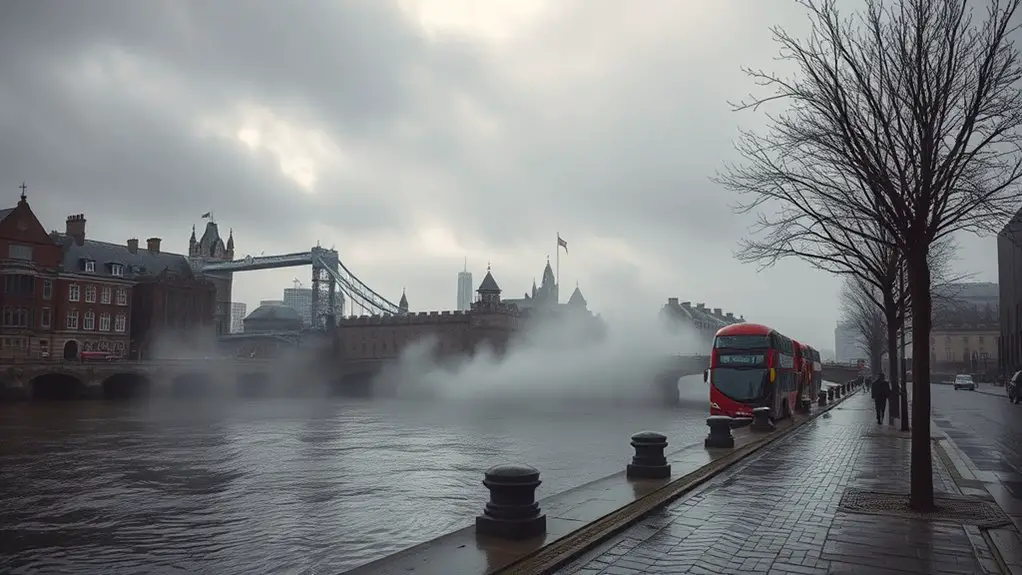
London weather by month changes noticeably in winter, and December brings short days, cool temperatures, damp spells, and occasional frost. The weather is usually manageable rather than extreme, but conditions can change quickly. Knowing the climate averages and checking the live forecast will help you pack well and plan outdoor time around the best part of each day.
Quick Answer
London in December has an average high near 8.8°C (47.8°F) and an average low near 3.1°C (37.5°F). Expect about 57mm of rain, short days of roughly eight hours, and some frosty mornings. Snow can happen, but lasting accumulation in central London is uncommon.
Key Takeaways
- The Met Office’s 1991–2020 Heathrow averages show a December high of 8.8°C and low of 3.1°C.
- December averages about 57mm of rain and nearly 11 days with at least 1mm of rainfall.
- Air frost occurs on about seven December days at Heathrow, although central London can stay slightly milder.
- Daylight falls below eight hours around the winter solstice, with sunset close to 4 PM.
- Pack layers, a waterproof outer layer, comfortable water-resistant shoes, gloves, and a compact umbrella.
What’s in This Article
- London December Weather at a Glance
- Typical Temperature Range During December
- Rainfall and Precipitation Patterns
- Chances of Snow and Frost
- Daylight Hours and Sunshine
- Wind Conditions and Humidity
- How to Dress and Prepare for December in London
- Seasonal Variations Across Different Weeks
- How to Plan Sightseeing Around the Weather
- Frequently Asked Questions
Disclosure: As an Amazon Associate I earn from qualifying purchases. Some links on this page are affiliate links, at no extra cost to you.
London December Weather at a Glance
The table below uses Met Office 1991–2020 climate averages for Heathrow. Heathrow is a useful long-term reference for Greater London, but your exact conditions can differ across the city and from year to year.
| Measure | December average | What it means for visitors |
| Daily maximum | 8.79°C (47.8°F) | Cool enough for a coat throughout the day |
| Daily minimum | 3.08°C (37.5°F) | Cold mornings and evenings, with colder nights possible |
| Rainfall | 57.05mm (2.25 inches) | Plan for showers, but not necessarily rain all day |
| Days with at least 1mm of rain | 10.77 days | Roughly one day in three reaches this rainfall threshold |
| Air frost | 7.17 days | Icy patches are possible, especially outside central London |
| Bright sunshine | 54.96 hours for the month | Daylight is limited, and many daylight hours may still be cloudy |
| Mean wind speed | 7.77 knots (about 8.9 mph) | Usually manageable, although fronts and storms can bring stronger gusts |
Note: Climate averages describe many Decembers, not the forecast for your trip. Check the local forecast and weather warnings shortly before each outdoor plan.
Typical Temperature Range During December
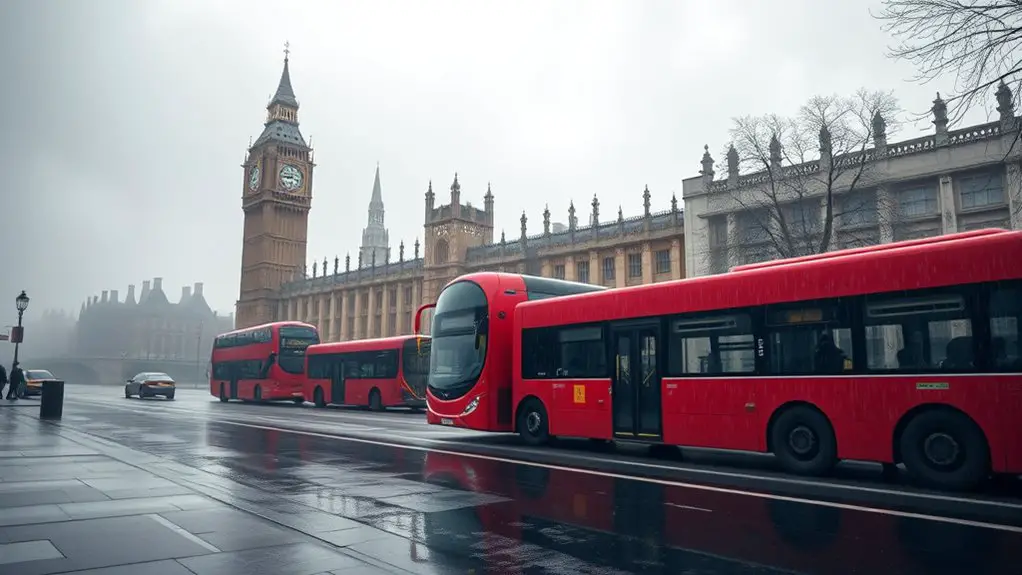
December in London is chilly, but it is usually above freezing during the daytime. The long-term average maximum at Heathrow is 8.79°C, while the average minimum is 3.08°C. Individual days can be much milder or colder than those figures, especially when Atlantic air or a cold easterly flow reaches southern England.
Mornings and evenings often feel colder than the temperature suggests because you may be standing outside in damp air or wind. A coat is useful all day, and a hat, scarf, and gloves become more valuable after sunset.
Freezing temperatures are possible overnight. However, an average low of 3.08°C does not mean every night stays near that temperature. Some nights remain mild, while others fall below 0°C and create frost or ice.
Rainfall and Precipitation Patterns
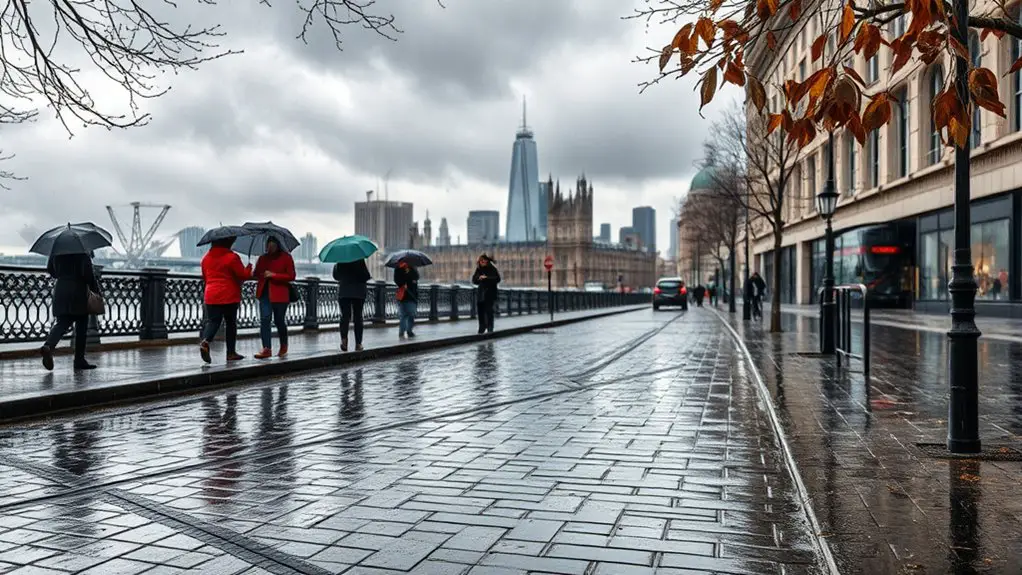
London’s December rainfall is moderate by UK standards. Heathrow averages 57.05mm for the month and 10.77 days with at least 1mm of rain. That does not mean it rains continuously for 11 full days. A counted rain day may include a short shower, several showers, or a longer wet spell.
Light rain and drizzle can feel more persistent because cool temperatures, cloud, and weak winter sunshine allow streets to stay damp. Heavy rain is possible when active weather fronts cross the region, but it is not the default every day.
Carry a compact umbrella and wear a water-resistant outer layer. During strong winds, close the umbrella and rely on a hood or waterproof jacket instead. Shoes with good grip are more useful than fashionable footwear on wet paving stones.
Heathrow averages about 57mm of rain in December, with at least 1mm recorded on roughly 11 days.
Chances of Snow and Frost
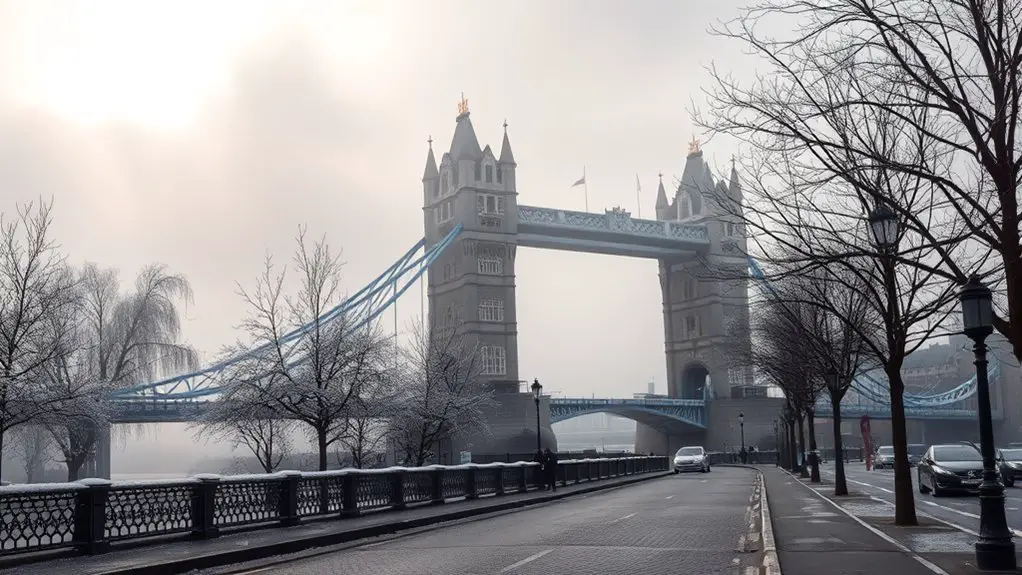
Frost is more likely than disruptive snow in London during December. Heathrow records an average of 7.17 air-frost days in the month. Central London may stay slightly warmer at night because buildings and paved surfaces hold heat, while open suburban areas can cool more quickly.
Likelihood of Snowfall
Snow is possible, but you should not plan a December visit expecting a white London. The Met Office explains that UK snow depends on a narrow combination of cold air, moisture, and the freezing level. Small changes in temperature can turn forecast snow into sleet or rain.
When snow reaches central London, it is often light or short-lived. A dusting may settle on grass, rooftops, or parked cars while busy roads and pavements remain wet. A stronger cold spell can produce more significant accumulation and travel disruption, but this is not a normal daily feature of December.
Frosty Night Conditions
Frost forms most readily on clear, calm nights when surfaces lose heat. It can appear even when the measured air temperature is slightly above freezing because exposed surfaces may be colder than the surrounding air. The Met Office’s guide to frost and ice also notes the risk of hard-to-see ice on roads and pavements.
Warning: Wet paving can freeze overnight. Walk slowly, use handrails, and allow extra time on bridges, steps, station entrances, and untreated side streets.
Temperature Fluctuations
London can move from a mild, wet Atlantic pattern to a colder, drier spell within a few days. A monthly average cannot show these short changes. Check the forecast each morning, especially if you have an early train, a long outdoor walk, or a day trip outside central London.
Daylight Hours and Sunshine
December has the shortest daylight of the year in London. In 2026, daylight lasts about 8 hours 11 minutes on December 1, falls to about 7 hours 50 minutes around the winter solstice, and returns to about 7 hours 55 minutes by December 31. The exact clock times change slightly each year, but sunrise is generally near 8 AM and sunset is close to 4 PM.
The Royal Observatory Greenwich gives London’s shortest day as about 7 hours 49 minutes. Bright sunshine is much less than total daylight: Heathrow averages about 55 hours of sunshine across the whole month, so cloudy skies are common.
Schedule parks, viewpoints, walking tours, and outdoor photographs between late morning and mid-afternoon. Museums, shops, theatres, restaurants, and festive light displays fit naturally after sunset.
Pro Tip: Put your most weather-dependent activity first in the day. You will have more daylight and enough time to move an indoor activity forward if rain arrives.
Wind Conditions and Humidity
Heathrow’s December mean wind speed is 7.77 knots, or about 8.9 mph. That monthly average includes calm periods and windier days. Passing fronts can bring much stronger gusts, so a forecast wind speed or warning matters more than the monthly mean for a particular outing.
Wind Speed Variability
Open places such as bridges, riverside paths, large squares, and exposed railway platforms can feel colder than sheltered streets. Wind removes the thin layer of warm air next to your clothing, increasing heat loss even when the measured temperature has not changed.
A windproof outer layer is often more useful than adding a very bulky sweater. Secure hats and loose scarves on gusty days, and avoid relying on a large umbrella when wind warnings are active.
Humidity Fluctuations
London often feels damp in December because moist air, drizzle, wet surfaces, and low temperatures occur together. Humidity changes with the weather pattern, but a single monthly percentage would not tell you how comfortable a specific day will feel.
Fog and low cloud can reduce visibility during calm, moist conditions. These conditions are usually local and temporary, so check transport updates rather than assuming the whole city will be affected.
How Wind and Humidity Affect Your Comfort
Wind, damp clothing, and long periods of standing still can make you feel colder quickly. Use breathable layers so you can remove one inside heated buildings, then add it again before going outdoors. Replace wet gloves or socks when possible because damp fabric loses warmth.
How to Dress and Prepare for December in London
Build your clothing around adjustable layers. London transport, shops, and museums can feel warm, while streets and platforms feel cold. A flexible outfit is more comfortable than one heavy layer that you cannot remove.
- Base layer: A long-sleeved top or thermal layer for cold days.
- Mid-layer: A fleece, jumper, or light insulated jacket.
- Outer layer: A waterproof or water-resistant coat with a hood.
- Footwear: Comfortable, water-resistant shoes or boots with reliable grip.
- Accessories: Gloves, a scarf, a warm hat, and spare socks.
- Day bag: A compact umbrella, reusable water bottle, portable charger, and a dry pouch for electronics.
Pro Tip: Choose a coat that covers your hips and has room for a mid-layer. It offers better protection during long walks without becoming difficult to carry indoors.
A thermal flask can be useful during long outdoor events, but most visitors can warm up easily in cafés, museums, markets, and stations. Keep medicines and electronics protected from rain, and bring a small cloth for wet glasses or phone screens.
Seasonal Variations Across Different Weeks
December weather does not follow a reliable week-by-week script. The first week is not always mild, the third week is not especially likely to bring snow, and Christmas week can be wet, dry, mild, or cold. Short-range forecasts are much more useful than calendar-based assumptions.
One predictable change is daylight. Days shorten until the winter solstice around December 21, then begin to lengthen slowly. Temperature averages also tend to edge downward from early winter toward January, but individual weather systems can easily reverse that trend for several days.
Keep your schedule flexible. Use better-weather periods for outdoor activities, parks, and day trips, then save indoor attractions for rainier or windier periods.
How to Plan Sightseeing Around the Weather
Check the Met Office London forecast a few days before your visit, then check again each morning. Forecast confidence is usually better at short range, and weather warnings focus on possible impacts rather than ordinary seasonal discomfort.
- Dry or bright morning: Prioritise viewpoints, parks, river walks, and outdoor photography.
- Showery day: Group indoor and outdoor stops in the same area so you can switch quickly.
- Windy day: Avoid exposed riverside routes and use a hood instead of an umbrella.
- Frost or snow warning: Allow extra time and avoid tight connections.
- Evening plans: Confirm last admission times because daylight ends early and winter opening hours may be shorter.
Rain, ice, snow, engineering work, or unrelated incidents can affect transport. Check Transport for London status updates before leaving, especially when travelling to an airport, rail terminal, or timed attraction.
Frequently Asked Questions
How does December weather vary between central London and the suburbs?
Central London often stays slightly milder at night because buildings and paved surfaces retain heat. Open suburban areas can cool faster and may see frost more readily. The difference varies with cloud, wind, and the wider weather pattern.
What outdoor activities work well in December in London?
Christmas markets, festive light walks, outdoor ice skating, parks, and riverside walks can all work well. Book flexible times where possible, dress in layers, and schedule longer outdoor activities during the brightest part of the day.
What are the best clothing choices for December in London?
Wear a warm base layer, an insulating mid-layer, and a water-resistant outer coat. Add comfortable shoes with good grip, plus gloves, a scarf, and a hat. Layers are useful because indoor spaces and public transport can feel much warmer than the street.
How does December weather affect transportation and travel in London?
Ordinary rain usually causes little disruption, but heavy rain, strong wind, ice, or snow can delay road and rail travel. Check TfL and rail updates, allow extra time for important journeys, and avoid very tight airport or train connections during warnings.
Can unusual weather disrupt December plans in London?
Yes. A strong storm, cold snap, snowfall, or icy morning can affect transport and outdoor events. Keep one indoor alternative available and follow official forecasts and warnings rather than relying on monthly averages.
Does it rain every day in London in December?
No. Heathrow averages nearly 11 December days with at least 1mm of rain. Some other days may have trace drizzle, but dry periods and fully dry days are also normal.
Will it snow in London at Christmas?
It is possible, but it cannot be predicted from the calendar alone. Snow needs the right combination of cold air and moisture, and small temperature changes can produce rain or sleet instead. Check the short-range forecast close to Christmas.
December in London rewards practical planning. Bring weather-resistant layers, use the limited daylight well, and keep one indoor backup for each outdoor plan. Cold, rain, and early sunsets are part of the season, but so are festive lights, warm cafés, museums, markets, and winter walks that make the city worth visiting.
Sources
- Met Office: Heathrow long-term averages — 1991–2020 temperature, rainfall, frost, sunshine, and wind data.
- Royal Observatory Greenwich: Winter solstice and shortest day — London’s minimum daylight near the December solstice.
- Met Office: Snow — why UK snowfall depends on temperature, moisture, and freezing level.
- Met Office: Frost and ice — frost formation and slippery-surface risks.
- Met Office: London forecast — short-range local conditions and weather warnings.
- Transport for London: Status updates — live transport disruptions and planned service changes.
