
Last Updated on July 24, 2026 by Daniel Globe
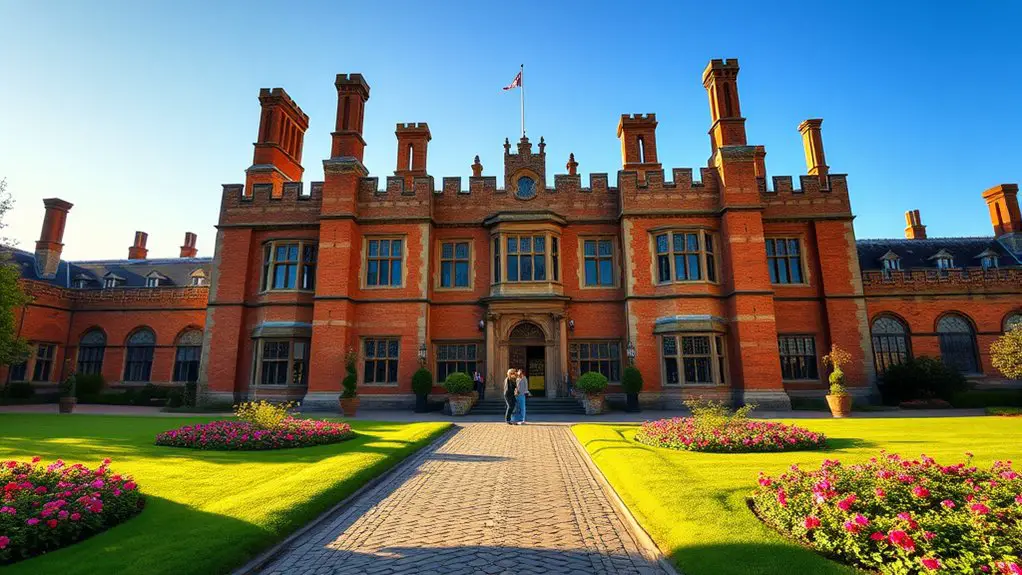
Hampton Court Palace brings together Henry VIII’s Tudor court, William III and Mary II’s Baroque palace, and gardens shaped and reconstructed across several centuries. It is about 35 minutes from London Waterloo by direct train, making it an easy London day trip. This guide explains the current tickets, transport, closures, visitor routes, gardens, facilities, and access information you need before you go.
Quick Answer
Take a direct train from London Waterloo to Hampton Court, then walk about five minutes to the palace. Allow at least three hours, book admission online, and check the date-specific opening and closure page before traveling. During 2026, some galleries and visitor routes have limited access because of conservation work.
Key Takeaways
- Direct trains from London Waterloo normally run about every 30 minutes and take around 35 minutes.
- Until 27 November 2026, adult admission is £29 off-peak and £32 on peak dates, excluding the optional donation.
- Allow at least three hours. A full day is better if you want to see the main palace routes, gardens, Maze, and family attractions.
- The standard ticket includes all open public palace areas, gardens, courtyards, the Maze, the Magic Garden, and a free audio guide.
- Check current route closures before booking. The Mantegna Gallery is closed until spring 2027, and other areas may close on specific dates.
At a Glance
| Time Required | At least 3 hours; 5–7 hours for the palace, gardens, Maze, meals, and family attractions |
| Difficulty | Easy to moderate walking, with some uneven historic floors, stairs, and long garden routes |
| Tools Needed | Downloaded ticket, comfortable shoes, weather protection, wired headphones, and a charged phone |
| Cost | Adult tickets from £29 off-peak or £32 peak until 27 November 2026 |
What’s in This Article
- Planning Your Hampton Court Palace Visit
- How to Get to Hampton Court Palace
- Hampton Court Palace Tickets and Prices
- Check 2026 Route Closures
- Suggested Hampton Court Palace Itinerary
- Highlights Inside Hampton Court Palace
- Palace Grounds and Gardens
- Accessibility and Family Visits
- Food and Visitor Facilities
- Tips for a Memorable Visit
- Frequently Asked Questions
- Conclusion
- Sources
Disclosure: As an Amazon Associate I earn from qualifying purchases. Some links on this page are affiliate links, at no extra cost to you.
Planning Your Hampton Court Palace Visit
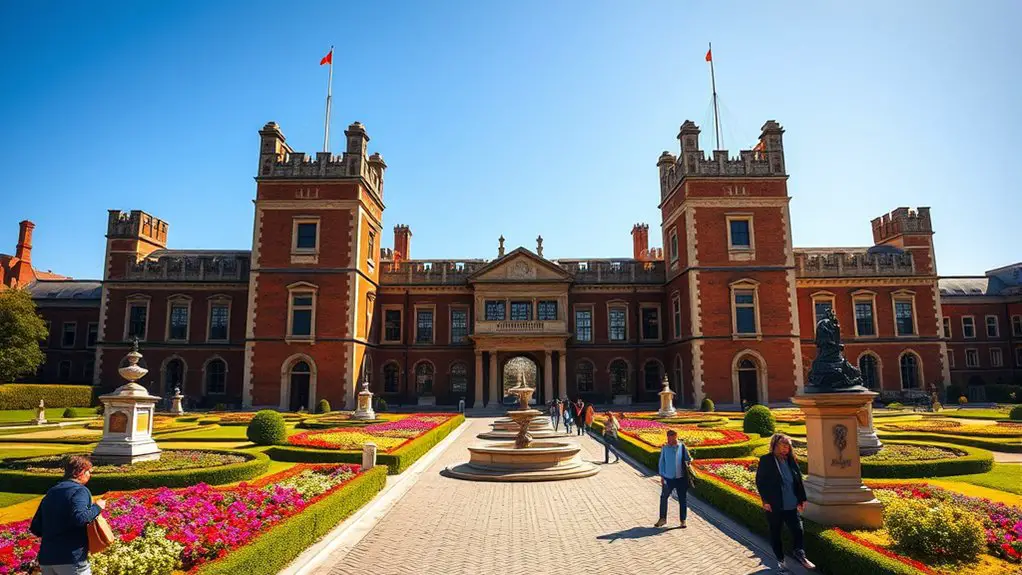
Start by checking the official opening and closing times for your exact date. Palace, garden, café, and family-area hours change by season, and temporary closures can be added for conservation, maintenance, weather, private events, or festivals.
Historic Royal Palaces recommends allowing at least three hours. That is enough for the main historic rooms and a brief garden walk, but it can feel rushed. Set aside most of a day if you also want to explore the Maze, Great Vine, Privy Garden, Great Fountain Garden, cafés, and Magic Garden.
The best arrival time depends on your plans. Arriving before 11:00 gives families and full-day visitors more time to explore. If you want a shorter and potentially quieter visit, Historic Royal Palaces also recommends considering a weekday after 13:00. School holidays, weekends, major events, and good weather can still increase attendance.
Spring brings strong displays in the Wilderness and formal gardens, while summer offers longer garden hours and more family events. Autumn can be pleasant for outdoor walks, but specific displays and opening times vary from year to year.
If you are traveling from outside London, book your accommodation early. Staying near Hampton Court, Kingston, Richmond, or central London can make an early start easier.
How to Get to Hampton Court Palace
Travel by Train
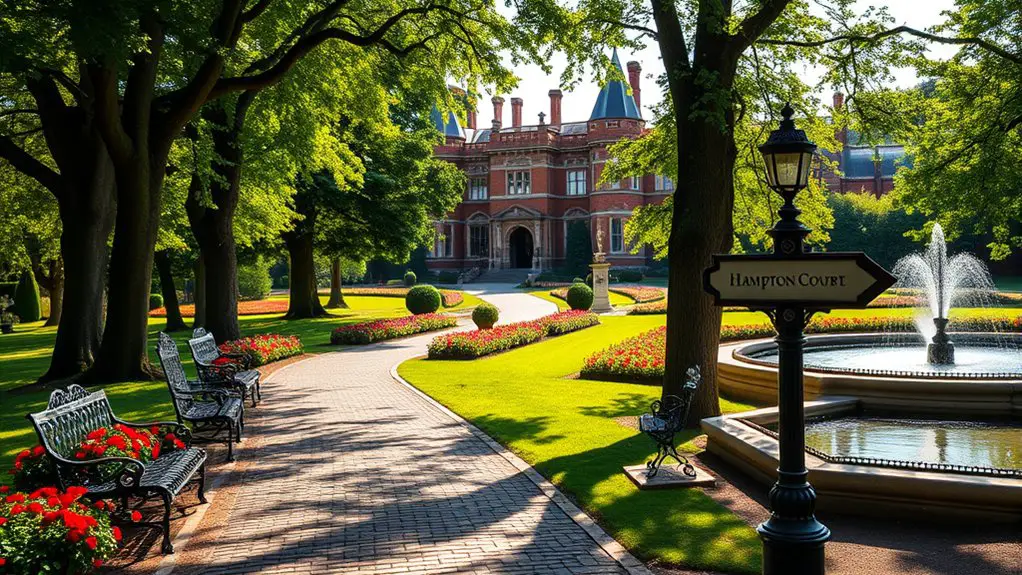
The simplest public-transport route is a direct South Western Railway train from London Waterloo to Hampton Court station. Trains normally leave about every 30 minutes, and the journey takes around 35 minutes. Hampton Court station is in Zone 6, and Oyster cards are accepted on the route.
The palace is about a five-minute walk from the station for most visitors. The route crosses Hampton Court Bridge, so visitors with limited mobility may need closer to ten minutes.
Check live South Western Railway times before leaving. Engineering work can replace direct trains with buses or require a change at Surbiton.
Travel by Bus
Useful routes include the 111, 216, 411, 461, and 513 from Kingston, plus the R68 from Richmond. There is no London Underground station at Hampton Court. You can connect by bus from Underground stations such as Richmond or Wimbledon.
Drive and Park
Hampton Court Palace is on the A308. Limited on-site parking is available on a first-come, first-served basis and currently costs £1.80 per hour, payable by card or a supported parking app. Hampton Court Green, the railway station, Walton Road, and Kingston provide alternatives when the palace car park is full.
The palace is close to the London Ultra Low Emission Zone boundary. Drivers should use the official Transport for London vehicle checker before traveling in a vehicle that may not meet ULEZ standards.
Arrive by Bicycle or Boat
National Cycle Network Route 4 passes the palace along Barge Walk. Bicycles cannot enter the palace courtyards or gardens, but cycle racks are available near the entrance and car park.
Seasonal riverboats may run from Westminster, Richmond, and Kingston. The journey from Westminster can take about four hours, so it works better as a scenic experience than the fastest way to reach the palace.
Pro Tip: Save your rail plan and palace ticket to your phone before leaving London. Mobile reception, Wi-Fi, engineering changes, and ticket-email access can slow you down if you rely on loading everything at the entrance.
Hampton Court Palace Tickets and Prices
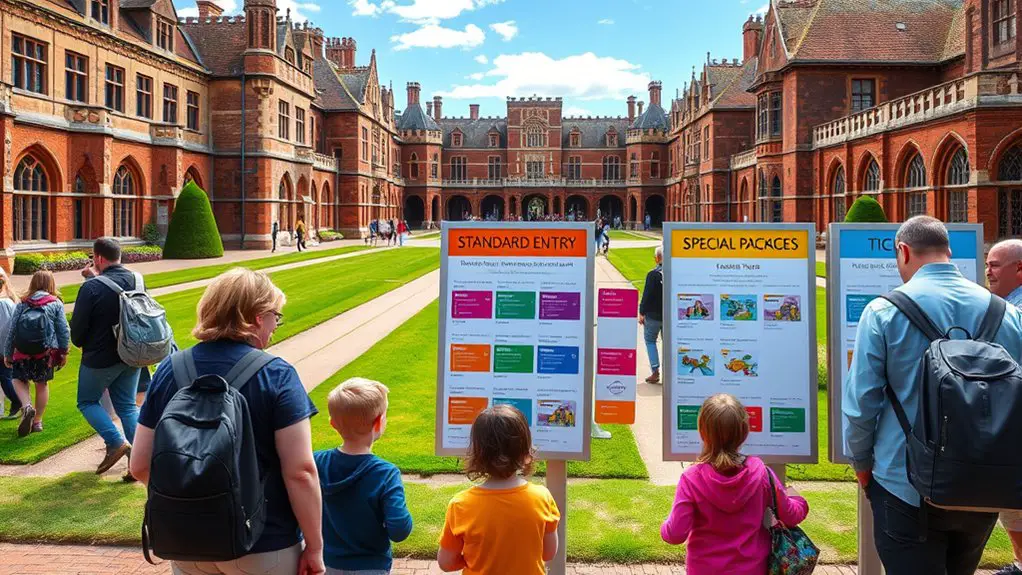
Ticket prices vary between off-peak weekdays and peak dates such as weekends and bank holidays. The following standard prices apply until 27 November 2026 and exclude the optional charitable donation.
| Ticket Type | Off-Peak | Peak |
|---|---|---|
| Adult | £29.00 | £32.00 |
| Child, age 5–15 | £14.50 | £16.00 |
| Young person, age 16–17 | £14.50 | £16.00 |
| Senior, student, or disabled concession | From £23.50 | From £25.00 |
| Child, age 0–4 | Free | Free |
| Disabled carer or companion | Free | Free |
From 28 November 2026, Winter Palace admission uses a different price schedule. Adult tickets are listed at £32 off-peak and £35 peak for the festive period, which runs through 3 January 2027. Always confirm the amount shown for your chosen date on the official Hampton Court Palace ticket page.
What Your Ticket Includes
A general admission ticket includes all open public areas of the palace, the gardens, courtyards, Maze, and Magic Garden. It also includes the standard audio-guide tours. You can use the visitor guide on your own device or borrow a free handset from the Undercroft shop, subject to availability.
Historic Royal Palaces members receive unlimited general admission from £65 per year. Some special event days still require members to reserve a free timed ticket.
The palace also runs a limited low-cost ticket scheme for visitors receiving named UK benefits, including Universal Credit, Pension Credit, Income Support, and certain other benefits. These tickets must be booked online, and the eligible visitor must bring proof of eligibility and identification.
Pro Tip: Book online as soon as you know your date. Admission numbers are limited, and popular dates or low-cost ticket allocations can sell out before the day of the visit.
Check 2026 Route Closures
Conservation and event work continues to affect some visitor routes during 2026. The Mantegna Gallery is closed until spring 2027, although two paintings from The Triumphs of Caesar are displayed in the Georgian Story during the closure.
Other galleries, courts, and gardens may close for one or more days. The Great Fountain Garden, Privy Garden, Cartoon Gallery, and Chapel Court are among the areas with date-specific restrictions listed during 2026.
Warning: Do not rely on an old closure list or social-media post. Check the official opening and route-closure page for your exact visit date before buying non-refundable travel tickets.
Suggested Hampton Court Palace Itinerary
First 60–90 Minutes: Tudor Hampton Court
Begin in Base Court and follow the Tudor route toward the Great Hall. Look at the hammerbeam roof, Tudor emblems, and surviving tapestries before continuing through the Great Watching Chamber.
Next, visit Henry VIII’s Kitchens. The kitchen complex explains how hundreds of workers prepared meals for the Tudor household using roasting fires, boiling houses, serving passages, storerooms, and specialist work areas.
Next 45–75 Minutes: State Apartments and Later Courts
Continue through Henry VIII’s State Apartments, the Processional Route, Haunted Gallery, and Royal Pew. The Chapel Royal can normally be viewed from the Royal Pew, while the chapel itself remains open for services rather than general visitor access.
Then move to William III’s Apartments and the Georgian Story. These routes show how Hampton Court changed from a Tudor palace into a Baroque royal residence used by Stuart and Georgian courts.
Final 60–120 Minutes: Gardens and Maze
Walk through the Privy Garden, Pond Gardens, and Great Fountain Garden before visiting the Great Vine. Continue to the Wilderness and Maze if time allows.
Families can add the Magic Garden, while keen gardeners may prefer the Rose Garden and recreated Kitchen Garden. Add a café or picnic break if you are staying for most of the day.
Note: Some private rooms, galleries, and seasonal routes do not open every day. Treat this itinerary as a flexible order rather than a guarantee that every listed room will be available.
Highlights Inside Hampton Court Palace
The palace is easiest to understand as several royal stories occupying one site. The Tudor rooms focus on Henry VIII and court life, while the Baroque and Georgian routes show how later monarchs rebuilt, decorated, and used the palace.
| Room or Route | Why It Is Worth Seeing |
|---|---|
| Great Hall | Henry VIII’s grand Tudor hall, with a soaring timber roof, royal emblems, and historic tapestries. Meals for members of the royal household were served here. |
| Henry VIII’s Kitchens | A large working complex where about 200 cooks and other staff produced more than 800 meals a day for the royal household. |
| Great Watching Chamber | The first State Apartment beyond the Great Hall, where guards controlled who could approach the king. Look for the gilded ceiling and Tudor badges. |
| Haunted Gallery and Royal Pew | Part of the ceremonial route between the royal apartments and Chapel Royal, with stories linked to Henry VIII and Catherine Howard. |
| William III’s Apartments | Baroque state and private rooms that reveal the more formal public life and smaller personal spaces of William III’s court. |
| Georgian Story | Rooms and displays covering George I, George II, Queen Caroline, and the palace’s eighteenth-century court. |
Great Hall and Tudor Kitchens
The Great Hall was designed to project Henry VIII’s wealth and authority. It also served a practical purpose as a dining hall for members of the royal household. Food arrived from the nearby kitchens, which formed one of the largest and busiest cooking operations in Tudor England.
Historic Royal Palaces states that around 200 cooks, sergeants, grooms, and pages worked in the kitchens and produced more than 800 meals each day. Walking through the boiling, roasting, storage, and serving areas makes the scale of Tudor court life easier to understand.
State Apartments and Chapel Royal
The Great Watching Chamber controlled access to increasingly private royal rooms. Its Tudor badges, later Stuart paneling, and elaborate ceiling show how the palace changed while older spaces continued to be used.
The Processional Route leads through the Haunted Gallery to the Royal Pew. Visitors can normally view Chapel Royal from the pew, but the chapel itself is reserved for services. Photography is not allowed in the Chapel Royal or Royal Pew.
William III and the Georgian Court
William III and Mary II began transforming part of Hampton Court into a Baroque palace at the end of the seventeenth century. William III’s State Apartments feature grand ceremonial rooms, painted ceilings, and carefully controlled sequences of access.
The Georgian Story explains how George I, George II, and Queen Caroline used Hampton Court during the eighteenth century. It gives useful context for visitors who know the palace mainly through Henry VIII.
Exploring the Palace Grounds and Gardens
Hampton Court has about 60 acres of formal and informal gardens. They do not represent one unchanged Tudor design. Instead, they combine surviving features, later royal designs, Victorian changes, and researched modern reconstructions.
The gardens cover about 60 acres and contain Tudor sites, Baroque layouts, historic plant collections, a recreated Georgian kitchen garden, and the world-famous Maze and Great Vine.
Great Fountain Garden
William III and Mary II created the Great Fountain Garden to complement their new Baroque East Front. Its fountain, gravel walks, clipped yews, and long views reflect late seventeenth-century royal taste rather than Henry VIII’s garden layout.
Privy Garden
A private garden existed here during Henry VIII’s reign, but the garden visitors see today is a carefully researched recreation of William III’s 1702 Baroque garden. It includes clipped plants, statues, formal patterns, a hornbeam bower, and the Tijou Screen.
Pond Gardens and Great Vine
The sunken Pond Gardens occupy former Tudor fishpond sites and were changed by later monarchs and gardeners. One of the glasshouses contains the Great Vine, planted in 1768 while Capability Brown managed the gardens.
Historic Royal Palaces describes the Great Vine as the world’s largest grapevine. It still produces dessert grapes, which may be harvested and sold during the late-summer season.
Wilderness and Maze
The Wilderness offers meadow areas, mature trees, spring flowers, and winding paths. Its name refers to a designed place for wandering rather than neglected land.
The Maze is the only survivor of several mazes once planted in this part of the garden. Historic Royal Palaces describes it as the world’s oldest hedge maze. Maze access is included with general palace admission, although it may close during severe weather.
Kitchen Garden, Rose Garden, and Magic Garden
The recreated Kitchen Garden shows how an eighteenth-century royal food garden may have looked, using historically appropriate fruits and vegetables where possible. The Rose Garden provides seasonal color near the Tudor buildings.
The Magic Garden is a children’s adventure playground inspired by the palace’s history and heraldic creatures. It has separate closing and last-entry times, so families should check its schedule before promising children a visit at the end of the day.
Accessibility and Family Visits
Hampton Court station is step-free. The route to the palace crosses Hampton Court Bridge and takes roughly five to ten minutes, depending on walking speed and mobility needs.
The palace has ten accessible parking bays. Parking rules and Blue Badge charges can change, so check the official accessibility page before driving. Historic Royal Palaces announced that charges would apply to some Blue Badge holders from 3 August 2026.
Wheelchairs and electric mobility buggies are available on a first-come, first-served basis and cannot be reserved in advance. Electric buggies are for outdoor use and cannot enter every garden area. A lift provides access to several first-floor routes, including the Tudor Apartments, Georgian Story, William III’s Apartments, and Cumberland Art Gallery when those routes are open.
Historic floors can be uneven, some spaces have low lighting, and popular rooms may become crowded. Ask a Palace Host for the most suitable step-free route on the day.
Pushchairs and buggies are allowed in the palace and gardens. A buggy park and family room are located near Clock Court. The palace does not advertise a stroller-rental service, so bring your own if your child needs one.
Trained assistance dogs, including medical alert dogs, are welcome. Other dogs and pets are not allowed inside the palace, courtyards, or gardens.
Food and Visitor Facilities
Cafés and Kiosks
The Tiltyard Café serves drinks, cakes, sandwiches, salads, children’s meals, and selected hot dishes. The Privy Kitchen Café offers lighter meals, sandwiches, pies, cakes, and drinks. Seasonal kiosks and ice-cream carts may also operate.
On-site catering is generally available to ticket holders. Opening times and menus change, so check the official food and refreshments page before your visit.
Picnics and Water
You may bring your own food, drinks, and picnic blanket. Outdoor picnics are welcome in the gardens. Indoor picnic areas may be available during weekends, bank holidays, and school holidays.
Water-refill points are available in the Magic Garden and Tiltyard Café. Bringing a refillable bottle can save time and money during a long garden visit.
Wi-Fi, Lockers, and Luggage
Free Wi-Fi is available inside the palace. Follow the on-screen connection prompts, but download your ticket before arriving so you do not depend on the connection at the gate.
Small lockers are available in the Buggy Park and require a refundable £1 coin deposit. Large luggage cannot be stored on-site, so arrange external luggage storage before traveling to the palace.
Tips for a Memorable Visit
- Wear comfortable shoes: A full visit involves historic floors, courtyards, gravel paths, and long garden walks.
- Check the weather: Much of the experience is outdoors, and indoor routes may not provide a quick shortcut between distant gardens.
- Bring wired headphones: The palace’s loan audio-guide handsets do not support Bluetooth headphones.
- Carry a portable charger: The digital visitor guide, tickets, photography, and transport planning can use significant phone power.
- Photograph carefully: Non-commercial photography is permitted in most areas, but flash is prohibited. Photography is not allowed in the Chapel Royal, Royal Pew, Cumberland Art Gallery, temporary exhibitions, or around certain loaned objects.
- Leave large equipment behind: Tripods, monopods, interior selfie sticks, and gimbals require prior permission and are generally unsuitable for a normal visit.
- Use the free audio guide: It adds useful context to the Tudor Kitchens, State Apartments, William III’s Apartments, Georgian Story, and family routes.
- Plan your final hour: The Maze, Magic Garden, cafés, and some garden areas can close at different times from the main palace.
Frequently Asked Questions
Are pets allowed inside Hampton Court Palace?
No. Dogs and other pets are not allowed inside the palace, courtyards, or gardens. Trained assistance dogs, including medical alert dogs, are welcome.
Is free Wi-Fi available at Hampton Court Palace?
Yes. Free Wi-Fi is available inside the palace. Follow the connection prompts on your device, but save your admission ticket offline before arriving.
Can I rent a wheelchair or stroller on-site?
Wheelchairs and outdoor electric buggies are available first come, first served and cannot be pre-booked. Pushchairs are permitted, and a buggy park is available, but the palace does not advertise stroller rentals.
Are there dining options inside the palace grounds?
Yes. The Tiltyard Café, Privy Kitchen Café, seasonal kiosks, and ice-cream carts provide food and drinks. You may also bring a picnic and eat in suitable garden areas.
Is photography permitted inside Hampton Court Palace?
Non-commercial photography without flash is allowed in most areas. It is prohibited in the Chapel Royal, Royal Pew, Cumberland Art Gallery, temporary exhibitions, and around certain objects. Tripods and similar equipment require prior permission.
Will conservation work affect my visit in 2026?
Possibly. The Mantegna Gallery is closed until spring 2027, and other rooms, courts, and gardens have date-specific closures. Check the official opening and closure page for your selected date.
How long should I spend at Hampton Court Palace?
Allow at least three hours for the principal palace rooms and a short garden visit. Plan five to seven hours if you want a relaxed meal, the formal gardens, Maze, Great Vine, and family attractions.
What is included with a Hampton Court Palace ticket?
Admission includes all open public areas of the palace, gardens, courtyards, Maze, Magic Garden, and the standard audio-guide tours. Separate premium events or private tours may require another ticket.
Conclusion
Hampton Court Palace is close enough to London for a straightforward day trip, but its Tudor rooms, Baroque apartments, gardens, Maze, and family attractions can easily fill most of a day. Take the direct train from Waterloo, reserve admission online, allow at least three hours, and check current opening times and route closures before leaving. A flexible route will help you enjoy the available rooms without rushing through the gardens.
Sources
- Historic Royal Palaces: Tickets and prices — current admission categories, 2026 rates, membership, and low-cost tickets
- Historic Royal Palaces: Opening and closing times — date-specific operating hours and temporary route closures
- Historic Royal Palaces: Getting here — trains, buses, parking, bicycles, boats, and ULEZ guidance
- Historic Royal Palaces: Accessibility — step-free travel, parking, mobility access, and visitor support
- Historic Royal Palaces: Palace facilities — Wi-Fi, luggage, photography, audio guides, and family facilities
- Historic Royal Palaces: Suggested itineraries — visit duration, route planning, and major palace highlights
