
Last Updated on July 28, 2026 by Daniel Globe
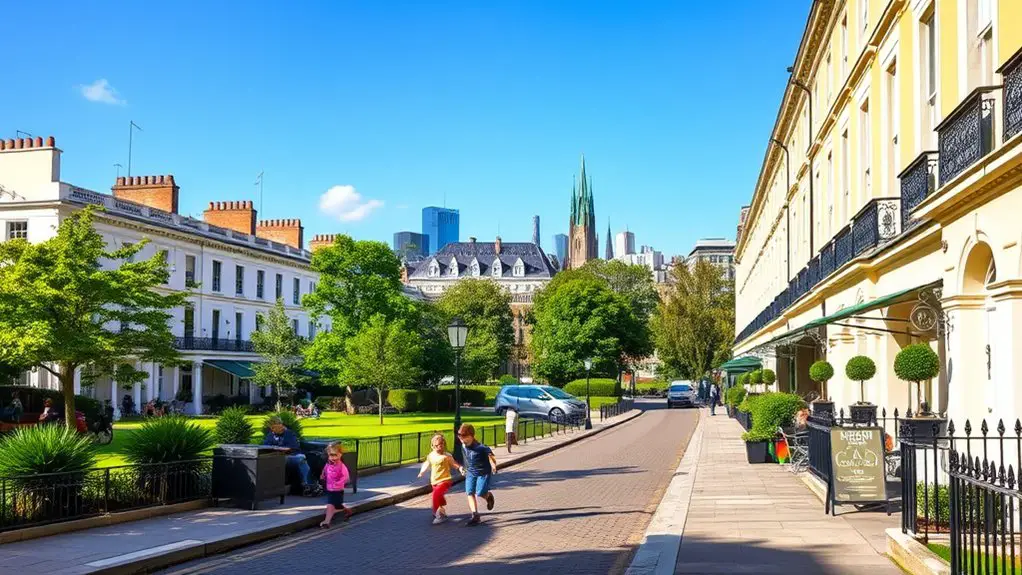
London has dozens of neighborhoods, but only a handful combine family-sized accommodation, useful transport, green space, and easy access to attractions. The best base depends on your children’s ages, your budget, and whether you prefer central sightseeing or a quieter place to recharge. This guide compares five strong choices for a family trip and explains the trade-offs before you book.
Quick Answer
South Kensington is the best all-around area for most families visiting London because it combines free museums, large parks, calmer residential streets, and convenient transport. South Bank is better for first-time sightseeing, Greenwich and Richmond suit families who want more space, and Camden works best for older children who enjoy a lively atmosphere.
Key Takeaways
- Best all-around: South Kensington offers free museums, parks, restaurants, and a calmer feel than the busiest central districts.
- Best for first-time sightseeing: South Bank and Waterloo put the London Eye, SEA LIFE London Aquarium, and Westminster within easy reach.
- Best mix of history and outdoor space: Greenwich has maritime attractions, a large park, and river or rail connections.
- Best for a slower pace: Richmond provides riverside walks and extensive parkland, but journeys to central attractions take longer.
- Best for older children and teens: Camden has markets, canal trips, street art, and plenty of food choices, though it can be crowded and noisy.
Disclosure: As an Amazon Associate I earn from qualifying purchases. Some links on this page are affiliate links, at no extra cost to you.
How to Choose the Best London Area for Your Family
Start with the part of the trip that matters most. Families with toddlers may value parks, lifts, and short walks more than nightlife or a central postcode. Families with older children may prefer markets, river trips, and evening activity. Hotel prices change by date, so compare the total stay rather than assuming one neighborhood is always cheaper.
Best Areas at a Glance
| South Kensington | Best all-around for museums and parks; usually one of the more expensive choices. |
| South Bank and Waterloo | Best for major sights and short walks; busy during weekends, holidays, and evening events. |
| Greenwich | Best for history, park space, and river travel; less convenient for repeated trips to West London. |
| Camden Town | Best for older children, food, and energy; crowds and late-night noise vary by street. |
| Richmond | Best for nature and a residential feel; allow extra time and money for travel into central London. |
South Kensington and Chelsea: Best All-Around
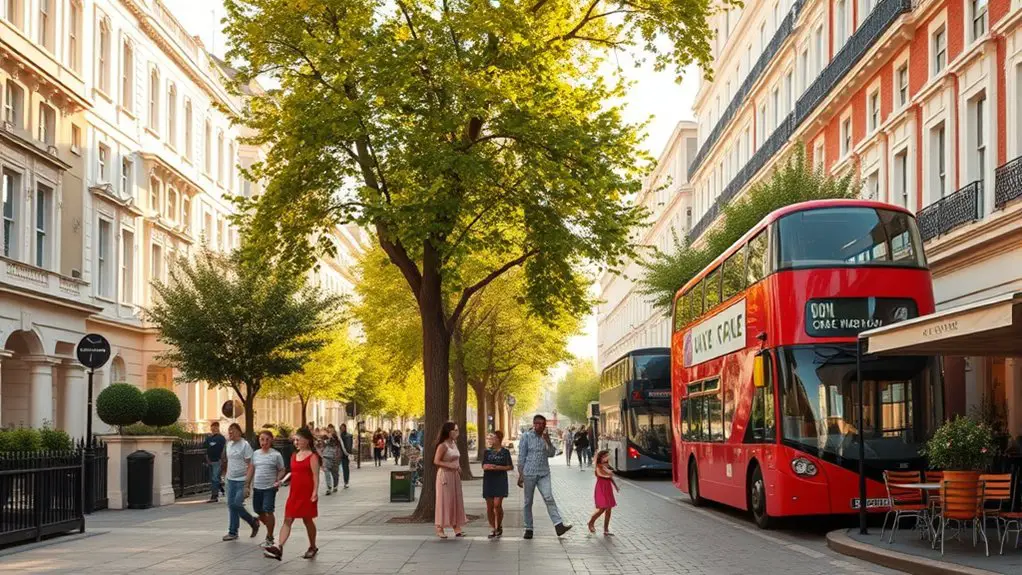
South Kensington and nearby parts of Chelsea are hard to beat for families. The streets are generally calmer than the main sightseeing districts, and Kensington Gardens and Hyde Park give children room to move between museum visits.
The Science Museum offers free general admission, although advance booking is recommended. The Natural History Museum and Victoria and Albert Museum are also close by, giving families several indoor options for rainy days. Some special exhibitions and interactive galleries charge separately.
You can wander past historic townhouses, stop at a family-friendly cafe, and find supermarkets or pharmacies without leaving the area. Transport links are useful, but families with a buggy should check the exact station and route in the TfL journey planner because not every Tube journey is step-free from street to train.
Note: As of July 28, 2026, The Royal Parks still lists the Diana, Princess of Wales Memorial Playground as closed for renewal, with reopening expected in summer 2026. Check the official page before planning around it; Buck Hill Playground and Hyde Park Playground are nearby alternatives.
Best for: Families who want free museums, parks, and a central but less hectic base. Main trade-off: Accommodation and dining can be expensive, especially near Exhibition Road and the park.
South Bank and Waterloo: Best for First-Time Sightseeing
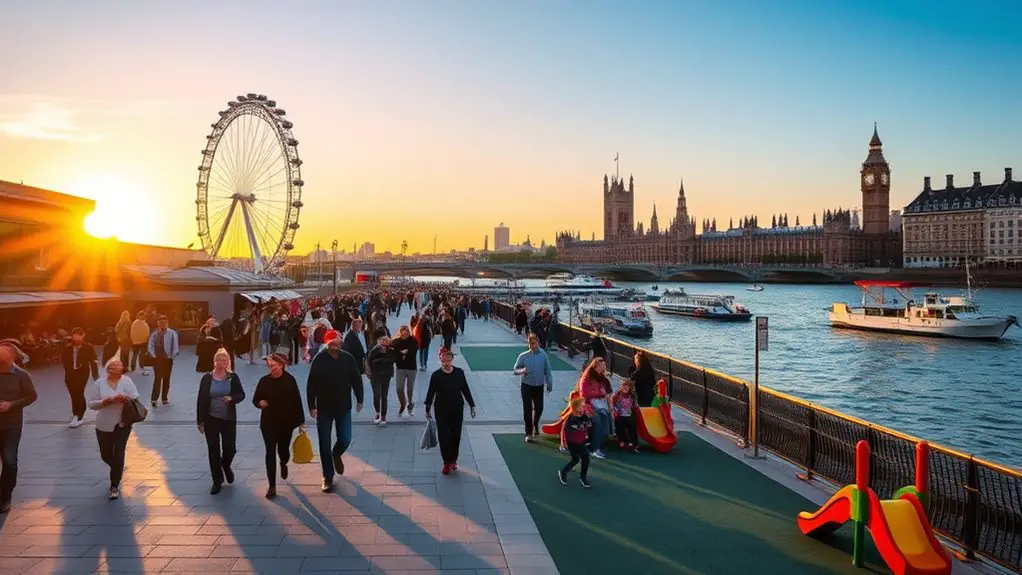
South Bank and Waterloo sit at the center of London’s cultural and sightseeing scene. A walk along the Thames gives you views of the London Eye, Big Ben, and the Houses of Parliament, while bridges make it easy to continue toward Westminster or Covent Garden.
The SEA LIFE London Aquarium is a favorite with children, and the Southbank Centre schedules performances, workshops, and festivals throughout the year. Jubilee Gardens provides space for a short break or picnic, and the riverside has many cafes, restaurants, and street-food choices.
Pro Tip: Check the official London Eye multi-attraction tickets before buying separate admission. Online bundles can cost less and let you reserve entry times, but standard tickets do not remove every security or boarding queue.
Waterloo Station makes it easy to reach other parts of the city, and many central sights are walkable. The trade-off is constant activity: the riverfront can be crowded during school holidays, weekends, and evening events. Ask for a room away from rail lines, main roads, bars, or event spaces if light sleepers are traveling with you.
Best for: First-time visitors who want to minimize daily travel. Main trade-off: Crowds, noise, and higher central-London room rates.
Greenwich: Best for History and Outdoor Space
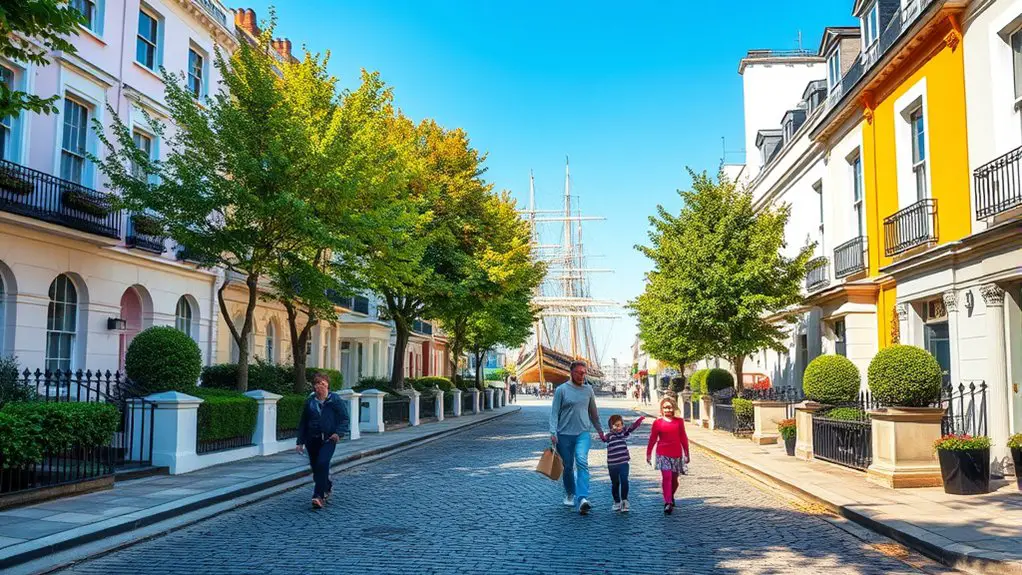
Greenwich is a strong pick for families who want history, open space, and a more relaxed pace. You can explore cobbled streets, visit maritime attractions, browse Greenwich Market, and let the kids run through one of London’s largest historic parks.
The Royal Observatory and Cutty Sark offer paid, educational outings, while the National Maritime Museum and Queen’s House have free general admission. Greenwich Park has hilltop city views, an accessible playground, a boating lake, and the enclosed Wilderness deer paddock. The climb toward the observatory is steep, so families using a buggy may prefer the gentler paths shown on the park map.
Greenwich at a Glance
| Parks | Greenwich Park and the enclosed Wilderness deer paddock |
| Attractions | Royal Observatory, Cutty Sark, National Maritime Museum, and Queen’s House |
| Transportation | DLR, National Rail, buses, and river boat services |
| Dining | Family-friendly cafes, pubs, market stalls, and riverside restaurants |
| Accommodation | Small inns, apartments, and hotels |
Greenwich Station and Cutty Sark DLR provide rail connections, while Greenwich Pier gives families a scenic route toward South Bank and Westminster. Greenwich is not served directly by London Overground, so check the exact station rather than relying on the line name.
Best for: Families who want a full day of history and outdoor space near their accommodation. Main trade-off: Trips to West London attractions can take longer.
Camden Town: Best for Older Children and Teens
Camden Town is the pick for families who want something lively and a little offbeat. The open-air Camden Market is packed with food vendors, shops, and unusual stalls that can keep older children and teenagers entertained.
Families can take a boat ride along Regent’s Canal or walk part of the towpath toward Regent’s Park and Little Venice. Official Camden Market information describes family-friendly canal trips departing from West Yard. Hawley Wharf also offers covered food areas, step-free access, baby-changing facilities, and a Changing Places toilet.
Colorful street art and quirky cafes give the neighborhood real character. However, Camden can feel crowded around the market and Tube station, especially on weekends. The late-night music and bar scene also means that the exact street matters more here than in quieter residential areas.
Best for: Families with older children who enjoy markets, food, street art, and a busier atmosphere. Main trade-off: Crowds, noise, and less convenient stroller movement at peak times.
Richmond: Best for Nature and a Slower Pace
Richmond is a peaceful alternative to central London and a top choice for families who love the outdoors. Richmond Park has wide open fields, ponds, woodland, and free-roaming red and fallow deer. The riverside area adds scenic Thames-side walks with cafes and shops along the way.
Warning: Richmond Park’s deer are wild and unpredictable. The Royal Parks asks visitors to stay at least 50 meters away and never touch or feed them. Keep children close, and be especially cautious during birthing season and the autumn rut.
Kids can visit the Museum of Richmond, which offers free entry and advertises family craft sessions and workshops. Check the current calendar before making a special trip, because activity dates and booking rules change.
The neighborhood mixes Georgian and Victorian architecture with modern shops and restaurants. Rail and Underground services connect Richmond with central London, but the daily journey adds time compared with South Kensington or Waterloo.
Best for: Families who want parkland, riverside walks, and evenings away from central crowds. Main trade-off: Longer journeys to many major attractions.
Tips for Getting Around London with Kids
London’s public transport network is extensive, but the easiest mode depends on your route and whether you have a buggy. The Tube is fast and frequent, though stations and trains can be crowded during weekday rush hours. Buses are often easier for families because boarding is at street level, children can see the city, and many routes pass major landmarks.
Up to four children under 11 can travel free with one fare-paying adult on the Tube, DLR, London Overground, Elizabeth line, and some National Rail services.
Children under 11 travel free on London buses and trams. On the Tube, DLR, London Overground, Elizabeth line, and eligible National Rail services, free travel applies when they are accompanied by a fare-paying adult, with a maximum of four children per adult. Adults can use a contactless bank card or Oyster card; each adult should use a separate card or device so the fare system can calculate the correct cap.
Note: Children aged 11 to 15 need their own ticket or payment card. Visiting families can ask TfL staff to add a Young Visitor Discount to a Visitor Oyster card, which gives half adult pay-as-you-go fares for up to 14 days. Check the latest TfL visitor guidance before traveling.
Plan for Buggies and Step-Free Routes
Do not assume that the nearest Tube station is step-free from the street to the train. Use TfL’s step-free filters and maps, and check for planned lift closures on the day. All DLR stations offer step-free access from street to train, although a small platform gap or step may still exist. On buses, you may need to fold a buggy if the wheelchair space is required by a wheelchair user.
Consider River Travel
If you are staying near the Thames, Uber Boat by Thames Clippers is a scenic way to travel between Greenwich, South Bank, Westminster, and other riverside areas. It uses a separate fare structure from standard Tube and bus travel, so compare single, child, and family ticket prices before boarding. Children aged four and under travel free, while ages five to 15 normally receive child fares.
Keep Daily Routes Realistic
- Group attractions by area instead of crossing London several times in one day.
- Avoid weekday rush hours when possible, especially with a stroller or luggage.
- Save step-free routes in the TfL Go app before leaving your accommodation.
- Leave extra time for station lifts, toilet stops, security checks, and tired children.
- Check the last part of the walk from the station; a short map distance can still include steep hills, bridges, or busy roads.
What to Check Before Booking Family Accommodation
A good neighborhood cannot fix an unsuitable room. London hotel rooms are often smaller than families expect, and room labels do not always guarantee separate beds or enough floor space for an open buggy.
- Sleeping setup: Confirm the exact bed types, maximum occupancy, and whether a cot or rollaway bed must be requested.
- Lift access: Ask whether every floor and the room itself can be reached without stairs.
- Noise: Check whether the room faces a rail line, main road, market, pub, or late-night venue.
- Food storage: A refrigerator, microwave, or kitchenette can make breakfast and snacks easier.
- Laundry: Longer trips are simpler with an in-room washer, guest laundry, or nearby laundromat.
- Cancellation terms: Flexible rates may be worth the extra cost when traveling with children.
Frequently Asked Questions
What is the best area to stay in London with children?
South Kensington is the strongest all-around choice for many families because it has free museums, nearby parks, useful transport, restaurants, and calmer streets than the busiest sightseeing areas. South Bank may be better when walking access to major attractions is the top priority.
Which areas in London are most budget-friendly for families?
Prices change by date and property, so no neighborhood is always cheapest. Stratford and Elephant & Castle sometimes cost less than South Kensington or South Bank, while Camden varies widely. Compare the full stay, room size, breakfast, and transport costs before choosing.
Are there safe London neighborhoods for families with young children?
No urban neighborhood is risk-free, and conditions can vary by street and time of day. South Kensington, Richmond, and Wimbledon are often chosen for their residential feel and parks. Check recent lodging reviews, study the walk from the station, and use normal city precautions.
What are the best public transportation options for families?
Buses are useful with children because they board at street level and provide city views. The Tube is faster for longer cross-city trips, while the DLR is fully step-free from street to train. Use contactless or Oyster for adults and confirm the current child-fare rules with TfL.
Which London area is easiest with a stroller?
Greenwich can work well because every DLR station is step-free from street to train, while South Bank has long, mostly level riverside paths. The exact hotel route still matters, so use TfL’s step-free planner and check for lift closures before each journey.
Which neighborhoods have the most parks and outdoor space?
South Kensington is close to Kensington Gardens and Hyde Park, Camden is near Regent’s Park, Greenwich has Greenwich Park, and Richmond has the largest Royal Park in London. Richmond offers the most countryside-like setting, while South Kensington keeps families closer to central attractions.
Are there family-friendly dining options in these areas?
Yes. All five areas have casual restaurants, cafes, supermarkets, and places with children’s menus or highchairs. Camden and Greenwich are especially useful for varied market food, while South Kensington and Richmond provide many quieter sit-down choices.
Conclusion
For most families, South Kensington is the best area to stay in London because it balances museums, parks, transport, and a calmer atmosphere. South Bank is the strongest choice for families who want to walk to major sights, while Greenwich and Richmond offer more space and a slower pace. Camden suits families with older children who enjoy markets and energy. Compare the exact room, street, and transport route before booking, because those details can matter as much as the neighborhood name.
Sources
- Transport for London: Best ways for visitors to pay — child fares, adult payment methods, and visitor discounts
- Transport for London: Travelling with a buggy — step-free planning tools and family-access guidance
- Science Museum — free general admission, booking, and visitor facilities
- Royal Museums Greenwich — current admission information for Cutty Sark, the Royal Observatory, National Maritime Museum, and Queen’s House
- The Royal Parks: Deer safety advice — minimum distance and safety rules for Richmond Park
- London Eye: Multi-attraction tickets — official bundle and timed-entry information
