
Last Updated on July 27, 2026 by Daniel Globe
Choosing the best area to stay in London depends on how you plan to spend your trip. A first-time visitor may value walkability to famous landmarks, while another traveler may prefer nightlife, museums, markets, quieter streets, or fast airport connections. The right neighborhood can save commuting time and make your stay feel much more relaxed.
Quick Answer
Covent Garden is the best all-around area to stay in London for many first-time visitors because it is central, walkable, and packed with theaters, restaurants, and attractions. Westminster is stronger for landmark sightseeing, South Kensington for museums and a calmer feel, Soho for nightlife, and Shoreditch for creative East London energy.
Key Takeaways
- Covent Garden is the strongest all-around choice for many first-time visitors who want to walk to restaurants, theaters, shops, and major sights.
- Westminster is best for famous landmarks, while South Kensington suits museum lovers and travelers who prefer a calmer atmosphere.
- Soho, Shoreditch, and Camden work well for nightlife, music, food, and late-evening energy.
- King’s Cross, Paddington, and Canary Wharf stand out when rail, airport, or business connections matter more than being beside the main tourist sights.
- London hotel prices change sharply by date, event, and day of the week, so compare actual room rates rather than assuming an entire neighborhood is cheap or expensive.
Best London Areas at a Glance
| Best for first-time visitors | Covent Garden |
| Best for iconic landmarks | Westminster |
| Best for museums and an elegant feel | Kensington and South Kensington |
| Best for nightlife | Soho |
| Best for street art and East London culture | Shoreditch |
| Best for families and riverside attractions | South Bank |
| Best for markets and photogenic streets | Notting Hill |
| Best for alternative culture and live music | Camden Town |
| Best for history and business | City of London |
| Best for business trips | Canary Wharf |
| Best major transport hub | King’s Cross and St Pancras |
| Best for Heathrow connections | Paddington |
Pro Tip: Pick your area based on where you expect to spend your evenings, not only where you will sightsee during the day. London’s transport makes daytime trips manageable, but returning across the city late at night can make an otherwise convenient hotel feel less practical.
Disclosure: As an Amazon Associate I earn from qualifying purchases. Some links on this page are affiliate links, at no extra cost to you.
How to Choose Where to Stay in London
There is no single London neighborhood that is best for everyone. Start by deciding which trade-off matters most: being able to walk to attractions, having nightlife outside your hotel, staying somewhere quieter, reaching an airport easily, or finding better value for your dates.
First Trip or Repeat Visit
For a first trip, a central base such as Covent Garden, Westminster, Soho, or the South Bank can reduce travel time because many major sights are within walking distance or a short Tube ride. Repeat visitors may prefer Shoreditch, Camden, Notting Hill, or another neighborhood with a stronger local identity.
Budget, Noise, and Transport
Do not assume one London district will always be cheaper than another. Hotel rates can change sharply around weekends, major events, school holidays, and business travel periods. Compare real prices for your exact dates, then check how close the property is to a useful station.
Nightlife districts such as Soho, Shoreditch, and Camden can remain busy late into the evening. Kensington, parts of Notting Hill, and some residential streets away from major entertainment zones generally offer a calmer atmosphere, although street-by-street conditions vary.
Note: No London neighborhood can guarantee personal safety. The Metropolitan Police’s visitor guidance recommends choosing accommodation carefully, keeping valuables secure, watching for pickpockets, and staying aware of your surroundings.
Westminster: Best for Historic London
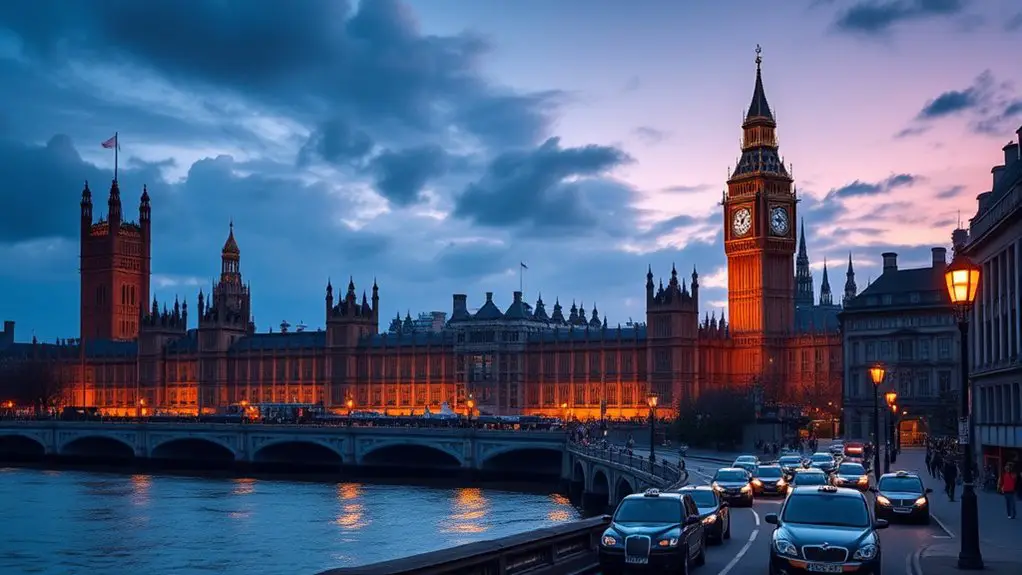
Best for: first-time sightseeing, royal and political landmarks, and travelers who want famous London views close by.
Westminster is the historic heart of central London, where some of the city’s best-known landmarks sit within a compact area. Visit London’s Westminster guide highlights Westminster Abbey, the Palace of Westminster, Big Ben, and St James’s Park among the area’s major attractions.
Staying here puts you within walking distance of Parliament Square, Whitehall, the Thames, St James’s Park, and many central sights. Westminster Underground station is served by the Jubilee, Circle, and District lines, which makes cross-city travel straightforward.
The trade-off is atmosphere and price. Parts of Westminster become heavily oriented toward sightseeing and government activity during the day, so travelers wanting late-night dining and entertainment immediately outside their hotel may prefer Soho or Covent Garden.
Covent Garden: Best All-Around First-Time Base
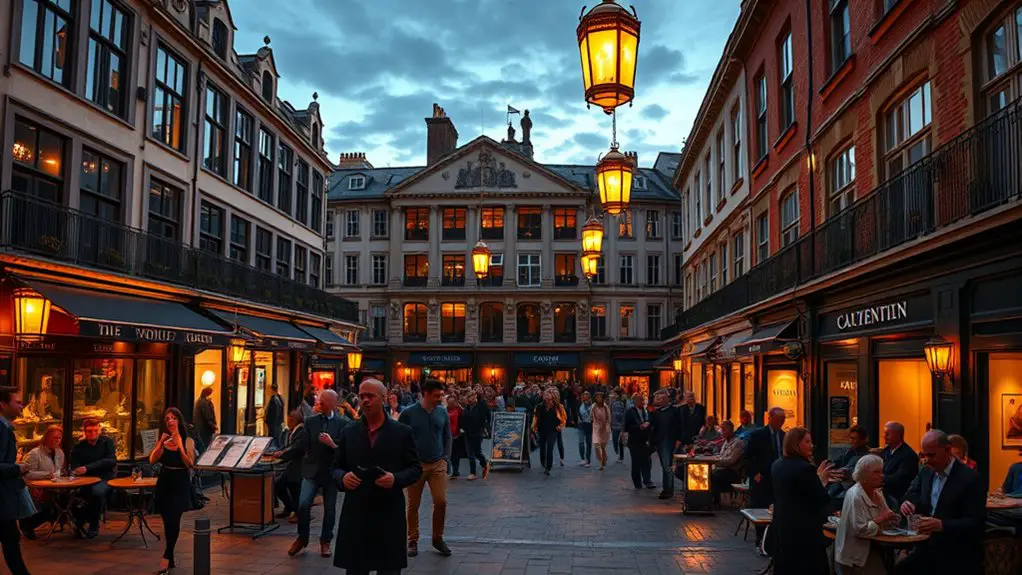
Best for: first-time visitors, theatre lovers, dining, shopping, and travelers who want to walk rather than rely on transport for every outing.
Covent Garden combines entertainment, historic streets, shops, restaurants, markets, and easy access to much of the West End. The official Visit London guide lists Covent Garden Market, the London Transport Museum, Somerset House, and the Royal Ballet and Opera among the area’s cultural draws.
The Royal Ballet and Opera performs at the Royal Opera House in Covent Garden. The organization adopted the Royal Ballet and Opera name in 2024, while the famous theatre building continues to be known as the Royal Opera House.
You can walk from Covent Garden to Leicester Square, Trafalgar Square, Soho, the Strand, and the Thames. Restaurants range from casual pre-theatre dining to higher-end destinations, and street performers add energy around the Piazza.
The main downside is that its central location attracts heavy visitor traffic, particularly around the Piazza and West End performance times. Travelers who want a quieter base may prefer Kensington or Notting Hill.
Kensington and Chelsea: Elegant and Upscale
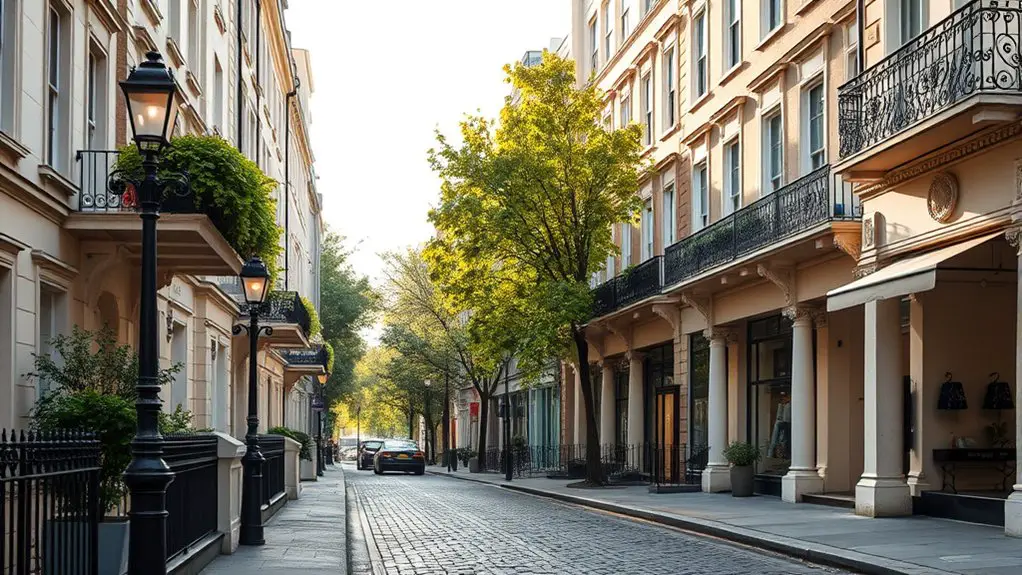
Best for: museums, elegant streets, parks, families, and travelers who prefer a calmer base than the West End.
Kensington and nearby South Kensington offer a refined setting with Victorian architecture, established shopping streets, restaurants, and some of London’s best-known museums. The area is home to attractions including Kensington Palace and the Victoria and Albert Museum, while the Natural History Museum and Science Museum are major draws in South Kensington.
Chelsea extends the upscale atmosphere south toward King’s Road, where boutiques, cafés, restaurants, and residential streets create a different feel from the busier tourist core.
Hyde Park and Kensington Gardens provide valuable green space, making this part of London particularly attractive for travelers who want to balance sightseeing with quieter walks.
The principal trade-off is cost: this is not a neighborhood to assume will be budget-friendly. Check actual hotel prices for your dates rather than relying on broad price labels.
Soho: Best for Nightlife and Entertainment
Best for: nightlife, restaurants, bars, live music, LGBTQ+ venues, and travelers who want to stay in the middle of the West End.
Soho is one of London’s most active entertainment districts. Its compact streets contain historic pubs, cocktail bars, restaurants, music venues, cafés, and theaters, with Covent Garden, Chinatown, Oxford Street, and Leicester Square close by.
The official Soho area guide highlights its live entertainment, food, nightlife, boutique shopping, and long-established LGBTQ+ scene.
During the day, Soho is busy with restaurants, shops, offices, and cafés. At night, the same streets become louder and more crowded. That energy is part of the appeal, but light sleepers should check hotel reviews for street-noise comments before booking.
Shoreditch: Best for Creative East London
Best for: street art, independent restaurants, bars, nightlife, design, and repeat visitors looking beyond London’s traditional sightseeing core.
Shoreditch is known for colorful street art, cafés, independent shops, bars, galleries, and a strong creative identity. Visit London describes Hoxton and Shoreditch as a creative hub with street art, pubs, cafés, galleries, restaurants, and nightlife.
Brick Lane and Old Spitalfields Market are nearby, while Liverpool Street, Old Street, and Shoreditch High Street provide useful transport options depending on where you stay.
Shoreditch is a strong choice when food, nightlife, and contemporary culture matter more than waking up beside Buckingham Palace or Westminster Abbey. The trade-off is that many headline attractions lie farther west.
South Bank: Best for Riverside Views and Cultural Attractions
Best for: families, river walks, cultural venues, and travelers who want central attractions without staying in the West End.
The South Bank lines a central stretch of the Thames and brings together riverside walks, restaurants, performance venues, and major attractions. The official South Bank guide highlights the London Eye, Southbank Centre, and family attractions along the river.
The National Theatre and Royal Festival Hall make the area especially strong for arts and entertainment. Continuing east along the Thames takes you toward Bankside, where Tate Modern, Shakespeare’s Globe, and Borough Market extend the cultural and food options.
Staying on the South Bank gives you easy pedestrian access across bridges to Westminster, Covent Garden, and the City. Waterloo is also one of London’s major rail and Underground hubs.
The busiest riverfront sections can feel tourist-heavy during the day, but the location remains one of the most practical choices for families and first-time visitors.
Notting Hill: Best for Charming Streets and Famous Markets
Best for: Portobello Road Market, colorful architecture, cafés, boutique shopping, and travelers who want a more residential west-London feel.
Notting Hill’s streets are known for colorful houses, mews, independent shops, cafés, and the famous Portobello Road Market. The market includes antiques, vintage goods, produce, food traders, and specialist stalls; according to Visit London, Saturday is its main trading day.
Nearby shops offer vintage clothing, artisan goods, coffee, and casual dining. Residential streets away from the busiest market sections can feel much calmer than Soho or Covent Garden.
| Colorful houses and gardens | Photogenic residential streets and a calmer atmosphere away from the market. |
| Portobello Road Market | Antiques, vintage goods, food, produce, and busy Saturday trading. |
| Cafés and vintage shops | A good fit for slow mornings, browsing, and neighborhood dining. |
| Independent artisans | Small shops and market traders give the area more character than a conventional shopping district. |
The trade-off is that Notting Hill sits west of many headline attractions. Notting Hill Gate provides Central, Circle, and District line connections, so reaching central London remains straightforward.
Camden Town: Best for an Eclectic and Alternative Vibe
Best for: markets, live music, alternative fashion, street food, and travelers who want a distinctive north-London atmosphere.
Camden Town combines quirky shops, large markets, canalside walks, international street food, music venues, and alternative fashion. A current Visit London Camden guide highlights Camden Market, live-music venues, independent shopping, and its alternative cultural scene.
Colorful shopfronts and market stalls create a very different atmosphere from Kensington or Westminster. Venues around Camden continue the area’s long association with live music, while Regent’s Canal offers a quieter side of the neighborhood.
Camden can become extremely busy around the markets, especially at weekends. Stay a few streets away from the busiest section if you want the atmosphere without constant crowds outside your accommodation.
The City of London: Best for Business and Historic Landmarks
Best for: business travelers, architectural history, St Paul’s Cathedral, Roman and medieval remains, and quieter weekends in parts of the financial district.
The City of London, often called the Square Mile, is London’s historic financial core. The City of London Corporation describes an area where medieval street patterns and historic remains sit beside modern architecture.
St Paul’s Cathedral, Guildhall, the Bank of England area, Leadenhall Market, Roman remains, historic churches, and modern skyscrapers all sit within a relatively compact district.
The Tower of London is one of the most important attractions nearby, but it is technically just outside the City boundary in the London Borough of Tower Hamlets. UNESCO identifies the Tower as lying within Tower Hamlets and adjoining the City of London.
The neighborhood changes character with the working week. Business streets can be extremely busy during office hours but much quieter at other times, while areas around St Paul’s, Liverpool Street, and major visitor attractions retain more activity.
Canary Wharf: Modern Business District With Comfort
Canary Wharf is a strong choice if you want a modern business hub, contemporary hotels, waterfront spaces, and excellent rail connections.
The district is dominated by modern offices and high-rise architecture, but restaurants, shops, public spaces, and waterside walks make it more than a weekday business zone.
Best for Business Travelers and Work Trips
Canary Wharf is home to major financial and professional-services offices, making it particularly practical when your meetings or conference are based in Docklands.
Staying close to your workplace can remove a cross-city commute and make early meetings, networking events, and evening business dinners easier. Coworking spaces, conference facilities, hotels, restaurants, and professional services are concentrated throughout the district.
For leisure travelers, the main trade-off is location: you are east of the West End and many traditional sightseeing areas, although modern rail connections make those journeys much easier than they once were.
Modern Architecture and Design
The modern architecture of Canary Wharf creates a striking contrast with historic London. Glass towers such as One Canada Square rise above former dock basins, while public squares, landscaped spaces, shopping areas, and waterfront paths soften the business-district feel.
The area can appeal to travelers who prefer contemporary hotels, wider pedestrian spaces, and a polished modern environment rather than narrow historic streets.
Access to Transport Links
Transport is one of Canary Wharf’s greatest strengths. Transport for London lists the Jubilee line, DLR, and Elizabeth line as key connections in the area.
The Jubilee line provides direct access toward London Bridge, Waterloo, Westminster, and the West End. The Elizabeth line offers fast east-west travel across central London and connections toward Heathrow. The DLR links Canary Wharf with other Docklands districts and provides onward access toward London City Airport.
Buses and river services add alternatives for shorter local trips or more scenic travel. Driving is generally less useful for most visitors because central-London traffic and parking can add expense and inconvenience.
King’s Cross and St Pancras: Best for Transport Connections
Best for: rail travelers, Eurostar passengers, short stays, and visitors planning day trips outside London.
King’s Cross and St Pancras have developed into far more than railway terminals. The surrounding district now includes restaurants, public spaces such as Granary Square, shopping at Coal Drops Yard, Regent’s Canal, and cultural attractions including the British Library.
The biggest advantage is connectivity. King’s Cross St Pancras Underground station links several Tube lines, while King’s Cross and St Pancras International provide extensive National Rail and international services. Visit London’s current King’s Cross guide also highlights the area’s cultural, dining, shopping, and family attractions.
It is especially practical when you have an early train, late arrival, Eurostar journey, or several day trips planned. The trade-off is that the area feels more like a transport hub than postcard London in some streets immediately around the stations.
Paddington: Best for Heathrow and West London Connections
Best for: Heathrow travelers, short stopovers, rail trips west of London, and visitors who value transport convenience.
Paddington is one of London’s most useful bases when airport or rail access matters. TfL lists Paddington as connected to the Elizabeth line as well as Bakerloo, Circle, District, and Hammersmith & City services, alongside National Rail.
The station is also the London terminus for Heathrow Express. That makes the neighborhood especially useful for travelers arriving late, departing early, or carrying heavy luggage.
Paddington does not offer the same concentrated nightlife as Soho or the theatre scene of Covent Garden, but Hyde Park, Little Venice, Bayswater, and Notting Hill are nearby. Hotel supply also spans a wide range, so it is worth comparing prices here when more central West End options are expensive.
Warning: Be cautious with listings that use broad descriptions such as “central London” or “near a major attraction.” Check the exact hotel address and walking distance to the station you expect to use most. A property can be in the right district but still add a long walk to every journey.
Frequently Asked Questions
Which neighborhoods offer the best family-friendly accommodations?
South Kensington and Kensington are strong family choices because major museums, parks, restaurants, and useful transport are close by. South Bank is another practical option for family attractions and riverside walks. Wimbledon offers a quieter, more residential atmosphere but sits farther from central sightseeing.
What are the safest areas for solo travelers at night?
There is no reliable way to label one London neighborhood completely safe at night. Kensington, Chelsea, and Westminster include many busy, well-traveled streets, but crime can happen anywhere. Choose well-reviewed accommodation, use busy routes and licensed transport, secure phones and bags, and follow current Metropolitan Police visitor-safety guidance.
Are there affordable yet centrally located neighborhoods?
No central London neighborhood is reliably cheap every night. Camden and Shoreditch sometimes provide better-value options than the West End, while King’s Cross and Paddington have broad hotel selections. Canary Wharf can also be worth checking outside peak business periods. Kensington is generally not the first area to target for bargains. Compare prices for your exact dates.
Which districts provide the best access to public transportation?
King’s Cross St Pancras is one of the strongest all-around transport hubs. Westminster has several central Tube lines, Waterloo serves South Bank, Paddington combines National Rail, the Elizabeth line, and multiple Tube services, and Canary Wharf has Jubilee, DLR, and Elizabeth line connections.
Where can I find the most authentic local dining experiences?
Shoreditch, Camden, Soho, and many surrounding residential areas offer broad selections of independent restaurants and cafés. Borough Market is also excellent for food, although it is a market in the Bankside and Southwark area rather than a neighborhood itself. Exploring a few streets away from headline attractions often reveals more neighborhood-focused cafés, pubs, and restaurants.
What is the best area to stay in London for a first visit?
Covent Garden is the strongest all-around choice for many first-time visitors because it combines a central location, dining, theater, shopping, and easy walking access to Soho, Trafalgar Square, the Thames, and other major sights. Westminster is a better alternative when historic landmarks are your main priority.
Where should I stay for easy Heathrow Airport access?
Paddington is particularly convenient because it has both Elizabeth line service and Heathrow Express connections. Canary Wharf is farther east but also sits on the Elizabeth line, making it a useful option when business commitments or accommodation needs place you in Docklands.
Conclusion
For many first-time visitors, Covent Garden offers the best balance of location, restaurants, theaters, shopping, and walkability. But it is not automatically the best choice for every trip. Pick Westminster for landmark sightseeing, Kensington for museums and a calmer atmosphere, Soho for nightlife, Shoreditch for contemporary East London, South Bank for riverside attractions, or Paddington and King’s Cross when transport matters most.
The best booking decision is the one that matches your daily plans. Compare hotel prices for your exact dates, check the walking distance to a useful station, and consider what you want outside your door after the sightseeing day ends.
Sources
- Visit London — London Areas — official visitor guidance on London’s major neighborhoods.
- Visit London — Covent Garden — attractions, culture, shopping, dining, and area information.
- City of London Corporation — Visit the City — official information on the Square Mile’s history and attractions.
- Transport for London — Canary Wharf — Jubilee, DLR, Elizabeth line, and station information.
- Transport for London — Paddington — Tube, Elizabeth line, and National Rail connections.
- Metropolitan Police — How to Stay Safe While Visiting London — visitor safety and theft-prevention guidance.
