
Last Updated on July 27, 2026 by Daniel Globe
If you’re visiting London for the first time, choosing the right neighborhood can save you time, simplify sightseeing, and shape the feel of your entire trip. The best base depends on whether you care most about famous landmarks, museums, nightlife, airport access, or keeping accommodation costs down. For most first-time visitors, a well-connected location in or near central London offers the easiest introduction to the city.
Quick Answer
For a first trip to London, Covent Garden and the West End are excellent all-around bases, while Westminster and South Bank put major landmarks close by. South Kensington suits museum lovers and families, Shoreditch works well for nightlife, and Paddington is especially convenient if easy Heathrow Airport access is a priority.
Key Takeaways
- Best all-around first-time base: Covent Garden and the West End for central sightseeing, restaurants, shopping, and theaters.
- Best for famous landmarks: Westminster and South Bank for Parliament, Westminster Abbey, the London Eye, and Thames walks.
- Best for families and museums: South Kensington, with the Natural History Museum and V&A nearby.
- Best for nightlife and creative culture: Shoreditch, though some streets can stay noisy late.
- Best for Heathrow convenience: Paddington, which has direct rail connections to the airport.
Disclosure: As an Amazon Associate I earn from qualifying purchases. Some links on this page are affiliate links, at no extra cost to you.
Best London Areas at a Glance
| Area | Best For | Main Advantage | Main Trade-Off |
|---|---|---|---|
| Covent Garden / West End | First-time sightseeing | Walkable to theaters, restaurants, shopping, and many central sights | Often expensive and busy |
| Westminster / South Bank | Landmarks and short visits | Close to major Thames-side attractions | Tourist-heavy and often pricey |
| South Kensington | Families and museums | Excellent museums and a more polished residential feel | Premium accommodation prices |
| Shoreditch | Nightlife, food, and street art | Creative atmosphere and strong evening scene | Noise and late-night crowds |
| Camden | Markets and live music | Distinctive alternative character | Busy around the market and nightlife areas |
| Paddington | Heathrow access | Fast airport rail links and good onward transport | Less atmospheric than the West End |
| Outer London | Potentially lower room rates | More residential surroundings and sometimes larger rooms | Longer daily journeys to central attractions |
Pro Tip: Don’t choose a hotel from the neighborhood name alone. Check its exact distance from a Tube or rail station and map the journey to the attractions you most want to visit. A hotel five minutes from a useful station can be more convenient than a supposedly more central property with awkward connections.
Central London: The Heart of the City
Central London gives first-time visitors convenient access to many of the city’s major attractions, shopping streets, theaters, restaurants, and museums. The term covers several distinct neighborhoods, however, so it helps to narrow your choice instead of simply booking anything described as “central.”
Covent Garden and the West End
For a classic first visit, Covent Garden and the West End are among the strongest all-around choices. Covent Garden sits in the West End and combines restaurants, shopping, entertainment, historic streets, and easy access to nearby theaters. You can confirm current area information through the official Visit London Covent Garden guide.
From this part of town, areas such as Soho, Leicester Square, Trafalgar Square, and the Strand are relatively close together. The British Museum, Buckingham Palace, and other major sights still require additional walking or public transport depending on your exact hotel.
The main drawback is price. Central rooms can cost more, and streets around theaters, restaurants, and nightlife can stay busy well into the evening.
Mayfair and Nearby Central Areas
Mayfair offers a more polished atmosphere, luxury shopping, fine dining, galleries, and high-end hotels. It works well if location and comfort matter more than budget, but travelers looking for casual nightlife or lower room rates usually have better options elsewhere.
Note: Most visitors do not need to buy individual Tube tickets. Transport for London says pay-as-you-go travel using contactless or Oyster is an easy and flexible option, with fare capping where applicable. Use the same card or device throughout a journey to avoid incorrect charges.
South Bank and Westminster: Near Iconic Sights
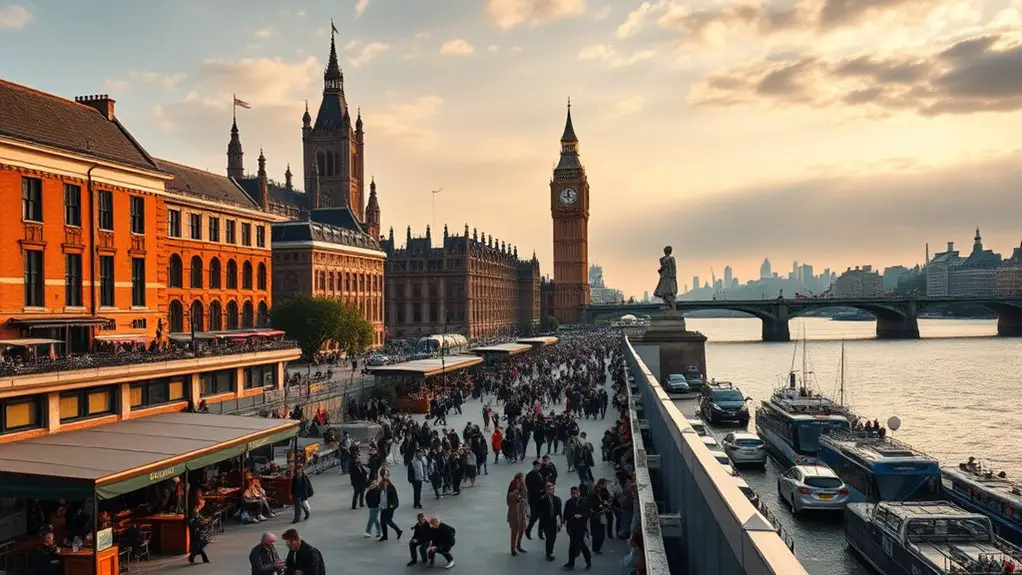
Westminster and South Bank are excellent choices when your priority is seeing London’s famous landmarks with minimal travel. They sit on opposite sides of the Thames but are linked by bridges and public transport.
In Westminster, you are close to the Houses of Parliament, Westminster Abbey, St James’s Park, and Buckingham Palace. Across the river, South Bank puts you near the London Eye, Southbank Centre, riverside walks, restaurants, and family attractions. Visit London’s South Bank guide provides current information on the area’s major attractions.
Tate Modern is also easy to include on a Thames-focused itinerary, although it sits farther east on Bankside rather than directly beside Westminster.
Accommodation ranges from upscale riverside hotels to more modest properties around Waterloo and nearby districts. Westminster and Waterloo stations also provide strong connections to other parts of London.
The trade-off is that these are major visitor zones. Expect crowds around landmark areas during busy periods, and compare room rates carefully before assuming that staying beside an attraction offers the best value.
Kensington and Chelsea: Elegant and Cultural Hubs
If you’re seeking comfortable accommodations in a more refined setting, Kensington and Chelsea combine residential streets, museums, shopping, restaurants, and easy access to central London.
South Kensington is particularly useful for museum-focused trips and families. The Natural History Museum and V&A South Kensington are both located here, making it possible to plan several major indoor attractions without repeatedly crossing the city.
Elsewhere in Kensington, Kensington Palace and nearby green spaces add a more historic feel. Chelsea is known for King’s Road, boutiques, restaurants, and galleries.
| Area | Notable Sights | Atmosphere |
|---|---|---|
| South Kensington | Natural History Museum, V&A | Cultural, polished, convenient for families |
| Kensington | Kensington Palace, Kensington Gardens | Elegant, historic, relatively relaxed |
| Chelsea | King’s Road, Saatchi Gallery | Fashionable, residential, arts-oriented |
These neighborhoods work especially well when you want a balance of culture and comfort rather than nonstop nightlife. The main downside is that accommodation can be expensive, particularly in the most desirable streets.
Shoreditch and East London: Trendy and Creative Neighborhoods
Shoreditch and nearby parts of East London offer a very different experience from Westminster or Kensington. The area is known for street art, independent businesses, nightlife, markets, bars, and creative venues.
It is a strong choice for visitors who want evenings and food culture to be part of the trip rather than simply returning to a quiet hotel after sightseeing.
Artistic Street Art Scenes
Shoreditch is well known for street art and murals, particularly around streets near Brick Lane and Shoreditch High Street. Artwork changes regularly, which is part of the appeal: walls can look different from one visit to the next.
You may encounter work associated with established or emerging artists, but don’t book the neighborhood expecting a particular Banksy or other individual piece to remain visible. Street art is temporary by nature.
A self-guided walk works well for casual exploration, while an organized street-art tour can provide more context about artists, techniques, and the area’s history.
Vibrant Nightlife Venues
Shoreditch has a broad nightlife scene covering cocktail bars, pubs, clubs, and live music. That variety makes it appealing to travelers who want to stay out late, but it also means accommodation on nightlife-heavy streets can be noisy.
| Venue Type | Atmosphere | Typical Appeal |
|---|---|---|
| Cocktail Bars | Stylish and social | Creative drinks and late evenings |
| Clubs | Energetic and loud | DJ sets and dancing |
| Live Music | Eclectic and lively | Bands and small performances |
| Pubs | Casual and welcoming | Drinks, conversation, and local crowds |
If nightlife matters to you, staying nearby can reduce late-night travel. If sleep matters more, choose a property a few streets away from the busiest bar and club corridors and check recent reviews for noise complaints.
Innovative Dining Options
East London also attracts visitors for its varied food scene, from casual international dishes and independent restaurants to market stalls and contemporary dining concepts.
BOXPARK Shoreditch remains one current option for food, drinks, shops, and events. Old Spitalfields Market and the wider Brick Lane area add further choices within walking distance of parts of Shoreditch.
You’ll find plant-based food, global cuisines, modern British cooking, and casual late-night options throughout the district. Because restaurants and vendors change regularly, check current opening details before building an itinerary around one specific venue.
Camden and North London: Alternative and Vibrant Areas
Camden is one of London’s best-known alternative neighborhoods, with markets, live music, independent shops, street food, canalside walks, and a strong connection to music culture.
Camden Market is the area’s major draw, with stalls selling clothing, crafts, food, and other goods. The official Visit London Camden guide also highlights the neighborhood’s markets, music venues, quirky shops, and Regent’s Canal.
The district suits travelers who want character and activity outside London’s most traditional sightseeing core. It can also be a fun base for visitors who plan to spend time at concerts or explore north London.
The downside is intensity. Streets around Camden Market can become crowded, and some parts of the neighborhood stay lively after dark. A room facing a quieter side street may be preferable if you’re a light sleeper.
Paddington: Best for Heathrow and Easy Connections
Paddington deserves consideration when airport convenience is especially important. Heathrow Express advertises a fastest journey of about 15 minutes between London Paddington and Heathrow, while the Elizabeth line provides another direct rail option to the airport.
Paddington also has Underground connections and puts you near Hyde Park, while areas such as Notting Hill, Marylebone, and the West End are accessible by public transport.
The neighborhood is more practical than romantic. For travelers dreaming of theater-lined streets or Thames views immediately outside their hotel, Covent Garden or South Bank may feel more memorable. For an early Heathrow departure, however, Paddington can make the final morning much easier.
Outskirts and Suburban Options: Budget-Friendly Retreats
Looking beyond central London can uncover lower-priced accommodation, larger rooms, and quieter residential surroundings. The trade-off is additional travel time, so compare the full cost and convenience rather than the nightly hotel rate alone.
Affordable Neighborhoods Near London
Areas such as Barking, Dagenham, Croydon, Ilford, and Woolwich can sometimes offer lower accommodation prices than the most popular parts of central London. Rates vary widely by date and property, so none should be treated as automatically “cheap.”
The most important factor is the exact transport connection. A property beside a fast rail or Tube route may work well, while a cheaper hotel requiring multiple changes every morning can quickly become frustrating.
Note: Before booking an outer-London hotel, map your morning and late-evening journey to central London. Include walking time to the station, transfers, and the frequency of the service—not just the straight-line distance on a map.
Quiet Suburban Getaways
If you’re seeking a peaceful escape from central London’s crowds, places such as Richmond, Wimbledon, and Kingston can provide greener surroundings, residential streets, parks, and local cafes.
These areas suit travelers who prefer a slower evening after sightseeing or who already know London and do not need to be beside the headline attractions. They may also provide a more neighborhood-oriented experience.
For a first trip lasting only two or three days, however, the extra commuting time can outweigh the benefits. Travelers staying longer have more flexibility to trade central convenience for quieter surroundings.
How to Choose the Right London Neighborhood
Start with your actual itinerary rather than a list of fashionable neighborhood names. A few practical checks make the decision much easier:
- Check the nearest station: Look at walking time from the hotel entrance, not simply whether a station appears nearby on a map.
- Prioritize your main attractions: If most of your plans are around Westminster and the West End, staying far outside central London may create unnecessary commuting.
- Consider evening noise: Shoreditch, Soho, Camden, and other nightlife areas can be excellent bases, but hotel reviews should be checked for street noise.
- Think about luggage: A direct airport or rail connection can matter more on arrival and departure days than it does during sightseeing.
- Check accessibility needs: Station layouts, stairs, lifts, and walking distances vary. Review current transport and hotel accessibility information before booking.
- Compare total cost: A cheaper room farther away is not always better value once extra travel time and transport are considered.
Getting Around From Your Hotel
London’s public transport network makes it possible to stay outside the immediate sightseeing core and still reach major attractions efficiently. Transport for London recommends contactless or Oyster pay as you go as convenient options for visitors.
For most first-time sightseeing itineraries, a well-connected base in or near Zones 1 and 2 keeps daily travel straightforward. That does not mean every good hotel must be in Zone 1; a direct route from a slightly farther neighborhood can be easier than a complicated journey from a geographically closer one.
Airport Connections
For Heathrow Airport, Paddington is especially convenient because of Heathrow Express and the Elizabeth line. Other central neighborhoods can also reach Heathrow through the Elizabeth line or Piccadilly line, so you do not need to stay in Paddington unless airport speed is a major priority.
For Gatwick Airport, Victoria is a useful base because Gatwick Express operates direct services between London Victoria and the airport. Current schedules should always be checked before travel, particularly when engineering work or timetable changes are planned.
Warning: No London neighborhood is crime-free. In busy visitor areas, keep phones and bags secure, especially around stations, nightlife districts, and crowded attractions. For a property-specific decision, check recent reviews and the Metropolitan Police crime map rather than relying on claims that one whole neighborhood is “the safest.”
Frequently Asked Questions
Which Neighborhoods Are Best for Family-Friendly Accommodations?
South Kensington is one of the strongest choices for families because major museums are nearby and the neighborhood is well connected. Westminster and South Bank can also work well when sightseeing convenience is the priority. Greenwich and quieter residential districts may appeal to families staying longer, but compare travel time with your planned attractions.
Are There Any Hotels With Excellent Views of the London Skyline?
Yes. Areas around South Bank, London Bridge, the Tower Bridge corridor, and other Thames-side districts have hotels with skyline or river views. A hotel’s location does not guarantee the view, though, so confirm the exact room category, floor, and view description before paying a premium.
Which Areas Offer the Quickest Access to Heathrow Airport?
Paddington is particularly convenient. Heathrow Express advertises a fastest journey of about 15 minutes between Paddington and Heathrow, and the Elizabeth line also serves the airport. Depending on your terminal, budget, and hotel location, the Elizabeth line or Piccadilly line may be more practical than Heathrow Express.
What Are the Safest Neighborhoods for Solo Travelers?
There is no single London neighborhood that can be guaranteed as the safest. Solo travelers are generally better served by choosing a well-reviewed property close to useful transport, checking the current Metropolitan Police crime map, and planning the walk from the station to the hotel. Normal big-city precautions are especially important in crowded tourist and nightlife areas.
Are There Eco-Friendly or Sustainable Lodging Options Available?
Yes. London has hotels and other accommodations that promote lower-impact operations or hold sustainability certifications. Because standards differ, check whether a property’s environmental claims are backed by an independent certification and whether that certification is current. Visit London also advises travelers to verify individual properties’ green credentials rather than assuming every sustainability claim has been independently certified.
Is It Better to Stay in Zone 1 or Zone 2?
Zone 1 is convenient for many famous attractions, but a Zone 2 hotel beside a fast, direct transport line can be just as practical. Compare the actual door-to-door journey to your priority sights instead of choosing solely by zone number.
Where Should I Stay in London for a Short Two- or Three-Day Trip?
For a short visit, prioritize central convenience. Covent Garden, the West End, Westminster, South Bank, and South Kensington reduce the amount of time you need to spend commuting. Paddington is also useful when Heathrow arrival or departure timing is especially important.
Conclusion
For most first-time visitors, the best place to stay in London is a well-connected central neighborhood that matches the trip you actually want. Covent Garden and the West End offer an excellent all-around base, while Westminster and South Bank are hard to beat for landmark-heavy sightseeing. South Kensington suits museums and families, Shoreditch delivers nightlife and creative culture, and Paddington stands out for Heathrow convenience.
Budget-conscious travelers can look farther from the center, but compare the savings with the extra commuting time. Wherever you stay, check the exact station distance, recent hotel reviews, evening noise, and your route to the attractions that matter most before booking.
Sources
- Transport for London — Best Ways for Visitors to Pay — supports Oyster, contactless, pay-as-you-go, and fare-capping guidance.
- Heathrow Express — Paddington to Heathrow Journey Time — supports the fastest advertised 15-minute airport connection.
- Metropolitan Police — Your Area — provides current local crime information and neighborhood crime maps.
- Natural History Museum — Getting Here — confirms the museum’s South Kensington location and transport information.
- Victoria and Albert Museum — Visit the V&A — confirms the V&A South Kensington location.
- Visit London — supports current neighborhood, attraction, and sustainable-accommodation information.
