
Last Updated on July 25, 2026 by Daniel Globe
London has world-class museums for almost every interest, from ancient history and fine art to dinosaurs, science, design, and modern conflict. Many of the biggest collections are free to enter, but booking rules and temporary-exhibition charges vary. A little planning also matters in 2026 because some familiar attractions, including London Museum at Smithfield, are not yet open.
Quick Answer
The best museums in London include the British Museum for world history, Tate Modern for modern art, the Natural History Museum for dinosaurs and nature, the V&A for art and design, the Science Museum for families, the National Gallery for European painting, and IWM London for modern conflict and social history.
Key Takeaways
- The British Museum is one of the strongest choices for ancient history, with the Rosetta Stone, Egyptian galleries, and collections covering cultures around the world.
- Tate Modern is best for international modern and contemporary art, while the National Gallery focuses mainly on Western European painting from the 13th to early 20th centuries.
- The Natural History Museum, Science Museum, and V&A sit close together in South Kensington, making this one of London’s easiest museum areas to explore.
- London Museum’s new Smithfield galleries open on November 28, 2026; before then, London Museum Docklands is the open branch to visit.
- General admission is free at many major museums, but special exhibitions and experiences can cost extra, and some venues recommend or require advance tickets.
Disclosure: As an Amazon Associate I earn from qualifying purchases. Some links on this page are affiliate links, at no extra cost to you.
Best London Museums at a Glance
| Museum | Best For | General Admission | Planning Note |
|---|---|---|---|
| British Museum | Ancient and world history | Free permanent collection | Advance booking is recommended during busy periods. |
| Tate Modern | Modern and contemporary art | Free collection | Major temporary exhibitions may require paid tickets. |
| Natural History Museum | Dinosaurs, wildlife, Earth science | Free general admission | Free advance tickets can help at busy times. |
| V&A South Kensington | Art, fashion, decorative arts and design | Free general admission | Some temporary exhibitions are ticketed. |
| Science Museum | Science, technology and families | Free general admission | A free general-admission ticket currently needs to be pre-booked. |
| National Gallery | European painting | Free general admission | Advance free booking is recommended. |
| London Museum | London history | Smithfield galleries will be free | Smithfield opens November 28, 2026; Docklands is open now. |
| Design Museum | Product, fashion and graphic design | Permanent collection is free | Major temporary exhibitions are often ticketed. |
| Saatchi Gallery | Contemporary exhibitions | Varies by exhibition | Check the current programme before assuming entry is free. |
| IWM London | War, conflict and social history | Free general admission | General entry does not normally require advance booking. |
Pro Tip: The Natural History Museum, V&A, and Science Museum are within the same South Kensington museum district. Two in one day is realistic for most visitors; trying to explore all three properly can feel rushed.
The British Museum
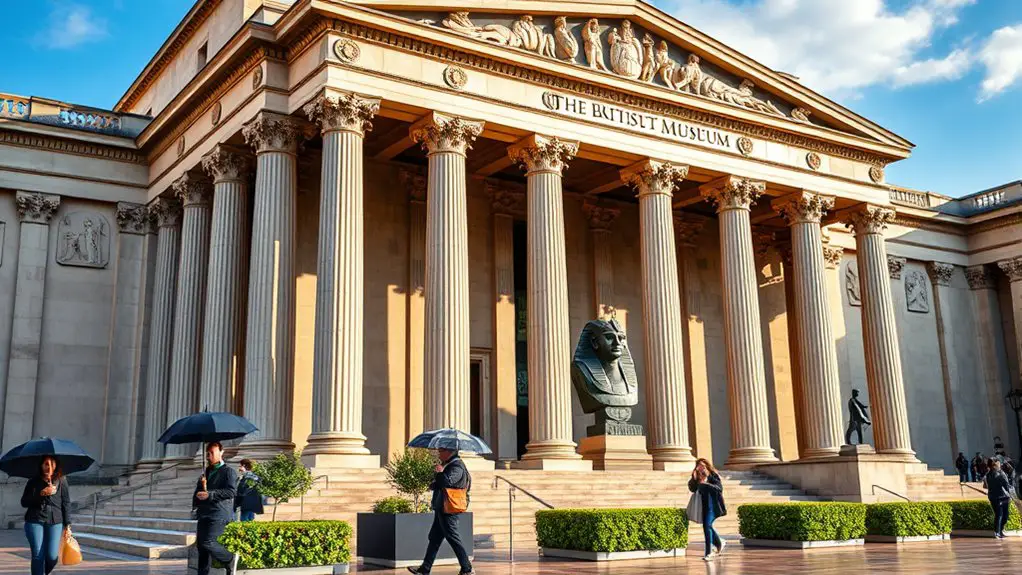
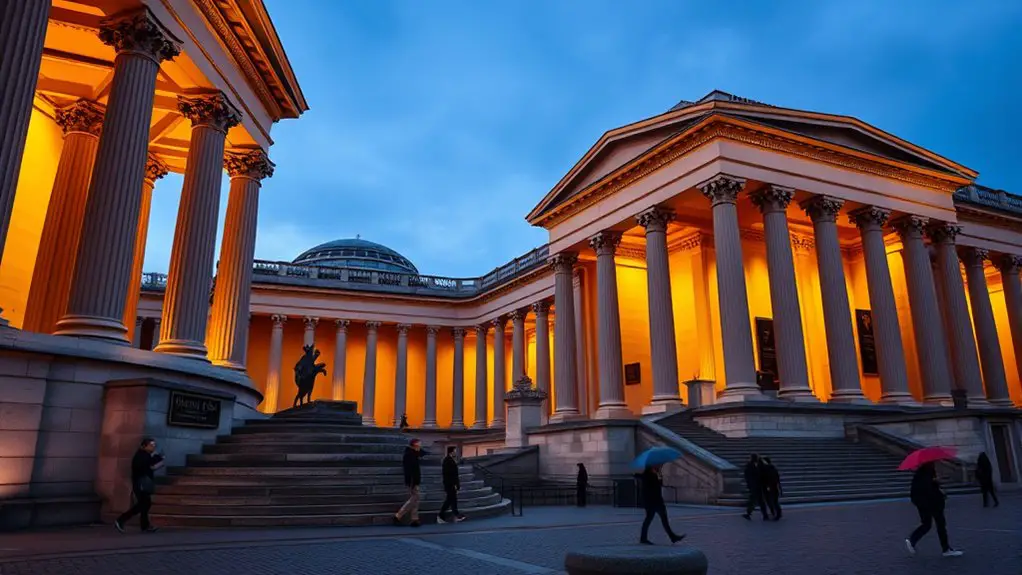
The British Museum is one of London’s best choices if your interests include archaeology, ancient civilizations, coins, sculpture, and cultural history. According to the British Museum’s official visitor information, its collections explore around two million years of human history, art, and culture.
One of its most famous objects is the Rosetta Stone, displayed in the Egyptian Sculpture Gallery. The inscriptions on the stone provided an important clue in the decipherment of Egyptian hieroglyphs. The museum also has extensive Egyptian galleries containing mummies, coffins, funerary objects, and sculptures.
The collection extends far beyond Egypt. Depending on gallery availability, you can explore ancient Greece and Rome, Mesopotamia, medieval Europe, Africa, Asia, the Islamic world, and objects from the Sutton Hoo ship burial.
The British Museum works best when you choose a few collections in advance rather than trying to cover the entire building in one visit.
Permanent-collection admission is free. Advance booking is recommended, especially during busy travel periods, and individual galleries can occasionally close at short notice.
Tate Modern
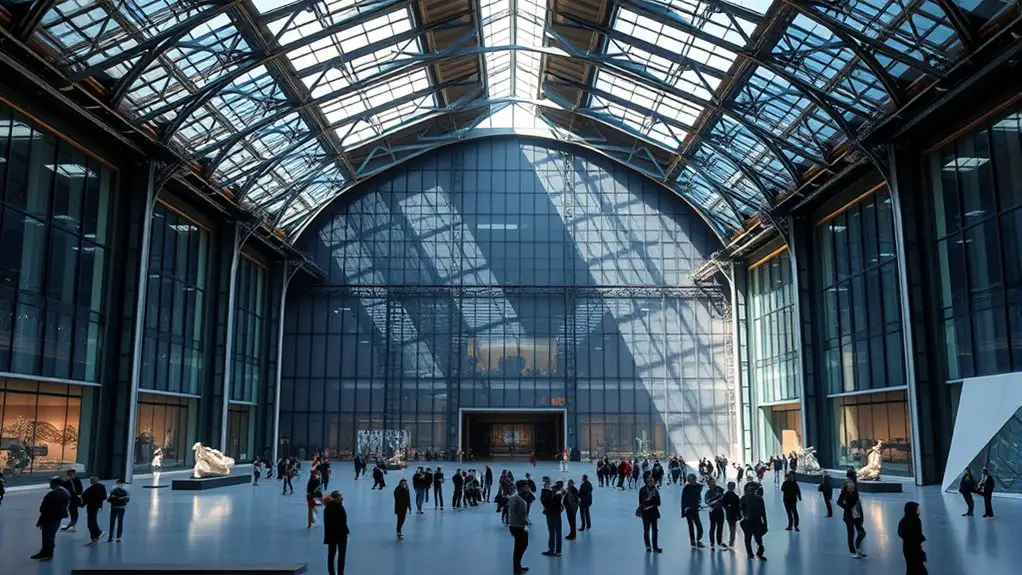
Tate Modern is the obvious London stop for international modern and contemporary art. Housed in the former Bankside Power Station beside the Thames, it combines large industrial spaces with paintings, sculpture, film, photography, installations, and performance-based work.
The Turbine Hall is one of the building’s defining spaces and has hosted large-scale commissions by major contemporary artists. Elsewhere, Tate’s displays introduce visitors to important movements and artists across modern art rather than following a single chronological route.
The main collection is free to visit, while major temporary exhibitions may require paid tickets. Because exhibitions and room displays change, check Tate’s current programme if there is a particular artist you hope to see.
The building itself is also part of the experience. Its riverside location places you near the Millennium Bridge, with St Paul’s Cathedral directly across the Thames.
Note: Do not plan a Tate Modern visit around a specific viewing terrace or upper-level viewpoint without checking Tate’s current access information first. Access to upper areas has changed over time.
The Natural History Museum
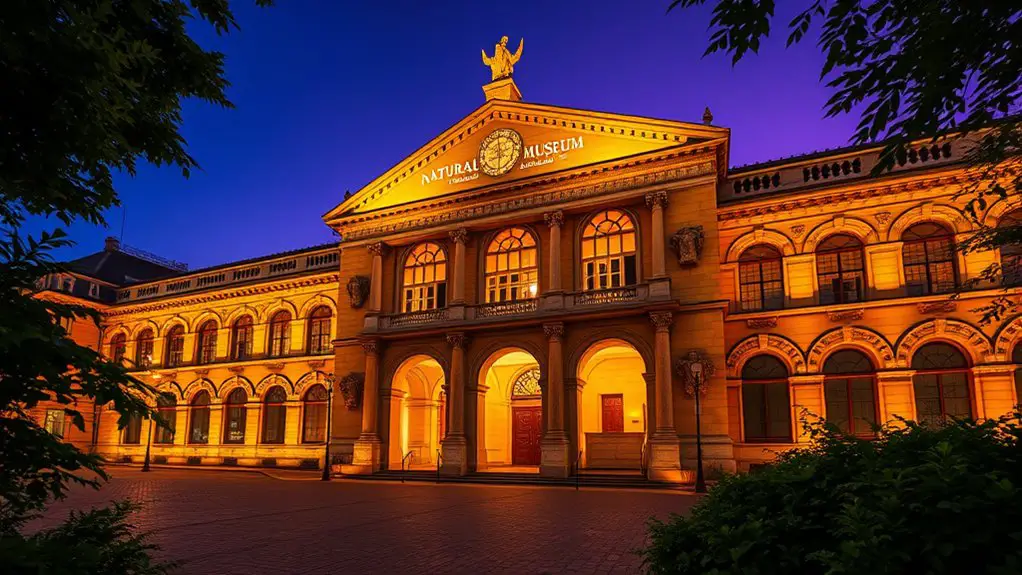
The Natural History Museum is one of the strongest London museums for families, dinosaur fans, wildlife lovers, and anyone interested in how Earth and life have changed through time.
Its famous Dinosaurs Gallery includes major fossils, a roaring T. rex display, and part of the first Tyrannosaurus rex skeleton ever discovered. Other areas explore mammals, minerals, volcanoes, earthquakes, evolution, biodiversity, and the scientific work behind the museum’s collections.
| Area | What to Look For | Good For |
|---|---|---|
| Dinosaurs | T. rex material, Triceratops skull, Iguanodon and other fossils | Families and dinosaur fans |
| Fossils and Evolution | Evidence showing how life has changed through time | Natural history and biology |
| Earth Sciences | Rocks, minerals, volcanoes and earthquakes | Geology and Earth science |
| Museum Gardens | Habitats, fossils and an outdoor story of life’s changing environments | A break between indoor galleries |
General admission is free, although some temporary exhibitions and events cost extra. The museum accepts free advance general-admission bookings, which can make arrival easier during busy periods. Check the official Natural History Museum visitor information before traveling.
The Victoria and Albert Museum
The Victoria and Albert Museum, usually called the V&A, is one of London’s most varied museums of art, design, and decorative culture. Its South Kensington galleries cover centuries of creativity across fashion, textiles, furniture, ceramics, jewelry, sculpture, photography, architecture, and performance.
Rather than focusing only on Victorian design, the V&A draws material from many cultures and historical periods. That breadth makes it especially useful for visitors interested in how objects are made, decorated, worn, used, and displayed.
You can move from elaborate historic rooms and sculpture to fashion, metalwork, ceramics, and contemporary design in the same visit. Temporary exhibitions often focus on major designers, fashion houses, performers, or cultural movements.
General admission to V&A South Kensington is free, although some special exhibitions are ticketed.
The Science Museum
The Science Museum combines historic objects with interactive galleries covering engineering, medicine, communication, mathematics, space, transport, computing, and other areas of science and technology.
General admission is free, but the museum currently asks visitors to pre-book a free admission ticket. Some experiences inside the building require separate paid tickets.
Interactive Exhibits Overview
Hands-on experiences are a major reason families choose the Science Museum. Wonderlab, for example, is a separately ticketed interactive gallery with more than 50 exhibits and live demonstrations. Power Up is another paid experience built around video games and consoles.
The wider museum also contains free galleries where visitors can explore scientific ideas through real objects, multimedia displays, and demonstrations. This balance means you can have a worthwhile visit without buying an add-on, while families who want more hands-on activity can book an extra experience.
Historic Scientific Collections
The Science Museum’s historic collections show how inventions and scientific ideas developed over time. Displays cover subjects such as steam power, medicine, mathematics, communication, computing, engineering, aviation, and space exploration.
Instead of treating inventions as isolated machines, the strongest galleries connect them with the people, industries, experiments, and social changes surrounding them. This gives visitors a clearer picture of how scientific discoveries move from experiments into everyday life.
Family-Friendly Activities
Families can combine the free galleries with interactive experiences, demonstrations, and trails. Depending on the day’s programme, options may include:
- Hands-on science exhibits
- Live demonstrations
- Wonderlab activities
- Power Up gaming experiences
- Family trails focused on themes such as space
Some family attractions have their own tickets, age guidance, or timed entry, so check the day’s programme before arriving.
The National Gallery
The National Gallery in Trafalgar Square is one of London’s essential stops for traditional European painting. Its collection covers the Western European tradition from the 13th to the early 20th centuries and includes work associated with artists such as Leonardo da Vinci, Botticelli, Titian, Rembrandt, Turner, Monet, and Van Gogh.
| Feature | Details | Tip |
|---|---|---|
| Location | Trafalgar Square | Easy to combine with central London sightseeing. |
| Collection | European painting from the 1200s to early 1900s | Choose a few rooms or artists rather than rushing the entire collection. |
| Admission | General admission is free | Advance free booking is recommended for quicker entry. |
2026 Update: The National Gallery’s famous 1888 Sunflowers by Vincent van Gogh is on loan to the Philadelphia Museum of Art through October 11, 2026. Check the National Gallery’s live collection information before planning a visit around one particular painting.
The National Gallery is free for general admission, although temporary exhibitions may be ticketed.
London Museum (Formerly the Museum of London)
This section needs an important 2026 update. The institution formerly known publicly as the Museum of London changed its name to London Museum in 2024. Its old London Wall museum is closed while the organization prepares its new home in Smithfield.
Important: London Museum’s new Smithfield permanent galleries are scheduled to open on November 28, 2026. If you are visiting London before that date, do not travel to Smithfield expecting the main museum galleries to be open.
Historical Exhibits Overview
When the new London Museum at Smithfield opens, its permanent galleries will tell London’s story across thousands of years using objects drawn from the museum’s extensive collection.
The museum has announced that the new Smithfield galleries will be free. The restored Victorian General Market will form the first major phase, while the adjacent Poultry Market is planned as a later phase.
That means older descriptions of walking through Roman, medieval, Tudor, and Victorian galleries at the former London Wall building should not be used as current visitor advice.
Interactive Learning Experiences
Until Smithfield opens, the practical option is London Museum Docklands at West India Quay. It is open and free, with galleries tracing London’s river, docks, port, trade, communities, wartime experiences, and the development of Docklands and Canary Wharf.
London Museum Docklands is especially useful if you want London-specific history rather than the international collections found at the British Museum.
The Design Museum
The Design Museum in Kensington focuses on the way design shapes everyday life. Its programme covers architecture, fashion, graphics, engineering, digital design, products, transport, and contemporary design practice.
The permanent collection display, Designer Maker User, explores modern design through the linked roles of the people who create products, manufacture them, and ultimately use them. The free display includes almost 1,000 objects covering twentieth- and twenty-first-century design.
The museum also runs temporary exhibitions that can focus on individual designers, film, fashion, popular culture, architecture, or wider design movements.
The permanent collection and various displays are free, while major temporary exhibitions are often ticketed. The Design Museum recommends pre-booking paid exhibitions because popular dates can sell out.
The Saatchi Gallery
The Saatchi Gallery in Chelsea is a good choice for visitors interested in contemporary art, emerging artists, photography, installation, and changing exhibition programmes.
Unlike a traditional museum built around one permanent collection route, the experience can change significantly depending on what is currently showing. That makes checking the programme before your visit especially important.
Contemporary Art Highlights
Saatchi Gallery has a long history of presenting contemporary artists and exhibitions that introduce work to wider audiences. Depending on the programme, you may encounter:
- Large-scale installation art
- Painting by emerging and established artists
- Photography and botanical art
- Multimedia exhibitions
- Guest and partner exhibitions
Because the programme rotates, describing a single group of artists or displays as permanent would quickly become outdated.
Free and Ticketed Exhibitions
Saatchi Gallery is not universally free. Some exhibitions and ground-floor displays have free admission, while headline and partner exhibitions can require paid tickets.
The gallery’s ticket information says free exhibitions do not normally need advance booking, while tickets may be sold for paid exhibitions. Check the current programme and price before traveling.
The Imperial War Museum
IWM London, part of Imperial War Museums, examines war and conflict through objects, personal testimony, photographs, film, artworks, military equipment, and documents.
Rather than presenting conflict only as a sequence of battles, the museum examines its effects on civilians, service personnel, families, governments, and society.
Major permanent displays include galleries devoted to the First World War and other twentieth- and twenty-first-century conflicts. The museum also presents art, film, photography, and personal objects that show how people experienced war away from the battlefield.
Visitors can expect:
- Military equipment and historic objects
- Letters, photographs, film, and personal testimony
- First World War galleries
- Displays exploring the human consequences of conflict
- Changing exhibitions and family activities
General admission to IWM London is free, and the museum says advance general-admission booking is not required. Some special events or exhibitions may have separate tickets.
IWM London is most rewarding when you allow time for personal stories and testimony instead of treating the galleries simply as displays of military hardware.
How to Choose the Right London Museum
With so many options, the best museum depends on what you actually want from the day.
- For ancient history: Start with the British Museum.
- For modern and contemporary art: Choose Tate Modern.
- For European paintings: Visit the National Gallery.
- For dinosaurs and nature: Pick the Natural History Museum.
- For families interested in experiments and technology: Choose the Science Museum.
- For fashion, decorative arts, and historic design: Visit the V&A.
- For modern product and graphic design: Try the Design Museum.
- For London’s own history: Visit London Museum Docklands before November 28, 2026, or the new London Museum at Smithfield after it opens.
- For contemporary rotating exhibitions: Check the Saatchi Gallery programme.
- For conflict and social history: Visit IWM London.
Planning Your London Museum Day
London’s biggest museums can easily take several hours each. Instead of treating them like boxes to tick, choose one major museum for a focused visit or pair two nearby venues.
South Kensington is particularly convenient because the Natural History Museum, Science Museum, and V&A are close together. The National Gallery works well with a Trafalgar Square and Westminster day, while Tate Modern can be combined with a walk along the South Bank and across the Millennium Bridge.
Admission rules also differ. Some museums encourage advance reservations even when admission is free, while the Science Museum currently requires a pre-booked free general-admission ticket. Temporary exhibitions, special experiences, and guided tours may have separate charges.
Finally, check the official museum website shortly before your visit. Individual galleries can close, temporary exhibitions change, major artworks can go on loan, and opening arrangements can be updated.
Frequently Asked Questions
Are these London museums wheelchair accessible?
Most major London museums provide step-free routes, lifts, accessible toilets, and other access services, but routes and facilities vary by building. Check the museum’s current accessibility page before visiting if you need step-free access, wheelchair loans, companion tickets, sensory resources, or specific assistance.
Do London museums offer guided tours?
Many do, including a mixture of scheduled talks, guided tours, audio guides, apps, and private tours. Availability, language, price, and booking requirements vary, so check the individual museum’s programme rather than assuming a tour will run when you arrive.
What are the best times to visit London museums to avoid crowds?
Weekday mornings are often a good starting point, particularly outside UK school holidays. Popular free museums can still be busy, so use advance timed tickets where available and arrive near the beginning of your entry window. Crowd levels vary with exhibitions, holidays, weather, and special events.
Are there family-friendly activities available?
Yes. The Natural History Museum and Science Museum are especially popular with families, while the British Museum, IWM London, Design Museum, and other venues run family trails, workshops, demonstrations, or seasonal activities. Some experiences are free and others need separate tickets.
Can I take photographs inside London museums?
Photography rules vary. Personal photography is permitted in many permanent galleries, but individual objects, loans, and exhibitions can have restrictions. Flash, tripods, selfie sticks, professional equipment, or commercial photography may also be prohibited. Follow signs and staff instructions inside each museum.
Which London museums are free?
General admission or permanent collections are free at the British Museum, Tate Modern, Natural History Museum, V&A, Science Museum, National Gallery, and IWM London. London Museum Docklands is also free. The Design Museum has free permanent displays, while Saatchi Gallery admission varies by exhibition. Special exhibitions and experiences may cost extra at otherwise free museums.
Do I need to book London museums in advance?
It depends on the museum. The Science Museum currently requires a pre-booked free general-admission ticket. The British Museum, Natural History Museum, and National Gallery provide or recommend advance free booking, particularly at busy times. IWM London does not normally require advance booking for general entry. Ticketed exhibitions should usually be booked ahead.
Conclusion
London’s museum scene works best when you choose according to your interests rather than trying to visit everything. Head to the British Museum for ancient civilizations, Tate Modern for contemporary art, the Natural History Museum for dinosaurs, the Science Museum for technology, the V&A for design, or IWM London for conflict and social history.
Most importantly, check current visitor information before you travel. Admission policies, temporary exhibitions, artwork loans, gallery closures, and booking rules can change. That is especially important in 2026, with London Museum’s new Smithfield galleries not opening until November 28 and major works such as the National Gallery’s Sunflowers temporarily away on loan.
Sources
- British Museum — Visit — free permanent collection, booking guidance, collections, and current visitor information.
- Science Museum — Visit — current free-ticket requirement, opening information, and family experiences.
- National Gallery — Visiting — general admission, booking, accessibility, and visitor guidance.
- London Museum — Smithfield — November 28, 2026 opening date and new museum information.
- Saatchi Gallery — Ticket FAQs — free versus ticketed exhibition guidance.
- Imperial War Museums — IWM London — free general admission and current visitor information.
