

Last Updated on July 31, 2026 by Daniel Globe
Air China can be a practical airline for travelers who need strong connections within China, access to a broad international network, or Star Alliance benefits. However, the experience is not identical on every route. Aircraft layouts, cabin condition, entertainment, internet access, customer support, and disruption handling can vary, so the exact flight matters as much as the airline name.
Quick Answer
Air China is generally a reasonable choice for travelers who value a broad China-focused network, Star Alliance connections, and competitive fares. Its current company-reported safety and punctuality metrics are solid, but service and cabin quality vary by aircraft and route. The airline’s 2002 fatal crash should be acknowledged when assessing its full safety history.
Key Takeaways
- Air China is China’s national flag carrier and a Star Alliance member with a large domestic and international network.
- The Air China group reported a 91.8% flight regularity rate and 3.0133 million safe flight hours for 2025.
- Its safety history includes the fatal 2002 crash of Air China Flight 129, which should not be omitted from a balanced review.
- Cabin quality, entertainment, internet access, and premium seating depend heavily on the aircraft and route.
- Air China is most attractive when its schedule, fare, alliance benefits, or China connections are better than the alternatives.
Disclosure: As an Amazon Associate I earn from qualifying purchases. Some links on this page are affiliate links, at no extra cost to you.
Air China at a Glance
| Factor | What Travelers Should Know |
|---|---|
| Safety | Current operations are subject to national oversight and industry auditing, but the airline’s history includes the fatal 2002 Flight 129 crash. |
| Punctuality | Air China reported a 91.8% flight regularity rate for 2025. Results for an individual route or travel date may differ. |
| Network | Strong coverage within China, international service from Beijing and other bases, and onward access through Star Alliance partners. |
| Cabin Experience | Varies substantially by aircraft, cabin, route, maintenance condition, and last-minute aircraft substitution. |
| Best For | Travelers prioritizing China connections, a convenient schedule, competitive pricing, or Star Alliance mileage and status benefits. |
Safety Record and Regulations
Air China was established in 1988 and is China’s national flag carrier. Like other major international airlines, it operates within a layered safety system involving national aviation authorities, aircraft manufacturers, airport operators, and international standards.
The roles of the main international organizations should not be confused. The International Civil Aviation Organization develops Standards and Recommended Practices that member states use when building and enforcing their aviation rules. The IATA Operational Safety Audit, commonly called IOSA, evaluates an airline’s operational management and control systems. IOSA registration is a positive oversight signal, but it is not a guarantee that an airline will never experience an accident or incident.
Air China’s 2025 Sustainability and ESG Report states that the group recorded 3.0133 million safe flight hours during the year and completed an IOSA audit with reported corrective action on identified risks. These are useful current indicators, although they are company-reported figures rather than an independent prediction of future safety.
A complete safety review must also acknowledge Air China Flight 129. On April 15, 2002, the Boeing 767 crashed into terrain while approaching Gimhae International Airport near Busan, South Korea. Of the 166 people aboard, 129 were killed. The official investigation examined crew performance, approach preparation, situational awareness, training, and air traffic control factors.
Note: A historic accident should neither be hidden nor treated as the only measure of present-day safety. A balanced assessment considers the accident record together with current oversight, auditing, training, fleet condition, and operational performance.
Fleet and Maintenance
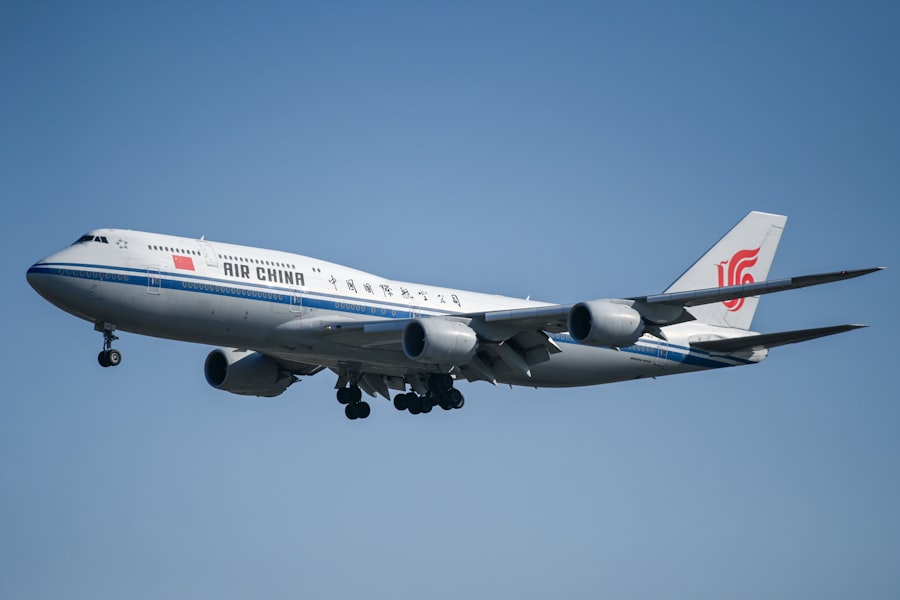
According to Air China’s company profile, the Air China group operated 964 aircraft as of December 31, 2025. That total includes Air China and its controlled companies, so it should not be treated as the mainline airline’s aircraft count alone.
The wider fleet includes Airbus, Boeing, and COMAC aircraft used for short-, medium-, and long-haul routes. Air China’s listed aircraft types include narrow-body jets for domestic and regional flights as well as Boeing 747, 777 and 787 aircraft and Airbus A330 and A350 wide-body jets. Aircraft type does not tell the whole story because the airline may operate more than one cabin layout for the same model.
Airline maintenance is performed through scheduled inspections, manufacturer procedures, regulatory requirements, component replacement, and continuing airworthiness programs. IATA also publishes industry information about aircraft maintenance and operational infrastructure. A large or relatively new fleet can improve efficiency and comfort, but fleet size alone does not prove that every cabin will look new or offer the same equipment.
Warning: Do not book solely from a seat photo or advertised aircraft type. Airlines can substitute aircraft for operational reasons, which may change the seat, cabin layout, entertainment system, internet availability, or premium-cabin privacy.
On-Time Performance
The original monthly punctuality figures did not identify a year or source. A more useful reference is Air China’s latest full-year corporate reporting.
| 2025 Metric | Company-Reported Result | How to Interpret It |
|---|---|---|
| Flight regularity rate | 91.8% | A strong group-level annual result, but not a guarantee for a specific airport, route, season, or flight. |
| Passenger satisfaction | 88.1 points | A corporate survey metric whose methodology and traveler mix may differ from public review platforms. |
| Safe flight hours | 3.0133 million | Shows the scale of group operations completed under the company’s safety reporting framework. |
Air China reported a 91.8% flight regularity rate for 2025, but the reliability of one itinerary still depends on the route, airport, weather, air traffic, connection time, and operating carrier.
Travelers should be especially careful with short connections, separate tickets, itineraries involving an airport change, or the final flight of the day. A delay on one segment can become more disruptive when there are few later alternatives.
Pro Tip: Check the exact flight number, operating carrier, airport code, scheduled connection time, and recent status before travel. Leave extra time when connecting on separate tickets or when checked baggage must be collected and rechecked.
Customer Service and Satisfaction
Air China’s customer experience can vary by airport, language, ticketing channel, cabin, and the complexity of the request. Routine check-in and onboard service may be straightforward, while refunds, schedule changes, codeshare problems, and missed connections can require more time and documentation.
The airline reported a passenger satisfaction score of 88.1 points for 2025. That figure provides useful company-level context, but it should not be treated as equivalent to an independent public rating. Survey design, route mix, language, and passenger expectations can all affect satisfaction measurements.
Travelers can reduce support problems by booking directly with the airline when the price and ticket terms are similar, keeping copies of receipts and boarding passes, and confirming whether Air China or a partner airline is responsible for each segment. On a codeshare itinerary, the marketing carrier shown on the ticket may differ from the airline operating the aircraft.
When a schedule changes, use the airline’s official website or app first, then contact the office serving the ticket’s country of sale. For tickets purchased through a travel agency, some voluntary changes and refunds may need to be processed by that agency.
Route Network and Partnerships

Air China’s network is one of its main advantages. Beijing is its core hub, and the airline also operates substantial domestic, regional, and international services through other Chinese cities. This can make Air China particularly useful for trips that combine an international flight with travel to a secondary city in China.
Through Star Alliance, Air China passengers can connect to partner-operated flights beyond the airline’s own nonstop network. Air China states that its services and alliance relationships provide access to more than 1,100 destinations in over 190 countries and regions. That figure represents alliance reach, not more than 1,100 destinations flown directly by Air China aircraft.
Star Alliance membership can also help eligible travelers earn or redeem miles, receive status benefits, and connect across partner airlines. However, lounge access, baggage treatment, seat selection, upgrade eligibility, and through-checking depend on the ticket, status, route, and operating carriers.
Note: Confirm the operating carrier for every segment. A flight sold with an Air China code may be operated by another airline, and its aircraft, crew, baggage rules, and onboard product may be different.
In-Flight Experience
Air China sells Economy, Premium Economy, Business Class, and First Class products, but not every cabin is installed on every aircraft. Short domestic flights may use narrow-body aircraft with a simpler service, while selected long-haul aircraft can provide lie-flat Business Class seating, larger entertainment systems, and more elaborate meals.
Economy-seat comfort depends on the aircraft layout, seat position, and flight length. Premium Economy is available only on selected aircraft and routes. Business and First Class can offer substantially more space, but privacy, storage, seat width, and direct aisle access vary by configuration.
Air China provides movies, television programs, music, games, meals, and beverages on eligible flights. The selection and delivery method vary. Some aircraft have seatback screens, while other flights may offer a more limited system or content through a cabin network.
Internet access should not be assumed. Some aircraft support onboard connectivity, but availability, coverage, speed, permitted services, and whether the system provides full internet access can vary. Download important work, entertainment, documents, and messaging information before boarding.
Meal service also depends on route, departure time, cabin, and flight duration. Travelers with dietary or religious requirements should request an eligible special meal before the airline’s deadline and verify the request in the booking.
Awards and Recognition: How Much Should They Matter?
Air China has received various brand, service, environmental, and industry awards over the years. However, an award should be considered only when its issuing organization, category, judging method, and year are clear.
Older awards do not necessarily describe the aircraft or service a traveler will receive today. Operational data, the exact aircraft, recent route-specific reports, ticket conditions, and the airline’s response to disruptions are more useful than an undated award claim.
Financial Stability
Financial performance matters because airlines require continuous investment in aircraft, maintenance, staff, technology, lounges, and customer-service systems. However, profitability should not be used as a direct measure of whether a particular flight is safe.
In its 2025 annual results, the Air China group reported revenue of RMB171.485 billion and a net loss attributable to shareholders of RMB1.788 billion. The loss means the original claim that Air China had maintained profitability was not accurate.
Air China remains a large carrier with an extensive fleet, network, and shareholder reporting obligations. Its results can still fluctuate because of ticket prices, fuel costs, exchange rates, competition, geopolitical disruptions, and demand on domestic and international routes.
Reviews, Strengths, and Trade-Offs
Airline-review scores change over time and often combine very different experiences. A short domestic flight on an older narrow-body aircraft should not be compared directly with a long-haul Business Class flight on a newer wide-body jet.
| Potential Strengths | Potential Trade-Offs |
|---|---|
|
|
When reading recent passenger reviews, look for reports about the same route, cabin, and aircraft type. Give more weight to detailed reviews that identify the travel date and explain how the airline handled a problem rather than reviews based only on food preference or one brief interaction.
Is Air China a Reliable Airline?
Air China is generally a reasonable airline for travelers who prioritize its network, schedule, fare, or Star Alliance benefits. Its company-reported 2025 flight regularity, safe-flight-hour, and passenger-satisfaction figures provide current positive evidence. Its large fleet and route network also give it more recovery options than a very small carrier may have.
That does not mean every Air China flight provides a premium or consistent experience. Cabin layouts vary, aircraft can be substituted, support may be slower during disruptions, and amenities such as internet access are not universal. Its safety history must also include the fatal Flight 129 crash rather than relying on an unqualified “strong safety record” label.
Air China May Be a Good Choice If:
- You need a convenient itinerary within China or through Beijing.
- The fare is meaningfully lower than comparable full-service alternatives.
- You value Star Alliance mileage, status, or connection options.
- Your exact flight is scheduled with a cabin and aircraft that meet your needs.
- You have enough connection time to absorb a moderate delay.
Consider Another Airline If:
- You need a highly consistent premium-cabin product across every segment.
- Reliable high-speed internet is essential during the flight.
- The itinerary requires a very short connection or separate tickets.
- Another airline offers clearer change, refund, seat, or baggage terms.
- Recent reports for your exact route show repeated operational problems.
Pro Tip: Before paying, compare the exact operating carrier, aircraft, seat map, connection airport, baggage allowance, change fee, refund rule, and total trip duration. These details usually affect the experience more than a broad airline rating.
If you are considering flying with Air China, you may also be interested in choosing a portable computer for the journey. A lighter device is easier to use in airports and carry through connections. See this guide to the best lightweight laptop for travel when preparing for your trip.
Frequently Asked Questions
Is Air China a good airline?
Air China can be a good choice when it offers the best China connection, schedule, fare, or Star Alliance benefits. It is a large full-service carrier, but cabin quality, entertainment, internet access, and customer support can vary by aircraft and route.
Is Air China safe?
Air China operates under national aviation oversight and participates in the IATA Operational Safety Audit program. Its 2025 corporate report lists 3.0133 million safe flight hours. No airline can guarantee risk-free travel, and a balanced assessment must also include its historic accident record.
What happened to Air China Flight 129?
Air China Flight 129 crashed into terrain near Busan, South Korea, on April 15, 2002, while approaching Gimhae International Airport. The accident killed 129 of the 166 people aboard. The official investigation examined crew preparation, situational awareness, training, and air traffic control factors.
Does Air China have good on-time performance?
Air China reported a 91.8% flight regularity rate for 2025. That is a group-level annual figure and does not guarantee that a particular flight will operate on time. Route, airport, weather, air traffic, and time of day can produce different results.
What amenities does Air China offer?
Depending on the route and aircraft, Air China may provide meals, beverages, movies, television programs, music, games, seatback entertainment, cabin-network content, power, or internet access. Not every amenity is available on every flight.
Does Air China offer Wi-Fi?
Selected Air China aircraft support onboard connectivity, but availability and capability vary. Some systems may provide only cabin content, while others may offer air-to-ground internet service. Check the exact flight and download essential files before departure.
Is Air China a Star Alliance member?
Yes. Air China is a Star Alliance member. Eligible travelers can earn or redeem miles and receive alliance benefits, although the exact benefits depend on the frequent-flyer program, status, fare, route, and operating carrier.
What should I check before booking Air China?
Check the operating carrier, aircraft, seat map, cabin, baggage allowance, fare restrictions, connection airport, minimum connection time, visa or transit requirements, and refund rules. Recheck the aircraft and schedule shortly before departure because operational changes can occur.
Sources
- Air China Company Profile — establishment, national-carrier status, group fleet size, and alliance network reach.
- Air China 2025 Sustainability and ESG Report — safe flight hours, flight regularity, passenger satisfaction, fleet, and IOSA reporting.
- Air China 2025 Annual Results — current revenue and net-loss figures.
- Official Air China Flight 129 Accident Report — accident circumstances, casualties, findings, and safety recommendations.
- IATA Operational Safety Audit — what IOSA evaluates and how the audit program works.
- IATA Maintenance and Operational Infrastructure — industry maintenance and operational information.
