

Last Updated on July 31, 2026 by Daniel Globe
Air France is one of Europe’s largest full-service airlines, but whether it is the right choice depends on your route, fare, aircraft, and expectations. Its broad Paris-based network, included long-haul meals, premium cabins, and Flying Blue benefits are major strengths. Lower fares, aircraft variation, and disruption support are the main areas to examine before booking.
Quick Answer
Yes, Air France is generally a good full-service airline, especially for travelers connecting through Paris or booking Premium, Business, or La Première. Its main drawbacks are fare-dependent baggage, different seats across aircraft, possible congestion at Paris-Charles de Gaulle, and customer-service experiences that can become less consistent during major disruptions.
Key Takeaways
- Air France is a full-service network airline with strong connections through Paris-Charles de Gaulle and a broad international route map.
- Long-haul meals, entertainment, and several cabin choices make it a more complete experience than most low-cost airlines.
- Economy baggage and seat selection depend on the exact fare, so compare the total trip price rather than the headline fare.
- Business seats are fully flat on long-haul flights, but privacy, direct aisle access, and cabin design still vary by aircraft.
- Air France is a sensible choice for many travelers, but no airline can guarantee perfect punctuality, service, or disruption handling.
Air France at a Glance
| Overall verdict | A good full-service option when its schedule, fare rules, and aircraft suit your trip |
| Main hub | Paris-Charles de Gaulle, with additional operations at Paris-Orly |
| Network | About 170 destinations across 73 countries and more than 800 daily flights in summer 2026, according to the Air France company overview |
| Fleet | 268 aircraft reported in the March 2026 company overview, with ongoing A220 and A350 modernization |
| Cabins | Economy, Premium, Business, and limited La Première service |
| Alliance | SkyTeam founding member |
| Loyalty program | Flying Blue |
| Best for | Paris trips, SkyTeam travelers, one-stop international itineraries, and passengers who value meals and premium cabins |
| Main watch-outs | Basic-fare baggage limits, paid seat selection, aircraft changes, and potentially demanding CDG connections |
Disclosure: As an Amazon Associate I earn from qualifying purchases. Some links on this page are affiliate links, at no extra cost to you.
Is Air France a Good Airline?
Air France is a good airline for many international travelers, but it is not automatically the best choice for every trip. It works particularly well when you need a direct flight to Paris, a convenient SkyTeam connection, or a full-service long-haul experience with meals and entertainment included.
The airline’s strongest products are generally found on newer or refurbished long-haul aircraft. Premium offers more room and a distinct meal service, while Business provides a fully flat bed. La Première can be exceptional, but it is available on only a limited number of routes and selected Boeing 777-300ER aircraft.
Economy can still be a solid experience, especially on long-haul flights, but travelers should pay close attention to the fare family. The lowest fare may restrict a full-size cabin bag, advance seat selection, changes, or refunds. A competing airline with a higher headline price can sometimes cost less after the extras are added.
Main Advantages
- Large international network centered on Paris.
- Useful SkyTeam and partner-airline connections.
- Meals and entertainment on long-haul services.
- Four cabin choices on selected routes.
- Fully flat long-haul Business seats.
- Modern A220 and A350 aircraft joining the fleet.
- Flying Blue earning and status benefits.
- Free high-speed Wi-Fi expanding across the fleet.
Main Drawbacks
- Basic Economy fares may not include a full-size cabin bag.
- Advance seat selection can cost extra.
- Aircraft and cabin layouts vary by route and date.
- Paris-Charles de Gaulle can require long walks, terminal changes, security checks, or passport control.
- Customer support may be slower during widespread weather, labor, or air-traffic disruptions.
- Air France is not always the cheapest option after fees are included.
The best Air France fare is not necessarily the cheapest one. Compare the schedule, operating airline, aircraft, baggage, seat fees, change rules, and total trip price before booking.
Safety Record and Regulatory Oversight
Air France is a major European carrier operating under French and European aviation requirements. Its aircraft maintenance, crew training, operational procedures, and airworthiness obligations are subject to continuing regulatory oversight. The airline also operates a large maintenance organization that supports its own fleet and other carriers.
That does not mean Air France is accident-free. Its history includes major accidents, including Air France Flight AF447, which crashed into the Atlantic Ocean in 2009 with 228 people on board. The official French BEA investigation documented the sequence of events and resulting safety lessons.
The balanced takeaway is that Air France is a regulated global airline with established safety, maintenance, and training systems, but no carrier should be described as risk-free. Official regulators, audit programs, and accident-investigation agencies provide more meaningful evidence than an unsupported label such as “perfect safety record.”
Note: Fleet age alone does not determine whether an airline is safe. Aircraft must remain within approved maintenance and airworthiness requirements regardless of age.
Customer Service and Satisfaction
Air France’s service is often strongest during normal operations. Cabin crews generally deliver a polished full-service experience, and the airline emphasizes French dining, presentation, and hospitality. The website and mobile app allow passengers to manage bookings, check in, receive flight updates, and purchase options.
As with most large network airlines, the experience can become less consistent when flights are cancelled or heavily delayed. Airport queues, rebooking demand, partner-airline involvement, and language or time-zone differences can all affect how quickly a problem is resolved.
For the best support, keep the Air France app installed, save your booking reference, enable notifications, and retain receipts for reasonable disruption-related expenses. Claims should be submitted through the airline’s official channel rather than through an unsolicited third-party service.
Air France Cabin Experience
Air France’s cabin products differ by route and aircraft. A cabin name alone does not guarantee the newest seat, so check the aircraft type and seat map before paying a premium.
| Cabin | What to Expect | Best For |
| Economy | Standard seating, entertainment on most long-haul aircraft, and meal service on intercontinental flights; baggage and seat benefits depend on fare | Price-conscious travelers who still want full-service long-haul features |
| Premium | More space, greater recline, enhanced dining, a smaller cabin, and improved baggage allowance | Long flights where Business is outside the budget |
| Business | Fully flat long-haul seats, priority services, lounge access where eligible, and upgraded dining; privacy and aisle access vary by configuration | Overnight travel, work trips, and passengers prioritizing sleep |
| La Première | Highly private suite, premium ground service, elevated dining, and a limited route footprint | Travelers seeking Air France’s most exclusive product |
Economy
Air France Economy is competitive with other European full-service carriers. On long-haul flights, passengers can generally expect a meal, beverages, and seatback entertainment, although equipment and service can change. Seat pitch and width depend on the aircraft, and the lowest fare may add charges for a full-size cabin bag or advance seat selection.
Premium
Premium is the practical middle ground. It provides more personal space, a smaller cabin, enhanced meals, and increased baggage allowances without the price of Business. It is best viewed as a more comfortable Economy experience rather than a substitute for a fully flat bed.
Business
Air France’s long-haul Business seats convert into fully flat beds. The newest A350 and refurbished Boeing 777 cabins add direct aisle access and greater privacy, but older layouts can feel less private. Confirm the seat map because an aircraft substitution may change the experience.
La Première
La Première is Air France’s most exclusive cabin and is available only on selected Boeing 777-300ER flights. Its private ground journey, lounge, dining, and onboard suite can be outstanding, but limited availability and high pricing make it relevant to a small group of travelers.
On-Time Performance and Connections
Air France’s punctuality cannot be reduced to one permanent score. Results change by month, airport, route, weather, air-traffic restrictions, labor conditions, and the method used to define an on-time arrival. A figure without a date and methodology can quickly become misleading.
Paris-Charles de Gaulle is Air France’s main strength and one of its main challenges. The hub creates many one-stop route combinations, but connections may involve long walks, shuttle transport, security screening, or passport control. A legal connection is not always a comfortable connection, particularly for families, travelers with limited mobility, or passengers unfamiliar with the airport.
Pro Tip: For an international connection at Paris-Charles de Gaulle, favor a longer layover when the price difference is small. Check whether you must change terminals, clear passport control, or pass through security again.
Monitor the flight in the Air France app, avoid scheduling a separate nonrefundable activity immediately after arrival, and consider travel insurance when a missed connection would create a major financial loss.
Fleet and Maintenance
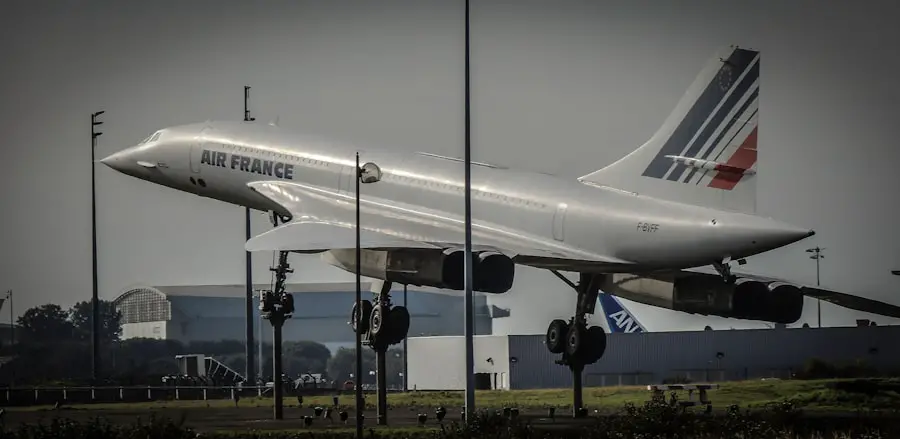
The aircraft shown above is an Air France Concorde. Concorde was retired and is not part of the airline’s current operating fleet.
Air France reported a fleet of 268 aircraft in its March 2026 company overview. The fleet combines regional, short-haul, medium-haul, and long-haul aircraft, allowing the airline to match capacity to each route.
| Aircraft Family | Typical Role | Passenger Takeaway |
| Embraer regional aircraft | Regional and thinner European routes | Smaller cabin and limited overhead-bin space; refurbished Embraer 190 cabins offer updated seats and Wi-Fi |
| Airbus A220 | Short- and medium-haul flights | Modern cabin, larger windows, and a 2-3 seating layout |
| Airbus A318, A319, A320, and A321 | Domestic, European, and North African routes | Standard single-aisle experience; Business normally uses the same basic seat with improved service and seating policies |
| Airbus A330 | Selected long-haul routes | Wide-body service, but the cabin may not have the airline’s newest seat design |
| Airbus A350 | Growing long-haul network | One of the airline’s newer long-haul aircraft, with quieter cabins and updated configurations |
| Boeing 777 | Major long-haul routes | Several layouts exist; selected 777-300ER aircraft offer the newest Business or La Première products |
| Boeing 787-9 | Selected long-haul routes | Modern wide-body aircraft with large windows, but a different cabin layout from newer A350s and refurbished 777s |
Aircraft assignments can change for operational reasons. A seat map is useful when choosing a flight, but it is not a guarantee that the same aircraft will operate on the day of travel.
Routes and Destinations
Air France’s main competitive advantage is its network. Its Paris-Charles de Gaulle hub links cities across Europe, North America, South America, Africa, Asia, and the Middle East. The airline reported approximately 170 destinations in 73 countries for summer 2026.
The network is particularly useful for travelers whose home airport does not offer a nonstop flight to their final destination. A single Air France or partner itinerary can protect the connection and allow baggage to be checked through when the booking and airport rules permit.
Schedules still change with seasonal demand, government restrictions, security conditions, and aircraft availability. Confirm that the flight is operated by Air France rather than merely carrying an Air France flight number, because partner aircraft, seats, meals, baggage rules, and Wi-Fi may differ.
Passengers traveling with fishing equipment should review Air France’s special-baggage requirements before arriving at the airport. For help selecting compact equipment, the existing guide to the best travel fishing pole can help you compare travel-friendly options.
Fares, Seat Selection, and Baggage
Air France sells several fare families, and the benefits can vary by market, route, cabin, and operating airline. The lowest fare may limit changes, refunds, seat selection, checked baggage, or a full-size cabin bag.
According to Air France’s current cabin-baggage rules:
- Economy: zero or one full-size hand-baggage item depending on the fare, plus one small bag, with a maximum combined weight of 12 kg or 26.4 lb.
- Premium: two hand-baggage items plus one small bag, with a maximum combined weight of 12 kg or 26.4 lb.
- Business and La Première: two hand-baggage items plus one small bag, with a maximum combined weight of 18 kg or 40 lb.
- Departures from the United States: Air France notes that TSA rules limit passengers to one hand-baggage item and one small bag.
Checked-baggage allowance depends on the ticket. Review the baggage line on the booking confirmation rather than assuming that every Economy ticket includes a checked suitcase.
Warning: On a codeshare or connecting itinerary, the operating airline’s baggage rules may differ. Air France advises following the strictest allowance when different segments show different limits.
If traveling as a group or family, examine the seat-selection rules before purchasing. Waiting until check-in can save money on some fares, but it reduces control over where the group sits.
Meals, Entertainment, and Wi-Fi
Air France emphasizes French-style dining. Long-haul Economy and Premium passengers normally receive meal service, while Business and La Première offer more elaborate menus. The exact food and beverage selection depends on the cabin, route, departure airport, flight duration, and time of day.
Special meals can be requested on eligible routes, but the request must be made before the airline’s deadline. Passengers with severe allergies should review the airline’s allergen information and carry any medically required supplies because an aircraft galley is not an allergen-free environment.
Seatback entertainment is available on most long-haul aircraft. Screen size, Bluetooth support, power outlets, and content can vary by aircraft and cabin.
Air France is rolling out free high-speed Wi-Fi across its fleet. Its summer 2026 schedule update reported that 40% of aircraft had been equipped by the end of March 2026, with virtually the entire fleet targeted by the end of the year. The high-speed service requires a Flying Blue login. Connectivity on aircraft awaiting the upgrade may use a different free or paid package.
Note: Wi-Fi is never guaranteed. Satellite coverage, aircraft substitutions, maintenance, and local restrictions can make the service unavailable even on an equipped flight.
Flying Blue Loyalty Program
Flying Blue is the loyalty program used by Air France and KLM. Members earn redeemable Miles on eligible activity and Experience Points, or XP, toward status. Eligible SkyTeam and other partner flights can also earn benefits under the program’s rules.
The principal status levels are Explorer, Silver, Gold, Platinum, and Ultimate. Higher levels can provide benefits such as priority services, baggage advantages, seat-selection benefits, lounge access, and increased mileage earning, subject to the applicable tier and itinerary.
The program is most useful for travelers who regularly fly Air France, KLM, or SkyTeam partners. Occasional travelers can still benefit from a free account because it is required to use Air France’s new high-speed Wi-Fi and can keep trip information in one profile.
Review the current Flying Blue status rules before pursuing elite status, since XP thresholds, qualification periods, partner earning, and benefits can change.
Financial Stability
Air France is part of the Air France-KLM Group, which publishes regular financial results. Its scale, global network, maintenance operations, partner relationships, and fleet investment give it more resources than a small independent carrier.
Financial performance can still change because of fuel prices, labor costs, exchange rates, geopolitical events, airspace closures, economic demand, and aircraft supply problems. A profitable quarter does not guarantee that a particular route will continue, and a difficult quarter does not automatically mean a booked flight is unsafe.
For most travelers, the more useful questions are whether the itinerary is on one ticket, what protection applies during a cancellation, whether the fare is refundable, and whether another airline offers a workable backup schedule.
Sustainability and Fleet Renewal
Air France is replacing older aircraft with models such as the Airbus A220 and A350. Newer-generation aircraft can reduce fuel use and noise compared with the models they replace. The airline also uses operational measures, rail partnerships, and sustainable aviation fuel as parts of its emissions strategy.
These efforts do not make flying carbon-free. Sustainable aviation fuel remains limited, and every flight still produces emissions. Sustainability claims should therefore be viewed as progress within a high-emission industry rather than proof that air travel has a negligible environmental effect.
How Air France Compares With Other Airlines
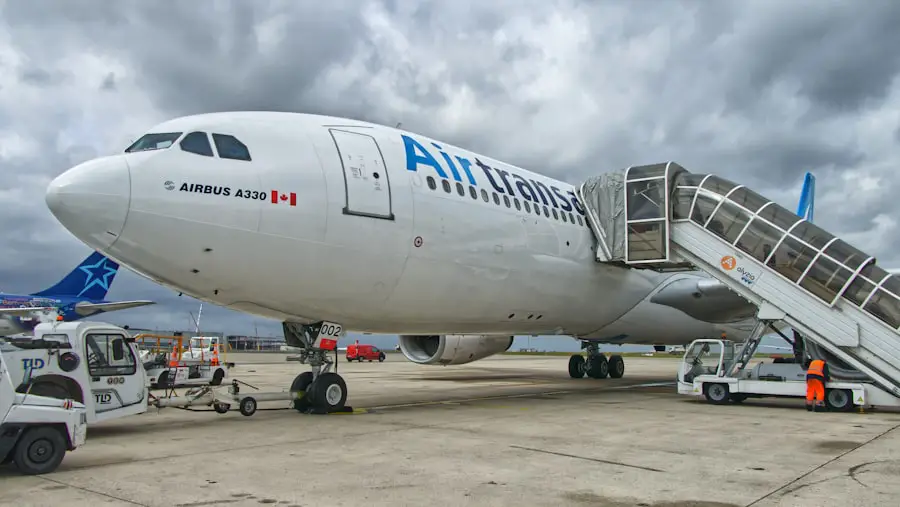
The aircraft shown above belongs to Air Transat, not Air France. It is included here as an example of another transatlantic carrier travelers may compare with Air France.
Compared with low-cost airlines, Air France normally offers a broader connection network and a more complete long-haul service. However, its lowest fare can still carry meaningful baggage, seat, and change restrictions.
Compared with Gulf carriers, Air France can be more convenient for travel to France, Europe, and parts of Africa, while some Gulf airlines may provide stronger connecting options through the Middle East or more consistent premium layouts on selected fleets.
Compared with other European network airlines, Air France is broadly competitive. The deciding factors are usually the nonstop schedule, total fare, connection airport, aircraft, loyalty preference, and disruption alternatives rather than the airline name alone.
Air France Is a Strong Choice When:
- You are flying nonstop to Paris.
- You need a protected connection through a major European hub.
- You collect Flying Blue or SkyTeam benefits.
- You value included long-haul meals and entertainment.
- The flight uses a newer A350 or refurbished Boeing 777 cabin.
- The total fare remains competitive after baggage and seat fees.
Compare Other Airlines When:
- A competitor offers a nonstop flight while Air France requires a connection.
- The layover at Paris-Charles de Gaulle is uncomfortably short.
- The cheapest Air France fare excludes baggage you need.
- A competing flight has a clearly better aircraft or seat.
- You need highly flexible change or refund terms.
- You hold valuable status with another airline alliance.
Booking Checklist
- Confirm the operating airline. A flight with an Air France number may be operated by a partner.
- Check the aircraft and seat map. Air France uses several long-haul configurations.
- Read the fare conditions. Verify change, refund, baggage, and seat-selection rules.
- Calculate the total cost. Add bags, seats, lounge access, and other required extras.
- Review the connection. Allow extra time at Paris-Charles de Gaulle when changing terminals or crossing a border checkpoint.
- Save the booking details. Keep the record locator, ticket number, receipts, and airline contact information available offline.
- Enable app notifications. Flight, gate, and disruption information can change quickly.
- Recheck before departure. Confirm the schedule, operating airline, baggage allowance, and travel-document requirements.
Overall Reputation and Reviews
Air France has a generally positive reputation as a global full-service airline, especially for its premium cabins, dining, Paris network, and brand presentation. That reputation does not mean every flight receives the same reviews. Economy seat comfort, airport queues, aircraft substitutions, delays, and post-disruption support can produce very different experiences.
When reading reviews, prioritize recent reports for the same route, aircraft, cabin, and airport. A review of La Première from Paris to New York says little about an Economy trip within Europe, and a complaint written during a continent-wide weather disruption may not represent normal operations.
The most defensible verdict is that Air France is a good airline when its network and full-service features match your needs. Check the exact product and fare rather than booking solely because of the brand or rejecting it because of one isolated review.
Frequently Asked Questions
What is Air France?
Air France is France’s principal international network airline. It is part of the Air France-KLM Group and was one of the founding airlines of the SkyTeam alliance. Its largest hub is Paris-Charles de Gaulle.
What services does Air France offer?
Air France operates domestic, regional, and international passenger flights, cargo services, and aircraft maintenance activities. Passenger services can include Economy, Premium, Business, La Première, meals, entertainment, Wi-Fi, lounges, priority airport services, and Flying Blue benefits, depending on the flight and ticket.
Is Air France a good airline?
Yes. Air France is generally a good full-service airline, particularly for Paris travel, SkyTeam connections, long-haul dining, and premium cabins. Its value depends on the aircraft, route, fare rules, baggage allowance, connection time, and total price.
What is the safety record of Air France?
Air France is a regulated European carrier with established maintenance, training, and operational systems. Its history is not accident-free and includes Flight AF447 in 2009. Safety should be assessed through current regulatory oversight, audits, and official investigation records rather than a simplistic accident-free label.
How does Air France compare with other airlines?
Air France is competitive with other major European full-service airlines. It is stronger than many low-cost carriers for connections and long-haul inclusions, but another airline may be better when it offers a nonstop flight, a lower total fare, a more comfortable aircraft, or stronger loyalty benefits for your account.
Does every Air France Economy fare include a cabin bag?
No. Air France states that Economy includes zero or one full-size hand-baggage item depending on the fare, plus one small bag. Check the allowance displayed during booking and on the ticket confirmation.
Does Air France offer free Wi-Fi?
Air France is introducing free high-speed Wi-Fi across its fleet for passengers who log in with a Flying Blue account. The rollout is continuing through 2026, so the available service can still differ by aircraft.
Is Air France Business Class worth it?
It can be worth the price on an overnight long-haul flight because the seat becomes a fully flat bed and eligible passengers receive priority services, lounge access, and upgraded dining. Check the aircraft because privacy and direct aisle access vary between configurations.
Is Flying Blue worth joining?
Joining is free and can be useful even for occasional travelers. Members can earn Miles, work toward status with XP, receive partner benefits when eligible, and use their account to access Air France’s new high-speed Wi-Fi.
Sources
- Air France Company Overview, March 2026 — fleet, network, passenger-transport, maintenance, and sustainability information
- Air France Summer 2026 Schedule — current destinations, route developments, La Première rollout, and Wi-Fi deployment
- Air France Baggage Rules — cabin-baggage quantities, weights, dimensions, and fare-dependent Economy allowances
- Air France Travel Cabins — Economy, Premium, Business, and La Première product information
- Air France Flying Blue Status Levels — Experience Points, qualification periods, and loyalty tiers
- French BEA Investigation of Air France Flight AF447 — official accident history and investigation findings
