
Last Updated on September 11, 2026 by Daniel Globe
Porter Airlines has a strong public safety record, but no airline can promise zero risk. The best evidence is its lack of a documented fatal accident since service began in 2006, its Canadian regulatory oversight, its mixed fleet of Embraer E195-E2 jets and Dash 8-400 turboprops, and the way investigators examine serious events.
Quick Answer
Porter Airlines is generally considered safe. It has no publicly documented fatal accident in its operating history, is regulated by Transport Canada, and completed the IOSA audit for its E195-E2 operation in 2026. Porter has had non-fatal incidents, so its record should be viewed as reassuring evidence, not a guarantee.
Key Takeaways
- Porter has no publicly documented fatal accident since it began flying in 2006.
- Its current fleet includes both Embraer E195-E2 jets and De Havilland Dash 8-400 turboprops.
- The 2023 Sault Ste. Marie overrun and 2024 Fredericton tail strike led to detailed Transportation Safety Board reviews.
- A February 2026 Halifax runway excursion was reported without injuries, but a final public investigation report was not available when this article was updated.
- Canadian passenger rights, not general EU rules, are the main protection for most Porter flights to, from, or within Canada.
Is Porter Airlines Safe?
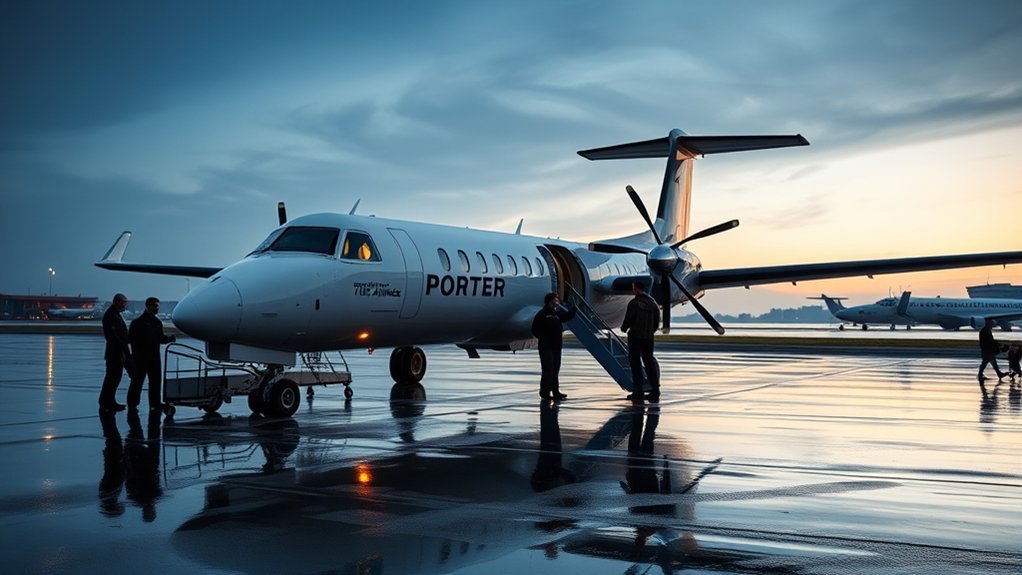
Yes, the available evidence supports describing Porter Airlines as a generally safe carrier. Porter operates under Transport Canada’s aviation safety framework, which includes inspections, enforcement, and safety management system requirements for airline operators.
Porter also announced in February 2026 that its Embraer E195-E2 operation had completed the International Air Transport Association Operational Safety Audit, commonly called IOSA. In June 2026, Porter became an IATA member. IOSA reviews areas such as flight operations, dispatch, maintenance, cabin operations, ground handling, cargo, and operational security.
These controls matter, but a safety record should not be reduced to a single rating or claim. Incident history, regulator findings, corrective action, fleet operation, crew training, maintenance, and current oversight all deserve attention.
Note: A record without fatalities is reassuring, but it does not prove that every flight is risk-free or that every safety decision was perfect. Aviation safety depends on continuous reporting, investigation, training, maintenance, and improvement.
Has Porter Airlines Ever Crashed?
Porter has had reportable accidents and incidents, but there is no publicly documented fatal accident involving the airline since it began operations in 2006. That distinction matters because the word “crash” is often used loosely.
- Fatal accident: an accident in which at least one person dies because of the event.
- Non-fatal accident: an event that may involve substantial aircraft damage or serious operational consequences without a death.
- Incident: an occurrence that affects or could affect safe operation but does not meet the formal accident definition.
- Runway excursion: an aircraft leaves the runway surface during takeoff, landing, or ground movement. It can range from minor to serious.
Porter’s history includes non-fatal runway and landing events. Those events should not be hidden, but they also should not be described as fatal crashes when no deaths occurred.
Recent Porter Airlines Incidents
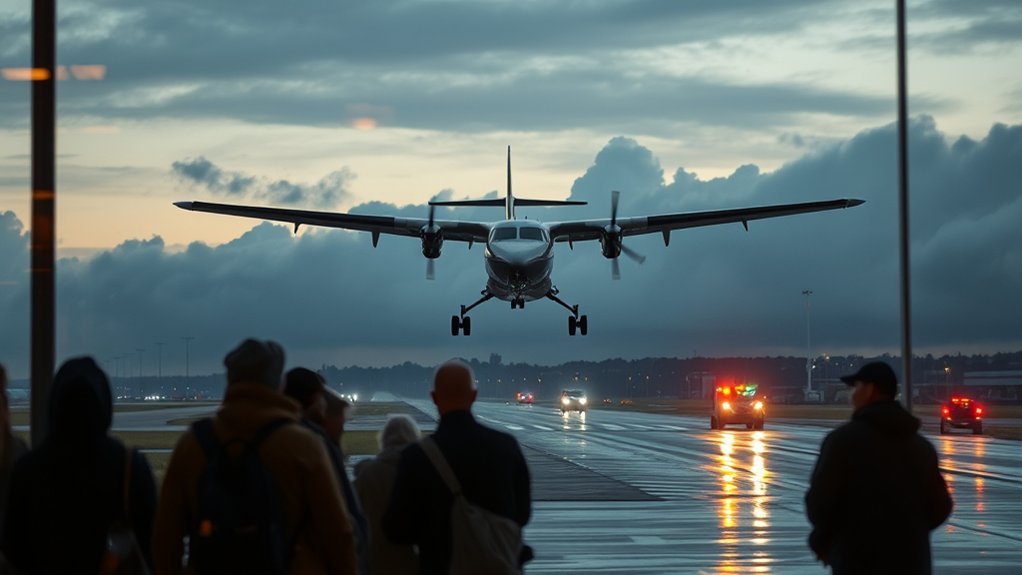
Three events are especially relevant when reviewing Porter Airlines safety: the April 2023 runway overrun at Sault Ste. Marie, the June 2024 hard landing and aft fuselage strike at Fredericton, and the February 2026 runway excursion reported at Halifax.
April 2023 Sault Ste. Marie Runway Overrun
On April 16, 2023, Porter flight POE2691, a Dash 8-400, overran Runway 12 at Sault Ste. Marie Airport. The Transportation Safety Board of Canada report states that 52 passengers and four crew members were on board. No one was injured, and the aircraft was not damaged.
The TSB found that the aircraft touched down far along the wet runway, the crew delayed full braking, and actual braking performance was lower than expected. Investigators also found air in the brake system. The report is important because it shows that “no injuries” does not mean nothing went wrong. It also shows how flight data, maintenance findings, runway condition, and crew actions are examined together.
June 2024 Fredericton Hard Landing and Tail Strike
On June 28, 2024, Porter flight PTR2375, another Dash 8-400, made a hard landing at Fredericton International Airport. The aircraft bounced, the crew began a go-around, and the aft fuselage contacted the runway. The TSB’s final report documented substantial damage to the fuselage and main landing gear.
The investigation found a rapid reduction in headwind close to touchdown and examined how the crew responded to the increased descent rate. Porter later revised its standard operating procedures for bounced-landing recovery and added a way for crews to report feedback about individual runway approaches and departures.
February 2026 Halifax Runway Excursion
On February 11, 2026, Porter flight PD209, an Embraer E195-E2 arriving from Toronto, was reported to have left the runway area at Halifax Stanfield during heavy snow. Public reports said that the occupants were moved safely to the terminal and that no injuries were reported.
A final public TSB investigation report for this event was not available when this article was updated on July 24, 2026. For that reason, it is too early to state a final cause or to attribute the event only to snow, runway conditions, pilot action, or aircraft performance.
Warning: Do not treat an early news report as a final accident finding. Causes are often more complex than the first headline suggests, and formal investigations can take months or longer.
How Porter Handles Bad Weather
Porter does not publish every internal dispatch or cockpit procedure, so claims about its exact decision process should stay within what can be verified. Like other Canadian airlines, Porter must operate within approved rules, aircraft limits, airport conditions, and company procedures.
Before and during a flight, crews and operational staff may need to consider:
- Current and forecast weather at the departure, destination, and alternate airports.
- Visibility, wind, runway surface condition, braking reports, and contamination such as snow, slush, ice, or standing water.
- Aircraft weight, landing distance, de-icing needs, fuel, and diversion options.
- Whether a delay, cancellation, go-around, diversion, or alternate runway is the safer choice.
A weather delay or diversion can be frustrating, but it is often a risk-control decision. Passengers should check the Porter app or official flight-status page during storms and avoid relying only on third-party flight trackers.
Why Porter’s Fleet Matters
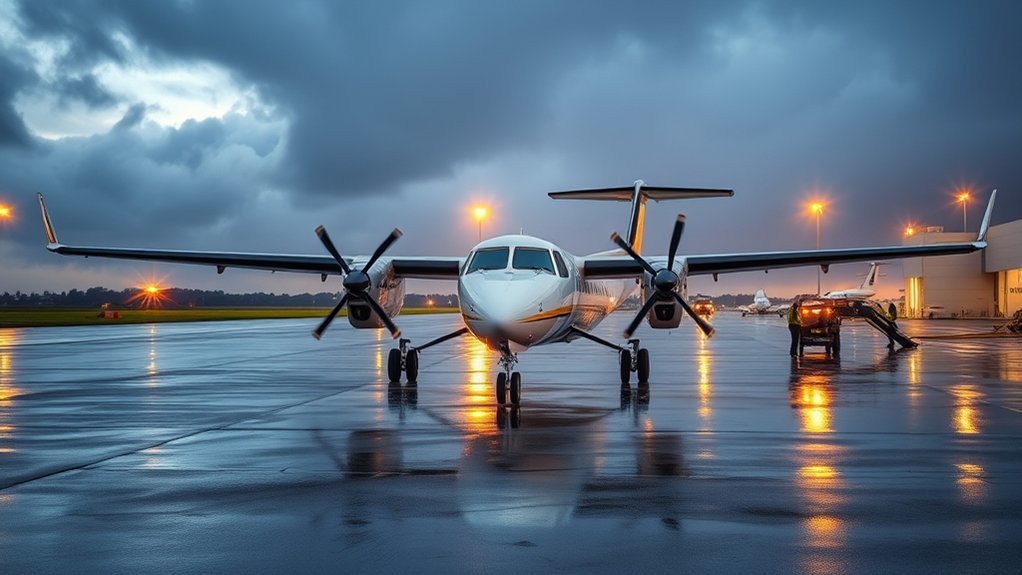
Porter no longer operates mainly one aircraft type. Its fleet includes the 78-seat De Havilland Dash 8-400 and the 132-seat Embraer E195-E2. In June 2026, Porter said its total fleet had reached 82 aircraft.
The Dash 8-400 is a twin-engine turboprop used heavily on regional routes, while the E195-E2 is a twin-engine jet used on longer routes. Different aircraft types have different operating limits, performance, training programs, and maintenance requirements.
Aircraft type alone does not make one airline safe. The stronger indicators are proper certification, approved maintenance, trained crews, reliable dispatch, compliance with operating limits, effective reporting, and corrective action when a problem is found.
How Porter’s Safety Record Compares
Porter’s lack of a documented fatal accident is positive, but direct airline-to-airline comparisons can be misleading. A smaller airline operates fewer flights than a large global carrier, so a simple count does not measure exposure fairly. Fleet mix, route length, operating environment, and reporting periods also differ.
Broader commercial aviation data gives useful context. The IATA 2025 Safety Report recorded 51 accidents among 38.7 million flights, equal to 1.32 accidents per million flights. IATA also reported a five-year average of one fatal accident per 5.6 million flights for 2021 through 2025.
Commercial aviation accidents remain rare, but a low industry rate does not remove the need to investigate every serious occurrence and apply the lessons.
The fair conclusion is that Porter’s record is reassuring within an already low-risk form of transport. It is not evidence that incidents do not happen or that future risk is zero.
What Happens After a Porter Incident
The Transportation Safety Board does not automatically open a full investigation into every event. It first receives occurrence information, assesses the safety value of further work, and decides whether to deploy investigators, conduct a formal investigation, publish limited information, or record the occurrence for data purposes.
When a formal investigation is opened, investigators may examine:
- flight data and cockpit voice recordings, when available;
- weather, runway condition, air traffic control, and airport operations;
- crew training, fatigue, decisions, and standard operating procedures;
- aircraft systems, maintenance history, damage, and performance; and
- organizational controls and previous similar events.
The TSB’s role is to advance transportation safety, not to assign civil or criminal blame. Separately, the airline and qualified maintenance personnel inspect the aircraft and decide what repairs, tests, or approvals are required before it can return to service.
What Worried Passengers Should Do
If you feel nervous about flying Porter, use current, specific information instead of viral posts or broad claims. A practical check takes only a few minutes:
- Confirm the aircraft type. Check your booking and Porter’s seat map to see whether the route uses a Dash 8-400 or E195-E2.
- Check official flight updates. Use Porter and the departure airport for delays, cancellations, gate changes, and weather disruption.
- Read final investigation reports. TSB reports are more reliable than early speculation because they explain evidence, findings, and safety action.
- Know your Canadian rights. The Air Passenger Protection Regulations apply to flights to, from, and within Canada, including many Porter itineraries.
- Keep records during disruption. Save messages, receipts, boarding passes, and written explanations of the reason for a delay or cancellation.
Pro Tip: For a weather-sensitive trip, choose an earlier flight and leave more connection time. This does not change aircraft safety, but it can reduce the chance that one delay causes a missed connection or overnight disruption.
EU passenger rules are not the default standard for a typical Porter itinerary in Canada or North America. Do not assume EU compensation rules apply. Start with Canadian rules, the airline’s tariff, and the law that covers the specific route.
Frequently Asked Questions
How safe is Porter Airlines?
Porter is generally considered safe based on its lack of a publicly documented fatal accident, Transport Canada oversight, IOSA registration for its E195-E2 operation, and its response to investigated events. No airline is risk-free, so this record should be treated as reassuring evidence rather than a guarantee.
Has Porter Airlines had a fatal crash?
No publicly documented fatal accident involving Porter Airlines was found from its 2006 launch through July 24, 2026. The airline has had non-fatal accidents and incidents, including runway excursions and a tail strike.
What aircraft does Porter Airlines fly?
Porter flies De Havilland Dash 8-400 turboprops and Embraer E195-E2 jets. The aircraft assigned to your trip depends on the route and schedule, and it can change for operational reasons.
Why might someone avoid seat 11A on a Porter plane?
Seat 11A is not inherently unsafe. Its location differs between Porter’s Dash 8-400 and E195-E2 layouts, so comfort can depend on the aircraft, window alignment, wing position, legroom category, and nearby exits. Check Porter’s current seat map for your exact aircraft before selecting it.
What are the odds of a commercial flight accident?
IATA recorded 1.32 accidents per million commercial flights in 2025, or about one accident per 759,646 flights. The five-year average for fatal accidents was one per 5.6 million flights from 2021 through 2025. These are global industry figures, not Porter-specific odds.
What rights do passengers have during a Canadian tarmac delay?
Canadian rules require basic standards of treatment, including working washrooms, suitable ventilation or temperature control, reasonable food and drink, and a way to communicate outside the aircraft when feasible. Disembarkation rules depend on the delay length and whether safety, security, customs, or air traffic control makes it impossible.
Sources
- Transportation Safety Board report A23O0046: April 2023 Sault Ste. Marie runway overrun, occupants, findings, and aircraft condition.
- Transportation Safety Board report A24A0038: June 2024 Fredericton hard landing, tail strike, damage, and safety action.
- Transport Canada: Safety management systems in aviation: Canadian airline oversight, inspection, enforcement, and safety management.
- Porter Airlines joins IATA: June 2026 IATA membership, IOSA milestone, and 82-aircraft fleet statement.
- IATA 2025 Safety Report: current global commercial aviation accident and fatal-accident rates.
- Canadian Transportation Agency: Air Passenger Protection Regulations: passenger rights for delays, cancellations, refunds, and tarmac delays.
Conclusion
Porter Airlines has a reassuring safety record, with no publicly documented fatal accident since it began flying in 2006. It operates under Canadian oversight, uses two modern aircraft families, and has completed IOSA registration for its E195-E2 operation. Its non-fatal incidents still matter because they reveal where procedures, training, maintenance, or operating decisions can improve. The balanced answer is that Porter is generally safe, but no airline or flight is free from risk.

1 Comment
Pingback: Is Garuda Indonesia Safe? Full Safety Guide [2026]