
Last Updated on August 26, 2026 by Ethan Caldwell
Parking legally is less about memorizing one national list and more about checking the exact signs, curb markings, time limits, and local rules where you stop. Crosswalks, sidewalks, driveways, fire-hydrant clearance zones, accessible spaces, tow-away areas, and other restricted locations are common trouble spots, but the exact distances, curb colors, fines, and exceptions can change from one city or state to another.
Quick Answer
Park only where signs, curb markings, permits, and local law allow it. Avoid crosswalks, sidewalks, driveways, fire-hydrant clearance zones, accessible spaces or access aisles without authorization, tow-away zones, and other posted restrictions. Because distances and curb colors vary by location, always check the exact spot before leaving your vehicle.
Key Takeaways
- Posted signs and local traffic laws control; do not assume one city’s curb colors, distances, or fines apply everywhere.
- Commonly prohibited locations include crosswalks, sidewalks, driveways, hydrant clearance zones, tow-away areas, and unauthorized accessible spaces.
- Check days, hours, arrows, meters, permit requirements, temporary restrictions, and street-cleaning rules before walking away.
- On a hill, secure the transmission and parking brake and position the wheels according to the slope and your state driver’s handbook.
- If you receive a ticket or your vehicle is towed, follow the issuing agency’s official instructions and deadlines rather than relying on generic advice.
Warning: This is general U.S. parking guidance, not a substitute for your state or local traffic code. A legal distance in one city can be illegal in another, and temporary signs can override normal parking availability. Read all signs at the exact location before leaving your vehicle.
At a Glance
| Time Required | Usually 30–60 seconds to inspect the curb, signs, arrows, hours, meter, and nearby restrictions |
| Difficulty | Easy once you slow down and read every applicable sign |
| Tools Needed | Street signs, curb markings, parking meter or approved parking app when required |
| Cost | Varies from free street parking to metered or garage fees; violations can add fines, towing, and storage costs |
Disclosure: As an Amazon Associate I earn from qualifying purchases. Some links on this page are affiliate links, at no extra cost to you.
It Is Illegal To Park In These Zones
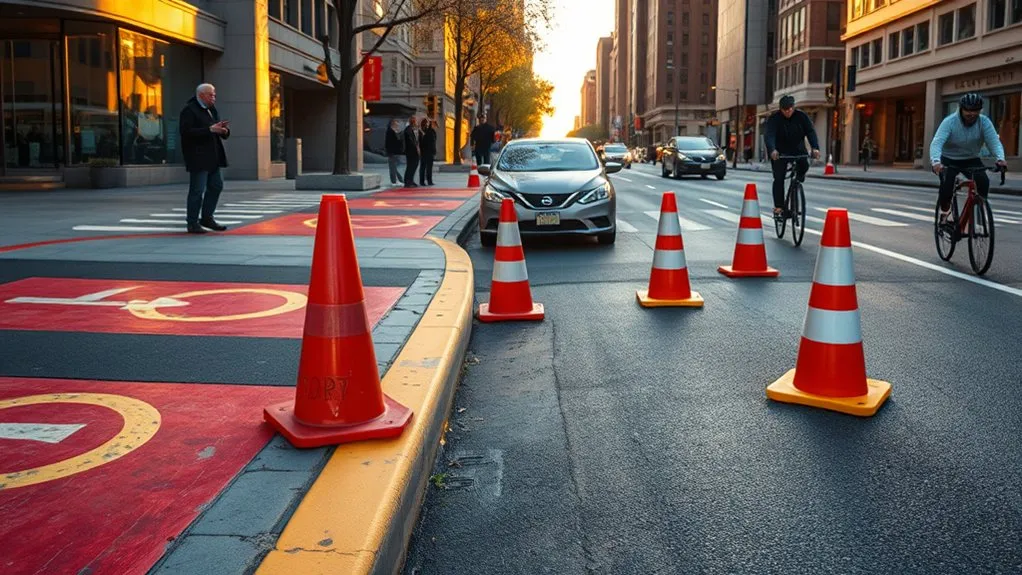
Many parking violations happen because a driver looks only for an empty patch of curb instead of checking what surrounds it. Common prohibited locations include marked or unmarked crosswalks, sidewalks, driveways, accessible curb ramps, signed no-parking or tow-away zones, and areas where a parked vehicle would block traffic or visibility.
The California Driver’s Handbook, for example, prohibits parking on crosswalks and sidewalks, in front of driveways, in crosshatched access areas beside accessible parking spaces, within specified hydrant and crosswalk clearances, and while double parked. Other states and cities use similar categories but can set different distances.
- Crosswalks and sidewalks: Keep pedestrian routes completely clear, including curb ramps and other accessible paths.
- Fire hydrants: Stay outside the clearance required by local law. Do not assume every city uses the same distance.
- Driveways and alleys: Do not block a public or private entrance, and check whether local law requires additional clearance from its edge.
- Intersections and traffic controls: Cities commonly require a buffer near intersections, stop signs, yield signs, signals, or pedestrian crossings.
- Bike lanes, bus stops, and loading zones: These are frequently restricted by local signs and ordinances.
- Accessible spaces and access aisles: Never use them without the required authorization, and never block the striped access aisle next to an accessible parking space.
- Tow-away and temporary no-parking zones: A space that is normally legal may become restricted for construction, moving activity, events, emergency work, or peak-hour traffic.
The safest parking rule is simple: an empty curb is not automatically a legal parking space.
How To Read Parking Signs And Curb Colors
Read parking signs from top to bottom and check every condition that could apply to your vehicle. Look for arrows showing where the restriction begins or ends, days of the week, hours, permit exceptions, vehicle-type limits, loading restrictions, meter requirements, and tow-away language.
Curb colors can provide another visual cue, but their legal meanings are not identical nationwide. In California, for example, the DMV explains the colors this way:
- White: Stop only long enough to pick up or drop off passengers.
- Green: Limited-time parking; check the sign or curb for the time limit.
- Yellow: Passenger or freight loading and unloading under the posted conditions.
- Red: No stopping, standing, or parking, except where a bus-specific red zone permits buses.
- Blue: Reserved for qualifying disabled-person parking under California rules.
Those are useful examples, not a nationwide color code. Seattle, for instance, also uses red, yellow, and white curb treatments but combines them with detailed signs governing tow-away areas, loading zones, passenger loading, and other restrictions. Check the local transportation department’s rules whenever you are unfamiliar with a city.
Pro Tip: If a sign is damaged, partly hidden, confusing, or appears to conflict with curb paint, photograph the entire block and all nearby signs before leaving the vehicle. When in doubt, choose another legal space rather than guessing.
Where To Park Legally On City Streets
Start by confirming that parking is allowed on that side of the street at that time. Then check the curb, signs, pavement markings, meter, nearby driveways, hydrants, crosswalks, curb ramps, bike facilities, and traffic controls. Make sure the whole vehicle fits inside any marked space and does not extend into a prohibited area.
Clearance distances can vary significantly. These current examples show why you should not memorize one national number:
| Location | California Example | Seattle Example |
|---|---|---|
| Fire hydrant | 15 feet | 15 feet |
| Crosswalk | Generally 20 feet; California lists a different distance where a curb extension is present | 20 feet |
| Driveway | Do not park in front of a driveway | Do not park in front of or within 5 feet of the edge |
| Stop or yield sign | Check state and local rules/signs | 30 feet |
The examples above come from current California DMV and Seattle parking guidance. Your location may use different distances or additional restrictions.
Local Parking Rules, Temporary Restrictions, And Permits
A street space that looks legal today may not be legal tomorrow morning. Cities routinely use time-limited parking, resident permit zones, street-cleaning schedules, construction restrictions, event closures, peak-hour tow-away rules, commercial loading periods, and temporary no-parking signs.
Before leaving the vehicle, check:
- Days and hours: A restriction may apply only on weekdays, commute hours, overnight periods, or certain event dates.
- Sign arrows: Arrows often show whether a restriction applies before the sign, after it, or in both directions.
- Permit exceptions: A resident or district permit may extend a time limit but may not exempt you from every meter or safety restriction.
- Payment rules: Confirm whether a meter, kiosk, or approved parking app is required and whether a maximum stay applies.
- Temporary signs: Construction, moving activity, utility work, parades, and emergencies can temporarily remove normally legal spaces.
Seattle, for example, limits vehicles on the same block to 72 consecutive hours even where no special sign is posted, while other cities use different long-term street-parking rules. Treat local transportation-department guidance as the authority for the block you are using.
Accessible Parking Spaces And Access Aisles
Do not park in an accessible space unless the vehicle and user meet the applicable permit or placard requirements. Just as important, never park in the striped or crosshatched access aisle beside an accessible space. That area is needed for wheelchair transfers, ramps, lifts, and an accessible route to the destination.
The U.S. Access Board’s ADA parking guidance requires accessible parking spaces to have adjoining access aisles and explains that the aisles must remain free of obstructions. Federal ADA standards do not establish one required pavement-marking color, so do not assume blue paint alone determines whether a space is legally accessible. Look for the required signage and local markings.
Note: A striped access aisle is not an extra parking space, motorcycle space, loading zone, or place to wait temporarily. Keep it completely clear.
Parking Rules For Hills, Curbs, And Driveways
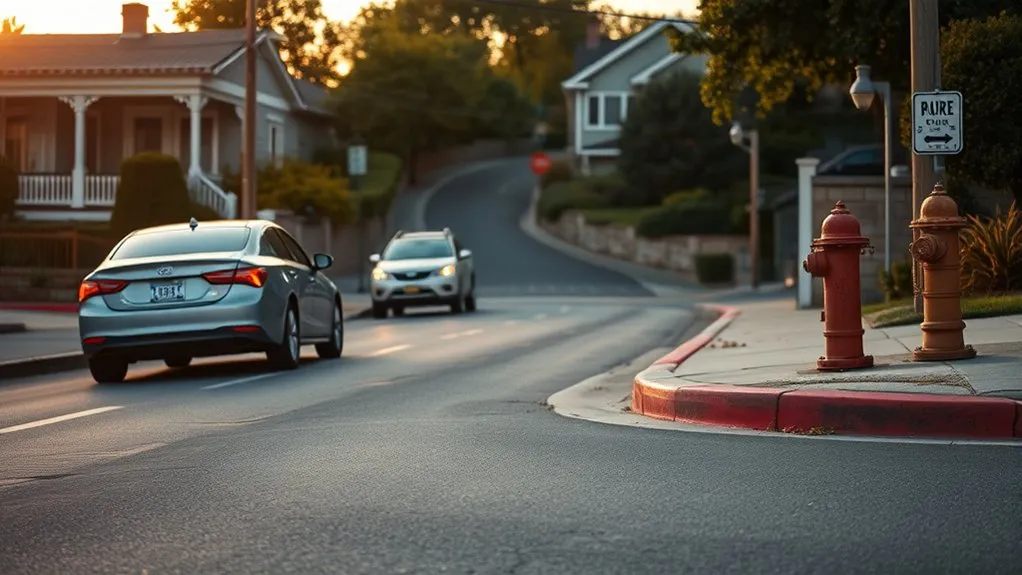
Hill parking adds another risk: an unattended vehicle can roll if it is not properly secured. Use the parking brake, place an automatic transmission in Park or secure a manual transmission according to the vehicle and state guidance, and position the front wheels so a rolling vehicle is directed as safely as possible.
Parking On Hills
Current California DMV guidance provides a useful example of the standard hill-parking method:
- Facing downhill beside a curb: Turn the front wheels toward the curb.
- Facing uphill beside a curb: Turn the front wheels away from the curb and allow the vehicle to settle gently against it if appropriate.
- No curb: California instructs drivers to turn the wheels to the right so a vehicle that rolls will move away from the center of the road.
- Sloping driveway: Turn the wheels so the vehicle would not roll into the street, place the transmission securely, and set the parking brake.
Because driver-handbook wording can vary by state, check your own state’s current handbook if you are unsure.
Curb And Driveway Rules
Do not assume that being only partly in front of a driveway is acceptable. Many local codes prohibit blocking any portion of a driveway and may require extra clearance from its edge. Also watch for curb ramps, alley entrances, loading zones, fire-station access, and painted restrictions near the driveway.
On a slope, combine legal placement with vehicle security: set the parking brake, secure the transmission, and position the wheels correctly before you walk away.
Parking Tips For Large Vehicles And EVs
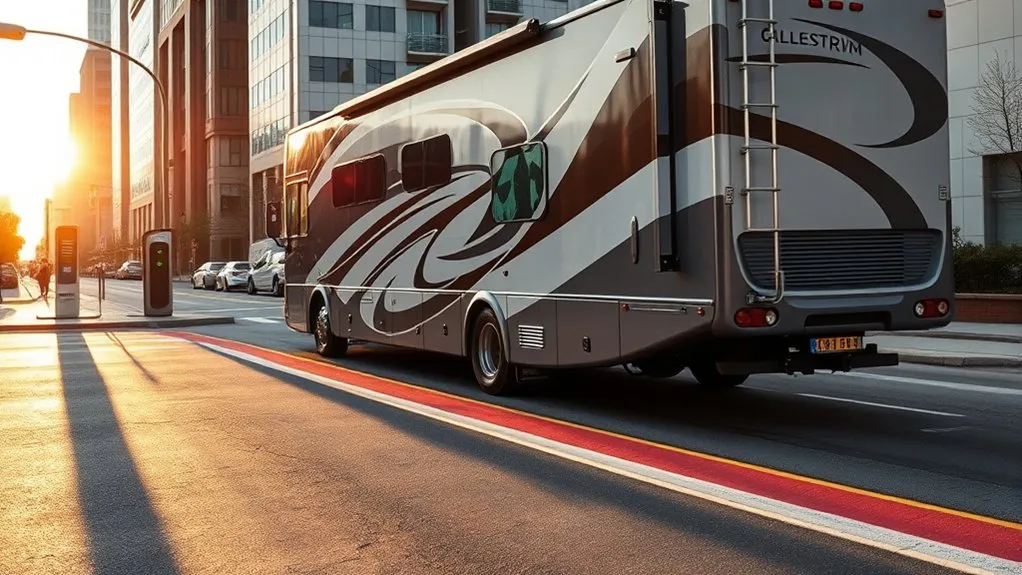
Large vehicles and EVs have extra parking considerations, but the basic rule is the same: use a space intended for your vehicle and obey the posted restrictions. Large vehicles need adequate length, width, turning room, and vertical clearance. EV drivers need to check whether a charging space is reserved for actively charging vehicles and whether a time limit or parking fee applies.
Maneuvering Large Vehicles
Choose a legal space that comfortably accommodates the entire vehicle without extending into another stall, sidewalk, bike lane, traffic lane, access aisle, or restricted curb area. Check garage height signs before entering, especially with vans, roof racks, cargo boxes, recreational vehicles, or commercial equipment.
California’s DMV recommends a parallel-parking space at least three feet longer than the vehicle when teaching standard parallel parking, but that should not be treated as a universal clearance rule for every large vehicle or parking facility.
- Slow down and signal before entering or leaving a space.
- Check mirrors and blind spots for pedestrians, bicycles, motorcycles, and other vehicles.
- Use only spaces where your vehicle type and dimensions are permitted.
- Do not block intersections, crosswalks, hydrants, driveways, loading zones, or accessible routes.
- Follow truck, RV, bus, commercial-vehicle, and overnight-parking restrictions where posted.
EV Charging Considerations
EV charging spaces can have rules beyond ordinary parking. The U.S. Department of Energy’s Alternative Fuels Data Center explains that charging-station signs may communicate EV-only use, active-charging requirements, access hours, and time limits.
Before occupying a charging space:
- Read the sign to see whether the space is for EV parking generally or only for a vehicle that is actively charging.
- Confirm that your vehicle can use the charging equipment before settling into the space.
- Check the parking fee, charging fee, access hours, and posted maximum stay.
- Do not block an accessible charging area or its access aisle.
- Move the vehicle when the posted charging or parking period ends so another driver can use the charger.
Enforcement depends on local law. Some states specifically fine vehicles that occupy designated charging spaces without being connected, while private parking facilities can also impose their own posted rules.
Safe Parking Strategies
Parking safely means checking both the legal restriction and the physical surroundings. Before backing or opening a door, look for pedestrians, bicycles, motorcycles, shopping carts, posts, and low obstacles that may not be obvious in mirrors.
- Choose a space that fits the vehicle without obstructing another user.
- Check mirrors and blind spots before backing or pulling out.
- Confirm local time limits, permits, height clearances, and vehicle restrictions.
- Use marked EV charging spaces only under the conditions shown on the sign.
- Lock the vehicle, take valuables with you when practical, and verify that you have not left the vehicle in an active travel or loading area.
What To Do After A Parking Ticket
If you receive a parking ticket, read the notice as soon as possible. Check the license plate, location, violation code, date, time, amount, deadline, and instructions for payment or dispute. Procedures differ by city, so the citation itself and the issuing agency’s official website should guide your next step.
| Action | How | Why It Matters |
|---|---|---|
| Review ticket | Check plate, location, violation, date, time, and deadline | Errors or misunderstood restrictions may affect your response |
| Save evidence | Photograph the vehicle, curb, signs, arrows, meter, and surrounding block | Evidence can support a legitimate dispute |
| Choose payment options | Use only the payment methods listed by the official issuing agency | Avoids scams and missed processing |
| Contest an unfair ticket | Follow the official administrative, written, online, or hearing process | Preserves your right to challenge the citation |
| Act by the deadline | Pay, request mitigation, or dispute within the required period | Late responses can add penalties or limit appeal options |
Official dispute systems commonly allow supporting photos and documents. For example, the New York City Department of Finance advises drivers disputing a ticket to photograph the relevant street, signs, and supporting details and to meet the applicable hearing deadline.
How Parking Violations Lead To Towing
Some parking violations result only in a citation, while others can lead to immediate removal. The exact towing authority depends on local law, but signed tow-away zones, blocked traffic or access, hazardous parking, unauthorized accessible parking, temporary restrictions, and certain unpaid-ticket situations can all create towing risk.
- Read tow-away language carefully: A no-stopping or tow-away restriction can be more serious than an ordinary time-limit violation.
- Check temporary signs: Construction, special events, moving permits, and utility work can turn a normally legal space into an enforceable tow zone.
- Do not rely on a universal grace period: Whether any grace period exists depends on the specific regulation.
- Expect variable costs: Tow, administrative, and storage charges differ by jurisdiction and can increase the longer a vehicle remains impounded.
Seattle provides a clear example: its transportation department states that vehicles in designated tow-away zones can be subject to immediate removal and impound. That is a Seattle rule, not a nationwide towing timetable.
What To Do If Your Car Is Towed
If your vehicle is missing, first confirm that it was not stolen or moved for an emergency. Then check the local police, transportation, parking authority, or city towing lookup listed for that jurisdiction. Have the plate number, vehicle description, registration, identification, and payment method available. Ask about retrieval deadlines, required documents, storage fees, and any separate process for contesting the tow or underlying citation.
What Parking Enforcement Officers Can Do
Parking-enforcement authority varies by jurisdiction. Depending on local law, officers or authorized parking personnel may inspect parked vehicles, issue citations, document violations, enforce time limits and permits, and request or authorize towing in qualifying situations.
Some agencies also use digital tools, including license-plate-based systems, where local policy permits them. Technology, data-retention rules, and enforcement authority are not identical everywhere, so do not assume one city’s procedure applies nationally.
Your best defense against an avoidable citation is still straightforward: read every applicable sign, keep the vehicle within the legal space, monitor the time limit, pay correctly when required, and move the vehicle before a restriction takes effect.
When To Contact A Parking Ticket Attorney
Most routine parking tickets can be handled through the issuing city’s payment, mitigation, or dispute process without hiring an attorney. Start by reading the ticket, gathering evidence, and following the official administrative procedure.
Legal advice may be worth considering when the matter is unusually complex or financially significant, such as a disputed impound involving substantial fees, repeated commercial or fleet violations, a complicated court appeal, or another legal issue that extends beyond an ordinary parking citation.
- Use the official dispute or hearing process first for an ordinary ticket.
- Keep copies of the ticket, photographs, receipts, tow documents, and all correspondence.
- If the matter progresses beyond the normal administrative process or involves significant legal consequences, consider advice from a lawyer licensed in the relevant jurisdiction.
Do not assume that hiring a lawyer is necessary just because you disagree with a ticket. Some cities expressly allow drivers to represent themselves throughout the normal parking-ticket hearing process.
Frequently Asked Questions
What Color Car Gets Stolen the Least?
Car color is not a parking-law factor, and you should not choose a parking spot based on an unsupported claim that one color is less likely to be stolen. For parking safety, focus on a legal, visible location, secure the vehicle, close the windows, lock the doors, and avoid leaving valuables in view.
What Is an Example of Illegal Parking?
Parking on a crosswalk is a common example of illegal parking. It blocks a pedestrian route and is prohibited in jurisdictions such as California, New York City, Seattle, and many other U.S. locations. Other common examples include blocking a driveway, parking on a sidewalk, or ignoring a posted tow-away restriction.
Why Put a Glass of Salt in a Car?
Some drivers use salt as an improvised moisture absorber, but this is not a parking rule or recommended parking technique. An open glass can spill, especially in a moving vehicle. If interior humidity is a problem, a purpose-made automotive desiccant or moisture absorber is a safer and easier-to-manage option.
What Are the 6 Places You Can’t Park Your Car?
Six common examples are: on a crosswalk, on a sidewalk, in front of a driveway, inside the legally required fire-hydrant clearance zone, in a posted no-parking or tow-away area, and in an accessible parking space or access aisle without proper authorization. This is not a complete nationwide list, and exact rules vary by location.
How Close Can I Park to a Fire Hydrant?
There is no single nationwide distance. California and New York City currently use a 15-foot rule in the situations described by their official guidance, while some other cities use different distances. Check local law and posted markings rather than assuming 15 feet applies everywhere.
Can I Park in an EV Charging Space If I Am Not Charging?
Only if the posted rules allow it. Many charging spaces are reserved for EVs that are actively connected to charging equipment, and some jurisdictions impose fines for occupying a designated charging space without charging. Read the sign at the station before parking.
What Should I Do If Parking Signs Are Confusing?
Read every sign on the relevant block, including arrows, hours, dates, permit exceptions, and temporary notices. If the restriction is still unclear, photograph the signs and choose another clearly legal space. Moving to a different space is usually safer than risking a ticket or tow based on a guess.
Sources
- California Department of Motor Vehicles — California Driver’s Handbook — illegal parking locations, colored curbs, parallel parking, and hill-parking guidance.
- Seattle Department of Transportation — Parking Signs — local clearance distances, loading zones, tow-away areas, permits, and time limits.
- New York City Department of Transportation — Parking Regulations — hydrant rules and city parking-regulation information.
- U.S. Access Board — ADA Guide to Parking Spaces — accessible spaces, access aisles, markings, and accessible routes.
- U.S. Department of Energy Alternative Fuels Data Center — EV Charging Signage — EV-only parking, charging policies, hours, and time-limit signage.
- New York City Department of Finance — Dispute a Ticket FAQs — evidence, hearing deadlines, and parking-ticket dispute procedures.
Conclusion
Before you walk away from your car, scan the whole parking space rather than just the curb beside your door. Read every applicable sign, check the hours and arrows, leave the required clearance around hydrants, crosswalks, driveways, and traffic controls, and keep accessible routes clear. On hills, secure the vehicle properly; at EV chargers, follow the charging-space rules; and in temporary or permit zones, check the current restrictions.
If you receive a ticket or your vehicle is towed, act promptly and use the official procedure listed by the issuing jurisdiction. A minute spent checking the rules before parking is usually much easier than dealing with a citation, tow, or blocked access afterward.
