

Last Updated on September 11, 2026 by Daniel Globe
Yes, Iberia has a formal operational safety system. As a Spanish commercial airline, it must operate under the oversight of Spain’s aviation authority, AESA, and meet European Union air-operations rules. Public evidence includes risk-management requirements, evidence-based pilot training, regulated maintenance training, licensed certifying staff, and improved technical-record systems. Iberia’s 2020 Applus+ COVID-19 certificate was a separate, time-specific workplace-hygiene measure.
Quick Answer
Yes. Iberia operates under AESA oversight and EASA rules that require commercial airlines to manage safety risks, train staff, monitor compliance, and maintain aircraft. Iberia also publishes evidence of pilot and maintenance training. Its 2020 Applus+ COVID-19 certificate was a separate historical hygiene accreditation, not its main flight-safety program.
Key Takeaways
- Iberia must maintain an approved management system and Air Operator Certificate under Spanish and European aviation rules.
- Its safety controls include hazard reporting, risk assessment, crew competence, maintenance, compliance monitoring, and emergency planning.
- Iberia has published evidence of evidence-based pilot training and EASA-approved maintenance training.
- The Applus+ SARS-CoV-2 accreditation dates from 2020 and covered workplace prevention measures, not the whole modern flight-safety system.
Does Iberia Have a Safety Program?

Yes. The strongest basis for that answer is not an old hygiene certificate or a commercial safety rating. It is the regulatory framework Iberia must follow as a Spanish commercial air operator.
Spain’s AESA Air Operator Certificate guidance explains that a Spanish airline must meet EASA Regulation 965/2012 requirements, show that it has the professional ability and resources to operate safely, and remain under continuous oversight. EASA’s safety-management framework requires operators to identify hazards, assess and reduce risks, monitor compliance, train personnel, document key processes, and seek continuous improvement.
Iberia does not publish its complete internal safety-management manual for passengers. That is normal because such manuals contain detailed operational procedures. However, the regulatory requirements and Iberia’s published training and maintenance information show that its safety work goes well beyond cabin cleaning.
What Iberia’s Safety Program Covers
A modern airline safety program is a management system, not one checklist. It connects people, aircraft, data, reporting, and oversight so problems can be found before they lead to an accident.
- Safety policy and accountability: Senior managers have defined safety duties and must provide the staff and resources needed to meet them.
- Hazard reporting: Crews and technical teams report events, defects, and unsafe conditions for review.
- Risk assessment: The airline evaluates hazards, selects controls, and checks whether those controls work.
- Training and competence: Pilots, cabin crew, dispatchers, engineers, and other staff must remain qualified for their roles.
- Operational and maintenance control: Procedures govern flight preparation, aircraft condition, defect handling, and return to service.
- Compliance monitoring: Internal checks and regulatory oversight test whether the airline follows approved rules and procedures.
- Emergency planning: The operator prepares for abnormal events and coordinates responsibilities across teams.
Note: “Safety program” and “Safety and Hygiene Plan” are not the same thing. Operational safety covers flight risks, training, maintenance, reporting, and oversight. Hygiene plans mainly address health and workplace exposure.
How Iberia Trains Crew for Safety
Iberia has published specific evidence about pilot training. In 2021, the airline said it had moved to an Evidence-Based Training program for recurrent pilot training. The model uses simulator assessment and focuses on the competencies EASA identifies, including communication, workload management, situational awareness, decision-making, teamwork, procedural knowledge, and manual and automated flight-path management.
This approach is more useful than simply repeating the same maneuvers on a fixed schedule. Instructors can identify learning needs, review errors, and target the skills needed for the aircraft and operating environment.
Cabin crews also work under EASA training and competence requirements. Their detailed Iberia course schedules are not publicly available, so it would be misleading to claim a specific drill frequency without a source. In practical terms, cabin crew training covers normal duties, emergency equipment, evacuation, fire and smoke response, first aid, communication, and crew coordination under the operator’s approved program.
How Iberia Checks Its Aircraft
Aircraft maintenance follows an approved program based on the aircraft type, usage, manufacturer instructions, airworthiness requirements, and findings from inspections. The exact intervals vary, so a blanket claim that every safety-critical item is checked “daily” would be too broad.
Iberia’s maintenance training centre has held EASA Part-147 approval from AESA since 2004. The airline says the centre provides type training for maintenance licence holders working on Airbus fleets. Iberia also recruits EASA Part-66 B1 and B2 certifying staff, who are qualified to authorize an aircraft’s return to service after covered maintenance work.
- Line-maintenance teams inspect aircraft and address reported defects between flights or during short ground stops.
- Scheduled checks examine systems and structures at intervals set by the approved maintenance program.
- Licensed certifying staff verify that covered work meets the required standard before release to service.
- Technical records help crews and engineers track defects, repairs, limitations, and follow-up work.
- Unscheduled inspections can be required after a defect, hard landing, bird strike, lightning strike, or other event.
In September 2025, Iberia reported introducing an Electronic Technical Log Book on selected long-haul aircraft. The system records technical events, improves traceability, and synchronizes information with maintenance data. That supports faster information flow, but it should not be described as a fleetwide sensor system unless Iberia confirms that scope.
How Iberia Stays Compliant
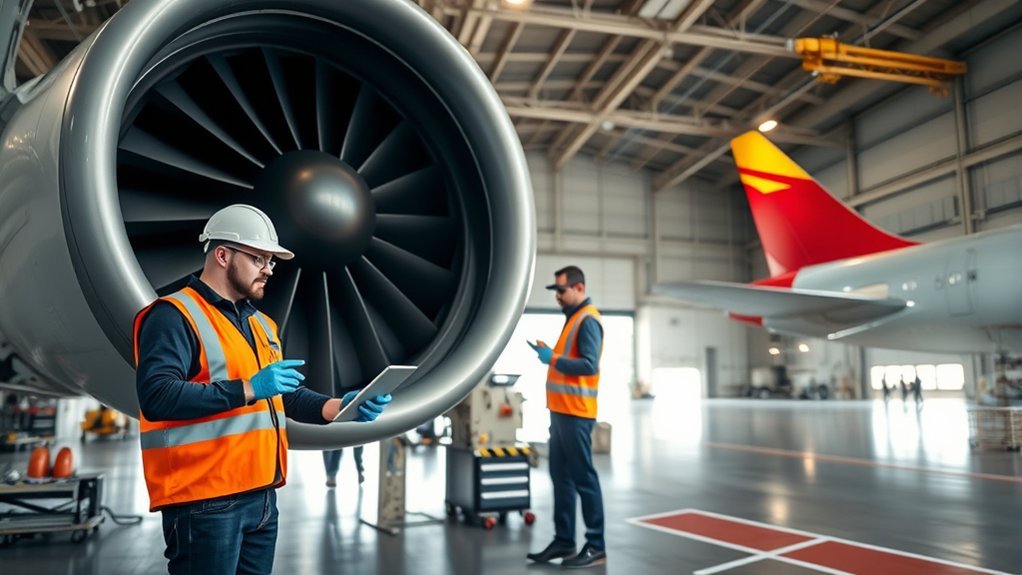
Iberia’s compliance framework has several layers. EASA sets common European air-operations requirements. AESA issues and oversees Spanish Air Operator Certificates. Iberia must maintain approved procedures, qualified personnel, suitable aircraft, safety-risk controls, and evidence that its management system works.
Regulatory oversight does not mean an airline can never have an incident. It means the airline must report and manage safety issues, correct findings, and remain able to show compliance. EASA rules also require authorities to continue assessing the effectiveness of an operator’s management system.
As of the European Commission’s EU Air Safety List update dated June 9, 2026, Iberia is not listed as banned or operationally restricted. That is a useful basic check, although absence from the list is not a guarantee that any airline is risk-free.
The best evidence of airline safety is a functioning system of oversight, reporting, training, maintenance, and corrective action, not a single marketing certificate or star rating.
What Iberia’s Safety Certification Covered
In July 2020, Applus+ accredited Iberia’s SARS-CoV-2 Prevention Plan as correctly implemented under the Quirónprevención COVID-19 Safety Protocol. Iberia’s announcement said the audit covered offices, hangars, workshops, and Spanish airport installations.
- Workplace hygiene and cleaning measures
- Social-distancing rules used during the pandemic
- Occupational-risk prevention practices
- Procedures for suspected infections
- Audits of implementation at covered facilities
This was meaningful evidence about Iberia’s workplace response at that time. It should not be presented as a current, permanent certification of flight operations, aircraft maintenance, or overall airline safety. It also does not prove that the same distancing rules remain in force in 2026.
Warning: Do not treat a COVID-era hygiene certificate, a customer-service star rating, or one accident count as a complete airline-safety score. Each measures a different issue and may apply to a limited period or scope.
What Iberia’s Safety Record Means
Iberia has a long operating history that includes serious accidents as well as many years of routine service. The source article’s claim that Iberia “lost six aircraft in 30 years” is not a reliable safety metric because it gives no dates, definition, exposure data, or source.
The Aviation Safety Network record for Iberia Flight 610 documents a fatal Boeing 727 accident near Bilbao in 1985. Its database also records a nonfatal Airbus A340 accident at Quito in 2007 in which the aircraft was substantially damaged and written off.
Historical records matter, but they should be interpreted with current oversight, fleet, training, maintenance, and operational changes. A raw aircraft-loss count does not account for the number of flights operated, the age of the events, the causes, or corrective actions.
What Iberia Safety Means for Your Flight
For your flight, Iberia’s safety system means trained crews, approved operating procedures, aircraft-maintenance controls, technical records, occurrence reporting, and regulatory oversight. These layers reduce and manage risk, but no airline can promise zero risk.
Your booking may carry an Iberia flight number while another airline operates the aircraft. Always check the words “operated by” on the booking page or ticket. The operating carrier, not only the marketing carrier, supplies the aircraft and crew and works under its own Air Operator Certificate.
You also play a small but important role. Follow the safety briefing, keep your seat belt fastened when seated, obey crew instructions, and report damaged batteries, smoke, unusual heat, or other immediate hazards. Service quality, delays, baggage handling, and seat comfort may affect trust in the brand, but they are different from operational safety.
How to Check Your Specific Iberia Flight
- Confirm the operating airline: Read the “operated by” line, especially on codeshare and regional flights.
- Check official restrictions: Use the current EU Air Safety List when evaluating an unfamiliar operator.
- Review travel notices: Check Iberia’s official site for operational, health, baggage, and dangerous-goods rules before departure.
- Use service ratings correctly: Product ratings can help compare seats and service, but they are not flight-safety certificates.
- Follow onboard instructions: The crew’s briefing and commands apply even when you fly often or know the aircraft type.
Frequently Asked Questions
Does Iberia Airlines have a good safety record?
Iberia operates under EASA rules and continuing AESA oversight, and it is not named on the EU Air Safety List dated June 9, 2026. Its long history includes serious accidents, so the fairest view is that current regulation, training, maintenance, and oversight matter more than an unsourced aircraft-loss total.
Does Iberia have a free stopover program?
Yes. Iberia’s Stopover Hola Madrid program can allow an eligible Madrid stop of at least 24 hours and up to 10 days and 9 nights without an extra charge for adding the stop to the ticket. It can apply to eligible one-way or round-trip itineraries, subject to route, operating-carrier, fare, and booking conditions.
What is better, American Airlines or Iberia?
Neither airline is automatically better for every trip. Compare the operating carrier, route, schedule, fare rules, seat, baggage allowance, and disruption options. Iberia’s Skytrax 4-Star Airline rating covers product and service quality, not an independent certification that Iberia is safer than American Airlines.
How trustworthy is Iberia Airlines?
Iberia is an established, regulated European airline subject to AESA oversight and EASA operating rules. That supports confidence in its operational framework. Customer service, punctuality, refunds, and baggage experiences are separate trust issues and can vary by flight and disruption.
Who regulates Iberia’s flight safety?
AESA, Spain’s national aviation safety authority, issues and continuously oversees Spanish Air Operator Certificates. Iberia must also comply with the common European aviation requirements developed within the EASA framework.
Is Iberia’s Applus+ COVID-19 certificate still proof of current flight safety?
No. The 2020 accreditation verified implementation of a SARS-CoV-2 workplace-prevention plan at specified Iberia facilities. It is useful historical evidence, but it is not a permanent certificate for current flight operations or the airline’s complete safety-management system.
Does an Iberia flight number always mean Iberia operates the aircraft?
No. Codeshare tickets can use an Iberia flight number while another airline operates the aircraft and provides the crew. Check the “operated by” line because the operating airline’s certificate, procedures, and oversight apply to that flight.
Conclusion
Yes, Iberia has a formal safety-management framework under AESA oversight and EASA air-operations rules. The most useful public evidence includes regulated risk management, evidence-based pilot training, approved maintenance training, licensed certifying staff, and technical-record controls. The 2020 Applus+ COVID-19 certificate should be described as historical and limited in scope. No airline is risk-free, but Iberia operates within a mature European regulatory system designed to identify hazards, correct problems, and improve safety continuously.
Sources
- European Union Aviation Safety Agency: Safety Management System: explains the risk-management, reporting, training, compliance, and documentation framework.
- Spanish Aviation Safety Agency: Air Operator Certificate: explains certification and continuous oversight for Spanish commercial airlines.
- Iberia: Evidence-Based Pilot Training: supports the description of Iberia’s recurrent pilot-training model.
- Iberia Maintenance Training Centre: supports EASA Part-147 approval and technical training claims.
- Iberia: Applus+ SARS-CoV-2 Prevention Plan Accreditation: confirms the date, scope, and workplace focus of the 2020 certification.
- European Commission: EU Air Safety List: provides the current list of airlines subject to bans or operating restrictions.
