
Last Updated on September 11, 2026 by Daniel Globe
Air Serbia is generally a reasonable airline to book when its fare, schedule, and baggage allowance suit your trip. It has a long operating history, a current 3-Star Skytrax product rating, and a growing network from Belgrade. However, service quality, included benefits, and cabin comfort vary by route, aircraft, fare, and operating carrier.
Quick Answer
Air Serbia has a generally good track record, but it is not a consistently premium airline. Its safety indicators are broadly reassuring, its long-haul flights include more services than its short-haul Economy fares, and its direct routes can offer good value. Check the fare, baggage allowance, aircraft, and operating carrier before booking.
Key Takeaways
- Skytrax certifies Air Serbia as a 3-Star airline for its airport service, onboard product, and staff service.
- AirlineRatings listed Air Serbia at 6 out of 7 for safety when checked on July 24, 2026.
- Serbia’s FAA Category 1 status applies to the country’s aviation-oversight system, not directly to Air Serbia as an individual airline.
- Economy meals, checked baggage, changes, and refunds depend on the route and fare family.
- Air Serbia is most attractive when it offers a convenient direct flight or a well-priced connection through Belgrade.
Is Air Serbia Worth Booking?
Air Serbia can be worth booking when it gives you a useful schedule, a competitive total price, or a direct route that other airlines do not offer. It operates as a network airline, but many short-haul Economy fares are unbundled. That means the lowest fare may not include checked baggage, advance seat selection, a full meal, changes, or a refund.
Skytrax certifies Air Serbia as a 3-Star airline. Skytrax describes the long-haul product as reasonably good while noting that staff attention and airport-service consistency can vary. A 3-Star certification means the product is acceptable across major areas, not that every flight delivers the same experience.
Air Serbia Pros
- Useful nonstop and connecting routes through Belgrade
- Included meals and checked baggage on listed long-haul fares
- Business Class lounge access and priority services on eligible tickets
- A free 8 kg hand-baggage allowance on standard Air Serbia fare structures
- Passenger protections for eligible cancellations, delays, and denied boarding
Air Serbia Cons
- The lowest short-haul Economy fares may exclude checked baggage and ticket changes
- Service, seating, and entertainment can differ between aircraft
- Some itineraries are operated by partner airlines under codeshare or wet-lease arrangements
- Passenger reports about customer support and disruption handling are mixed
- A connection through Belgrade may add risk when the layover is short
Pro Tip: Compare the final price after adding baggage, seat selection, meals, and change flexibility. A higher fare family can cost less overall than buying the cheapest ticket and adding several services separately.
Air Serbia at a Glance
| Airline type | Network airline with unbundled short-haul Economy fares |
| Main hub | Belgrade Nikola Tesla Airport |
| Skytrax certification | 3-Star airline |
| AirlineRatings safety score | 6 out of 7 when checked July 24, 2026 |
| Best suited to | Travelers seeking direct Serbian and Balkan links or competitive connections through Belgrade |
| Main limitation | The experience and included benefits vary significantly by route, fare, aircraft, and operating carrier |
A Brief History of Air Serbia
Air Serbia traces its history to Aeroput, which was established in Belgrade in 1927. The company later operated as JAT and Jat Airways before adopting the Air Serbia name in October 2013.
Origins As Aeroput
Aeroput was Serbia’s first national civil air-transport company. Its early routes helped connect Belgrade with cities in the region and Central Europe.
- 1927: Aeroput was established in Belgrade.
- 1929: The airline expanded its regional international network.
- Later development: The company became the foundation for the national airline that eventually developed into JAT.
JAT Era Growth
The airline became JAT Jugoslovenski Aerotransport after the Second World War. It developed a broad international network during the following decades and became one of the best-known airlines in the former Yugoslavia.
Political changes, sanctions, market disruption, and financial pressure later reduced the airline’s network and operating strength. It was renamed Jat Airways in 2003.
Rebranding To Air Serbia
Jat Airways became Air Serbia in October 2013 after a restructuring that included a 49% investment by Etihad Airways. The rebrand introduced new aircraft, updated cabins, revised services, and a larger connecting network through Belgrade.
Air Serbia launched nonstop Belgrade-New York service in June 2016. Etihad’s ownership later fell to 18% in 2020, and the Republic of Serbia became the airline’s sole shareholder in 2023. Etihad’s involvement is therefore part of Air Serbia’s development history rather than a current ownership relationship.
In 2025, Air Serbia reported 4.57 million passengers, €719.5 million in revenue, and €45.3 million in pre-tax profit.
Those figures show that the airline has grown beyond its early restructuring period. However, financial growth does not by itself prove that every passenger will receive consistent service.
What Air Serbia’s Safety Rating Shows
Air Serbia’s available safety indicators support a generally reassuring assessment, but each indicator has a different meaning. Commercial rating websites, regulatory oversight, audit registration, accident history, and the operating carrier should be considered separately.
Safety Ratings Explained
When checked on July 24, 2026, AirlineRatings listed Air Serbia at 6 out of 7 for safety. Its published breakdown included credit for IOSA registration, operating standards, the absence of a recent fatal accident, and not appearing on the European Union’s banned-carrier list.
This is a commercial rating rather than a government certification. It can help with comparison, but it should not be treated as a guarantee or as a substitute for official oversight.
Category 1 Oversight
Serbia received FAA Category 1 status in 2014. However, the FAA International Aviation Safety Assessment program evaluates a country’s civil aviation authority, not an individual airline.
Note: Category 1 means the FAA determined that Serbia’s civil aviation authority met ICAO standards for licensing and overseeing the country’s air carriers at the time of assessment. It does not mean the FAA awarded Air Serbia a separate Category 1 airline rating.
This regulatory status is still useful because it concerns the system responsible for certifying and supervising Serbian airlines. It should be presented as national oversight evidence rather than direct proof of every Air Serbia flight’s performance.
Current Safety Rating and Record
Air Serbia should not be described as having a completely incident-free recent history. On February 18, 2024, flight JU324 from Belgrade to Düsseldorf was operated for Air Serbia by Marathon Airlines using an Embraer E195. The aircraft was damaged during departure and returned to Belgrade. Air Serbia reported no injuries and ended its cooperation with Marathon Airlines shortly afterward.
The distinction between the marketing airline and operating airline matters. A ticket may carry an Air Serbia flight number while another carrier provides the aircraft and crew.
Pro Tip: Look for the words “operated by” during booking and again before departure. Check the operating carrier when comparing aircraft, baggage, check-in, seating, and onboard service.
How Good Is Air Serbia’s Service?
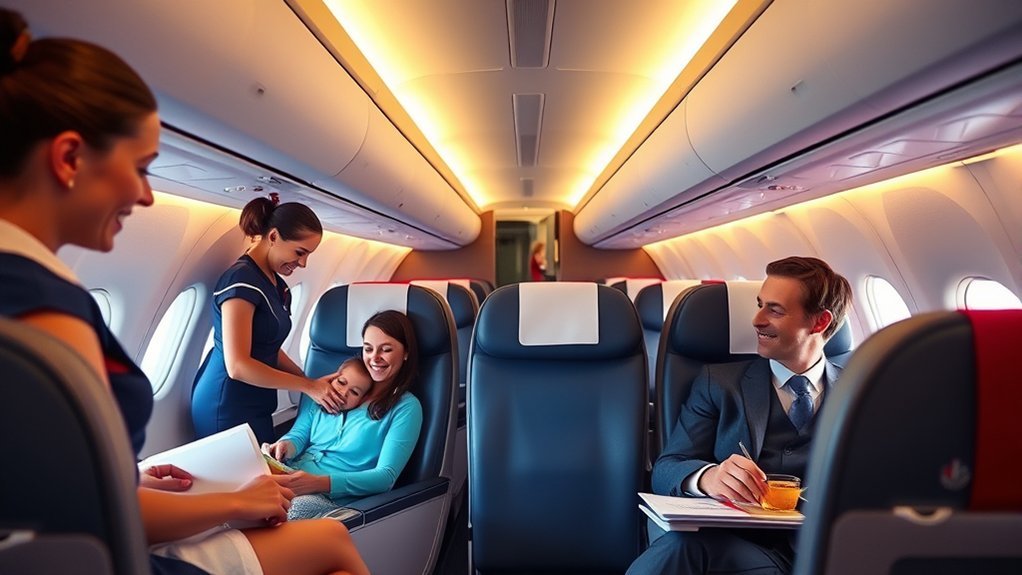
Air Serbia’s service is best described as acceptable but variable. Skytrax says its long-haul product is reasonably good in both Economy and Business Class, while staff attention and some Belgrade airport services can be inconsistent.
The airline’s 3-Star certification covers seats, food, cleanliness, amenities, cabin service, and ground service. It is not the same as a passenger-review average or safety rating.
Why Passenger Reviews Vary
Online reviews often focus on unusually good or unusually bad experiences. Complaints about missed connections, baggage, delays, refunds, or customer support can reveal issues worth considering, but they do not establish how often those problems occur across the entire network.
Your own experience can depend on:
- The aircraft assigned to the flight
- The length and type of route
- The fare you purchased
- Whether Air Serbia or a partner operates the flight
- Airport congestion and weather
- Whether your itinerary includes a connection
- How much time you allow between flights
What Economy Class Is Like on Air Serbia
Air Serbia Economy Class is not one uniform product. Short-haul flights within Europe and nearby regions use different fare families and service levels from long-haul flights to North America and China.
Short-Haul Economy
For many European and Middle Eastern routes, Air Serbia offers Economy Light, Standard, and Comfort fares. All generally include one hand-baggage item of up to 8 kg, but checked baggage and flexibility vary.
- Economy Light: Usually includes hand baggage but no checked bag. Changes and refunds are generally not permitted.
- Economy Standard: Usually adds one checked bag of up to 23 kg. Changes may be allowed for a fee.
- Economy Comfort: Usually includes one checked bag, selected seat benefits, and greater change or refund flexibility.
Short-haul Economy passengers generally receive a refreshment, while a meal may require an additional payment. The exact service can vary by flight.
Long-Haul Economy
Listed long-haul fare families include Deal, Saver, Value, and Freedom. Meals are included on these fares, while seat selection, changes, and refunds depend on the fare.
On direct flights between Belgrade and the United States or Canada, the published allowance generally includes two checked bags of up to 23 kg each. Itineraries that connect beyond Belgrade can have a different allowance, so the electronic ticket remains the final reference.
Air Serbia’s Airbus A330 aircraft normally provide a long-haul cabin with personal entertainment. However, screen condition, content, seat design, and cabin layout may differ between individual aircraft. A single seat-pitch figure should not be applied to the entire fleet.
What to Expect in Air Serbia Business Class
Air Serbia Business Class includes priority airport services, a larger baggage allowance, meals, and lounge access on eligible itineraries. The actual seat and cabin style depend on whether you are flying short haul or long haul.
Short-Haul Business Class
On European and Middle Eastern routes, Business All Inclusive generally provides:
- Priority check-in, boarding, and baggage handling
- Fast-track access where available
- Air Serbia Premium Lounge access in Belgrade
- Two hand-baggage pieces of up to 8 kg each
- Two checked bags of up to 32 kg each
- Included food and refreshments
- More flexible change and refund conditions
Short-haul Business Class may use the same basic seat type as Economy with the middle seat left empty. It should not be confused with a long-haul lie-flat cabin.
Long-Haul Business Class
Long-haul Business fares generally include priority services, lounge access, meals, one hand-baggage item of up to 8 kg, and two checked bags of up to 32 kg each. Some Air Serbia A330 configurations offer lie-flat seating, but travelers should check the aircraft and seat map because cabin layouts can differ.
The Air Serbia Premium Lounge in Belgrade includes food, drinks, work areas, internet access, and shower facilities. Eligible Air Serbia Business Class passengers receive access.
Air Serbia Baggage Rules
Air Serbia can enforce its published weight and size limits at check-in or the gate. The standard published personal item allowance is up to 4 kg, while the normal Economy hand-baggage allowance is one piece of up to 8 kg. Business hand-baggage allowances differ between short-haul and long-haul fare structures.
| Fare or route | Hand baggage | Typical checked baggage |
| European Economy Light | 1 piece up to 8 kg | Not included |
| European Economy Standard or Comfort | 1 piece up to 8 kg | 1 piece up to 23 kg |
| European Business All Inclusive | 2 pieces up to 8 kg each | 2 pieces up to 32 kg each |
| Direct Belgrade-USA/Canada Economy | 1 piece up to 8 kg | 2 pieces up to 23 kg each |
| Direct Belgrade-USA/Canada Business | 1 piece up to 8 kg | 2 pieces up to 32 kg each |
These are general published allowances. Codeshare flights, connecting routes, loyalty status, special equipment, and the carrier shown on the first ticketed segment can affect the final rules. Confirm the allowance displayed on your ticket and in My Trips.
How Does Air Serbia Handle Delays and Cancellations?
Air Serbia publishes passenger rights for denied boarding, long delays, cancellations, and involuntary downgrades. The exact protection depends on the departure country, destination, operating carrier, cause of the disruption, flight distance, and how much notice you received.
Refund or Rerouting
If Air Serbia cancels an eligible flight, its passenger-rights notice provides a choice between:
- Reimbursement for the unused journey, normally within seven days
- Rerouting to the final destination at the earliest opportunity
- Rerouting at a later date that is convenient to you, subject to seat availability
The seven-day period refers to reimbursement. It is not a rule requiring you to complete free rebooking within seven days of the original flight.
Meals, Hotel Accommodation, and Transport
Depending on the length of the delay, Air Serbia may need to provide reasonable meals and refreshments, communication, hotel accommodation, and transport between the airport and accommodation.
If an eligible flight is delayed by at least five hours, you may choose reimbursement rather than continuing the trip. Keep your booking confirmation, boarding pass, written notices, and receipts for reasonable expenses.
Compensation
Eligible cancellation and denied-boarding claims may qualify for compensation of €250, €400, or €600 based on distance. Payment can be reduced after suitable rerouting, and compensation may not apply when sufficient advance notice was given or when extraordinary circumstances could not reasonably have been avoided.
This is separate from reimbursement. A passenger may have a right to rerouting or a refund even when fixed compensation is not payable.
Optional Credit Voucher
Air Serbia also offers a credit-voucher process. For a qualifying flight canceled by the airline for operational reasons, the voucher can include the ticket and purchased ancillary value plus 10% of the net fare, fuel surcharge, and eligible ancillary value. Airport taxes are not increased.
A voucher is optional and has restrictions. It is nontransferable, nonrefundable, and usable only under its published conditions. Compare it with a cash refund before accepting it.
How Reliable Is Air Serbia?
Air Serbia’s recent business growth shows that it has expanded its capacity and network. In 2025, it operated 48,925 flights, carried 4.57 million passengers, and reported 103 routes. By June 2026, it said its fleet had grown to more than 30 aircraft.
These figures show a substantial operating airline, but they do not provide a current system-wide on-time-performance percentage. It would therefore be misleading to call every Air Serbia flight reliable or unreliable based only on company growth or a collection of online reviews.
You can reduce disruption risk by:
- Choosing a nonstop flight when the price difference is reasonable.
- Allowing a comfortable connection in Belgrade.
- Avoiding separate tickets for closely timed flights.
- Checking the operating carrier and aircraft.
- Selecting a fare that permits changes when your plans are uncertain.
- Keeping medication, documents, valuables, and essentials in your hand baggage.
Should You Fly Air Serbia?
Air Serbia is a sensible option when it offers the best direct route, a competitive total price, or a convenient connection through Belgrade. Its current ratings and regulatory background do not raise an obvious reason to avoid the airline, but they also do not guarantee premium or perfectly consistent service.
Air Serbia is likely a good fit if:
- You want a nonstop flight to Serbia or another destination in its regional network
- The total fare remains competitive after adding the services you need
- You are comfortable with a standard 3-Star airline product
- Your itinerary has enough connection time
- You have confirmed the operating carrier and baggage allowance
You may prefer another airline if:
- You expect consistently polished premium service
- You need a highly flexible ticket but are considering Economy Light
- A short connection could cause a major problem if the first flight is delayed
- Another airline offers a similar direct flight with better timings or a lower total price
- A specific seat, aircraft, or entertainment system is essential to you
Frequently Asked Questions
Does Air Serbia have a good safety record?
Air Serbia’s available safety indicators are generally reassuring. AirlineRatings listed it at 6 out of 7 when checked on July 24, 2026, and it is IOSA registered. Serbia also has FAA Category 1 oversight status. These indicators do not guarantee a risk-free flight, and the 2024 JU324 occurrence should not be omitted from its recent history.
Does Air Serbia have a good reputation?
Its reputation is mixed but generally credible. Skytrax certifies Air Serbia as a 3-Star airline and describes its long-haul product as reasonably good. Passenger comments vary, especially regarding delays, airport service, baggage, and customer support.
What rank is Air Serbia?
Skytrax certifies Air Serbia as a 3-Star airline. In the 2025 World Airline Awards, Air Serbia entered the global top 100 and placed third among regional airlines in Europe. Award rankings and Star Ratings use different methods and should not be confused with safety ratings.
How strict is Air Serbia with carry-on baggage?
Air Serbia may weigh or measure baggage at check-in or the gate. Standard Economy fares generally permit one hand-baggage piece of up to 8 kg plus a personal item of up to 4 kg. Business allowances vary by route. Oversized or overweight baggage may be checked and charged.
Is Air Serbia a low-cost airline?
No. Air Serbia is a network airline with Economy and Business Class, connecting services, lounges, and long-haul flights. However, its lowest short-haul Economy fares are unbundled and may resemble low-cost fares because checked baggage, meals, seats, changes, and refunds can cost extra.
Does Air Serbia Economy include meals and checked baggage?
It depends on the route and fare. Short-haul Economy Light generally excludes checked baggage and a full meal. Economy Standard and Comfort usually include one 23 kg checked bag. Listed long-haul fares include meals, while checked-baggage allowances depend on the itinerary.
Conclusion
Air Serbia has a generally good track record and can be a practical choice for regional or long-haul travel. Its 3-Star Skytrax product, broad network, regulatory background, and recent business growth support its credibility. However, its current commercial safety score is 6 out of 7 rather than 7 out of 7, and service quality can vary.
The best booking decision depends on the complete itinerary. Check the operating carrier, aircraft, fare flexibility, baggage allowance, meal inclusion, connection time, and final price. Air Serbia is often worth choosing for a convenient direct route or good-value connection, but travelers seeking a consistently premium experience should compare alternatives.
Sources
- Air Serbia: Our Story – airline history, ownership changes, network, and fleet background
- Air Serbia: Baggage – personal-item, hand-baggage, and checked-baggage allowances
- Air Serbia: Passenger Rights – cancellation, delay, rerouting, reimbursement, care, and compensation rules
- Federal Aviation Administration: IASA Program – what FAA Category 1 assesses
- Skytrax: Air Serbia Rating – current 3-Star product and service certification
- AirlineRatings: Air Serbia Safety Rating – current commercial safety-score breakdown
