Last Updated on July 26, 2026 by Daniel Globe
Korean Air is South Korea’s largest full-service airline and a major option for travel between Asia, North America, Europe, and Oceania. It is generally a good choice for travelers who value attentive cabin service, included meals, a broad international network, and convenient connections through Seoul Incheon. However, seat design, Wi-Fi access, and baggage allowance can vary by aircraft, route, fare, and operating carrier.
Quick Answer
Yes, Korean Air is generally a good full-service airline. Its strongest features are professional service, solid recent safety ratings, included long-haul meals, and useful connections through Seoul. Its main drawbacks are aircraft-dependent seating, limited Wi-Fi coverage, and punctuality that was respectable but not industry-leading in 2025.
Key Takeaways
- Overall verdict: Korean Air is a strong full-service option, particularly for long-haul flights and connections between Asia and North America.
- Safety: AirlineRatings currently gives Korean Air a 7/7 safety score, but no airline should be described as completely risk-free.
- Service: Skytrax certified Korean Air as a 5-Star Airline for the sixth consecutive year in 2026.
- Reliability: Cirium recorded a 75.34% on-time arrival rate in 2025, placing Korean Air tenth among qualifying Asia-Pacific airlines.
- Check your aircraft: Seat type, entertainment, Premium Class, and Wi-Fi availability are not identical across the fleet.
Note: The airline’s official name is Korean Air, not “Korea Air.” Korean Air Lines Co., Ltd. is the company’s legal English name.
Disclosure: As an Amazon Associate I earn from qualifying purchases. Some links on this page are affiliate links, at no extra cost to you.
Is Korean Air a Good Airline Overall?
Korean Air is a good airline for most travelers seeking a traditional full-service experience. Unlike an ultra-low-cost carrier, it generally combines transportation with services such as cabin baggage, checked-baggage allowances on many fares, meals on appropriate routes, entertainment, and connecting-flight support.
The airline is especially competitive when an itinerary connects through Seoul Incheon International Airport. Korean Air’s network, SkyTeam membership, and partnership with Delta Air Lines make it useful for trips involving South Korea, Japan, Southeast Asia, and destinations across North America.
Its strongest qualities are usually the cabin crew, meal service, network, and long-haul experience. The main limitations are inconsistency between aircraft, paid Wi-Fi that is not available on every plane, and fare rules that require careful checking.
Korean Air Pros and Cons
| Pros | Cons |
|---|---|
| Professional cabin service and strong independent service ratings | Seat design and cabin condition vary by aircraft |
| Meals and entertainment on many international flights | Wi-Fi remains limited to selected aircraft and routes |
| Useful Seoul hub and extensive SkyTeam connections | Some lower fare classes have reduced baggage or mileage benefits |
| Good recent safety profile | 2025 punctuality was mid-pack rather than region-leading |
| Premium Class is expanding on selected aircraft | The Asiana integration may lead to service and schedule changes |
Korean Air Safety Record
Korean Air’s recent safety profile is strong. AirlineRatings gives Korean Air a 7/7 safety rating. Its scoring page credits the airline for IOSA registration, operating standards, the absence of a European Union ban, and no fatal accident during the rating’s most recent 10-year assessment window.
That rating should not be interpreted as a guarantee. Korean Air has a historical accident record, particularly from earlier decades, and aviation safety can never be reduced to a marketing slogan. The more useful conclusion is that the airline’s recent operating record and current third-party safety assessment are favorable.
Korean Air’s current 7/7 third-party safety score supports a positive recent assessment, but “safe” should never be presented as an absolute promise.
In 2026, Korean Air was also selected to chair SkyTeam’s Safety, Security & Quality Advisory Group for a two-year term. That appointment is an additional industry signal, although it is not a substitute for regulatory oversight or independent accident data.
Customer Satisfaction and Service Quality
Customer experiences can differ by airport, aircraft, route, and disruption. However, Korean Air has strong independent recognition for both airport and onboard service. Skytrax certified Korean Air as a 5-Star Airline for 2026, marking the airline’s sixth consecutive year at that level.
Skytrax’s assessment covers check-in, boarding, lounges, baggage handling, seating, cleanliness, meals, entertainment, and staff service across multiple cabins. This does not mean every passenger will have a five-star experience, but it is stronger evidence than an unsupported claim that the airline simply has “excellent customer service.”
What Service Is Like on Board
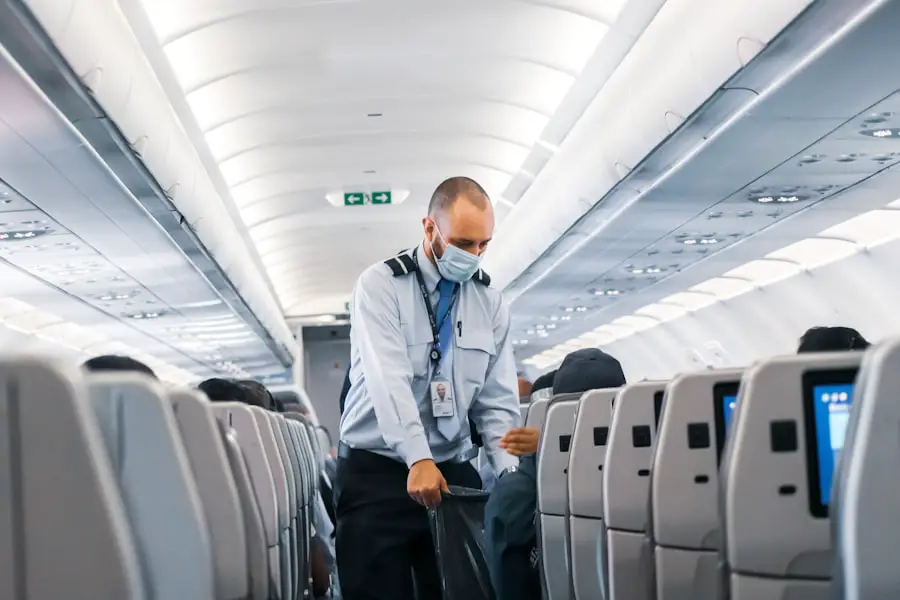
Korean Air is commonly positioned as a hospitality-focused full-service airline. Cabin crews provide safety instructions, meal and beverage service, and assistance with passenger requests. Long-haul Economy passengers may receive a blanket, pillow, slippers, or a toothbrush set depending on the route and aircraft.
Service can be less extensive on short flights, and codeshare passengers receive the service offered by the airline operating the aircraft. A ticket displaying a Korean Air flight number does not always mean the plane and crew belong to Korean Air.
On-Time Performance
Korean Air’s punctuality is respectable, but the original article’s description of it as “excellent” was too broad. Cirium’s 2025 On-Time Performance Review recorded 75.34% of Korean Air flights arriving within 15 minutes of their scheduled arrival time.
That result placed Korean Air tenth among qualifying Asia-Pacific airlines in Cirium’s 2025 ranking. It shows that roughly three out of four measured arrivals met Cirium’s on-time standard, but several regional competitors performed better.
Note: Airline-wide annual statistics cannot predict one flight. Weather, airspace restrictions, airport congestion, maintenance, and late-arriving aircraft can all affect an individual itinerary.
Pro Tip: For an important connection, compare the recent operating history of the exact flight number and leave a larger connection buffer during winter weather or peak travel periods.
Cabin Classes and Seat Comfort
Korean Air offers Economy, Premium Class, Prestige Class, and First Class, although not every cabin is installed or sold on every route. Seat specifications can vary substantially between older and newer aircraft.
Economy Class
Economy is the most widely available cabin. International service may include meals, drinks, entertainment, and basic comfort items, depending on flight duration and aircraft. Some aircraft have seatback screens, while the Airbus A220-300 and Boeing 737-8 may use wireless entertainment viewed through a passenger’s own device.
Travelers should inspect the seat map and aircraft type before booking. Even aircraft with the same model name may have more than one interior configuration.
Premium Class
Korean Air introduced Premium Class in September 2025, beginning with retrofitted Boeing 777-300ER aircraft. The airline announced a 2-4-2 layout, 39- to 41-inch seat pitch, 19.5-inch seat width, leg and foot rests, and greater recline than Economy.
Premium Class remains route- and aircraft-dependent. It should not be assumed to be available on every Boeing 777 flight or every long-haul route.
Prestige Class
Prestige is Korean Air’s business-class product. Newer aircraft may offer direct aisle access and fully flat seating, while some older or short-haul configurations use angled or recliner-style seats. This variation makes the aircraft and seat map especially important for a premium-cabin booking.
First Class
First Class is available only on selected routes and aircraft. It generally includes a larger private seat, premium dining, priority airport services, lounge access where eligible, and an increased baggage allowance. Some aircraft no longer offer a dedicated First Class cabin, so availability must be confirmed for the exact flight.
Warning: Airlines can change aircraft for operational reasons. A specific seat type is not guaranteed until departure, even when an aircraft was displayed during booking.
Meals, Entertainment, and Amenities
Food is one of Korean Air’s better-known service areas. Depending on the route and cabin, passengers may be offered Korean dishes such as bibimbap, ssambap, or noodle-based meals alongside Western or regional options.
Special meals are available for dietary, health, religious, and age-related needs. Korean Air generally asks passengers to submit requests at least 24 hours before departure. Codeshare requirements may differ, and certain meals may not be offered on short routes.
Entertainment options can include movies, television programs, music, and the Morning Calm in-flight magazine. The exact library and delivery method depend on the aircraft. Passengers on aircraft using wireless entertainment should bring a charged device and compatible earphones.
Does Korean Air Have Wi-Fi?
Yes, but not on every aircraft. Korean Air currently lists in-flight Wi-Fi on routes operated by aircraft such as the Boeing 737-8, Boeing 737-900ER, Boeing 787-10, Airbus A321neo, and Airbus A350-900.
The service is generally paid, with internet and messaging plans offered through the onboard portal. Availability can still be interrupted by satellite coverage, weather, restricted airspace, or an aircraft substitution.
Passengers should use Korean Air’s flight-specific Wi-Fi checker rather than assuming that a route always has connectivity.
Baggage Allowance and Fees
Korean Air includes cabin baggage, but the number and weight of checked bags depend on the cabin, fare family, route, ticket issue date, and operating airline.
Carry-On Baggage
Economy and Premium Class passengers are generally allowed one carry-on bag plus one personal item, with a combined maximum weight of 10 kg. The main carry-on bag must normally remain within 55 cm × 40 cm × 20 cm, including wheels and handles.
First and Prestige Class passengers are generally allowed two carry-on bags with a combined maximum weight of 18 kg. Travelers should verify current limits before departure because codeshare rules may follow the operating carrier.
Checked Baggage
On many international routes outside the Americas, Economy passengers receive one checked bag weighing up to 23 kg. On routes to or from the Americas, some Economy fares include two 23 kg bags, while Saver fares may include less.
Prestige Class commonly includes two bags of up to 32 kg each, while First Class may include three bags of up to 32 kg each. These are general examples, not a substitute for Korean Air’s booking-specific baggage calculator.
Pro Tip: Check the baggage line on your e-ticket and confirm which airline operates every segment. Codeshare itineraries can apply a different carrier’s allowance or special-baggage rules.
Fleet and Maintenance
Korean Air operates a mixed Boeing and Airbus fleet. Its published company profile lists 162 aircraft, including 139 passenger aircraft and 23 freighters, with the statistics labeled as of 2024.
| Published Fact | Korean Air Information | Traveler Impact |
|---|---|---|
| Passenger aircraft | 139 aircraft as of 2024 | A broad mix of long-haul and regional aircraft means cabins are not uniform. |
| Freighters | 23 aircraft as of 2024 | Cargo operations form a significant part of the airline’s business. |
| Aircraft families | A220, A321neo, A330, A350, A380, 737, 747, 777, and 787 families | Seat, power, entertainment, and Wi-Fi features depend on the assigned aircraft. |
| Published network | 116 cities in 40 countries as of 2024 | The network supports many one-stop itineraries through Seoul. |
The fleet includes newer aircraft such as the Airbus A350, Airbus A321neo, Boeing 737-8, and Boeing 787-10, as well as older aircraft types. Newer does not automatically mean safer, but newer cabins may offer updated seating, lighting, entertainment, and connectivity.
Route Network
Korean Air’s official company profile lists service to 116 cities in 40 countries using data labeled as of 2024. Its main international hub is Seoul Incheon, with domestic service also connecting cities inside South Korea.
The airline is particularly useful for journeys linking North America with South Korea and other Asian destinations. A passenger may be able to book one itinerary, check baggage through to the final destination, and connect within the same alliance network.
Schedules change seasonally, and not every destination is served daily. Travelers should compare the total journey time, layover length, airport terminal, and operating airline rather than judging a ticket by fare alone.
Awards and Recognitions
Korean Air’s most relevant current service recognition is its Skytrax 5-Star Airline certification. In April 2026, Skytrax announced that Korean Air had retained the certification for the sixth consecutive year.
The audit covered airport service, check-in, lounges, boarding, transfers, baggage handling, seats, dining, amenities, entertainment, cleanliness, and staff performance across multiple travel classes.
A Skytrax certification is useful independent evidence, but it remains a standardized industry assessment rather than a promise that every flight will be flawless. Equipment changes, local airport handling, irregular operations, and individual expectations can produce different experiences.
Partnerships and Alliances
Korean Air was one of the four founding members of SkyTeam in June 2000. The alliance supports benefits such as coordinated itineraries, partner mileage earning, reciprocal elite privileges, and access to a wider destination network when eligibility conditions are met.
Korean Air also operates a trans-Pacific joint venture with Delta Air Lines. The partnership supports connecting schedules and codeshare options across Asia and the Americas.
Codeshares require extra attention. The operating airline controls the aircraft, crew, cabin product, meals, baggage handling, and many accessibility services. Always look for the words “operated by” on the booking page.
SKYPASS Loyalty Program
SKYPASS members can earn miles on eligible Korean Air flights and selected partner flights. Earning rates depend on the marketing carrier, operating carrier, booking class, route, and ticket conditions.
Miles earned from eligible Korean Air or partner flights generally remain valid until December 31, Korean Standard Time, of the tenth year following the qualifying flight date under the program’s published rules.
SKYPASS can be useful for travelers who regularly fly Korean Air or SkyTeam partners. Less-frequent travelers should compare award availability, taxes, change rules, and mileage expiration before concentrating all travel in one program.
Financial Stability
Korean Air remains a large airline with passenger, cargo, and aerospace operations, but its current financial position should be described with balance rather than simple praise.
For the second quarter of 2026, Korean Air reported standalone revenue of KRW 5.0199 trillion, up 26% from the same quarter a year earlier. Quarterly operating profit fell 34% to KRW 261.8 billion, and the company reported a quarterly net loss of KRW 97.3 billion. For the first half of 2026, operating profit was still 4% higher year over year.
These figures show substantial revenue and continued operating profit for the first half, alongside pressure from fuel costs and other expenses. Airline finances can change quickly due to fuel prices, currency movements, demand, competition, labor costs, and geopolitical events.
Korean Air and Asiana Airlines Integration
Korean Air acquired a controlling stake in Asiana Airlines in December 2024, but the airlines have continued operating separately during the integration period.
As of July 26, 2026, Korean Air says the integrated airline is scheduled to launch on December 17, 2026. Before and after that date, passengers may see changes to schedules, terminals, aircraft assignments, loyalty arrangements, and partner benefits.
Korean Air has announced that former Asiana mileage will be managed separately for ten years after the merger, with conversion options and different ratios depending on how the miles were originally earned. Members should consult the current integration notice before transferring or redeeming miles.
Note: A merger announcement does not mean every aircraft, route, lounge, loyalty account, or service process changes on the same day. Integration normally occurs in stages.
Who Should Choose Korean Air?
Korean Air is a particularly good fit for:
- Travelers connecting between North America and destinations in East or Southeast Asia.
- Passengers who prefer a full-service airline with meals and checked-baggage benefits on eligible fares.
- Travelers who value Korean meal options and attentive cabin service.
- SkyTeam or SKYPASS members who can use partner benefits.
- Passengers who find a convenient itinerary through Seoul Incheon.
When Another Airline May Be Better
Another airline may suit you better when:
- A competitor offers a nonstop flight while Korean Air requires a long connection.
- Guaranteed high-speed Wi-Fi is essential for your trip.
- The assigned Korean Air aircraft has an older seat than a similarly priced competitor.
- A lower fare does not include the baggage or mileage benefits you need.
- You are booking solely for punctuality and another carrier has stronger recent results on the same route.
Overall, Korean Air combines a strong recent safety assessment, highly rated service, a broad international network, and a generally comfortable full-service product. It is not perfect, and travelers should verify the aircraft, operating carrier, baggage allowance, and connection time before paying. When the schedule and fare are competitive, Korean Air is a credible and often appealing choice.
If you are preparing for an upcoming trip, you may also find these travel gift ideas for women useful.
Frequently Asked Questions
Is Korean Air a good airline?
Yes. Korean Air is generally a good full-service airline, especially for long-haul travel, meals, cabin service, and connections through Seoul. Travelers should still compare the aircraft, fare rules, Wi-Fi availability, and connection time for their specific itinerary.
Is Korean Air safe?
Korean Air has a strong recent safety profile. AirlineRatings currently assigns it a 7/7 score and credits it with no fatal accident during the rating’s latest 10-year assessment window. No airline can guarantee risk-free travel, and historical incidents should not be ignored.
Is Korean Air a five-star airline?
Yes. Skytrax certified Korean Air as a 5-Star Airline for 2026, its sixth consecutive year receiving that certification. The rating evaluates airport and onboard products as well as staff service.
Does Korean Air have good on-time performance?
Korean Air’s performance is respectable rather than industry-leading. Cirium recorded a 75.34% on-time arrival rate in 2025, ranking the airline tenth among qualifying Asia-Pacific carriers.
Does Korean Air offer in-flight Wi-Fi?
Yes, on selected aircraft and routes. Eligible aircraft include models such as the Boeing 737-8, 737-900ER, 787-10, Airbus A321neo, and A350-900. The service is generally paid and may be unavailable after an aircraft change.
Does Korean Air include checked baggage?
Many Korean Air fares include checked baggage, but the allowance depends on the route, cabin, fare family, ticket conditions, and operating carrier. Check the allowance printed on the ticket rather than relying on a general rule.
What in-flight amenities does Korean Air provide?
Amenities may include meals, beverages, movies, television programs, music, blankets, pillows, slippers, toothbrush sets, power outlets, and Wi-Fi. The exact offering depends on the route, flight duration, cabin, and aircraft.
Is Korean Air part of an airline alliance?
Yes. Korean Air was one of the four founding airlines of SkyTeam in 2000. It also operates a trans-Pacific joint venture with Delta Air Lines.
When will Korean Air and Asiana fully merge?
As of July 26, 2026, Korean Air says the integrated airline is scheduled to launch on December 17, 2026. Operational, loyalty, aircraft, and schedule changes may continue in stages after that date.
Sources
- Korean Air company overview — official fleet, company, and route-network information.
- AirlineRatings Korean Air safety assessment — current third-party safety score and rating criteria.
- Cirium 2025 On-Time Performance Review — Korean Air’s 2025 punctuality rate and Asia-Pacific ranking.
- Skytrax 2026 Korean Air certification — current 5-Star Airline recognition and audit scope.
- Korean Air in-flight Wi-Fi guide — eligible aircraft, connection method, and availability limitations.
- Korean Air-Asiana merger announcement — planned December 17, 2026 launch date for the integrated airline.