
Last Updated on July 25, 2026 by Caleb Warren
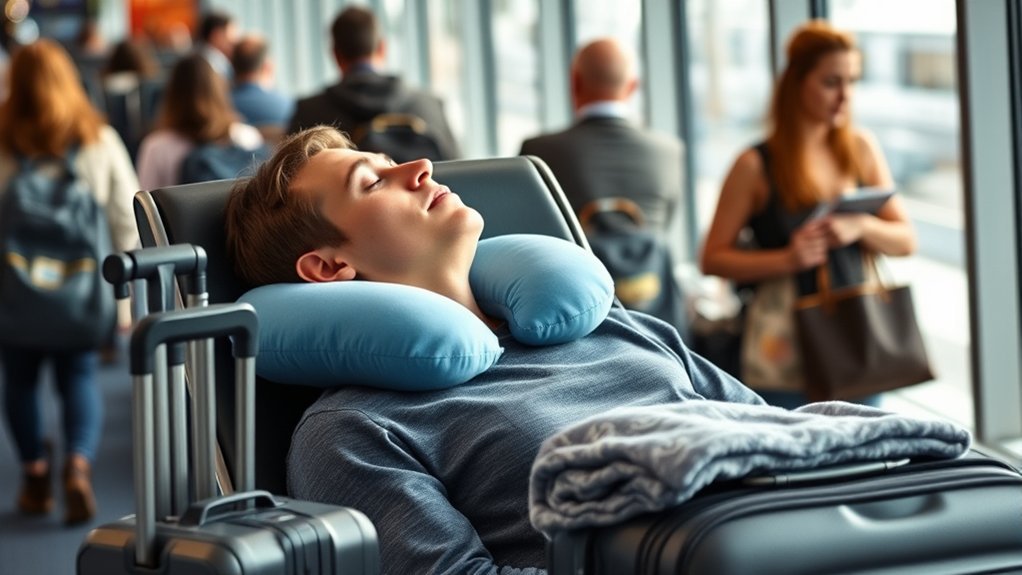
Using a travel pillow correctly can transform a uncomfortable airport layover into a restful, rejuvenating nap. While most travelers intuitively wear U-shaped travel pillows with the opening in the front, rotating the pillow or securing its position according to your body posture provides critical cervical spine support and prevents neck pain. Mastering proper travel pillow placement ensures you wake up refreshed and ready for your destination.
Quick Answer
To use a travel pillow correctly for upright sleeping, position the thickest cushion under your chin by turning the U-shaped opening toward the back. Secure the chin clasp tightly. This supports your cervical spine, prevents forward head-drop (the leading cause of travel neck strain), and keeps your airway aligned during airport naps.
Key Takeaways
- Reverse the Pillow for Upright Naps: Place the thick cushion beneath your chin to prevent forward head-drop when sleeping seated upright.
- Secure the Snapping Mechanism: Lock snaps or drawstrings to maintain consistent neck support throughout sleep cycles.
- Match Pillow Material to Travel Style: Choose high-density memory foam for deep support, or inflatable designs for light packing.
- Maintain Terminal Hygiene: Use washable pillow covers to protect against airport terminal germs and bacteria.
At a Glance
| Time Required | 1–2 minutes setup |
| Difficulty | Beginner |
| Tools Needed | Travel pillow (Memory foam, inflatable, or wrap) |
| Key Benefit | Prevents cervical strain, head-drop, and muscle fatigue |
Disclosure: As an Amazon Associate I earn from qualifying purchases. Some links on this page are affiliate links, at no extra cost to you.
The Ergonomics of Travel Sleep: Why Placement Matters
When you sleep seated upright in an airport terminal or airplane seat, gravity causes your head to lean sideways or drop forward. Human heads weigh approximately 10 to 12 pounds (4.5 to 5.4 kg). When your head slumps forward at a 45-degree angle, the strain placed on your cervical spine increases to roughly 49 pounds, straining the sternocleidomastoid and trapezius muscles.
According to research on cervical spinal alignment and posture, maintaining a neutral spinal alignment is necessary to prevent muscle spasms, nerve compression, and micro-awakenings during sleep cycles. Proper support keeps your neck aligned with your spine, allowing your neck muscles to fully relax.
“Maintaining neutral cervical spine posture during upright resting reduces muscle fatigue and supports deeper slow-wave sleep cycles.”
How to Position Your Travel Pillow for Maximum Support
Positioning your travel pillow correctly depends on your resting environment, seat angle, and personal sleep posture preferences. Follow these step-by-step techniques to achieve optimal comfort during airport naps.
1. Upright Seated Position (Reversed Placement)
If you are resting in a standard upright terminal chair without a recline angle:
- Turn the travel pillow so the main padded section rests directly beneath your chin.
- Place the opening toward the nape of your neck.
- Fasten the snap, toggle, or velcro strap behind your neck to secure the pillow in place.
- Allow your chin to rest lightly on the cushion, preventing forward head slump.
Pro Tip: Turning a standard U-shaped pillow backward creates a comfortable shelf for your chin, stopping the involuntary head-bobbing reflex that repeatedly wakes upright sleepers.
2. Reclined Seated Position (Standard Placement)
When resting in a reclined seat or leaning back against a high terminal bench:
- Position the central cushion behind the upper curve of your neck.
- Ensure the side bulges align with your jawline to stabilize lateral (side-to-side) movement.
- Tighten the front closure strap until the pillow fits snugly against your neck without restricting airway or carotid artery pressure.
3. Side-Leaning Position (Window or Wall Support)
If you are seated next to a terminal wall or window structure:
- Rotate the pillow 90 degrees so the bulk of the foam rests between your shoulder and ear.
- Lean your head gently toward the supported side, keeping your neck in line with your spine.
- Use the snapping mechanism to lock the support in place.
Avoid These Common Travel Pillow Mistakes
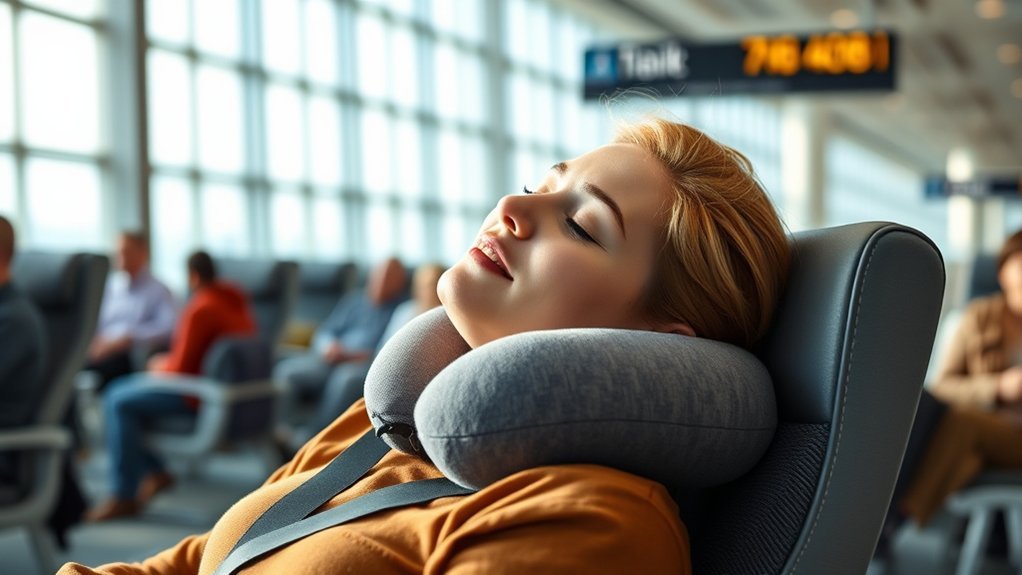
Avoiding common travel pillow errors ensures a restful nap without waking up with a stiff neck or cervical muscle strain:
- Leaving the Front Strap Unfastened: An unfastened pillow spreads open under weight, allowing your head to slip between the sides and bending your neck awkwardly.
- Overinflating Air Pillows: Fully inflating an air-filled travel pillow makes it hard and unyielding, pushing your neck forward out of alignment. Inflate air pillows to approximately 70–80% capacity for optimal cushioning.
- Using the Same Orientation for All Seats: Wearing the pillow the same way regardless of recline angle leads to poor posture. Adjust placement based on whether your head tends to fall forward or to the side.
- Neglecting Pillow Height (Loft): Using a pillow that is too thick behind the head forces the chin toward the chest. Choose a pillow with a flat back profile if resting against high-backed seats.
Warning: Never overtighten a neck support strap or drawcord. The pillow should rest comfortably against your chin and neck without placing pressure on your throat or restricting breathing.
Choosing the Right Travel Pillow Type
Selecting the right pillow design depends on your travel habits, storage needs, and preferred sleeping posture. The chart below details common travel pillow materials and configurations:
| Pillow Style | Pros | Cons | Best For |
|---|---|---|---|
| Memory Foam | Contours to neck shape; excellent shock absorption | Heavier; bulkier to carry | Frequent flyers, maximum support |
| Inflatable | Packs down flat; adjustable firmness levels | Less cushioned surface feeling | Backpackers, light travelers |
| Ergonomic Wrap (Trtl) | Internal ribs support weight; prevents head-drop | Requires snug wrapping around neck | Upright terminal chair napping |
| Microbead | Lightweight and pliable | Loses shape over time; minimal support | Casual short-haul resting |
Key Features to Look for in a Travel Pillow
When selecting a high-performance travel pillow for airport layovers, prioritize these functional features:
- Snapping Mechanism or Adjustable Clasp: A front snap or toggle holds the sides together, forming a continuous ring of support around your neck.
- Flat Back Profile: A thinned posterior wall keeps your head from being pushed forward when leaning back against headrests.
- Removable, Washable Cover: Airport seating host micro-organisms and dust. Machine-washable covers keep your gear clean and hygienic.
- Breathable Fabrics: Moisture-wicking fabrics like bamboo viscose or plush polyester mesh keep you cool during sleep.
Tips for a Restful and Safe Airport Nap
Sleeping safely in a busy airport terminal requires setting up a comfortable, secure environment:
Note: Quality sleep during travel reduces fatigue and helps maintain immune system resilience according to the CDC Sleep Guidelines.
- Find Quiet Terminal Gate Zones: Seek out lesser-used gates or dedicated lounge relaxation rooms away from main walking paths and food courts.
- Secure Luggage Items: Loop your arm or leg through your carry-on luggage straps, or rest your feet on your bag to deter theft while you rest.
- Set Multiple Vibrating Alarms: Set alarm notifications on your phone or smartwatch 25 to 30 minutes prior to boarding time. Keep one alarm set for local time and another for your boarding countdown.
- Use Sanitizing Protective Barriers: Place a clean scarf, hood, or pillow cover over your travel pillow to prevent direct contact with public seating surfaces.
Frequently Asked Questions
Can I use a travel pillow on a bus, train, or car ride?
Yes. Travel pillows work well on buses, trains, and passenger cars. Adjust the pillow orientation depending on seat recline and vehicle movement—turning the pillow backward helps absorb sudden stops without straining your neck.
How do I clean and sanitize my travel pillow?
Unzip and remove the fabric cover, then wash it in warm water with mild detergent. For memory foam cores, spot-clean with a damp cloth and warm soap water—never submerge memory foam in water or place it in a washing machine, as moisture breaks down the foam structure.
Are inflatable travel pillows comfortable enough for long flights?
Inflatable pillows provide good adjustable support and pack down small. To optimize comfort, inflate the pillow to roughly 75% capacity to keep it soft and pliable rather than hard and rigid.
What size travel pillow is best for my body frame?
Choose a pillow size based on your neck length and shoulder width. Individuals with longer necks benefit from taller high-loft memory foam pillows (4.5–5 inches high), while those with shorter necks should choose low-profile or thin-back models (3–4 inches high) to avoid unnatural spinal bending.
Can travel pillows help prevent neck pain during flights?
Yes. A properly positioned travel pillow maintains neutral spine alignment, keeping head movement minimal and preventing forward head slump. This drastically reduces muscle stiffness and tension headaches during long journeys.
Conclusion
Optimizing how you use your travel pillow transforms your airport layover from an uncomfortable waiting period into a refreshing rest break. By reversing standard U-shaped pillows to support your chin, adjusting inflation levels, and securing fasteners, you preserve cervical alignment and prevent morning stiffness. Select the proper pillow material for your journey and practice smart sleeping habits so you land refreshed, comfortable, and ready to enjoy your trip.
Sources
- National Center for Biotechnology Information (NCBI) — Research on Cervical Spinal Alignment and Postural Strain during Resting.
- Sleep Foundation — Clinical Guidance on Sleeping While Traveling in Vehicles and Airports.
- Centers for Disease Control and Prevention (CDC) — Sleep Health and Immune Function Maintenance Guidelines.

