

Last Updated on September 10, 2026 by Daniel Globe
Finding the right kids travel pillow size is the single most important factor in preventing uncomfortable neck strain, chin-slumping, and restless sleeping during long travel road trips or airplane flights. An ill-fitting travel pillow can push a child’s head forward awkwardly or fail to provide lateral chin support. By selecting a pillow tailored to your child’s age, neck circumference, and travel environment, you ensure proper spinal alignment and a restful journey.
Quick Answer
To select the ideal kids travel pillow size, measure your child’s neck circumference. Toddlers (ages 2–4) require a pillow with a 9–11 inch inner opening and thin rear padding (<1.5 inches). Children aged 5–8 need an 11–13 inch opening, while older kids (9–12) require 13–15 inches. Ensure the pillow provides chin-slump support without pushing the head forward in car seats or flight chairs.
Key Takeaways
- Measure Before Buying: Base pillow size on neck circumference and height rather than age alone.
- Avoid “Head-Push”: Flat or narrow rear cushions prevent dangerous forward head tipping in high-backed car seats.
- Prioritize Hypoallergenic Fabrics: Microfleece and breathable cotton prevent skin irritation on long trips.
- Car Seat Safety First: Never place bulky cushions behind a child’s head that interfere with the 5-point harness posture.
Disclosure: As an Amazon Associate I earn from qualifying purchases. Some links on this page are affiliate links, at no extra cost to you.
Why Choosing the Right Travel Pillow Size Matters
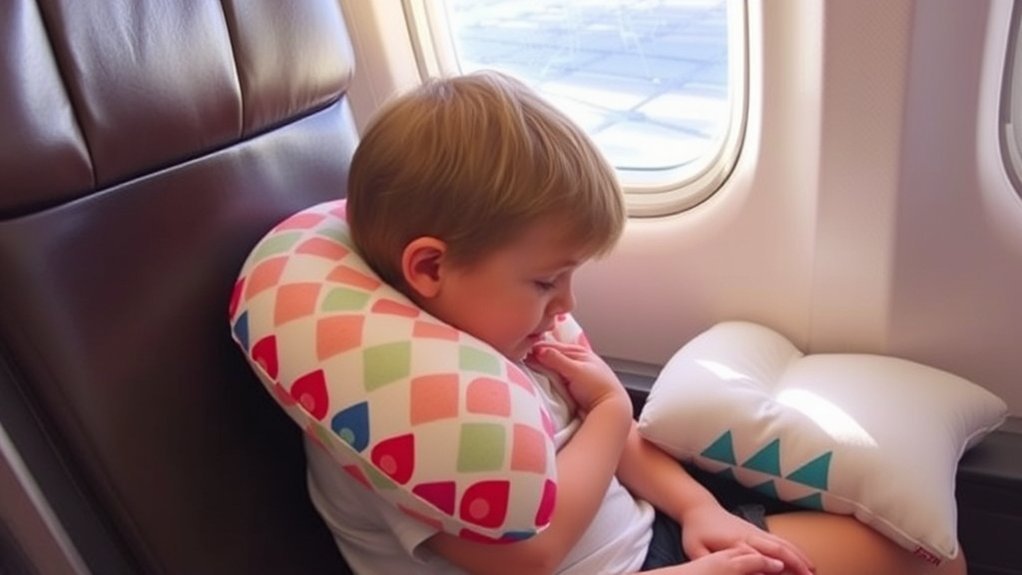
When traveling with children, choosing the correct travel pillow size is vital for maintaining healthy neck alignment and encouraging restful sleep. Children’s cervical spines undergo rapid development, meaning adult neck pillows are far too thick and wide, causing excessive strain. An appropriately sized pillow stabilizes the head, preventing uncomfortable bobble-head movements and lateral swinging during transit.
Travel pillows are generally categorized across distinct age brackets—specifically 2–4 years, 5–8 years, and 9–12 years—to cater to evolving anatomical dimensions. Using a pillow that is too large forces the chin toward the chest, which can obstruct airways or lead to muscle fatigue. Conversely, a pillow that is too small offers zero lateral support.
At a Glance: Kids Travel Pillow Sizing Reference
| Age Range | Neck Circumference | Recommended Rear Thickness |
| Toddler (Ages 2–4) | 9.0″ – 11.0″ (23–28 cm) | 1.0″ – 1.25″ (Flat back mandatory) |
| Young Child (Ages 5–8) | 11.0″ – 13.0″ (28–33 cm) | 1.5″ – 2.0″ (Ultra-thin neck band) |
| Tween (Ages 9–12) | 13.0″ – 15.0″ (33–38 cm) | 2.0″ – 2.5″ (Contoured rear support) |
Warning: Never use thick, rounded neck pillows behind a toddler seated in a car safety seat. According to guidelines from the National Highway Traffic Safety Administration (NHTSA), adding bulky padding behind the head can push the head forward, compromising the airway and altering the fit of the car seat harness. Choose flat-backed or chin-supporting wraps instead.
Essential Features of Travel Pillows for Kids
Selecting the right travel pillow goes beyond physical dimensions. High-performing travel pillows combine ergonomic construction with durable, lightweight materials to satisfy active kids on the go:
- Ergonomic Chin and Side Support: Prevents the head from dropping forward or tilting awkwardly during sleep.
- Lightweight Design: Ideally weighs around 3.9 oz (110g), making it easy for children to carry in their backpack.
- Hypoallergenic Shell Fabrics: Soft materials such as plush microfleece reduce friction and comfort sensitive facial skin.
- Customizable Fit Mechanisms: Adjustable Velcro straps, snap buttons, or overlapping arms accommodate growing neck sizes.
- Machine-Washable Covers: Easy maintenance allows quick cleaning following spills or travel grime.
Comparing Materials: Best Options for Sensitive Skin
Children frequently rest their faces directly against pillow fabrics during travel. Selecting non-irritating, breathable, and hypoallergenic materials is critical to prevent skin redness, heat rashes, or allergy flare-ups.
Hypoallergenic and Soft Fabric Benefits
Hypoallergenic materials prevent common triggers for children prone to eczema or contact dermatitis. Premium options include:
- Microfleece & Cotton: Exceptionally soft texture that minimizes friction against delicate facial skin.
- Recycled PET (RPET) Fabrics: Eco-friendly textiles engineered for softness and sustainable production.
- Shredded Serene Polyurethane Foam or Poly-Fill: Provides plush support without the rigid “stuck” feeling or chemical off-gassing of traditional dense memory foam.
Breathable and Moisture-Wicking Options
Overheating is a primary cause of restless sleep during travel. Materials like microsuede, moisture-wicking synthetic blends, and open-cell poly-fill maintain air circulation, pulling heat away from the neck to keep skin dry and comfortable throughout long flights or car trips.
Pro Tip: Look for travel pillows certified by OEKO-TEX Standard 100. This certification ensures every component—from thread to filling—has been independently tested for harmful substances, providing extra peace of mind for kids with allergies.
Why Ergonomic Designs Matter for Kids’ Travel Pillows
Standard U-shaped pillows often fail children because their rear cushions are too thick, pushing their head forward against high-backed car seats or airplane chairs. Ergonomic kids’ pillows address this by engineering flat backs with reinforced side and chin cushions.
“Proper cervical alignment during travel sleep prevents localized muscular strain and helps keep a child’s upper airway fully unobstructed.”
Proper neck support stabilizes the head during sudden vehicle turns or turbulence, promoting deeper, uninterrupted rest so your child arrives refreshed and ready for activities.
The Importance of a Customizable Fit
Children grow rapidly, and fixed-diameter pillows quickly become either too restrictive or excessively loose. Customizable fit features allow the pillow to grow alongside your child:
- Velcro & Snap Adjustments: Enable precise tightening around small necks to prevent chin-slumping.
- Flexible Overlapping Arms: Allow children to cross the pillow ends under their chin for 360-degree support or wear it sideways as a lean-on cushion.
- Multi-Position Utility: Adapts seamlessly to car seats, plane trays, or airport lounge chairs.
Popular Travel Pillow Brands for Kids
Several reputable manufacturers design travel pillows specifically for pediatric dimensions:
- BCOZZY Kids Travel Neck Pillow: Designed for ages 3–7 (Small) and 8–12 (Medium). Features patented overlapping arms that cradle the chin to stop forward head dropping, constructed with breathable microfleece and machine-washable poly-fill.
- Cabeau Evolution Cool / Kids Line: Engineered with eco-friendly RPET fabric, adjustable front clasps, and raised side supports to stabilize lateral tilt.
- Trunki Yondi: Built for younger toddlers, utilizing hidden magnets under the chin to form a continuous support ring alongside a flat rear profile suitable for car seats.
How to Clean and Care for Kids’ Travel Pillows
Maintaining hygiene on road trips or international flights is crucial. Follow these care steps to extend pillow lifespan:
- Check the manufacturer’s care tag prior to washing.
- For fully machine-washable pillows, wash on a gentle cycle using cold water and mild detergent.
- If the pillow uses a removable cover, unzip and separate internal foam cores or supports before laundering.
- Air-dry thoroughly in a well-ventilated space to maintain fill loft and prevent fabric shrinkage.
When to Replace Your Child’s Travel Pillow
Most kids’ travel pillows have an effective lifespan of 1 to 2 years under regular travel conditions. Replace your child’s pillow immediately if you notice:
- Loss of inner core resiliency, clumping, or permanent flattening of side supports.
- Persistent neck discomfort or complaints of stiffness after travel.
- Physical growth, where the inner circumference leaves gaps or feels overly tight around the throat.
- Persistent odors, staining, or fabric tearing that survives deep washing.
Enhancing Travel Comfort: Additional Accessories for Kids
Pairing a well-fitted pillow with complimentary travel accessories helps create a soothing, travel-friendly environment:
- Compact Travel Games: Keeps kids entertained and relaxed during waking hours.
- Healthy Snack Packs: Maintains stable blood sugar levels during long transit delays.
- Breathable Travel Blankets: Complements neck pillows for full-body thermal comfort.
- Lightweight Storage Clips: Allows kids to fasten their pillow directly to their backpack for hands-free transport.
Frequently Asked Questions
What age range is suitable for kids’ travel pillows?
Travel pillows specifically engineered for children are generally recommended for ages 2 to 12. Children under 2 years old should not use travel neck pillows in car seats due to suffocation risks and infant spinal safety guidelines established by pediatric medical authorities.
How do I know if a travel pillow fits my child properly?
A proper fit means the pillow snuggly cradles the jaw and sides of the neck without pushing the back of the head forward. You should be able to slide two fingers comfortably between the pillow and your child’s neck, ensuring secure support without choking or constriction.
Can travel pillows be used in car safety seats?
Yes, provided the pillow has an ultra-thin or flat rear design that does not push your child’s head forward or interfere with the car seat harness system. Avoid bulky, round traditional U-shaped pillows in high-backed car seats.
Are there travel pillows specifically designed for toddlers?
Yes, toddler-specific pillows (ages 2–4) feature smaller inner neck circumferences (9–11 inches), lighter fill densities, and flat back panels designed specifically to accommodate toddler proportions in booster or car seats.
What should I consider when choosing travel pillows for special needs children?
For children with sensory sensitivities or low muscle tone, look for sensory-friendly fabrics (like seamless microfleece), highly adjustable latch systems, and firmer lateral support extensions that assist with head control without causing tactile overload.
Conclusion
Choosing the right travel pillow size for your child can transform long road trips and flights into restful, peaceful adventures. By matching the pillow’s inner circumference to your child’s neck size, opting for breathable hypoallergenic fabrics, and prioritizing flat-backed ergonomic designs, you can guarantee superior comfort and safety. Investing in a properly fitting travel pillow protects growing cervical spines and ensures your child arrives energized and ready for your family vacation.
Sources
- National Highway Traffic Safety Administration (NHTSA) — Car seat safety and harness placement standards
- American Academy of Pediatrics (AAP) — Pediatric posture and child travel safety guidance
- OEKO-TEX Association — Textile chemical safety and hypoallergenic standards
