
Last Updated on July 27, 2026 by Caleb Warren
Mold in a backpack is more than an eyesore. Left damp for too long, a pack can develop musty odors, staining, and material damage, while disturbing mold may cause allergic reactions or respiratory irritation in sensitive people. Most small mold problems can be handled at home, but the safest method starts with the backpack’s care label, gentle physical cleaning, and complete drying rather than trying to sterilize the fabric with harsh chemicals.
Quick Answer
To remove mold from a backpack, check the care label, empty the bag, and remove loose growth outdoors while protecting yourself from spores. Gently clean affected fabric with lukewarm water and mild soap, rinse as the care label permits, and air-dry completely in shade. Avoid bleach unless both the backpack manufacturer and cleaner label allow it.
Key Takeaways
- Start with mild soap or detergent and gentle physical cleaning; removing the mold matters more than simply trying to kill it.
- Always follow the backpack’s care label. Machine washing, soaking, bleach, and other treatments can damage coatings, padding, dyes, or seam treatments on some packs.
- Dry wet gear promptly. The EPA recommends drying wet or damp materials within 24–48 hours when possible to help prevent mold growth.
- Chlorine bleach is not recommended by the EPA as a routine mold-cleanup method. Never mix bleach with vinegar, ammonia, or other cleaners.
- If mold or a strong moldy odor remains deep inside foam, padding, or other porous material after careful cleaning and drying, professional treatment or replacement may be safer.
At a Glance
| Time Required | About 30–60 minutes of cleaning, plus enough time for the backpack to dry completely |
| Difficulty | Easy for small surface growth; harder if mold has reached thick padding or liners |
| Tools Needed | Mild soap or detergent, soft brush or cloth, microfiber towel, gloves, clean water, and appropriate mold-exposure protection |
| Cost | Usually low if you already have basic cleaning supplies and protective gear |
Disclosure: As an Amazon Associate I earn from qualifying purchases. Some links on this page are affiliate links, at no extra cost to you.
Understanding the Risks of Mold in Backpacks
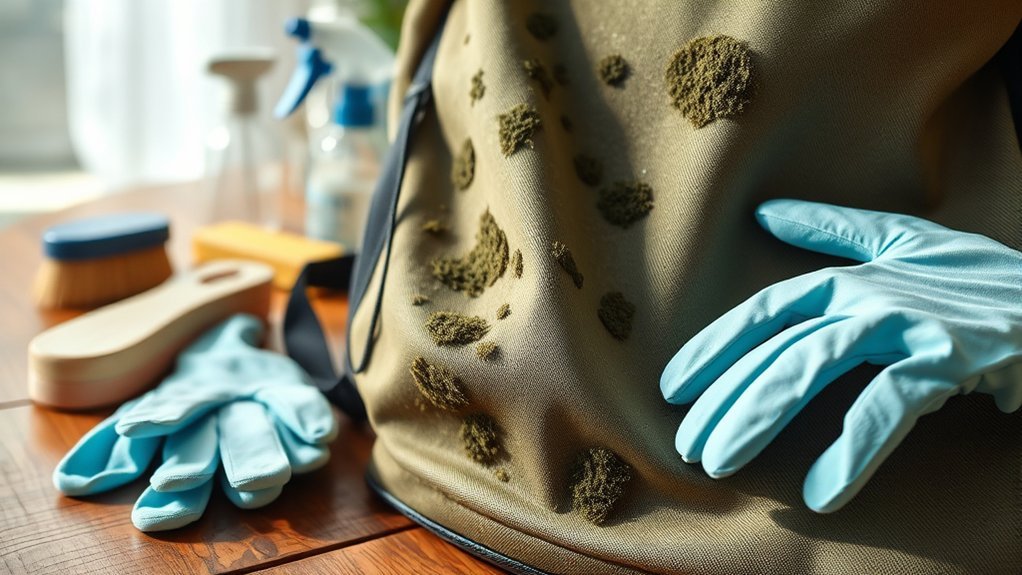
Mold grows when spores reach material that stays damp long enough. A backpack can create favorable conditions after rain, spills, sweat, wet clothing, or storage in a humid area, especially when the bag is zipped closed before it dries.
The U.S. Environmental Protection Agency recommends drying wet or damp materials within 24–48 hours when possible to help prevent mold growth. That does not mean every wet backpack will grow mold at exactly the 48-hour mark; temperature, airflow, humidity, material, and contamination all affect growth.
The most important mold-prevention step is moisture control: dry a wet backpack promptly instead of storing it damp and closed.
Mold exposure can cause allergic reactions and irritation of the eyes, skin, nose, throat, and lungs. It can also worsen asthma symptoms in people who are sensitive to mold. Health effects vary, so avoid describing every mold exposure as dangerous or toxic.
Note: Backpack construction matters. Smooth synthetic shell fabrics may be easier to surface-clean than absorbent canvas, but seams, foam back panels, shoulder straps, liners, and other padded areas can still trap moisture and allow mold to penetrate more deeply.
Mold also damages the material it grows on. The EPA notes that the longer mold remains, the more damage it can cause. Prompt cleaning therefore protects both the backpack and the person handling it.
Signs of Mold Growth in Your Backpack

Check the entire backpack if it has been stored damp or smells unusual. Common warning signs include:
- Fuzzy, powdery, or irregular patches: Mold may appear white, gray, green, brown, or black.
- Dark or light discoloration: Staining can remain even after mold has been successfully removed, so color alone does not prove that mold is still active.
- A persistent musty odor: The EPA notes that moldy or musty odors can suggest hidden mold growth and should be investigated.
- Persistent dampness: Pay special attention to shoulder straps, back padding, bottom panels, seams, laptop sleeves, and enclosed pockets.
Do not try to identify a mold species from its color. For ordinary household cleanup, knowing the exact species usually does not change the basic response: limit exposure, remove visible growth, clean the material safely, and eliminate the moisture problem.
Preparing for Mold Removal
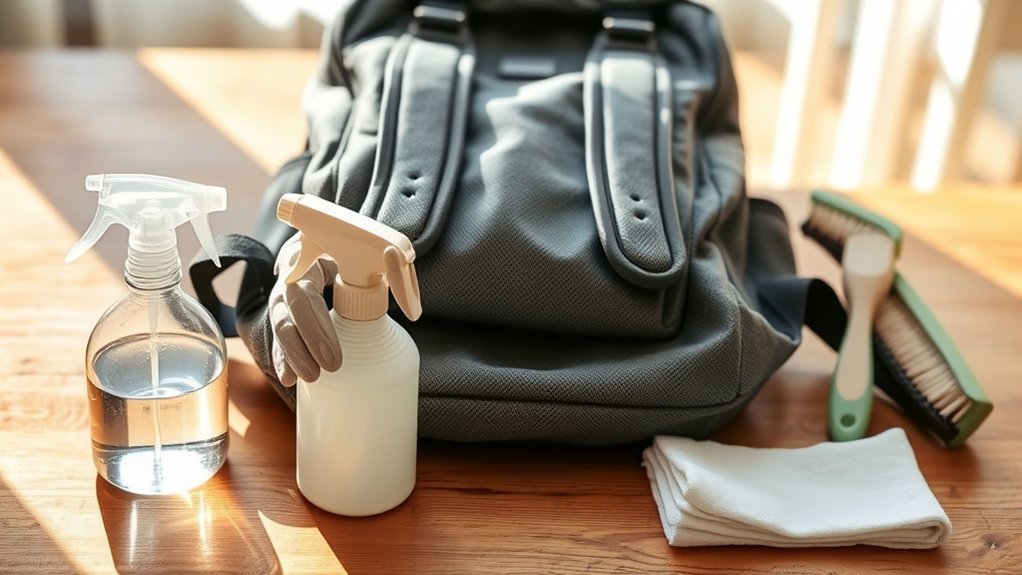
Before cleaning, empty every compartment, check the care label, and decide whether the material can be safely washed, spot-cleaned, or needs specialist care. Taking a few minutes to assess the backpack first can prevent damage to waterproof coatings, dyes, foam, leather, hardware, and seam treatments.
Gather Cleaning Supplies
| Cleaning Supply | Purpose | Important Notes |
|---|---|---|
| Mild soap or detergent | Primary cleaner | Use a product compatible with the backpack’s care instructions. |
| White vinegar | Optional odor or stain treatment | Spot-test first. Do not mix with chlorine bleach. |
| Baking soda | Optional deodorizing treatment | Can leave residue or affect some finishes; spot-test first. |
| Soft-bristled brush or toothbrush | Physical mold removal | Scrub gently to protect coatings and fibers. |
| Microfiber towel or clean cloth | Wiping and blotting | Helps remove cleaning residue and excess water. |
| Gloves, eye protection, N95 respirator | Reduce mold and cleaner exposure | EPA guidance recommends limiting contact with disturbed mold and spores. |
| Bleach or specialty cleaner | Optional treatment only where specifically permitted | Follow both the backpack care label and the cleaner’s current product label. |
Assess Mold-Affected Areas
Inspect the main compartment, pockets, seams, back panel, straps, bottom panel, and any removable inserts. A musty odor with no obvious surface growth may indicate mold inside padding or another hidden layer.
Next, judge how deeply the problem has penetrated. Light surface spotting on a washable synthetic shell is usually easier to handle than mold embedded in thick foam, raw canvas, leather, or a laminated waterproof structure.
The EPA warns that mold can enter the spaces and crevices of porous materials, making complete removal difficult or impossible in some cases. A heavily moldy pack with contaminated foam may therefore require professional cleaning or replacement rather than repeated soaking.
Identify the Cleaning Method
Start with the manufacturer’s care instructions. Some backpacks can tolerate hand washing or even machine washing, while others cannot be submerged at all.
For example, Deuter’s backpack-care guidance recommends lukewarm water and pH-neutral soap but warns against washing its packs in a washing machine because abrasion can damage materials and polyurethane coatings. The North Face generally recommends spot-cleaning its backpacks with a damp cloth and air-drying them rather than fully submerging them.
Warning: Leather, suede, waxed fabric, bonded laminates, electronics-equipped bags, and packs with special finishes may require specialized cleaning. Do not soak them or apply vinegar, peroxide, bleach, or another chemical unless the manufacturer specifically allows it.
Cleaning Solutions for Mold Removal
The safest general approach is not to hunt for the strongest chemical. Mold cleanup works by physically removing growth, cleaning away residue, and eliminating the moisture that allowed it to grow.
The EPA specifically notes that dead mold can still trigger allergic reactions in some people. In other words, simply applying a substance that “kills” mold is not enough; the residue still needs to be removed.
Gentle and Household Cleaning Options
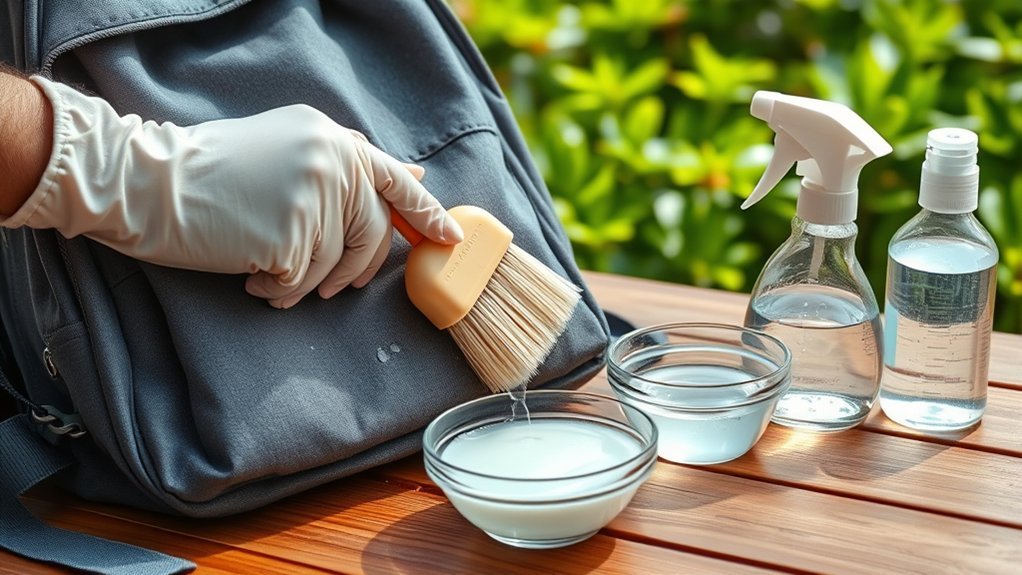
- Mild soap and water: This is the best starting point for most washable backpacks. Mix a small amount of mild soap or detergent with lukewarm water, apply it with a cloth or soft brush, gently work the affected area, and remove the loosened residue. Rinse or wipe away soap according to the care label.
- White vinegar: Vinegar may help with some odors and stains, but do not rely on it as a universal mold sterilizer. If the manufacturer’s instructions do not prohibit it, spot-test a diluted solution in a hidden area before treating a visible section.
- Baking soda: A small amount of baking soda can help absorb odors or provide gentle abrasion on durable, colorfast material. Test first and rinse thoroughly so powder does not remain inside fabric or seams.
- Hydrogen peroxide or oxygen/color-safe bleach: Treat these as optional stain-removal products rather than routine mold-removal necessities. They can affect color or finishes, and non-chlorine bleach is chemically different from chlorine bleach. Use only when the care label and the product label permit it.
Chemical Mold Solutions
Chlorine bleach is sometimes recommended for specific bleach-safe fabrics, but it should not be the automatic next step for a moldy backpack. The EPA does not recommend chlorine bleach or other biocides as a routine mold-cleanup practice. Physical removal and moisture control remain essential.
Warning: Never mix chlorine bleach with vinegar, ammonia, or other household cleaners. Dangerous gases can form. Work with good ventilation, protect your skin and eyes, and follow the cleaner’s label exactly.
If the backpack’s manufacturer specifically permits chlorine bleach, first confirm that the material and color are bleach-safe. Follow the current directions on the exact bleach product you are using rather than relying on a universal dilution ratio, because bleach concentrations and product formulations vary.
For example, Clorox publishes a backpack-cleaning method for its own disinfecting bleach, including a product-specific dilution and colorfastness procedure. Those directions apply to that product and bleach-safe backpacks; they should not be generalized to every chlorine bleach, color-safe bleach, or technical pack.
Preventive Maintenance Tips
- Dry after wet use: Empty the backpack after rain, spills, or a sweaty trip. Open every compartment and let the pack dry before storing it.
- Remove food and organic residue: Crumbs, drink spills, dirt, sweat, and other residues can hold moisture and create odors. Clean them when you notice them rather than relying on a rigid calendar schedule.
- Store with airflow: Keep the backpack in a dry, ventilated area instead of a damp basement, sealed plastic bin, or humid closet.
Pro Tip: Air-dry technical backpacks in a shaded, well-ventilated place. Backpack manufacturers and outdoor-gear care specialists commonly advise avoiding dryers, heaters, and prolonged direct sunlight because heat and UV exposure can damage fabrics, coatings, adhesives, or structural components.
Step-by-Step Guide to Remove Mold From a Backpack
- Empty the backpack completely. Remove everything from every pocket. Detach removable rain covers or accessories if the manufacturer permits it.
- Read the care label. Check whether the pack may be hand-washed, submerged, machine-washed, or only spot-cleaned. The manufacturer’s instructions override generic cleaning advice.
- Move to a well-ventilated area. If you need to brush off visible dry growth, doing so outdoors helps keep loosened spores out of your living space.
- Protect yourself. Wear gloves. When disturbing visible mold or producing airborne dust/spores, EPA guidance recommends limiting inhalation exposure with an N95 respirator; eye protection also helps prevent particles or cleaner splashes from reaching your eyes.
- Remove loose material gently. Use a soft brush or cloth. Avoid aggressive scrubbing that can abrade waterproof coatings or weaken already damaged fibers.
- Clean with mild soap and lukewarm water. Work a small amount into the affected area with a soft brush or cloth. The goal is to loosen and physically remove mold and residue.
- Rinse or wipe away the cleaner. Use clean water as the care instructions allow. Avoid soaking foam or laminated sections unnecessarily.
- Inspect again. Repeat gentle cleaning if visible residue remains. A permanent discoloration can remain after successful cleanup, so judge the result by visible growth, odor, dryness, and the condition of the material rather than color alone.
- Dry completely. Blot away excess moisture, open every zipper and pocket, and air-dry the pack in a shaded, ventilated location. Do not store it until straps, padding, seams, and interior layers are dry.
- Reassess persistent problems. If visible mold or a strong moldy odor remains deep inside padding after repeated careful cleaning and drying, consider professional cleaning or replacing the backpack.
Note: A faded or dark stain can remain even after mold has been removed. The EPA notes that mold can leave cosmetic damage, so a persistent mark by itself does not prove that living mold remains.
Drying Your Backpack After Cleaning
Thorough drying is one of the most important steps because mold cannot continue growing without sufficient moisture.
- Blot excess water first: Press a clean microfiber towel against wet areas rather than twisting or wringing padded sections.
- Open every pocket and zipper: Air needs to reach enclosed seams, sleeves, and padding.
- Hang or position the pack for drainage: Hanging it upside down can help water drain from pockets and the bottom panel, provided doing so does not distort the suspension system.
- Use moving air: A ventilated room or fan can speed evaporation. Avoid blasting the pack with hot air.
- Avoid dryers and direct heat unless specifically allowed: Heat can deform foam, damage coatings, affect adhesives, or warp structural components.
- Avoid prolonged direct sunlight: Shade is usually a better drying location for technical fabric because extended UV exposure can degrade synthetic materials.
Drying time varies widely with the amount of water used, humidity, airflow, and the thickness of the pack. A heavily padded backpack may feel dry on the shell while moisture remains inside the shoulder straps or back panel, so check those areas before storing it.
Preventing Future Mold Growth
Preventing mold is much easier than removing it. Make a habit of emptying the backpack after wet or sweaty use and letting it air out before putting it away.
Store the bag in a cool, dry place with reasonable airflow. Avoid damp basements, garages with condensation problems, sealed containers holding residual moisture, or closets where the pack repeatedly feels clammy.
Silica gel packets or reusable desiccant packs can help control small amounts of residual humidity in enclosed storage, but they cannot make a wet backpack safe to store. The bag still needs to be fully dried first.
If your storage room itself is humid, address the room rather than relying only on packets inside the bag. EPA mold guidance recommends keeping indoor relative humidity below 60% when possible, ideally around 30%–50%.
Tips for Maintaining a Clean Backpack
Regular maintenance reduces the dirt, sweat, food residue, and moisture that can contribute to odors and mold. There is no need to sanitize every backpack on a fixed weekly schedule.
- Clean when needed: Wipe or wash the pack when it becomes noticeably dirty, sweaty, stained, or contaminated by food or drinks.
- Empty it after trips: Remove wet clothes, towels, food, and trash instead of leaving them zipped inside.
- Dry before storage: Never pack the bag away while its fabric, foam, or straps are still damp.
- Keep zippers and seams clean: Sand and dirt can wear components and trap grime around high-contact areas.
- Check water repellency after deep cleaning: Some technical packs may need their water-repellent treatment refreshed after extensive washing. Follow the backpack manufacturer’s recommendations before applying any waterproofing product.
When to Seek Professional Cleaning Help
Home cleaning makes sense for small amounts of surface mold on a backpack that can be safely cleaned and completely dried. Professional help or replacement becomes more reasonable when the problem extends beyond the surface.
Consider professional treatment when:
- mold is deeply embedded in thick foam, insulation, or inaccessible internal layers;
- a strong moldy odor remains after the backpack has been cleaned and fully dried;
- the material is leather, suede, specialty-coated, vintage, expensive, or otherwise difficult to clean safely;
- the backpack was contaminated by sewage or another hazardous water source;
- cleaning has caused or revealed serious deterioration in seams, fabric, coatings, or padding; or
- you have health concerns that make direct mold exposure unwise.
The EPA notes that porous materials sometimes cannot be completely cleaned once mold penetrates their internal spaces. In a backpack, persistent contamination deep inside foam padding may therefore be a reason to replace the bag rather than repeatedly soaking it with stronger chemicals.
Frequently Asked Questions
Can mold affect the functionality of my backpack?
Yes. Mold and prolonged moisture can contribute to staining, odors, weakened fibers, deteriorating coatings, and damage around seams or padding. Clean the problem promptly and dry the backpack completely before using or storing it again.
Is it safe to use bleach on a moldy backpack?
Not automatically. The EPA does not recommend chlorine bleach as a routine mold-cleanup method, and bleach can discolor fabric or damage some backpack materials and finishes. Use it only when the backpack manufacturer and the exact bleach product label permit it. Never mix chlorine bleach with vinegar, ammonia, or other cleaners.
Can I put a moldy backpack in the washing machine?
Only if its care label says machine washing is allowed. Some manufacturers specifically prohibit machine washing because agitation can damage coatings, padding, frames, or other components. When in doubt, use the manufacturer’s cleaning method rather than assuming a machine wash is safe.
How can I identify different types of mold?
Color and texture are not reliable ways to identify a mold species. For routine home cleanup, exact identification usually is not necessary because the basic response is the same: reduce exposure, remove visible growth, clean the material safely, dry it completely, and correct the moisture problem.
Will mold damage my backpack’s material permanently?
It can. Mold may stain or damage material, and deep growth inside porous fabric or foam can be difficult to remove completely. Even after successful cleaning, cosmetic discoloration can remain. Acting quickly gives you the best chance of limiting permanent damage.
Can I prevent mold during storage?
Yes. Store the backpack only after it is completely dry, choose a dry area with airflow, and avoid damp basements or sealed containers that trap moisture. Desiccant packets can help manage residual humidity but cannot replace proper drying.
When should I replace a moldy backpack instead of cleaning it?
Replacement may make sense when mold has penetrated thick foam or inaccessible padding, a strong moldy odor remains after proper cleaning and complete drying, or the material has become structurally damaged. Porous materials can sometimes be impossible to clean completely once mold grows deep inside them.
Conclusion
Removing mold from a backpack is mainly a matter of removing the growth, cleaning the material safely, and eliminating moisture. Start with the backpack’s care label and a mild soap-and-water method rather than reaching immediately for vinegar, peroxide, or bleach. Then give the pack enough airflow and time to dry all the way through.
Bleach should be reserved for situations where both the backpack manufacturer and the cleaner’s label permit it, and it should never be mixed with other cleaners. If mold remains deep inside padding or the bag still smells strongly moldy after careful cleaning and complete drying, professional treatment or replacement may be the better choice.
Sources
- U.S. EPA — A Brief Guide to Mold, Moisture and Your Home — supports mold health information, PPE, porous-material guidance, prompt drying, cleanup completion, humidity control, and physical removal of mold.
- U.S. EPA — Should I Use Bleach to Clean Up Mold? — supports the guidance that chlorine bleach is not recommended as routine mold cleanup and that dead mold still needs to be removed.
- CDC — 8 Tips to Clean Up Mold — supports protective equipment, detergent-and-water cleaning, prompt drying, and the warning against mixing cleaners.
- Deuter — How to Clean a Backpack — supports manufacturer-specific guidance on mild cleaning, avoiding machine washing and dryers, complete drying, shade, storage, and waterproofing care.
- The North Face — Product Care — supports spot-cleaning backpacks with a damp cloth, air drying, and following product-specific care instructions.
- Clorox — How to Wash and Clean a Backpack — supports product-specific colorfastness testing and illustrates why bleach dilution instructions must be tied to the exact product and backpack care label.
