
Last Updated on July 23, 2026 by Caleb Warren
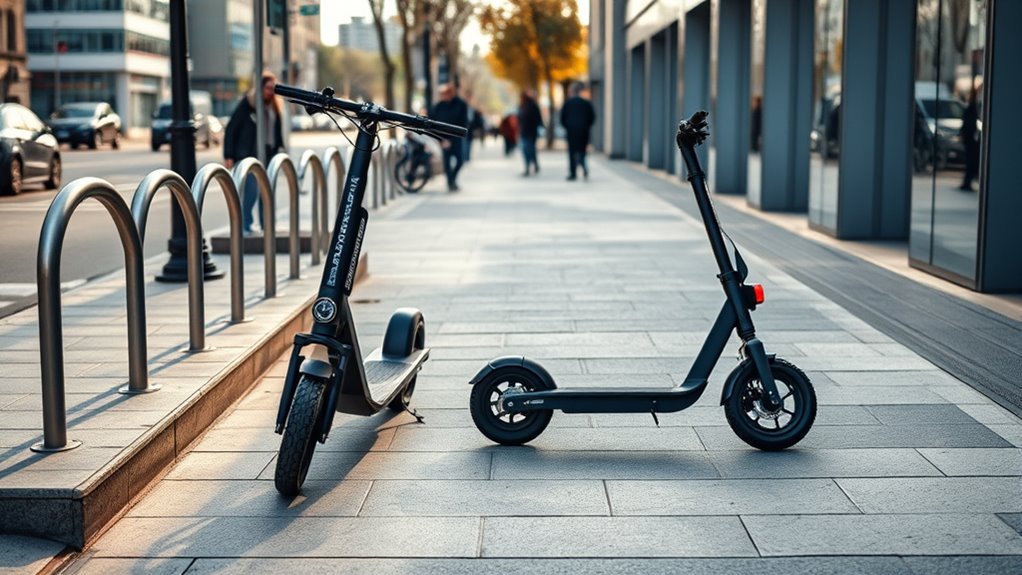
Safe electric scooter parking is simple when you focus on three things: legality, accessibility, and security. Choose a permitted parking area, keep the full pedestrian route clear, set the scooter upright on stable ground, and secure it as local rules require. The exact rules vary by city and by whether the scooter is privately owned or rented.
Quick Answer
Park an electric scooter in a designated bay or another locally permitted spot. Keep sidewalks, curb ramps, entrances, transit stops, and emergency access fully clear. Use the kickstand on firm, level ground, lock a private scooter through a structural part of its frame, and complete every rental-app parking step.
Key Takeaways
- Use a marked scooter bay, bike corral, or other location that local signs and the rental app allow.
- Do not rely on one universal clearance number. Leave the full width required by local accessibility and parking rules.
- Keep curb ramps, tactile paving, doorways, driveways, fire access, and transit boarding areas completely unobstructed.
- Set the scooter upright on firm, level ground and check that the kickstand is stable before walking away.
- Lock privately owned scooters securely, and finish all in-app steps for rental scooters, including any required parking photo.
At a Glance
| Time Required | About 1 to 3 minutes |
| Difficulty | Easy |
| Tools Needed | Kickstand; a suitable U-lock, D-lock, or chain for a private scooter; rental app when applicable |
| Cost | No added cost if you already own a suitable lock; rental penalties may apply for improper parking |
Disclosure: As an Amazon Associate I earn from qualifying purchases. Some links on this page are affiliate links, at no extra cost to you.
How to Park an Electric Scooter Safely
Use this step-by-step check every time you park:
- Stop safely and step off. Come to a complete stop away from moving traffic before checking your phone, signs, or parking map.
- Confirm that parking is legal. Look for a marked scooter bay, bike corral, or another location allowed by local signs and your rental app.
- Check the whole surrounding area. Keep the scooter away from curb ramps, tactile paving, building entrances, driveways, fire access, transit stops, benches, pay stations, and narrow walking routes.
- Choose firm, level ground. Avoid grass, loose gravel, soft soil, steep slopes, puddles, and any surface where the kickstand may sink or slide.
- Set it upright. Fully deploy the kickstand, gently release the handlebar, and confirm that the scooter does not wobble or lean into the path of travel.
- Secure it correctly. Lock a private scooter to a permitted, immovable object through a structural part of the frame or stem. Use the built-in lock on a rental scooter when the operator or city requires it.
- Complete the rental ride. Follow the app prompts, take a clear parking photo if requested, and wait for confirmation that the ride has ended.
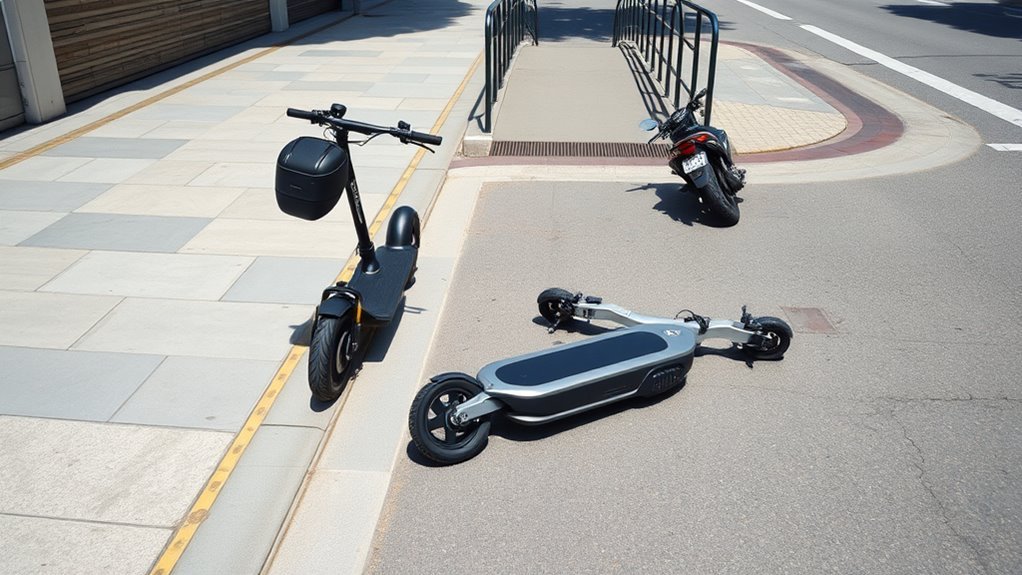
Warning: Never leave a scooter across a curb ramp, tactile surface, doorway, fire exit, driveway, or pedestrian route. A scooter that looks only slightly out of the way can still block a wheelchair user or create a serious trip hazard for someone with low vision.
Find Legal Electric Scooter Parking Spots
Start with designated scooter parking zones, bike corrals, or marked micromobility bays. These are usually the clearest options because the city or operator has already chosen the location to reduce sidewalk clutter. For a rental scooter, check the app before ending the ride. A parking icon may show an approved area, while shaded zones may restrict riding, parking, or both. Operator guidance such as Lime’s end-of-ride instructions also requires the scooter to remain upright and clear of pedestrian routes.
Shared Versus Private Scooter Parking
Shared scooters may have geofenced parking rules, built-in cable locks, mandatory bays, and a required end-of-ride photo. The app may refuse to end your ride outside an approved area. Do not assume that a nearby scooter was parked correctly.
Privately owned scooters are governed by local laws and property rules. A bike rack may be suitable in one place and prohibited or reserved in another. Never attach a lock to private railings, trees, accessibility equipment, temporary fencing, or traffic-control devices unless local rules clearly allow it.
Note: Electric scooter laws differ sharply by location. For example, current UK Department for Transport guidance allows approved rental scooters in official trial areas but still prohibits privately owned e-scooters on public roads and pavements. Always check the rules for the exact city or property where you plan to park.
Places to Avoid
- Curb ramps, corners, crossings, and tactile paving
- Doorways, emergency exits, loading areas, and driveways
- Bus stops, rail-station entrances, and passenger boarding zones
- Fire hydrants, fire lanes, utility access points, and waste collection areas
- Narrow sidewalks, stairs, handrails, benches, and parking pay stations
- Private property without permission
- Any no-parking, no-ride, or restricted zone shown by signs or the rental app
Use the Kickstand on Flat Ground
Once you have found a legal spot, place the scooter on a firm, stable, and level surface. Fully extend the kickstand and make sure its foot sits flat. Avoid grass, loose gravel, soft dirt, steep slopes, wet leaves, broken pavement, and surfaces that may shift under the scooter’s weight.
Do not balance the scooter on a curb edge or lean it against a wall where it could fall into a doorway or walking route. After setting the kickstand, hold the handlebar lightly for a moment and check for movement. If the scooter rocks, sinks, or leans, move it to a better surface.
Inspect the kickstand from time to time. A loose hinge, weak spring, bent leg, or worn foot can make the scooter unstable. Repair a damaged kickstand before relying on it in public.
Lock Your Scooter for Extra Security
A privately owned scooter is easy to roll or carry away if it is not secured. Use a strong U-lock, D-lock, or quality chain and attach the scooter to a permitted, immovable object. Metropolitan Police security guidance recommends quality locks, securing the frame, and using two locks where practical. Thread the lock through a solid part of the frame or lower stem that cannot be removed easily. Do not rely on locking only a wheel, handlebar, folding latch, or detachable accessory.
How to Lock a Private Electric Scooter
- Choose a recognized parking stand or another fixed object that local rules permit.
- Position the lock as high and tight as practical so there is less room for cutting or twisting tools.
- Fill extra space inside a U-lock so the scooter cannot be moved around easily.
- Use a second lock of a different type for longer stops or higher-risk areas.
- Remove easily detached accessories, and record the scooter’s serial number and identifying details.
- Choose a visible, well-lit location, preferably with regular foot traffic or camera coverage.
No lock guarantees that a scooter cannot be stolen. Layering security makes theft slower, noisier, and less attractive.
Pro Tip: Before locking up, photograph the parked scooter, its surroundings, and the lock placement. The image can help you remember the location and document how the scooter was secured.
Avoid Blocking Sidewalks and Ramps
Leave the full locally required pedestrian clear zone. Do not use a universal rule such as parking “1.5 meters from the curb.” Distance from the curb is not the same as usable path width, and local standards vary. In the United States, the 2010 ADA Standards use a 36-inch minimum clear width for many accessible walking surfaces, while cities may set wider scooter-parking rules. Seattle’s official shared-scooter guidance, for example, tells riders to leave at least six feet clear.
Clear Pedestrian Pathways
Park in the furnishing zone near street trees, poles, racks, or corrals only when local rules allow it and enough clear width remains. Keep the scooter parallel to the curb or rack when that arrangement reduces its footprint. The handlebar, stem, wheel, and lock must all remain outside the walking route.
Check the path from both directions before leaving. A scooter may look clear from one angle but still protrude into the route at handlebar height. This matters for wheelchair users, people with strollers, and people who navigate with a long cane.
Keep Ramps Accessible
Curb ramps and their landings must remain completely open. Do not park on the ramp, on tactile warning surfaces, beside the flared sides, or where the scooter blocks the approach. Also keep building ramps, handrails, and level landings clear.
| Do | Do Not |
|---|---|
| Park in a marked bay or permitted furnishing zone | Block a curb ramp or tactile surface |
| Leave the locally required clear path | Assume one clearance number applies everywhere |
| Keep entrances and emergency access open | Force pedestrians into the street |
| Check the handlebar and lock for protrusion | Crowd a narrow walkway |
Accessible parking is not only about avoiding a fine. It prevents trip hazards and keeps public space usable for everyone.
Stay Out of No-Parking Zones
Check signs, curb markings, property rules, and the rental app before parking. Many shared-scooter systems use mapped zones that can change by neighborhood, event, construction project, or time of day. A location that was valid on an earlier trip may not be valid today.
Do not leave a scooter in a fire lane, curb ramp, transit stop, loading zone, driveway, building entrance, station entrance, park area, private lot, or other restricted location unless the relevant authority clearly permits it. Never lock to equipment that workers or emergency responders may need to access.
If the app shows a no-parking zone, move to the nearest approved location rather than repeatedly trying to end the ride. Parking outside the service area or failing to complete the app process may keep the meter running or trigger a penalty.
Park Safely When No Spots Are Open
If the designated area is full, do not squeeze the scooter into a gap that blocks the walkway or makes other scooters unstable. Check the app for the next approved bay, look for a permitted bike corral, or continue to another legal location.
Find Nearby Alternatives
A safe alternative may be a nearby marked bay, an in-street bike corral, or a public rack that local rules allow scooters to use. Do not assume that every bike rack, parking space, signpost, or sidewalk edge is legal. Read posted restrictions and follow the operator’s instructions.
For a private scooter, folding and carrying it into your destination may be safer than leaving it in an uncertain public location, provided the property allows scooters indoors. For a rental scooter, contact in-app support if no approved location is reasonably available.
Keep Paths Clear
Any alternative must still meet the same basic test: the scooter is upright, stable, legal, visible, and outside every pedestrian, vehicle, and emergency route. Never lay it flat in a walking area or place it where a door could strike it.
| Action | Why It Matters |
|---|---|
| Park upright on stable ground | Reduces tip-over and trip hazards |
| Use the next approved location when a bay is full | Prevents overcrowding and obstruction |
| Choose a visible, well-lit area | Improves security and makes the scooter easier to find |
| Complete every app prompt | Confirms the rental ride has ended correctly |
Park for Short Stops, Overnight, and Bad Weather
The longer a scooter remains unattended, the more carefully you should choose the location and security method. For a quick stop, use a legal, visible spot and lock the scooter every time. For several hours or overnight, use secure indoor storage, a monitored parking facility, or another protected area when available and permitted.
- Do not leave the scooter in standing water, deep puddles, or a place where sprinklers or runoff may soak it.
- Avoid unstable ground that may soften after rain.
- Do not block indoor corridors, stairs, elevators, fire doors, or building exits.
- Remove detachable lights, bags, phone mounts, and other easy-to-take accessories.
- Follow the manufacturer’s storage and temperature guidance for your exact battery and scooter model.
What to Do if a Shared Scooter Is Blocking the Way
Report an improperly parked shared scooter through the operator’s app or the city’s reporting system. Include the scooter ID, exact location, and a clear photo when possible. If the scooter is creating an immediate danger, contact the appropriate local authority or emergency service.
Move a shared scooter only when it is safe, local guidance allows it, and you can do so without entering traffic or risking injury. Some scooters are heavy, locked, alarmed, or difficult to reposition. Reporting the obstruction is often safer than trying to lift it yourself.
Common Electric Scooter Parking Mistakes
- Using a universal 1.5-meter rule: Follow the local clear-path requirement instead of measuring from the curb.
- Copying another rider: A nearby scooter may already be parked incorrectly.
- Leaving the handlebar in the walkway: Check the scooter’s full width, not only the wheels.
- Parking on a curb edge or soft ground: The kickstand can slip, sink, or tip.
- Blocking curb ramps or tactile paving: These areas must remain fully usable.
- Locking only a wheel: Secure a structural part of the scooter to a permitted fixed object.
- Using a prohibited object: Trees, private railings, accessibility equipment, and traffic-control devices may not be legal locking points.
- Skipping the rental photo or confirmation: The ride may remain open or the operator may issue a warning or fee.
- Parking in private or high-traffic areas: The scooter may obstruct others, be removed, or be damaged.
Frequently Asked Questions
How do you safely park an electric scooter?
Use a legal designated area, keep every pedestrian and emergency route clear, place the scooter upright on firm ground, deploy the kickstand, secure it as required, and complete the rental app process before leaving.
Can I lock an electric scooter to a street sign?
Only when local rules allow it and the sign is not related to traffic control, accessibility, emergency access, or temporary works. A recognized bike rack or designated corral is usually the safer choice.
Can I park an electric scooter on the sidewalk?
It depends on local law. Some cities allow parking only in a furnishing zone or designated bay, while others require in-street corrals or prohibit sidewalk parking. Never block the required clear pedestrian route, curb ramps, entrances, or transit access.
What should I do if the rental app will not end my ride?
Check that you are inside an approved parking zone, position the scooter correctly, enable the phone permissions the app needs, retake the parking photo, and follow the on-screen prompts. Contact in-app support if the ride still will not close.
Are scooters good for autistic kids?
Autism alone does not determine whether a scooter is suitable. Consider the child’s age, balance, judgment, sensory needs, ability to follow safety rules, and the advice of a pediatrician or occupational therapist. The American Academy of Pediatrics recommends that children under 16 should not operate or ride motorized or electric scooters.
How long do two battery bars last on an electric scooter?
There is no universal mileage or time estimate for two bars. Battery displays, capacities, riding modes, temperatures, hills, tire pressure, rider weight, and battery condition vary by model. Use the scooter’s range estimate or owner’s manual and leave a safety margin.
What should you not do when parking an electric scooter?
Do not block sidewalks, curb ramps, tactile paving, doorways, driveways, hydrants, transit stops, emergency access, or private property. Do not leave the scooter flat, balance it on unstable ground, lock only a wheel, or ignore the app’s no-parking zones.
Conclusion
Good electric scooter parking protects your scooter and everyone who uses the space around it. Choose a legal location, preserve the full pedestrian route, use stable ground and the kickstand, and secure the scooter correctly. When a bay is full or the rules are unclear, keep looking rather than creating an obstruction. A careful extra minute can prevent a fall, a fine, a theft, or an accessibility barrier.
Sources
- U.S. Department of Justice: 2010 ADA Standards for Accessible Design – accessible-route clear-width and obstruction requirements.
- Seattle Department of Transportation: How to Use Scooter Share and Bike Share – official shared-scooter parking locations, clear-path guidance, and prohibited areas.
- UK Department for Transport: Using a Rental E-Scooter – current legal status and location-specific rental rules, updated July 7, 2026.
- Metropolitan Police: Protect Your Bike From Theft – D-lock, double-locking, secure-stand, lighting, and CCTV guidance that also applies to scooter theft prevention.
- Lime Help Center: Ending Your Ride – designated parking, upright positioning, kickstand use, access clearance, and parking-photo steps.
- American Academy of Pediatrics: Why Children Should Not Ride E-Scooters – child age and e-scooter safety guidance.
