
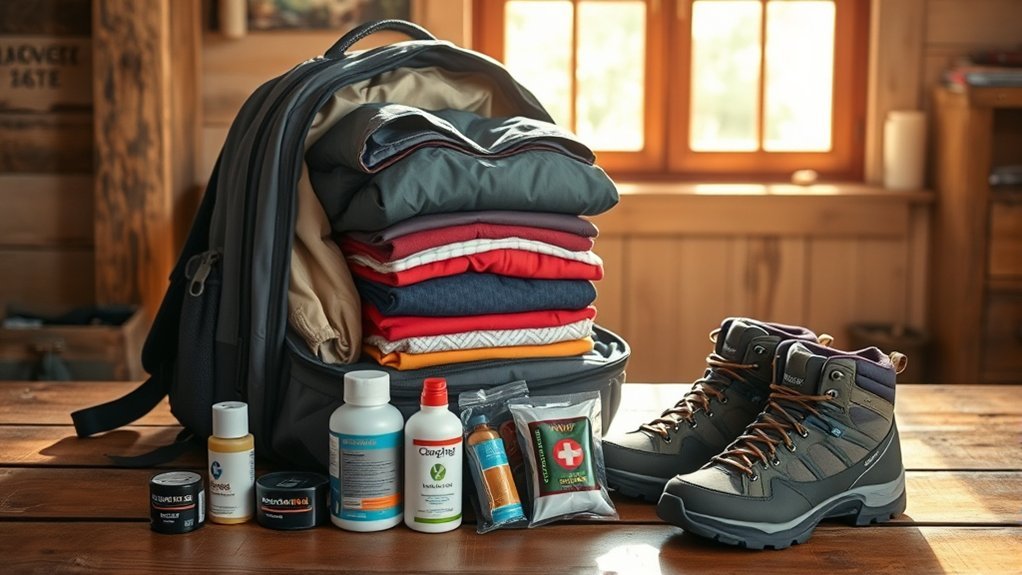
To pack your backpack efficiently, start with lighter items like sleeping bags at the bottom for cushioning. Place heavier gear in the middle for better balance. Keep the hydration reservoir at the top for easy access and secure quick-access items like snacks and emergency gear in external pockets. Fill gaps with clothing to minimize movement and guarantee stability. By following these tips, you can streamline your packing strategy for a more enjoyable outing, plus discover more helpful tricks next!
Packing the Bottom of the Backpack

Packing the bottom of your backpack is essential for a comfortable hike. Start by placing lighter, fluffier items like your sleeping bag at the base. This not only cushions your lumbar area but also helps maintain balance. Avoid stashing heavy gear down low, as it can lead to back pain on the trail. If you’re bringing a sleeping pad or sleep clothes, add those in too for extra comfort.
Many backpacks come with a dedicated compartment for sleep items, which keeps them organized and easily accessible. Properly packing the bottom enhances overall stability, reducing the risk of injury while you explore. Remember, the way you pack affects your energy and enjoyment, so take the time to do it right. With a well-packed bottom section, you’re setting yourself up for a liberating and enjoyable hiking experience.
Products Worth Considering
Free up 40% additional space: Frelaxy Compression Stuff Sack is an incredibly simple and practical solution to space-saving, they will give you more space to pack what you need and give you an unprecedented portable experience.
High Quality Material: It's perfect for spring, summer, fall, and cool weather. Crafted from durable, waterproof 210T polyester outer, filler highly elastic hollow cotton for warmth retention, lining breathable and skin-friendly durable fabric, this sleeping bag shields you from moisture and wind. Whether you're camping in mild or cooler temperatures (50°F-68°F), the hollow cotton filling provides warmth and insulation for a restful sleep
Product Size - Length: 48 inches/4 ft (1.2 m) Width: 1 inch (25 mm) Thickness: 1.5 mm
Packing the Middle of the Backpack
When packing the middle of your backpack, focus on placing heavier items for ideal weight distribution. Use this section to fill gaps with extra clothes, which helps stabilize your load and reduce movement. Make sure everything is secure to enhance comfort and prevent back strain on your hike.
Optimal Weight Distribution
The middle section of your backpack should hold heavier and bulkier items to guarantee ideal weight distribution. By placing these items here, you stabilize your center of gravity, making it easier on your muscles and joints as you navigate uneven terrain. For example, packing a bear canister filled with food and a cooking kit in this area keeps these essential supplies accessible and well-supported. Additionally, fill any gaps in the middle compartment with extra clothes to create a denser packing system. This prevents shifting and enhances stability. Securing your items in the middle minimizes movement while hiking, boosting your comfort and reducing the risk of injury. Prioritize this balance for a smoother, more enjoyable outdoor experience.
Secure Packing Techniques
To guarantee your backpack remains stable and comfortable, secure heavier items in the middle section. Place bulkier gear, like a bear canister filled with food and your cooking kit, here for ideal balance. Make sure these items are tightly packed to minimize movement while hiking, preventing discomfort and instability. Organize efficiently to maintain a low center of gravity, which reduces strain on your back. You can also use gaps in this section for extra clothes, creating a denser packing system that better distributes weight. Regularly check that heavier items stay close to your back, essential for maintaining proper posture and reducing fatigue. A well-packed middle section enhances your hiking experience and liberates your journey.
Gap Utilization Strategies
Utilizing gaps in your backpack’s middle section can greatly enhance your packing efficiency. Start by placing heavier and bulkier items first to maintain balance and support your back. Once that’s set, fill the gaps between these larger items with extra clothing. This not only maximizes space but also creates a denser packing system. Make sure to securely pack essential items like your bear canister filled with food and your cooking kit in this section to minimize movement during hikes. By organizing your gear properly, you’ll distribute weight evenly, reducing strain on your back. Remember to pack items tightly together to fill any voids, preventing shifting and keeping your load stable throughout your journey.
Packing the Top of the Backpack
Packing the top of your backpack efficiently sets the stage for a successful hiking trip, especially when you need quick access to essential gear. Start by loading your hydration reservoir at the top; this guarantees easy access to water and helps maintain balance as you pack other items. Next, organize your tent components—rain fly, poles, body, and stakes—so they’re readily available during unexpected weather changes. If you prefer, strap tent poles to the outside of your pack for better access and space optimization.
Once everything is in place, secure all items in the top section to prevent shifting while you hike. Don’t forget to utilize the top lid for crucial gear like a headlamp and first aid kit; these should be easily reachable in case of emergencies. With this setup, you’re well-prepared for whatever your adventure throws at you.
Utilizing External Pockets
External pockets on your backpack are invaluable for quick access to important items during your hike. By utilizing these pockets effectively, you can streamline your experience and stay focused on the adventure ahead. Here are a few tips for what to store in external pockets:
- Water Bottle: Store it here for easy access and efficient filtering, keeping it separate from other gear.
- Poop Kit & Bear Spray: Keep these essential items in a readily accessible pocket for quick retrieval when needed.
- Extra Layers: Pack your warm or rain gear in the shovel pocket, allowing for quick adjustments as weather changes.
Products Worth Considering
A Convenient Durable Extra Pocket Bag That Can Be Attached to Any Backpack or to Your Waist Belt, It Features Convenient Velcro Closures Tabs and Strong Metal Snap Buttons for Fast, Easy, and Secure Fixing and for Additional Protection Against Loss
【Lightweight And Foldable Backpack】 Seektop lightweight travel backpack weighs only 0.99 lbs but has a capacity of 20 liters, ideal for adult hikers seeking minimalist gear for day trips. Folds into 8.26"x7.87" compact pouch using built-in zippered pocket, effortlessly store in travel luggage as backup hiking backpack for sudden adventures.
【Lightweight And Foldable Backpack】 Seektop lightweight travel backpack weighs only 0.76 lbs but has a capacity of 15 liters, ideal for adult hikers seeking minimalist gear for day trips. Folds into 7.48"x7.87" compact pouch using built-in zippered pocket, effortlessly store in travel luggage as backup hiking backpack for sudden adventures.
Additional Packing Considerations
When packing your backpack, think about quick access essentials like your cell phone and snacks—keeping them handy in the hip belt pocket can save you time on the trail. Don’t forget to secure your wallet and keys in a zipped pocket to prevent losing them while you hike. Additionally, consider using external lash points for gear you need frequently, allowing you to maximize space and maintain organization.
Products Worth Considering
Large Capacity: With 40L storage space, this backpack features with multi-compartment design includes one main zipped compartment, several front pockets with zippers and two side pockets. Large capacity helps you easily organize all your essential items.
【Phone Pocket】The shoulder strap phone pocket can hold phones of all sizes and also store your change and bank cards. It allows you to quickly take out your phone and change while hiking or traveling
【Small Size, Large Capacity】Size is 3.93*0.98*7.28in.There is a zippered main pocket that can carry mobile phones (for holding the iPhone 16 Pro Max),power banks,bank cards,etc.The other front mesh pocket can hold water bottles and other small items, which is very convenient to take out
Quick Access Essentials
Efficiently organizing your backpack can make a significant difference during your outdoor adventures. To stay prepared and liberated on the trail, keep your quick access essentials handy. Here’s what you should do:
- Store your cell phone and trail snacks in the hip belt pocket for easy access during breaks or emergencies.
- Carry extra layers for warmth or rain in the shovel pocket, ensuring you can quickly respond to changing weather.
- Attach trekking poles to exterior loops when not in use, keeping them accessible without cluttering your pack.
Secure Valuable Items
To keep your valuable items safe and secure while hiking, it’s important to choose the right storage spots in your backpack. Store your cell phone and trail snacks in the hip belt pocket for quick access on the go. Keep your wallet and keys in an inner pocket to minimize the risk of losing them during your hike. Utilize external lash points for gear like crampons or ice axes, ensuring they’re easily reachable. If you’re not using your trekking poles, attach them to exterior loops for a hands-free experience and to save internal space. Personalize your pack’s organization by considering which items you need quick access to, balancing convenience with security for a smoother, more liberated adventure.
Tips for Minimizing Movement
Minimizing movement in your backpack is essential for a comfortable hike. When your gear shifts, it can throw off your balance and lead to discomfort. Follow these tips to keep everything secure:
Minimizing movement in your backpack is crucial for a comfortable hike; secure your gear to maintain balance and prevent discomfort.
- Place heavier items in the middle: This enhances balance, supporting your back and reducing movement.
- Fill gaps: Use extra clothes or smaller items to create a denser packing system, which minimizes shifting.
- Secure all items tightly: This prevents any movement, ensuring a stable load as you traverse the trails.
Products Worth Considering
How to Compress:The cube is compressed by the middle zipper; Using steps: 1)Fold and flatten clothes 2)Pack clothes in the cube and zip the front zipper 3) Put a finger on the back of the middle zipper when compressing to avoid zipper get stuck in fabric
SPACE-SAVING DESIGN FOR TRAVEL & HOME: Compact and efficient at 11"L x 6"W x 3"H (each), these packing cubes fit perfectly in suitcases, duffel bags, backpacks, and totes, making them ideal for business trips, vacations, camping, and cruises. You can also use them at home to maximize closet space and keep items organized and easy to find.
Premium Fabric: Smooth and durable fabric protects clothes from wrinkles and stains; high performance feature makes the packing cubes can bear high density wear and tear during traveling; water-repellent feature protect your clothes from spill or leaks
Organizing for Quick Access
When you’re out on the trails, having quick access to essential gear can make all the difference. Keep frequently used items like your cell phone and trail snacks in the hip belt pocket for easy reach while hiking. Store your headlamp and first aid kit in the top lid of your backpack, ensuring they’re readily available during emergencies or nighttime activities. For hydration, place your water bottle in an external pocket, allowing you to sip without rummaging through your pack.
Utilize external pockets for items like bear spray or a poop kit, so you can grab them swiftly when needed. When it comes to your tent, organize components like the rain fly and stakes at the top for fast setup in unpredictable weather. By planning your organization wisely, you empower yourself to handle any situation with confidence and efficiency.
Products Worth Considering
More durable: The travel shoe bags adopt waterproof nylon fabric with double stitching and two-way zippers, which is more durable to use.
DOUBLE ZIPPER-POCKET: Backpack strap pouch has 2 lower zip-compartments to divide your EDC gears on the shoulder, the outer long zip-pocket work great for sunglasses, TQ, or a flashlight. The enclosed main zip-compartment can hold a smartphone, power bank, notebook, and its interior slot pocket with elastic edge can store small kits like pens, cards, and glow sticks stably. Patent Number: D1046444
[ROBUST & RESILIENT]: Our tactical backpack measures 8"H X 6"W X 3"D. ifak trauma kit Designed for ultimate toughness, a double-layered First Aid Kit Pouch made from 600D polyester, standing up to the demands of military personnel, first responders, and outdoor enthusiasts.
Frequently Asked Questions
What Are the Best Materials for a Lightweight Backpack?
The best materials for a lightweight backpack are ripstop nylon, polyester, and mesh. These fabrics offer durability without the bulk, allowing you to carry your essentials comfortably while enjoying your adventures without unnecessary weight.
How Do I Choose the Right Backpack Size for My Needs?
Most people underestimate backpack size, with 60% choosing incorrectly. To find the right fit, consider your torso length and intended use—hiking, commuting, or travel—ensuring comfort and efficiency for your adventures ahead.
What Should I Do if My Backpack Feels Unbalanced?
Shift heavier items closer to your back and distribute weight evenly. Adjust straps for a snug fit, and consider using compression straps. If it still feels off, reassess your packing strategy for better balance.
Can I Pack Food in My Backpack Without Attracting Animals?
Yes, you can pack food in your backpack without attracting animals. Use airtight containers, keep food sealed, and store it in the backpack’s inner pockets. Avoid strong-smelling items, and always clean up any spills immediately.
How Often Should I Repack My Backpack During a Trip?
You should repack your backpack daily or whenever you reach a new campsite. This keeps your gear organized, guarantees easy access, and helps you adjust to changing needs, making your journey smoother and more enjoyable.
Conclusion
Packing your backpack efficiently is like fitting together pieces of a puzzle; every item has its place. By following these steps and tips, you’ll maximize space and guarantee easy access to your essentials. Remember to balance the weight, utilize external pockets, and pack thoughtfully to minimize movement. With these strategies in mind, you’ll be ready to tackle any adventure with confidence and ease. Happy packing!