
Last Updated on July 24, 2026 by Logan Reeves
A successful fishing trip starts before you reach the water. You need to choose a target species and location, check the current rules, watch the weather, pack gear that fits the fishery, and make a safety plan. These steps matter whether you are visiting a local pond, hiking to a remote stream, booking a charter, or flying with fishing equipment.
Quick Answer
To plan a fishing trip, choose your species and water first, then verify licenses, seasons, limits, access rules, weather, and local conditions. Pack species-appropriate tackle, safety equipment, water, food, and navigation tools. Protect your rods during travel, follow bait-transport rules, and use careful catch-and-release methods.
Key Takeaways
- Plan around a specific species, waterbody, season, and legal access point.
- Check official regulations again shortly before the trip because seasons, closures, and limits can change.
- Match your rod, reel, line, hooks, bait, and lures to the fishery instead of relying on one universal setup.
- Treat weather, cold water, lightning, poor cell coverage, and unstable shorelines as safety risks.
- Protect fish and habitats through careful handling, proper waste disposal, and clean-drain-dry practices.
At a Glance
| Time Required | About 30 to 60 minutes for a local trip; longer for remote, overnight, charter, or air-travel plans |
| Difficulty | Easy to moderate, depending on access, weather, water type, and target species |
| Tools Needed | Official regulations, map, weather forecast, gear checklist, navigation backup, and emergency contacts |
| Cost | Varies by license, access fee, transportation, lodging, guide service, bait, and gear rental |
Disclosure: As an Amazon Associate I earn from qualifying purchases. Some links on this page are affiliate links, at no extra cost to you.
Plan Your Fishing Trip Around a Species and Location
Start by deciding what you want to catch and how you want to fish. A bank-fishing trip for stocked trout requires a different plan from surf fishing, kayak fishing, fly fishing, or a guided offshore trip. Your target species affects the season, location, tackle, bait, legal limits, and safest time to go.
- Choose the trip type: shore, pier, wading, kayak, private boat, charter, or remote hike-in fishing.
- Select a target species: use the local fish and wildlife agency’s species pages, stocking reports, or fishing forecasts.
- Confirm legal access: check parking hours, launch rules, private-property boundaries, permits, and trail conditions.
- Set a backup location: choose a second nearby waterbody in case the first site is closed, crowded, unsafe, or unfishable.
- Decide whether you will keep fish: this determines whether you need a cooler, ice, measuring tool, tags, or report cards.
How to Choose the Best Time for Your Fishing Trip
Dawn and dusk can be productive because many fish feed in lower light, but they are not universal rules. The best time depends on the species, season, water temperature, tide or river flow, weather, and local food sources. In cool spring weather, midday warmth may improve shallow-water activity. During hot weather, early morning, evening, deeper water, shade, or moving water may be better. Night fishing can also be productive for some species where it is legal, but you need safe lighting, navigation, warmer clothing, and extra awareness of boats and shoreline hazards.
Match the Season to the Species
Use local fishing forecasts and recent reports instead of assuming spring and fall are always best. Spawning runs, stocking schedules, migrations, water releases, and seasonal closures can create short windows of opportunity. Saltwater anglers should also study tide direction and height, while river anglers should check flow, clarity, and recent rainfall.
Check Weather and Water Conditions
- Temperature: fish are sensitive to water temperature, and each species has a preferred range.
- Light: low light can make some fish less cautious, while other species feed well during bright periods.
- Wind: light wind may move food and break up surface glare, but strong wind can make casting, paddling, and boating unsafe.
- Clouds and rain: overcast skies may extend shallow feeding, but heavy rain can muddy water, raise rivers, and create dangerous currents.
- Tides and current: moving water often concentrates bait, but the best stage varies by species and location.
Pro Tip: Compare the forecast with a recent local fishing report. A good seasonal pattern can change quickly after a cold front, heat wave, storm, dam release, or sudden change in water clarity.
Local Fishing Regulations You Need to Know
Fishing laws are specific to the state, province, country, waterbody, species, season, and fishing method. Check the official agency website for both the general regulations and any emergency orders or in-season updates. Do not rely only on an old screenshot, social media post, or summary table.
Required Fishing Licenses
Most destinations require a license based on age, residency, trip length, and water type. Additional stamps, validations, tags, or report cards may apply to certain species or areas. Keep a digital or printed copy in the form accepted by the local authority.
California is a useful example. Anglers age 16 or older generally need a sport fishing license. A license is not required while angling from a qualifying public pier in ocean or bay waters, but all other rules still apply, including seasons, size limits, bag limits, and required report cards. Review the current California sport fishing license and report card rules before fishing.
Warning: A pier, dock, jetty, or seawall is not automatically a license-free public fishing pier. Confirm the site’s legal definition and current rules before casting.
Daily Catch Limits
Bag and possession limits vary widely. Some waters have different limits for wild and hatchery fish, different rules for tributaries, or special limits for slot-size fish. A fish may be legal in one waterbody and protected in another nearby waterbody.
- Check the daily bag limit and the total possession limit.
- Confirm minimum, maximum, and slot-size rules.
- Learn how the agency requires you to measure the fish.
- Check whether harvest tags or report cards must be completed immediately.
- Know whether fish must remain whole or identifiable during transport.
Seasonal Regulations Overview
Do not use a single statewide season table for trout, bass, sturgeon, catfish, or salmon. Open dates and size limits may change by waterbody, region, fish stock, and emergency action. California, for example, publishes separate freshwater and ocean rules and advises anglers to check for revised versions during the year. Use the current California fishing regulations hub or the official agency for your destination.
| Rule to Verify | What to Check | Why It Matters |
|---|---|---|
| Open season | Dates, days of the week, hours, and emergency closures | A species may be closed even when the waterbody is open |
| Bag and possession limits | Daily limit, possession limit, and combined-species limit | Limits can differ by species, region, and fish origin |
| Size and harvest rules | Minimum, maximum, slot limit, catch-and-release, and measurement method | Incorrect measurement can turn a legal catch into a violation |
| Gear and bait | Number of rods, hook type, barbs, live bait, lead restrictions, and tackle limits | Legal methods may change from one water to another |
| Protected areas | Marine protected areas, spawning closures, sanctuary zones, and private land | Some areas prohibit all fishing or restrict specific methods |
Note: Regulations can change after a booklet is printed. Check the official website again within 24 to 48 hours of departure, especially for salmon, sturgeon, shellfish, drought-affected rivers, marine fisheries, and waters managed by emergency order.
Essential Fishing Gear for Your Next Adventure
Your tackle should match the target species, water depth, cover, current, and fishing method. A light freshwater setup may use 4- to 12-pound-test line and small hooks such as sizes 6 to 10, but those ranges are not suitable for every trip. Saltwater fish, heavy cover, trolling, large catfish, salmon, and sturgeon may require much stronger equipment.
| Category | What to Pack |
|---|---|
| Core tackle | Rod, reel, suitable line, legal hooks, leaders, swivels, weights, floats, lures, or permitted bait |
| Fish handling | Pliers, dehooker, line cutters, wet rubber or knotless net, measuring tool, and release device where needed |
| Personal safety | Properly fitted life jacket when boating or paddling, first aid kit, sun protection, water, food, rain layer, and seasonal clothing |
| Navigation | Downloaded offline map, charged phone, power bank, compass, GPS, light, and emergency whistle |
| Harvest and storage | Cooler, enough ice, tags or report card, and a legal way to keep the catch identifiable |
| Organization | Tackle box, waterproof pouches, rod sleeves, labels, spare line, and a small trash bag |
Live bait such as worms or crickets can work well where legal, but never assume you may transport live bait between waters. Some parks and states restrict live fish, amphibians, minnows, or water from bait containers because they can spread disease and invasive species.
Tips for Reaching Remote Fishing Spots
Remote water can offer quiet fishing, but poor access, changing weather, weak cell service, and delayed rescue increase the risk. Plan the route as carefully as you plan the tackle.
Accessible Routes Planning
- Study official maps, land-management pages, recent trail reports, and satellite views.
- Confirm road conditions, gates, parking, launch hours, access fees, and private-property boundaries.
- Download maps for offline use and carry a backup navigation method.
- Check the distance, elevation gain, river crossings, shoreline stability, and return route.
- Choose an alternate site that is easier to reach if conditions worsen.
Essential Gear Checklist
Use a durable backpack or dry bag, a protected rod or telescopic setup, a compact tackle box, sturdy footwear, extra water, food, a first aid kit, a headlamp, and clothing for changing conditions. Pack only the tackle you are likely to use, but do not cut safety supplies to reduce weight.
Local Regulations Awareness
Remote does not mean unregulated. Confirm fishing rules, camping restrictions, fire rules, land access, boat inspections, bait restrictions, and whether the area requires a wilderness permit. Respect closures that protect spawning fish, wildlife, water quality, or damaged trails.
Warning: Do not depend on cell service. Share your destination, route, vehicle details, group size, and expected return time with a reliable person. Set a clear time for that person to seek help if you do not return.
Fishing Trip Safety and Emergency Planning
Check the forecast before leaving and continue watching the sky, wind, water level, and temperature. The National Weather Service advises people fishing or boating to monitor forecasts and be ready to return to shore quickly when severe weather threatens. Review its inland boating and fishing safety guidance.
- Wear a correctly fitted life jacket when boating, kayaking, canoeing, wading in strong current, or fishing near dangerous water.
- Leave the water at the first sign of lightning, rapidly building clouds, strong wind, rising water, or unsafe waves.
- Carry drinking water, sun protection, insect protection, and layers for cold or wet conditions.
- Keep sharp hooks controlled and carry pliers or cutters for hook injuries.
- Tell someone where you are going and when you will return.
- Know the local emergency number, nearest road access, and nearest medical facility.
Cold water can be dangerous even when the air feels warm. Slippery rocks, unstable banks, surf, wakes, and sudden dam releases also deserve careful attention. Turn back when conditions exceed your experience or equipment.
Researching Fishing Conditions Before Your Trip
Check several sources instead of trusting one app or report. Useful information includes water temperature, flow, clarity, tide, wave height, recent rainfall, stocking activity, boat-ramp status, algae warnings, wildfire closures, and recent angler reports.
- Official agency updates: regulations, emergency closures, stocking reports, fish advisories, and access notices.
- Weather and water data: local forecasts, river gauges, tide tables, marine forecasts, and buoy observations.
- Local reports: tackle shops, guides, marinas, park staff, recent fishing reports, and community apps such as Fishbrain. Treat user reports as leads and verify legal or safety information with official sources.
- Maps: depth charts, public-access maps, marine protected areas, trails, and private-land boundaries.
Recent information is most useful when it matches your species, technique, and exact area. A report from the opposite end of a large lake or from a different river section may not describe your conditions.
Connect With Local Guides for Expert Fishing Advice
A qualified local guide can shorten the learning curve, provide suitable tackle, explain seasonal patterns, and help you fish unfamiliar water safely. This can be especially valuable for offshore trips, large rivers, remote areas, and species that require specialized methods.
- Ask what is included in the rate, such as tackle, bait, fish cleaning, safety gear, meals, or permits.
- Confirm the cancellation and weather policy.
- Check the guide’s required license, insurance, vessel credentials, and recent reviews where applicable.
- Explain your experience level, mobility needs, target species, and whether you plan to keep or release fish.
- Ask what clothing, food, medication, and personal equipment you must bring.
A good guide should discuss realistic expectations rather than promise a guaranteed catch.
Best Practices for Traveling With Fishing Gear
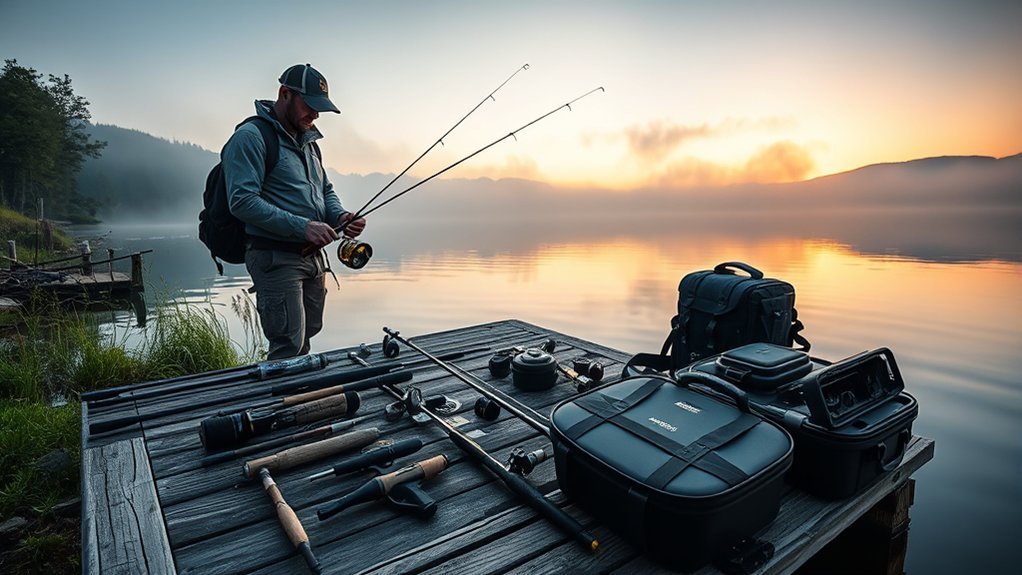
Protect rods in a rigid or padded case, loosen reel drags, cover sharp points, and keep small tackle organized. Photograph expensive equipment before travel and label cases with your contact details.
Traveling by Car
- Secure rods so doors, cargo, or passengers cannot crush them.
- Keep hooks covered and tackle boxes closed.
- Do not leave heat-sensitive line, electronics, bait, or medication in a hot vehicle.
- Transport live bait, fish, and water only when local rules allow it. When permitted, use a secure, aerated container and never release unused bait into another waterbody.
- Keep wet waders and muddy gear separate until you can clean and dry them.
Flying With Fishing Gear
The Transportation Security Administration permits fishing rods in carry-on and checked baggage, but the rod must meet the airline’s size rules. TSA advises that large hooks and other dangerous sharp tackle should be sheathed, securely wrapped, and packed in checked baggage. Small flies and expensive reels that do not create a security concern may be carried on, subject to screening. Review the current TSA fishing gear guidance and your airline’s baggage policy before departure.
Preventing the Spread of Invasive Species
Before moving to another waterbody, remove visible plants, animals, mud, and debris. Drain boats, livewells, motors, bait containers, and other spaces that hold water. Dry equipment as required by the destination, and dispose of unwanted bait in the trash rather than releasing it. The National Park Service explains these steps in its Clean, Drain, Dry guidance.
Making the Most of Your Fishing Experience: Pro Tips
- Start with high-percentage water: look for depth changes, current seams, points, weed edges, docks, rocks, stumps, shade, or baitfish.
- Match local food: choose lure size, color, action, or bait that resembles what the target fish is eating.
- Change one variable at a time: adjust depth, speed, lure, or location so you can learn what caused the response.
- Use suitable tackle: select a rod, line, and hook strong enough to land the fish without an unnecessarily long fight.
- Keep a simple log: record weather, water temperature, location, depth, lure, tide or flow, and successful patterns.
- Know when to move: if you have covered the likely depth and structure without signs of fish, test a new area.
There is no single most effective fishing technique. A Texas-rigged worm may work well for bass in cover, while a small jig can suit panfish. A float rig, fly, trolling setup, or natural bait may fit another species and waterbody better.
What to Know About Fishing Etiquette and Conservation
Give other anglers enough room to cast, drift, land fish, and move safely. Avoid crossing lines, blocking launches, creating excessive noise, or crowding someone who is already fishing a small spot. Follow posted rules and leave gates, parking areas, campsites, and shorelines in good condition.
For fish you plan to release, use tackle strong enough to avoid exhaustion and prepare release tools before the fish is landed. NOAA recommends dehooking a fish in the water when possible, using wet hands, avoiding the eyes and gills, supporting the body, and keeping air exposure to a minimum. Less than 60 seconds is ideal when a fish must leave the water. Review NOAA Fisheries’ catch-and-release best practices.
- Use barbless hooks, crimped barbs, circle hooks, or non-stainless hooks when appropriate or required.
- Use a wet rubber or knotless net for fish that need netting.
- Cut the line close to a deeply swallowed hook when removal would cause more injury.
- Never place a fish on hot, dry, or rough ground for a photograph.
- Use a descending device where required or appropriate for fish affected by barotrauma.
- Pack out fishing line, hooks, bait containers, food wrappers, and all other trash.
A responsible fishing trip protects three things at once: the angler, the fishery, and access for the next visitor.
Frequently Asked Questions
What is the 80/20 rule in fishing?
The 80/20 rule is an informal idea that a large share of your catches may come from a small share of the available water. Use it as a reminder to identify productive depth, cover, current, temperature, and food instead of casting everywhere at random. It is not a biological law or guaranteed ratio.
What is the 90/10 rule in fishing?
The 90/10 rule expresses the same general idea more strongly: fish often concentrate in limited areas that offer food, cover, suitable temperature, oxygen, or current. The exact percentage is not proven or fixed, so use it as a search strategy rather than a factual measurement.
What is the most effective fishing technique?
The most effective technique is the one that matches the target species, depth, habitat, forage, water conditions, and legal rules. Start with a proven local method, then adjust lure or bait, depth, speed, and location based on what you observe.
Why do some anglers quit fishing?
Common reasons include repeated poor results, limited access, rising costs, lack of time, uncomfortable conditions, and overly high expectations. Shorter trips, simpler gear, realistic goals, a local mentor, and learning one waterbody at a time can make fishing more enjoyable.
Do I need a fishing license when traveling?
Usually, you must follow the license rules for the place where you fish, not the place where you live. Nonresident fees and short-term licenses may apply. Some waters also require stamps, permits, validations, tags, or report cards. Check the official agency before every trip.
Can I take fishing rods and hooks on a plane?
TSA allows fishing rods in carry-on and checked bags, but airline size rules still apply. Large hooks and dangerous sharp tackle should be sheathed, securely wrapped, and placed in checked baggage. Confirm both security and airline rules before packing.
Conclusion
A rewarding fishing trip comes from preparation, not a promise of constant action. Choose a species and waterbody, verify the latest rules, study the conditions, carry the right tackle and safety gear, and protect the places you visit. When the weather, access, or regulations change, adjust the plan. Good decisions help you return safely and leave a healthier fishery behind.
Sources
- California Department of Fish and Wildlife: Sport Fishing Licenses and Report Cards – license ages, public-pier exception, validations, and report-card requirements
- California Department of Fish and Wildlife: Fishing Regulations – current freshwater and ocean regulation resources and revision notices
- Transportation Security Administration: Fishing Gear – carry-on and checked-baggage guidance for rods, hooks, and lures
- NOAA Fisheries: Catch-and-Release Best Practices – gear, handling, air exposure, dehooking, and release guidance
- National Park Service: Clean, Drain, Dry – steps for reducing the spread of aquatic invasive species
- National Weather Service: Inland Boating Safety – forecast monitoring and severe-weather planning for fishing and boating
