
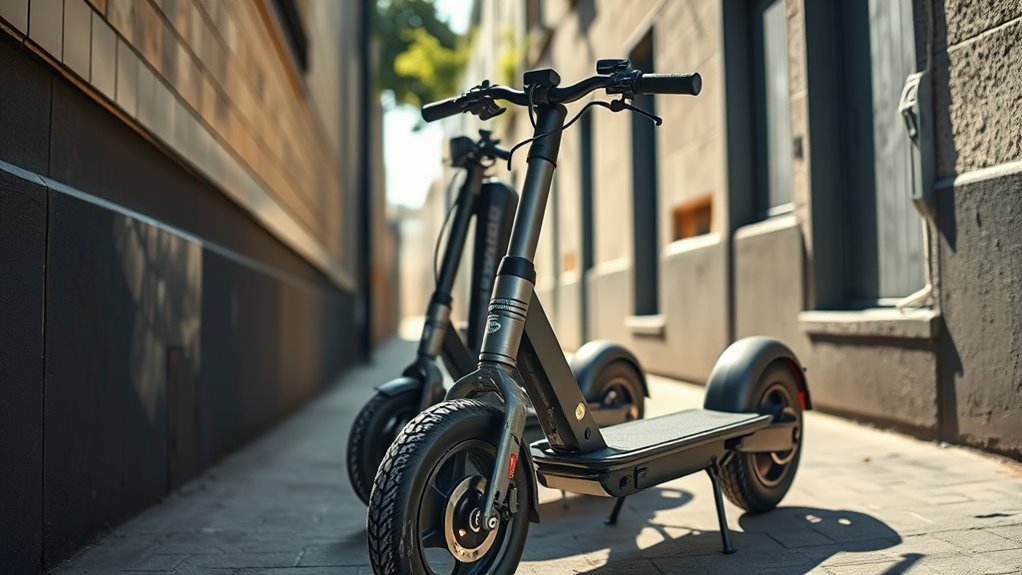
Last Updated on August 26, 2026 by Caleb Warren
An electric scooter does not have a fixed expiration date. For a regularly used consumer model, roughly 3 to 5 years is a useful planning estimate rather than a guaranteed specification. Battery condition, mileage, rider weight, road quality, weather exposure, maintenance, repairability, and replacement-parts availability usually matter more than the scooter’s age alone.
Quick Answer
Most electric scooters do not have a fixed expiration date. For a regularly used consumer model, roughly 3–5 years is a reasonable planning estimate, but the battery, tires, brakes, folding hardware, weather exposure, and parts availability matter more than the calendar. A replaceable battery can extend the scooter’s useful life.
Key Takeaways
- Three to five years is only a planning range: actual scooter life depends on usage, construction, maintenance, storage, and whether major parts can be replaced.
- Battery life is model-specific: NIU says its kick-scooter batteries are tested to reach about 500 charging cycles before a noticeable difference in daily use.
- Tires and brakes may wear before the battery: these are normal service items and do not mean the whole scooter is finished.
- Long-term storage requires model-specific care: do not assume the battery should be stored at 100% charge.
- Battery safety matters: use the supplied or manufacturer-approved charger, remain present while charging, and stop using a battery that is swollen, damaged, unusually hot, smoking, or giving off an unusual odor.
Disclosure: As an Amazon Associate I earn from qualifying purchases. Some links on this page are affiliate links, at no extra cost to you.
How Long Does an Electric Scooter Last?
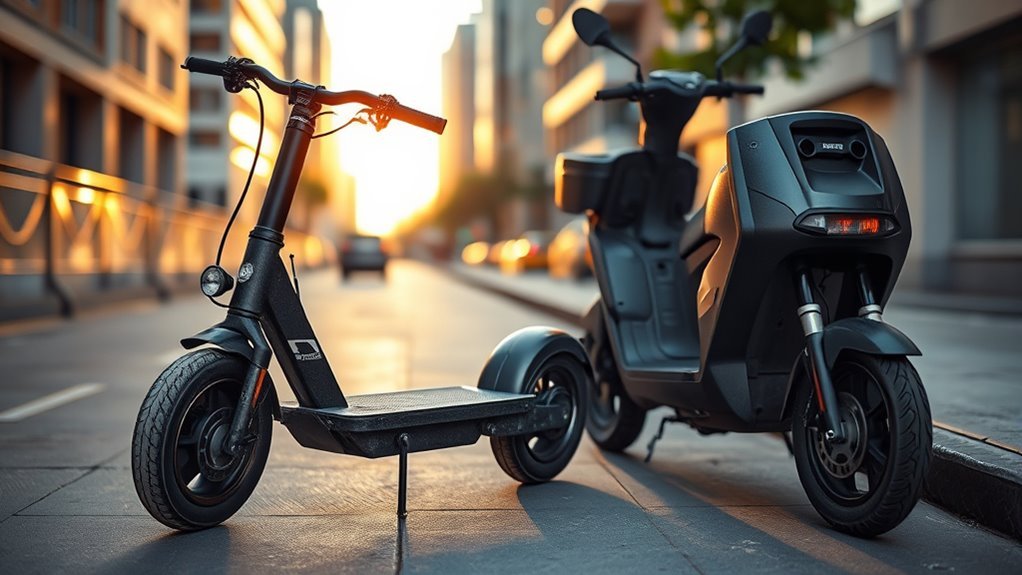
A well-cared-for electric scooter can remain useful for several years, but there is no industry-wide number that applies to every model. A practical 3-to-5-year planning range works for many consumer scooters, while lightly used, repairable models may remain serviceable longer. Heavy commercial-style use, water damage, corrosion, repeated impacts, and unavailable replacement parts can shorten that period substantially.
The lithium-ion battery is one of the most important limits on long-term performance because its usable capacity gradually declines with cycling and age. However, it is not accurate to say every scooter battery dies after the same number of cycles. NIU states that its kick-scooter batteries are tested to reach about 500 charging cycles before a noticeable difference in daily use. Other manufacturers may use different cells, battery-management systems, cycle definitions, charging limits, and replacement criteria.
Tires, brake pads, bearings, folding mechanisms, cables, and other mechanical parts may need service before the battery becomes unusable. That is normal maintenance rather than the end of the scooter.
A scooter usually becomes uneconomical to keep when battery, electronic, structural, and repair costs stack up—not simply because it reaches a certain birthday.
What Shortens Electric Scooter Lifespan?
Heavy use, overloading, impacts, poor maintenance, moisture, unsuitable charging, extreme temperatures, and long periods of improper storage can all shorten an electric scooter’s useful life. Most damage is cumulative: a slightly loose folding joint, underinflated tire, corroded connector, or weak brake becomes more serious when it is ignored.
Heavy Use And Overloading
Daily high-mileage riding places more cycles on the battery and more wear on tires, bearings, brakes, suspension, folding hardware, and fasteners. Rough pavement, potholes, curbs, gravel, and repeated hard impacts add mechanical stress.
Stay within the scooter manufacturer’s stated maximum rider and cargo weight. Excess loading can increase braking distance, heat the motor and controller, accelerate tire wear, and place extra stress on the frame. NIU’s warranty terms, for example, specifically exclude frame cracking caused by excessive load, which shows why the rated load limit matters.
Aggressive acceleration and repeated hard braking can also increase energy use and component heat. You do not need to ride excessively slowly, but smoother acceleration, avoiding unnecessary curb drops, and reducing speed on broken pavement can reduce avoidable wear.
Poor Maintenance And Storage
Poor maintenance can shorten scooter life because small problems often damage other parts. Low tire pressure can increase rolling resistance and make the motor work harder. Worn brake pads can damage rotors. Loose fasteners can increase movement in the stem or folding mechanism. Moisture can corrode bearings, electrical connectors, and hardware.
Replace worn tires, brake pads, damaged cables, and loose or damaged hardware promptly. Store the scooter in a dry indoor area whenever possible and follow the manufacturer’s battery-storage instructions if it will not be used for weeks or months.
Water, Weather, and Temperature
An IP rating does not make an electric scooter waterproof. Ratings vary by model, and water-resistance testing applies under defined laboratory conditions. Avoid submerging the scooter, riding through deep water, pressure-washing it, or plugging in a wet charging port.
Temperature also matters. Cold weather can temporarily reduce lithium-ion battery range and power, while prolonged high temperatures can accelerate battery aging. Always follow the operating, charging, and storage temperature limits in the scooter’s manual rather than relying on one temperature range for every model.
How Long Do Scooter Batteries Last?
Battery lifespan should be considered in two ways: cycle life and calendar life. Cycle life describes how much charging and discharging the battery experiences. Calendar life describes aging that happens simply with time, even if the scooter is not ridden every day.
There is no universal cycle count for every electric scooter. NIU says its kick-scooter batteries can undergo about 500 charging and discharging cycles under normal working temperatures and uses an example in which 500 cycles could translate to roughly four years for a rider who charges every few days. That example should not be treated as a guarantee for another scooter or usage pattern.
Battery Cycle Lifespan
A charge cycle is not necessarily the same thing as plugging the scooter in once. Manufacturers can define or count cycles differently, and partial charging may contribute only part of an equivalent full cycle.
| Battery factor | What it means for lifespan |
|---|---|
| Published manufacturer cycle rating | Use the number in your model’s documentation instead of assuming every scooter has the same cycle life. |
| Frequent deep discharge | Can add battery stress compared with keeping the pack within the manufacturer’s normal operating range. |
| High temperature | Can accelerate chemical aging and capacity loss. |
| Long-term storage | Requires the correct storage charge and periodic checking to prevent damaging over-discharge. |
Battery capacity normally declines gradually rather than suddenly reaching a universal “dead” cycle number. Reduced range is therefore often the first symptom riders notice.
Charging Habits Matter
How you charge affects both safety and long-term battery performance. Recharge before the scooter becomes deeply discharged when practical, but do not follow rigid percentage rules that conflict with your manufacturer’s instructions.
Use the charger supplied with the scooter or one specifically approved or recommended for that model. The U.S. Consumer Product Safety Commission warns against unapproved “universal” micromobility chargers because a connector can physically fit while still having incompatible charging characteristics.
Warning: CPSC advises users to remain present while charging micromobility products, never charge them while sleeping, use only the supplied or manufacturer-recommended charger, and use only approved replacement battery packs. Stop using a battery that is swollen, crushed, punctured, leaking, smoking, unusually hot, or producing an unusual odor.
Storage And Temperature
Long-term storage is one of the areas where model-specific instructions matter most. Do not assume that storing the battery at 100% is best.
For example, Segway’s MAX G2 instructions say to charge the battery to 50% or above before long storage and recommend recharging it every 30 to 60 days to reduce the risk of over-discharge. Another model may specify a different procedure.
- Store the scooter indoors in a dry location.
- Check your manual for the recommended storage state of charge.
- Check or recharge the battery at the interval specified by the manufacturer.
- Do not store the scooter with an empty battery for months.
- Keep it away from prolonged high heat, direct sun, standing water, and freezing conditions outside the manufacturer’s limits.
Pro Tip: If the scooter will sit for several months, set a recurring reminder to check the battery at the interval listed in its manual. Long-term over-discharge can turn an otherwise healthy scooter into an expensive battery-replacement job.
Which Scooter Parts Wear Out First?
There is no single part that always fails first. Tires and brakes commonly require service before the battery reaches the end of its useful life, especially on scooters ridden frequently. The battery is more accurately described as one of the first potentially expensive major components to show age-related performance loss.
| Component | Common warning signs | Typical response |
|---|---|---|
| Tires | Low tread, cuts, repeated flats, pressure loss, wobble | Repair or replace the tire |
| Brake pads/rotors | Longer stopping distance, scraping, weak braking | Adjust or replace brake components |
| Battery | Noticeably reduced range, unexpected shutdowns, charging problems | Diagnose the battery and replace it if the model supports safe replacement |
| Folding/stem hardware | Play, looseness, clicking, difficulty locking | Stop and inspect; service damaged hardware before riding |
| Wiring/electronics | Intermittent lights, error codes, power loss, damaged insulation | Have the electrical system diagnosed rather than bypassing safety circuits |
Inspect these components regularly and replace worn parts before they create secondary damage. In particular, looseness in the stem or folding mechanism deserves immediate attention because it affects steering control and structural safety.
Signs Your Electric Scooter Needs Replacing
Battery range loss, brake wear, noises, and reduced performance do not automatically mean you need a new scooter. Many of these problems are repairable. Whole-scooter replacement becomes more reasonable when failures are structural, unsafe, repeated, or too expensive compared with the scooter’s value.
- Battery fades quickly: Diagnose the pack first. If a compatible manufacturer-approved replacement is available, a battery replacement may add years of useful service.
- Brakes stay weak after proper service: Do not keep riding. The brake system, wheel, rotor, cable, hydraulic system, or mounting hardware may need repair.
- Grinding or rattling increases: Bearings, wheels, folding hardware, suspension, or other mechanical parts may be damaged.
- Power drops or the scooter shuts down: The battery, controller, motor, wiring, or thermal protection system needs diagnosis.
- The frame, stem, fork, or folding joint is cracked: Stop riding. Structural damage can justify replacement even if the electronics still work.
- The battery shows fire-risk symptoms: Swelling, smoke, extreme heat, unusual odor, leaking, severe impact damage, or water-related battery damage requires immediate caution and professional handling.
Repair or Replace an Electric Scooter?
The right choice depends on safety, repair cost, availability of approved parts, and the condition of the rest of the scooter.
| Problem | Usually repair or replace? |
|---|---|
| Worn tire or brake pads | Repair. These are normal wear items. |
| Healthy scooter with an aging replaceable battery | Usually repair. An approved replacement battery can extend service life. |
| Loose but serviceable folding hardware | Repair before riding. |
| Cracked frame, stem, fork, or non-serviceable structural joint | Often replace. Structural safety comes first. |
| Repeated battery, motor, controller, and wiring failures together | Compare total repair cost with replacement. |
| Severe battery fire, flood, or major collision damage | Professional assessment is essential; replacement may be the safer option. |
Parts support matters too. A mechanically sound scooter can become uneconomical to repair if the correct battery, controller, brake hardware, or folding components are no longer available.
How to Extend Scooter Lifespan
To get more useful life from your scooter, catch small problems before they become expensive failures. Check tires, brakes, steering, folding hardware, lights, and visible cables regularly and follow the maintenance schedule in your model’s manual.
- Stay within the rated weight limit. Do not routinely overload the frame, motor, tires, and brakes.
- Maintain tire pressure. Use the pressure specified by the manufacturer for pneumatic tires.
- Check brakes before riding. Do not wait for stopping power to become dangerously weak.
- Avoid unnecessary impacts. Slow for potholes, curbs, broken pavement, and other obstacles.
- Keep the scooter dry. Wipe it down after damp use and never charge through a wet port.
- Protect the battery. Avoid long periods at a deeply discharged state and follow the manufacturer’s charging and storage limits.
- Use approved replacement parts. This is especially important for chargers and battery packs.
- Fix stem or folding-joint play promptly. Steering and structural problems should not be ignored.
Upgrades that increase speed, voltage, or electrical load can create compatibility and safety problems. Prioritize manufacturer-supported repairs and durability improvements over modifications that push the scooter beyond its original design.
Battery Care Tips for Longer Range
Battery care affects both range today and usable capacity later. Avoid unnecessary deep discharge, excessive heat, incompatible chargers, and months of neglect in storage. Exact charge limits differ by model, so your manual takes priority over universal percentage rules.
Charging Best Practices
- Recharge before extended deep discharge. You generally do not need to run a lithium-ion scooter battery to zero before charging it.
- Allow a very hot battery to cool. If the scooter has just been ridden hard in warm conditions, follow the manual’s instructions before charging.
- Use the supplied or manufacturer-approved charger. Physical connector compatibility alone does not make a charger safe.
- Charge while you are present. Do not leave a micromobility battery charging while you are asleep or away from home.
- Stop if charging becomes abnormal. Excess heat, smoke, swelling, unusual smells, sparking, or damaged wiring requires attention.
CPSC’s micromobility guidance recommends following the manufacturer’s charging instructions, using the supplied or recommended charger, and using only approved replacement batteries.
Temperature And Storage
Electric scooter batteries work best within the temperature limits specified by the manufacturer. Very cold conditions can reduce available range temporarily, while prolonged heat can accelerate battery aging. Do not charge a battery outside its approved charging-temperature range.
For long storage, do not automatically fully charge the battery. Check the manual for the correct storage level and maintenance interval. Segway’s MAX G2 documentation, for example, specifies at least 50% charge and a recharge every 30–60 days during extended non-use.
Choose a dry indoor location away from direct sun, heaters, freezing outdoor conditions, standing water, and combustible clutter around the charging area.
Note: Amp-hours (Ah) and watt-hours (Wh) describe battery capacity; a larger Ah or Wh rating does not by itself prove that a battery will last more years. Cell quality, battery-management design, temperature, charging, chemistry, and manufacturing quality also matter.
Battery-Friendly Riding Habits
Riding style affects energy consumption and how often the battery must be recharged. You can reduce avoidable stress by accelerating smoothly, keeping tires properly inflated, reducing unnecessary top-speed riding, and avoiding loads above the scooter’s rating.
- Maintain correct tire pressure to reduce rolling resistance.
- Accelerate progressively instead of repeatedly using maximum acceleration.
- Reduce speed on steep climbs when the motor is struggling or overheating.
- Do not repeatedly run the battery until the scooter shuts itself down.
- Watch for a meaningful decline in range rather than obsessing over a single percentage reading.
If the battery still delivers the range you need and shows no abnormal behavior, normal gradual capacity loss does not automatically require replacement.
Maintenance That Keeps Scooters Running
Routine inspection is one of the easiest ways to extend service life. The exact maintenance interval should come from your manual, but the schedule below provides a useful general framework.
| Task | Interval | Benefit |
|---|---|---|
| Brake, tire, stem, and visible-damage check | Before rides | Catches safety problems early |
| Tire pressure and brake inspection | Weekly to monthly, depending on use | Safer stopping and steadier handling |
| Battery and charger inspection | Every ride/charge | Helps spot damage, heat, or charging problems |
| Fastener, folding mechanism, wiring, and cable check | Monthly | Reduces looseness and unexpected failures |
| Drying and moisture inspection | After wet conditions | Reduces corrosion risk |
| Stored-battery check | At the manufacturer’s specified storage interval | Helps prevent damaging over-discharge |
Replace tires and brake components when they reach their wear limits. Use the correct tools, torque specifications, replacement parts, and service procedures for your model. If a repair involves the battery pack or high-current electrical system and the manufacturer does not provide a user-service procedure, use an authorized or qualified technician.
Why Budget Scooters Wear Out Faster
Some budget scooters wear faster because cost-saving designs may use smaller batteries, simpler bearings, basic suspension or no suspension, less robust folding hardware, limited weather sealing, or components that are difficult to replace. However, price alone does not determine lifespan, and it is not accurate to say every budget scooter lasts only one or two years.
Upfront price matters less than build quality, battery quality, parts availability, weather protection, repairability, and how the scooter is actually used.
- Battery: Compare cell quality, capacity, manufacturer support, replacement availability, and published cycle information rather than assuming a specific lifespan from price alone.
- Brakes: Check whether pads, cables, rotors, or other wear parts can be purchased and serviced easily.
- Tires: Properly sized replacement tires should be readily available.
- Folding mechanism: Look for minimal play, sturdy locking hardware, and replacement-part support.
- Weather resistance: Check the model’s actual IP rating and the manufacturer’s exclusions instead of assuming all scooters tolerate rain equally.
- Support: A scooter with available batteries, controllers, tires, brake parts, manuals, and service centers can remain useful much longer than an unsupported model.
A well-supported inexpensive scooter may therefore outlast a more expensive scooter that is abused or impossible to repair.
What Scooter Warranty Coverage Reveals
Warranty coverage can provide useful information about manufacturer support, but a warranty period is not the same thing as expected lifespan. A two-year warranty does not mean the scooter is designed to fail after two years, and a short warranty does not prove that every unit will fail early.
NIU’s current U.S. scooter warranty, for example, lists two years of coverage for the main body, including the battery, charger, frame, motor, controller, dashboard, front fork, and main harness, while some accessories and consumable components have shorter coverage.
When comparing scooters, read:
- Battery warranty length
- Motor and controller coverage
- Frame and fork coverage
- Wear-item exclusions
- Water-damage exclusions
- Maximum-load exclusions
- Required maintenance
- Whether labor and shipping are covered
- Availability of authorized repair service
A strong warranty is valuable mainly because it reduces the financial risk of covered early failures. Long-term ownership still depends on maintenance, parts availability, and what the warranty excludes.
Frequently Asked Questions
How Far Will an Electric Scooter Go on a Full Charge?
There is no universal range. Official examples show how widely it can vary: Segway lists about 12.4 miles of typical range for the E2 Plus, while the MAX G3 publishes approximately 25 to 50 miles depending on riding mode and test conditions. NIU lists 31 miles for the KQi3 Pro. Rider weight, speed, hills, temperature, wind, tire pressure, acceleration, and battery age can all reduce real-world range.
What Is the Lifespan of an E-Scooter?
About 3 to 5 years is a reasonable planning estimate for many regularly used consumer scooters, but it is not a guaranteed industry specification. A scooter can last longer if the frame remains sound and batteries, tires, brakes, bearings, and other parts are replaceable. Heavy use, corrosion, impacts, poor storage, and unavailable parts can shorten service life.
What Happens if You Don’t Move Your Electric Scooter for 3 Months?
The battery continues to self-discharge, and leaving it too low for months can cause damaging over-discharge. Tires can lose pressure, exposed hardware may corrode, and brakes or moving parts may need inspection before riding again. Follow the manufacturer’s storage-charge recommendation and periodic recharge schedule; do not assume a full charge is always the correct storage level.
How Long Do Electric Scooters Last per Charge?
Check the specific model rather than using one mileage figure for every scooter. Range can vary from short urban trips to several dozen miles on larger models, and advertised figures are usually measured under controlled test conditions. Speed, hills, wind, temperature, tire pressure, payload, acceleration, and battery condition all affect real-world range.
Can Replacing the Battery Make an Electric Scooter Last Longer?
Yes. If the frame, steering, brakes, motor, controller, and wiring are still in good condition, replacing an aging battery with a manufacturer-approved compatible pack can extend the scooter’s useful life. Battery replacement is not appropriate for every model, so follow the manufacturer’s service instructions.
Is It Bad to Charge an Electric Scooter Every Day?
Not necessarily. Lithium-ion batteries do not need to be fully discharged before each recharge. Charging frequency should match your usage and the manufacturer’s instructions. What matters more is avoiding incompatible chargers, excessive heat, long periods of deep discharge, and unsafe unattended charging.
Should I Fully Charge an Electric Scooter Before Storing It?
Not automatically. Long-term storage recommendations vary by manufacturer. Segway’s MAX G2 instructions, for example, say to store at 50% charge or above and recharge every 30–60 days. Always follow the instructions for your exact scooter rather than using a universal 100% storage rule.
Can Rain Shorten an Electric Scooter’s Lifespan?
Repeated moisture exposure can promote corrosion and electrical problems, especially if water reaches connectors, bearings, the charging port, or the battery enclosure. Check your scooter’s specific IP rating and manufacturer instructions. Never assume an IP-rated scooter is waterproof, and do not charge it while the charging area is wet.
Conclusion
Your electric scooter can remain useful for years when the frame stays sound, consumable parts are replaced on time, and the battery is charged and stored correctly. Do not judge the scooter only by age. Watch its battery range, braking, steering, folding mechanism, tires, electronics, and repair history.
A weak battery, worn tire, or brake problem can often be repaired. Cracked structural parts, serious battery damage, repeated major electrical failures, or repair costs approaching the value of a replacement scooter are stronger reasons to retire it. Following the manufacturer’s maintenance limits and current charging-safety guidance is the best way to protect both lifespan and reliability.
Sources
- U.S. Consumer Product Safety Commission — Micromobility Information Center — charging, battery, riding, and replacement-battery safety guidance.
- U.S. Consumer Product Safety Commission — Universal Charger Warning — explains the fire risk from unapproved or incompatible micromobility chargers.
- Segway Ninebot MAX G2 Important Information — battery storage charge, recharge interval, temperature, and long-term storage guidance.
- NIU Scooter FAQ — manufacturer battery-cycle information and charging guidance.
- NIU Scooter Warranty — current warranty periods for batteries, frames, motors, controllers, accessories, and consumables.
- Segway MAX G3 Specifications — official range figures and explanation of factors that change real-world range.
