
Last Updated on July 24, 2026 by Daniel Globe
A .40-caliber handgun bullet can travel far beyond the distance at which most people could accurately place a shot. The exact distance changes with the cartridge, bullet, firearm, firing direction, weather, and terrain, but the safe assumption is simple: every round remains dangerous until a suitable backstop stops it.
Quick Answer
A .40 S&W bullet should be treated as capable of traveling roughly a mile or more. A police range-design table lists calculated maximum ranges of 1,736 yards for a 150-grain JHP and 1,940 yards for a 180-grain JHP. Practical accuracy is far shorter, but that does not reduce the danger beyond your target.
Key Takeaways
- “.40 caliber” can describe several cartridges. The figures in this article apply specifically to the .40 S&W.
- There is no single universal effective range because accuracy depends on the firearm, ammunition, sights, shooter, and target.
- Representative range-safety calculations place the maximum distance for .40 S&W loads at roughly 1,700–1,900 yards.
- A missed shot, ricochet, or round that passes through a target can remain dangerous far beyond the firing line.
- Use an authorized range, a maintained backstop, eye and hearing protection, and proper lead-hygiene practices.
What’s in This Article
- .40 Caliber vs. .40 S&W
- How Far a .40 S&W Bullet Can Travel
- What Affects Its Travel Distance
- Practical and Effective Range
- Hazards of Long-Distance Bullet Travel
- Legal and Ethical Considerations
- How to Shoot Safely and Responsibly
- How Bullet Design Changes Performance
- Understanding the Limits
- Frequently Asked Questions
- Sources
Disclosure: As an Amazon Associate I earn from qualifying purchases. Some links on this page are affiliate links, at no extra cost to you.
.40 Caliber vs. .40 S&W
The term .40 caliber describes a projectile with a diameter of approximately four-tenths of an inch, but it does not identify one specific cartridge. Several cartridges fire bullets of about that diameter, and they can have very different velocities and maximum ranges.
This article focuses on the .40 S&W. According to Smith & Wesson’s company history, the cartridge was introduced in 1990 with the Model 4006 pistol. Smith & Wesson developed it jointly with Winchester in connection with the FBI’s request for performance similar to a reduced-power 10mm load in a shorter cartridge.
The .40 S&W became a widely used law-enforcement cartridge during the 1990s and 2000s. By the mid-2010s, many agencies were moving toward 9mm after considering modern projectile performance, recoil, magazine capacity, shooter qualification results, firearm wear, and ammunition cost. The .40 S&W remains commercially available for sporting, defensive, and training use.
How Far Can a .40 S&W Bullet Travel?
No single distance applies to every .40 S&W round. However, a police range-design document provides useful safety-planning figures. Its calculated table lists a maximum range of 1,736 yards for a 150-grain JHP traveling at an assumed 1,140 fps and 1,940 yards for a 180-grain JHP at an assumed 985 fps.
| Distance Type | What It Means |
|---|---|
| Practical shooting distance | The distance at which a particular shooter can meet a defined accuracy standard with a specific handgun and load. This is usually measured in tens of yards, not thousands. |
| Effective range | A purpose-dependent term based on required accuracy and performance. It is not a fixed number for every shooter or situation. |
| Maximum ballistic range | The distance the bullet may travel before striking the ground or another object. Representative .40 S&W safety calculations are approximately 1,700–1,900 yards. |
Note: Maximum-range tables are designed to help range planners establish danger areas. They do not predict the exact landing point of a round fired from a particular handgun.
What Affects How Far a .40 Cal Bullet Travels
The distance a .40 S&W bullet travels depends on several connected variables. Changing only the bullet or firearm can produce a different result, even when the cartridge name on the box is the same.
Cartridge Load and Muzzle Velocity
Factory ammunition is available with different bullet weights, powder charges, and projectile designs. A faster initial velocity generally allows a bullet to remain airborne longer, but velocity alone does not determine maximum range. Drag and projectile shape also matter.
Use the ammunition manufacturer’s published data when you need the velocity or trajectory of a specific load. The Sporting Arms and Ammunition Manufacturers’ Institute recommends consulting the manufacturer because exterior-ballistic performance varies between commercial loads.
Firearm and Barrel Length
Barrel length, chamber dimensions, bore condition, and the individual firearm can affect measured muzzle velocity. A figure recorded from one test barrel should not automatically be treated as the result from every pistol.
Bullet Weight and Shape
Bullet weight, nose shape, diameter, and aerodynamic drag affect how quickly the projectile slows. Two bullets leaving the muzzle at similar speeds may follow different trajectories and travel different total distances.
Firing Direction and Elevation
A round fired toward an elevated area can remain airborne longer than one that quickly enters a suitable backstop. A horizontal or low-angle shot is not automatically safe, however. It can travel a long distance over level ground, skip from a hard surface, or ricochet upward.
Wind and Air Density
Wind can move the bullet sideways, while temperature, altitude, humidity, and air pressure change aerodynamic drag. These effects make the final path and landing area difficult to predict outside a controlled range.
Practical and Effective Range of a .40 S&W
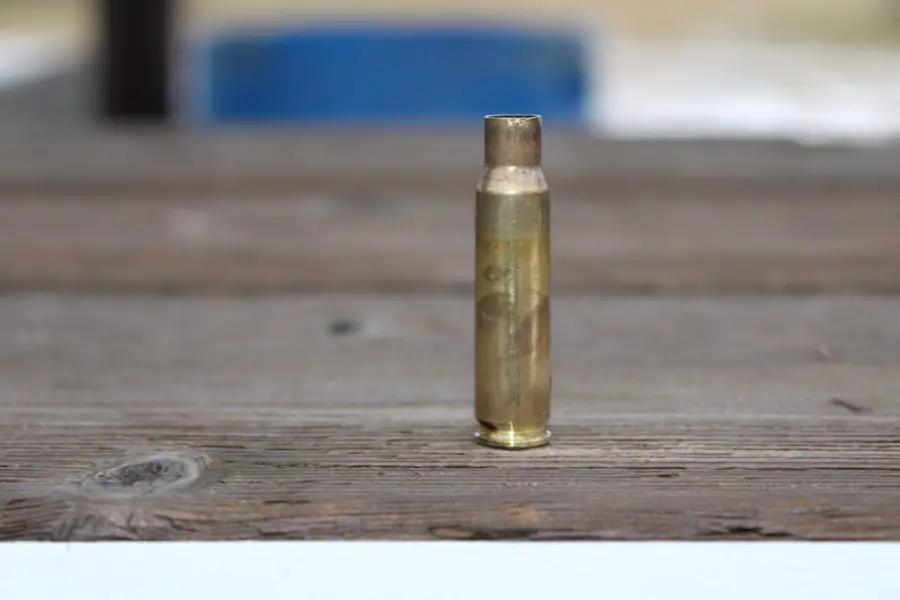
A .40 S&W handgun does not have one universal effective range. A trained shooter using a full-size pistol, clear sights, stable conditions, and a known-distance target may meet an accuracy standard that another shooter or compact pistol cannot.
Distances such as 25 or 50 yards are often used in handgun courses, qualifications, and competitions, but they are course distances rather than hard ballistic limits. A bullet does not become harmless when it passes the distance at which the shooter can reliably hit a target.
For this reason, practical accuracy should never determine the size of the safe area behind a target. The backstop and surrounding danger area must account for missed shots, deflection, penetration, ricochets, and the round’s much longer maximum travel distance.
Warning: Never fire toward the sky, water, exposed rock, concrete, unapproved metal, buildings, roads, trails, or an area you cannot fully inspect. A missed or deflected .40 S&W bullet may travel roughly a mile or more.
Hazards of Shooting at Long Distances
| Hazard | What It Means for Shooters |
|---|---|
| Stray bullets | A round that misses the target or leaves the range can travel into an area the shooter cannot see. |
| Ricochets | Rock, concrete, exposed steel, frozen ground, and water can redirect a bullet or fragments in an unpredictable direction. |
| Over-penetration | A bullet that passes through a target may continue toward objects or people behind it. |
| Secondary projectiles | Bullet fragments, pieces of a target, stones, or damaged target hardware can travel away from the impact point. |
| Loss of accuracy | Wind, sighting error, movement, and bullet drop increase the chance that a distant shot will miss the intended target. |
An elevated round may cover a large distance before returning to the ground. A low-angle round can also remain dangerous by traveling over open terrain or striking a hard surface and changing direction. You cannot reliably judge the final path by watching where the muzzle was pointed.
Target placement matters as much as the visible target. The line from the muzzle through the target must terminate within a backstop designed for the ammunition being fired. Targets should not be positioned where misses can pass over or beside the berm.
Legal and Ethical Considerations for Long-Range Shooting
Firearm-discharge, possession, transportation, hunting, noise, and land-use laws vary by country, state, county, municipality, and property type. Before shooting, check the official rules issued by the range, land manager, wildlife agency, police authority, and applicable local government. The USA.gov state and local government directory can help U.S. readers locate official agencies.
Permission to enter private property does not automatically mean permission to discharge a firearm. Confirm property boundaries, nearby homes, roads, trails, livestock areas, and any seasonal fire restrictions. Do not assume an isolated-looking area is empty.
Ethical range use also includes following cease-fire commands, collecting cases only when the range permits it, and respecting lead-management procedures. The U.S. Environmental Protection Agency’s range guidance explains why bullet containment and lead management are important at outdoor facilities.
How to Shoot Safely and Responsibly

The primary firearm-safety rules apply every time a gun is handled:
- Treat every firearm as if it is loaded.
- Keep the muzzle pointed in a safe direction.
- Keep your finger outside the trigger guard until you are ready to fire.
- Know your target, what is around it, and what lies beyond it.
Use a designated range or another location that has been legally approved and professionally assessed for the ammunition being used. Follow the range officer’s commands, posted caliber restrictions, target-placement rules, firing-line procedures, and cease-fire signals.
Wear properly fitted eye and hearing protection. Indoor and outdoor firing can expose shooters and staff to hazardous noise and lead. CDC/NIOSH firing-range guidance recommends effective ventilation, good housekeeping, personal hygiene, and controls that prevent lead dust from being carried home.
- Do not eat, drink, smoke, or touch your face at the firing line.
- Wash your hands and exposed skin with soap and cool water after shooting.
- Keep contaminated range clothing and footwear away from children and living areas.
- Never move forward of the firing line until the range has been declared safe.
- Unload and secure the firearm according to the law and the manufacturer’s instructions before leaving.
Pro Tip: A professionally designed and well-maintained earthen berm can reduce penetration and ricochet hazards, but no backstop eliminates every risk. Use only targets, ammunition, and firing positions approved by the range.
How Bullet Design Changes Performance
Projectile construction affects muzzle velocity, drag, penetration, expansion, fragmentation, and behavior after impact. Full-metal-jacket, jacketed-hollow-point, solid, and frangible bullets can therefore produce different trajectories and impact hazards even when they share the .40 S&W cartridge designation.
Hollow-point bullets are designed to expand under specified conditions, but expansion is not guaranteed. Clothing, intermediate barriers, impact angle, velocity, and manufacturing differences can change the result. A bullet that does not expand may penetrate farther than expected.
Frangible ammunition is designed to break apart when it strikes certain hard targets, and some ranges use it for specialized training. It must still be matched to the firearm, target, and range. Frangible construction does not make it safe to shoot without a proper backstop or toward an unapproved surface.
Understanding the Limits of a .40 Cal Bullet’s Travel
Representative police range-design calculations place the maximum travel of .40 S&W bullets at approximately 1,736–1,940 yards—far beyond normal handgun target distances.
The most important distinction is not whether a shooter can accurately hit a target at a particular distance. It is whether every possible shot will end inside a safe, maintained backstop. Practical accuracy may end within tens of yards, while the danger created by a missed round can extend roughly a mile.
Use load-specific manufacturer data when evaluating trajectory, follow all range and legal requirements, and never fire unless you can identify the target, the complete impact area, and the place where the bullet will stop.
Frequently Asked Questions
What is the maximum distance a .40 S&W bullet can travel?
The exact distance depends on the load, firearm, firing direction, and environment. A police range-design table gives calculated maximum ranges of 1,736 yards for one representative 150-grain JHP load and 1,940 yards for a representative 180-grain JHP load. Treat roughly one mile or more as a danger-area figure rather than a guaranteed result.
Is .40 caliber the same as .40 S&W?
Not always. “.40 caliber” describes an approximate bullet diameter, while .40 S&W is one specific cartridge. Other .40-caliber cartridges may have different case capacities, velocities, firearms, and maximum ranges.
What is the effective range of a .40 S&W handgun?
There is no universal effective range. It depends on the shooter, pistol, sights, ammunition, target, conditions, and required accuracy. Distances such as 25 or 50 yards may appear in training or competition, but they are not safety limits for the bullet.
What factors affect how far a .40 S&W bullet travels?
Important factors include muzzle velocity, bullet weight and shape, barrel length, firing direction, elevation, wind, temperature, altitude, air pressure, and whether the projectile strikes or skips from another surface.
Can a .40 S&W bullet travel more than a mile?
Yes. The 1,940-yard range-design calculation for a representative 180-grain load is slightly more than 1.1 miles. Actual distance varies, so this number should be used as a safety warning rather than a prediction for every shot.
Is firing horizontally safer than firing upward?
A horizontal shot may return to the ground sooner than a highly elevated shot, but it is not safe without a proper impact area. It can cross open ground, pass through a target, or ricochet from water, rock, concrete, steel, or hard soil.
Why did many law-enforcement agencies move away from the .40 S&W?
By the mid-2010s, many agencies were choosing modern 9mm systems after weighing projectile performance, recoil, shooter speed and accuracy, magazine capacity, ammunition cost, firearm reliability, and component wear. Individual agency policies and ammunition selections still vary.
What safety steps should you follow when shooting a .40 S&W firearm?
Treat the firearm as loaded, control the muzzle, keep your finger off the trigger until ready to fire, and identify the target and everything beyond it. Use an authorized range and maintained backstop, follow range commands, wear eye and hearing protection, and wash after shooting to reduce lead exposure.
Firearms Safety Disclaimer: This article provides general information only. It is not professional firearms instruction, ammunition guidance, or legal advice. Follow the firearm and ammunition manufacturers’ instructions, receive training from a qualified instructor, obey range commands, and verify all applicable local, state, federal, and land-use laws before possessing, transporting, or discharging a firearm.
Sources
- Smith & Wesson Company History — introduction and development history of the .40 S&W cartridge.
- SAAMI Standards — current centerfire pistol and revolver ammunition standards.
- Western Australia Police Range Standards — calculated maximum ranges and outdoor pistol-range safety design.
- NSSF Rules of Safe Gun Handling — muzzle control, trigger discipline, and identifying what lies beyond the target.
- CDC/NIOSH: Preventing Lead and Noise Exposure at Indoor Firing Ranges — hearing, ventilation, hygiene, and lead-exposure guidance.
- Safariland: Why America’s Finest Left .40 S&W Behind — background on the law-enforcement transition toward modern 9mm systems.

