
Last Updated on September 11, 2026 by Tyler Morgan
On January 1, 1914, Tony Jannus lifted a Benoist Model XIV flying boat from the water at St. Petersburg, Florida, and carried one paying passenger across Tampa Bay. The 23-minute trip is widely recognized as the start of scheduled commercial airline service by airplane. From that short route, commercial aviation grew through airmail contracts, federal safety rules, modern airliners, jet travel, and stronger competition.
Quick Answer
Scheduled commercial airline service by airplane began on January 1, 1914, with the St. Petersburg-Tampa Airboat Line in Florida. Tony Jannus flew passenger Abraham Pheil across Tampa Bay in about 23 minutes. Earlier airship companies carried passengers, so the 1914 milestone is best described as the first scheduled commercial airplane service.
Key Takeaways
- The St. Petersburg-Tampa Airboat Line began scheduled commercial airplane service on January 1, 1914.
- The first seat sold at auction for $400, while the regular one-way fare was $5.
- Government airmail contracts gave early airlines dependable revenue before passenger traffic could support them.
- The Douglas DC-3, federal regulation, international routes, and postwar airport growth made airline travel more practical.
- Jet aircraft and later deregulation lowered costs and expanded access, although the benefits were not equal in every market.
What’s in This Article
- When Did Commercial Flights Begin?
- What Counts as the First Commercial Flight?
- The First Commercial Flight in 1914
- How Commercial Aviation Grew After World War I
- Why Mail Kept Early Airlines Flying
- What Flying in the 1920s Felt Like
- How Stewardesses Changed Air Travel
- How International Passenger Flights Expanded
- How World War II Changed Commercial Aviation
- How the Jet Age Transformed Passenger Flights
- How Commercial Flights Became Affordable
- Commercial Aviation Timeline
- How Commercial Aviation Changed Modern Travel
- Frequently Asked Questions
When Did Commercial Flights Begin?
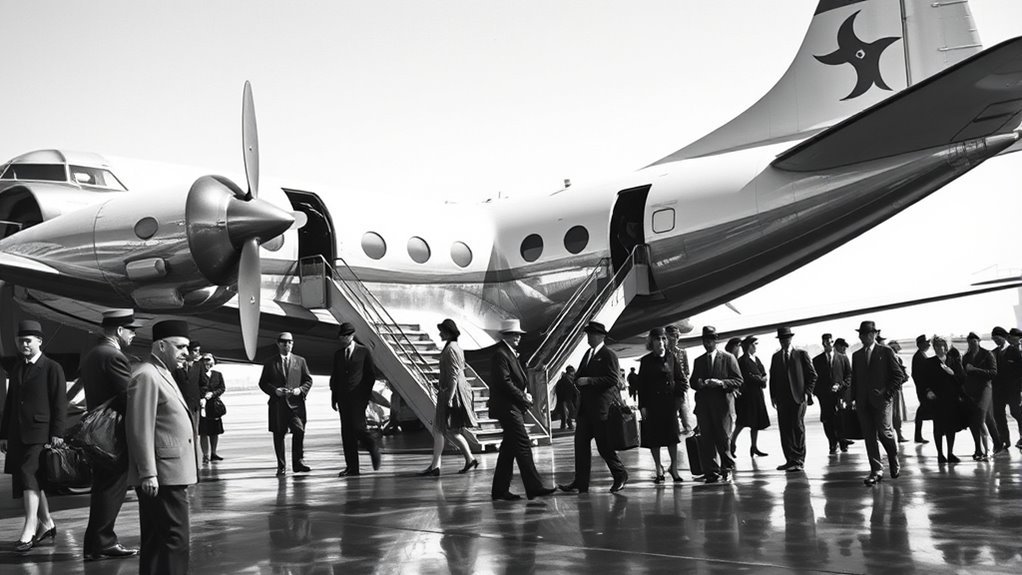
Commercial flights began in a form recognizable as scheduled airline travel on January 1, 1914. The St. Petersburg-Tampa Airboat Line offered a published schedule, sold tickets to the public, and carried a paying passenger between two cities.
Tony Jannus piloted the single-engine Benoist Model XIV flying boat across Tampa Bay in about 23 minutes. The trip covered roughly 23 miles and replaced a much longer journey around or across the bay by boat, rail, or road.
The first passenger was former St. Petersburg mayor Abraham Pheil. He paid $400 at an auction for the inaugural seat. After that ceremonial flight, the regular fare was $5 each way. The Smithsonian National Air and Space Museum records that the service carried 1,204 passengers before it closed at the end of March 1914.
Note: Historical accounts sometimes give slightly different totals and operating dates. The safest summary is that the airline carried about 1,200 passengers and operated for roughly three months.
What Counts as the First Commercial Flight?
The phrase first commercial flight can mean different things. The Wright brothers made the first successful powered, controlled airplane flight in 1903, but that was not a scheduled passenger service. Germany’s DELAG company began carrying passengers in Zeppelin airships before 1914, making it an earlier commercial air-transport company.
The Tampa Bay service holds a more specific distinction. It is widely recognized as the first scheduled commercial airline service using a heavier-than-air airplane. The International Civil Aviation Organization also identifies the January 1, 1914, trip as the first scheduled commercial flight.
This wording avoids treating airships, experimental passenger rides, military flights, and one-time demonstrations as the same type of service.
The First Commercial Flight in 1914
The St. Petersburg-Tampa Airboat Line was organized by Percival E. Fansler and used an aircraft built by Thomas Benoist. It showed that a small airline could sell seats, follow a timetable, and save travelers significant time.
First Scheduled Passenger Service
Passengers boarded beside the pilot in an open cockpit. The Benoist Model XIV could carry only one passenger at a time, so the service looked very different from a modern airline. Even so, it had the core features of commercial aviation: a route, a schedule, a fare, and public ticket sales.
The first ticket’s $400 auction price was ceremonial and far above the regular $5 fare. That difference matters because the auction did not represent the normal cost of using the service.
St. Petersburg to Tampa
The 23-minute flight crossed Tampa Bay between St. Petersburg and Tampa. Contemporary alternatives could take much longer, which made speed the airline’s strongest selling point. The flying boat design also let the operator use the bay instead of relying on a large paved airport.
The airline depended partly on local financial support and winter tourism. When the tourist season weakened and the subsidy did not continue, the business closed. Its brief life showed that the technology worked, but it also revealed a problem that would follow early airlines for years: passenger fares alone often could not cover operating costs.
Early Commercial Flight Impact
The route proved that people would pay for scheduled air transportation when it offered a clear time advantage. It also introduced business questions that later airlines had to solve, including safety, maintenance, dependable schedules, passenger demand, weather limits, and route economics.
The service did not directly create modern aviation regulation, but it became an important proof of concept. After World War I, governments, aircraft builders, postal systems, and private operators built the larger network that the 1914 route had only suggested.
How Commercial Aviation Grew After World War I
World War I accelerated aircraft production, pilot training, engine development, and navigation knowledge. After the war, surplus aircraft and experienced pilots entered civilian aviation, but passenger airlines still struggled to make money.
Government policy gave the industry a stronger foundation. The Contract Air Mail Act of 1925, often called the Kelly Act, allowed the U.S. Post Office to pay private companies to carry mail. The Air Commerce Act of 1926 created federal responsibilities for pilot licensing, aircraft certification, airways, navigation aids, and air-traffic rules.
Airlines such as Western Air Express, Pan American Airways, Boeing Air Transport, and the companies that later became United, American, Eastern, and TWA expanded during the 1920s and 1930s. Routes became more dependable as airports, weather reporting, radio communication, maps, and air-traffic systems improved.
In 1935, the Douglas DC-3 made its first flight. Its reliability, 21-seat cabin, and lower operating cost helped airlines earn money from passengers without depending entirely on government subsidy.
Why Mail Kept Early Airlines Flying
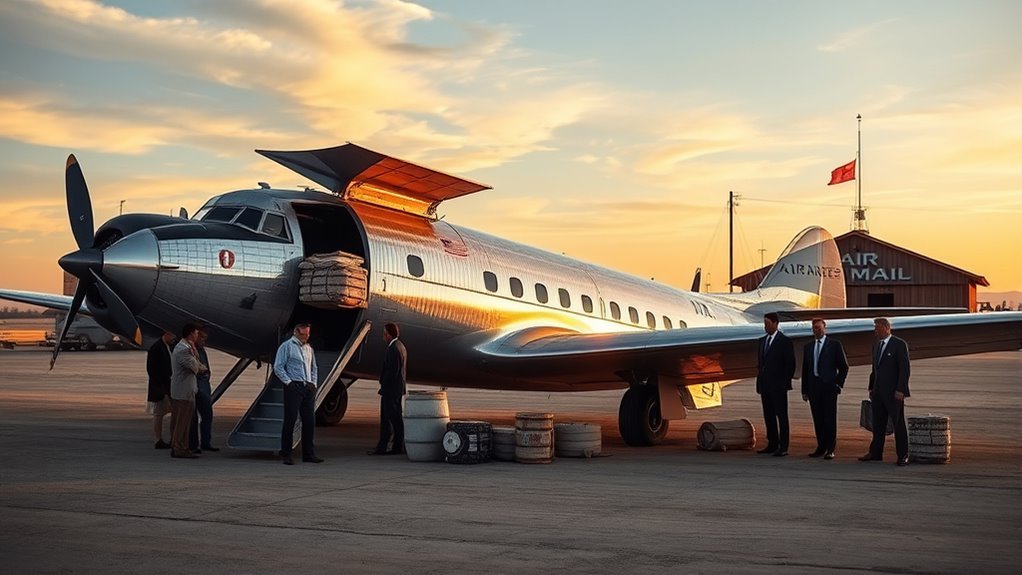
Early airlines survived because airmail revenue paid for aircraft, pilots, maintenance, and route development when passenger demand remained weak. The first regularly scheduled U.S. airmail service began on May 15, 1918, between Washington, Philadelphia, and New York.
The Post Office initially operated the service with Army aircraft and pilots. It later ran the system directly before transferring routes to private contractors. According to the Smithsonian National Postal Museum, postal contracts became the difference between survival and failure for many early commercial carriers.
Mail Revenue Saved Airlines
Passenger traffic could not yet support a national airline network. Mail contracts supplied regular income and encouraged carriers to fly on fixed schedules, even when few passengers booked seats.
The system also shaped aircraft design. Airlines needed enough payload for mail, but reforms in 1930 gave them stronger incentives to use larger, multi-engine aircraft that could carry passengers as well.
Air Mail Built Routes
Airmail forced operators to build repeatable routes with mapped checkpoints, fuel stops, maintenance bases, weather procedures, and navigation aids. Pilots used tools such as knee boards, scrolling maps, and liquid-filled compasses to stay on course.
Those routes later became passenger corridors. In that sense, mail did more than finance airlines. It helped create the operating system that scheduled passenger travel needed.
What Flying in the 1920s Felt Like
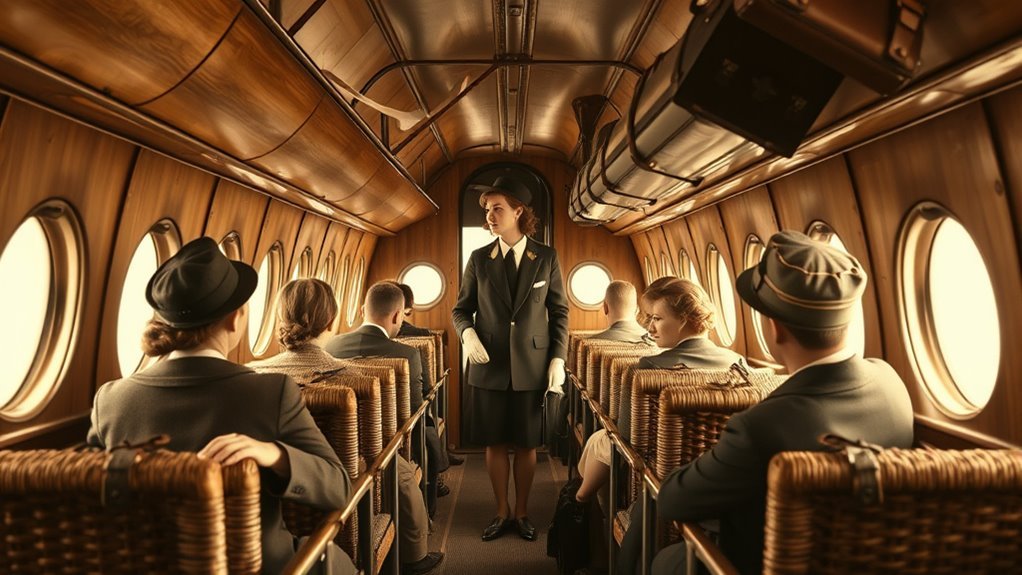
Flying in the 1920s felt more like an adventure than routine transportation. Tickets were expensive, cabins were small, and most aircraft flew low because they were not pressurized. Wind and weather made flights rough, while limited insulation exposed passengers to cold and constant vibration.
A coast-to-coast round trip cost about $260, close to half the price of a new automobile at the time. As a result, most passengers were wealthy travelers or businesspeople who valued speed more than comfort.
Noise was severe. The Smithsonian reports that a Ford Tri-Motor could reach nearly 120 decibels during takeoff. Crew members sometimes used megaphones to communicate, and airlines supplied cotton for passengers’ ears.
U.S. airlines carried about 6,000 passengers in 1929, more than 450,000 in 1934, and 1.2 million in 1938.
That rapid growth did not mean flying had become common. Trains and buses still carried far more people. However, safer aircraft, better schedules, and growing public confidence were turning air travel into a practical choice.
How Stewardesses Changed Air Travel
In 1930, nurse Ellen Church persuaded Boeing Air Transport to place trained nurses aboard passenger aircraft. She became the first airline stewardess and helped develop the job description and training program for the company’s first eight women flight attendants.
Their main value was not decoration or luxury. They reassured nervous passengers, provided first aid, explained safety procedures, served food, managed the cabin, and helped people cope with turbulence and air sickness. The first uniform used dark green wool with a matching green and gray cape.
The growth of flight attendants improved the passenger experience, but it also came with unfair employment rules. Airlines imposed strict age, appearance, marriage, and weight requirements on women for many years. Modern flight attendants have a broader professional role centered on safety, emergency response, security, and passenger care.
Passenger traffic rose sharply during the 1930s, but it would be misleading to credit flight attendants alone. Better aircraft, mail subsidies, regulation, airports, advertising, and stronger routes all contributed to the increase.
How International Passenger Flights Expanded
Pan American Airways opened a scheduled transpacific airmail route with the China Clipper in 1935 and began passenger service in 1936. In 1939, Pan Am started regular transatlantic passenger service using Boeing 314 flying boats.
Long-distance flying boats could use sheltered water when suitable runways were unavailable. They carried relatively few passengers and charged high fares, but they proved that scheduled ocean crossings were possible.
International commercial aviation also required agreements between countries covering airspace, landing rights, safety standards, customs, and route authority. The 1919 Paris Convention and later international organizations helped create common rules for cross-border air transport.
How World War II Changed Commercial Aviation
World War II sharply limited ordinary civilian travel, but it expanded aircraft manufacturing, long-range navigation, airport construction, weather services, and large-scale transport operations. Airlines and their crews supported military logistics, while many passenger aircraft were adapted for wartime use.
After the war, airlines gained access to improved aircraft, experienced crews, and a larger airport network. Pressurized airliners such as the Lockheed Constellation and Douglas DC-6 made longer flights more comfortable and helped begin the era of mass air travel.
Commercial flying still remained regulated and relatively expensive, but it was no longer an experiment for a small group of wealthy passengers. It had become essential national and international infrastructure.
How the Jet Age Transformed Passenger Flights
Jet passenger service began in the United States in the late 1950s. Pan American introduced overseas Boeing 707 service in October 1958, and Douglas DC-8 service followed in 1959.
Jets were faster, flew higher above much of the weather, and could carry more passengers over longer distances. They also improved aircraft productivity because one airplane could complete more miles and more trips in a day.
- Shorter journeys: Coast-to-coast travel fell to about five hours on early transcontinental jet routes.
- Greater capacity: Larger cabins spread operating costs across more seats.
- Longer range: Airlines could offer more nonstop and one-stop international routes.
- Lower seat-mile costs: More productive aircraft helped airlines reduce fares over time.
- Mass-market travel: Passenger numbers more than quadrupled between 1955 and 1972.
The Smithsonian’s Jet Age history notes that falling fares allowed many more people to fly. The Boeing 747, which entered service in 1970, pushed this trend further by carrying far more passengers at a lower cost per seat.
How Commercial Flights Became Affordable
Commercial flights became more affordable through a combination of better aircraft, larger passenger loads, denser route networks, competition, and changing regulation. No single event made flying cheap for everyone.
| Milestone | How It Changed Cost or Access |
|---|---|
| Airmail contracts | Supported routes before passenger fares could pay the full cost. |
| Modern propeller airliners | Raised capacity, reliability, speed, and aircraft utilization. |
| Jet service | Lowered seat-mile costs and shortened long journeys. |
| Wide-body aircraft | Carried many more passengers on busy routes. |
| U.S. deregulation in 1978 | Allowed airlines greater freedom to choose fares and routes, increasing competition in many markets. |
| Low-cost airline models | Used simpler fleets, high aircraft utilization, direct sales, and optional extras to offer lower base fares. |
The Airline Deregulation Act of 1978 reduced federal control over U.S. domestic fares and routes. It encouraged new entry and fare competition, and government reviews found lower fares and better service for many travelers. The results were not equally positive everywhere. Some smaller communities faced fewer flights, less competition, or higher fares, which is why the Essential Air Service program remained important.
Southwest began scheduled service in 1971 and became a major example of the U.S. low-cost model. Laker Airways launched its low-fare Skytrain transatlantic service in 1977, while Ryanair adopted a low-cost strategy much later. These developments should not be grouped together as if they all began in the 1960s.
Modern fares can look low at first because airlines may charge separately for bags, seat selection, food, and other services. Affordability therefore depends on the total trip price, not only the advertised base fare.
Commercial Aviation Timeline
| Year | Milestone | Why It Mattered |
|---|---|---|
| 1909-1910 | DELAG begins commercial passenger airship operations | An early commercial air-transport company carried passengers before scheduled airplane airlines. |
| 1914 | St. Petersburg-Tampa Airboat Line opens | First scheduled commercial airline service by airplane. |
| 1918 | Scheduled U.S. airmail service begins | Established regular air routes and operating procedures. |
| 1925 | Contract Air Mail Act | Moved mail routes to private contractors and supported airline growth. |
| 1926 | Air Commerce Act | Created a federal framework for aircraft, pilots, airways, and safety rules. |
| 1935 | Douglas DC-3 first flight | Made passenger routes far more reliable and economically sustainable. |
| 1939 | Regular transatlantic passenger service | Connected North America and Europe by scheduled passenger air service. |
| 1958 | Boeing 707 enters U.S. airline service | Ushered in faster, higher-capacity jet travel. |
| 1970 | Boeing 747 enters service | Expanded long-haul capacity and lowered cost per seat. |
| 1978 | U.S. Airline Deregulation Act | Increased fare and route competition while changing service patterns. |
How Commercial Aviation Changed Modern Travel
Commercial aviation changed travel by making journeys that once took days or weeks possible in hours. It connected regional economies, supported tourism, enabled rapid business travel, moved urgent cargo, and made long-distance family visits more practical.
The system grew through more than aircraft alone. Airports, paved runways, weather forecasting, radio navigation, air-traffic control, maintenance standards, pilot licensing, cabin-safety rules, and international agreements all helped make scheduled travel dependable.
Commercial flying also created new tradeoffs. Large networks improve global access, but air travel produces noise, congestion, emissions, security demands, and uneven service between major hubs and smaller communities. Airlines now face pressure to improve fuel efficiency, use lower-carbon fuels, modernize air-traffic systems, and develop new aircraft without reducing safety.
The 1914 Tampa Bay route lasted only a few months, yet it introduced the basic promise that still drives airline travel: pay for a seat, leave at a scheduled time, and reach a distant place faster than older forms of transport allowed.
Frequently Asked Questions
When was the first commercial airline flight?
The first scheduled commercial airline flight by airplane took place on January 1, 1914. Tony Jannus flew the St. Petersburg-Tampa Airboat Line across Tampa Bay in about 23 minutes.
Was the 1914 flight the first commercial air service of any kind?
Not exactly. Germany’s DELAG company carried paying passengers in Zeppelin airships before 1914. The Tampa Bay service is best described as the first scheduled commercial airline service using a heavier-than-air airplane.
Who was the first paying commercial airplane passenger?
Former St. Petersburg mayor Abraham Pheil won the first seat at auction for $400. He flew beside pilot Tony Jannus on January 1, 1914.
How long did the first commercial airplane airline operate?
The St. Petersburg-Tampa Airboat Line operated for roughly three months. The Smithsonian reports that it closed at the end of March 1914 after carrying 1,204 passengers.
Why was airmail important to early airlines?
Airmail contracts provided dependable revenue when few people could afford passenger tickets. The contracts also helped create routes, schedules, navigation systems, maintenance bases, and operating procedures that passenger airlines later used.
What made the Douglas DC-3 important?
The Douglas DC-3 carried more passengers in greater comfort and operated reliably at a lower cost than many earlier airliners. It was the first airliner widely recognized as able to fly profitably without direct government subsidy.
How did deregulation make flights cheaper?
The Airline Deregulation Act of 1978 gave U.S. airlines greater freedom to choose domestic routes and fares. More competition lowered prices and expanded service in many markets, although some smaller communities experienced fewer options or higher fares.
Conclusion
Commercial aviation did not grow from one invention or one airline. The 1914 Tampa Bay service proved that scheduled passenger flights by airplane could work. Airmail contracts built dependable routes, regulation improved safety and public confidence, the DC-3 made passenger service more sustainable, international flying connected continents, and jets turned long journeys into routine trips.
Deregulation and low-cost operating models later widened access, but affordability and service still vary by route and community. The central idea remains the same as it was on January 1, 1914: a scheduled aircraft can turn distance into time saved.
Sources
- Smithsonian National Air and Space Museum: Early Airlines You Might Not Have Heard Of: first flight fare, passenger count, aircraft, and operating period.
- Smithsonian National Air and Space Museum: Early Commercial Aviation: passenger growth, early flying conditions, flight attendants, and airline development.
- Smithsonian National Postal Museum: How Mail Made Commercial Aviation: airmail routes, postal contracts, and their role in airline survival.
- Federal Aviation Administration: A Brief History of the FAA: the Air Mail Act, Air Commerce Act, safety regulation, and deregulation.
- Smithsonian National Air and Space Museum: Douglas DC-3: aircraft capacity, first flight, reliability, and profitability.
- Smithsonian National Air and Space Museum: The Jet Age: jet-era growth, falling fares, passenger expansion, and the Boeing 747.

