
Last Updated on July 24, 2026 by Daniel Globe
Milan’s best-known sights sit in plain view, but some of its most memorable places are easy to miss. You can see a 1930s villa with a private pool, flamingos behind a garden wall, a bronze ear used as an intercom, an ossuary covered with bones, unusual postwar homes, quiet Brera gardens, and a working amaro museum. The key is knowing which places welcome visitors, which require booking, and which you should view only from public space.
Quick Answer
The best hidden gems in Milan include Villa Necchi Campiglio, Villa Invernizzi’s flamingos, Ca’ de l’Oreggia, San Bernardino alle Ossa, Casa Rossi’s octagonal courtyard, the Maggiolina igloo houses, Brera’s garden spaces, and Collezione Branca. Group nearby stops together and reserve timed attractions before you go.
Key Takeaways
- Quadrilatero del Silenzio gives you four easy stops in one walk: Villa Necchi, Villa Invernizzi, Ca’ de l’Oreggia, and nearby architectural details.
- Some places are private. Villa Invernizzi, Casa Rossi, the igloo houses, and Palazzo Sola Busca should be viewed respectfully from public areas unless access is clearly permitted.
- Book ahead for Villa Necchi and Collezione Branca, especially when you need a specific time or an English-language tour.
- Do not force everything into one day. The central sights fit together well, but Collezione Branca and Maggiolina are farther north and work better on a second route.
Disclosure: As an Amazon Associate I earn from qualifying purchases. Some links on this page are affiliate links, at no extra cost to you.
Milan Hidden Gems at a Glance
| Place | Area | Access | Planning Note |
|---|---|---|---|
| Villa Necchi Campiglio | Via Mozart 14 | Ticketed museum | Allow about 60 to 90 minutes; booking is wise. |
| Villa Invernizzi flamingos | Via Cappuccini 7 | Street view only | The villa is private, and the birds may not always be visible. |
| Ca’ de l’Oreggia | Via Serbelloni 10 | Exterior detail | Look beside the entrance of Palazzo Sola Busca. |
| Piazza del Quadrilatero | Corso Venezia 11 | Public courtyard | Enter through the former seminary’s Baroque doorway. |
| San Bernardino alle Ossa | Piazza Santo Stefano | Free church and ossuary | Check current worship and opening times before visiting. |
| La Legge Nuova | Duomo façade | Visible from the square | Use binoculars or a zoom lens to see the detail clearly. |
| Casa Rossi | Corso Magenta 12 | Private courtyard | Access is not guaranteed; never follow residents through a closed entrance. |
| Maggiolina igloo houses | Via Lepanto | Private homes, exterior only | Keep noise low and photograph from the public street. |
| Brera courtyards and gardens | Via Brera and nearby lanes | Mix of free and ticketed spaces | Combine the Pinacoteca courtyard, Botanical Garden, and Palazzo Citterio. |
| Collezione Branca | Via Resegone 2 | Free guided tour | Adults only; advance online reservation is required. |
Note: Opening hours, ticket rules, and public access can change. Check each official website shortly before your visit, especially for churches, private courtyards, and guided tours.
Villa Necchi Campiglio: Milan’s Hidden Art Villa
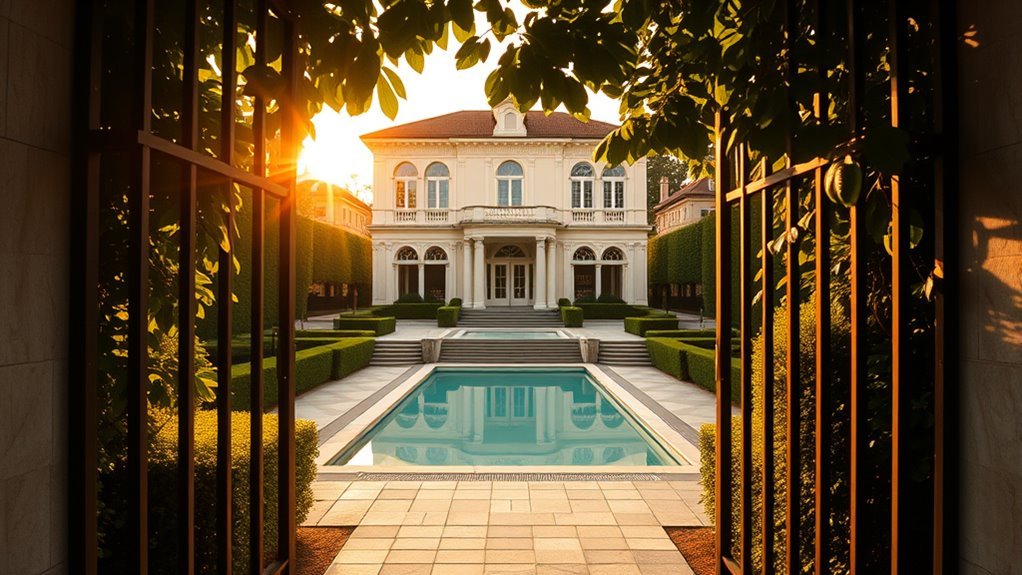
Tucked behind walls and greenery in the Quadrilatero del Silenzio, Villa Necchi Campiglio is one of Milan’s finest 20th-century house museums. Architect Piero Portaluppi designed it for the Necchi-Campiglio family, and construction took place between 1932 and 1935.
The house combines elegant materials with technology that was advanced for its time. Its features included a private pool, an internal lift, a service tunnel, custom fittings, and modern communication systems. The rooms now display period furnishings and several art collections, so the visit covers architecture, design, family life, and Italian art rather than one subject alone.
Use the official digital guide or podcasts as you move through the rooms. Then leave time for the garden and pool area, which show how Portaluppi connected the house to its outdoor setting. The official FAI site lists current opening times, tickets, exhibitions, and accessibility information.
See the Pink Flamingos at Villa Invernizzi
A few streets from Villa Necchi, Villa Invernizzi hides one of Milan’s strangest sights: a colony of pink flamingos living around a pond in a private garden. You cannot enter the property, but you may catch a view through the greenery from the public street near Via Cappuccini 7.
The sight is memorable because it feels so unexpected in central Milan. Still, treat it as a brief street stop rather than a guaranteed wildlife attraction. The birds may be behind plants, away from the visible part of the pond, or difficult to photograph. Do not lean over barriers, block the gate, or disturb residents.
Pro Tip: Visit Villa Invernizzi, Ca’ de l’Oreggia, and Villa Necchi on the same walk. The three stops are close together, but Villa Necchi itself deserves a reserved time slot.
Find Ca’ de l’Oreggia Near Villa Necchi
At Palazzo Sola Busca, a giant bronze ear projects from the wall beside the entrance. Milanese residents nicknamed the building Ca’ de l’Oreggia, or the House of the Ear. The sculpture is not only decorative. It was created by Adolfo Wildt as an early intercom, turning a practical device into a piece of surreal public art.
The Palazzo Sola Busca Ear
The bronze ear dates from the 1930s and is known as one of Milan’s early intercom systems. Look closely at its carefully modelled ear, hair, and facial details. It reflects Wildt’s ability to make familiar forms feel dramatic and slightly unsettling.
The intercom is attached to a private residential building, so the best way to see it is from the pavement. You do not need to enter the courtyard or touch the sculpture.
Where to Find It on Via Serbelloni
Look for Palazzo Sola Busca at Via Serbelloni 10. The ear sits near the entrance and can be easy to pass if you are looking across the street or moving quickly. The official YesMilano hidden-gems guide also maps this stop with Villa Necchi, Villa Invernizzi, Casa Rossi, the Duomo sculpture, and other unusual places.
A Short Walk Near Villa Necchi
Start near the Palestro area, see Villa Invernizzi from Via Cappuccini, continue to the bronze ear on Via Serbelloni, and finish at Villa Necchi on Via Mozart. This short route keeps the outdoor stops together and lets you save most of your time for the museum.
- View the flamingos only from the public street.
- Walk to Via Serbelloni 10 and find the bronze ear.
- Continue to Villa Necchi for your booked visit.
Visit Milan’s Secret Courtyards in the Quadrilatero
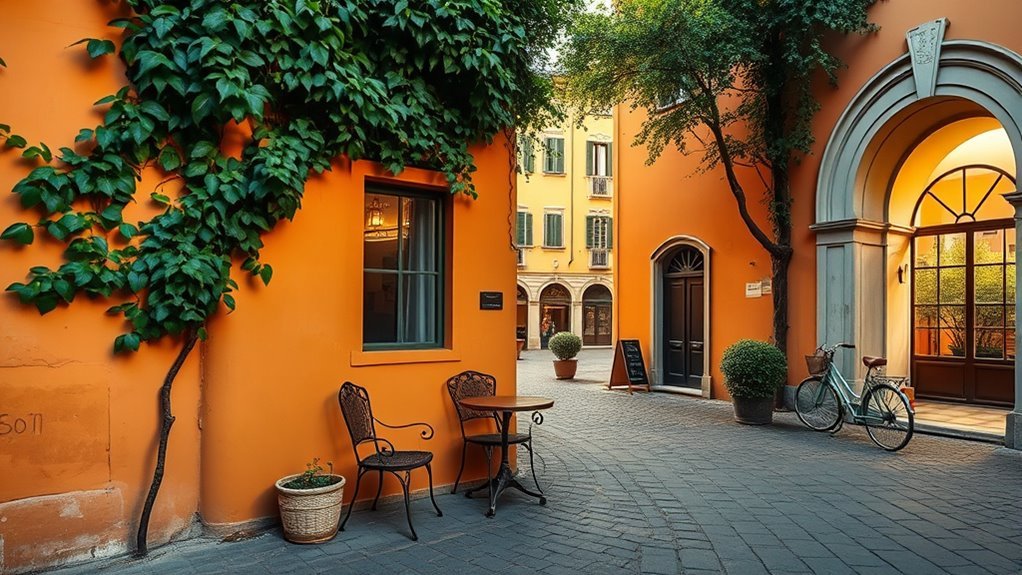
Milan’s fashion district is known for polished storefronts, but several passages open into quieter courtyards. The easiest public example is Piazza del Quadrilatero, reached through the Baroque entrance of the former Archbishop’s Seminary at Corso Venezia 11. The restored courtyard links Corso Venezia with Via Sant’Andrea and now contains shops, dining, and hotel spaces.
Other courtyards in central Milan may be residential, privately managed, or open only during events. Do not assume an open door means public access. For a respectful courtyard walk, focus on places officially open to visitors:
- Piazza del Quadrilatero: a restored former seminary courtyard open to the city.
- Villa Necchi Campiglio: a ticketed house museum with a designed garden and pool.
- Pinacoteca di Brera courtyard: a grand public museum entrance space that works well with a Brera walk.
See San Bernardino alle Ossa
San Bernardino alle Ossa is one of Milan’s most unusual religious sites. The complex began near a medieval hospital and cemetery. An ossuary was established in 1210 when burial space became limited, and a small church followed in 1268. After later damage and rebuilding, the ossuary that survives today was completed in the late 17th century.
Inside the small chapel, skulls and bones cover walls, niches, pillars, and door frames in formal patterns. Above them, Sebastiano Ricci’s late-17th-century fresco fills the vault with souls and angels. The contrast between human remains and bright Baroque painting gives the room its powerful effect.
Admission is generally free, but this remains an active religious place. Check the sanctuary’s official history and current visitor information before going. Dress respectfully, keep your voice low, and avoid interrupting services.
Warning: The ossuary displays real human remains. It may be upsetting for young children or anyone sensitive to death, bones, or religious funerary spaces.
Spot La Legge Nuova on the Duomo
On the Duomo’s façade, look above and to the left of the main central entrance for a sculpture called La Legge Nuova, or The New Law. Camillo Pacetti created the work in 1810. Its raised arm and radiant headpiece give it a clear visual resemblance to New York’s Statue of Liberty, which came decades later.
The resemblance has produced a popular story that Pacetti’s work inspired Frédéric Auguste Bartholdi. However, the connection is not established by firm documentary evidence. Present it as an interesting theory, not a proven design history. The Italian Ministry of Culture’s catalogue record confirms Pacetti, the 1810 marble version, and its position on the cathedral façade.
Note: You can confirm the date, artist, and location of La Legge Nuova. The claim that it directly inspired the Statue of Liberty remains a local legend or theory.
Discover Casa Rossi’s Octagonal Courtyard
Casa Rossi at Corso Magenta 12 is known for a five-storey courtyard that frames an octagonal slice of sky. Pillars, capitals, windows, and repeating levels make it one of Milan’s most photogenic residential interiors.
The important detail is access: Casa Rossi is not a guaranteed public attraction. You may find the entrance closed, and you should not follow residents inside or pressure staff for entry. If the courtyard is openly accessible and permission is clear, keep the visit brief and quiet. If not, continue toward Santa Maria delle Grazie and the surrounding Magenta district.
Discover Milan’s Maggiolina Igloo Houses
In the Maggiolina district, rounded homes on Via Lepanto show how Milan experimented with housing after World War II. Engineer Mario Cavallè designed the igloo-style units as temporary homes for families displaced by bombing. Their domed shapes used limited space in a practical and unusual way.
Only two houses are reported to retain the original layout. They are still private residences, not an open-air museum. View them from the public street, avoid photographing residents, and do not enter gardens or driveways. The nearest useful metro stops include Marche and Istria on the M5 line.
Find Brera’s Secret Courtyards and Galleries
Brera gives you a better mix of public courtyards, museums, gardens, and small streets than the original idea of simply hunting for private entrances. Begin in the monumental courtyard of the Pinacoteca di Brera, then decide how much museum time you want.
The works by Raphael and Caravaggio are inside the Pinacoteca di Brera, not in its courtyard. For modern and contemporary art within the expanded Brera system, visit Palazzo Citterio, which opened to the public in December 2024. Milan’s Galleria d’Arte Moderna is a separate museum at Villa Reale on Via Palestro, not a hidden Brera gallery.
For a quiet green break, add the Brera Botanical Garden behind Palazzo Brera. Admission is normally free, but entrances or hours can change during university work and special events. The surrounding lanes also contain independent galleries, bookshops, and artisan stores, though their exhibitions and opening times change often.
Visit Collezione Branca at the Fernet-Branca Factory
At Via Resegone 2, Collezione Branca presents the history of a Milan company founded in 1845. The museum route includes advertising, documents, production tools, herbal materials, historic bottles, and parts of the working industrial complex. Fernet-Branca’s formula remains secret, but the company states that it uses 27 herbs, spices, and roots from four continents.
The current official booking page says the guided historical tour is free, limited to adults, and capped at 20 participants per tour. Italian and English dates are listed separately, so select the correct language when reserving. Some special experiences also include a tasting.
Reserve through the official Collezione Branca booking page. Because dates are limited, this stop should shape your itinerary rather than be treated as a casual walk-in.
Note: Collezione Branca tours are for adults only. Bring identification if requested, follow factory safety rules, and drink responsibly if your booked experience includes a tasting.
How to Plan Your Milan Hidden-Gems Route
The places in this guide do not form one tight walking loop. Plan by neighborhood so you spend less time crossing the city and more time at the sites.
One-Day Central Milan Route
A realistic central route can include the Quadrilatero del Silenzio in the morning, the Duomo and San Bernardino around midday, and Brera in the afternoon. This plan works best when Villa Necchi is booked in advance.
- Morning: Villa Invernizzi, Ca’ de l’Oreggia, and Villa Necchi.
- Midday: Duomo façade for La Legge Nuova, then San Bernardino alle Ossa.
- Afternoon: Pinacoteca courtyard, Brera Botanical Garden, and Brera lanes.
Casa Rossi can replace part of Brera if the Magenta district is more important to you, but interior access is never certain.
Second-Day North Milan Route
Use a second half-day for the Maggiolina igloo houses and Collezione Branca. The two stops are north of the historic center, and the Branca visit must follow its booked start time. This route is much easier than trying to add both places to a full central sightseeing day.
Getting Around by Public Transport
Milan’s metro, trams, buses, and trolleybuses connect these neighborhoods well. On ATM services, you can pay with a contactless card or compatible phone or watch. Use the same card or device throughout the journey, and tap out when the system requires it. Check the official ATM contactless guide for current rules and fares.
- Palestro or San Babila: useful for the Quadrilatero del Silenzio.
- Duomo or Sforza-Policlinico: useful for the cathedral and San Bernardino.
- Lanza, Montenapoleone, or Moscova: useful for different parts of Brera.
- Marche or Istria: useful for the Maggiolina houses.
- Maciachini or Lancetti: useful for Collezione Branca.
Access, Etiquette, and Photography
Several of Milan’s hidden gems remain special because they are homes, churches, or working spaces rather than standard attractions. Follow these rules:
- Stay on public pavement at Villa Invernizzi, Palazzo Sola Busca, and the Maggiolina homes.
- Do not enter Casa Rossi unless access is clearly open and permitted.
- Keep voices low and follow dress and photography rules inside San Bernardino.
- Avoid photographing identifiable residents, staff, or worshippers without permission.
- Use a zoom lens instead of leaning over gates or placing equipment against private property.
- Check step-free access directly with each venue because historic buildings may have narrow passages, steps, or temporary route changes.
Frequently Asked Questions
What is the best time to visit Milan’s hidden gems?
Spring and early autumn usually give you comfortable walking weather and longer daylight without the strongest summer heat. Weekday mornings are especially useful for quieter streets and courtyards. Always check seasonal hours because gardens, churches, and museums may change schedules.
Are these hidden spots easy to reach by public transport?
Yes. Most central stops are close to metro stations or tram routes. Maggiolina and Collezione Branca require a separate trip north, but both remain reachable by public transport. Use ATM’s official journey information for live service changes.
Which hidden gems require advance reservations?
Reserve Villa Necchi when you want a reliable entry time. Collezione Branca requires advance booking for its guided tours, and English-language dates may be limited. Pinacoteca di Brera and Palazzo Citterio may also benefit from advance booking during busy periods.
Which places are family-friendly?
Villa Necchi’s garden, the Brera Botanical Garden, Piazza del Quadrilatero, and the street-based architecture stops can work well for families. San Bernardino’s real human remains may upset children. Collezione Branca tours are restricted to adults.
Can I visit all these places in one day?
Not comfortably. You can cover the Quadrilatero del Silenzio, Duomo area, San Bernardino, and part of Brera in one well-planned day. Put Maggiolina and Collezione Branca on a second half-day, especially because the Branca tour has a fixed reserved time.
Which Milan hidden gems are free?
Street views of Villa Invernizzi, Ca’ de l’Oreggia, La Legge Nuova, Casa Rossi’s exterior, and the Maggiolina homes are free. San Bernardino and the Brera Botanical Garden are normally free. Collezione Branca’s guided tour is currently free but requires booking and is adults only.
Can I take photos at these places?
Outdoor photography from public space is generally possible, but never block gates or photograph residents closely. Museums and churches may restrict flash, tripods, video, or photography during services. Follow posted rules and staff instructions at every venue.
Conclusion
Milan’s hidden side is not one secret district. It is a series of small discoveries spread across elegant streets, religious spaces, residential neighborhoods, museums, and industrial history. Start with the compact Quadrilatero del Silenzio route, add the Duomo and San Bernardino, then choose Brera, Maggiolina, or Collezione Branca according to your interests. A little planning will help you see more while respecting the private homes and active spaces that make these places feel authentic.
Sources
- FAI: Villa Necchi Campiglio: architecture, construction dates, collections, visitor information, and current exhibitions.
- YesMilano: Hidden Gems in Milano: official city guidance for Villa Invernizzi, Ca’ de l’Oreggia, Piazza del Quadrilatero, Casa Rossi, Maggiolina, and other unusual stops.
- San Bernardino alle Ossa: Official History: origins of the ossuary, rebuilding, bone displays, and Sebastiano Ricci’s fresco.
- Italian Ministry of Culture: La Legge Nuova: artist, date, and placement on the Duomo façade.
- Pinacoteca di Brera: Grande Brera: Pinacoteca, Palazzo Citterio, modern collections, and the expanded Brera museum system.
- Collezione Branca: Official Booking: current tour rules, languages, age restriction, capacity, and reservations.
