
Last Updated on September 11, 2026 by Daniel Globe
The Gobi Desert stretches across southern Mongolia and northern China, but most leisure trips focus on Mongolia’s South Gobi region. There you can explore gravel plains, rocky canyons, high dunes, fossil sites, nomadic culture, and remarkably open night skies. A successful trip requires realistic routing, an experienced driver, flexible clothing, enough water, and preparation for rough roads and limited services.
Quick Answer
The Gobi Desert is a vast cold-desert region shared by Mongolia and China. For a first visit, allow at least six days for Mongolia’s South Gobi, travel between June and early September, use a local driver with a suitable vehicle, and prepare for rough roads, cold nights, dust, limited power, and weak mobile coverage.
Key Takeaways
- The Gobi is not one endless field of sand. Much of it consists of gravel plains, rocky basins, steppe, mountains, and canyons.
- June through early September is usually the most practical travel period, but nights can still be cold and weather can change quickly.
- Most first-time visitors should use an experienced local driver and a vehicle suitable for unpaved terrain.
- Carry layers, sun and dust protection, personal medicine, a power bank, cash, and more drinking water than you expect to need.
- A six-day trip can cover the main South Gobi attractions, but Karakorum and central Mongolia need additional time.
Disclosure: As an Amazon Associate I earn from qualifying purchases. Some links on this page are affiliate links, at no extra cost to you.
What Makes the Gobi Desert Unique?
The Gobi Desert is one of Asia’s largest desert regions. Its boundaries vary by definition, but its area is commonly estimated at about 1.3 million square kilometers.
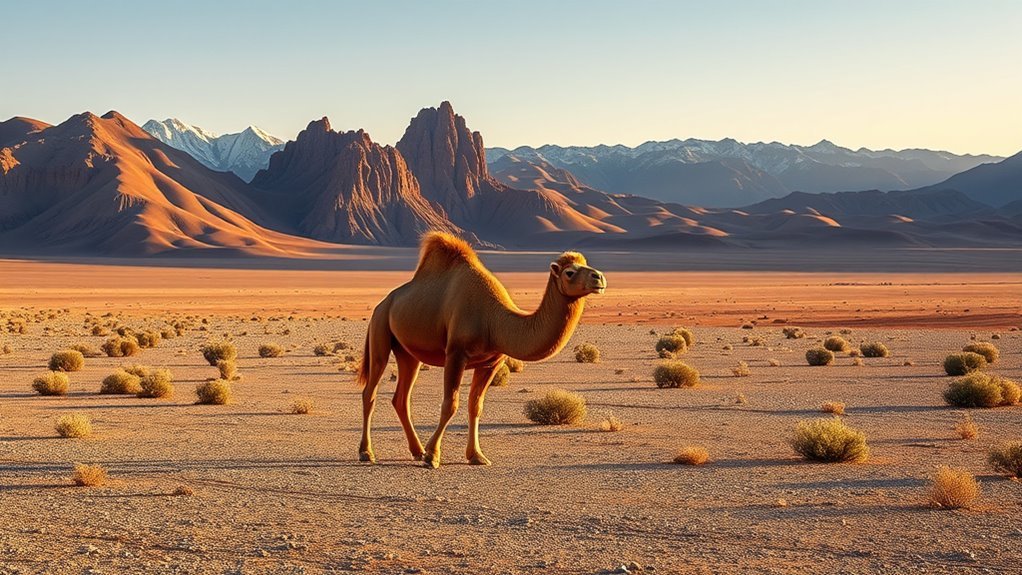
Much of the Gobi is a rock-and-gravel desert rather than an unbroken sea of sand.
You will still find dramatic dunes. At Khongoryn Els, also called the Singing Sands, some dunes are reported to approach 300 meters. Elsewhere, the landscape changes to gravel plains, red cliffs, dry basins, mountain steppe, and narrow valleys.
Yolyn Am, or Eagle Valley, is a striking canyon within Gobi Gurvansaikhan National Park. Seasonal ice can remain in shaded sections into warmer months, although its depth and duration vary from year to year.
The Gobi is a cold desert with strong seasonal and daily temperature changes. Summer afternoons can be hot, evenings can be chilly, and winter conditions can become severe. Rainfall is limited, but sudden rain, flooding, dust storms, strong winds, or even snow are possible.
The region is also important for archaeology, paleontology, nomadic heritage, and wildlife conservation. Dinosaur fossils, ancient settlement evidence, Buddhist sites, and living herding traditions give the Gobi far more depth than its empty appearance suggests.
Where the Gobi Desert Is
The Gobi forms a broad desert and semi-desert zone across southern Mongolia and northern China. The Mongolian word “gobi” is commonly translated as “desert” or “waterless place,” although the region includes seasonal water sources, springs, oases, and groundwater-fed lakes.
- Mongolian Gobi: The South Gobi visitor circuit includes destinations such as Yolyn Am, Khongoryn Els, Bayanzag, Tsagaan Suvarga, and Ongi Monastery.
- Chinese Gobi: Large Gobi landscapes continue through Inner Mongolia and neighboring areas of northern China.
- Different land types: The wider region includes desert pavement, gravel plains, steppe, low mountains, cliffs, basins, dunes, and scattered vegetation.
Note: A typical “Gobi Desert tour” sold in Mongolia visits only a small part of this enormous transnational region. Check the exact route rather than assuming every tour visits the same attractions.
Best Time to Visit the Gobi Desert
For most travelers, the most practical time to visit Mongolia’s Gobi is from June through early September. This period generally offers warmer daytime conditions, longer daylight, operating ger camps, and easier access to established tourism routes.
June
June often brings comfortable daytime conditions and fewer peak-season visitors. Nights can still be cold, especially near valleys and higher ground. Pack a warm layer even when the forecast looks mild.
July and August
July and August are the warmest and busiest months. They are well suited to dune walks, camel rides, hiking, photography, and cultural visits. Midday heat, strong sun, thunderstorms, dust, and busy camps are possible.
September
September can offer cooler weather, clearer light, and fewer visitors. Nights become colder, and some seasonal camps may begin reducing services later in the month.
May and October
May and October can work for flexible travelers, but cold nights, wind, snow, reduced camp availability, and changing road conditions are more likely. Confirm accommodation and transport before committing to a shoulder-season route.
Winter
Winter travel is possible with specialist planning, but temperatures can fall to around -40°C in extreme conditions. Deep cold, snow, ice, short daylight, and limited services make winter unsuitable for a casual first trip.
Warning: Gobi weather can change without much notice. Check the forecast, follow local advice, and carry warm clothing even during summer. Dust storms, flooding, heat, strong winds, and cold nights can all disrupt a route.
How to Get Around the Gobi Desert
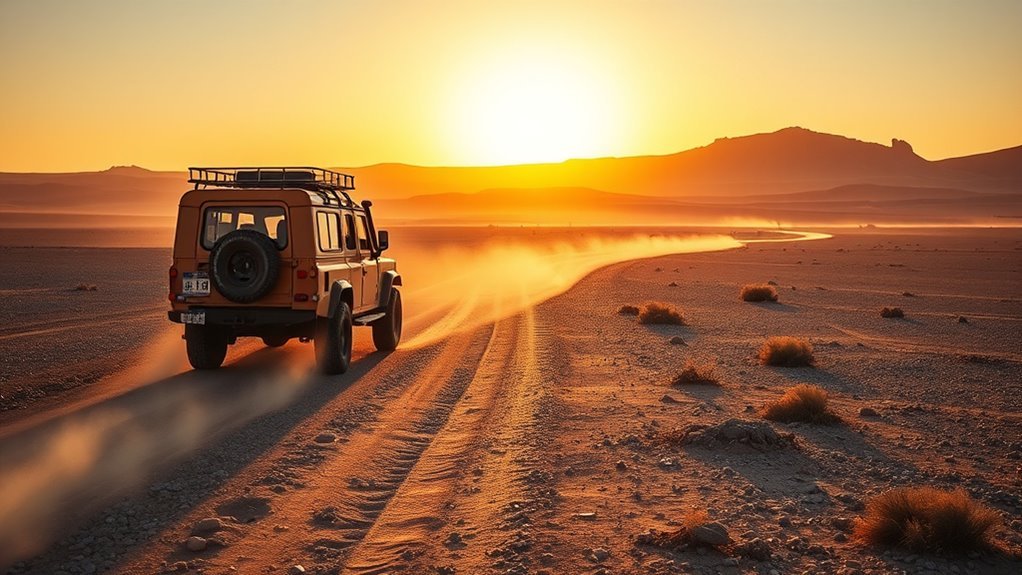
Most first-time visitors explore the Gobi in a 4×4, off-road van, or other suitable vehicle with an experienced local driver. Many routes leave paved roads, road signs can be limited, and familiar-looking tracks may lead in different directions.
The Government of Mongolia’s visitor information recommends a suitable off-road vehicle for remote areas such as Gobi Gurvansaikhan National Park. Fuel stations can be widely separated, so the route, fuel plan, spare tire, tools, and emergency supplies should be confirmed before departure.
Travel With a Driver or Small Group
A guided private vehicle provides the most flexibility. A small group tour can reduce the cost per person while keeping the safety benefits of a driver, arranged accommodation, meals, water, and local contacts.
Long travel days are normal. A distance that looks short on a map may take much longer because of sand, corrugations, mud, river crossings, navigation, livestock, photo stops, or vehicle problems. Avoid planning each day around a fixed average speed.
Fly to Dalanzadgad
Domestic flights may connect Ulaanbaatar with Dalanzadgad, the main gateway to the South Gobi. Flying can reduce overland travel time, but schedules and availability vary. You will still need arranged ground transport to reach Yolyn Am, Khongoryn Els, Bayanzag, and remote camps.
Independent Driving
Independent driving is best left to travelers with remote-area experience, a proper 4×4, offline maps, spare fuel, recovery equipment, two spare tires where practical, drinking water, food, and backup communication.
Large rural areas have no mobile signal. Share your planned route and expected arrival time with someone outside the vehicle. A satellite communicator or satellite phone can provide an important backup on remote routes.
Pro Tip: Ask a tour operator exactly what the price includes. Confirm the vehicle type, driver and guide, fuel, park fees, meals, drinking water, ger accommodation, airport transfers, camel rides, bedding, and emergency procedures.
What to Pack for a Gobi Desert Tour
Pack for strong sun, dust, rough roads, basic facilities, and major temperature changes. Soft luggage or a duffel is often easier to fit into a tour vehicle than a large rigid suitcase.
Desert Travel Essentials
- Drinking water and an emergency reserve: Confirm how much safe water your operator supplies. Do not assume 1.5 liters per day will be enough.
- Sun protection: Bring sunscreen, sunglasses with UV protection, a wide-brimmed hat, and lip balm.
- Dust protection: Pack a buff, scarf, or mask and a protective bag for cameras and electronics.
- Personal medicine: Carry prescriptions, basic first-aid supplies, blister care, rehydration salts, and any stomach medication you normally use.
- Navigation and communication: Download offline maps, save accommodation details, and carry written emergency contacts.
- Cash: Cards may work in Ulaanbaatar and larger towns, but remote camps and small businesses may require Mongolian tögrög.
- Food preferences: Bring a few familiar snacks if you have allergies, dietary restrictions, or a low tolerance for meat-heavy meals.
Clothing for Changing Weather
Use a simple layering system:
- Lightweight, breathable shirts and trousers for daytime.
- A fleece, sweater, or insulated layer for mornings and evenings.
- A windproof and water-resistant outer layer.
- A warm hat and light gloves for cold nights or shoulder-season travel.
- Sturdy walking shoes or boots with reliable grip.
- Comfortable camp shoes that are easy to remove before entering a ger.
Long sleeves and trousers also help protect you from sun, wind, dust, insects, and scratches from low vegetation.
Toiletries and Power Gear
Facilities range from established tourist camps with showers and electricity to family stays with simple outdoor toilets and very limited power.
- Wet wipes, toilet paper, hand sanitizer, and a sealable rubbish bag
- Quick-dry towel and basic toiletries
- Power bank and spare camera batteries
- Headlamp with spare batteries
- Universal adapter suitable for Mongolia’s 220V supply and common Type C or E sockets
- Dust-resistant covers or bags for electronics
Some camps use generators or solar power for only a few hours. Charge devices whenever electricity is available, but avoid assuming every ger camp will have a working outlet.
A 6-Day Gobi Desert Itinerary
This sample route focuses on the main South Gobi attractions. Exact overnight stops should change with weather, road conditions, camp availability, and whether you begin in Ulaanbaatar or Dalanzadgad.
Day 1: Ulaanbaatar to Tsagaan Suvarga
Leave Ulaanbaatar early and travel south toward Tsagaan Suvarga, often called the White Stupa. Walk along the colorful eroded formations and stay at a nearby ger camp or family-operated accommodation.
Day 2: Tsagaan Suvarga to Yolyn Am
Continue toward Dalanzadgad and Gobi Gurvansaikhan National Park. Hike into Yolyn Am, where the narrow canyon, high rock walls, birds, and seasonal ice contrast with the surrounding desert.
Day 3: Yolyn Am to Khongoryn Els
Travel deeper into the South Gobi toward Khongoryn Els. Depending on arrival time and conditions, take a short camel ride with local herders or explore the lower dunes.
Day 4: Khongoryn Els
Spend the morning or late afternoon walking on the dunes when temperatures are lower. Sand climbing is physically demanding, so carry water, protect your camera, and turn back before exhaustion.
Use the rest of the day to visit a herding family, learn about domestic Bactrian camels, and enjoy the surrounding steppe and mountain views.
Day 5: Khongoryn Els to Bayanzag
Travel to Bayanzag and the Flaming Cliffs. Walk only on established visitor routes, respect barriers, and never remove fossils, fragments, rocks, plants, or archaeological material.
Continue toward a camp near Bayanzag or begin traveling north toward Ongi, depending on the final route.
Day 6: Return or Continue North
Return toward Dalanzadgad for a flight or begin the long overland journey toward Ulaanbaatar. A route that includes Ongi Monastery may require a longer final day or an additional overnight stop.
Karakorum is in central Mongolia, not the South Gobi. Add at least two or three more days if you want to include Ongi Monastery, Karakorum, Erdene Zuu Monastery, and a comfortable return to Ulaanbaatar.
Note: A six-day tour involves several long and bumpy driving days. Seven to nine days provides a more comfortable pace and more time for walking, photography, family visits, and weather delays.
Sleeping in Gers and Eating in the Gobi Desert
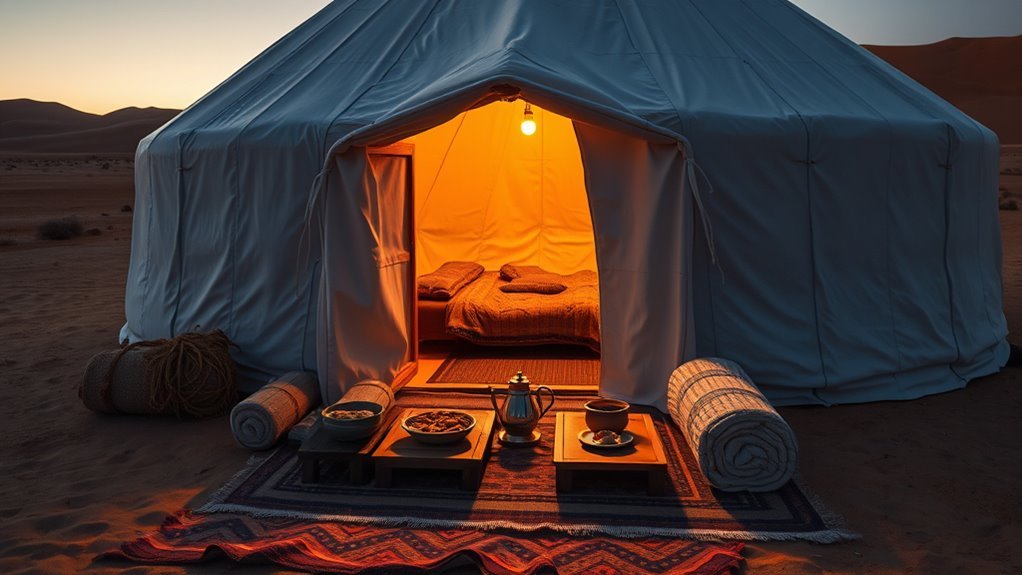
A Mongolian ger is a round, portable dwelling built with a wooden frame and layers of felt and canvas. Tourist camps and family stays both use gers, but their facilities can differ greatly.
Tourist Ger Camps
A tourist camp may provide made-up beds, a dining ger, shared toilets, scheduled showers, and limited electricity. Higher-comfort camps may have private bathrooms, but this should never be assumed without checking the booking details.
Family Ger Stays
A stay with a herding family is usually simpler and more personal. Toilets may be outdoors, washing water may be limited, and electricity may come from a small solar panel or battery. Follow your host’s guidance about seating, shoes, food, animals, and photography.
Food in the Gobi
Meals commonly include meat, noodles, rice, dumplings, soups, bread, dairy products, tea, and preserved foods. Fresh vegetables and fruit may be limited at remote camps.
A camp may prepare a traditional dish such as khorkhog, in which meat is cooked with heated stones, when it is arranged in advance. This is different from the restaurant-style dish commonly called “Mongolian barbecue” outside Mongolia.
Tell your operator about vegetarian, halal, gluten-free, allergy-related, or other dietary requirements before the trip. Severe restrictions can be difficult to manage without advance preparation, so carry suitable backup snacks.
The Gobi’s Wildlife, Fossils, and Landscapes
The Gobi supports rare animals, important fossil beds, and a much wider range of landscapes than many visitors expect.
Desert Wildlife
The Great Gobi Biosphere Reserve provides habitat for threatened species including the Gobi bear, snow leopard, wild Bactrian camel, Asiatic wild ass, argali, ibex, and goitered gazelle.
- Gobi bear: An extremely rare desert-adapted bear associated with remote parts of southwestern Mongolia.
- Snow leopard: A secretive mountain predator that is very unlikely to be seen on an ordinary tour.
- Wild Bactrian camel: A threatened wild species distinct from the domestic two-humped camels used by herding families.
- Khulan and gazelles: Fast-moving desert ungulates that may be seen at a distance in suitable areas.
Wildlife sightings are never guaranteed. Use binoculars, remain quiet, avoid feeding animals, and follow park or guide instructions about distance.
Dinosaur Fossils
The Gobi has produced fossils of dinosaurs, mammals, reptiles, and other ancient animals. The American Museum of Natural History’s Central Asiatic Expeditions began working in the region in 1922.
In 1923, expedition members discovered the famous fossil eggs at the Flaming Cliffs. They were initially attributed to Protoceratops, but later evidence connected similar eggs with oviraptorid dinosaurs.
Fossils from the wider Gobi include animals such as Velociraptor, Protoceratops, Oviraptor, armored dinosaurs including Tarchia, early mammals, lizards, and other organisms. These discoveries help researchers reconstruct ancient ecosystems and animal behavior.
Warning: Do not dig for, handle, buy, or remove fossils or archaeological objects. Fossils found by researchers in Mongolia remain protected scientific and cultural property.
Varied Landscapes
The Gobi includes several distinct environments:
- Khongoryn Els and other dune systems
- Rocky desert pavement and gravel plains
- Mountain steppe and dry valleys
- Yolyn Am’s narrow canyon
- Bayanzag’s red-orange cliffs
- Saxaul woodland and salt-tolerant vegetation
- Springs, seasonal streams, oases, and groundwater-fed basins
Saxaul shrubs help stabilize soil and provide food or shelter for desert life. Avoid driving over vegetation or creating new tracks, even where the landscape appears empty.
Gobi Desert Culture, Monasteries, and Nomads
Nomadic herding remains an important part of Mongolian culture. Families move between seasonal pastures according to water, grass, weather, livestock needs, and local tradition. Domestic Bactrian camels, goats, sheep, horses, and cattle support rural livelihoods.
When visiting a family ger:
- Wait for your host or guide to show you where to sit.
- Avoid stepping on the threshold or leaning on the central supports.
- Accept offered tea or food politely, even when you only take a small amount.
- Ask before photographing people, homes, ceremonies, or children.
- Do not touch personal or religious objects without permission.
- Keep a respectful distance from livestock unless invited closer.
A snuff bottle may be offered as a gesture of hospitality. Your guide can demonstrate the appropriate way to receive and return it without creating an awkward moment.
Ongi Monastery was once an important Buddhist complex near the Ongi River. Its development took place mainly during the eighteenth and early nineteenth centuries, and much of the complex was destroyed during the political and religious repression of the 1930s. The ruins and restored elements now provide an important historical stop between the South Gobi and central Mongolia.
Ancient trade routes, monasteries, archaeological sites, and nomadic pastoralism connect the Gobi with the wider history of the Silk Roads and the Mongol Empire. Treat monasteries as religious and cultural places rather than only as photo locations.
Safety and Practical Planning
Travel Insurance
Choose insurance that covers rural Mongolia, hiking, camel riding, domestic transport, trip interruption, and medical evacuation. Check whether the policy excludes off-road travel or activities arranged by small local operators.
Health and Physical Demands
Gobi trips can involve hours of vehicle vibration, basic toilets, limited showers, heat, cold, dust, dune climbing, uneven trails, and getting in and out of high vehicles. Travelers with back, knee, mobility, respiratory, or other health concerns should discuss the route with the operator before booking.
Mobile Service and Electricity
Mobile and internet service may work in towns and some camps, but large rural areas have no coverage. Download essential information before departure and tell family members that you may be offline for several days.
Cash and Supplies
Carry enough Mongolian tögrög for small purchases, tips, snacks, and services outside major towns. Refill water, snacks, medicine, and toiletries in Ulaanbaatar or Dalanzadgad before entering remote areas.
Emergency Information
The Government of Mongolia lists the following national emergency numbers:
- Police: 102
- Ambulance: 103
- Fire: 101
Emergency numbers are useful only where a phone connection exists. In remote areas, your driver’s experience, vehicle preparation, route plan, and backup communication may be more important.
Responsible Travel in the Gobi
- Pack out tissues, wipes, batteries, plastic, and other rubbish.
- Use existing tracks instead of creating new off-road routes.
- Do not climb unstable cliffs or enter restricted fossil areas.
- Do not collect fossils, plants, bones, cultural objects, or stones from protected sites.
- Keep noise low near families, livestock, monasteries, and wildlife.
- Use water carefully at camps and family stays.
- Choose local guides, drivers, camps, and family-run services when practical.
- Ask before flying a drone because park, border, cultural, and aviation restrictions may apply.
Stargazing and Photography in the Gobi Desert
Low population density and limited artificial lighting can provide excellent stargazing in the Gobi. Visibility still depends on cloud, dust, wind, moonlight, smoke, and lighting around your camp.
Stargazing Tips
- Check the moon phase before choosing a night for Milky Way photography.
- Move away from vehicle lights and camp buildings only with your guide’s knowledge.
- Wear warm layers because temperatures can drop quickly after sunset.
- Carry a headlamp with a red-light setting to preserve night vision.
- Watch for uneven ground, animals, guy ropes, and open toilet pits in the dark.
Photography Tips
Use dunes, gers, saxaul shrubs, cliffs, or distant mountains as foreground elements. Protect lenses and camera bodies from blowing sand, and avoid changing lenses during strong wind.
For daytime photography, early morning and late afternoon usually offer softer light and more texture. At Bayanzag, the red cliffs become especially vivid when the sun is low. Always request permission before photographing people at close range.
Sources
- European Space Agency: Earth from Space, “Waterless Place” — Gobi geography, area, terrain, rainfall, and fossil background.
- Government of Mongolia: Explore and Experience — Khongoryn Els, Yolyn Am, Flaming Cliffs, climate extremes, and visitor experiences.
- Government of Mongolia: Know Before You Go — weather, currency, electricity, emergency numbers, transport, fuel, and rural travel.
- UK Foreign Travel Advice for Mongolia — road conditions, weather hazards, rural communication, water, provisions, and route planning.
- UNESCO Great Gobi Biosphere Reserve — protected ecosystems and threatened Gobi wildlife.
- American Museum of Natural History: Dinosaur Eggs — Flaming Cliffs discoveries and the 1923 dinosaur-egg history.
Frequently Asked Questions
What are five facts about the Gobi Desert?
The Gobi spans Mongolia and China, is commonly estimated at about 1.3 million square kilometers, consists largely of rock and gravel rather than only sand, experiences hot summers and extremely cold winters, and contains important dinosaur fossil sites and habitats for rare wildlife.
What are five interesting facts about Mongolia?
Mongolia is one of the world’s most sparsely populated countries, has a strong nomadic herding tradition, uses the portable ger as a traditional dwelling, celebrates the Naadam sports of wrestling, horse racing, and archery, and contains landscapes ranging from taiga and alpine mountains to steppe and the Gobi.
What is the Gobi Desert known for?
The Gobi is known for its cold-desert climate, gravel plains, Khongoryn Els dunes, Yolyn Am canyon, Flaming Cliffs fossil sites, domestic Bactrian camels, rare wildlife, Buddhist ruins, nomadic families, and remote landscapes with limited artificial light.
Is the Gobi Desert worth visiting?
Yes, it can be highly rewarding for travelers interested in open landscapes, fossils, photography, hiking, wildlife conservation, and nomadic culture. It is less suitable for travelers who need smooth roads, dependable internet, luxury facilities, short driving days, or easy independent transportation.
How many days do you need in the Gobi Desert?
Six days is a practical minimum for a focused South Gobi trip. Seven to nine days creates a more comfortable pace. Add at least two or three more days if you also want to visit Ongi Monastery, Karakorum, Erdene Zuu, or other central Mongolian destinations.
Can you visit the Gobi Desert without a tour?
Independent travel is possible, but it requires remote-driving experience, a suitable 4×4, reliable navigation, fuel planning, recovery equipment, water, supplies, and backup communication. Most first-time visitors will have a safer and easier trip with an experienced local driver.
Conclusion
The Gobi Desert rewards travelers who arrive prepared for distance, changing weather, basic facilities, and slow overland travel. Its dunes, gravel plains, fossil sites, canyons, wildlife habitats, monasteries, gers, and nomadic communities provide a varied experience that goes far beyond a typical sand-desert image.
Plan at least six days for the South Gobi, use a reliable driver and suitable vehicle, carry adequate water and layers, confirm camp facilities, and leave extra time for road or weather delays. With responsible planning and respect for local people, fossils, wildlife, and fragile vegetation, the journey can become one of Mongolia’s most memorable travel experiences.
