
Last Updated on July 28, 2026 by Ethan Caldwell
Emergency travel can mean leaving home during a disaster or solving an urgent problem while you are away. In either case, the safest plan starts with official instructions, a clear destination, reliable road information, and essential supplies. Prepare before conditions worsen so you can act quickly without taking unsafe shortcuts.
Quick Answer
For emergency evacuation travel, follow local officials and designated routes, leave as soon as advised, and use state DOT or 511 updates to confirm closures. Do not rely on navigation apps alone or take unapproved shortcuts. Carry a go-bag, plan for pets and access needs, and never drive through floodwater.
Key Takeaways
- Follow evacuation orders, local alerts, and designated routes before advice from a navigation app.
- Keep at least a half tank of fuel for unexpected evacuation needs and leave early when officials advise it.
- Confirm road conditions through your state DOT, 511 service, emergency management office, or local news.
- Pack medications, documents, water, food, chargers, pet supplies, and items needed by older adults or people with disabilities.
- For emergencies abroad, know how to contact local emergency services, your insurer, and your embassy or consulate.
At a Glance
| Time Required | About 30–60 minutes to build a basic plan and go-bag; route checks take only a few minutes |
| Difficulty | Moderate; easier when routes, contacts, transport, and supplies are prepared in advance |
| Tools Needed | Phone or weather radio, printed contacts and maps, go-bag, charger, and a transportation plan |
| Cost | Varies; use supplies you already own first, then budget for fuel, medications, pet items, backup power, lodging, or insurance |
Note: This guide offers general preparedness and travel information. During a real emergency, directions from local emergency managers, police, fire officials, public health agencies, and medical professionals take priority.
Disclosure: As an Amazon Associate I earn from qualifying purchases. Some links on this page are affiliate links, at no extra cost to you.
What Is Emergency Evacuation Travel?
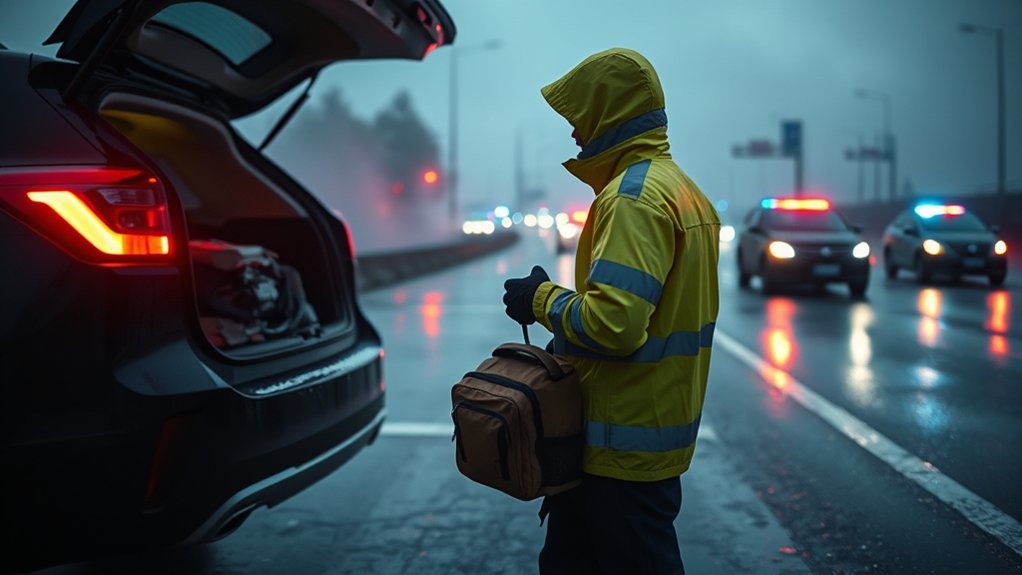
Emergency evacuation travel is the quick movement of people from a dangerous area to a safer place. It may happen because of a wildfire, hurricane, flood, chemical release, civil emergency, or another threat. The trip may be by car, public transportation, organized evacuation vehicle, or on foot.
The goal is not simply to travel fast. It is to move at the right time, on the route officials recommend, with the people, medications, documents, and supplies you need. The safest destination may be a public shelter, a hotel, a friend’s home, a medical facility, or another community outside the affected area.
Should You Evacuate or Shelter in Place?
Do not assume that leaving is always safer. Some emergencies require evacuation, while others require you to stay indoors and seal off outside air. Ready.gov advises planning for both evacuation and sheltering in place.
- Evacuate when officials issue an evacuation order, when fire or flood threatens your route, or when remaining creates an immediate danger.
- Shelter in place when officials say outside air is unsafe, travel routes are more dangerous than your current location, or moving would expose you to the hazard.
- Leave early if advised when you need extra time for children, older adults, pets, mobility equipment, livestock, or medical devices.
Warning: Do not delay after a mandatory evacuation order so you can finish packing. Take people, pets, medications, critical papers, and essential equipment, then leave on the route officials provide.
Best Evacuation Routes to Use
The best evacuation route is the one local authorities identify for the current hazard. It may use an interstate, state highway, local road, public transit line, or walking route. Road capacity matters, but so do fire direction, flood zones, bridge conditions, wind, damaged utilities, and emergency traffic controls.
Follow Official Evacuation Routes First
Start with your city, county, tribal, or state evacuation map. During the emergency, follow signs, traffic officers, emergency alerts, and official updates. Federal evacuation guidance says to follow recommended routes and avoid shortcuts because they may be blocked.
Interstates and major highways are often used because they can carry more vehicles, but they are not automatically the safest choice in every event. Officials may close entrances, reverse lanes, redirect traffic, or send one evacuation zone in a different direction from another.
When Alternate Back Roads Are Safe
Plan a second route before an emergency, but do not treat an unfamiliar back road as a guaranteed escape. Smaller roads may have low-water crossings, weak bridges, fallen trees, smoke, debris, limited fuel, or no cell coverage. They may also be reserved for emergency vehicles or residents.
Use a back road when it appears on an official alternate route, a traffic officer directs you there, or official road information confirms that it is open and appropriate. A map app can help with orientation, but it should not override barricades, evacuation-zone instructions, or DOT closures.
Avoiding Traffic Gridlock
Leave when your zone is told to leave. Departing too late can trap you behind heavy traffic, but leaving before your zone is called can add congestion and interfere with staged evacuation plans. Keep enough fuel, load your go-bag in advance, and choose a destination before you start driving.
- Use one vehicle per household when practical.
- Tell an out-of-area contact where you are going.
- Do not stop on the shoulder unless there is an emergency.
- Let a passenger check alerts, or pull over safely before using your phone.
- Keep children and pets secured throughout the trip.
Pro Tip: Save your primary route, alternate route, destination address, and family contact on paper. A printed plan still works when batteries die, towers fail, or a phone cannot load a map.
State Evacuation Routes and Back Roads
State-designated routes are built into emergency plans, but the active route can change with the hazard. Learn your evacuation zone before disaster season, then check current instructions when an event begins. Do not assume yesterday’s safe road is open today.
| Hazard | Route Priority |
| Wildfire | Leave immediately when ordered; follow fire and law-enforcement directions because smoke and fire direction can change quickly |
| Hurricane | Follow your evacuation zone and state traffic plan; avoid waiting until winds or flooding make travel unsafe |
| Flood or Flash Flood | Move toward higher ground and never enter water-covered roads, low-water crossings, or barricaded areas |
| Chemical Release | Follow instructions on whether to evacuate or shelter in place; do not drive through a contaminated area |
Warning: Never drive around a flood barricade or into water covering a road. The National Weather Service warns that 12 inches of rushing water can carry away most cars, and the road may be washed out below the surface.
How to Check Road Closures Fast

Check official sources before you commit to a route. Navigation apps can show traffic slowdowns and user reports, but their information may be delayed, incomplete, or based on a route that authorities do not want evacuees to use.
| Checkpoint | What It Tells You |
| Local emergency alerts | Evacuation zones, orders, shelter locations, and hazard-specific instructions |
| State DOT website or app | Official closures, detours, cameras, incidents, and travel restrictions |
| 511 traveler information | Current travel conditions where a state or local 511 service is implemented |
| FEMA app | Weather alerts, preparedness information, and active shelter information |
| Google Maps or Waze | Secondary traffic and navigation context; confirm major changes against official sources |
The Federal Highway Administration explains that 511 provides current travel information, but implementation is handled by state and local agencies. Check your state’s 511 website or app before an emergency, rather than assuming every feature is available by phone in every location.
The FEMA app can provide weather alerts and shelter information. Also enroll in your local city or county alert system, because local evacuation orders are often more specific than national alerts.
What to Pack Before You Leave
Keep a go-bag where every household member can reach it. Build it around the “Five P’s”: people and pets, prescriptions, papers, personal needs, and priceless items. The list below focuses on items that protect health, identity, communication, and mobility.
- Water and food: bottled water, nonperishable food, infant or dietary supplies, and a manual can opener if needed.
- Medications: prescription medicines, dosage list, copies of prescriptions, glasses, hearing-aid batteries, and essential medical equipment.
- First aid: bandages, antiseptic, gloves, pain reliever you can safely take, and any clinician-approved travel medicines.
- Documents: photo ID, insurance details, emergency contacts, medical information, pet records, and copies of key travel documents in a waterproof pouch.
- Power and light: charged phone, portable power bank, cables, flashlight, and spare batteries.
- Clothing and protection: sturdy shoes, weather layers, N95 respirators when appropriate, hygiene items, and blankets.
- Pets: carrier or leash, food, water, medicine, waste supplies, identification, and vaccination records.
- Vehicle items: paper map, basic tool kit, jumper cables, tire inflator, and seasonal supplies.
Do not pack prescription antibiotics “just in case” unless a clinician has evaluated your destination, health history, and likely risks and has given clear instructions. Antibiotic choice for travelers’ diarrhea varies by destination and resistance patterns, and many cases do not require antibiotics.
Emergency Travel Services That Help
Emergency travel support may come from an insurer, a medical assistance company, an employer, a tour operator, an airline, a credit-card benefit, or a government consular service. These services are not interchangeable.
- Trip disruption insurance may cover cancellation, interruption, delays, or baggage, depending on the policy.
- Travel health insurance may cover eligible medical care abroad.
- Medical evacuation insurance may arrange and pay for approved transport to an appropriate medical facility.
- Travel assistance may help locate care, coordinate communication, replace documents, or organize logistics, but assistance alone is not always insurance.
The CDC advises travelers to compare these types of coverage carefully. Ask who decides whether evacuation is medically necessary, where you may be transported, whether direct hospital payment is available, and which exclusions apply to preexisting conditions, high-risk activities, natural disasters, civil unrest, or war.
The CDC reports that medical evacuation can range from about $25,000 within North America to more than $250,000 from distant or remote locations, depending on the patient and circumstances.
How to Handle a Medical Emergency
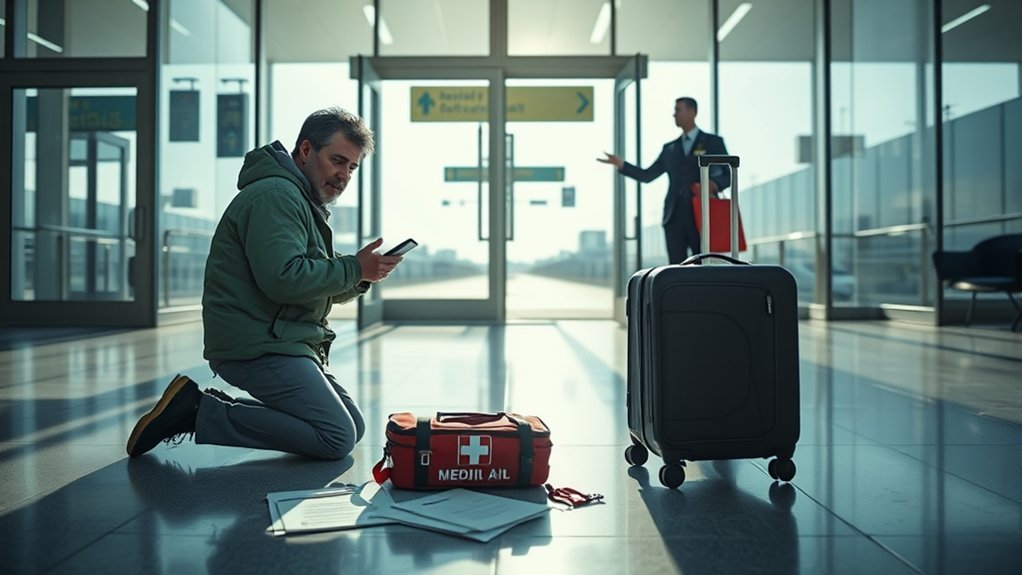
If someone has trouble breathing, severe bleeding, chest pain, signs of stroke, loss of consciousness, a serious allergic reaction, or another life-threatening problem, call the local emergency number immediately. Do not delay urgent care while trying to reach an insurer.
- Make the scene safe. Do not enter traffic, fire, floodwater, smoke, or another hazard to reach the person.
- Call for emergency help. Use the destination’s local emergency number and follow the dispatcher’s instructions.
- Give care within your training. Use first aid, CPR, an AED, or bleeding control only as you are trained and able.
- Share medical facts. Provide allergies, conditions, medications, blood type if known, and emergency contacts.
- Contact insurance or assistance. Once immediate care is underway, ask about approved facilities, payment, transfer, and evacuation procedures.
- Keep records. Save medical notes, test results, prescriptions, itemized bills, and receipts.
Before international travel, confirm whether your health plan covers care abroad and whether you need separate travel health or medical evacuation insurance. Your embassy or consulate may provide information about local medical facilities, but it generally does not pay private medical bills.
What to Do If You Lose Your Passport?
Contact your country’s nearest embassy or consulate and report the passport lost or stolen through the process it provides. You will normally need to appear in person and show identity, citizenship, and travel details.
For U.S. citizens, the U.S. Department of State says a police report is not mandatory, though it can help explain the loss or theft. Bring a passport photo, identification, proof of citizenship if available, your itinerary, the required application, and fees. An embassy or consulate may issue a limited-validity emergency passport when urgent travel does not allow time for a regular passport.
- Cancel or report the missing passport promptly so it cannot remain valid for travel.
- Keep a paper copy and an encrypted digital copy of your passport information separate from the original.
- Ask the consulate whether an emergency document affects transit or entry through another country.
- Contact your airline after you know which replacement document you will receive.
Safety Tips for Emergency Evacuation
Preparation should cover the full trip: when to leave, where to go, how to get there, how to communicate, and what to do if the first plan fails. Practice the plan with everyone in the household.
Prepare Before Departure
| Preparation | Why It Matters |
| Go-bag | Reduces last-minute packing and keeps essentials together |
| Local alerts | Provides evacuation orders, zones, shelter details, and changing hazards |
| Fuel plan | A half tank supports an unexpected evacuation; fill the tank when evacuation appears likely if it is safe to do so |
| Pet and service-animal plan | Confirms transport, supplies, identification, and a shelter or lodging option |
| Two destinations | Provides a backup if the first shelter, hotel, or host location is unavailable |
Ready.gov notes that public shelters accept service animals, while many do not accept household pets inside. Check local shelter rules and identify a pet-friendly option before you need it. Keep carriers, leashes, food, water, medicine, and records ready.
Choose Safer Routes
Compare your primary and alternate routes against local hazards. Avoid roads beside rivers during floods, roads through heavy fuel during wildfires, coastal roads during storm surge, and routes through a chemical release area. Verify bridges, tunnels, mountain passes, and low-water crossings when those features matter.
- Prioritize the route named by officials, not the route with the shortest estimated time.
- Verify closures before leaving and continue listening for changes.
- Never cross barricades or drive through smoke or water you cannot assess safely.
- Return only after officials say the area and route are safe.
Evacuating Without a Car or With Access Needs
Do not wait for an order to start solving transportation problems. Contact your local emergency management office now to learn about evacuation assistance, paratransit, pickup points, accessible shelters, and registries offered in your area.
- Arrange help from at least two trusted people in case one is unavailable.
- Plan how to move wheelchairs, oxygen, dialysis supplies, communication devices, and backup batteries.
- Write instructions for equipment that a helper may not know how to use.
- Keep medication lists, care plans, and provider contacts in the go-bag.
- Ask transit or shelter providers about accessibility before an emergency when possible.
Staying Connected During an Evacuation
Choose one out-of-area contact who can collect updates from the household. Text messages may work when voice calls do not, but do not depend on one device or network.
- Charge phones and power banks before conditions worsen.
- Turn on emergency alerts and save local emergency-management numbers.
- Download offline maps for the evacuation area and destination.
- Carry a battery-powered or hand-crank radio when severe weather may disrupt service.
- Set simple check-in times and avoid unnecessary calls that drain batteries.
Frequently Asked Questions
What Are the 3 C’s of an Emergency Situation?
In first aid, the American Red Cross teaches Check, Call, Care: check the scene and person, call the local emergency number, and provide care within your training. This is a first-aid memory aid, not a complete evacuation-planning standard.
What Qualifies for Emergency Travel?
Emergency travel generally means urgent movement caused by a disaster, medical crisis, serious family event, civil emergency, safety threat, or lost travel document. Formal eligibility for an emergency passport appointment, insurance benefit, employer evacuation, or airline waiver depends on that organization’s rules and documentation requirements.
What Are the Five W’s of Travel?
Use who, what, when, where, and why as a planning check: who is leaving, what hazard or urgent need exists, when you should move, where you will go, and why the chosen route and destination are safe. It is a useful checklist, not an official emergency-management rule.
What Are the 5 P’s of Emergency Preparedness?
A common evacuation checklist is people and pets, prescriptions, papers, personal needs, and priceless items. The Arizona Emergency Information Network uses this version in its Ready, Set, Go guidance. Life safety comes first; do not delay an ordered evacuation to collect valuables.
Should I Use Back Roads During an Evacuation?
Use a back road only when officials identify it as an alternate route or reliable official information confirms it is open and safe. Do not follow an app onto an unfamiliar road that may be flooded, blocked, restricted, or needed by emergency vehicles.
What If I Do Not Have a Car?
Contact local emergency management before a crisis to ask about public evacuation transportation, pickup points, accessible transit, and shelter arrangements. Build a backup plan with family, neighbors, community groups, or care providers, and leave early when extra assistance is needed.
Conclusion
Emergency travel is safer when the decisions are made before the pressure rises. Know whether your area may require evacuation or sheltering in place, learn your zone, prepare two destinations, keep essential supplies together, and arrange transportation for every household member. During the event, follow official instructions, verify road conditions, avoid unsafe shortcuts, and change plans when authorities or hazards require it.
Sources
- Ready.gov: Evacuation — official guidance on routes, fuel, planning, and evacuation actions
- FEMA Mobile Products — FEMA app alerts, preparedness tools, and shelter information
- Federal Highway Administration: 511 — scope and implementation of 511 traveler information
- National Weather Service: Turn Around, Don’t Drown — floodwater and roadway safety
- CDC Yellow Book: Travel and Medical Evacuation Insurance — coverage differences, policy questions, and evacuation costs
- U.S. Department of State: Lost or Stolen Passport Abroad — reporting and replacement steps for U.S. citizens

