

Last Updated on September 11, 2026 by Daniel Globe
You rely on a sharp knife for safer, faster, and more precise cutting. A sharp blade bites cleanly into ingredients without slipping, whereas a dull knife requires excessive force that leads to accidents. Learning how to sharpen correctly preserves blade geometry, extends knife life, and delivers professional culinary results at home.
Quick Answer
To sharpen a knife, set your blade to the correct angle (15° for Japanese knives, 20° for Western knives), maintain uniform pressure across a lubricated whetstone from heel to tip until a continuous wire burr forms along the entire opposite side, flip the blade to repeat, progress to a fine grit, and finish on a leather strop with polishing compound to remove microscopic burrs.
Key Takeaways
- Honing vs. Sharpening: Honing realigns a rolled edge without removing significant metal; sharpening grinds away steel to create a fresh, keen apex.
- Angle Consistency: Holding a steady bevel angle is far more critical than stroke speed or excessive downward pressure.
- Feel the Burr: You must create a raised steel wire burr along the full edge before progressing to higher grit stones.
- Progression Order: Use coarse grits (300–400) for repair, medium (1000) for edge setting, fine (3000–6000) for refining, and a leather strop for mirror deburring.
At a Glance
| Time Required | 10–20 minutes per blade for full sharpening; 1–2 minutes for routine maintenance honing. |
| Difficulty | Beginner to Intermediate (Guided systems are beginner-friendly; freehand whetstones require muscle memory). |
| Tools Needed | Whetstone (1000/6000 grit) or Multi-Stone System, Honing Solution / Water, Angle Guide, Leather Strop with Compound, Cleaning Towel. |
| Cost Range | $15 – $130 (Budget DIY sandpapers to professional electric belt sharpeners and premium waterstones). |
Disclosure: As an Amazon Associate I earn from qualifying purchases. Some links on this page are affiliate links, at no extra cost to you.
Top Picks for Knife Sharpening
|
Category |
Product |
Score |
|---|---|---|
|
🏆 Best Starter Kit |
90/100 |
|
|
💼 Best Benchtop Stone |
88/100 |
|
|
🔰 Best Lubricant |
84/100 |
|
|
🎯 Best Angle Guide |
80/100 |
|
|
⭐ Best Honing Steel |
91/100 |
|
|
🎨 Best Leather Strop |
89/100 |
|
|
🚀 Best Electric Sharpener |
94/100 |
|
|
🔧 Best Ceramic Rod |
82/100 |
How to Sharpen a Knife Step-by-Step
Achieving a razor edge is not a matter of luck or brute force; it is a mechanical process of matching angles and managing abrasives. Follow this proven four-step progression to transform any dull culinary, outdoor, or pocket knife.
Step 1: Determine and Set Your Edge Angle
Most knives fall into two primary edge categories. Choose the angle that matches your blade steel and manufacturer specifications:
- 15° to 17° Per Side (30°–34° Inclusive): Standard for Japanese blades (e.g., Shun, Global) and harder carbon/powder steels (Rockwell HRC 60+). Produces extreme sharpness for delicate slicing.
- 20° Per Side (40° Inclusive): Standard for German/Western chef knives (e.g., Wüsthof, Zwilling) and heavy-use outdoor blades (HRC 56–58). Delivers enhanced durability against chipping on cutting boards.
Pro Tip (The Sharpie Trick): Color the entire factory bevel of your knife with a black permanent marker before placing it on the stone. Take two light test strokes. If the ink is removed only from the top of the bevel, your angle is too shallow; if only at the very edge, your angle is too steep. When ink is wiped cleanly across the full bevel, your angle is locked in perfectly.
Step 2: Establish the Burr on a Coarse or Medium Stone
Submerge waterstones in water for 10–15 minutes until bubbles stop rising (or apply honing solution generously to Arkansas oil stones). Place the stone on a non-slip base with the coarse or medium side facing up (typically 400 to 1000 grit).
- Place the knife heel on the far side of the stone at your target angle.
- Apply moderate, even finger pressure (about 4–6 lbs) directly above the contact point on the blade.
- Sweep the blade smoothly across the stone in an arc from heel to tip, pulling toward your body.
- Repeat for 10–15 consistent passes.
- Check for the Burr: Gently brush your thumb perpendicular to the blade edge on the unsharpened side. You should feel a continuous, rough ridge of displaced metal (a wire burr) running from heel to tip. If you do not feel it, continue sharpening this side—do not flip the knife until the burr is uniform.
Warning: Always check for the burr by stroking your thumb away from the spine down and over the edge perpendicularly—never slide your finger parallel along the length of the blade, which will cause severe cuts.
Step 3: Apex the Secondary Side and Refine
Once the burr is established across the entire first side, flip the knife to the opposite face. Maintain the exact same angle and stroke count until you feel the wire burr flip over to the original side. Once the edge is apexed equally on both sides:
- Switch to a finer grit stone (3000 to 6000 grit) to polish the scratch pattern.
- Use lighter pressure (1–2 lbs) with alternating single-pass strokes (one on side A, one on side B) to minimize and weaken the burr.
Step 4: Strop and Deburr
Even on fine stones, a microscopic foil edge remains attached to the apex. Finish the blade on a leather strop loaded with fine abrasive compound (such as aluminum oxide or diamond paste).
- Draw the blade backward (trailing edge only—spine leading, cutting edge trailing) with light pressure at your sharpening angle.
- Perform 10–15 trailing strokes per side. This snaps off the microscopic foil burr and polishes the apex to hair-shaving keenness.
- The Paper Test: Hold a sheet of standard copy paper vertically. A properly sharpened and deburred blade will glide through the paper from heel to tip silently without snagging, tearing, or catching.
“Sharpening is not about removing metal aggressively; it is about bringing two microscopic planes together at a clean, burr-free intersection.”
Selection Criteria for Sharpening Gear
To evaluate the best sharpening tools, each item was assessed on abrasive quality, angle control consistency, grit progression capability, durability, and practical ease of use. I evaluated whether each system accommodates common kitchen and outdoor bevels (15°–20°), how effectively it manages swarf (metal debris), and its long-term cost-to-performance ratio.
Smith’s Tri-Hone

This three-stone system gives you a complete sharpening progression mounted on a triangular rotating hub. You can reshape a nicked edge with the coarse synthetic stone (300 grit), refine the bevel with the medium synthetic stone (600 grit), and finish with the natural Fine Arkansas stone (approx. 1000–1200 grit equivalent). The molded base features built-in oil troughs to collect excess lubricant, rubber non-skid feet for tabletop stability, and a clip-on angle guide.
It is an outstanding setup for maintaining kitchen cutlery, pocket knives, and hunting gear when you want the benefits of traditional bench stones without handling loose, disorganized blocks.
What People Say
Sharpening enthusiasts and culinary home cooks consistently praise the Tri-Hone’s value, noting that having three stones organized in one self-contained unit eliminates workspace clutter. Many highlight the rock-solid base and included honing oil as big positives for beginners.
A few experienced users mention that natural Arkansas stones cut slower on modern high-vanadium super-steels compared to diamond abrasives, meaning severely damaged heavy-duty blades take patience to reprofile.
Overall Sentiment: Positive

When It Helps
|
Situation |
How It Helps |
|---|---|
|
Regular Kitchen Use |
You can keep chef and paring knives sharp between professional services, making meal prep effortless and safe. |
|
Outdoor Blades |
When you return from field dressing or fishing, the coarse and medium stones restore rolled edges before fine polishing. |
|
Learning Sharpening |
The included angle guide and clearly labeled grits help you master muscle memory and steady hand angles. |
|
Budget Maintenance |
Provides multiple grit stages and mineral honing fluid in a single package without requiring multiple stone purchases. |
Durability
The combination of synthetic aluminum oxide and natural Novaculite Arkansas stone resists dishing better than soft waterstones. When cleaned regularly with honing oil to flush away swarf, the stones will last for decades. The heavy-duty plastic base withstands workshop drops and keeps the stones elevated away from wet bench tops.
Key Benefits
- Complete coarse, medium, and fine three-grit stone progression
- Rotating triangular base with non-slip rubber feet for rapid grit changes
- Integrated oil reservoir catches runoff fluid and suspended steel swarf
- Includes factory angle guide and premium non-petroleum honing solution
Rating: 4.6 (total: 5,104+ reviews)
Work Sharp Benchtop

The Work Sharp Benchtop Whetstone offers a premium, guided waterstone experience engineered for precision edge work. It features a dual-grit premium corundum (aluminum oxide) waterstone with a 1000-grit side for establishing a crisp apex and a 6000-grit side for mirror-polishing. The stone sits inside an innovative water-control reservoir base that captures runoff and eliminates tabletop mess.
What sets this kit apart are the magnetic angle guides (15° and 17°) that snap onto the base, allowing beginners to establish the exact bevel angle before beginning each stroke.
What People Say
Reviewers frequently commend the grit calibration, noting that the 1000-grit surface cuts fast without gouging and the 6000-grit stone produces a true mirror finish. The integrated angle guides receive high marks from users transitioning from pull-through sharpeners to manual waterstones.
Overall Sentiment: Positive

When To Use
|
Situation |
How It Helps |
|---|---|
|
Daily Kitchen Prep |
You can quickly refresh Japanese Santokus and Western Chef knives to keep slicing thin and effortless. |
|
Restoring Edges |
The 1000-grit side swiftly eliminates minor micro-chips and establishes a clean, sharp working apex. |
|
Delicate Fillet Work |
The ultra-fine 6000-grit waterstone polishes edge bevels to reduce cutting resistance and tissue drag. |
|
Learning Technique |
The interchangeable 15° and 17° guides provide immediate visual and tactile references for proper wrist posture. |
Durability
The high-density corundum stone resists premature dishing when soaked and lubricated properly. Because it uses water rather than oil, cleanup is effortless and free of sticky residue. The heavy-duty reservoir base includes non-skid rubber feet that grip wet countertops firmly.
Key Benefits
- Dual-sided 1000/6000 grit corundum waterstone for sharpening and mirror polishing
- Self-contained water management base contains splash and swarf
- Interchangeable 15° (Asian blades) and 17° (Western blades) magnetic angle guides
- Anti-skid rubberized footprint ensures safe, stable sharpening passes
Rating: 4.6 (total: 942+ reviews)
Sharpie Chisel

While commonly thought of as standard stationery, a black chisel-tip permanent marker is one of the most critical diagnostic tools in a professional knife sharpener’s toolkit. By coating the edge bevel with ink (the “Sharpie Marker Trick”), you can visually track exactly where abrasive stone contact is occurring during your stroke.
The wide chisel tip covers broad kitchen knife bevels in a single pass. If your stone removes ink only at the shoulder, your sharpening angle is too low; if it wipes only the microscopic apex, your angle is too steep. This provides instant visual confirmation that you are grinding the actual cutting edge.
What People Say
Bladesmiths, woodworkers, and knife maintenance enthusiasts consider broad chisel Sharpies an indispensable alignment tool. Reviewers appreciate the quick-drying formula that does not smudge during waterstone work and cleans off easily with rubbing alcohol once sharpening is complete.
Overall Sentiment: Positive

When To Use
|
Situation |
How It Helps |
|---|---|
|
Finding Factory Bevel Angles |
Ink the edge and take one light pass on the stone to identify the exact angle ground by the manufacturer. |
|
Checking Stroke Uniformity |
Reveals whether your wrist is rolling or dipping at the curved belly and tip of the blade. |
|
Reprofiling Damaged Blades |
Confirms that coarse stone grinding has reached all the way to the apex before you switch to fine grits. |
|
Tracking Burr Removal |
Highlights stubborn low spots along the bevel that require extra stone contact. |
Durability
The rugged polypropylene barrel and tightly sealed cap prevent alcohol solvent evaporation, ensuring long shelf life in a workshop or kitchen drawer. The durable chisel tip withstands firm pressure against hardened steel edges without fraying.
Key Benefits
- Essential visual diagnostic tool for the “Sharpie Marker Trick”
- Broad chisel tip inks wide blade bevels and chisels in a single swipe
- Quick-drying, water-resistant ink stays put during wet stone sharpening
- Easily removed with isopropyl alcohol or mineral oil after sharpening
Rating: 4.8 (total: 6,689+ reviews)
Smith’s Honing Solution

When sharpening on natural Arkansas stones or oil-compatible synthetics, using a dedicated honing lubricant is vital. Unlubricated sharpening causes microscopic metal filings (swarf) to become permanently embedded in the stone’s pores, glazing the surface and destroying its abrasive action. Smith’s HON1 solution is a non-petroleum formula designed to float swarf away from the cutting interface.
Unlike heavy automotive oils or vegetable oils that turn rancid and gum up stone pores, this low-viscosity formula cleans the stone while lubricating the blade stroke. It also contains built-in rust inhibitors that protect high-carbon steel blades during sharpening sessions.
What People Say
Users praise the solution for keeping natural Novaculite stones cutting aggressively without glazing over. Reviewers highlight that it washes off easily with warm water and soap, unlike messy petroleum-based mineral spirits.
Overall Sentiment: Positive

When To Use
|
Situation |
How It Helps |
|---|---|
|
Using Arkansas Stones |
Suspends metal swarf so pores stay open, maintaining cutting speed and preventing glazed stones. |
|
Extended Sharpening Sessions |
Dissipates frictional heat and provides a fluid glide that protects delicate knife apexes. |
|
Carbon Steel Care |
Integrated corrosion inhibitors prevent rust from forming on exposed carbon steels during maintenance. |
|
Stone Cleaning and Maintenance |
A few drops worked with a soft cloth loosen accumulated metal shavings for quick stone rejuvenation. |
Durability
The stable, non-toxic liquid will not separate, evaporate prematurely, or degrade over time in storage. Because only 4 to 6 drops are required per sharpening session, a single 4-ounce squeeze bottle provides enough lubricant for dozens of complete knife sharpening overhauls.
Key Benefits
- Non-petroleum, water-soluble formula cleans up easily with soap and water
- Prevents pore clogging and glazing on natural Arkansas and synthetic oil stones
- Built-in rust and corrosion inhibitors protect carbon and tool steels
- Controlled squeeze-tip bottle allows precise drop-by-drop application
Rating: 4.6 (total: 6,748+ reviews)
Sharpal Guide

The SHARPAL 196N Angle Pyramid is an ingenious training tool designed to solve the single hardest part of freehand sharpening: maintaining a consistent bevel angle. Instead of clamping onto the blade spine (which can scratch polished knives), this compact pyramid sits directly on your sharpening stone. It features four precision-molded angle faces: 14°, 17°, 20°, and 25°.
Before initiating your stroke, you rest your blade flat against the chosen angle face, lock your wrist posture, and then glide across the stone. It acts as an instant muscle-memory calibration tool for both kitchen knives and heavy outdoor tools.
What People Say
Buyers praise the pyramid for eliminating the guesswork of setting edge angles on flat stones. Beginners note that using it to recalibrate their wrist position every 5 to 10 strokes drastically speeds up learning and produces razor-sharp results much faster.
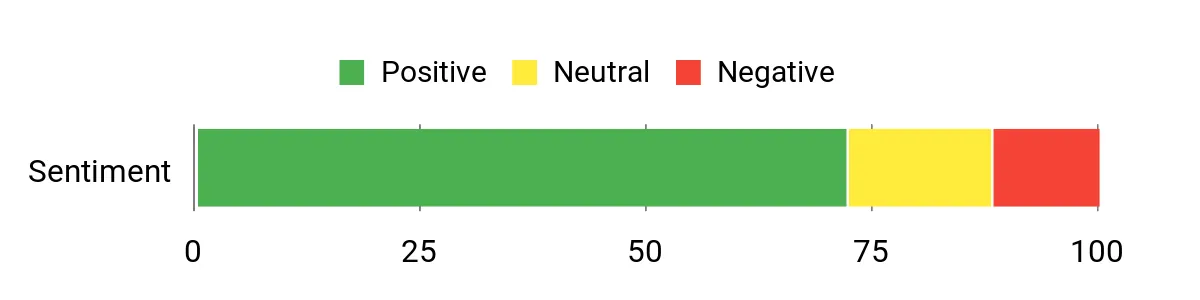
Overall Sentiment: Positive
When To Use
|
Situation |
How It Helps |
|---|---|
|
Learning Freehand Sharpening |
Provides a tactile, physical angle standard that builds reliable muscle memory without scratched blade faces. |
|
Switching Between Knife Styles |
Lets you switch seamlessly from a 14° Japanese Santoku to a 20° German Chef knife or 25° pocket knife. |
|
Field & Camp Sharpening |
Weighs less than an ounce, making it an easy addition to camp kits for outdoor edge touch-ups. |
|
Validating Bevel Symmetry |
Allows you to verify that both sides of the blade are sharpened at the exact same degree. |
Durability
Engineered from high-impact ABS plastic with rubberized non-slip feet on each face, the guide resists oil, water, and accidental stone contact. The package includes two identical pyramids, providing a handy backup for your field roll or workshop bench.
Key Benefits
- Four universal sharpening angle presets: 14°, 17°, 20°, and 25°
- Non-clamping design eliminates scratches and abrasions on polished knife blades
- Rubberized anti-skid base stays firmly planted on wet stones during angle calibration
- Compact 2-pack provides portable convenience for home kitchens and field kits
Rating: 4.3 (total: 4,389+ reviews)
Dura-Gold Sheets

High-grade wet/dry silicon carbide sandpaper is the backbone of the budget-friendly “Scary Sharp” method. By securing these sheets to a perfectly flat surface (such as a piece of float glass, granite surface plate, or dense mouse pad), you create an adaptable sharpening platen that rivals expensive diamond stones for steel removal and microbevel reprofiling.
The Dura-Gold variety pack spans coarse grits (150, 220) for grinding out heavy edge chips and reprofiling blunt bevels, up to fine finishing grits (320, 400, 600) for refining the apex. Silicon carbide fractures continuously under pressure, presenting sharp new cutting edges that bite cleanly through hardened cutlery steels.
What People Say
Experienced woodworkers and knife restorers praise the durability of Dura-Gold sheets when used wet with water or light mineral oil. Users highlight that the flexible resin backing does not tear when wrapped around backing blocks or stropping boards.
Overall Sentiment: Positive

When To Use
|
Situation |
How It Helps |
|---|---|
|
The “Scary Sharp” System |
Mount sheets on float glass for an ultra-flat, professional sharpening station at a fraction of waterstone costs. |
|
Reprofiling Heavily Damaged Edges |
Coarse 150–220 grits remove chipped metal rapidly without wearing down or dishing expensive whetstones. |
|
Waterstone Flattening (Lapping) |
Rub dished waterstones across 220-grit wet sandpaper on a flat tile to restore a dead-flat sharpening surface. |
|
Convex Edge Sharpening |
Pair sandpaper with a soft mouse pad backing to smoothly hone convex bevels on hunting knives and axes. |
Durability
Silicon carbide electro-coated onto waterproof latex paper ensures that these sheets resist tearing and abrasive shedding when fully soaked. Used with water and a drop of dish soap as lubricant, each sheet can sharpen multiple dull blades or re-flatten several waterstones before wearing out.
Key Benefits
- Electro-coated silicon carbide grain cuts hardened cutlery steels rapidly
- 100% waterproof backing performs exceptionally wet or dry without curling
- Versatile 150 to 600 grit progression covers heavy repair through edge refinement
- Ideal low-cost solution for stone lapping, convex grinding, and chisel restoration
Rating: 4.5 (total: 395+ reviews)
Belkin Mouse Pad

In knife sharpening circles, a traditional closed-cell neoprene mouse pad is celebrated as the ultimate platen for convex edge sharpening. Knives with convex grinds (such as bushcraft blades, hunting knives, and heavy cleavers) do not feature flat bevels; their edges curve smoothly to the apex. Placing a sheet of fine wet/dry sandpaper over a firm mouse pad creates a cushioned surface with just enough give to wrap naturally around the convex curve as you draw the blade across.
The Belkin Premium Mouse Pad features a non-skid natural rubber backing that grips workbenches firmly, while its high-density neoprene core provides uniform compliance without excessive squish (which could otherwise round off your apex).
What People Say
Knife makers and outdoor enthusiasts frequently highlight high-density neoprene pads as a secret weapon for maintaining axes, machetes, and convex outdoor knives (like Bark River blades). Reviewers note that the pad’s firm foam core supports consistent stropping strokes without collapsing under hand pressure.
Overall Sentiment: Positive

When To Use
|
Situation |
How It Helps |
|---|---|
|
Convex Edge Sharpening |
Provides compliant backing for sandpaper that contours perfectly to curved convex edge bevels. |
|
Improvised Strop Base |
Can be loaded with abrasive polishing paste to serve as an economical, wide-surface stropping pad. |
|
Waterstone Underlayment |
Placed under whetstones to absorb water runoff and provide non-slip traction on slick granite countertops. |
|
Workstation Bench Mat |
Protects delicate knife handles and polished bolsters from scratches during maintenance. |
Durability
The vulcanized rubber base and moisture-resistant surface layer withstand repeated wetting during waterstone and wet-sandpaper sessions. The closed-cell neoprene structure maintains its resilient cushioning and rebounds quickly without taking permanent compression sets.
Key Benefits
- Provides ideal cushioning for convex edge sharpening with wet/dry sandpaper
- Non-skid rubber base prevents shifting on wet kitchen counters and workbenches
- Compact, portable profile fits easily into knife rolls and outdoor field kits
- Protects blade finishes and countertops from accidental scratches and stone slippage
Rating: 4.5 (total: 28,823+ reviews)
Shun Honing Steel

Daily cutting causes the microscopic teeth of a sharp knife apex to bend and roll out of alignment. A premium combination honing steel realigns these rolled microscopic teeth back to center without grinding away valuable blade steel. The Shun Combination Honing Steel features a dual-surface stainless rod: a smooth side for daily realignment and a micro-ribbed side for lightly touching up a sluggish edge.
Critically, the built-in angle guide built into the bolster sets the blade precisely at 16° (the factory standard for Japanese kitchen knives), eliminating the common error of honing at too steep an angle and dulling the knife.
What People Say
Chefs and home cooks consistently praise the balance and ergonomic Pakkawood handle, highlighting how quickly 4 to 5 light passes restore crisp slicing performance before meal prep. Reviewers note that the 16° bolster guide gives beginners complete confidence when learning rod technique.
Overall Sentiment: Positive

When To Use
|
Situation |
How It Helps |
|---|---|
|
Daily Meal Prep |
Realigns the apex in seconds before cutting tomatoes, meats, and herbs, extending time between whetstone sessions. |
|
Maintaining 16° Japanese Cutlery |
The built-in handle guide matches the exact factory geometry of Shun, Kai, and other premium Japanese blades. |
|
Light Weekly Touch-Ups |
The micro-ribbed side provides light bite to straighten minor edge rolls that the smooth side cannot reset. |
|
Preserving Blade Lifespan |
Realigns edges non-destructively without abrading or thinning valuable core steel. |
Durability
The hardened stainless steel rod will not pit, bend, or rust under kitchen conditions. The traditional contoured Pakkawood handle is saturated with thermosetting resin, making it completely moisture-resistant, non-slip, and durable enough to withstand daily commercial kitchen use.
Key Benefits
- Dual-surface design: smooth face for daily realignment, micro-ribbed face for light refresh
- Built-in 16° angle guide in the handle ensures precision alignment on Japanese cutlery
- Hardened stainless steel rod maintains straightness and resists corrosion
- Moisture-resistant contoured Pakkawood handle delivers an ergonomic, secure grip
Rating: 4.7 (total: 148+ reviews)
BeaverCraft Strop
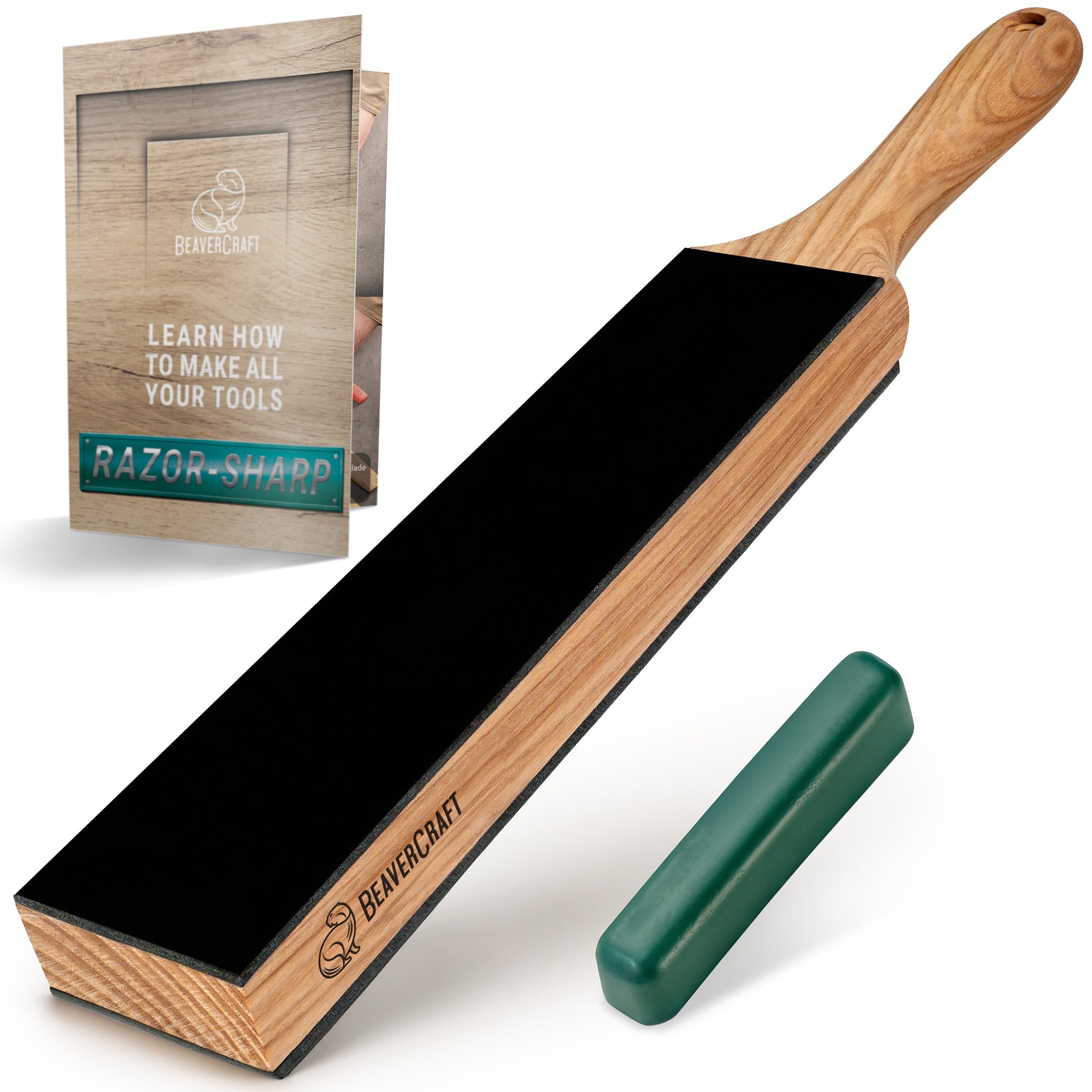
Stropping is the essential final step that separates a moderately sharp knife from a truly hair-popping, razor-keen blade. The BeaverCraft Paddle Strop features genuine vegetable-tanned cowhide mounted on a solid ash wood base. It provides two stropping surfaces: a suede (rough) side for holding polishing compound to deburr and refine the edge, and a smooth leather side for final burnishing.
The included green chromium oxide polishing compound (approx. 0.5 micron) cuts at a microscopic level, stripping away lingering wire burrs and polishing the edge apex to a mirror sheen without rounding the bevel.
What People Say
Woodcarvers and knife enthusiasts rate this paddle strop as one of the best value upgrades available. Users highlight that regular stropping for 30 seconds after kitchen use keeps knives shaving-sharp for months without ever touching a whetstone.
Overall Sentiment: Positive

When To Use
|
Situation |
How It Helps |
|---|---|
|
Final Deburring After Stones |
Snaps off microscopic wire burrs and cleans the apex to produce a smooth, snag-free cutting edge. |
|
Routine Kitchen Touch-Ups |
10 passes per side realigns and polishes the apex, postponing the need for stone sharpening by weeks. |
|
Woodcarving and Leatherworking |
Maintains razor keenness on chisels, gouges, and drawknives for clean cuts with zero grain tear-out. |
|
Polishing Edge Microbevels |
Chromium oxide compound produces a mirror-reflective bevel that minimizes cutting friction. |
Durability
The genuine vegetable-tanned leather is firmly bonded to a kiln-dried European ash wood paddle that resists warping. With routine reapplication of the included compound block, the leather will provide thousands of stropping cycles before requiring dressing or cleaning.
Key Benefits
- Dual-sided design: rough suede for compound polishing, smooth grain leather for clean stropping
- Includes green chromium oxide polishing compound block (0.5 micron polish)
- Generous 14-inch paddle length allows full, natural stropping passes on large chef knives
- Ergonomic ash wood handle provides comfortable, steady hand control
Rating: 4.6 (total: 2,382+ reviews)
Work Sharp MK2

For users who want razor-sharp results without spending hours mastering freehand waterstone technique, the Work Sharp Knife & Tool Sharpener Mk.2 is the gold standard in powered sharpening. Utilizing flexible abrasive belt technology similar to professional blade grinders, the MK2 creates a gently convex edge that is stronger and more durable than flat stone bevels.
The Mk.2 features an upgraded two-speed motor (low speed for precision knife sharpening, high speed for heavy tool grinding) and an angle guide that toggles easily between 20° (for kitchen knives) and 25° (for outdoor and hunting blades).
What People Say
Owners consistently marvel at how quickly the MK2 restores butter-knife-dull blades to razor sharpness in under two minutes. Users appreciate the flexible belt tracking and leather-lined angle guide that prevents blade scratching during high-speed passes.
Overall Sentiment: Positive

When To Use
|
Situation |
How It Helps |
|---|---|
|
High-Volume Sharpening |
Restores an entire block of kitchen knives in 15 minutes with zero arm fatigue. |
|
Reprofiling Damaged Blades |
Coarse abrasive belts grind out deep edge nicks, chips, and broken tips in seconds. |
|
Lawn and Garden Tools |
The tool guide can be removed to sharpen axes, lawnmower blades, pruners, and shovel edges. |
|
Serrated Knives |
The extra-fine flexible belt conforms to serration gullets to sharpen bread knives without flattening teeth. |
Durability
Constructed with impact-resistant reinforced polymer housing and a heavy-duty continuous motor. The abrasive belts are consumable items that change out in seconds without tools. The unit includes a 3-year manufacturer warranty for peace of mind.
Key Benefits
- Flexible abrasive belt system grinds a strong, durable convex cutting edge
- Dual-speed motor switch handles delicate kitchen blades and heavy lawn tools
- Precision angle guide toggles between 20° (kitchen) and 25° (outdoor) bevels
- Sharpen kitchen knives, pocket blades, serrated edges, scissors, and axes on one machine
Rating: 4.7 (total: 8,040+ reviews)
Noble Ceramic Rod
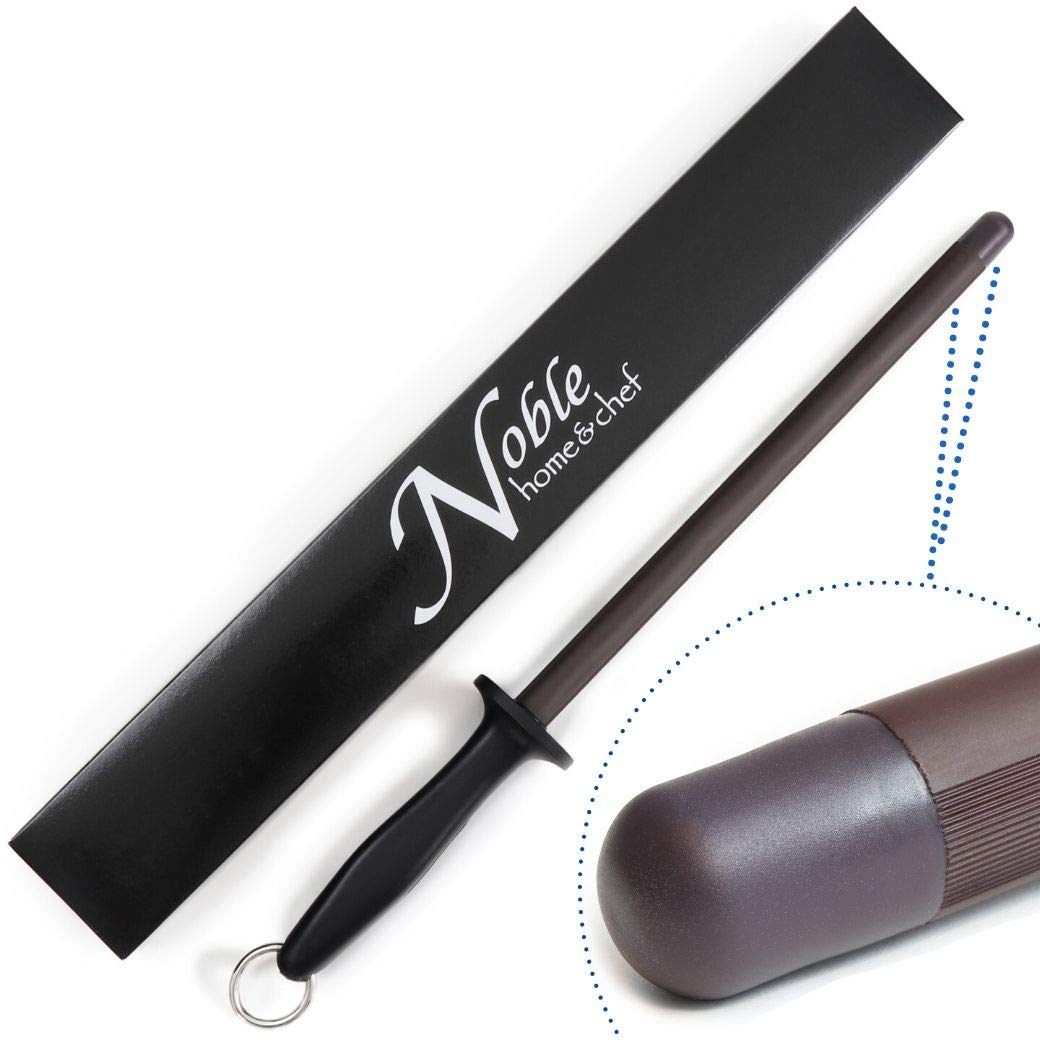
Traditional grooved steel rods only realign edges; they do not sharpen or remove steel. For hard Japanese knives (Rockwell HRC 60+) that are too hard for standard steel rods, a ceramic honing rod is the ultimate daily maintenance tool. Ceramic has a Mohs hardness of 9 (approaching diamond), allowing it to lightly abrade, realign, and hone hard cutlery steels simultaneously.
The Noble Home Chef Ceramic Rod features a Japanese ceramic cylinder with a dual-grit surface: ribbed sides for quick edge realignment and smooth sides for fine honing (~2000-grit finish). It is equipped with a rubberized shock-absorbing tip that protects the rod from shattering if bumped against the counter.
What People Say
Chefs appreciate that this rod actually puts a fresh, micro-refined edge on hard VG-10 and AUS-10 Japanese knives that slip harmlessly off traditional metal steels. Users consistently praise the protective rubber bumper and generous 11-inch rod length.
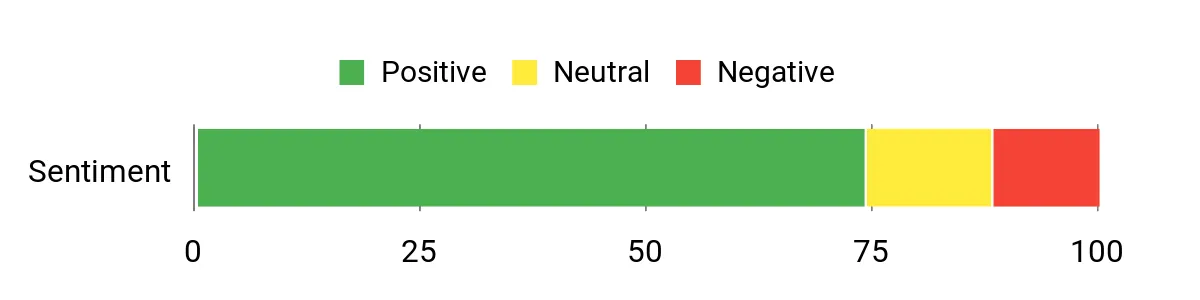
Overall Sentiment: Positive
When To Use
|
Situation |
How It Helps |
|---|---|
|
Hard Japanese Cutlery |
Hones hard carbon and high-alloy steels (HRC 60–63) that standard metal steels cannot abrade. |
|
Mid-Week Touch-Ups |
Removes micro-burrs and refines the apex in 10 seconds without pulling out waterstones. |
|
Commercial Kitchen Service |
Maintains edge bite during high-volume prep shifts with minimal metal removal. |
|
Kitchen Storage |
Features an integrated stainless steel hanging loop for quick pegboard or knife-rack access. |
Durability
High-purity ceramic never rusts, pits, or degrades. While ceramic is inherently brittle compared to steel, the protective rubber tip cushions downward bench contact. Clean periodically with an eraser or scouring pad to remove metal swarf buildup and restore fresh abrasive cutting action.
Key Benefits
- Dual-surface Japanese ceramic hones and lightly abrades hard cutlery steels
- Approaches diamond-level hardness to sharpen blades up to HRC 64
- Impact-resistant rubberized tip prevents chipping against countertops
- Long 11-inch rod comfortably accommodates large 8″ to 10″ chef knives
Rating: 4.4 (total: 259+ reviews)
Frequently Asked Questions
How often should you hone or sharpen your knives?
Honing and sharpening serve fundamentally different maintenance roles. Honing should be done frequently—ideally before every major meal prep session or weekly—to realign the microscopic teeth of the blade without removing steel. Sharpening with whetstones or abrasive systems removes metal to establish a brand-new apex and is typically required only every 3 to 6 months for home cooks, or whenever the blade fails to slice cleanly through a tomato skin or copy paper after honing.
Which sharpener should you start with as a beginner?
If you want to master traditional freehand techniques, start with a dual-sided 1000/6000 grit waterstone or a self-contained 3-stone system like Smith’s Tri-Hone paired with an angle guide pyramid. If you want fast, foolproof results with zero learning curve, an electric flexible-belt system like the Work Sharp MK2 provides professional, repeatable convex edges in minutes. Every sharpening kit should also include a leather strop with polishing compound for final deburring.
What is the safest, most effective sharpening technique?
The most reliable technique relies on steady angle control rather than downward pressure. Secure your stone on a rubberized non-slip mat, apply 4–6 lbs of finger pressure over the stone contact area, and draw the blade from heel to tip in sweeping strokes. Always grind until you feel a uniform wire burr across the entire opposite side before flipping the blade. To deburr, finish with trailing strokes (spine leading) on a fine stone or leather strop to avoid cutting into the abrasive medium.
Preferred Sharpeners Comparison
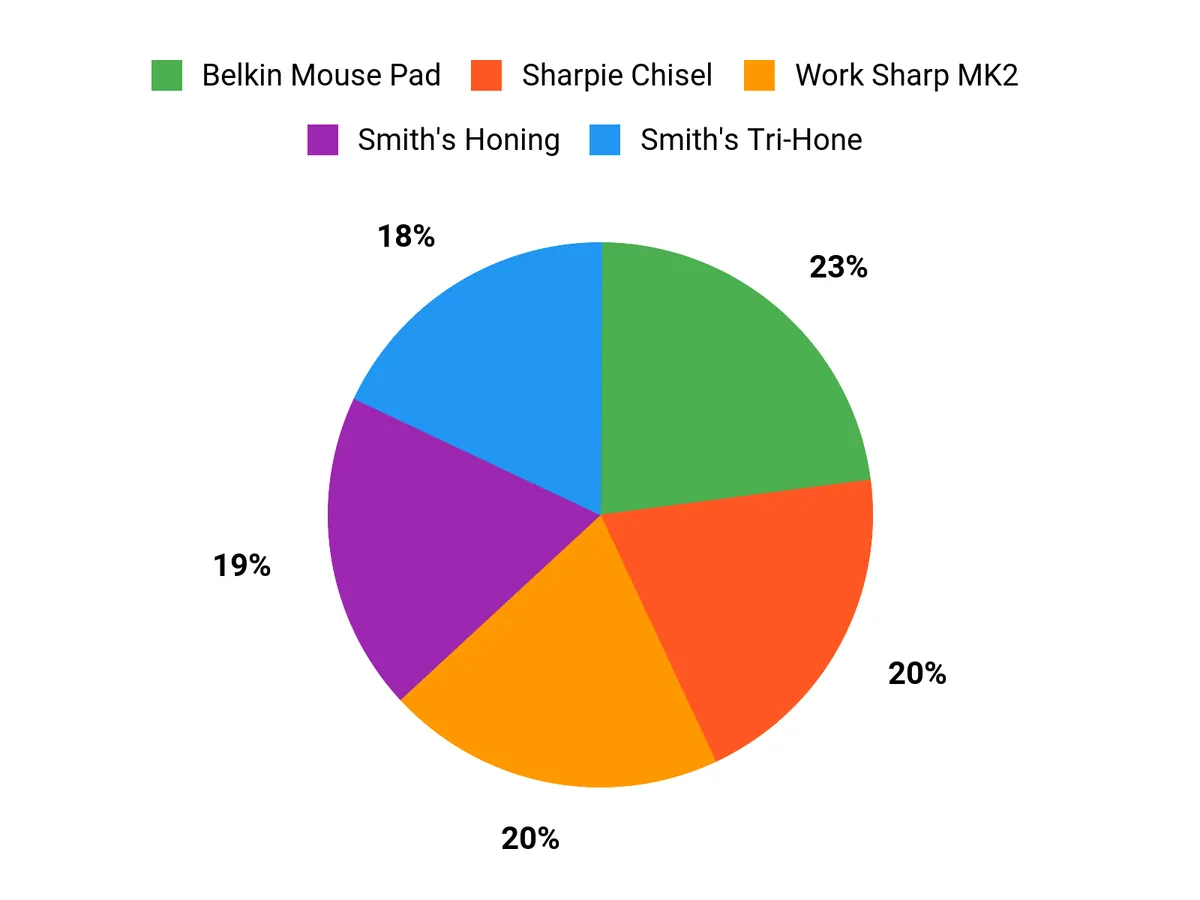
When selecting between a manual multi-grit system like Smith’s Tri-Hone, a precision waterstone like the Work Sharp Benchtop, or an electric belt sharpener like the Work Sharp MK2, you balance manual control against speed and consistency. Manual stones offer complete control over custom bevel angles, while electric belt systems deliver fast, razor-sharp convex edges with minimal effort.
Wrapping Up
Building a dependable knife maintenance routine requires the right progression of tools: a coarse-to-medium stone for shaping the apex, a fine stone or ceramic rod for refining, non-petroleum honing lubricant to prevent stone clogging, and a leather strop with polishing compound for final deburring.
If you prefer manual control and traditional stones, the Work Sharp Benchtop Whetstone and Smith’s Tri-Hone provide complete grit progressions in stable, mess-free bases. For fast, repeatable sharpening across both kitchen and outdoor gear, the Work Sharp MK2 electric system delivers outstanding convex edges in minutes. Maintain your blades between sharpenings with a Shun Honing Steel or Noble Ceramic Rod, and finish on a BeaverCraft Strop to keep every knife performing safely, efficiently, and with hair-popping sharpness.
| Product Name | Image | Rating | Material | Product Dimensions |
|---|---|---|---|---|
| Smith’s TRI6 Arkansas Tri-Hone Stone Sharpening System |
|
4.6/5 (5,104 reviews) | Arkansas Stone, Synthetic Corundum | 1.63″L x 1″W x 6″H |
| Work Sharp Benchtop Whetstone Knife Sharpener |
|
4.6/5 (942 reviews) | Corundum (Aluminum Oxide) | 4″L x 2.25″W x 9.5″H |
| Sharpie Permanent Markers, Chisel Tip, Black, 12 Count |
|
4.8/5 (6,689 reviews) | Polypropylene, Quick-Dry Ink | 2.2 x 3.4 x 5.6 inches |
| Smith’s HON1 Honing Solution – 4oz Bottle |
|
4.6/5 (6,748 reviews) | Non-Petroleum Lubricant | 5″L x 2.5″W x 1.17″H |
| SHARPAL 196N Angle Pyramid Guide 4 Universal Angles 2-Pack |
|
4.3/5 (4,389 reviews) | High-Impact ABS Plastic | 3.14″L x 1.6″W x 0.3″H |
| Dura-Gold Premium Sandpaper Sheets – 150 to 600 Grit Variety Pack |
|
4.5/5 (395 reviews) | Silicon Carbide | 9″L x 5.5″W |
| Belkin Premium Mouse Pad – Convex Sharpening Platen |
|
4.5/5 (28,823 reviews) | High-Density Neoprene & Rubber | 8.5″L x 10.4″W |
| Shun Kanso 9″ Combination Honing Steel |
|
4.7/5 (148 reviews) | Stainless Steel & Pakkawood | 13.75″L x 1″W x 1.25″H |
Sources
- Shun Cutlery / Kai USA Official Knife Care Guide — Angle geometry standards and Japanese steel maintenance protocols.
- Work Sharp Sharpening Educational Resources — Flexible belt convex edge dynamics and whetstone grit staging.
- Norton Abrasives Sharpening Stones 101 — Abrasive minerals, Novaculite Arkansas properties, and swarf lubrication guidelines.
- CATRA (Cutlery and Allied Trades Research Association) — International edge sharpness, blade retention, and burr formation testing standards.
This guide is reader-supported. When you click through links we may earn a referral commission on qualifying purchases at no additional cost to you.
