

Last Updated on July 28, 2026 by Ethan Caldwell
The Athens Airport metro is one of the simplest ways to reach central Athens, but its airport trains do not run as often or as late as regular city metro services. Metro Line 3 normally leaves the airport every 36 minutes, reaches Monastiraki in about 41 minutes, and costs €9. After the final departure, four 24-hour airport buses and licensed taxis provide reliable alternatives. Travelers arriving overland from the rest of Europe should also know that Greece currently has no operating international passenger-train services, so rail journeys must include a ferry or coach connection.
Quick Answer
Athens Airport Metro Line 3 normally runs every 36 minutes. The regular first departure from the airport is 6:10 AM and the last is 11:34 PM, with Monastiraki about 41 minutes away. The fare is €9. After the last train, use a 24-hour airport bus or taxi.
Key Takeaways
- Airport Metro Line 3 normally runs every 36 minutes, not every 30 minutes.
- The regular last airport departure is 11:34 PM, but temporary evening works can affect how far the train travels into central Athens.
- The airport metro ticket costs €9, while a one-way Airport Express bus ticket costs €5.50.
- The four 24-hour airport buses are X93, X95, X96, and X97.
- There are currently no international passenger trains into Greece; overland travelers must combine trains with a ferry or coach.
At a Glance
| Time Required | Metro: about 41 minutes to Monastiraki; X95 bus: about 60 minutes to Syntagma; other bus routes take about 45–90 minutes |
| Difficulty | Easy, provided you check current service notices and choose the correct route |
| Tools Needed | Official timetable, payment card or ticket, destination address, and a backup route for late arrivals |
| Cost | Metro €9; Airport Express bus €5.50; taxi to the central inner ring €40 during the day or €55 from midnight to 5 AM |
Disclosure: As an Amazon Associate I earn from qualifying purchases. Some links on this page are affiliate links, at no extra cost to you.
What Time Does the Airport Metro Leave?

Under the regular timetable, Metro Line 3 trains leave Athens Airport every 36 minutes. The first listed airport departure is at 6:10 AM, and the final departure is at 11:34 PM. Because schedules and temporary works can change, check the official STASY Line 3 timetable on the day you travel.
The regular journey takes approximately:
- 39 minutes to Syntagma
- 41 minutes to Monastiraki
- 61 minutes to Piraeus
A one-way airport metro ticket costs €9. According to OASA’s current fare information, it remains valid for 90 minutes from first validation on eligible buses, trolleybuses, trams, and metro lines. It is not valid on Airport Express buses or the X80 express route.
Warning: As of July 28, 2026, temporary works affect late Metro Line 3 services from Sunday through Thursday. After 9:40 PM, several central stations close, late airport trains terminate at Ampelokipi, and a temporary X23 bus links Ampelokipi with Monastiraki. Check STASY before relying on a late direct ride.
The normal airport branch runs every 36 minutes, so missing one train can add more than half an hour to your trip.
Take the Airport Metro to Monastiraki
Monastiraki is a convenient stop for travelers staying near Plaka, Psiri, the Ancient Agora, or the northern side of the Acropolis area. Board a Line 3 train marked toward Dimotiko Theatro. Under the regular timetable, the trip from Athens Airport to Monastiraki takes about 41 minutes and requires no transfer.
The airport rail station is across from the terminal building and is reached by the elevated pedestrian walkway. Both Metro Line 3 and Hellenic Train suburban services use the airport rail complex, so check the departure display before boarding.
Buy the correct airport ticket from a machine or ticket office before entering the platform. Full-fare contactless payment is also available across the OASA network in supported locations. Validate the ticket or payment method as directed at the gate or validator, and keep the ticket until the entire journey is complete.
Pro Tip: Confirm that the train display says “Airport” when traveling toward the airport. Not every eastbound Line 3 train continues beyond Doukissis Plakentias to the airport branch.
When Is the Last Train From Athens Airport?
The regular last Metro Line 3 departure from Athens Airport is 11:34 PM. Under the normal schedule, it reaches Monastiraki at approximately 12:15 AM and continues toward Piraeus. Temporary engineering works, strikes, or emergency changes can shorten or alter that journey, so the listed time should not be treated as a guaranteed direct service every night.
Do not plan around your flight’s scheduled landing time alone. Passport control, baggage collection, and the walk to the airport station may take longer than expected. Check the live timetable after landing and move to a bus or taxi plan early if the final train is too close.
Note: Regular city Metro Lines 2 and 3 have 24-hour service every Saturday, but airport trains are excluded. The airport branch still follows its separate timetable.
Night Buses From Athens Airport
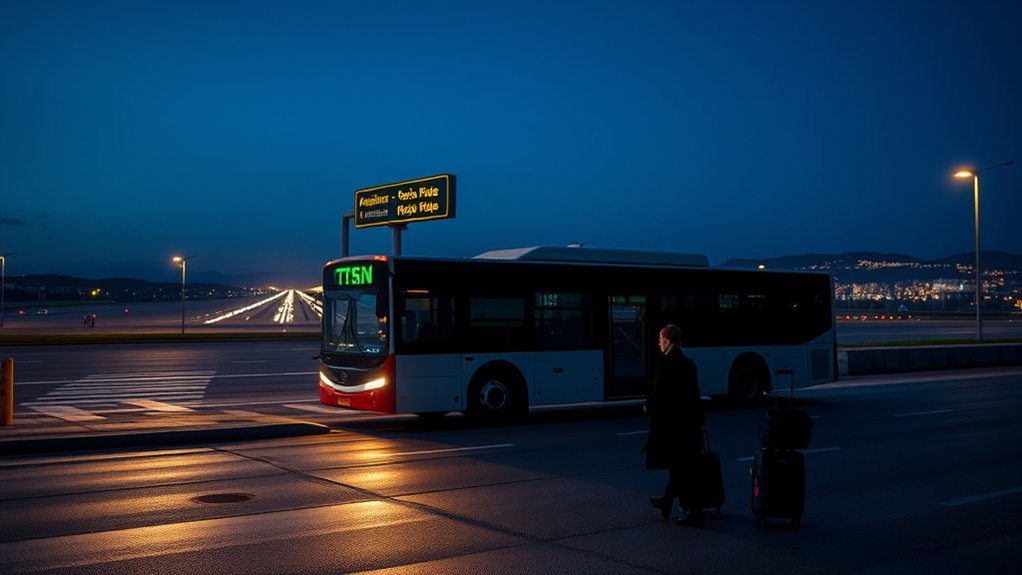
Athens Airport has four 24-hour Airport Express bus routes. A one-way full-fare ticket costs €5.50 and is valid only for that airport-express journey. You can buy a ticket before boarding or use an accepted physical or mobile contactless payment method at the designated validator.
- X95: Airport to Syntagma Square, with an official estimated travel time of about 60 minutes.
- X96: Airport to Piraeus, taking approximately 90 minutes depending on traffic.
- X93: Airport to the Kifissos and Liosion intercity bus-station area, taking approximately 65 minutes.
- X97: Airport to Elliniko; during the overnight period, the route starts or finishes at Dafni. The official estimated journey is about 45 minutes.
Exact departure intervals vary by route and time of day. Check the official OASA Airport Express bus page or OASA Telematics before traveling.
Pro Tip: For most hotels in central Athens, X95 to Syntagma is the most useful overnight bus. From Syntagma, walk only when the route is practical and well lit; otherwise continue by a licensed taxi.
Taxi and Suburban Railway Options
Licensed taxis operate 24 hours a day from the official taxi rank outside Exit 3 on the Arrivals Level. Athens International Airport lists a flat fare of €40 between the airport and the central Athens inner ring from 5 AM to midnight, and €55 from midnight to 5 AM. The applicable price is based on the time you reach the destination. See the airport’s official taxi information for boundaries and current conditions.
The suburban railway is another daytime option. It links the airport with Athens Central Station, Piraeus, Ano Liosia, and onward regional connections. It is useful for Larissis Station or certain rail transfers, but it is not a 24-hour substitute for the metro.
Best Europe-to-Athens Rail Routes
There is currently no continuous international passenger-train route into Greece. Hellenic Train states that all international railway itineraries are suspended until further notice. That means travelers from Western or Central Europe must combine rail with either an Adriatic ferry from Italy or an international coach for the final border crossing.
The most straightforward low-flight route is usually:
- Travel by train to Bari, Ancona, or Venice.
- Take a ferry to Patras, or in some cases Igoumenitsa.
- Continue from Patras to Athens by a Hellenic Train bus-and-rail connection or a direct intercity coach.
A Balkan route can still be built, but it is no longer an all-rail itinerary. It may include trains within countries such as Austria, Hungary, Serbia, Romania, or Bulgaria, followed by an international coach into Greece.
Warning: Do not book a journey to Athens based on an old map that shows passenger trains from Belgrade, Skopje, or Sofia into Thessaloniki. Confirm every border-crossing segment separately because Greece’s international passenger trains are currently suspended.
Train + Ferry From Italy to Athens
A train-and-ferry itinerary from Italy is currently the clearest way to reach Athens while keeping most of the journey on rail or sea. Start with an Italian train to Bari, Ancona, or Venice, take an Adriatic ferry to Patras, and then continue overland to Athens.
Superfast Ferries and Anek Lines operate within the same Attica Group booking environment on relevant Adriatic services. Routes and operating days vary, and not every crossing is daily. Check the current Superfast ports and destinations and revised-schedule notices before coordinating a train arrival with a sailing.
Italy Train Connections
Travelers from Rome, Milan, Florence, Bologna, or other major Italian cities can use Trenitalia or Italo to reach an Adriatic departure city.
- Bari: Often the most convenient southern Italian gateway and generally the shortest of the three main Adriatic approaches.
- Ancona: A practical option from northern and central Italy with regular long-distance rail links.
- Venice: Convenient for travelers coming from northeastern Italy or Central Europe, but the sea journey is normally much longer.
Allow substantial time between the train and ferry. You may need to travel from the railway station to the ferry terminal, complete document checks, and check in before boarding.
Overnight Ferry Routes
Many Italy–Greece sailings operate overnight, but there is no single journey time that applies to Bari, Ancona, and Venice. Duration depends on the departure port, intermediate calls, vessel, weather, and seasonal timetable.
- Reserve the ferry as soon as your travel dates are firm.
- Check whether the sailing arrives at Patras or Igoumenitsa.
- Choose an air seat, deck passage, or cabin according to the fare rules and trip length.
- Carry the passport or identification used for the reservation.
- Recheck the sailing shortly before departure for revised times.
A cabin costs more but can be worthwhile on a long overnight crossing. Environmental charges, port fees, seasonal supplements, and accommodation upgrades may remain payable even when a rail-pass benefit applies.
Athens Arrival Options
Patras does not currently have a direct passenger train to Athens. Hellenic Train’s normal combined route uses an onward bus from Patras to Kiato, followed by the suburban railway from Kiato toward Athens or Piraeus. Search the complete Patras-to-Athens or Patras-to-Piraeus journey through Hellenic Train’s official booking system so the available bus-and-rail connection appears together.
A direct intercity coach from Patras to Athens is another practical option. Current departures and ticket availability should be checked with KTEL Achaia.
Eligible Eurail and Interrail products may reduce ferry costs. A pass valid in Greece or Italy generally provides a 30% Superfast passenger-fare discount, while the six-day Greek Islands Pass includes different Greece–Italy travel benefits. Review the exact Eurail Superfast Ferries terms before booking.
Warning: A separately purchased train, ferry, bus, or hotel reservation may not be protected when an earlier service is delayed. Avoid a tight same-day connection and review each operator’s change and refund conditions.
The Scenic Balkan Rail Route

A journey through Berlin, Vienna, Budapest, Belgrade, Sofia, or Bucharest can still be a memorable way to approach Greece, but it is not currently a continuous rail route to Athens. The final international connection into Greece requires a coach or another form of road transport because Hellenic Train’s international passenger services are suspended.
As of July 2026, Hellenic Train states that all international passenger-rail itineraries are suspended until further notice.
A realistic Balkan itinerary may involve:
- Rail travel through Central Europe to Budapest, Belgrade, Bucharest, or Sofia.
- An international coach for the border crossing into Greece.
- A coach to Thessaloniki or Athens, or a domestic Hellenic Train service where one fits the route.
- Separate bookings and generous connection time.
- Daily checks for strikes, engineering works, and seasonal changes.
This option suits travelers who value the journey more than speed. It is usually more complex than the Italian train-and-ferry route and should not be described as a simple or guaranteed budget itinerary.
Booking Tips for Trains to Athens
Build the itinerary one confirmed segment at a time. Start with the least flexible service—usually the ferry—then choose trains and overnight stops that leave enough room for delays.
| Journey Part | What to Do |
|---|---|
| Italian train | Book with Trenitalia or Italo and allow time to reach the ferry terminal. |
| Adriatic ferry | Confirm the exact port, check-in deadline, arrival port, accommodation type, and revised sailing notices. |
| Patras connection | Use the Hellenic Train bus to Kiato plus suburban rail, or book a direct KTEL coach to Athens. |
| Balkan route | Plan a coach for the international entry into Greece; do not rely on old through-train maps. |
| Rail pass | Read the exact Eurail or Interrail ferry benefit and budget for reservations, fees, supplements, and cabin upgrades. |
Keep every ticket, booking reference, passport detail, and operator contact in one offline folder. Ferry and rail apps are useful, but mobile service may be limited during the crossing.
How to Get Around Athens
Athens has metro, tram, bus, trolleybus, and suburban-rail services. A standard urban 90-minute ticket currently costs €1.20 and allows eligible transfers within the urban zone. Airport journeys require a separate airport product.
Operating hours vary by line and day:
- Metro Line 1 generally begins around 5 AM, with final departures depending on the station.
- Metro Lines 2 and 3 generally begin around 5:30 AM.
- Friday service operates later on parts of the network.
- Lines 2 and 3 have 24-hour service every Saturday, but airport trains are excluded.
- Temporary works and strikes can change these hours at short notice.
Use the metro for central attractions, the tram for parts of the coast, and buses where rail coverage is limited. The suburban railway is useful for Athens Central Station, Piraeus, the airport, Kiato, and some regional connections.
Warning: Pickpocketing can occur on crowded metro trains, station escalators, and around major attractions. Keep phones, passports, and wallets secured; avoid placing valuables in open pockets or unattended bags.
Frequently Asked Questions
Where should I be cautious when choosing accommodation in Athens?
Athens does not have a simple official list of neighborhoods tourists must avoid. Check recent accommodation reviews, the walk from the nearest station, street lighting, and nighttime noise. Around busy transport hubs and crowded tourist areas, protect your belongings and avoid demonstrations. Plaka, Koukaki, Syntagma, Monastiraki, and Kolonaki are popular choices, but suitability depends on your budget and preferred atmosphere.
Can I wear jeans in Athens?
Yes. Jeans are common casual clothing in Athens. Lightweight trousers or shorts are usually more comfortable during hot summer weather. For churches and monasteries, choose neat clothing that covers shoulders and follows any posted modesty requirements.
Does Hellenic Train offer scenic routes?
Yes. The Pelion Train between Ano Lechonia and Milies and the Katakolo–Olympia route are current scenic examples. The Diakopto–Kalavryta Odontotos rack railway is suspended until further notice as of March 2026, so check Hellenic Train’s tourist-train page before planning.
When is the best time to travel to Athens?
Spring and fall are often the most comfortable periods for sightseeing because temperatures are generally milder than in midsummer. Summer offers long days and a busy atmosphere but can be very hot, while winter usually brings fewer visitors and more variable weather.
Is the Athens Airport metro open 24 hours?
No. The airport branch follows a separate timetable even when central Metro Lines 2 and 3 operate through the night on Saturdays. Under the regular timetable, the final airport departure is at 11:34 PM.
Which airport bus goes to central Athens?
X95 travels between Athens Airport and Syntagma Square and is normally the most useful 24-hour bus for central Athens. The official estimated journey is about 60 minutes, but traffic can make it longer.
Can I travel all the way to Athens by train from another European country?
Not at present. Greece’s international passenger-train services are suspended until further notice. The most practical mostly-rail option is a train to Bari, Ancona, or Venice, followed by a ferry to Greece and an onward bus or domestic rail connection.
Conclusion
The Athens Airport metro is fast and convenient when your arrival fits the timetable. Under normal service, airport trains run every 36 minutes, Monastiraki is about 41 minutes away, and the final departure is at 11:34 PM. Check current STASY notices before traveling, especially during late-evening works. If the train no longer suits your arrival, use the 24-hour X95, X96, X93, or X97 bus, or take a licensed taxi.
For overland travel from the rest of Europe, plan around the present suspension of Greece’s international passenger trains. An Italian train plus an Adriatic ferry is usually the clearest alternative, followed by a Patras–Kiato bus and suburban train or a direct coach to Athens. Book flexible connections, verify every operator’s schedule, and leave enough time between separately ticketed services.
Sources
- STASY Line 3 Timetables — airport frequency, regular schedules, and current Line 3 service changes
- OASA Airport Express Bus Lines — current bus routes, destinations, operating hours, and estimated journey times
- OASA Ticket Prices — current airport metro, Airport Express bus, and urban-ticket fares
- Athens International Airport Public Transportation — official metro, suburban railway, bus, and station information
- Hellenic Train International Railway Services — current suspension of international passenger-train itineraries
- Superfast Ferries Sail & Rail Information — Adriatic ports, eligible rail-pass products, and ferry-booking conditions

