
Last Updated on September 11, 2026 by Daniel Globe
Angkor Wat is Cambodia’s most famous temple and the centerpiece of the much larger Angkor Archaeological Park near Siem Reap. A good visit combines early planning, enough time for the galleries and upper levels, respectful clothing, reliable transport, and a realistic temple itinerary. The cooler, drier months from November to February are popular, but the greener rainy season can also be rewarding if you do not mind showers.
Quick Answer
Allow about 2–3 hours for Angkor Wat itself, or half a day for a slower visit. Current Angkor passes cost US$37 for one day, US$62 for three days, or US$72 for seven days. Arrive early, cover your shoulders and knees, carry water, and arrange transportation before starting your temple circuit.
Key Takeaways
- Angkor Wat normally opens at 5:00 AM and closes at 5:30 PM, while the upper Bakan sanctuary has separate hours and restrictions.
- Official Angkor passes cost US$37 for one day, US$62 for three days, and US$72 for seven days.
- The three-day pass can be used within a seven-day validity period, while the seven-day pass expires within 30 days.
- Bare shoulders and shorts or skirts above the knees are prohibited in sacred places.
- Angkor Wat is one temple complex; the UNESCO-listed Angkor area extends across roughly 400 square kilometers and contains scores of monuments.
At a Glance
| Time Required | About 2–3 hours for Angkor Wat; half a day for a slower visit |
| Difficulty | Moderate walking on uneven stone; Bakan involves steep stairs |
| Tools Needed | Angkor Pass, water, sun or rain protection, modest clothing, comfortable footwear |
| Cost | Official pass: US$37 for 1 day, US$62 for 3 days, or US$72 for 7 days |
Disclosure: As an Amazon Associate I earn from qualifying purchases. Some links on this page are affiliate links, at no extra cost to you.
What Is Angkor Wat and Why Visit?
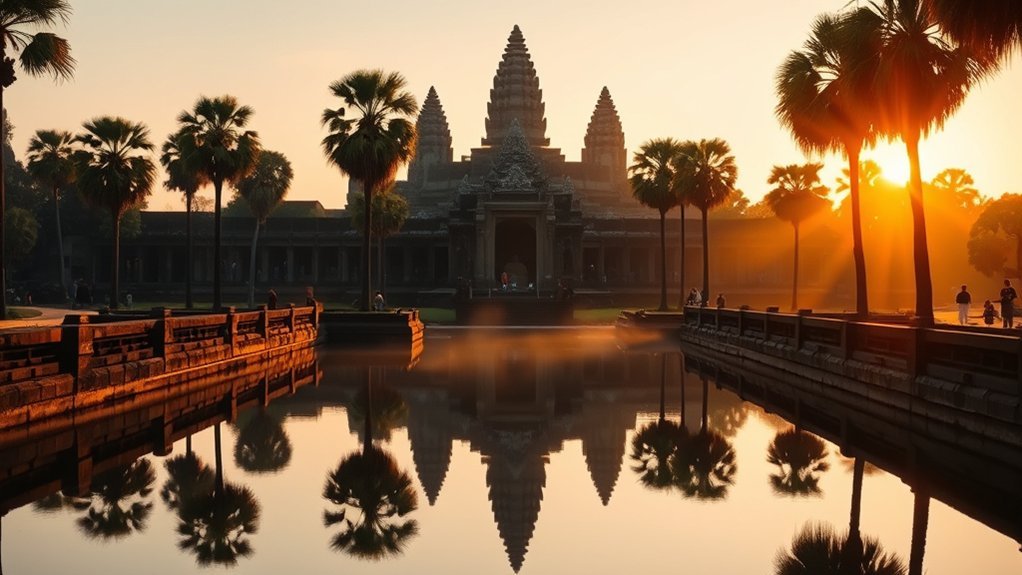
Angkor Wat is a monumental 12th-century temple built during the reign of King Suryavarman II. It was originally dedicated to the Hindu god Vishnu and later became an important Buddhist religious site. Today, it remains an active sacred place as well as Cambodia’s best-known cultural landmark.
According to Angkor Enterprise, Angkor Wat covers about 162.6 hectares, or roughly 402 acres, making it the world’s largest religious monument. Its design combines the Khmer temple-mountain and galleried-temple traditions, with its central towers representing Mount Meru in Hindu cosmology.
Do not confuse Angkor Wat with the entire Angkor Archaeological Park. UNESCO describes the wider Angkor World Heritage property as extending across roughly 400 square kilometers and containing scores of temples, reservoirs, canals, roads, and remains of successive Khmer capitals.
The temple is especially known for its vast moat, symmetrical galleries, central towers, extensive bas-reliefs, and numerous devata and apsara carvings. Its unusual westward orientation has inspired several interpretations, including funerary symbolism, but official descriptions note that scholars remain divided about its exact significance.
Angkor is not a single temple: UNESCO’s World Heritage property extends across roughly 400 square kilometers and contains scores of monuments and historic landscape features.
When Is the Best Time to Visit Angkor Wat?
November through February is the most popular period because Cambodia is generally drier and temperatures are relatively more comfortable than during the hottest part of the year. December and January are among the cooler months, but this is also peak tourism season.
The rainy season, generally from May through October, should not automatically be ruled out. Cambodia’s Ministry of Tourism notes that rain often comes in heavy periods rather than lasting all day, while the landscape becomes greener and visitor numbers can be lower.
- November–February: Drier, comparatively cooler, and popular with visitors.
- March–April: Hotter conditions can make long temple days tiring.
- May–October: Wetter and more humid, but greener scenery and potentially fewer crowds.
- Sunrise: Arrive before the main morning rush if seeing the towers at first light is a priority.
For sunrise, remember that Angkor Wat officially opens at 5:00 AM. Sunrise is famous here, but it is not a quiet secret; expect other visitors around the reflection ponds and western approach.
What Are Angkor Wat’s Opening Hours?
APSARA National Authority currently lists Angkor Wat’s opening hours as 5:00 AM to 5:30 PM. The upper Bakan sanctuary follows separate hours, generally 7:40 AM to 5:00 PM.
Warning: Bakan can close on Buddhist holy days. APSARA also states that children under 12 and pregnant visitors are not permitted to climb to the top for safety reasons. Temporary conservation work can also affect access, so follow current signs and staff instructions.
The general Angkor pass page may display later park-wide closing times, but individual monuments have their own schedules. Plan around the operating hours of the specific temples you want to enter rather than assuming every monument stays open until the park closes.
How Much Time Do You Need at Angkor Wat?
A focused visit to Angkor Wat takes about 2–3 hours, which matches APSARA’s official visitor guidance. That is enough time for the main approach, lower galleries, major bas-reliefs, central sanctuary area, and several stops for photographs.
Plan half a day if you prefer a slower pace, want to study the carvings, or expect to queue for Bakan. The walk involves large courtyards, uneven stone, steps, and exposed areas, so heat and humidity can slow you down.
If Angkor Wat is only the beginning of your temple visit, dedicate more time to the wider archaeological park. A three-day pass gives most first-time visitors a better chance to see Angkor Wat, Angkor Thom, Bayon, Ta Prohm, and several Grand Circuit temples without rushing.
How Much Are Angkor Wat Tickets?
As of August 2026, the official Angkor Enterprise prices for the Angkor Temples Park are:
- 1-day pass: US$37
- 3-day pass: US$62, with three visit days available during a seven-day validity period
- 7-day pass: US$72, with seven visit days available during a 30-day validity period
The current pass covers more than 50 accessible temples in the Angkor Temples Park. Children under 12 do not need an entrance ticket, although officials may request a passport or other proof of age. A photo is required for three-day and seven-day tickets.
Pro Tip: Angkor Enterprise states that when you purchase a ticket for the following day after 4:45 PM, you may enter the park that evening and still use the ticket for the next day. This can be useful if you want an evening visit before a full sightseeing day.
Buy through official Angkor Enterprise channels rather than unofficial resellers. Ticket policies and monument access can change, so checking the official site shortly before your visit is worthwhile.
How Do You Get Around Angkor Wat?
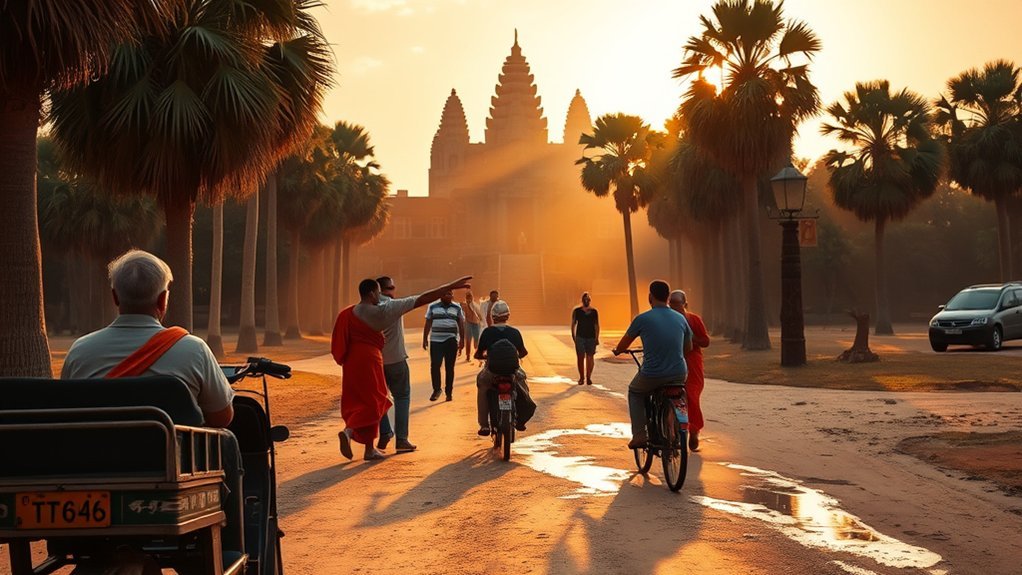
Angkor Wat itself is walkable once you reach the entrance, but the wider Angkor Archaeological Park is far too large for most travelers to explore entirely on foot. Tuk-tuks, cars, bicycles, guided vehicles, and scooters are commonly used between monuments.
A tuk-tuk is convenient for a Small Circuit or Grand Circuit day because the driver can wait while you tour each temple. Prices vary according to route, pickup location, sunrise departure, waiting time, vehicle type, and whether distant temples such as Banteay Srei are included. Agree on the complete route and price before departure.
Getting There
Most international air travelers now arrive through Siem Reap–Angkor International Airport (SAI), rather than the old airport close to the city. The new airport is east of Siem Reap and requires a substantially longer ground transfer.
The airport’s official transportation page lists airport shuttle services and other ground-transport facilities. The current airport-linked shuttle operator lists a one-way bus fare of about US$8, although schedules and fares can change.
- Airport shuttle bus: economical for travelers whose schedule matches the departures.
- Private car or taxi: more convenient for direct hotel transfers, with prices varying by provider.
- Tuk-tuk: useful once you are based in Siem Reap and visiting temples.
- Bicycle or e-bike: suitable for travelers comfortable riding in tropical conditions and traffic.
Touring Options
Choose your transportation based on how many temples you want to see and how much heat you can comfortably handle. A driver makes it easier to move between widely separated monuments, while cycling provides more independence but requires considerably more physical effort.
A licensed local guide is optional rather than required. Independent visitors can explore Angkor Wat successfully, but a knowledgeable guide can explain Khmer history, Hindu and Buddhist imagery, architectural changes, and the narratives shown in the bas-reliefs.
Angkor Enterprise states that visitors can rent and ride scooters to visit the temples. If you choose to self-drive, make sure you meet applicable licensing requirements, are comfortable with local road conditions, and follow all traffic and park rules.
How Should You Plan a 1-Day or 3-Day Angkor Itinerary?
One-Day Visit
If you have only one day, concentrate on the most important sites rather than trying to cover the entire park. A practical first-time route is:
- Angkor Wat early in the morning.
- Angkor Thom and Bayon after leaving Angkor Wat.
- Ta Prohm for its famous combination of ruins and giant tree roots.
- Banteay Kdei or another nearby Small Circuit temple if time and energy allow.
Angkor Enterprise’s current guidance also recommends the Small Circuit for a one-day ticket.
Three-Day Visit
With three visit days, spread the major monuments out so you have time to appreciate them:
- Day 1: Angkor Wat, Angkor Thom, Bayon, and Ta Prohm.
- Day 2: Grand Circuit sites such as Preah Khan, Neak Pean, Ta Som, East Mebon, and Pre Rup.
- Day 3: Banteay Srei and any temples you want to revisit or explore more slowly.
This plan also lets you avoid spending every afternoon walking through exposed stone monuments during the hottest part of the day.
What Are the Top Things to See at Angkor Wat?
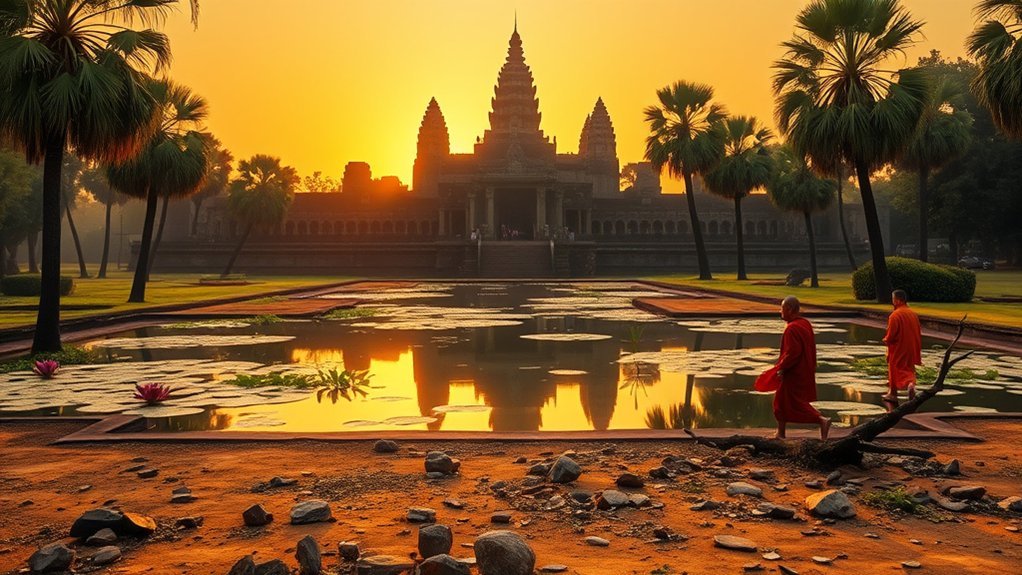
Start with the monumental western approach and moat before entering the galleries. The temple’s increasingly elevated enclosures lead toward the central group of towers, whose design symbolizes Mount Meru.
- Bas-relief galleries: APSARA reports more than 1,000 square meters of carved panels illustrating epic, historical, heavenly, and underworld scenes.
- Devata and apsara carvings: Look closely at the clothing, jewelry, hairstyles, and individual details carved throughout the monument.
- Churning of the Sea of Milk: One of Angkor Wat’s best-known relief scenes, drawn from Hindu mythology.
- Bakan: The upper sanctuary offers a closer view of the temple’s central architecture but involves steep access and specific visitor restrictions.
- Moat and western causeway: These features emphasize the huge scale and symmetry of the temple before you even enter the main galleries.
Most of Angkor Wat’s principal bas-reliefs date to or shortly after Suryavarman II’s reign, although APSARA notes that some northeastern reliefs were completed later, during the 16th century.
How Much Does an Angkor Wat Trip Cost?
The entrance pass is the easiest part of the budget to calculate because the official price is fixed: US$37 for one day, US$62 for three days, or US$72 for seven days.
Transportation, guides, food, and hotels vary much more. A temple driver may charge differently for a standard Small Circuit, a pre-dawn pickup, a Grand Circuit, or a long detour to Banteay Srei. Guide rates also depend on language, duration, group size, and itinerary.
For a realistic budget, separate your costs into:
- Angkor entrance pass
- Transportation between Siem Reap and the temples
- Optional licensed guide
- Meals and drinking water
- Accommodation in Siem Reap
- Airport transportation
- Optional distant-temple excursions
Do not choose a three-day pass solely because it appears cheaper per day. Pick it when your itinerary genuinely needs more than one temple day. Its flexible seven-day validity makes it especially useful if you want rest days between visits.
Who Built Angkor Wat?
Angkor Wat was commissioned during the reign of King Suryavarman II, who ruled in the first half of the 12th century. APSARA dates the temple to approximately 1113–1150 and says its construction is thought to have required about 30 years of intensive work.
The sanctuary was originally associated with Vishnu, marking a departure from the Shaiva traditions favored by several earlier Khmer rulers. Over subsequent centuries, Angkor Wat became an important Buddhist pilgrimage site and remains connected with Buddhist worship today.
- Period: first half of the 12th century
- King: Suryavarman II
- Original religious dedication: Hindu, particularly Vishnu
- Later religious role: major Buddhist sacred site
Angkor Wat is unusually oriented toward the west. Funerary associations and the possibility of a royal memorial function have long formed part of scholarly interpretation, but the meaning of the orientation is not completely settled.
What Should You Wear at Angkor Wat?
Wear modest, lightweight clothing suitable for both a sacred place and Cambodia’s tropical climate. The official Angkor Visitor Code of Conduct says revealing clothing, including shorts and skirts above the knees and clothing that leaves shoulders bare, is prohibited in sacred places.
Dress Code Basics
- Keep your shoulders covered.
- Wear shorts, trousers, skirts, or dresses that cover the knees.
- Choose breathable fabrics for heat and humidity.
- Follow staff instructions at upper levels and active sacred spaces.
- Avoid clothing that is excessively revealing even outside the strict minimum rule.
A lightweight long-sleeved shirt, T-shirt, loose trousers, long skirt, or similarly modest outfit works well. Do not rely on arriving in prohibited clothing and assuming you will be admitted.
Temple-Ready Footwear
Comfortable footwear matters because Angkor Wat involves uneven stone, long walking distances, steps, and surfaces that can become slippery after rain. Closed walking shoes or secure sandals with good grip are practical choices.
Flip-flops are not specifically prohibited by the official visitor code, but they usually provide less support and traction for a long temple day. High heels are specifically discouraged at the temples.
What Visitor Rules and Safety Tips Should You Know?
Angkor remains a sacred and archaeologically fragile site. The visitor code asks travelers to respect worshippers and monks, avoid restricted areas, and help protect the monuments.
- Do not touch carvings or lean against fragile temple structures.
- Do not climb loose stones or enter restricted areas.
- Follow directional and conservation signs.
- Keep noise low around sacred spaces and worshippers.
- Ask permission before photographing monks.
- Do not litter or smoke in the protected site.
- Commercial photography and drone operations require appropriate permission.
Note: Angkor’s ancient stone surfaces can be uneven, worn, or slippery, particularly during wet weather. Carry drinking water, use sun protection, and slow down on steps and elevated areas.
Which Nearby Temples Should You Visit?
Angkor Wat is only one part of the wider Angkor landscape. Several other major temples can easily fill another day or two.
- Bayon: Located at the center of Angkor Thom and famous for its monumental face towers and detailed scenes of Khmer daily life.
- Ta Prohm: Known for massive tree roots growing around and through parts of the monument.
- Banteay Srei: Celebrated for detailed carving and warm-toned sandstone. APSARA places it about 37 km from Siem Reap, so allow extra driving time.
- Preah Khan: A large Jayavarman VII-era complex that rewards slower exploration.
- Neak Pean: A compact island sanctuary associated with a historic water complex.
- Ta Som: A smaller Grand Circuit temple with face towers and a dramatic tree-framed gateway.
If you have only one day, prioritize Angkor Wat, Bayon, and Ta Prohm. With three visit days, add the Grand Circuit and Banteay Srei instead of trying to rush through too many monuments at once.
Frequently Asked Questions
What Is Angkor Wat in a Nutshell?
Angkor Wat is a huge 12th-century Khmer temple in Cambodia, originally dedicated to Vishnu and later associated with Buddhism. It is the world’s largest religious monument and the best-known temple within the much larger UNESCO-listed Angkor archaeological landscape.
Do I Need a Guide for Angkor Wat?
No. You can visit Angkor Wat independently. A knowledgeable licensed guide is useful if you want detailed explanations of Khmer history, architecture, religious symbolism, and the stories carved into the bas-reliefs.
What Should I Wear When Visiting Angkor Wat?
Wear clothing that covers your shoulders and knees. Choose lightweight, breathable fabrics for the tropical climate and comfortable shoes or secure sandals with enough grip for uneven stone and steps.
What Does Angkor Wat Symbolize?
Its temple-mountain design represents Mount Meru, the cosmic mountain in Hindu tradition, while its surrounding moat and galleries contribute to the larger sacred cosmological plan. Its westward orientation is unusual and has several scholarly interpretations.
How Much Is an Angkor Wat Ticket?
The current official Angkor Temples Park prices are US$37 for one day, US$62 for three visit days, and US$72 for seven visit days. The three-day pass expires within seven days and the seven-day pass within 30 days.
How Long Should I Spend at Angkor Wat?
Plan about 2–3 hours for a normal visit. Allow half a day if you want to move slowly, examine the reliefs in detail, take many photographs, or wait for access to the upper sanctuary.
Do Children Need an Angkor Pass?
Children under 12 are currently exempt from the Angkor entrance fee, although proof of age such as a passport may be requested. Children under 12 are not allowed to climb the upper Bakan sanctuary.
What Time Does Angkor Wat Open for Sunrise?
Angkor Wat currently opens at 5:00 AM. Arrive early enough to enter and walk toward the western reflection ponds before sunrise, especially during the busy November-to-February travel season.
Conclusion
Angkor Wat rewards good planning. Give the temple at least 2–3 hours, arrive early if sunrise matters to you, dress respectfully, carry water, and choose a pass that matches the number of temple days you actually want. With extra time, explore Angkor Thom, Bayon, Ta Prohm, the Grand Circuit, and Banteay Srei instead of squeezing the entire archaeological park into one exhausting day.
The most important distinction to remember is that Angkor Wat is one extraordinary monument within a much larger living heritage landscape. Respect the sacred spaces, follow conservation signs, and leave enough time to notice the architecture and carvings rather than simply moving from photo stop to photo stop.
Sources
- Angkor Enterprise — Available Tickets — current pass prices, validity periods, and general park access information.
- Angkor Enterprise — Angkor Wat — monument size, history, religious dedication, architecture, and opening hours.
- APSARA National Authority — Angkor Wat — history, bas-reliefs, suggested visit duration, Bakan hours, and visitor restrictions.
- Angkor Visitor Code of Conduct — dress code, monument protection, sacred-site etiquette, restricted areas, and visitor behavior.
- UNESCO World Heritage Centre — Angkor — World Heritage status, approximately 400-square-kilometer archaeological landscape, and cultural significance.
- Siem Reap–Angkor International Airport — Transport & Directions — current airport ground-transport information.
