

Last Updated on September 11, 2026 by Daniel Globe
If you searched for Glass Pebble Beach in Florida, you may have seen descriptions of a hidden shoreline near St. Petersburg covered with smooth, colorful sea glass. That story needs an important correction. Official Pinellas County sources do not identify a beach by that name. This guide explains what is verified, where the confusion may come from, and how the Florida claim differs from the real Glass Beach in Fort Bragg, California.
Quick Answer
Glass Pebble Beach is not an officially documented beach near St. Petersburg, Florida. Pinellas County’s official Fort De Soto information lists North Beach and East Beach, not Glass Pebble Beach. The well-documented U.S. shoreline famous for wave-smoothed glass is Glass Beach in Fort Bragg, California.
Key Takeaways
- There is no verified official Pinellas County destination called Glass Pebble Beach.
- Fort De Soto Park near St. Petersburg is real, but official sources describe its major swimming areas as North Beach and East Beach.
- The famous Glass Beach in Fort Bragg, California has a documented history as a former dump where waves smoothed discarded glass.
- California State Parks says glass and other protected features must not be removed from Glass Beach at MacKerricher State Park.
- Use official park maps and current park notices before traveling instead of relying on unofficial directions to a supposedly secluded shoreline.
What Is Glass Pebble Beach?
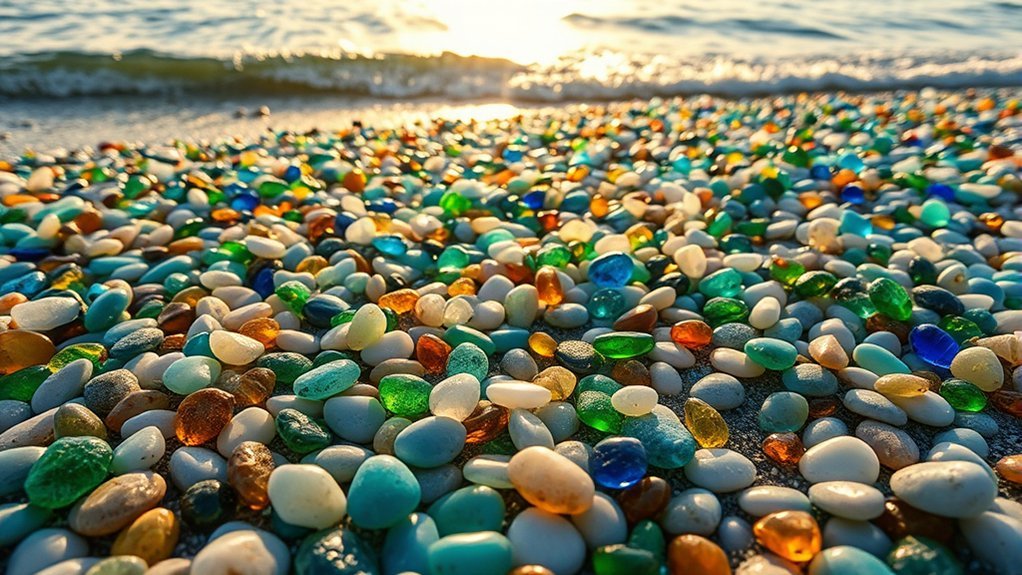
The term Glass Pebble Beach appears on travel websites describing a glass-covered shoreline somewhere around Florida’s Gulf Coast. However, it does not appear as an official beach name in Pinellas County’s current information for the St. Petersburg area.
That distinction matters. A beach may occasionally contain pieces of weathered glass without being a recognized “glass beach,” and online repetition does not establish a place’s location or history. Visitors should therefore avoid assuming that there is a hidden public beach near St. Petersburg where glass pebbles replace the sand.
The closest commonly mentioned real destination is Fort De Soto Park in Tierra Verde, south of St. Petersburg. It is an established Pinellas County park with beaches, trails, swimming areas, historic fortifications, camping, fishing, kayaking, and wildlife habitat. Official county information describes almost three miles of white sandy beach rather than a shoreline covered with glass.
Note: Finding a few pieces of sea glass on a shoreline does not prove that the location is an official “Glass Pebble Beach.” Beach conditions change constantly as waves, storms, tides, erosion, and cleanup move material along the coast.
Where Is Glass Pebble Beach?
There is no authoritative public address or officially mapped location for a beach named Glass Pebble Beach near St. Petersburg. Pinellas County’s official Fort De Soto map identifies North Beach, East Beach, the dog beach, piers, trails, campgrounds, and other facilities, but it does not identify Glass Pebble Beach.
If an online article is using “Glass Pebble Beach” to refer loosely to the St. Petersburg area, do not follow vague instructions to trek through an unmarked or secluded coastal area. You could encounter private property, protected habitat, storm damage, unstable shoreline, or an access point that is not open to the public.
For a verified public beach destination near St. Petersburg, Fort De Soto Park is located at 3500 Pinellas Bayway South, Tierra Verde, Florida 33715. Pinellas County says the 1,136-acre park consists of five interconnected islands and includes more than seven miles of waterfront.
As of August 2026, Pinellas County lists general county park hours as 7 a.m. to sunset, with Fort De Soto open throughout the year. Daily parking is currently $6 per vehicle. Fees, facility access, and temporary closures can change, so check the official Fort De Soto Park page before leaving.
Pro Tip: If a travel guide describes a “secret” beach but gives no official park name, address, land manager, or legal access point, verify the destination with the city, county, state park system, or another public land agency before planning the trip.
The History Behind Glass Pebble Beach
The commonly repeated story that a glass-making industry near St. Petersburg dumped bottles or industrial glass along the shoreline in the mid-20th century could not be verified in authoritative Pinellas County sources. It should not be presented as established local history.
A remarkably similar history is documented in Fort Bragg, California. California State Parks says the shoreline now known as Glass Beach was formerly used for waste disposal. A State Parks history release says the dump operated until 1967. Over time, wave action broke and rounded surviving glass fragments, producing the smooth pieces for which the area became famous.
| Claim or Place | What Can Be Verified |
|---|---|
| “Glass Pebble Beach,” St. Petersburg | No official Pinellas County beach by this name was found. |
| Florida glass-industry dumping story | Not supported by the official local sources reviewed. |
| Fort De Soto Park, Florida | Verified county park with North Beach, East Beach, white sandy shoreline, wildlife habitat, and historic military features. |
| Glass Beach, Fort Bragg, California | Verified glass beach associated with former shoreline dumping and decades of wave action. |
This distinction is especially important because the colorful glass history associated with Fort Bragg can easily be copied into articles about unrelated beaches. Similar wording online does not establish that Florida had an equivalent dump site.
The documented American Glass Beach story belongs to Fort Bragg, California; it should not be transferred to a Florida shoreline without reliable local evidence.
When to Visit Glass Pebble Beach
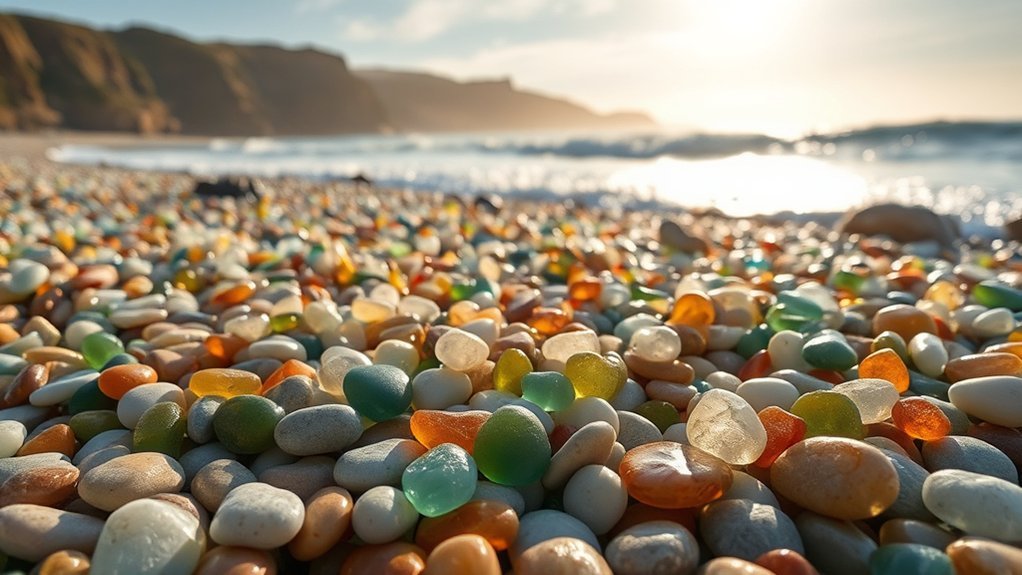
Because there is no verified Florida destination by this exact name, there is no reliable “best season” for visiting Glass Pebble Beach. Instead, base your plans on the real beach or park you intend to visit.
For Fort De Soto Park, check current Pinellas County conditions before your trip. Weather, storms, nesting wildlife, maintenance, and hurricane-repair work can affect individual facilities and shoreline access. The park is generally open from 7 a.m. to sunset, and arriving earlier in the day can give you more time to explore before closing.
If you actually mean Glass Beach at Fort Bragg, California, it is associated with MacKerricher State Park. California State Parks currently lists MacKerricher’s operating hours as 6 a.m. to sunset. Ocean conditions on the Mendocino Coast can be dangerous, so check current weather and tide conditions and stay well back from unexpectedly large waves.
- Confirm the exact destination before starting your trip.
- Check the managing agency’s current alerts for closures, storm damage, or restricted areas.
- Use established public access rather than unofficial paths.
- Wear footwear suitable for shells, rocks, and occasional sharp debris.
- Keep a safe distance from surf, wildlife, dunes, and nesting areas.
How to Visit Glass Pebble Beach Responsibly
Responsible beach visits start with knowing who manages the land and following that site’s actual rules. Do not assume that collection rules are identical across Florida, California, city beaches, county parks, state parks, or private property.
At the verified Glass Beach associated with MacKerricher State Park, California State Parks expressly says that natural and cultural features are protected and that glass found at Glass Beach may not be removed. Photograph the glass where it lies rather than taking pieces home.
At Fort De Soto, respect shorebird habitat, sea-turtle nesting areas, vegetation, posted closures, and other park rules. Pinellas County specifically prohibits disturbing protected shorebird and sea-turtle nesting areas and removing or damaging park vegetation.
Warning: Never assume a piece of glass is safe to handle simply because it is on a beach. Freshly broken glass can remain sharp. Children should not pick up unfamiliar glass or debris, and visitors should wear footwear where broken material may be present.
Good shoreline practices include carrying out all trash, staying on legal public routes, keeping away from nesting wildlife, leaving protected natural or cultural objects in place, and obeying temporary closures. These steps protect both visitors and sensitive coastal environments.
Frequently Asked Questions
Why Is Collecting Sea Glass Illegal in California?
Collecting sea glass is not accurately described as illegal everywhere in California. Rules depend on the property and managing agency. At Glass Beach associated with MacKerricher State Park, California State Parks specifically prohibits removing glass because the park’s natural and cultural features are protected.
Is Glass Pebble Beach Real or Fake?
The name appears online, but no authoritative Pinellas County source reviewed for this article identifies an official beach called Glass Pebble Beach near St. Petersburg. Treat it as an unofficial internet term rather than a verified destination with a known address.
Can You Take Glass From Glass Beach, California?
No. California State Parks states that glass and other natural or cultural features at Glass Beach in the MacKerricher State Park area may not be removed or disturbed. Leave the pieces where they are and take photographs instead.
What Makes Glass Beach Unique?
Fort Bragg’s Glass Beach is notable because discarded glass from former shoreline dump sites was broken and rounded by decades of wave action. Its appearance reflects both a history of human waste disposal and the long-term effects of coastal processes.
Is Fort De Soto Park Florida’s Glass Pebble Beach?
Official Pinellas County sources do not describe Fort De Soto as Glass Pebble Beach or as a beach covered with sea glass. The park’s principal named beach areas include North Beach and East Beach, and the county describes much of its shoreline as white sand.
How Can I Verify Directions to a Hidden Beach?
Start with the government agency that manages the coastline, such as a city, county, state park, or federal land agency. Confirm the official place name, public access point, operating hours, current closures, and parking information before relying on directions from blogs or social media.
Conclusion
Glass Pebble Beach near St. Petersburg should not be presented as a confirmed Florida destination. Official Pinellas County information does not identify a beach by that name, and the repeated story about a nearby glass industry dumping waste could not be verified. Fort De Soto Park is a real and worthwhile St. Petersburg-area destination, but it should not be confused with the documented Glass Beach in Fort Bragg, California. Verify the exact place before traveling, use legal public access, respect wildlife and protected features, and follow the rules of the agency managing the shoreline.
Sources
- Pinellas County — Fort De Soto Park — official address, park size, beaches, amenities, and current visitor information.
- Pinellas County — Fort De Soto Park Map — official map identifying North Beach, East Beach, trails, facilities, and access areas.
- Pinellas County — Park Hours — current county park operating-hour information.
- California State Parks — MacKerricher State Park — current park information, operating hours, access, and visitor guidance.
- California State Parks — MacKerricher State Park Brochure — Glass Beach protection and no-removal rules.
- California State Parks — Glass Beach History Release — former dump history, 1967 closure, and wave-smoothed glass.
