

Last Updated on September 11, 2026 by Daniel Globe
Glass pebbles can add color, reflection, and texture to gardens, fountains, vases, mosaics, and other decorative projects. Many products are made from recycled glass, but others use new glass or colored coatings, so check the label before buying. The best size, finish, depth, and installation method depend on where you plan to use them.
Quick Answer
Glass pebbles are smooth decorative pieces made from tumbled glass. Some contain recycled glass, while others do not. They work well in garden beds, fountains, vases, mosaics, and accent displays. Choose a size and product rating that fit the project, then install the pebbles on a clean, stable base.
Key Takeaways
- Many glass pebbles use recycled glass, but you should verify the recycled-content statement on the package.
- Tumbled pebbles, crushed glass mulch, flat glass gems, glass sand, and fire glass are different products and are not always interchangeable.
- A 2- to 3-inch layer can work for loose landscape mulch, but mosaics, fountains, paths, aquariums, and fire features need different preparation.
- Loose glass may become hot in direct sun and should be kept away from young children and unsuitable walking areas.
- Check the manufacturer’s instructions before using glass near flames, fish, pools, food, pets, or bare feet.
Disclosure: As an Amazon Associate I earn from qualifying purchases. Some links on this page are affiliate links, at no extra cost to you.
What Are Glass Pebbles?
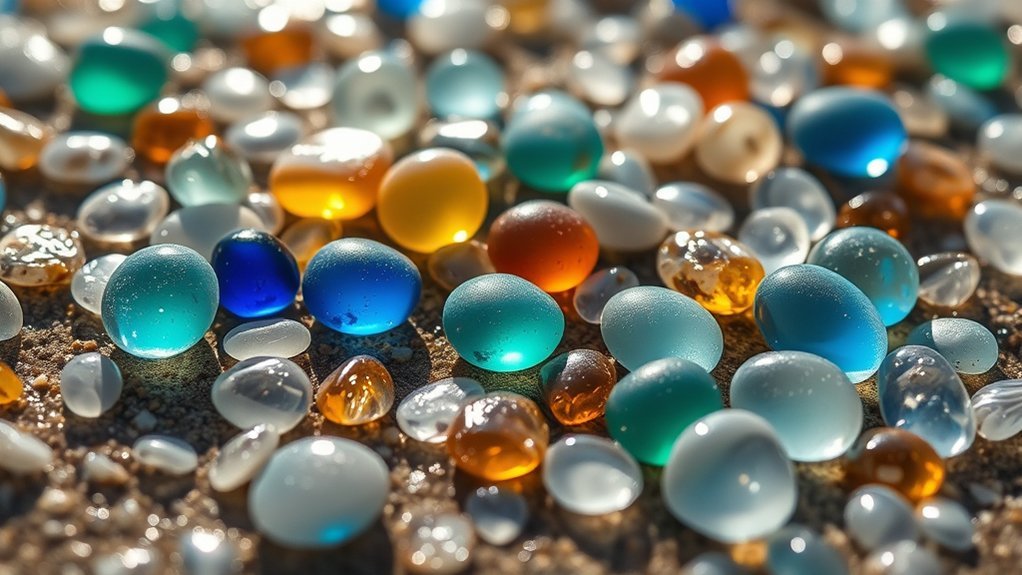
Glass pebbles are small decorative pieces of glass that have been shaped, tumbled, polished, or molded to create smoother edges. They are available in clear, blue, green, amber, white, black, and many other colors. Some are transparent, while others are frosted, opaque, mirrored, or iridescent.
Many manufacturers make decorative pebbles from bottles or other recovered glass. However, recycled content is not guaranteed across the whole product category. Look for a clear recycled-content statement instead of assuming that every bag uses waste glass.
Common Types of Decorative Glass
- Tumbled glass pebbles: Rounded or softened pieces used in landscaping, vases, displays, and crafts.
- Flat glass gems: Molded pieces with a rounded top and flat base, often used in vases, floral arrangements, games, and craft projects.
- Crushed glass mulch: Smaller processed glass used as decorative ground cover. It should be properly tumbled or processed for landscape use.
- Glass sand: Finely processed glass that may be used in drainage, landscaping, construction, filtration, or restoration projects when it meets the required specification.
- Fire glass: Heat-rated tempered glass made for approved gas fire features. Ordinary decorative glass must not be used as a substitute.
- Mosaic glass: Pieces selected for bonding to a stable surface with a compatible adhesive and grout system.
Note: Product names are not always consistent. Read the package instructions to confirm whether the glass is approved for landscaping, water, heat, foot traffic, aquariums, or bonded installation.
Glass Pebbles vs Natural Stone
Glass pebbles and natural stone can both create decorative ground cover, borders, displays, and water-feature accents. Their appearance, sourcing, surface texture, heat behavior, and maintenance needs differ.
| Feature | Glass Pebbles | Natural Stone |
| Origin | May contain recycled or newly manufactured glass | Quarried, collected, or cut from natural rock |
| Appearance | Bright colors, transparency, reflection, and uniform finishes | Natural color variation, mineral patterns, and irregular texture |
| Surface | Can be smooth and tumbled, but damaged pieces may chip | Ranges from smooth river stone to rough crushed rock |
| Heat | May become hot in direct sunlight | May also absorb and hold heat, depending on color and type |
| Maintenance | May show dust, mineral scale, algae, and fingerprints | May collect soil, moss, stains, or mineral deposits |
| Best fit | Colorful accents and reflective designs | Natural-looking beds, paths, drainage areas, and borders |
Material Origins
Recycled glass pebbles can give bottles and other suitable glass material another use instead of sending that material directly to disposal. Natural stone comes from geological deposits and normally requires extraction, grading, and transportation.
Neither material is automatically the greener choice in every project. Environmental impact also depends on recycled content, processing, transportation distance, product lifespan, installation method, and what happens to the material after use.
Visual Differences
Glass can reflect or transmit light, which creates a brighter and more modern appearance. Clear and pale colors can appear different when wet, while iridescent finishes may change as the viewing angle moves. Natural stone normally provides softer earth tones, mineral patterns, and more irregular shapes.
Glass pieces are often more consistent in color and finish, but that consistency depends on the product. Natural stones usually have more variation between individual pieces.
Sustainability Benefits
Using a verified recycled-glass product can support material reuse and reduce demand for some virgin raw materials. The U.S. Environmental Protection Agency’s glass data shows that large amounts of glass still enter the waste stream.
EPA estimated that approximately 7.6 million tons of municipal solid-waste glass entered U.S. landfills in 2018. The figure is from 2018 data reported on an EPA page updated in March 2026.
Recycling claims still need context. A decorative pebble may contain coatings, mixed materials, adhesives, grout, soil, or other contamination after use. Local recycling programs may not accept it, even when the base material is glass.
Why Choose Glass Pebbles?
Glass pebbles are useful when you want color, reflection, or a smooth decorative accent that ordinary gravel may not provide. They can create contrast around plants, brighten a fountain, support flowers in a vase, or form part of a mosaic pattern.
Possible benefits include:
- A wide choice of colors, sizes, and finishes
- Reflective or translucent effects in sunlight and water
- Long-lasting inorganic ground cover that does not decompose like wood mulch
- Reusable material that can be moved to another display or project
- Options made with verified post-consumer or post-industrial glass
- Simple cleaning with water and mild detergent in many decorative applications
Glass also has limitations:
- It may become hot in sunny locations.
- Loose pieces can shift on slopes or in areas with heavy runoff.
- Small pieces can be unsafe around young children.
- Damaged glass may chip and should be removed.
- Reflective surfaces may produce glare.
- Colored coatings may perform differently from solid-colored glass.
- Glass does not add organic matter or nutrients to soil.
Note: Inorganic mulches, including recycled glass and rock, may hold heat. Oklahoma State University advises considering this effect near heat-sensitive plants.
Best Glass Pebble Uses by Project
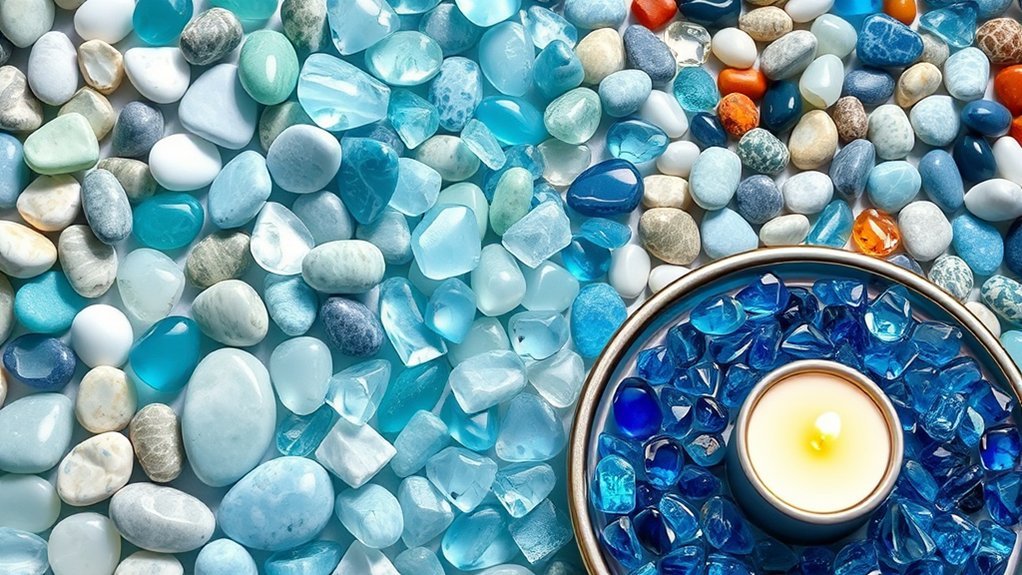
Landscape Beds and Borders
Use processed landscape glass as a decorative top layer around established plants, borders, signs, or architectural features. It can help cover exposed soil and may reduce some moisture loss and weed germination when installed at a suitable depth.
Do not pile glass against trunks, stems, siding, or drainage openings. Check the surface temperature during hot weather, especially around young or heat-sensitive plants. Oklahoma State University notes that inorganic mulch can hold heat, even though mulch in general can help reduce moisture loss.
Paths and Walkways
Glass can provide a colorful path accent, but loose decorative pebbles are not automatically suitable for a full walking surface. Pieces may shift, create glare, become hot, or expose damaged edges.
For a path, use a product specifically approved for that purpose. Install a stable compacted base, strong edging, and the depth recommended by the manufacturer. Avoid using loose glass where people will walk barefoot unless the product and complete installation system are designed for bare-foot traffic.
Fountains, Water Features, and Vases
Glass pebbles can reflect light through moving water and help hide pumps, supports, or container bases. Rinse the pebbles before use to remove packaging dust.
For a fountain, verify that the product will not damage the pump or release an unsuitable coating. For a vase, make sure the container can support the combined weight of the glass and water.
Mosaics and Bonded Surfaces
Flat-backed gems and mosaic glass are easier to bond than rounded pebbles. Use an adhesive and grout system approved for the substrate, moisture level, temperature, and indoor or outdoor location.
A test layout helps you check spacing and color balance before applying adhesive. Bonded glass on floors, stairs, showers, pools, or outdoor surfaces needs a complete system rated for that application.
Tabletop and Container Displays
Use glass pebbles in bowls, candle-free centerpieces, floral displays, shadow boxes, and clear containers. Place a protective mat under heavy displays to reduce the risk of scratching furniture.
Fire Features and Aquariums
Ordinary decorative glass is not a substitute for fire glass. Fire features require manufacturer-approved, heat-rated material installed in the correct appliance and at the specified depth.
Aquariums require glass that is specifically sold as aquarium-safe. Decorative coatings, residues, sharp fragments, and unknown recycled inputs may be unsuitable for fish or filtration systems.
Warning: Keep loose glass pebbles away from babies and young children because small pieces can be swallowed or create a choking hazard. Do not use ordinary decorative glass in fire pits, aquariums, pools, play areas, or bare-foot paths unless the manufacturer specifically approves that use.
How to Choose the Right Glass Pebbles
Start with the project rather than the color. A pebble that works in a vase may not be suitable for landscaping, a fountain, a walking surface, or a fire feature.
Size and Shape
Smaller pieces work well for detailed mosaics, narrow borders, and small containers. Medium pebbles provide visible color without creating large gaps. Larger pieces can serve as focal points or cover broad areas with fewer individual pieces.
Many decorative products are sold in sizes around 1 to 2 centimeters, while larger pieces may approach 5 centimeters. Actual sizing varies by manufacturer, so check the stated range and expect some natural variation in tumbled products.
Inspect the edges before installation. Properly processed decorative pebbles should feel smooth, but “tumbled” does not mean unbreakable or suitable for every walking surface.
Color and Finish
Clear glass reflects surrounding colors and works well in water or lighted displays. Blue and green can create a cool look, while amber, red, and gold provide warmer contrast. White or frosted glass can brighten shaded areas but may show dirt or algae more quickly.
Common finishes include:
- Polished: Smooth and reflective
- Frosted or matte: Softer appearance with less direct reflection
- Transparent: Allows light and background color to show through
- Opaque: Provides a solid, stronger color
- Iridescent: Changes appearance with light and viewing angle
- Coated: Uses a surface finish that may require extra care
Pro Tip: Wet a sample before ordering a large quantity. Glass often looks darker, clearer, or more reflective when wet, so a dry store sample may not show the final appearance in a fountain or outdoor bed.
Check the Product Rating
Review the package or technical information for:
- Recycled-content percentage
- Indoor or outdoor approval
- UV and freeze-thaw suitability
- Landscape, pool, aquarium, or fire-feature approval
- Recommended depth and coverage
- Color coating or surface treatment
- Cleaning restrictions
- Warnings about children, pets, food, or foot traffic
How Much Glass Pebble Do You Need?
Measure the length and width of a rectangular area, then multiply them to find the square footage. For a circular area, multiply the radius by itself and then by 3.14.
Use this formula for loose landscape material:
Cubic feet needed = area in square feet × depth in inches ÷ 12
To convert cubic feet to cubic yards:
Cubic yards needed = cubic feet ÷ 27
For example, a 50-square-foot bed at a depth of 2 inches requires about 8.3 cubic feet, or about 0.31 cubic yard, before allowing for uneven ground or future touch-ups.
The Oklahoma State University Extension recommends a 2- to 3-inch mulch depth near plants, with finer material at the lower end and coarser material at the higher end. Follow the glass manufacturer’s coverage guidance when it differs.
How to Install Glass Pebbles
The correct installation method depends on whether the glass will remain loose, sit inside a container, or become bonded to a surface.
At a Glance
| Time Required | About 30 to 90 minutes for a small loose bed; bonded or large projects take longer |
| Difficulty | Easy for loose decorative beds; moderate for paths and bonded surfaces |
| Tools Needed | Gloves, tape measure, rake or trowel, broom, edging, and project-specific adhesive tools when needed |
| Cost | Varies by area, depth, color, finish, recycled content, edging, and whether adhesive or grout is required |
Installing a Loose Landscape Bed
- Confirm the application. Use processed landscape glass with smooth, tumbled edges. Check the heat, outdoor-use, and safety instructions.
- Measure the area. Calculate the square footage and required depth before buying the material.
- Clear the surface. Remove weeds, roots, litter, sharp debris, and unstable soil.
- Grade the bed. Create a firm, even base that directs water away from buildings and prevents low spots.
- Add edging. Strong edging helps keep loose pebbles from spreading into lawns, drains, or walkways.
- Use underlayment only when suitable. A permeable landscape fabric may reduce mixing with soil, but it should not block drainage or interfere with plant care.
- Pour and spread the pebbles. Apply the product at its recommended depth. For general mulch applications, this may be about 2 to 3 inches.
- Keep space around plants. Do not mound glass against trunks, crowns, or soft stems.
- Level the surface. Use a rake or gloved hands to create even coverage.
- Rinse if needed. A light rinse can remove packaging dust and reveal the final color. Do not use water as a substitute for compaction or proper edging.
Installing a Glass Pebble Path
A path needs more support than a decorative bed. Excavate to the required depth, install a compacted base, add firm edging, and use a product approved for paths. Loose glass is generally better as an accent than as the only walking layer.
Avoid steep slopes because glass may migrate during rain or maintenance. Also consider glare, surface temperature, accessibility, footwear, and snow-removal needs.
Installing a Mosaic or Bonded Surface
- Clean and dry the substrate.
- Make sure the surface is stable, level, and suitable for tile or glass installation.
- Arrange the pattern without adhesive first.
- Choose an adhesive approved for glass, the substrate, moisture exposure, and temperature range.
- Apply the adhesive according to its instructions.
- Press each piece into place without forcing adhesive over the visible surface.
- Allow the adhesive to cure fully.
- Apply compatible grout when the design requires it.
- Clean residue before it hardens and seal the grout when recommended.
Rounded pebbles may be difficult to bond evenly. Flat-backed glass or mesh-mounted mosaic products usually create a more stable surface.
Preparing Glass for Water Features and Containers
- Inspect the pieces and remove chipped or sharp glass.
- Rinse them in clean water to remove dust.
- Do not use soap when the glass will enter an aquarium or sensitive water system.
- Confirm that the container, shelf, or fountain basin can support the finished weight.
- Keep glass away from pump intakes and moving mechanical parts.
- Use aquarium-approved material when fish or other aquatic animals are present.
How to Care for Glass Pebble Projects
Regular cleaning keeps glass bright and helps you spot damage before it becomes a problem.
- Remove loose debris: Use a soft broom, small rake, or low-pressure rinse.
- Wash dirty glass: Use water and a small amount of mild detergent when the product instructions allow it.
- Rinse thoroughly: Soap film can attract more dirt and dull the surface.
- Control algae: Clean fountains regularly and maintain proper water circulation.
- Remove weeds: Pull weeds before roots spread through the glass layer.
- Correct shifting: Rake loose pieces back into place and repair damaged edging.
- Inspect for chips: Wear gloves and remove cracked or sharp pieces.
- Protect coatings: Avoid abrasive tools, harsh acids, or strong chemicals unless the manufacturer approves them.
Common Glass Pebble Problems
The glass looks dull: Rinse away dust and check for hard-water deposits. Use only a cleaner approved for the finish.
Algae keeps returning: Improve circulation, reduce excess nutrients, and clean the fountain or container more often.
Weeds are appearing: Remove the entire root, add glass where coverage has become thin, and repair gaps along the edges.
The pebbles keep moving: Improve edging, correct drainage, reduce runoff, or move the glass away from steep slopes.
The color is changing: Wet glass naturally looks different from dry glass. Coated products may also fade or wear, so review the product warranty and care instructions.
A piece has cracked: Remove it with gloves. Do not leave damaged glass in a path, play area, aquarium, or pet-accessible location.
Frequently Asked Questions
What are glass pebbles used for?
Glass pebbles are used in garden beds, borders, fountains, vases, floral arrangements, tabletop displays, mosaics, crafts, and other decorative accents. Use only products rated for specialized applications such as paths, pools, aquariums, or fire features.
What do glass beads symbolize?
The meaning of glass beads varies by culture, history, color, design, and personal use. They may represent trade, status, identity, creativity, protection, remembrance, or connection in particular traditions. There is no single meaning shared by every culture or glass object.
What is the spiritual meaning of glass crystals?
Some people use glass or crystal-like objects as personal symbols of clarity, reflection, calm, or intention. These meanings are based on belief and personal practice. Research has not shown that crystals have a specific healing effect beyond placebo, so they should not replace evidence-based medical or mental-health care.
How can you tell glass beads from stone?
Look for transparency, tiny bubbles, mold seams, highly uniform color, or a smooth manufactured surface. Natural stone often shows grains, veins, crystals, pores, or irregular mineral patterns. Weight and temperature are not reliable tests by themselves. Avoid scratch or impact tests because they can damage the piece or create sharp fragments.
Are glass pebbles safe for gardens?
Properly processed landscape glass can be used in decorative garden beds. Choose tumbled material, remove damaged pieces, maintain space around plant stems, and watch for excess heat in direct sun. Glass does not improve soil with organic matter, so plant nutrition and soil care must be handled separately.
Do glass pebbles get hot in the sun?
Yes. Glass and other inorganic ground covers can absorb and hold heat, especially in strong sun. Dark colors may become particularly warm. Check the location before placing glass near heat-sensitive plants, pets, children, or surfaces used with bare feet.
Can ordinary glass pebbles be used in a fire pit?
No. Use only fire glass approved by the fire-feature manufacturer. Ordinary decorative pebbles may crack, pop, discolor, or behave unpredictably when exposed to high heat. Follow the appliance instructions for glass type, burner clearance, ventilation, and installation depth.
Can glass pebbles be used in an aquarium?
Use only glass labeled as aquarium-safe. Unknown coatings, residues, sharp fragments, and mixed recycled inputs may be unsuitable. Rinse approved material thoroughly and make sure its size will not trap fish, damage bottom-dwelling animals, or interfere with filtration.
Can old glass pebbles go in a recycling bin?
Do not assume that decorative or broken glass belongs in curbside recycling. EPA guidance says local rules vary and broken glass should not be placed in a household recycling bin because it can injure workers and damage equipment. Reuse the pebbles when possible or ask your local waste authority about safe disposal.
Conclusion
Glass pebbles can create bright, colorful, and long-lasting accents in gardens, fountains, vases, mosaics, and indoor displays. The safest approach is to match the product to the exact project, verify any recycled-content claim, prepare a stable base, and follow the manufacturer’s instructions.
Do not treat every decorative glass product as suitable for heat, aquariums, pools, children, pets, bare feet, or walking surfaces. With the correct rating, installation, and routine care, glass pebbles can remain attractive and useful for many years.
Sources
- U.S. Environmental Protection Agency: Glass Material-Specific Data — supports national glass generation, recycling, and landfill figures.
- U.S. Environmental Protection Agency: How Do I Recycle Common Recyclables? — supports local-program checks and broken-glass recycling guidance.
- Oklahoma State University Extension: All You Need to Know About Mulch — supports mulch depth, moisture, and inorganic-mulch heat cautions.
- Mississippi State University Extension: Recycled Glass Sand — supports researched drainage, landscaping, and reuse applications for processed glass sand.
- U.S. Consumer Product Safety Commission: Small Parts and Choking Hazards — supports the warning about small objects around young children.
- PubMed: Placebo Effects in Alternative Medical Treatments for Anxiety — supports the correction of unsupported crystal-healing claims.
