
Last Updated on September 11, 2026 by Daniel Globe
Angkor Wat is Cambodia’s best-known monument and the centerpiece of the Angkor Archaeological Park near Siem Reap. A good visit takes more planning than simply arriving at the gate: you need the right Angkor Pass, suitable clothing, realistic temple hours, plenty of water, and a route that fits your available time. November through February is especially popular for its relatively dry, cooler weather, but Angkor can be visited year-round.
Quick Answer
Angkor Wat is the largest religious structure in the world and the highlight of Cambodia’s Angkor Archaeological Park. Plan at least half a day for Angkor Wat itself or one to three days for the wider park. Current Angkor passes cost $37 for one day, $62 for three days, and $72 for seven days.
Key Takeaways
- Angkor Wat opens early for sunrise, but individual temples across the park have different opening hours.
- The official Angkor Pass currently costs $37 for 1 day, $62 for 3 days, or $72 for 7 days.
- Cover your shoulders and knees when entering sacred areas; shorts or skirts above the knees are prohibited there.
- November through February generally brings drier and relatively cooler conditions, while March and April are hotter.
- A tuk-tuk or private car is easiest for most visitors; cycling and self-drive scooters are alternatives if you are comfortable with local conditions.
- Allow at least one full day for the main temples and two or three days if you want a less rushed Angkor experience.
Disclosure: As an Amazon Associate I earn from qualifying purchases. Some links on this page are affiliate links, at no extra cost to you.
What Is Angkor Wat?
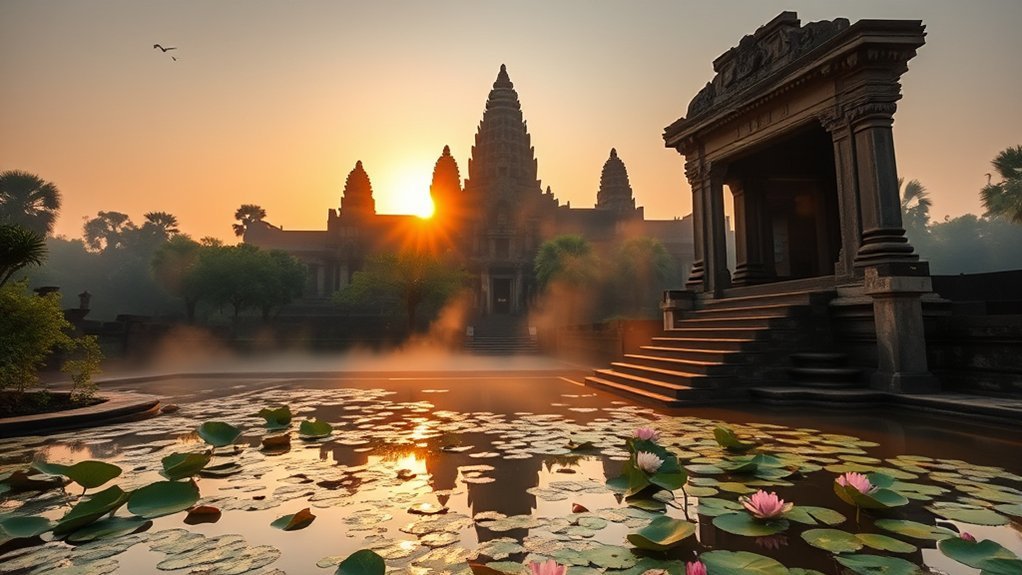
Angkor Wat was built in the early 12th century during the reign of King Suryavarman II. It was originally dedicated to the Hindu god Vishnu and gradually became a Buddhist religious site later in the 12th century. Its design combines the Khmer temple-mountain tradition with concentric galleries surrounding the central sanctuary.
The monument occupies about 162.6 hectares, and Guinness World Records recognizes it as the world’s largest religious structure. Its towers symbolize Mount Meru from Hindu cosmology, while the surrounding moat and carefully planned galleries reinforce the temple’s religious symbolism.
Angkor Wat covers about 162.6 hectares and is recognized as the largest religious structure ever built.
The walls contain extensive bas-relief galleries showing Hindu epics, religious stories, royal processions, battles, and scenes from Khmer life. Angkor Wat is only one part of the much larger UNESCO-listed Angkor site, which extends over roughly 400 square kilometers and includes scores of temples, reservoirs, roads, and archaeological features from successive Khmer capitals.
When to Visit Angkor Wat
You can visit Angkor throughout the year, but weather changes the experience considerably. Cambodia has a tropical climate with a generally dry season from November through April and a monsoon-driven rainy season from roughly May through October. November through January normally brings some of the more comfortable temperatures for long days outdoors.
| Period | What to Expect | Best For |
|---|---|---|
| November–February | Generally drier weather and relatively cooler mornings | Comfortable temple touring and sunrise visits |
| March–April | Hotter conditions, especially around midday | Travelers who can start early and rest during the hottest hours |
| May–October | More rain, humidity, lush vegetation, and occasional slippery paths | Green landscapes and travelers comfortable with showers |
Is Sunrise Worth It?
Sunrise at Angkor Wat is famous for the silhouette of the towers reflected in the ponds west of the temple. It is also one of the most popular times to visit, so do not expect complete solitude. Arrive with your pass already organized and allow time to walk from the entrance to your preferred viewing area before dawn.
Pro Tip: Angkor Enterprise currently says that if you buy a one-day pass for the following day after 4:45 PM, you may enter that evening for sunset and still use the pass the next day. Check the official rules again before relying on this benefit because ticket policies can change.
Angkor Wat Tickets and Opening Hours
Foreign visitors generally need an Angkor Pass to enter the temples in Angkor Archaeological Park. Buy through Angkor Enterprise, the official ticket authority, rather than an unofficial reseller.
| Pass | Current Price | Validity |
|---|---|---|
| 1 Day | $37 | 1 day |
| 3 Days | $62 | Use the three visit days within a 7-day validity period |
| 7 Days | $72 | Use the seven visit days within a 30-day validity period |
Children under 12 currently do not need an Angkor Pass, although officials may ask to see a passport or other proof of age. Three-day and seven-day passes require a photo for identification.
Angkor Enterprise currently lists general Angkor Temples Park access beginning at 5:00 AM, but individual monuments follow their own schedules. Angkor Wat itself is currently listed as open from 5:00 AM to 5:30 PM, while temples such as Bayon open later. Always check the official temple information if your schedule depends on a specific opening or closing time.
Note: Ticket prices, temple hours, restoration closures, religious-day restrictions, and access routes can change. Check Angkor Enterprise and APSARA National Authority shortly before your visit.
What to Wear to Angkor Wat
Angkor is an active sacred landscape as well as an archaeological site. The official visitor code prohibits revealing clothing such as shorts or skirts above the knees and clothing that leaves the shoulders bare in sacred places. Lightweight clothing that provides proper coverage is usually the most comfortable choice.
| What to Wear | Why It Helps |
|---|---|
| Shirt covering the shoulders | Meets sacred-site dress expectations |
| Lightweight pants, long skirt, or knee-covering clothing | Provides appropriate coverage while remaining practical in the heat |
| Comfortable shoes with good grip | Helps on uneven stones, steps, and long walking routes |
| Hat for outdoor areas | Provides sun protection; remove it where temple rules require |
| Light rain layer in wetter months | Useful during sudden tropical showers |
Warning: The steps to the Bakan, Angkor Wat’s upper level, are very steep. APSARA states that children under 12 and pregnant visitors are not allowed to climb to the upper level, and Bakan may close on Buddhist holy days. Follow all staff instructions and posted restrictions.
Top Angkor Temples to See
The Angkor complex contains far more than Angkor Wat. These major sites give you a useful cross-section of Khmer architecture, religion, royal history, and conservation.
- Angkor Wat: The essential first stop, known for its monumental towers, galleries, bas-reliefs, and sunrise views.
- Bayon: The central state temple of Angkor Thom, famous for the multitude of large stone faces on its towers and its detailed historical and everyday-life bas-reliefs.
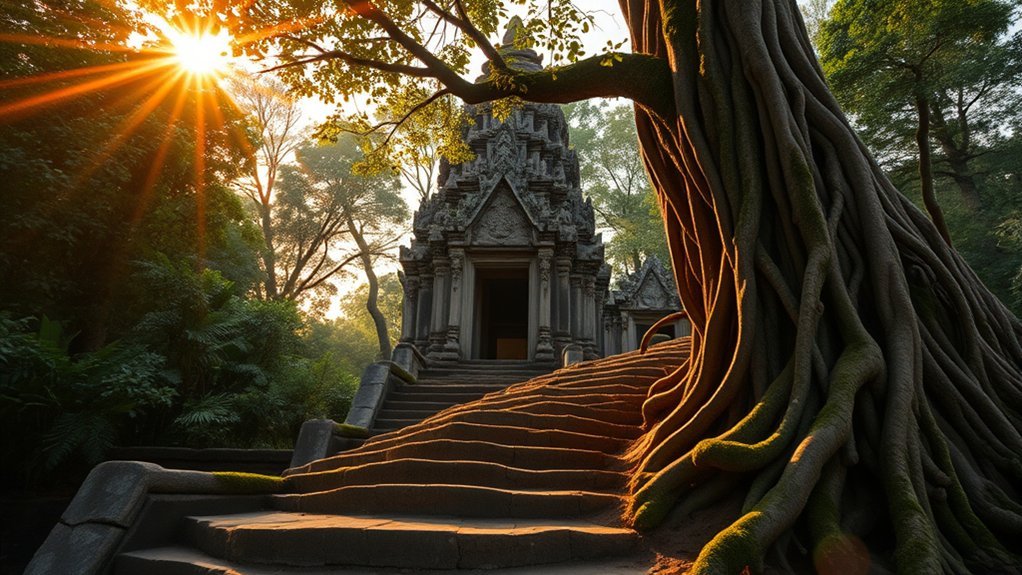
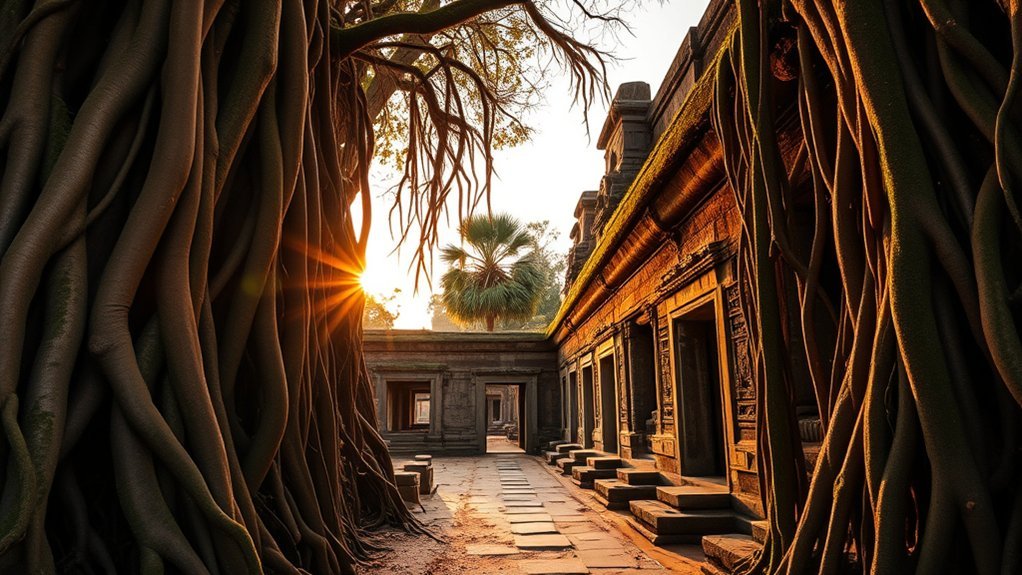
- Ta Prohm: A temple where trees and roots grow dramatically around the stone structures, showing the close relationship between ruins and forest.
- Preah Khan: A large late-12th-century complex built under Jayavarman VII, with long corridors, courtyards, Buddhist and Hindu elements, and areas where vegetation remains among the ruins.
- Banteay Srei: A smaller but exceptionally detailed temple north of the main Angkor group, known for finely carved pinkish sandstone.
Angkor Thom should also be on almost every itinerary, but it is important to understand that Angkor Thom is a fortified royal city rather than one individual temple. Bayon stands at its center, while the city also contains the Baphuon, Terrace of the Elephants, Terrace of the Leper King, gates, and other monuments.
Getting Around the Angkor Complex
Angkor Archaeological Park is far too large to treat as a single walkable attraction. Most visitors move between temples by tuk-tuk/remork, private car, guided vehicle, bicycle, e-bike, or scooter.
Transportation Options
- Tuk-tuk/remork: A practical choice for couples, families, and first-time visitors who want a driver waiting between temples.
- Private car: More comfortable in very hot weather or heavy rain and useful for longer routes such as Banteay Srei.
- Bicycle: Good for active travelers who are comfortable riding longer distances in tropical heat.
- Scooter: Angkor Enterprise currently confirms that visitors can rent and ride scooters to the temples, but only choose this option if you are comfortable with local traffic and rental requirements.
- Guided tour: Useful when you want transportation combined with historical and architectural explanation.
Local day-hire prices are not fixed park-wide rates. Before leaving, confirm the total price, temples included, expected finish time, whether sunrise or distant temples cost extra, and whether the driver waits at every stop.
Tuk-Tuk Tours
Tuk-tuks are one of the easiest ways to explore Angkor because you do not need to navigate between temples yourself. Drivers commonly know the Small Circuit and Grand Circuit routes and can wait near the exit while you explore on foot.
Before starting, agree on your route and final price rather than assuming a quoted amount includes every stop. A sunrise departure, Banteay Srei, airport transfer, or unusually long day may be priced differently from a standard circuit.
Getting Around Efficiently
Do not try to see every famous temple in one rushed day. Group nearby monuments together, start early, and build in time for water, meals, and breaks during the hottest part of the day.
- Use the Small Circuit for a concentrated first-day route including Angkor Wat, Angkor Thom/Bayon, Ta Prohm, and nearby monuments.
- Use the Grand Circuit on another day for Preah Khan, Neak Pean, Ta Som, East Mebon, Pre Rup, and surrounding sites.
- Save more distant sites such as Banteay Srei for a separate half-day or full-day outing.
- Ask your driver or guide where to meet after each temple because some sites have different entrance and exit points.
What About the Siem Reap Airport?
The current airport is Siem Reap–Angkor International Airport (SAI), which replaced the old Siem Reap airport in October 2023. Cambodia’s Ministry of Tourism places it about 51 kilometers from Siem Reap city and roughly 40 kilometers from Angkor Wat.
That means you should not plan on stepping off a flight and reaching the temples within a few minutes. Allow meaningful transfer time between SAI, your hotel, and Angkor, especially if you are trying to make a sunrise, sunset, or flight connection.
How Many Days Do You Need for Angkor Wat?
You can see Angkor Wat and several headline temples in one long day, but two or three days produces a much better-paced visit.
One Day
Use the Small Circuit as your foundation. A practical route is Angkor Wat, Angkor Thom and Bayon, Ta Prohm, and one or two nearby temples. Start early and avoid adding too many distant sites.
Two Days
Spend the first day on Angkor Wat, Angkor Thom, Bayon, Ta Prohm, and nearby monuments. On day two, explore the Grand Circuit, including Preah Khan, Neak Pean, Ta Som, East Mebon, and Pre Rup.
Three Days
Use the third day for Banteay Srei, overlooked temples, repeat photography at Angkor Wat, or a slower visit to areas you rushed earlier. The three-day pass is especially useful because its visit days can currently be used within a seven-day validity window.
What to Bring to Angkor Wat
- Water: You will spend hours outdoors in tropical conditions.
- Sun protection: Bring sunscreen, sunglasses, and a hat for exposed areas.
- Comfortable shoes: Expect uneven stone, stairs, gravel, and long walks.
- Rain protection: A compact rain jacket or umbrella is useful in wetter months.
- Phone or camera: Keep equipment manageable because you will walk and climb frequently.
- Your pass: Keep the digital or physical ticket accessible for checkpoints.
- Passport copy or proof of age for children: Children under 12 may need to prove their age for free entry.
Angkor Wat Etiquette and Visitor Rules
Angkor is not simply an archaeological attraction. It remains culturally and spiritually important, so visitor behavior matters. The official Angkor Visitor Code of Conduct asks visitors to respect worshipers, monks, monuments, restricted areas, and the surrounding environment.
- Do not touch carvings, sit on fragile structures, move stones, or climb in restricted areas.
- Keep your voice down in sacred spaces.
- Ask permission before photographing monks.
- Do not smoke or litter within the site.
- Do not give candy or money directly to children; the official code encourages helping through recognized organizations instead.
- Follow barriers and signs even if another visitor ignores them.
- Avoid high heels and equipment that can damage stone surfaces.
Best Things to Do in Siem Reap
Siem Reap is worth exploring beyond the temple circuits. After a long day at Angkor, you can spend the evening around Pub Street and the Old Market area, where restaurants, cafes, shops, and bars stay active after dark.
Try Khmer dishes such as fish amok and lok lak, but also explore smaller local restaurants away from the busiest tourist streets.
For another side of local life, visit communities around Tonlé Sap. Floating and stilted villages vary considerably, so choose an operator that treats residents respectfully and makes clear how tour revenue benefits the community.
The Artisans Angkor Silk Farm in Puok District remains open to visitors and shows the process from mulberry cultivation and silkworms through spinning, dyeing, and weaving. It is a useful cultural stop if you are interested in traditional Khmer crafts.
In the evening, Phare, the Cambodian Circus combines acrobatics, theater, music, and storytelling. You can also visit the Angkor National Museum before or after your temple days if you want more background on Khmer art, religion, and history.
Frequently Asked Questions
What should I know before visiting Angkor Wat?
Buy your Angkor Pass through the official Angkor Enterprise system, wear clothing that covers your shoulders and knees in sacred areas, bring water and sun protection, and check individual temple hours. Start early if you want cooler conditions, but expect the sunrise area to be popular.
Can a man wear shorts at Angkor Wat?
Shorts above the knees are prohibited in sacred areas under the official visitor code. Men should choose lightweight trousers or shorts that provide proper knee coverage, and shirts should cover the shoulders.
What is Cambodia’s best kept secret near Angkor?
There is no objective or official “best kept secret.” If you want a quieter Angkor experience, try spending more time at temples such as Preah Khan or Ta Nei and visit major temples outside their busiest periods. Crowd levels vary by day and season.
Can a woman wear shorts in Cambodia?
Shorts are common in casual settings, but sacred sites have stricter expectations. At Angkor, shorts and skirts above the knees and clothing that leaves the shoulders bare are prohibited in sacred areas. Lightweight long pants or a longer skirt are easy options.
How much is an Angkor Wat ticket?
Current Angkor Temples Park prices are $37 for a one-day pass, $62 for a three-day pass, and $72 for a seven-day pass. Children under 12 currently enter without a ticket, although proof of age may be requested.
What time does Angkor Wat open?
Angkor Wat is currently listed as opening at 5:00 AM and closing at 5:30 PM. Other temples have different schedules, so check official opening times before building a tightly timed itinerary.
Is one day enough for Angkor Wat?
One day is enough to see Angkor Wat plus several major temples, especially on the Small Circuit. Two or three days is better if you want the Grand Circuit, Banteay Srei, photography time, or a more relaxed pace.
Conclusion
Angkor Wat rewards good planning. Organize your official pass before a tightly timed sunrise visit, dress appropriately for sacred areas, carry enough water, and avoid trying to squeeze the entire archaeological park into a few rushed hours. One day covers the major highlights, while two or three days gives you time to explore Angkor Wat, Angkor Thom, Ta Prohm, Preah Khan, the Grand Circuit, and quieter temples at a more comfortable pace. Siem Reap then gives you plenty to see, eat, and experience after the temples close.
Sources
- UNESCO World Heritage Centre — Angkor — World Heritage status, archaeological significance, and approximate 400 km² area.
- Angkor Enterprise — Available Tickets — current Angkor Pass prices, validity periods, and general park-access hours.
- Angkor Enterprise — Visitor Code of Conduct — clothing, monument protection, monks, smoking, littering, and visitor behavior.
- APSARA National Authority — Angkor Wat — temple history, suggested visit duration, Bakan restrictions, and visitor information.
- World Bank Climate Knowledge Portal — Cambodia Climate Profile — dry and rainy seasons and regional climate patterns.
- Cambodia Ministry of Tourism — Siem Reap–Angkor International Airport — airport opening and distance from Siem Reap and Angkor Wat.
