

Last Updated on September 11, 2026 by Daniel Globe
Angkor Wat is Cambodia’s best-known temple and the centerpiece of the UNESCO-listed Angkor Archaeological Park near Siem Reap. A rewarding visit takes more planning than simply arriving for sunrise: you need the right pass, realistic transport times, respectful clothing, sun protection, and a route that matches your available days. This guide covers the history, current ticket options, opening hours, temple circuits, safety advice, and worthwhile experiences beyond the ruins.
Quick Answer
Angkor Wat is a 12th-century temple complex about 6 kilometers north of central Siem Reap. Visit from November to February for milder weather, or during the wet season for greener scenery and fewer visitors. Buy an official Angkor Pass, arrive early, cover your shoulders and knees, and allow at least one full day.
Key Takeaways
- The current Angkor Pass costs $37 for one day, $62 for three days, or $72 for seven days.
- Angkor Wat opens at 5:00 a.m., but the upper Bakan sanctuary follows shorter hours and closes on Buddhist holy days.
- November through February offers milder weather but also brings the largest crowds.
- Sunrise is beautiful but rarely quiet; buy your pass beforehand and expect busy reflection-pool areas.
- A one-day visit covers the Small Circuit highlights, while three days allows a more comfortable mix of major and quieter temples.
- Siem Reap–Angkor International Airport is far outside the city, so allow roughly an hour or more for the airport transfer.
At a Glance
| Time Required | One full day for the main sights; three days for a better-paced visit |
| Difficulty | Moderate; expect heat, long walks, uneven stone, and optional steep stairs |
| Tools Needed | Angkor Pass, water, sun protection, modest clothing, secure footwear, and an offline map |
| Cost | $37, $62, or $72 for the pass, plus variable transport, food, and guide costs |
Disclosure: As an Amazon Associate I earn from qualifying purchases. Some links on this page are affiliate links, at no extra cost to you.
What Is Angkor Wat?
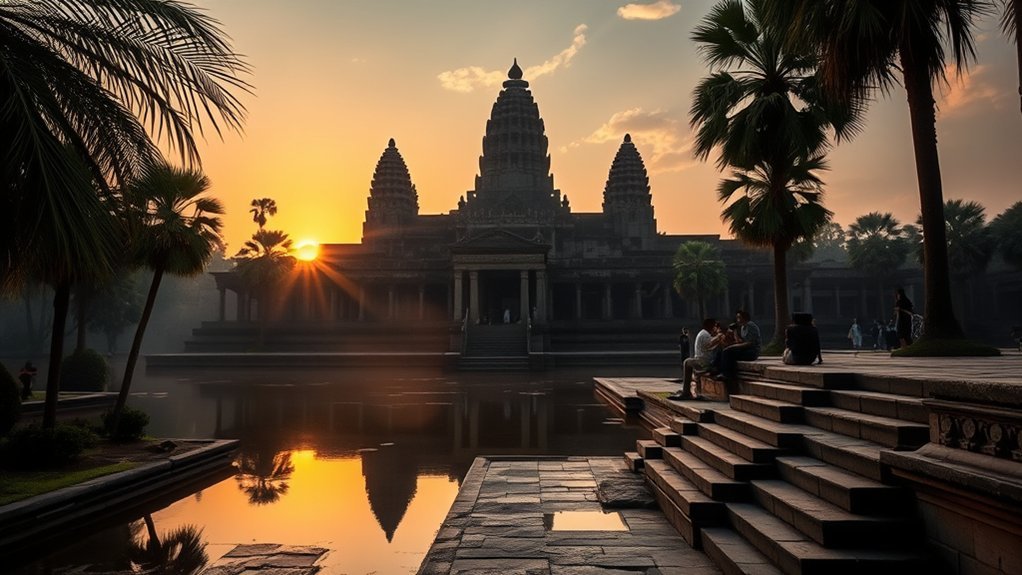
Angkor Wat is a monumental temple complex constructed during the reign of King Suryavarman II, approximately between 1113 and 1150. It originally served as a state temple dedicated to the Hindu god Vishnu. Over later centuries, it developed into an important Buddhist sacred site and remains an active place of worship.
Guinness World Records recognizes Angkor Wat as the largest religious structure, enclosing about 162.6 hectares, or 401 acres. The temple is only one part of the much larger Angkor World Heritage property, which includes the remains of several Khmer Empire capitals and extends across roughly 400 square kilometers.
Angkor Wat’s architecture represents the Hindu cosmos. Its rising central towers symbolize Mount Meru, while the surrounding galleries, enclosure walls, and moat create a carefully ordered sacred landscape. The temple’s western orientation is unusual. It is often interpreted in connection with Vishnu, royal funerary symbolism, and Brahmanic ritual, although scholars continue to discuss its full meaning.
The lower galleries contain more than 1,000 square meters of bas-reliefs. They portray Hindu epics, royal processions, battles, heavens and hells, and the famous Churning of the Sea of Milk. Most visitors need two to three hours to see the main causeway, galleries, central terraces, carvings, and upper areas without rushing.
Angkor Wat is not the whole of Angkor. It is the best-known monument within a vast archaeological landscape of temples, reservoirs, roads, settlements, and former royal capitals.
Where Is Angkor Wat?
Angkor Wat lies about 6 kilometers, or 3.7 miles, north of central Siem Reap. It stands inside Angkor Archaeological Park, close enough for a short drive from most city hotels but far enough that walking from central Siem Reap is impractical for most visitors—especially before sunrise or during the hotter months.
The airport information in many older guides is no longer correct. Commercial flights now use Siem Reap–Angkor International Airport, or SAI, which opened in 2023 well outside the city. Depending on traffic and your hotel’s location, the airport transfer commonly takes about an hour or more. The airport publishes current shuttle and ground-transport information on its official transport page.
| Feature | Why It Matters |
|---|---|
| West-facing layout | An unusual orientation associated with several religious and royal interpretations |
| Five central towers | Represent the peaks of Mount Meru in Hindu cosmology |
| Wide moat and enclosures | Create the monumental approach and define the sacred temple landscape |
| Narrative bas-reliefs | Preserve religious stories, royal history, warfare, dress, and daily-life details in stone |
When Is the Best Time to Visit Angkor Wat?
November through February is the easiest period for most travelers because temperatures are generally milder and rainfall is lower. It is also peak season, so hotels, sunrise viewpoints, Bayon, and Ta Prohm can be busy.
Cambodia’s official tourism guidance divides the year into a wet season and a dry season. Each offers a different Angkor experience rather than a simple “good” or “bad” choice.
| Period | Conditions | Main Trade-Off |
|---|---|---|
| November–February | Drier and relatively cooler | Most comfortable weather, but the largest crowds |
| March–April | Very hot, dry, and often dusty | Plan early starts and a long midday break |
| May–October | Humid with monsoon showers and greener scenery | Fewer visitors, but paths can become wet or slippery |
Pro Tip: Start before the heat builds, return to Siem Reap or stop for a shaded lunch around midday, and continue in the afternoon. This is usually more comfortable than forcing every temple into one continuous tour.
Angkor Wat Tickets and Opening Hours
The official Angkor Pass covers temples within Angkor Archaeological Park. Buy it through Angkor Enterprise, its official ticketing system, or an authorized counter. Avoid unofficial websites that imitate the government ticket pages.
| Pass | Current Price | Validity | Best For |
|---|---|---|---|
| 1 day | $37 | One selected day | Angkor Wat, Angkor Thom, Bayon, and Ta Prohm |
| 3 days | $62 | Three visits within seven days | Small Circuit, Grand Circuit, and a less-rushed schedule |
| 7 days | $72 | Seven visits within 30 days | Photography, research, slow travel, and repeat visits |
Children under 12 currently enter without an Angkor Pass, but staff may ask for a passport to confirm age. Children under 12 may not climb to Bakan. A photograph is currently required for three-day and seven-day passes, while the official ticket FAQ says a one-day pass does not require one.
Current published hours include:
- Angkor Wat: 5:00 a.m. to 5:30 p.m.
- Bakan upper sanctuary: 7:40 a.m. to 5:00 p.m.; closed on Buddhist holy days.
- Main Angkor ticket office: generally 5:00 a.m. to 5:30 p.m.
- Other temples: many open later than Angkor Wat and may close at different times.
Note: There is no separate sunrise ticket. A valid standard Angkor Pass allows entry to Angkor Wat when it opens at 5:00 a.m. Buying the pass online or before the morning of your visit reduces the risk of missing the first light while waiting at a counter.
Warning: Ticket prices, opening hours, restoration closures, and access routes can change. Check Angkor Enterprise and APSARA National Authority shortly before your visit rather than relying on an old screenshot or third-party ticket page.
Products Worth Considering
SIZE: Measuring approximately Angkor Wat in Siem Reap Cambodia 2⅞" Wide x 2⅜" High x ¾" Thick, this cute collectible will look great on your refrigerator and magnetic notice board.

➤ Quantitiy: 1Pc Angkor Wat Landmark Shield Patch(2.5x3.1 inches) and 1Pc Cambodia Flag Lapel Pin (0.7x0.6 inches)

SIZE: Measuring approximately Apsaras of Angkor Wat in Siem Reap Cambodia 2¼" Wide x 2⅝" High x ¾" Thick, this cute collectible will look great on your refrigerator and magnetic notice board.
How to Get to Angkor Wat From Siem Reap
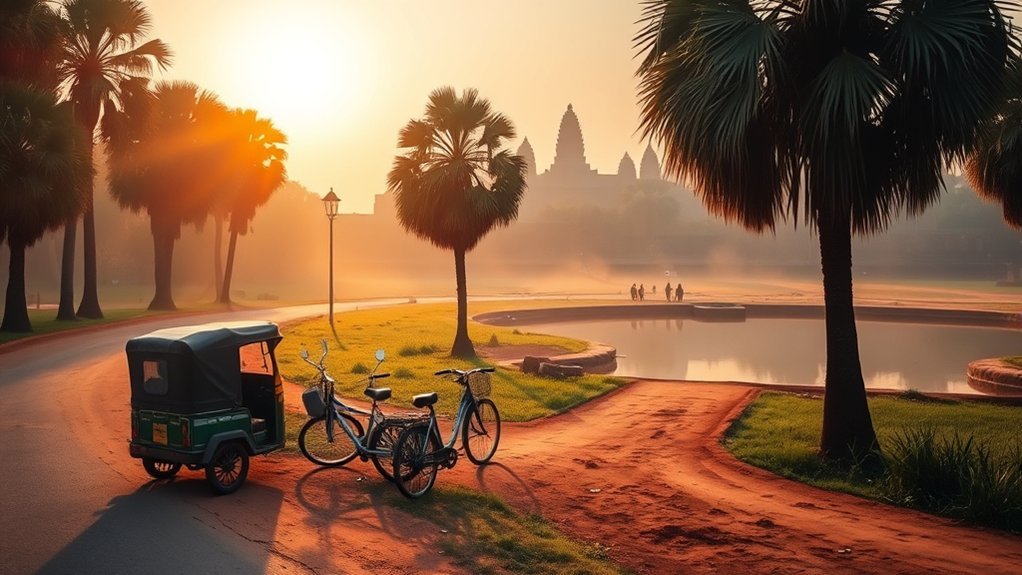
Angkor Wat is close to Siem Reap, but the temples are spread across a large park. Choose transport for the full route rather than only the first ride to Angkor Wat. A driver may need to wait for several hours and continue to Angkor Thom, Bayon, Ta Prohm, Banteay Kdei, or the Grand Circuit.
Products Worth Considering

To celebrate the beauty and hightlight the significance of some of the most important and popular places for tourism, our artist crafted this collection of original...
Transportation Options
Tuk-tuk or remork: This is the classic flexible option. Before leaving, agree on the temples, sunrise pickup, waiting time, meal breaks, hotel return, and total price. Confirm whether a longer stop or sunset adds a fee.
Car or van: Air conditioning makes a major difference during March and April and may be more comfortable for families, older travelers, or anyone carrying camera equipment. Prices are usually quoted by vehicle and route.
Bicycle: Cycling offers independence, but the ride to Angkor Wat is only the beginning. A complete circuit adds many kilometers, and midday heat can be severe. Carry more water than you expect to need and use lights if riding before dawn.
E-bike or scooter: These can reduce effort, but riders should confirm local licensing, insurance, battery range, parking rules, and rental conditions. Do not learn to ride in temple traffic.
Guided tour: A small-group or private tour can combine transport with historical interpretation. Compare the route, group size, included water, meal arrangements, and whether the guide is licensed.
Travel Time and Costs
| Option | Approximate Time to Angkor Wat | How Cost Is Usually Set | Best For |
|---|---|---|---|
| Tuk-tuk or remork | About 15–25 minutes from central Siem Reap | Per route, half day, or full day | Flexible temple hopping |
| Car or van | About 15–25 minutes | Per vehicle and planned circuit | Comfort, families, and hot weather |
| Bicycle | About 35–60 minutes, depending on start point and pace | Daily rental | Fit travelers with enough daylight |
| Guided vehicle tour | Pickup time depends on the itinerary | Per person or private group | First-time visitors seeking context |
| SAI airport transfer | Usually about an hour or more to Siem Reap | Shuttle seat or private vehicle | Arriving and departing passengers |
A flight from Phnom Penh may spend roughly an hour in the air, but it is not a 45-minute door-to-door trip. Add travel to the departure airport, check-in, security, baggage collection, and the long ground transfer from SAI.
What to Wear at Angkor Wat

Angkor is a living sacred site, not only an archaeological attraction. Wear clothing that covers your shoulders and knees. Lightweight trousers, longer shorts that clearly cover the knees, breathable skirts, and tops with sleeves are practical in the heat.
- Footwear: Wear supportive shoes or secure walking sandals with reliable grip.
- Sun protection: Bring a hat, sunscreen, and sunglasses for exposed approaches and courtyards.
- Rain protection: Carry a compact rain jacket or poncho during the wet season.
- Water: Bring a refillable bottle and drink regularly before you feel thirsty.
- Small bag: Keep your pass, phone, cash, and valuables secure and close to your body.
Remove your hat where requested, including before entering the upper Bakan area. Do not assume that wrapping a thin scarf over an otherwise unsuitable outfit will always satisfy entry staff.
Warning: Stone steps can be steep, narrow, polished, or wet. Children under 12 and pregnant visitors may not climb Bakan. Anyone with heart, balance, or mobility concerns should remain on the lower levels rather than attempting the upper sanctuary.
How to Plan an Angkor Wat Sunrise Visit
Sunrise can be memorable, but it is one of the most popular times to visit. Expect groups near the western reflection ponds, especially from November through February. Cloud, mist, or rain can also hide the sun, so treat the changing light and early temple atmosphere as the experience rather than expecting a guaranteed postcard view.
- Buy your pass beforehand. Save the e-ticket to your phone and keep a backup screenshot that can be opened without mobile data.
- Confirm pickup the previous evening. Your driver should know whether you want sunrise only or a complete Small Circuit tour.
- Reach the entrance before opening. Angkor Wat opens at 5:00 a.m., and walking from the entrance to a viewing area takes additional time.
- Move beyond the first crowd. After the sky brightens, continue into the galleries while some visitors remain outside taking photographs.
- Eat and rest afterward. Carry a small snack or arrange breakfast before continuing to Angkor Thom and Bayon.
Pro Tip: Travelers who value quieter temple time more than the classic silhouette can visit another site at opening and explore Angkor Wat later in the morning or afternoon. The temple remains impressive even without a visible sunrise.
Top Angkor Wat Sights for a Short Visit
With one day, focus on the Small Circuit rather than racing across the entire archaeological park. Angkor Wat, Angkor Thom, Bayon, the Terrace of the Elephants, and Ta Prohm provide a strong mix of architecture, carvings, royal history, and forest-covered ruins.
| Site | Why Go | Suggested Time |
|---|---|---|
| Angkor Wat | Five-tower skyline, bas-reliefs, galleries, and sacred architecture | 2–3 hours |
| Bayon | Enigmatic face towers and scenes of Khmer daily life | 45–75 minutes |
| Terrace of the Elephants | A former royal viewing platform with carved elephant processions | 20–30 minutes |
| Ta Prohm | Tree roots, atmospheric corridors, and ongoing conservation work | 1–1.5 hours |
| Banteay Kdei or Srah Srang | A calmer final stop near the end of the Small Circuit | 30–60 minutes |
Sample One-Day Angkor Itinerary
- Early morning: Angkor Wat sunrise and a complete visit to the galleries.
- Midmorning: South Gate of Angkor Thom and Bayon.
- Late morning: Baphuon, the Terrace of the Elephants, or the Terrace of the Leper King.
- Midday: Shaded lunch and hydration break.
- Afternoon: Ta Prohm followed by Banteay Kdei or Srah Srang.
- Evening: Return to Siem Reap before exhaustion reduces the value of the final stops.
Bakan Sanctuary offers wide views over the temple grounds, but the climb is optional and can involve a queue. Access is restricted by age, pregnancy, health, clothing, operating hours, holy days, and temporary safety decisions.
Best Temples to See If You Have More Time
A second or third day lets you explore the Grand Circuit and temples beyond the busiest core. These sites reveal how Angkor changed across different rulers, religious traditions, architectural styles, and landscapes.
- Preah Khan: A large late-12th-century complex that once functioned as a city and center of Buddhist study.
- Neak Pean: A compact island sanctuary built within a former reservoir, usually combined with the Grand Circuit.
- Ta Som: A smaller temple known for its face gates, fine carvings, and tree-covered eastern entrance.
- East Mebon and Pre Rup: Brick and laterite temple-mountains that show a different side of Angkorian architecture.
- Banteay Kdei: A quieter Buddhist complex with courtyards, galleries, and carved dancers.
- Banteay Srei: A more distant temple celebrated for detailed pink-sandstone carving; allow additional driving time.
- Ta Nei: A comparatively quiet forest temple for visitors who want a less crowded atmosphere.
Sample Three-Day Angkor Itinerary
Day 1 — Angkor Wat and the Small Circuit: Angkor Wat, Angkor Thom, Bayon, the royal terraces, Ta Prohm, and Banteay Kdei.
Day 2 — Grand Circuit: Preah Khan, Neak Pean, Ta Som, East Mebon, and Pre Rup. Start early but skip sunrise unless you genuinely want a second dawn visit.
Day 3 — Outer temples and Siem Reap culture: Banteay Srei, a quieter temple or village stop, and an afternoon museum, craft workshop, or rest period in Siem Reap.
Angkor Wat Safety, Accessibility, and Etiquette
The temples combine tropical weather with ancient stonework. Surfaces can be uneven, narrow, steep, or slippery, and restoration work may alter normal routes. Do not cross barriers or enter areas closed by staff.
- Heat: Drink regularly, use shade, and reduce your route if dizziness, headache, or nausea begins.
- Steps: Use handrails where available and avoid climbing in rain or when your footwear lacks grip.
- Accessibility: Some approaches and ground-level areas are more manageable than upper terraces, but thresholds, sand, rough stone, and stairs remain significant barriers. Arrange a suitable vehicle and discuss access with your hotel, guide, or APSARA before travel.
- Children: Keep children close near roads, steep stairs, water, unstable surfaces, and wildlife.
- Monkeys and other animals: Do not feed, touch, tease, or approach them for photographs.
- Valuables: Keep phones, cameras, wallets, and passes secured in crowded areas.
Follow the official Angkor visitor code: wear appropriate clothing, respect worshippers and monks, do not touch or climb the monuments, remove your litter, and do not encourage child selling by handing out money or gifts at temple sites.
Note: Ask before photographing monks or worshippers. Keep your voice low in active shrines, walk around ceremonies rather than through them, and never pose on altars or sacred carvings.
Warning: Do not fly a drone anywhere in Angkor Archaeological Park without written authorization from APSARA National Authority and any required aviation clearance. Possessing a small recreational drone does not create an automatic right to launch it near the temples.
Best Things to Do in Siem Reap
Siem Reap deserves time beyond the temple circuits. After an early start at Angkor, choose one evening activity or a slower cultural experience instead of filling every hour.
- Try Cambodian food: Look for fish amok, Khmer curry, grilled meats, fresh spring rolls, and regional dishes rather than eating only around Pub Street.
- Watch Phare, the Cambodian Circus: The performance combines acrobatics, theater, music, and Cambodian storytelling.
- Join a cooking class: Market visits and hands-on classes offer useful context for local herbs, spices, rice, and sauces.
- Visit Artisans Angkor’s Silk Farm: Guided visits explain silkworm cultivation, dyeing, spinning, and hand weaving.
- Explore a museum: The Angkor National Museum can provide useful background before or after seeing the temples.
- Visit Tonlé Sap responsibly: Choose a transparent community-based operator, avoid intrusive photography, and do not treat homes, schools, or working boats as staged attractions.
- Shop for local crafts: Buy from workshops and markets that identify the maker and explain where the work was produced.
The water level around Tonlé Sap changes dramatically by season, so a wet-season and dry-season visit can look very different. Confirm current boat conditions and what your fee supports before booking.
Why Angkor Wat Belongs on Your Cambodia Itinerary
Angkor Wat belongs on a Cambodia itinerary because it connects architecture, religion, engineering, royal history, and living spiritual practice in one place. Its scale is impressive, but its carvings and carefully arranged spaces reward slower attention more than a rushed photograph.
The surrounding archaeological landscape is equally important. Greater Angkor once supported a vast urban population through roads, reservoirs, canals, temples, rice fields, and dispersed settlements. Bayon, Ta Prohm, Preah Khan, Banteay Srei, and the other monuments reveal a civilization that changed across centuries rather than a single frozen historical moment.
Plan enough time to move carefully, read the carvings, observe active worship, and visit at least one quieter site. The result will feel less like checking off a landmark and more like understanding how Angkor functioned as a city, royal center, and sacred landscape.
Sources
- UNESCO World Heritage Centre — Angkor — World Heritage status, archaeological significance, and the scale of the Angkor property.
- APSARA National Authority — Angkor Wat and visitor information — history, architecture, opening hours, Bakan restrictions, and conduct rules.
- Guinness World Records — Largest Religious Structure — recognized measurement of Angkor Wat’s enclosed area.
- Angkor Enterprise — Available Tickets and official ticket FAQs — current prices, pass validity, purchase rules, and child policy.
- Cambodia Ministry of Tourism — Weather in Cambodia — wet-season and dry-season conditions.
- Siem Reap–Angkor International Airport — Transport and Directions — current airport ground-transport information.
Frequently Asked Questions
How much does an Angkor Wat ticket cost?
The current official Angkor Pass costs $37 for one day, $62 for three days, or $72 for seven days. The three-day pass is valid for three visits within seven days, and the seven-day pass is valid for seven visits within 30 days. Check Angkor Enterprise before travel in case prices change.
Can you hire a guide at Angkor Wat?
Yes. You can arrange a licensed guide through a reputable hotel, tour operator, or local guide service. Confirm the guide’s credentials, language, route, meeting point, duration, and whether transport is included before paying.
Is Angkor Wat suitable for children?
Yes, provided the route includes shade, water, food, rest, and close supervision. Children under 12 currently enter free with possible passport verification, but they may not climb Bakan. Keep children away from steep drops, roads, wildlife, and unstable stonework.
Are drones allowed at Angkor Wat?
Do not fly a drone in Angkor Archaeological Park without written authorization from APSARA National Authority and any required aviation clearance. Permission may involve an application, conditions, and fees, particularly for professional filming.
What time can you enter Angkor Wat for sunrise?
Angkor Wat currently opens at 5:00 a.m. There is no separate sunrise ticket; you enter with a valid standard Angkor Pass. Buy the pass beforehand and arrive before opening because walking to a viewing area takes additional time.
How many days do you need at Angkor Wat?
One full day is enough for Angkor Wat, Bayon, Ta Prohm, and several Angkor Thom sights. Three days is better for most history-focused visitors because it allows the Small Circuit, Grand Circuit, Banteay Srei, rest breaks, and time at quieter temples.
Can you wear shorts at Angkor Wat?
Shorts are acceptable only when they clearly cover the knees. Shoulders must also be covered. Choose breathable clothing that remains modest while walking, sitting, and climbing rather than relying on a loosely draped scarf.
Is Angkor Wat worth visiting during the rainy season?
Yes. The wet season brings greener scenery, fuller ponds, dramatic skies, and fewer visitors. Expect humidity, showers, mosquitoes, and slippery stone. A rain jacket, secure footwear, and a flexible route make the visit easier.
Is Angkor Wat wheelchair accessible?
Accessibility is limited. Some approaches, walkways, and ground-level areas may be manageable with assistance, but sand, thresholds, rough stone, narrow passages, and stairs create major barriers. Arrange suitable transport and ask APSARA, your hotel, or an experienced guide about current access before visiting.
Conclusion
Angkor Wat rewards preparation. Buy the correct pass, allow enough time, start before the strongest heat, and dress for both the climate and a living sacred site. Sunrise is memorable, but the galleries, carvings, towers, and wider Angkor landscape are what make the visit last in your memory.
One day reveals the essential sights. Three days gives you time to understand how Angkor Wat, Bayon, Ta Prohm, Preah Khan, Banteay Srei, and the quieter temples fit together. Pair the ruins with Cambodian food, crafts, performance, and responsible community experiences in Siem Reap for a richer view of the region.
