
Last Updated on September 11, 2026 by Daniel Globe
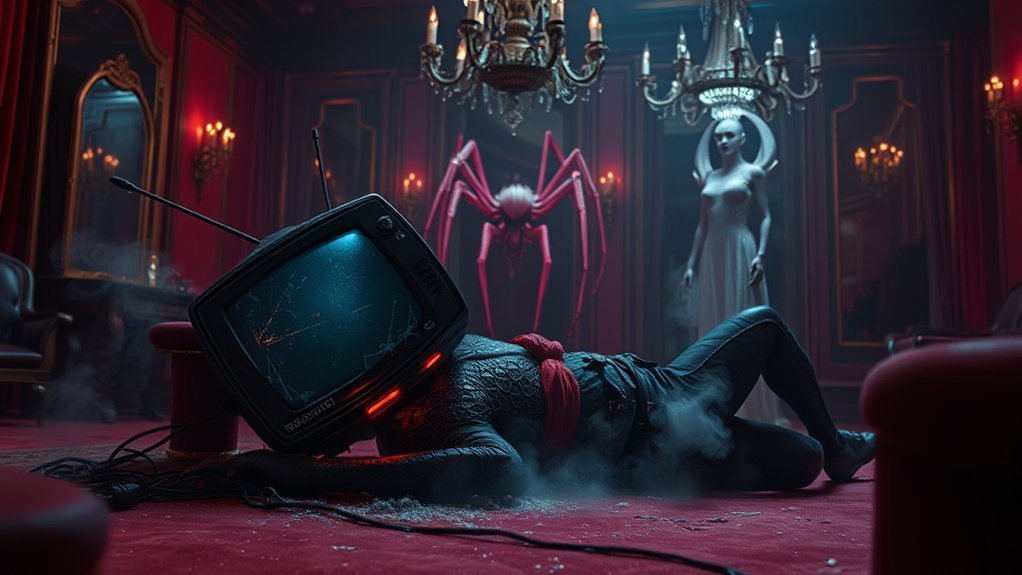
In Hazbin Hotel, the media-controlling Overlord known as Vox met his mortal end through a sudden, fatal electrocution when a heavy television set crashed down on him. In widely circulated fan lore and character backstory, he was known in life as Vincent Whittman, a ruthless 1950s television weatherman and broadcaster whose deadly ambition followed him straight into the Pride Ring of Hell. That catastrophic accident permanently bonded his identity to broadcast technology, shaping his cathode-ray demon form, his electric abilities, and his corporate empire, VoxTek Enterprises.
Quick Answer
Vox died during the 1950s from fatal electrocution caused by a falling television set during a live broadcast event. In Hell, this violent demise manifested directly into his demon physiology: his head became a high-tech flat-screen monitor and his sinner powers grant him absolute control over electricity, broadcast signals, and mass media.
Key Takeaways
- Mortal Identity: Popularly identified in lore narratives as Vincent Whittman, an aggressively ambitious 1950s broadcaster who manipulated and eliminated television rivals.
- Cause of Death: Lethal electrical shock when an old cathode-ray tube television fell during a broadcast/ceremonial event.
- Sinner Manifestation: His demonic form directly reflects his death, granting him a TV-screen head, electricity manipulation, and telecommunication traversal.
- Hell’s Hierarchy: Co-founder of The Vees alongside Valentino and Velvette, ruling Pentagram City’s commerce and entertainment through VoxTek.
When Did Vox Die?
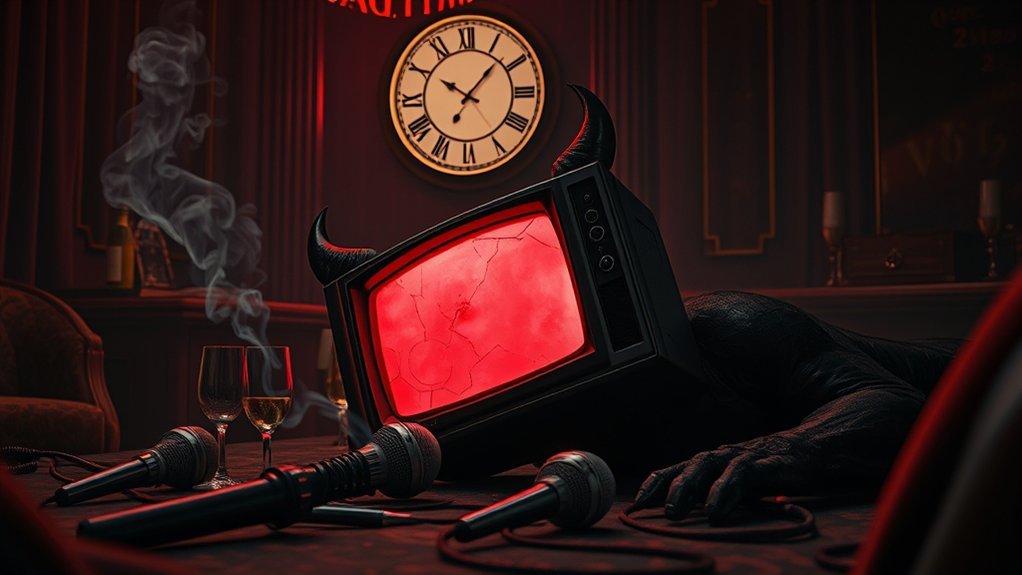
According to official series creator Vivienne Medrano (Vivziepop), Vox died during the 1950s, the golden age of commercial broadcast television. His mortal life ended the exact moment an old-fashioned television set fell onto him, unleashing a lethal surge of electricity. This timing explains why his aesthetic, corporate terminology, and deep ideological clash with older media forms (specifically Alastor’s 1930s radio era) sit at the center of his character design.
The moment of death served as the catalyst for his infernal ascension. Rather than purging his desire for fame, damnation amplified his obsession with visibility and surveillance. In Hell, sinner demons manifest physical forms that reflect both their sins and the circumstances of their death; for Vox, dying by a television set ensured he would spend eternity as a living screen.
Vincent Whittman’s Life Before Hell
In extended lore and backstory narratives, Vincent Whittman was a cutthroat media personality whose career mapped the cutthroat evolution of mid-century broadcast journalism. He did not view television as a public service, but rather as an unprecedented weapon for psychological control, social leverage, and personal vanity.
Vincent’s Weatherman Career
Starting as an on-air weather forecaster, Whittman quickly realized that public exposure was the fastest route to influence. However, mere segment reporting failed to satisfy his narcissistic drive. When co-anchors and network producers received higher billing, his envy spiraled into active workplace sabotage, set tampering, and calculated violence designed to vacate senior network seats.
Rise Through TV Ranks
Whittman systematically replaced his superiors by orchestrating on-set accidents and staging hostile takeovers within the station. He studied viewer psychology, discovering that audiences responded more to polished sensationalism than journalistic integrity.
At a Glance: Mortal Career Trajectory
| Initial Position | Station Weatherman & Segment Presenter |
| Climb Method | Elimination of rival news anchors and studio executives |
| Peak Human Title | Self-styled “God of Entertainment” & Studio Head |
| Fatal Flaw | Obsessive narcissism and reckless studio management |
Murder And Power Grab
Whittman’s corporate ascension was paved with extreme hostility. He eliminated senior news anchors and talk show hosts, stealing their formats while presenting himself as the irreplaceable face of modern broadcasting. Ultimately, his coup of network executive Robert “Bob” Sinclaire consolidated his unilateral grip over the airwaves, setting the template for the media monopoly he would later construct in Hell.
The Baptism Accident That Killed Vox
The ironic climax of Whittman’s mortal life occurred during a televised baptism and promotional ceremony. In his bid to turn a sacred public event into high-rated spectacle, an overhead support rig failed, dropping an enormous vintage television unit straight onto him in the water.
Baptism Electrocution
The combination of high-voltage studio currents and ritual water created an instantaneous fatal circuit. The massive shock triggered immediate cardiac arrest and severe thermal damage, severing his human life in full view of his audience and production crew.
TV Collapse Incident
The incident carries strong thematic irony: the very medium Whittman used to control public perception collapsed and destroyed his physical body. This collapse served as his symbolic transition point into an Overlord.
| Narrative Element | Direct Impact | Symbolic Demon Meaning |
|---|---|---|
| Live Broadcast Setting | Public catastrophe on live air | Inability to separate life from performance |
| Falling Television Rig | Blunt force and crushed skull | Head permanently replaced by a television screen |
| High-Voltage Electrocution | Instant cessation of vital signs | Electric demonic powers and signal travel |
How Vox Became A Sinner Demon
Upon arriving in the Pride Ring, his soul took the form of a Television Demon. In early decades, his head was an antique cathode-ray tube (CRT) television with an antenna. As technology advanced across the mortal world, Vox upgraded his demonic form into a modern high-definition widescreen flat panel, complete with digital display capabilities and touch interfaces.
Note on Sinner Anatomy: In Vivziepop’s universe, Sinners cannot permanently die from conventional wounds; only angelic steel can destroy a sinner’s soul during the annual Extermination. Vox exploits this immortality by constantly upgrading his digital hardware in Hell.
How Death Changed Vox
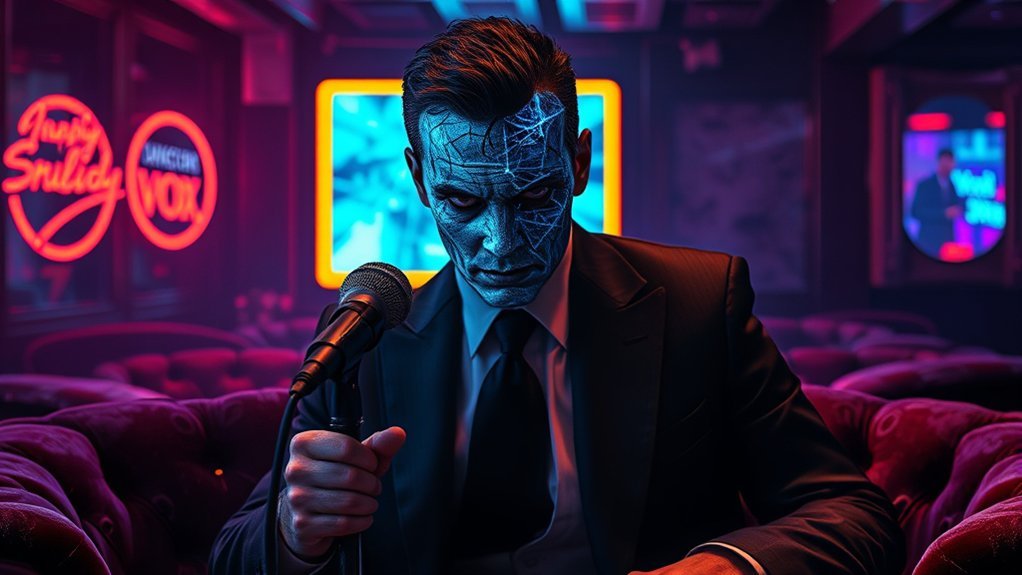
Death removed the legal and societal boundaries that constrained Whittman during his mortal life. In Hell, his predatory ambition morphed into total commercial warfare. Instead of merely broadcasting news, Vox engineered a massive corporate infrastructure to hold the souls of Pentagram City captive through screens, smartphones, and smart devices.
“He didn’t just adapt to the afterlife—he industrialized Hell’s attention span by turning every television screen into an eye for surveillance.”
How Vox Rose To Power In Hell
Vox accumulated power by securing demonic soul contracts through tech dependency. By offering citizens modern conveniences, consumer electronics, and streaming media, he acquired thousands of souls who voluntarily tied their everyday lives to his digital grid. This immense soul leverage catapulted him into the ranks of the ruling Overlords.
Vox And Alastor’s Rivalry After Death
The rivalry between Vox and Alastor the “Radio Demon” stands as one of Hell’s most iconic power struggles, representing the technological war between modern digital video and old-school analog radio.
Post-Death Feud
When Vox initially rose to prominence, he attempted to form an alliance with Alastor, recognizing the Radio Demon’s sheer magical brutality. However, Alastor flatly rejected the partnership, laughing off Vox’s technology and refusing to view him as an equal. That humiliation sparked a bitter grudge that has lasted decades.
Alastor’s Rejection
During the musical sequence “Stayed Gone” in Hazbin Hotel Season 1, Episode 2, Alastor returns after a seven-year absence, immediately hijacking Vox’s live news broadcast. Alastor effortlessly mocks Vox’s reliance on consumer gadgets and corporate trends, provoking Vox into an uncontrolled emotional fury that triggers a city-wide electrical blackout across Pentagram City.
Power And Revenge
Vox relies on surveillance networks, digital hypno-broadcasts, and hired operatives (such as Sir Pentious) to monitor Alastor and Charlie Morningstar’s Hazbin Hotel. Alastor, by contrast, relies on raw, ancient eldritch power and psychological warfare, creating a permanent deadlock between new-age media and old-world horror.
How Vox Built VoxTek In Hell
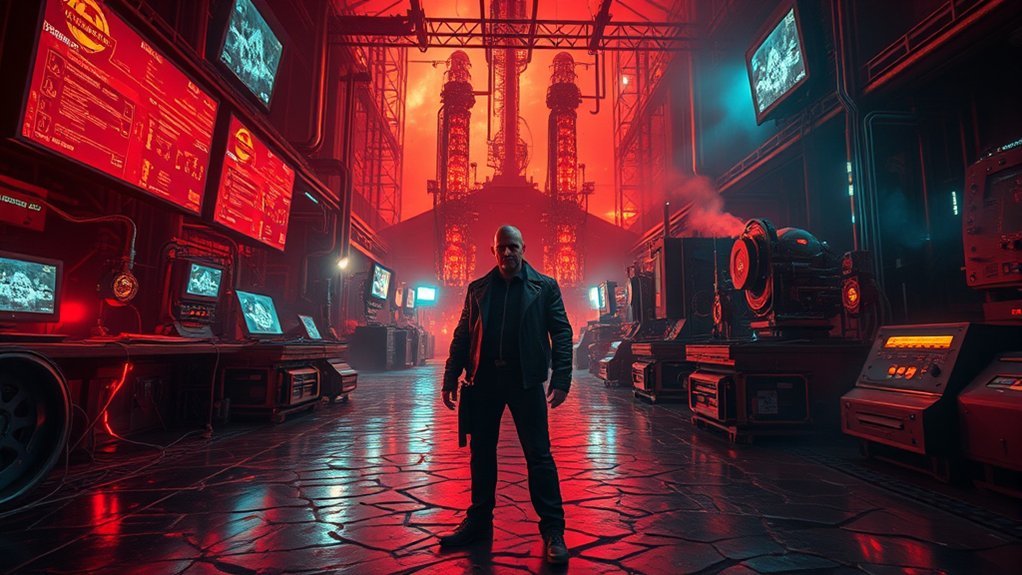
Through VoxTek Enterprises, Vox monopolized the manufacture of smart home devices, televisions, mobile phones, security systems, and entertainment programming across Pentagram City. Every product comes equipped with hypnotic frequencies and surveillance protocols, giving Vox real-time tracking data on citizens and rival Overlords alike.
Vox’s Role In The Vees
Vox serves as the technological mastermind, financial strategist, and de facto leader of The Vees, an Overlord alliance comprising:
- Vox: Media distribution, tech manufacturing, surveillance, and broadcast networks.
- Valentino: Adult entertainment production, studio operations, and physical coercion.
- Velvette: Social media influence, trend forecasting, and fashion design.
Together, the trio commands the cultural and commercial landscape of the Pride Ring, utilizing mutual leverage to counter traditional Overlords like Carmilla Carmine, Zestial, and Alastor.
How Vox’s Death Shaped His Ambition
The sudden nature of Vox’s death instilled a deep, underlying terror of obsolescence and irrelevance. His technological upgrades and frantic need to dominate television ratings stem from a desperate drive to remain permanent. Because a failing screen killed his mortal body, he is consumed by the need to control every screen in existence.
Frequently Asked Questions
Did Vox have a crush on Alastor?
In canonical show material, their dynamic is primarily an intense rivalry rooted in wounded pride, professional jealousy, and rejected partnership. While fandom frequently interprets their history romantically, series creator Vivienne Medrano has characterized Vox’s fixation as deep narcissistic injury following Alastor’s refusal to collaborate or respect his media empire.
What is Vox trying to do in Hazbin Hotel?
Vox aims to expand VoxTek’s corporate monopoly across all of Pentagram City, eliminate competing Overlords, and humiliate Alastor. Furthermore, the Vees seek to undermine Charlie Morningstar’s Hazbin Hotel to prevent soul redemption from disrupting their customer base and soul contract economy.
Who was Vox before he died?
Before descending to Hell, Vox was a mid-20th-century television personality and broadcaster (identified in fan lore as Vincent Whittman) who eliminated colleagues to seize control of a broadcast studio before dying in a fatal television electrocution accident during the 1950s.
Conclusion
Vox’s journey from a ruthless mortal broadcaster to Hell’s dominant media Overlord highlights how death in the Hazbin Hotel universe magnifies a sinner’s core obsession. The fatal 1950s television accident that ended Vincent Whittman’s human life did not extinguish his hunger for control; it weaponized it. Through VoxTek, his alliance with the Vees, and his relentless technological feud with Alastor, Vox continues to broadcast his influence across the Pride Ring, proving that in Hell, attention is the ultimate currency.
Sources
- Amazon Prime Video — Hazbin Hotel Official Series — Canon episode lore, season 1 broadcast details, and character debuts.
- Hazbin Hotel Wiki — Vox Profile & Overlord Lore — Verified character history, demonic physiology, and creator stream archives.
- IMDb — Hazbin Hotel Series Production Credits — Cast, production details, and Vivienne Medrano studio notes.
