
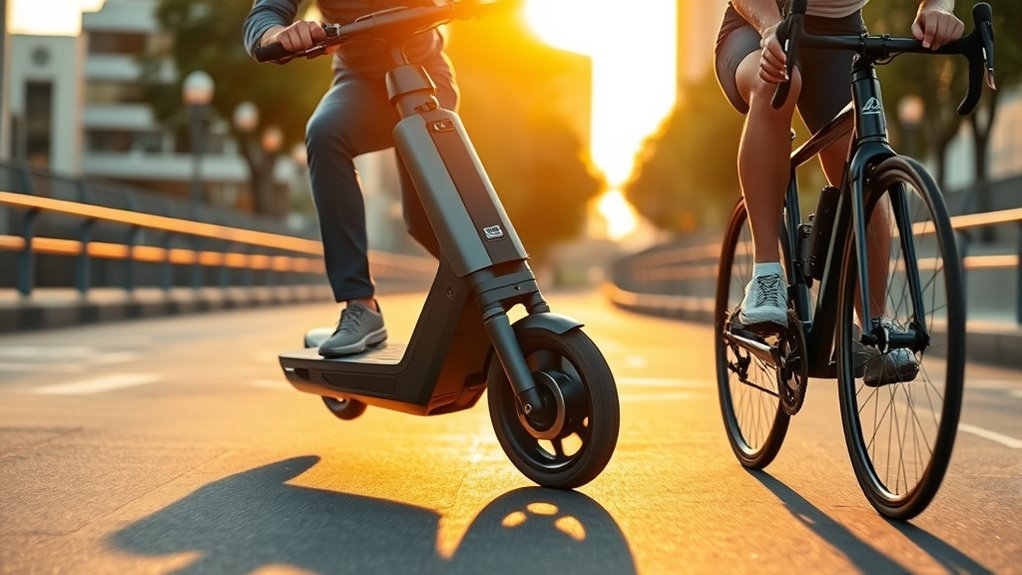
Last Updated on September 10, 2026 by Daniel Globe
You’ll usually get faster acceleration from an electric scooter, especially for short urban trips where quick throttle response matters. A bicycle can match or beat a scooter over longer distances because your legs keep producing power without battery limits. The faster choice depends on your route, terrain, fitness, and how you plan to ride.
Quick Answer
An electric scooter is usually faster for quick starts and short city trips because its motor delivers instant acceleration. A bicycle can be faster over longer rides, hills, and rough roads when a skilled rider maintains strong speed. Your fastest option depends on distance, terrain, and riding conditions.
Key Takeaways
- Electric scooters usually accelerate faster from a stop.
- Bicycles often perform better on hills and rough terrain.
- Scooter speed depends on battery, motor power, and local limits.
- Bike speed depends heavily on rider fitness and effort.
Disclosure: As an Amazon Associate I earn from qualifying purchases. Some links on this page are affiliate links, at no extra cost to you.
How Fast Are Electric Scooters and Bikes?
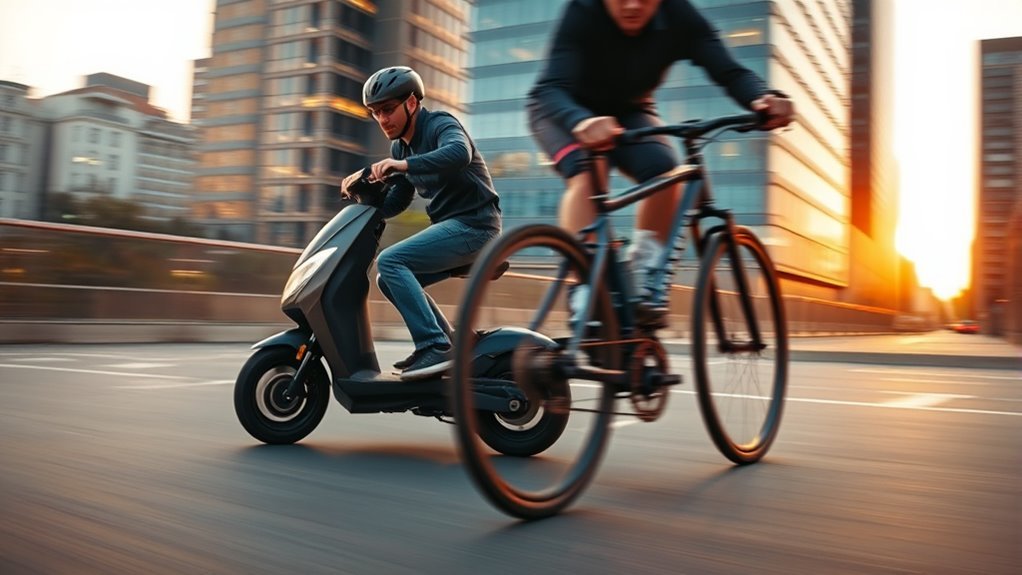
Electric scooters and bicycles have different speed advantages. Most commuter electric scooters typically reach around 15 to 25 mph, while faster performance models may go beyond that range. Bicycle speeds vary more because they depend on rider effort, bike type, wind, and terrain.
A casual cyclist may ride around 12 to 15 mph, while experienced riders on suitable bikes can maintain higher speeds. Unlike scooters, bicycles do not slow down because of battery limits, which makes them strong options for longer rides.
At a Glance
| Category | Electric Scooter |
| Typical Speed | About 15–25 mph for many commuter models |
| Acceleration | Usually faster from a stop |
| Long Distance | Limited by battery range |
Which Accelerates Faster In Traffic?
In stop-and-go traffic, electric scooters usually have the advantage because the motor provides immediate power when you press the throttle. You can move away from traffic lights quickly without needing several pedal strokes to build momentum.
Bicycles can accelerate quickly when ridden by experienced cyclists, but they require physical effort. For short urban trips with frequent stops, a scooter often feels faster because less energy is needed to reach cruising speed.
Pro Tip: A faster vehicle is not always faster in real life. Traffic lights, parking, road quality, and route choices often decide your total travel time.
How Terrain Affects Scooter And Bike Speed
Terrain can completely change the speed comparison. Electric scooters perform best on smooth, flat pavement where their motors can maintain steady power. Rough roads, steep hills, and uneven surfaces can reduce speed and comfort.
Bicycles usually handle changing terrain better because larger wheels and gears help riders maintain control. A strong cyclist may continue climbing or riding rough paths where a scooter loses efficiency.
Warning: Always follow local speed limits and wear appropriate protective equipment when riding an electric scooter or bicycle.
What Range And Fatigue Change On Longer Rides?
Long-distance riding creates a bigger difference between scooters and bicycles. Many electric scooters travel roughly 15 to 40 miles per charge depending on battery size, rider weight, speed, and terrain.
Bicycles can travel much farther if the rider has the endurance, but physical fatigue becomes the limiting factor. A scooter reduces effort but depends on charging availability.
| Option | Long-ride effect |
|---|---|
| Electric scooter | Less physical effort and steady powered speed |
| Bicycle | Greater endurance potential but requires more effort |
| Scooter on hills | Battery drains faster |
| Bike on rough roads | Maintains control better |
Which Is Faster For Your Daily Ride?
Your fastest daily option depends on your route. For short city commutes with frequent stops, an electric scooter often wins because it accelerates quickly and requires less effort.
For longer commutes, fitness-focused rides, or routes with hills and uneven surfaces, a bicycle may be the better choice. Bikes provide more flexibility because they do not depend on battery charge.
Frequently Asked Questions
What’s faster, a bike or an e-scooter?
An electric scooter is usually faster for quick acceleration and short urban trips. A bicycle can be faster over longer distances when a rider maintains strong speed.
Can you go on the highway with an electric scooter?
Generally, no. Electric scooters are usually not designed or legally allowed for highway travel because they cannot safely match vehicle traffic speeds.
What age should a kid get an electric scooter?
Age recommendations vary by scooter model and child maturity. Parents should check manufacturer guidance, supervise younger riders, and prioritize safety equipment.
Conclusion
So, which is faster for you: an electric scooter or a bicycle? An e-scooter usually wins in quick bursts and stop-and-go traffic, while a bicycle can keep pace longer and handle more varied terrain. Your route, distance, energy level, and local rules matter more than top speed alone.
Sources
- National Highway Traffic Safety Administration — bicycle safety guidance.
- U.S. Consumer Product Safety Commission — consumer safety information for powered products.
