
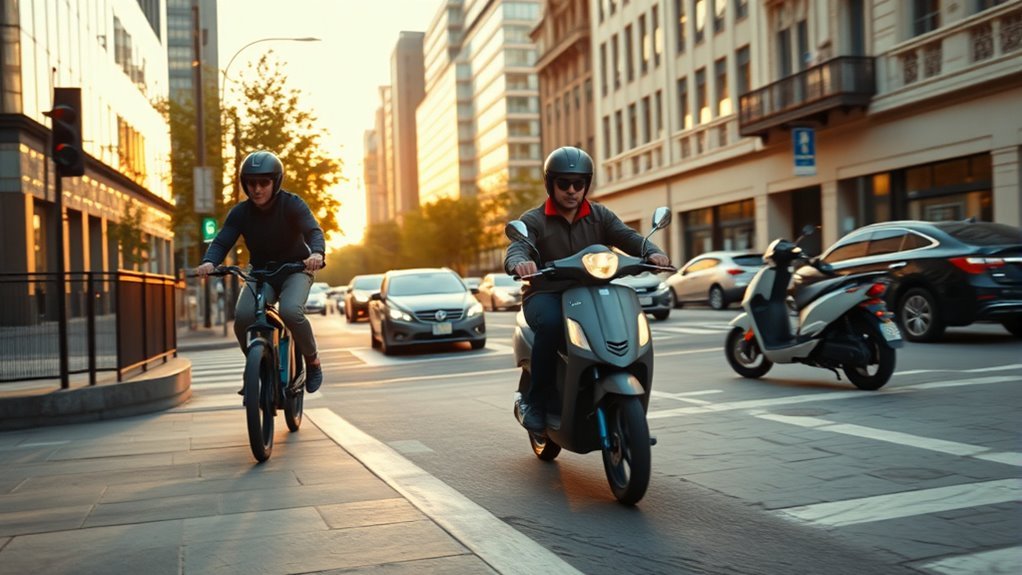
Last Updated on September 10, 2026 by Daniel Globe
You are usually more stable and better protected on an e-bike than on an electric scooter, especially when riding on rough roads, uneven pavement, or routes with traffic. Larger wheels, a seated position, and bicycle-style handling can make e-bikes easier to control. However, the safest choice depends on your speed, riding skills, route, equipment, and how responsibly you ride.
Quick Answer
An e-bike is often safer than a scooter because it usually offers larger wheels, better stability, stronger braking, and improved visibility. However, an experienced scooter rider with proper safety gear may be safer than an inexperienced e-bike rider. Your route and riding habits matter most.
Key Takeaways
- E-bikes usually provide more stability because of larger wheels and seated riding positions.
- Scooters can be harder to control over potholes, cracks, and uneven surfaces.
- Helmet use, lights, braking ability, and rider experience strongly affect safety.
- Neither vehicle is automatically safe without responsible riding habits.
Disclosure: As an Amazon Associate I earn from qualifying purchases. Some links on this page are affiliate links, at no extra cost to you.
Is an E-Bike Safer Than a Scooter?
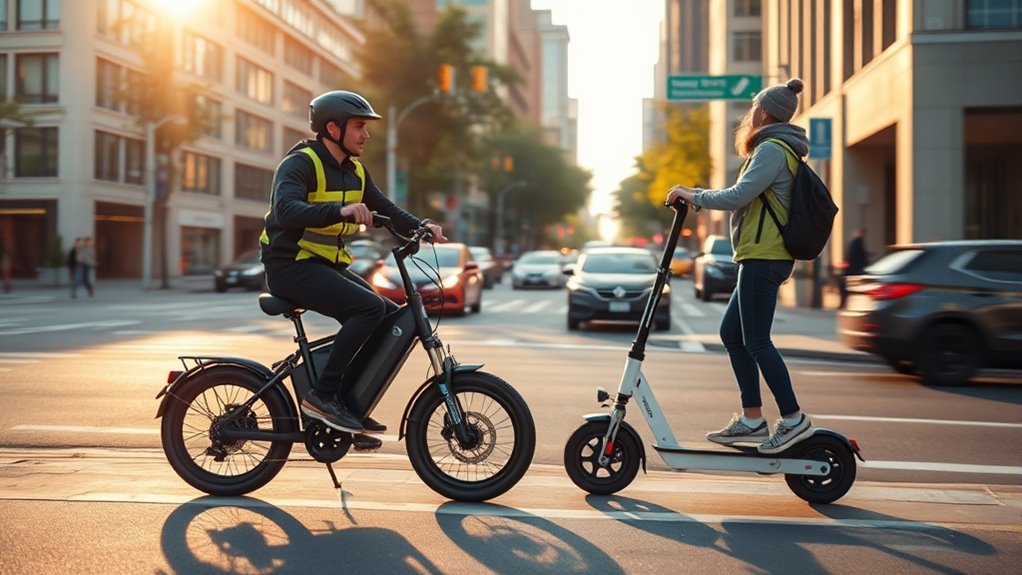
Yes, an e-bike is often the safer option when you compare overall handling and stability. The larger frame, bigger tires, and bicycle-style design can help you maintain balance when dealing with potholes, road debris, and sudden changes in terrain.
Injury totals also show that electric micromobility safety is an important issue. A 2022 analysis estimated 23,493 e-bike injuries and 56,847 e-scooter injuries in the United States, but these numbers represent total injuries rather than the exact risk for every ride. Usage levels, rider behavior, and riding environments all affect those numbers. Research on micromobility injuries provides useful context.
Warning: A heavier or faster vehicle is not automatically safer. Speed, distractions, poor visibility, and missing protective gear can increase injury risk on both e-bikes and scooters.
What Makes E-Bikes More Stable?
E-bikes usually feel more stable because they use a bicycle-style frame with larger wheels and tires. This design gives you a longer wheelbase, more predictable steering, and better ability to absorb bumps.
| Feature | Safety Benefit |
|---|---|
| Larger wheels | Roll over cracks and bumps more smoothly |
| Seated position | Improves balance and weight control |
| Bicycle frame | Provides more predictable handling |
| Stronger brakes | Can improve stopping control |
This does not mean every e-bike is safer. Poor maintenance, excessive speed, or an inexperienced rider can still create dangerous situations.
Why Scooter Riders Face Higher Injury Risk
Scooters can be convenient, lightweight, and easy to store, but their smaller wheels can make rough surfaces more challenging. A pothole, curb edge, or piece of debris can affect a scooter more quickly because there is less wheel size to absorb the impact.
Many scooter-related injuries happen because riders lose balance, fall forward, or collide with obstacles. Studies have found that e-scooter injuries are increasing, making protective equipment and responsible riding important. The U.S. Consumer Product Safety Commission tracks increasing injuries involving micromobility products.
E-Bike vs Scooter: Helmets, Lights, and Brakes
Safety is not only about the vehicle design. Your equipment and riding habits can change your risk significantly.
- Helmets: A properly fitted helmet helps reduce the risk of serious head injuries. The CDC recommends helmet use as part of bicycle safety. CDC bicycle safety guidance.
- Brakes: Quality e-bikes often use bicycle-style braking systems, while budget scooters may use simpler braking setups.
- Lights: Higher-mounted lights and reflectors can help other road users notice you sooner.
- Maintenance: Proper tire pressure, working brakes, and charged batteries improve safety on both vehicles.
The safest micromobility vehicle is the one you can control confidently while following safe riding practices.
How to Choose the Safer Ride
At a Glance
| Best for | E-bikes for stability, scooters for portability |
| Road type | Rough roads usually favor e-bikes |
| Safety gear | Helmet, lights, and visible clothing |
| Main factor | Your skill and riding conditions |
If you ride over rough pavement, longer distances, or busy streets, an e-bike may give you a wider safety margin. If you need a lightweight vehicle for short trips on smooth paths, a scooter may still be practical.
Pro Tip: Before choosing a vehicle, test it on the exact type of roads you use most. A smooth bike path and a cracked city street require very different handling skills.
Frequently Asked Questions
What is safer, an e-bike or an e-scooter?
An e-bike is often safer for stability because it has larger wheels, a bicycle-style frame, and a seated riding position. However, safety still depends on speed, traffic, maintenance, and rider behavior.
Do police care about e-bike safety rules?
Yes. Riders should follow local traffic laws, speed limits, and helmet requirements where applicable.
What are the disadvantages of an e-bike?
E-bikes are usually heavier and more expensive than scooters. They may require more storage space, battery care, and maintenance.
Why are doctors concerned about children riding e-bikes?
Concerns focus on speed, traffic exposure, limited experience, and inconsistent helmet use. Children should follow age recommendations and ride with appropriate supervision and safety equipment.
Conclusion
An e-bike is usually the safer choice when you value stability, control, and confidence on mixed surfaces. Its larger wheels, seated position, and bicycle-style design can make everyday riding easier to manage. Still, safety depends on the rider more than the machine alone. Wear a helmet, use lights, maintain your vehicle, and choose the option that matches your route and experience.
Sources
- JAMA Network Open — micromobility injury trends from 2017–2022.
- U.S. Consumer Product Safety Commission — e-scooter and e-bike injury data.
- CDC Bicycle Safety — helmet and injury prevention guidance.
