
Last Updated on September 10, 2026 by Daniel Globe
You can usually ride an electric scooter in a bike lane if local ordinances allow it, because most states treat scooters the same as bicycles under the law. You must follow the traffic rules that apply to cyclists, keep control of the scooter, and yield when required. In Boulder, bike lane access depends on which kind of device you’re riding, and you should obey posted limits and signals at all times. Rules differ by city and state, so the details below walk through exactly what changes and where.
Quick Answer
Yes, in most places you can ride a personal electric scooter in a bike lane, since scooters are legally treated like bicycles in states such as Colorado and Florida. Exact rules — speed limits, sidewalk access, minimum age — vary by city and state, so always confirm local ordinances before riding, especially since laws change often.
Key Takeaways
- Most states give scooter riders the same rights and duties as cyclists, so bike lanes are usually fair game unless a local ordinance says otherwise.
- In Boulder, personal e-scooters are allowed in bike lanes, streets, multi-use paths, and most sidewalks — but larger, registered “low-power scooters” are not allowed in bike lanes at all.
- Speed limits stack: expect roughly 8 mph in crosswalks, 15 mph on multi-use paths, and posted road limits elsewhere.
- Pennsylvania is a notable exception — it currently has no dedicated e-scooter statute, and personal scooters generally aren’t legal for public road or sidewalk use there yet.
- Always yield to pedestrians, signal your turns, and check current city rules before you ride, since ordinances and shared-scooter operators change frequently.
Disclosure: As an Amazon Associate I earn from qualifying purchases. Some links on this page are affiliate links, at no extra cost to you.
Can You Ride an Electric Scooter in Bike Lanes?
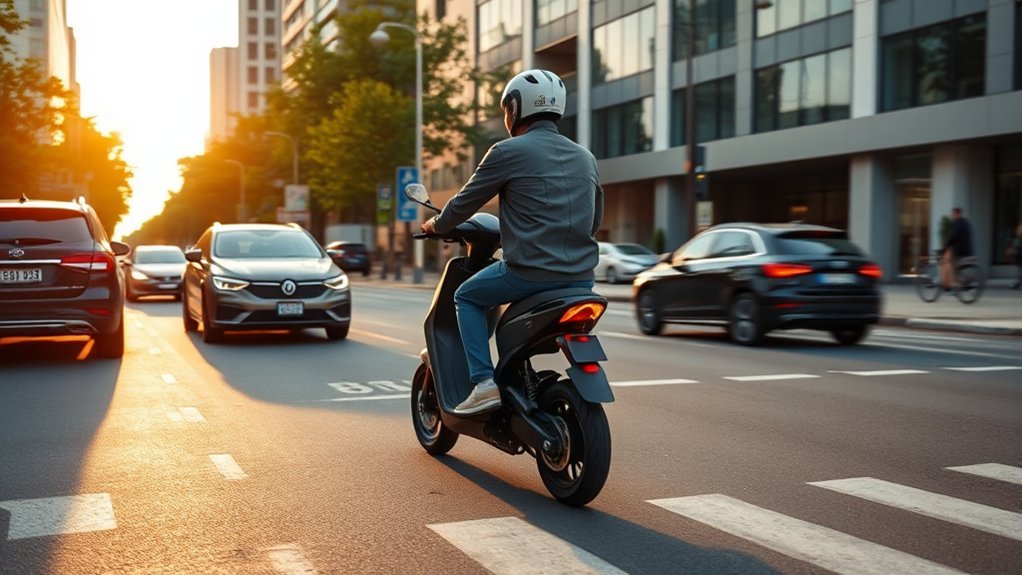
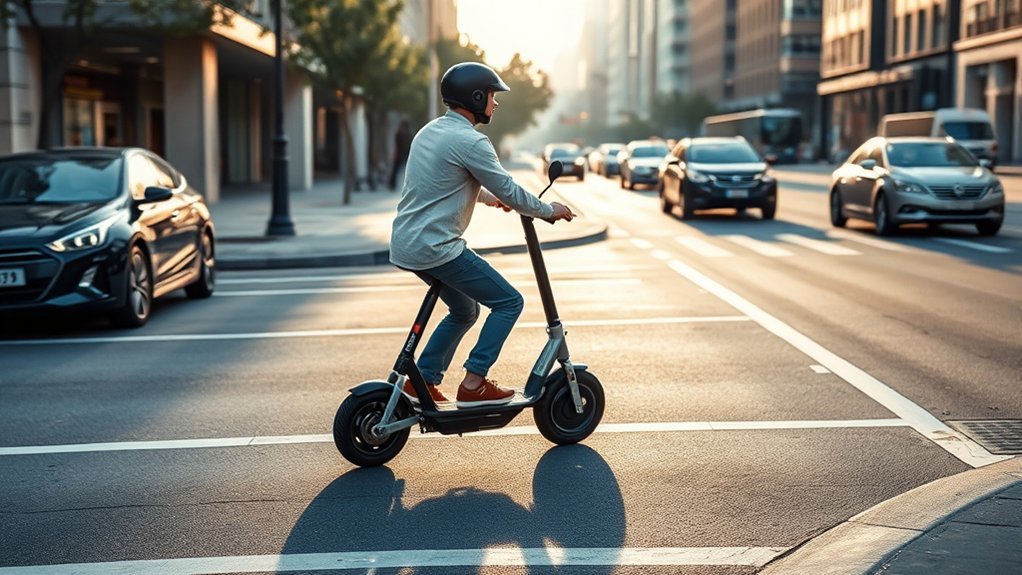
Yes—generally, you can ride an electric scooter in bike lanes, provided local ordinances allow it and you comply with applicable safety rules. Most states, including Colorado and Florida, give scooter riders the same rights and duties as bicyclists on the road, which is why bike lanes are typically open to them. That means you should obey signals, yield when required, and maintain control at all times. For scooter safety, ride predictably, keep a steady line, and avoid blocking cyclists or pedestrians. Signal before turning or changing position so others can react in time, and check the applicable city code before you ride, because local rules can add conditions state law doesn’t cover — from speed caps to outright bans in specific zones.
Note: “Electric scooter” isn’t always one legal category. Some cities distinguish a lightweight personal e-scooter (the kind you stand on) from a larger, throttle-heavy “low-power scooter” that may need registration and insurance — and the two often have different bike-lane rights. Check which category your device falls into before assuming the rules below apply.
Where Electric Scooters Are Allowed in Boulder
In Boulder, which rules apply depends on which device you’re riding — the city splits e-micromobility into several categories, and they don’t all get the same access. According to the City of Boulder’s official e-micromobility guide, a personal e-scooter falls under “Lightweight Electric Vehicle,” which is permitted on streets, bike lanes, multi-use paths, and sidewalks adjacent to non-residential streets (as long as no bike lane is present and the sidewalk isn’t next to a 20-mph-or-under street). By contrast, a registered “low-power scooter” is allowed on streets but explicitly barred from bike lanes. Keep your scooter’s front and rear lights working for night travel, and observe posted speed limits. For parking, place your ride where it won’t block access or movement, and never leave it in a dismount zone.
| Area | Allowed for personal e-scooters? | Key limit |
|---|---|---|
| Sidewalks by non-residential streets | Yes, if no bike lane and street speed is above 20 mph | Not in dismount zones |
| Multi-use paths | Yes | 15 mph |
| Streets & bike lanes | Yes | Posted street limit (20 mph on residential streets) |
| Crosswalks | Yes | 8 mph |
| OSMP trails | No | Prohibited |
These distinctions matter because riding a low-power scooter in a bike lane — even though it feels like the “obvious” place for it — can get you cited in Boulder specifically.
Bike Lane Rules for Scooter Riders
Although electric scooters are often allowed in bike lanes where local rules permit, confirm the local ordinance before you ride — this is the single most city-specific part of scooter law. You must obey the same traffic laws that bind cyclists, including stopping at signals and hand-signaling turns. For scooter safety, keep your speed at or below the posted limit for that zone. Practice disciplined lane etiquette: stay right, pass only when clear, and avoid unpredictable movement. Do not leave your scooter in the bike lane; park it in a designated area so you don’t block lawful travel. When you move between bike lanes and other paths, yield to pedestrians, maintain distance, and use an audible warning when passing.
- Verify city rules before departure.
- Signal every turn and stop.
- Keep speed within posted limits for that specific zone.
- Park only in authorized zones, never in a dismount zone.
- Yield courteously and pass safely, with an audible signal.
When You Can Ride on Sidewalks
If a bike lane isn’t available, many cities allow you to ride an electric scooter on sidewalks adjacent to non-residential streets — but only where local ordinances permit, and often only below a specific street speed limit. Verify the local rule first, since sidewalk access is one of the most inconsistent parts of scooter law from city to city. On permitted sidewalks, keep speed near walking-to-jogging pace and stay alert for pedestrians, driveways, and doorways.
| Rule | What you do | Result |
|---|---|---|
| Local ordinance | Check before riding | Avoid citation |
| Sidewalk zone | Confirm permission and street speed | Lawful access |
| Speed limit | Stay near 8 mph | Better pedestrian safety |
| Dismount zone | Get off your scooter | No violation |
| Passing | Slow down, signal audibly | Respect shared space |
Dismount in designated Dismount Zones, and don’t ride where the device is barred outright. In practice, checking the local map and posted restrictions before you ride is what keeps sidewalk riding both legal and safe — not guesswork.
How to Yield to Pedestrians
When you ride an electric scooter, you must yield to pedestrians at all times, especially in crosswalks, on sidewalks, and anywhere they have the right of way. Treat every crossing as controlled space, not your path. Use clear yielding technique: slow early, stop if needed, and let people pass before you proceed.
- Give walkers priority in crosswalks and on pathways.
- Use a bell or brief verbal warning before overtaking from behind.
- Maintain a safe distance while passing.
- Reduce speed to avoid startling or crowding anyone.
- Know local traffic laws — failing to yield can trigger real fines, not just warnings.
When in doubt, yield. It’s the simplest rule that keeps shared public space safe for everyone using it.
Age, Helmet, and Registration Rules to Know Before You Ride
Bike-lane access is only part of the picture — most citations for scooter riders come from age, helmet, or registration issues rather than lane placement. Rules here vary more by state than bike-lane rules do:
- Colorado (Boulder): personal e-scooters (“lightweight electric vehicles”) don’t require registration, insurance, or a license; registered low-power scooters do.
- Florida: under Florida Statute § 316.2128, riders don’t need a driver’s license, registration, or insurance for a motorized scooter — the tradeoff is that the statutory speed cap for the scooter itself is 20 mph, separate from whatever the road’s posted limit is.
- Pennsylvania: there’s currently no dedicated e-scooter statute in Pennsylvania’s vehicle code, and no standing state minimum age for scooter use, largely because personal e-scooters generally aren’t legal for use on public roads or sidewalks under current law. A bill nicknamed “Abby’s Law” would create a licensed category with a 16+ age minimum, but as of this writing it has not passed.
Warning: Scooter ordinances change often and shared-scooter operators can switch mid-year (Denver moved from Lime and Bird to Veo as its exclusive operator in 2026). Don’t rely on an app’s old defaults or a friend’s memory of “the rules” — check your city’s current page before you ride somewhere unfamiliar.
Boulder Scooter Rules That Can Change
In Boulder, you can ride a personal electric scooter in a bike lane as a “lightweight electric vehicle” under the city’s current framework — but Boulder can revise lane access, speed limits, and enforcement standards with little notice, and it has updated this guidance as recently as late 2025. Posted operating limits today are 15 mph on multi-use paths, 8 mph in crosswalks, and 20 mph on residential streets; there is no separate, higher limit specific to bike lanes. You must yield to pedestrians and slower-moving traffic, and give an audible signal before passing. Personal e-scooters aren’t permitted on Open Space and Mountain Parks trails regardless of class. To stay compliant, check the current ordinance before you ride, since compliance protects your right to travel safely and without avoidable conflict on public ways.
Frequently Asked Questions
What happens if you get caught riding illegally on an electric scooter?
You could face a fine or citation under local traffic law if you’re caught violating scooter ordinances — typically treated as a noncriminal traffic infraction rather than a criminal offense. Follow posted riding rules, park properly, and wear a helmet if you’re under 18 or if your local law requires it for your age group.
Where can you not ride a shared scooter in Denver?
As of May 2026, Denver’s exclusive shared-scooter operator is Veo, which replaced Lime and Bird. Riding on Denver sidewalks is illegal citywide, with narrow exceptions near the very start or end of a trip; the city also requires sidewalk-detection technology on shared devices to enforce this. Scooters are also banned from specific areas such as the 16th Street Mall. Follow designated lanes and posted parking corrals to avoid a citation.
What are the rules for electric scooters in Florida?
Under Florida Statute § 316.2128, scooter riders have the same rights and duties as bicyclists, including obeying signals and yielding to pedestrians. The scooter’s own statutory speed cap is 20 mph, separate from the posted road speed limit, which can be higher. No driver’s license, registration, or insurance is required, though local ordinances can add restrictions, particularly for riders under 16.
Do I need a license for a scooter in PA?
Pennsylvania currently has no dedicated statute for personal e-scooters, and no driver’s license is required where riding is otherwise permitted. In practice, most personal e-scooters don’t meet the equipment standards to be legally registered for public roads under current law, so their public-road and sidewalk use is limited. A proposed bill, “Abby’s Law,” would create a formal low-speed e-scooter category with a 16+ minimum age, but it has not yet passed — treat any “just be 16” claim as describing a proposal, not current law.
Is there a minimum age to ride an electric scooter in a bike lane?
It depends on the state and the device. Florida and Colorado don’t set a blanket statewide minimum age for personal e-scooters, though local ordinances can add one. Some states tie a minimum age to helmet requirements instead of riding rights outright. Always check both state and city rules, since the two can differ.
Conclusion
So, can you ride your electric scooter in a bike lane? Usually, yes—when state and local law say you may, you can zip along like a tiny, silent rocket. But don’t treat that lane like your personal racetrack, and don’t assume the rules from one city travel with you to the next. You must follow posted rules, yield properly, and watch for changes, because scooter laws — and even which company runs the shared scooters in your city — can shift with little warning. If you stay alert, check current ordinances, and ride with discipline, you’ll get where you’re going safely and legally.
Sources
- City of Boulder — E-micromobility: E-bikes, E-scooters and More — official device categories, sidewalk/bike-lane/path rules, and posted speed limits
- Colorado Revised Statutes § 42-4-1412 (FindLaw) — statewide rights and duties for bicycle, e-bike, and scooter riders
- Florida Statute § 316.2128 — official text on motorized scooter and micromobility device requirements
- Pennsylvania SB 1008, “Abby’s Law” (PA General Assembly) — proposed low-speed electric scooter category and age/helmet requirements, not yet enacted
- The Denver Gazette — Denver’s switch to Veo — current shared-scooter operator and sidewalk-riding rules in Denver

