
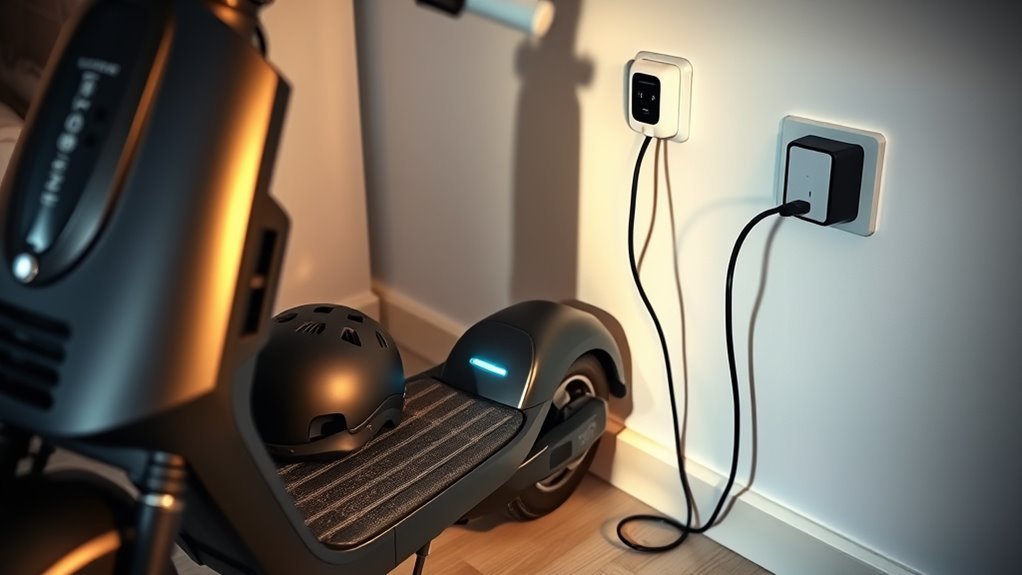
Last Updated on September 10, 2026 by Daniel Globe
You should charge your electric scooter after most rides if your daily commute significantly depletes the battery, but you do not need to plug it in after short, low-drain trips. Modern electric scooters use lithium-ion batteries that thrive on shallow discharge cycles and partial top-ups rather than complete drains. For daily commuting, keeping your battery level between 20% and 80% minimizes chemical stress, prevents voltage sag, and significantly extends the lifespan of your battery cells.
Quick Answer
Yes, charging your electric scooter after every ride is safe and beneficial if your battery drops below 50% to 60%. Lithium-ion packs do not suffer from “battery memory” and prefer frequent partial recharges over deep discharges. For maximum lifespan, keep the charge between 20% and 80%, let the scooter cool down for 15 to 30 minutes before plugging it in, and unplug it once it finishes charging.
Key Takeaways
- Partial charges are optimal: Lithium-ion cells experience the lowest mechanical and chemical stress between 20% and 80% State of Charge (SoC).
- Avoid 0% depletion: Deep discharges accelerate capacity loss and can trigger permanent low-voltage protection lockouts.
- The 30-minute cooldown rule: Never plug in a charger immediately after riding; warm battery cells degrade rapidly when charged under thermal load.
- Safe connection sequence: Always plug the charger into the AC wall outlet first, then connect the DC barrel plug to the scooter to eliminate voltage arcing.
- Periodic balancing: Charge to 100% every 4 to 8 weeks to allow the Battery Management System (BMS) to balance individual cell voltages.
At a Glance
| Time Required | 3 to 8 hours (depending on battery capacity & charger amperage) |
| Difficulty | Beginner / Basic Routine Maintenance |
| Tools Needed | OEM Manufacturer Charger, AC Wall Outlet, Outlet Timer (Optional) |
| Cost | $0.05 – $0.20 per full charge (residential electricity rates) |
Disclosure: As an Amazon Associate I earn from qualifying purchases. Some links on this page are affiliate links, at no extra cost to you.
Should You Charge Your Electric Scooter After Every Ride?
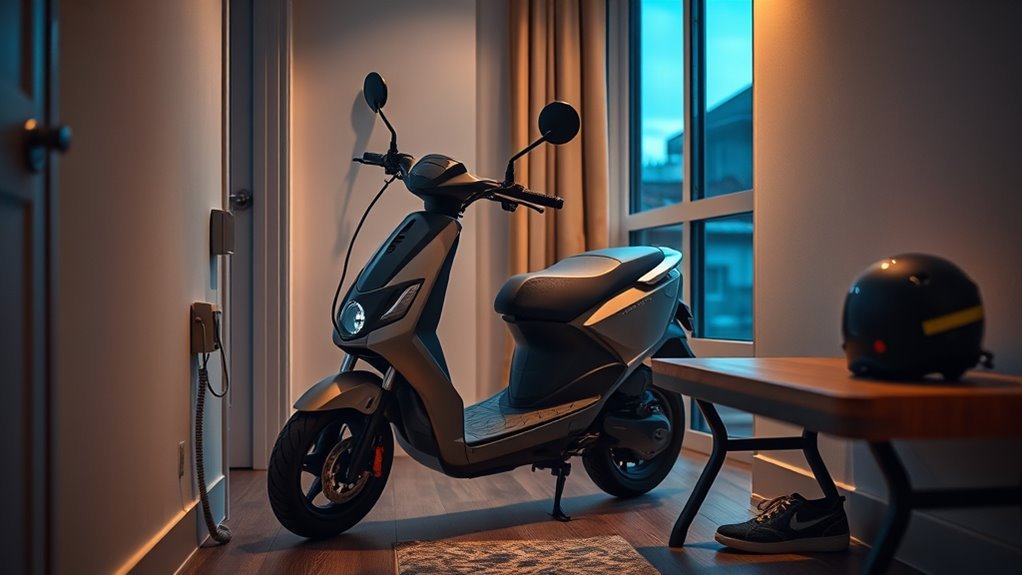
Charging your electric scooter after every ride is generally recommended if your typical commute uses more than 30% to 40% of the total battery capacity. Unlike older nickel-cadmium batteries, modern electric scooters use lithium-ion (Li-ion) or lithium iron phosphate (LiFePO4) chemistry. These cells have zero memory effect, meaning you do not need to run them down to empty before plugging them back in.
In fact, charging frequently to prevent deep discharges is one of the most effective ways to preserve long-term battery health. A standard scooter battery is rated for 300 to 500 complete discharge cycles (0% to 100%). However, if you perform partial discharge cycles (discharging only 50% before recharging), your battery can deliver 1,200 to 1,500 partial cycles before dropping to 80% original capacity.
If you only took a short 5-minute trip down the street and used 5% of your charge, you do not need to plug the scooter in immediately. Letting the pack rest between 40% and 70% is completely safe and avoids unnecessary charging cycles.
When to Charge Your Electric Scooter: The 20% to 80% Rule
The optimal operating window for lithium-ion scooter batteries is between 20% and 80% State of Charge (SoC). When cell voltage sits at the extreme ends of the spectrum—either fully saturated at 4.2V per cell or depleted below 3.0V per cell—the internal electrode structure undergoes elevated physical and chemical stress.
According to electrochemical testing from Battery University, operating a lithium-ion battery at a lower peak voltage and avoiding full discharges can more than double its overall cycle life.
- At 80% to 100%: The battery experiences high mechanical stress due to maximum cell voltage and internal resistance, generating more heat during the final saturation phase.
- At 20% to 80%: The chemical transfer of lithium ions between the anode and cathode occurs with minimal resistance, producing little excess heat and negligible cell wear.
- Below 20%: Voltage drops significantly under motor load (known as voltage sag), forcing the battery pack to draw higher current to sustain speed, which accelerates internal degradation.
Why Overcharging and Heat Damage Scooter Batteries
Modern electric scooters feature an integrated Battery Management System (BMS) that protects against catastrophic overcharging by terminating current when the cells reach peak voltage. However, leaving your scooter plugged in for days at a time still causes subtle, cumulative harm.
Heat Damage and Thermal Degradation
Heat is the primary enemy of lithium battery longevity. When a battery sits on a charger at 100% capacity, the charger continues to provide trickle voltage to maintain that peak state. This generates steady ambient heat. Sustained exposure to temperatures above 30°C (86°F) while fully charged accelerates the breakdown of the liquid electrolyte and thickens the Solid Electrolyte Interphase (SEI) layer on the anode, permanently diminishing total storage capacity.
Charger Disconnection and Parasitic Loads
Leaving the charger connected indefinitely keeps the BMS circuitry in an active monitoring state and exposes the power supply to household voltage spikes. Unplugging the charger once the indicator light turns green relieves static voltage stress on the battery pack and isolates your hardware from potential electrical surges.
Pro Tip: If you regularly charge overnight, plug your charger into an inexpensive mechanical outlet timer or smart plug set to turn off automatically after 4 to 5 hours. This prevents the pack from resting at full voltage and elevated temperatures all night.
Best Charging Habits for Electric Scooters
Adopting consistent charging habits prevents premature battery replacement, which can otherwise cost 30% to 50% of the entire scooter’s retail price. Follow this standardized procedure every time you recharge:
- Allow the battery to cool down: Wait 15 to 30 minutes after completing a ride before plugging in your scooter. Charging a warm battery accelerates chemical degradation.
- Connect the charger to the wall outlet first: Plug your power adapter into the AC mains wall socket before connecting the DC output plug to your scooter. This equalizes the capacitor voltage inside the power brick and prevents sparking at the scooter’s charging port.
- Charge in a moderate climate: Always charge in a dry, ventilated area at room temperature (between 15°C and 25°C / 59°F to 77°F).
- Monitor the indicator light: Red indicates active bulk charging; green indicates the battery has reached its top-off threshold.
- Disconnect promptly: Unplug the charger from the scooter port first, then remove the adapter from the wall outlet.
Warning: Never charge an electric scooter battery at or below freezing temperatures (0°C / 32°F). Charging cold lithium cells causes permanent lithium metal plating on the anode, which creates internal short circuits and presents a severe fire hazard.
Signs Your Scooter Needs a Charge
You do not have to wait until your scooter display flashes an empty battery icon to recharge. Watch for these mechanical and electrical indicators that show your pack has entered its low-voltage zone:
- Sluggish Hill Climbing: The motor struggles or bogs down on mild inclines that it normally climbs with ease.
- Severe Voltage Sag: The battery meter drops 2 or 3 bars during hard acceleration, then slowly climbs back up when you release the throttle.
- Dimming Headlights or Display: Lighting systems flicker or dim when engaging the motor due to unstable system voltage.
- Reduced Top Speed: The scooter’s electronic speed controller (ESC) enters a protective power-saving mode, limiting maximum velocity on flat ground.
Common Charging Mistakes to Avoid
Small maintenance errors can shorten an electric scooter battery’s lifespan from 4 years down to less than 18 months. Avoid these three common mistakes:
1. Riding Down to 0% Battery
Draining a lithium-ion battery until the scooter completely shuts down causes high internal resistance and can drop individual cell voltages below the minimum safety threshold (typically 2.5V per cell). When this happens, standard chargers may fail to recognize the battery, requiring manual reactivation or cell replacement.
2. Using Incompatible Fast Chargers
Always use the manufacturer’s original equipment (OEM) charger or a certified replacement that matches the exact voltage and current specifications. High-amperage generic chargers push excess current into smaller battery packs, creating severe thermal stress and potentially bypassing BMS over-current protections.
3. Storing with an Empty or Full Battery
If you plan to store your electric scooter over the winter or leave it unused for more than a month, never leave it at 0% or 100%. Self-discharge will draw an empty battery into a dead state, while a full battery undergoes accelerated oxidation. Store the scooter at 50% to 60% charge in a cool, dry room.
How to Maximize Electric Scooter Battery Life
To maximize total mileage and retain strong hill-climbing power across multiple seasons, combine disciplined charging routines with proactive storage habits:
Note on BMS Cell Balancing: While running between 20% and 80% is optimal for day-to-day rides, the passive balancing circuits in most scooter BMS units only activate when the pack reaches 100%. To keep all internal battery cells at equal voltage, charge your scooter to a full 100% once every 4 to 8 weeks and leave it on the charger for an extra hour after the light turns green.
- Avoid extreme temperatures: Never leave your scooter in the trunk of a hot car during summer or in an uninsulated shed during freezing winter months.
- Check tire pressure regularly: Low tire pressure increases rolling resistance, requiring the motor to draw higher continuous current and draining the battery faster.
- Store at 50% and top up monthly: If stored long-term, inspect the charge level every 30 days and top it back up to 50% to counteract natural self-discharge.
Frequently Asked Questions
How often should I charge an electric scooter?
You should charge your scooter whenever the remaining battery level drops below 40% to 50%, or after any moderate-to-long commute. Routine partial charging is significantly healthier for lithium-ion cells than waiting for the battery to run out completely.
How long do 2 bars last on an electric scooter?
Two battery bars typically represent roughly 20% to 40% of remaining capacity. On an entry-level commuter scooter (e.g., 250W–350W motor), this delivers approximately 3 to 7 miles of range, whereas high-capacity dual-motor models may achieve 10 to 15 miles. Range on low bars drops rapidly when riding uphill or in cold weather due to voltage sag.
What happens if you don’t move your electric scooter for 3 months?
If an electric scooter sits unused for 3 months without maintenance, its battery naturally self-discharges at a rate of 2% to 5% per month. If stored near empty, it can drop into a destructive “deep sleep” state where the BMS shuts down permanently. To prevent this, store the scooter at 50% to 60% charge in a temperature-controlled environment and check it monthly.
Should I charge my e-scooter to 100%?
Yes, you can charge to 100% whenever you need maximum range for a long commute. However, avoid keeping it parked at 100% for days at a time. For daily short commutes, charging to around 80% reduces cell wear. Make sure to complete a full 100% charge every 4 to 8 weeks so the BMS can balance cell voltages across the pack.
Can I leave my electric scooter charging overnight?
While modern BMS units stop charging once the battery reaches full voltage, leaving the scooter plugged in overnight exposes the pack to prolonged trickle heat and electrical surges. It is best practice to unplug the charger shortly after the status light turns green, or use an outlet timer to shut off power automatically.
Why does my scooter charger get hot during charging?
It is normal for power adapters to become warm (up to 40°C–50°C / 104°F–122°F) as they convert high-voltage AC mains electricity into low-voltage DC current. However, if the charger is too hot to hold comfortably, emits a plastic burning smell, or makes a buzzing sound, disconnect it immediately and replace it with an OEM unit.
Conclusion
You do not need to stress over plugging in your electric scooter after every single short ride, but establishing consistent charging habits will protect your battery from early failure. Treat your scooter battery with proactive care: let it cool down before charging, keep your daily state of charge mostly between 20% and 80%, unplug when complete, and perform a periodic 100% top-up to balance your cells. By avoiding deep discharges and high thermal stress, your scooter will deliver reliable acceleration, predictable range, and multi-year longevity.
Sources
- Battery University (Cadex Electronics) — BU-808: How to Prolong Lithium-based Batteries and Depth of Discharge Analysis.
- UL Solutions — UL 2272 Standard for Electrical Systems for Personal E-Mobility Devices.
- U.S. Consumer Product Safety Commission (CPSC) — Micromobility Device and Lithium-Ion Battery Safety Guidelines.
- National Fire Protection Association (NFPA) — E-Bike and E-Scooter Battery Charging and Safety Protocols.
