
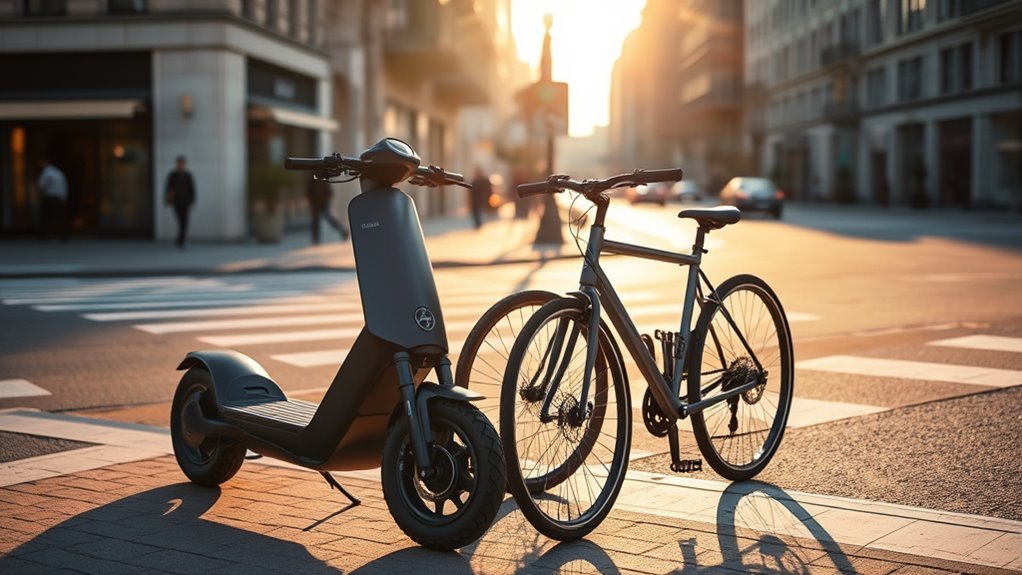
Last Updated on September 10, 2026 by Daniel Globe
If you want the cheaper, lighter option for short city trips, choose an electric scooter. It usually costs less upfront, folds easily, and is simple to store, but it’s slower, less comfortable, and better for shorter ranges. If you need more speed, better hill climbing, a seated ride, and longer distance, an e-bike is the stronger choice, though it costs more and weighs more. The details below can help you decide which fit suits you best.
Disclosure: As an Amazon Associate I earn from qualifying purchases. Some links on this page are affiliate links, at no extra cost to you.
What’s the Difference Between an Electric Scooter and Bike?
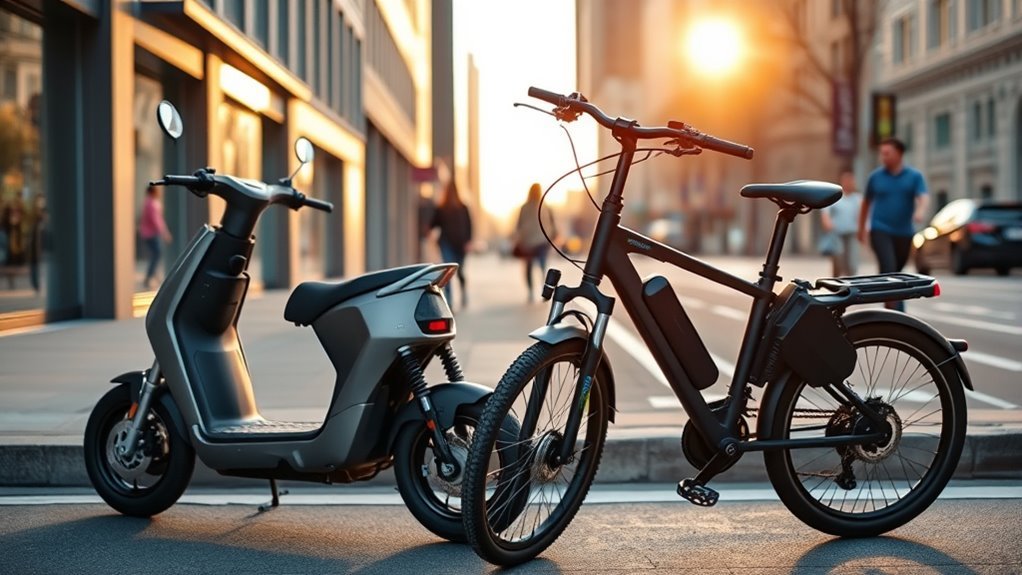
The main difference between an electric scooter and an electric bike is how they move and what they’re built for. You ride an e-bike with pedal assist, so you can keep momentum and reach 20-28 mph for longer trips. An electric scooter relies on standing balance and throttle control, usually topping out at 15-20 mph. That makes scooters easier to fold, carry, and store, while e-bikes usually feel heavier and less portable. You also get different range performance: e-bikes often cover 30-60 miles per charge, compared with 15-30 miles for scooters. If you want freedom across more distance, that matters. Maintenance differs too. Scooters need simpler brake checks and battery care, while e-bikes demand gear and drivetrain upkeep. When you compare safety features and battery types, you’re really choosing between compact convenience and a faster, farther-reaching ride.
Electric Scooter vs Bike Cost Breakdown
Cost is often the deciding factor when you compare an electric scooter vs bike. You’ll usually pay less upfront for a scooter: entry-level models start around $500, while reliable electric bikes typically begin near $1,000. Midrange scooters often sit between $500 and $2,000, but electric bikes can run from $1,200 to $10,000, depending on features and brand. At the high end, scooters can cost several thousand dollars, though cargo and lightweight electric bikes can start around $2,000 and climb quickly.
If you’re weighing cost effectiveness, scooters often win for urban riders who want freedom without a heavy financial burden. They usually need less maintenance, which can improve long term savings. Electric bikes may justify their higher price if you value added capability, but the cost gap is real. For budget-conscious mobility, scooters often offer the more economical path.
Electric Scooter vs Bike Speed and Range
When you compare speed, e-bikes usually give you 20-28 mph with pedal assist, while e-scooters typically top out around 15-20 mph. For range, e-bikes often cover 30-60 miles per charge, which is well above the 15-30 miles most scooters manage. These differences can shape your commute, especially if you need longer distance performance rather than short urban trips.
Speed Comparison
Electric bikes usually go faster than electric scooters, with pedal-assist models commonly reaching 20–28 mph compared with most scooters at 15–20 mph. You’ll notice sharper acceleration differences because e-bikes combine motor support with your pedaling, while scooters depend on motor power alone.
- Faster top speed
- Quicker takeoff
- Better urban suitability
- More stable handling
- Better for longer commutes
If you want efficient movement through traffic, an e-bike usually gives you more control and momentum. A scooter can still serve short trips well, but its lower speed can limit your pace on open routes. Choose based on how much freedom you want in motion, not just convenience.
Range Comparison
Range matters just as much as speed when you’re choosing between an electric scooter and an e-bike. You’ll usually get 30-60 miles from an e-bike, so it handles longer commutes and extended rides with less worry. An electric scooter typically gives you 15-30 miles per charge, which can work well for short urban trips but can cut your freedom on bigger routes. If you value charging efficiency, the scooter’s smaller battery can recharge faster after quick trips. Still, the e-bike’s higher range and 20-28 mph pedal-assist speed improve terrain suitability for varied journeys. For simple, near-home mobility, the scooter stays practical. For more distance, more pace, and more autonomy, the e-bike gives you the stronger range advantage.
Electric Scooter vs Bike Comfort Compared
When you compare comfort, an e-bike usually feels easier to ride because you sit down, and that seated position reduces strain over longer distances. You’ll also notice that bigger tires and suspension on many e-bikes handle bumps better than most scooters, which can make rough roads feel smoother. Scooters often mean standing the whole time, so fatigue can build faster, though some models with seats narrow that gap.
Seated Ride Comfort
For seated ride comfort, e-bikes usually have the clear advantage because you can sit, pedal, and rest as needed, while scooters mostly require you to stand, which can feel tiring on longer trips.
- You get a more relaxed posture.
- You can shift effort as needed.
- seating options on some scooters are limited.
- ergonomic benefits on e-bikes support longer rides.
- You’re less likely to fatigue on commutes.
If you value freedom on the road, an e-bike gives you a seated setup that better fits daily travel. Adjustable seats and handlebar heights help you tailor the fit, so you can ride with less strain. Some scooters offer seats, but they’re uncommon and usually don’t match the comfort of an e-bike. For longer commutes, you’ll likely feel steadier, freer, and more at ease on an electric bike.
Tire And Suspension
Beyond seating comfort, tire size and suspension play a big role in how smooth each ride feels. You’ll usually get more stability from e-bikes because their larger wheels roll over cracks and rough patches more easily. Scooters often use pneumatic tire types that soften small bumps, but their compact design still limits smoothness on broken pavement.
| Vehicle | Tire types | Suspension systems |
|---|---|---|
| E-bike | Larger wheels | More advanced |
| Scooter | Pneumatic, smaller wheels | Limited or none |
That difference matters when you want freedom on mixed terrain. E-bikes handle uneven surfaces better and keep your ride composed over longer distances. Scooters stay efficient in dense urban settings, but they rely more on clean pavement. If you want the most comfort, look closely at tire types and suspension systems.
Standing Fatigue Factors
Standing fatigue is a major comfort difference between electric scooters and bikes, especially on longer rides. You stay in a standing position on a scooter, so fatigue management becomes critical when the route is rough or long.
- Scooter platforms can feel cramped.
- Your feet and legs take constant load.
- Uneven surfaces increase discomfort.
- E-bikes let you sit and relax.
- Pedal assist adds movement and eases strain.
Most bikes also support better posture through ergonomic frames, and that helps you ride farther with less tension. Some scooters offer seats, but they’re uncommon. If you want more freedom from strain, an e-bike usually gives you better comfort, more body-position options, and a smoother experience over distance.
Electric Scooter vs Bike Portability and Storage
When portability matters, electric scooters usually have the advantage because they are lighter, more compact, and easier to fold and carry. You can often lift a scooter onto a train or tuck it under a desk, which makes scooter storage simpler in apartments and tight urban spaces. Most models weigh 30-40 lbs, so you keep mobility without sacrificing freedom. By contrast, bike transport can be harder because electric bikes often exceed 60 lbs and take up more room. Their bulk can make stairways, elevators, and crowded transit less convenient. If you live in a small home or want a vehicle that moves with you, a scooter fits that need well. E-bikes can still work if you value cargo capacity, but racks and baskets add weight and reduce portability. For an independent, space-conscious lifestyle, scooters usually win on storage and transport.
Electric Scooter vs Bike Maintenance Costs
Electric scooters usually cost less to maintain because they have fewer mechanical parts, so you’re mainly handling basic brake checks, battery care, and tire pressure. That simplicity can keep annual costs around $50 to $100, while electric bikes often land between $100 and $300 because you must service gears, drivetrains, and other moving parts.
- Fewer parts usually mean fewer failures
- Battery care stays central for both
- Bikes often need more tire and chain replacement
- Scooters can simplify repairs and downtime
- Repair accessibility often favors bikes locally
If you want lower ongoing expense and less upkeep, a scooter can free you from frequent shop visits and surprise bills. However, you should weigh warranty support too: scooter repairs may require shipping, which adds delay and cost. Bikes may cost more overall, but local repair accessibility can make service easier when you need quick, practical fixes.
Electric Scooter vs Bike on Hills and City Roads
On hills and uneven city streets, an electric bike usually gives you more confidence because its stronger motor and pedal assistance help you climb more efficiently while preserving battery life. For hill climbing, you’ll usually get better torque from an e-bike, especially if the motor is 750W or higher. A scooter can handle short rises, but steep gradients often expose its limits. In urban navigation, the bike’s larger wheels and stable frame smooth out cracks, bumps, and rough pavement, so you stay in control with less effort. A scooter, however, can cut through tight spaces and crowded lanes more easily, which helps when you need quick movement in dense traffic. You should also factor in local road rules, since regulations can affect where you ride and how fast you can go. If you want range, stability, and freedom on mixed terrain, the bike often feels more capable.
Who Should Choose an Electric Scooter vs Bike?
Who should choose an electric scooter versus a bike? Your answer depends on commute length, cargo needs, and fitness preferences. If you want commuter convenience in dense city streets, an electric scooter gives you portability, quick storage, and nimble traffic handling. If you want movement and endurance, an electric bike lets you ride with pedal assist while still getting exercise. Budget also matters: scooters usually cost less upfront, so they fit tighter limits and simpler trips. Bikes cost more, but they reward you with range and utility.
Choose a scooter for short city trips; choose a bike for longer rides, cargo, or fitness.
- Choose a scooter for short urban trips
- Choose a bike for longer rides
- Choose a bike if you carry kids or cargo
- Choose a scooter if you want lower entry cost
- Choose a bike if fitness matters more
If your commute exceeds 5 miles, the bike’s 30-60 mile range usually serves you better than a scooter’s 15-30 miles.
Frequently Asked Questions
Is It Better to Get an Electric Scooter or Electric Bike?
You’ll usually choose an electric bike for longer commutes, speed, and range, while electric scooter benefits include lower cost and portability. Compare your distance, budget, and maintenance needs, then pick what frees your routine most.
Are Scooters Good for Autistic Kids?
Yes, scooters can help—if they fit you. You’ll get sensory benefits, easier navigation, and more independence, while scooter safety features matter. You should match speed, stability, and supervision to your child’s needs.
What Are the Disadvantages of E-Scooters?
E-scooters can limit you with safety concerns, short battery life, maintenance issues, and riding restrictions. You’ll often face rougher stability, less cargo capacity, and fewer service options, which can reduce freedom on longer trips.
Do Cops Care About Electric Scooters?
Yes, cops do care about electric scooters; you’ll feel their watchful presence like streetlights on a foggy night. You should expect scooter regulations and police enforcement on speed, sidewalks, helmets, and intoxicated riding.
Conclusion
So, which should you choose? If you want a lighter, more compact ride, an electric scooter may fit your routine better. If you need more comfort, range, and hill-climbing power, a bike is usually the smarter pick. Keep in mind that some e-bikes can reach 20 mph, while many scooters top out around 15 to 20 mph. In the end, you should match your choice to your commute, storage space, and daily travel needs.
