
Last Updated on July 24, 2026 by Ethan Caldwell
Hotels normally prepare a bed with clean sheets and pillowcases before a new guest checks in. The pillow inserts usually remain in the room, protected by pillowcases and often zippered pillow protectors, until they need cleaning or replacement. Other layers, including duvet inserts, comforters, blankets, and decorative pillows, follow property-specific cleaning schedules. Knowing the difference between these items helps you ask the right questions and spot obvious housekeeping problems.
Quick Answer
Hotels should provide clean pillowcases and sheets for every new guest. They do not normally replace the pillow insert after every stay. Pillows are inspected, protected, cleaned when appropriate, and replaced according to their condition and hotel policy. Duvet inserts, comforters, and decorative pillows may follow different cleaning schedules.
Key Takeaways
- Clean sheets and pillowcases should be placed on the bed before a new guest arrives.
- The pillowcase, pillow protector, and pillow insert are separate items with different cleaning schedules.
- There is no universal rule requiring hotels to replace every pillow after a fixed number of months or years.
- Duvet covers, comforters, blankets, and decorative pillows may be handled differently by each property.
- Visible stains, hair, strong odors, moisture, or bed-bug evidence are reasons to stop using the bed and contact the front desk.
Disclosure: As an Amazon Associate I earn from qualifying purchases. Some links on this page are affiliate links, at no extra cost to you.
Do Hotels Change Pillows and Pillowcases?
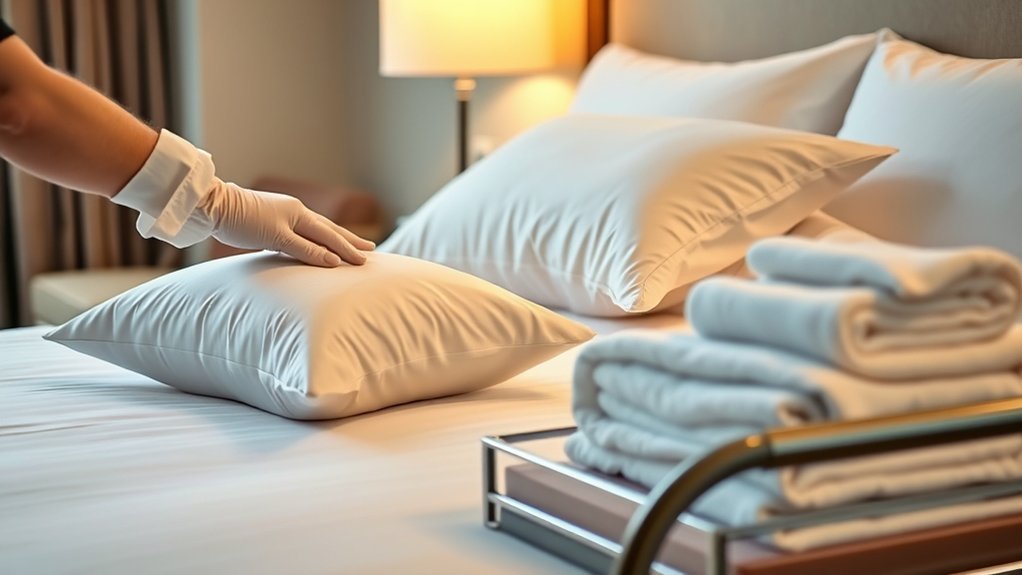
Hotels normally change and launder pillowcases before the room is assigned to another guest. This is not merely a courtesy in every location. For example, Florida law requires clean pillow slips and sheets for each succeeding guest. Ohio law also requires sheets and pillow slips to be washed before another guest uses them.
The pillow insert is different. Hotels generally do not provide a newly purchased pillow for every stay. Instead, housekeeping may use a layered system consisting of the pillow insert, a washable protector, and a clean outer pillowcase. The protector helps reduce direct contact between the insert and moisture, skin oils, hair products, and other residue.
Hotels replace pillow inserts when they become stained, damaged, lumpy, flat, odorous, unsupportive, or unsuitable for continued service. The timing depends on the pillow material, room use, laundering instructions, brand standards, and the property’s inspection process. There is no reliable industry-wide rule stating that every hotel pillow must be replaced after exactly two years.
| Bedding item | What normally happens after checkout | What to know |
|---|---|---|
| Pillowcase | Removed and replaced with a laundered pillowcase | This is the layer that touches your face. |
| Pillow protector | Inspected and laundered according to property procedures | A zippered protector adds a washable barrier around the insert. |
| Pillow insert | Reused if it remains clean, dry, supportive, and in good condition | Cleaning depends on the fill material and care instructions. |
| Sheets | Removed and replaced with clean sheets for the next guest | This is a basic room-turnover expectation and a legal requirement in some jurisdictions. |
| Duvet cover or top sheet | Handled according to the hotel’s bedding system | Ask whether the removable layer was changed after checkout. |
| Duvet insert or comforter | Inspected and cleaned on a property-specific schedule or when soiled | Bulky filled items may not be laundered after every stay. |
| Decorative pillow or bed runner | Schedule varies widely | Move decorative items away if you do not plan to use them. |
What Hotel Bedding Gets Washed Between Guests?
The sheets and pillowcases that directly contact a guest should be removed and replaced during checkout cleaning. A hotel may wash these items in an on-site laundry or send them to a commercial laundry service. Either way, the bed should be remade with clean linens before the next guest enters the room.
The treatment of upper bedding depends on how the bed is assembled. Some hotels use a removable duvet cover. Others place a duvet or blanket between clean flat sheets, a setup often called triple sheeting. A property may also use a washable coverlet or a traditional comforter.
Because these systems differ, you cannot determine the cleaning schedule from the word “duvet” or “comforter” alone. The useful question is whether the layer that may touch your body was changed or laundered after the previous checkout.
Note: Checkout cleaning and stayover cleaning are different. During a multi-night stay, some hotels change sheets only on request, after a set number of nights, or when visibly soiled. This does not change the expectation that clean linens should be provided when a new guest checks in.
How Often Do Hotels Clean or Replace Pillows?
There is no single cleaning or replacement schedule used by every hotel. A property must consider the pillow’s fill, care label, condition, use level, available laundry equipment, and brand procedures. A clean, supportive pillow may remain in service, while one with stains, moisture, odors, damaged seams, clumped fill, or lost support should be removed.
Pillow Cleaning Frequency
Pillowcases should be changed between guests. The protector and insert require separate decisions. A washable protector may be laundered more often than the filled insert because it is easier to remove and dry.
Whether the pillow itself can be washed depends on its construction. Some synthetic and down-alternative pillows are machine washable. Some feather, down, foam, or specialty pillows require different care. Washing an unsuitable pillow can damage its fill, prevent complete drying, or create moisture problems.
The safest statement is that hotels should follow the manufacturer’s care instructions, inspect the pillow, keep it dry and protected, and remove it from service when it can no longer be maintained properly.
Pillow Replacement Cycle
Hotels do not need to replace every pillow after every guest, and no universal two-year rule applies to the entire industry. Replacement should be based on condition and performance rather than a fixed internet estimate.
Warning signs include permanent yellowing, stains that remain after proper cleaning, persistent odors, torn fabric, leaking fill, clumping, loss of loft, or poor neck support. A flattened pillow may be uncomfortable without necessarily being contaminated, but it can still be unsuitable for guest use.
Pillow Hygiene Checks
When you enter the room, first inspect the outer pillowcase without placing your face on it. Look for hair, makeup, discoloration, dampness, tears, or a strong odor. You can then pull back a small section of the case to see whether a protector is present and whether it appears dry and intact.
Do not remove the protector completely or place the pillow on the floor. If the pillowcase or protector looks questionable, leave the pillow untouched and ask housekeeping to replace the full set.
The U.S. Environmental Protection Agency explains that dust mites and their allergens can occur in pillows, mattresses, blankets, and other fabrics. This is especially relevant for travelers with asthma or dust-mite allergies. It does not mean that every reused hotel pillow presents a serious health risk.
Which Hotel Bedding May Not Be Laundered After Every Stay?
Bulky filled items, decorative pillows, bed runners, blankets, and nonremovable bedspreads may follow a different schedule from sheets and pillowcases. Their treatment depends on whether they touched the guest, whether a clean sheet or cover protected them, whether they can be machine washed, and whether housekeeping found stains or damage.
This does not mean that these items are always dirty or never cleaned. It means you should not assume that every decorative or filled layer was washed after the last checkout. If you are uncertain, move decorative items away from the sleeping area and ask whether the removable top layer was changed.
High-touch room items are a separate issue. Remotes, switches, handles, phones, faucets, and bathroom surfaces can collect contamination through repeated handling. A hotel-room cleanliness study identified several potential problem areas, including toilets, bathroom floors, sinks, light switches, and housekeeping equipment. It did not establish one object as universally the germiest item in every hotel room.
Warning: Small blood spots, shed insect skins, live insects, or dark spotting around mattress seams can indicate bed bugs. Do not place luggage or clothing on the bed. Contact the front desk and request another room away from the affected area or seek different lodging.
The Centers for Disease Control and Prevention notes that bed bugs can occur in hotels at any price level and are not proof that a property is generally dirty. They can hide in mattress seams, box springs, bed frames, headboards, furniture, and luggage.
How Can You Tell If Bedding Is Fresh?
You can identify obvious housekeeping problems, but you cannot prove that bedding is sanitary by looking at it. Research on hotel-room cleanliness found that visual assessments did not reliably predict microbial contamination.
A clean-looking bed can still hide contamination, so use appearance as a warning check rather than proof of sanitation.
Before unpacking, check the following:
- Sheets: Look for hair, crumbs, makeup, unexplained spots, damp areas, or severe wrinkles that suggest the bed was slept in.
- Pillowcases: Check both sides for hair, stains, makeup, odors, and damaged fabric.
- Pillow protectors: Confirm that they appear dry, intact, and free from visible staining.
- Top bedding: Look for spills, bodily-fluid stains, food residue, and strong odors.
- Mattress seams: Check briefly for live insects, shed skins, small blood spots, or dark spotting.
- Bed area: Look behind the headboard area and around nearby furniture without dismantling the room.
A neutral laundry smell is normal. A strong fragrance does not prove that fabric is clean, and a lack of fragrance does not mean it is dirty. Avoid pressing your face into the bedding to test its smell.
What Should You Ask Hotel Staff Before Sleeping?
You usually do not need to interview housekeeping before using the room. However, a few direct questions can help when the bedding system is unclear or you have allergies:
- Were the sheets and pillowcases changed after the last guest?
- Is this a removable duvet cover, a comforter, or a triple-sheeted blanket?
- Was the layer touching the guest changed during checkout cleaning?
- Can I receive a clean pillow, protector, or complete linen set?
- Do you have feather-free, down-free, fragrance-free, or hypoallergenic bedding?
- Can housekeeping remove the decorative pillows or bed runner?
Pro Tip: When asking for replacement bedding, request a complete clean set rather than asking staff to “fix” or remake the existing bed. This makes your request clear and reduces misunderstandings.
What Should You Do If Hotel Bedding Looks Unclean?
- Stop using the bed. Do not place your clothing, luggage, or personal pillow on questionable bedding.
- Document the visible issue. Take a clear photo of stains, hair, moisture, insects, damaged protectors, or other problems.
- Contact the front desk. Calmly explain the exact issue and ask for fresh sheets, pillowcases, protectors, or pillows.
- Request a room change when necessary. This is appropriate if the room cannot be corrected promptly, the mattress is affected, or you find possible pest evidence.
- Escalate unresolved concerns. Ask for the housekeeping supervisor or manager on duty if the replacement items are also unclean.
- Leave when there is a serious problem. Seek different lodging if you find convincing bed-bug evidence or the property cannot provide a usable room.
A single hair or linen stain may result from a housekeeping mistake rather than a property-wide problem. The hotel’s response is important. A responsible property should inspect the issue and provide a reasonable solution.
What If You Have Allergies or Sensitive Skin?
Contact the hotel before arrival when you have a strong feather, down, dust-mite, fragrance, or detergent sensitivity. Ask whether the property offers synthetic pillows, fragrance-free linens, or rooms that have not accommodated pets.
“Hypoallergenic” does not mean completely allergen-free, so describe your specific concern instead of relying only on that label. For example, ask for a feather-free pillow if feathers are the problem or fragrance-free bedding if scented laundry products trigger symptoms.
Keep personal medication and any doctor-recommended allergy supplies accessible. For a severe allergy, confirm the room setup directly with the property rather than depending only on a booking-page amenity description.
Frequently Asked Questions
Do hotels change pillowcases between guests?
Hotels should replace used pillowcases with clean, laundered ones before a new guest checks in. This is a standard room-turnover expectation and is required by lodging laws in some jurisdictions. Contact the front desk if a pillowcase has hair, stains, makeup, moisture, or a noticeable odor.
Do hotels wash the pillow after every guest?
Usually, no. The pillowcase should be changed, while the pillow protector and insert follow separate inspection and cleaning procedures. Whether an insert can be washed depends on its material and care instructions.
How often do hotels replace pillows?
There is no universal hotel replacement schedule. Hotels should replace pillows when they are permanently stained, damaged, odorous, clumped, flat, leaking fill, or no longer supportive. Brand standards and pillow materials also affect the timing.
What are the seven rules of housekeeping?
There is no single official set of seven rules used by every hotel. A practical room-turnover process includes removing used linens, separating soiled laundry, cleaning and disinfecting appropriate surfaces, inspecting protectors and bedding, remaking the bed with clean linens, checking high-touch items, and completing a final room inspection.
What is the most commonly forgotten item in hotels?
There is no authoritative worldwide ranking. Phone chargers, toiletries, clothing, jewelry, medications, and travel documents are all commonly left behind. Before checkout, inspect outlets, bedside tables, drawers, the safe, bathroom hooks, the shower, and the closet.
What is the germiest place in a hotel room?
No single item is always the germiest. Remotes, switches, phones, handles, faucets, toilets, sinks, and bathroom floors are all high-touch or contamination-prone areas. Wash your hands normally and ask the hotel to address visibly unclean surfaces.
Should you bring your own pillowcase to a hotel?
You do not normally need to bring one, but it may help if you have sensitive skin, fragrance concerns, or a strong preference for a familiar fabric. A personal pillowcase does not correct a stained, damp, odorous, or pest-affected pillow, so report those problems instead of covering them.
Can you request new pillows at a hotel?
Yes. You can request a clean replacement pillow, a different firmness, or a feather-free option. Availability depends on the property, but hotels commonly keep extra pillows or can move you to another room when the existing bedding is unsuitable.
Sources
- Florida Statutes, Chapter 509: Requirements for clean sheets, pillow slips, and bedding in public lodging establishments.
- Ohio Revised Code §3731.12: Requirements for washing hotel sheets and pillow slips before use by another guest.
- Centers for Disease Control and Prevention: About Bed Bugs: Hotel bed-bug signs, hiding places, and travel risks.
- U.S. Environmental Protection Agency: Asthma Triggers: Dust mites and allergens in pillows, mattresses, and bedding.
- Journal of Environmental Health hotel-room cleanliness study: Limits of visual inspections and potentially contaminated room areas.
- IHG Clean Promise: Example of a major hotel group’s property cleanliness commitment.
Conclusion
Hotels should change sheets and pillowcases before a new guest checks in, but they do not replace every pillow insert after every stay. Pillow protectors, inserts, duvet covers, comforters, and decorative bedding each follow different care procedures. There is also no universal rule saying that every hotel replaces pillows after exactly two years.
Check the bed for obvious problems before using it, but remember that appearance alone cannot confirm sanitation. Ask for a complete clean linen set when something looks or smells wrong. For stains, moisture, allergy concerns, or possible bed-bug evidence, contact the front desk before unpacking or sleeping in the room.
