
Last Updated on July 24, 2026 by Daniel Globe
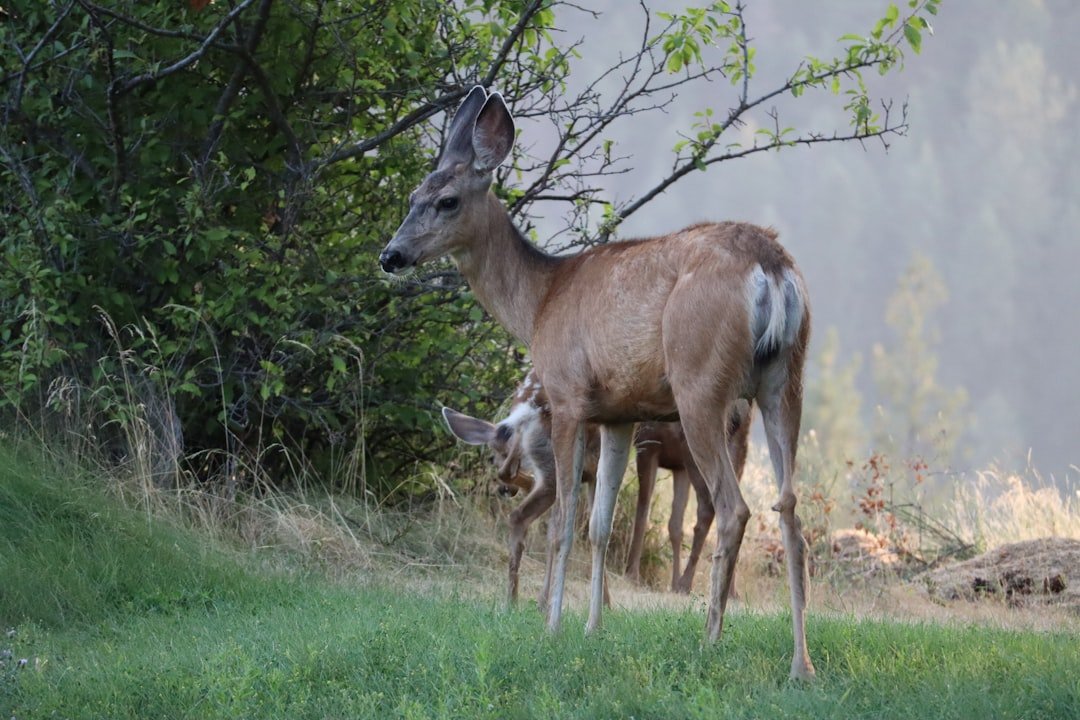
White-tailed deer do not use one bedding area as a fixed home base. Most use several beds or focal resting areas within a home range, and the distance they travel depends on habitat, sex, age, season, breeding behavior, weather, and disturbance. This article focuses on white-tailed deer because other deer species can move very differently.
The key is to separate total distance traveled from distance from a bed. A GPS collar can add every turn an animal makes and produce several miles of daily travel even when the deer stays inside a much smaller area.
Quick Answer
There is no reliable universal mileage. In one Oklahoma GPS study, daily path length averaged about 1.7 to 2.1 miles for females and 3.8 to 4.6 miles for bucks in the measured seasons. Those totals include every turn and do not equal straight-line distance from one bedding site.
Key Takeaways
- No single mileage rule applies to every white-tailed deer or habitat.
- Daily path length, straight-line displacement, home range, migration, and dispersal are different measurements.
- Food, cover, water, breeding activity, and human pressure shape where and when deer move.
- Bucks often increase movement during the rut, while northern deer may make long seasonal migrations to winter range.
- Deer commonly use several bedding sites rather than returning to one exact bed every day.
What’s in This Article
- How Far White-Tailed Deer Travel From Bedding Areas
- Factors That Change Deer Travel Distance
- Why Bedding Areas Matter for Deer
- How Deer Choose Bedding Areas
- How Deer Movement Changes by Season
- How Human Activity Changes Deer Movement
- How to Identify Bedding Areas Without Disturbing Deer
- How to Protect and Manage Deer Bedding Areas
- Frequently Asked Questions
Disclosure: As an Amazon Associate I earn from qualifying purchases. Some links on this page are affiliate links, at no extra cost to you.
How Far White-Tailed Deer Travel From Bedding Areas
A precise average distance from a bedding area is not supported across all white-tailed deer populations. Researchers usually measure total path length, daily space use, annual home range, migration, or dispersal. Those measurements answer different questions, so they should not be turned into one universal “miles from the bed” rule.
A GPS-collar study in Oklahoma recorded average female daily movement of about 2.7 to 3.4 kilometers, or 1.7 to 2.1 miles, depending on reproductive phase. Male daily movement averaged about 6.2 kilometers after the rut and 7.4 kilometers during the rut, or roughly 3.8 to 4.6 miles. These figures represent the full path traveled, not the greatest straight-line distance from a bed.
A large Mississippi State University buck movement study found a median annual home range of about 860 acres, but individual ranges varied greatly. Roughly one-quarter of the bucks used less than 500 acres, while roughly one-quarter used more than 2,000 acres. Their daily range stayed near 200 acres across the breeding season, even though their routes and longer-term space use changed.
| Measurement | What It Means | Common Mistake |
|---|---|---|
| Daily path length | The sum of every measured movement during a day. | Treating it as the straight-line distance from a bed. |
| Daily range | The area used during a day. | Assuming the deer covered every part of that area. |
| Annual home range | The broader area used across seasons. | Assuming the deer travels across the full range each night. |
| Migration or dispersal | A seasonal move or a move to establish a new range. | Using an exceptional long-distance move as a normal daily estimate. |
A deer can accumulate several miles of movement in a day without ever ending up several miles from its bedding cover.
Note: Treat any fixed claim such as “deer always travel 1 to 2 miles from their bed” as a rough local observation, not a biological rule.
Factors That Change Deer Travel Distance
Food distribution drives much of a deer’s routine movement. When high-quality forage, secure cover, and water sit close together, a deer can meet its needs in a compact area. When those resources are scattered, it must use more space and may travel a longer route.
Breeding changes the pattern for bucks. During the rut, bucks spend more time searching for receptive does, and both daily movement and longer-term space use can increase. Age and individual behavior also matter. A 2025 Wisconsin GPS study of 188 male deer found that movement rate and daily range varied by age, which shows why one number cannot describe every buck.
White-tailed deer often show strong movement peaks near dawn and dusk, but they also move during daylight and at night. The Mississippi research found a dawn-and-dusk flurry rather than complete inactivity at other times. Moon phase is not a reliable shortcut either. In that study, movement changed through the breeding season but did not follow a consistent moon-phase pattern.
Social structure influences space use. Does often live in family groups with young and related females. Bucks may form loose bachelor groups outside the rut, then become more independent as breeding activity increases. These patterns can change which feeding areas, travel corridors, and beds an animal uses.
Note: Weather can affect short-term movement, but GPS studies have found inconsistent effects within seasons. Temperature, wind, precipitation, snow depth, and habitat must be considered together.
Why Bedding Areas Matter for Deer
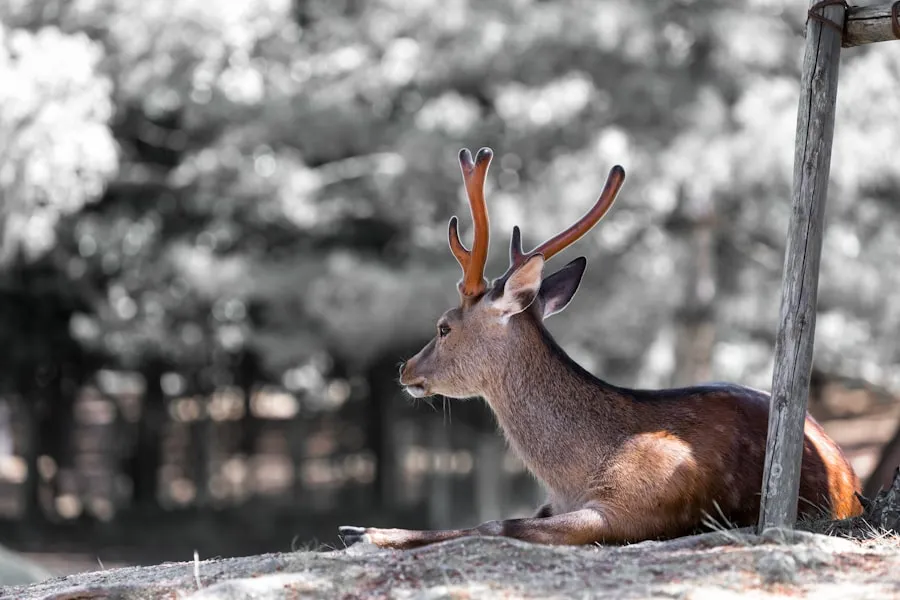
A bedding area is a place where a deer lies down to rest, ruminate, conserve energy, and reduce exposure. It may be a single bed, a small cluster of beds, or one of several resting focal areas spread across the animal’s home range.
Screening cover often matters more than a specific plant type. In the Mississippi buck study, the most heavily used likely bedding areas had about twice as much structural screening cover as unused areas. That cover helped block the view of people and natural predators while also providing nearby forage in some locations.
Bedding needs change with sex, season, temperature, and reproductive status. Females with young may select concealment that helps hide fawns. During hot weather, shade and airflow can matter. During cold or snowy conditions, thermal cover and reduced exposure become more important.
A secure bed does not need to sit at one fixed distance from food. Deer respond to the complete layout of cover, forage, water, terrain, roads, and disturbance. A useful habitat contains these resources close enough that deer can reach them without excessive energy cost or exposure.
How Deer Choose Bedding Areas
| Factor | How It Can Affect a Bedding Site |
|---|---|
| Screening and concealment cover | Helps a deer rest with less visual exposure and may provide escape cover. |
| Food distribution | Nearby forage can reduce the distance and risk involved in routine feeding trips. |
| Water | Its local importance varies with climate, season, and moisture in food, but it is an essential habitat need. |
| Temperature and thermal cover | Shade, sun exposure, wind protection, and overhead cover can help with heat or cold stress. |
| Terrain and escape routes | Slopes, ridges, wetlands, and dense edges can shape visibility and safe movement. |
| Human disturbance | Roads, hunting pressure, recreation, and repeated intrusion can change when and where deer bed. |
Dense vegetation is often useful, but not every bed sits in the thickest cover available. Deer balance concealment with temperature, visibility, scent detection, nearby resources, and escape options. A hillside point, field edge, wetland island, conifer stand, old field, or brushy thicket can all serve as bedding habitat under the right conditions.
Wind can influence how a deer detects danger and regulates temperature, but the popular rule that every buck beds with the wind at its back and a view downhill is too rigid. Terrain and local wind swirl vary, and deer use many bed orientations.
Pro Tip: Look for a group of oval depressions, flattened leaves or grass, nearby droppings, hair, and well-used approach trails. One isolated depression is not enough to prove that an area is a regularly used bed.
How Deer Movement Changes by Season
Spring and Summer
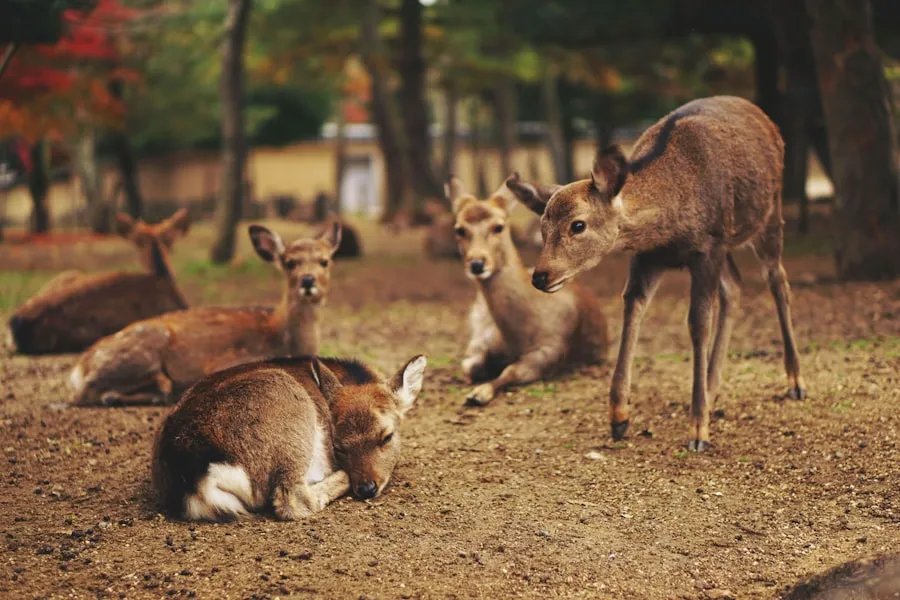
Fresh plant growth changes feeding locations, and females alter their space use around birth and fawn rearing. Bucks often settle into summer patterns while rebuilding body condition and growing antlers. Movement can remain compact where forage and cover are abundant, but local habitat layout still controls the actual distance.
Autumn and the Rut
Acorns, crops, fruit, and other seasonal foods can redirect normal travel routes. As breeding activity rises, bucks spend more time walking and searching for does. Their total daily travel may increase, but some still use a compact daily area while making occasional excursions.
Winter
Winter does not always make deer travel farther each day. Deep snow and cold can raise the energy cost of movement, causing northern deer to gather in sheltered wintering areas and reduce local activity. The long move may happen during migration to that seasonal range rather than during every nightly feeding trip.
In a small northeastern Minnesota GPS study, female white-tailed deer migrated 23 to 45 kilometers, or about 14 to 28 miles, between seasonal ranges. That seasonal migration research should not be confused with ordinary daily movement from a bed. Many white-tailed deer in milder climates do not migrate at all.
Note: Seasonal migration, juvenile dispersal, and rare long-distance excursions are exceptions to normal movement within an established home range.
How Human Activity Changes Deer Movement
Development and habitat fragmentation can remove cover, separate food from bedding habitat, and force deer to cross roads or open areas. Agriculture can either concentrate food in one place or remove cover after harvest. The result depends on the season and the arrangement of resources.
Hunting pressure and recreation can change the timing, route, and location of deer movement. Some deer shift toward thicker cover or more nighttime activity. Others maintain a similar daily range but reshape it to avoid high-risk areas. Effects are not identical everywhere. For example, the 2025 Wisconsin study found no significant opening-weekend effect on male movement rates, even though age and breeding timing affected movement.
Off-road vehicles, repeated foot traffic, loose dogs, logging activity, and other disturbance can also change bedding use. A single quiet pass may have little effect, while repeated intrusion into a core resting area can make deer use another location or time period.
Warning: Do not enter private land, closed habitat, or an active hunting area without permission. Repeatedly walking through bedding cover can disturb wildlife and create safety risks.
How to Identify Bedding Areas Without Disturbing Deer
Start from a distance. Use maps or aerial imagery to identify thick cover near feeding areas, water, terrain breaks, wetlands, old fields, conifer stands, and low-traffic edges. Then study the travel routes around those places rather than walking directly through the center.
- Look for bed shape: Deer beds are usually oval depressions where leaves, grass, or snow have been flattened.
- Confirm repeated use: Multiple beds, fresh droppings, hair, tracks, and connecting trails provide stronger evidence than one depression.
- Check size and grouping: A cluster may indicate a doe family group, while a large isolated bed may belong to one adult, but tracks and other signs are needed before drawing conclusions.
- Observe entry and exit trails: Trails between cover and food often reveal more about routine movement than the bed itself.
- Use cameras responsibly: Where legal, place a trail camera on an outer travel corridor instead of directly over the bed.
Pro Tip: Record wind, date, fresh sign, food conditions, and camera observations over several weeks. A pattern built from repeated evidence is more reliable than one visit.
How to Protect and Manage Deer Bedding Areas
Good habitat management starts with a property-level evaluation. Deer need a useful mix of food, cover, water, and connected space through the year. The right balance differs by region, soil, plant community, deer density, and land-use goal.
The University of Missouri habitat guide recommends identifying the resource in shortest supply before choosing a management practice. Helpful options may include maintaining native shrubs, protecting brushy edges, controlling invasive plants, improving mast-producing woodland, restoring early-successional vegetation, and keeping escape cover near open feeding areas.
Limit unnecessary access to heavily used bedding cover, especially during fawning, severe winter weather, or hunting season. Keep travel corridors connected where possible. Roads, fences, large cleared areas, and repeated disturbance can reduce the value of otherwise suitable cover.
Prescribed fire, timber work, mowing, and herbicide use can improve habitat when they follow a site-specific plan, but they can also remove needed cover at the wrong time. Work with a qualified wildlife biologist, forester, extension specialist, or local natural-resource agency before making large changes.
Note: Supplemental feeding is not a substitute for habitat management. It may be restricted by law, can concentrate animals, and may increase disease transmission. Check local wildlife regulations before feeding or baiting deer.
Frequently Asked Questions
What is a deer bedding area?
A bedding area is a place where deer lie down to rest, ruminate, conserve energy, and reduce exposure. It may contain one bed or several beds and can be one of multiple resting areas inside a deer’s home range.
How far do deer travel from their bedding area?
There is no dependable universal distance. White-tailed deer may use a compact area when food and cover sit close together, or travel a longer route when resources are scattered. Published GPS figures often describe total daily path length or home range, not straight-line distance from one bed.
Do bucks travel farther than does?
Bucks often show greater daily movement or expanded space use during the rut, but the difference varies by habitat, age, season, and individual. Outside the breeding season, male and female ranges can overlap in size in some landscapes.
Do deer return to the same bedding area every day?
Deer often reuse secure beds and familiar resting areas, but most do not rely on one exact spot every day. Food changes, wind, temperature, predators, breeding activity, and human disturbance can cause them to switch beds.
When do deer leave their bedding areas?
White-tailed deer often show their strongest movement around dawn and dusk, but they can get up, feed, reposition, or travel at any hour. Breeding season, weather, food, and disturbance can shift the timing.
How far can deer migrate in winter?
Some northern white-tailed deer move many miles between seasonal ranges. One northeastern Minnesota study recorded migrations of about 14 to 28 miles. This is a seasonal movement, not a normal nightly distance from a bedding site, and many deer in milder regions do not migrate.
How can hunters use bedding-area knowledge responsibly?
Focus on legal access routes and outer travel corridors rather than repeatedly entering the bed itself. Study fresh sign, wind, food conditions, and camera data where cameras are allowed. Always follow property boundaries, season rules, and local hunting regulations.
Sources
- Mississippi State University Extension: Understanding Buck Movement: GPS-based buck movement, home range, bedding cover, rut behavior, and hunting pressure.
- International Journal of Ecology: Measuring Fine-Scale White-Tailed Deer Movements: daily movement distances and dawn-and-dusk movement peaks.
- USDA Forest Service: White-Tailed Deer Species Review: social behavior, habitat, seasonal food, and cover use.
- University of Missouri Extension: Evaluating White-Tailed Deer Habitat: food, cover, water, escape cover, and habitat-planning guidance.
- University of Minnesota Extension: White-Tailed Deer Behavior: seasonal diet, winter yards, migration, and feeding cautions.
- U.S. Geological Survey: Tracking White-Tailed Deer Migration by GPS: measured seasonal migration distances in northeastern Minnesota.
