
Last Updated on August 22, 2026 by Caleb Warren
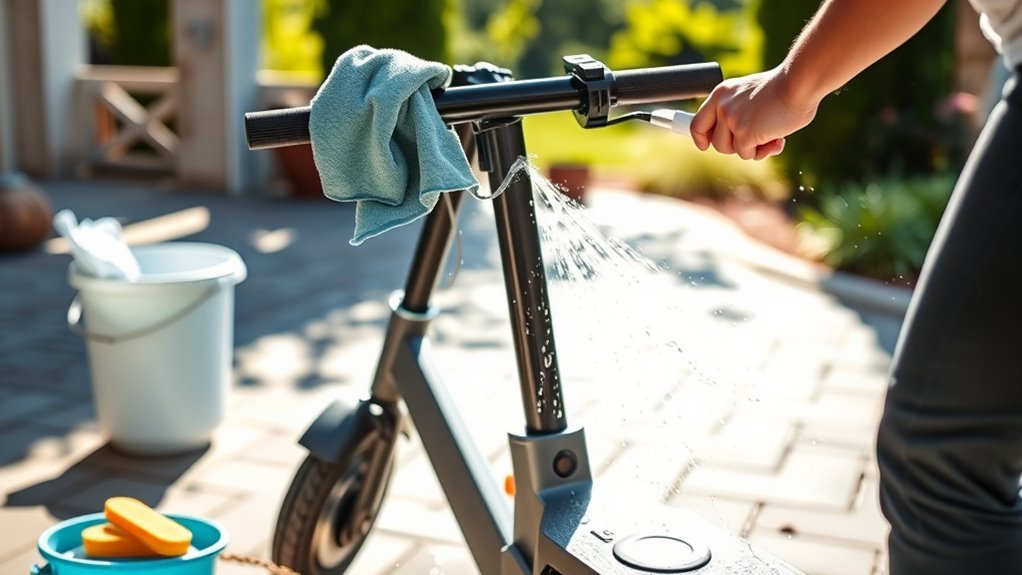
Turn off your electric scooter and unplug the battery before you clean it. Use warm, soapy water, a soft sponge or cloth, and a soft-bristle brush for stubborn dirt. Wipe the frame, deck, and wheels gently, but keep moisture away from ports, connectors, and sealed housings. Dry all parts completely, then lubricate moving joints lightly with silicone-based lubricant. If you keep going, you’ll see how to protect it from wet-weather damage — and which mistakes to avoid.
Quick Answer
Power off and unplug the battery, then wipe the scooter with a soft cloth or sponge dipped in warm, soapy water. Avoid hoses, pressure washers, and harsh solvents. Keep liquid away from ports and connectors, dry every part completely, then lubricate joints with a silicone-based lubricant.
Key Takeaways
- Always power down and unplug the battery before cleaning.
- Use a damp cloth and mild soap — never a hose, pressure washer, or harsh solvent.
- Check your scooter’s IP rating; it’s water-resistant, not waterproof.
- Dry every part fully before lubricating joints and reconnecting the battery.
- Add extra sealing and covers if you ride regularly in wet weather.
At a Glance
| Time Required | 15–30 minutes for a routine wipe-down; 45–60 minutes for a monthly deep clean |
| Difficulty | Easy — no disassembly required |
| Tools Needed | Bucket, mild soap, soft sponge or brush, microfiber cloths, silicone-based lubricant, dielectric grease |
| Cost | $15–$30 for basic supplies (most items are reusable) |
Disclosure: As an Amazon Associate I earn from qualifying purchases. Some links on this page are affiliate links, at no extra cost to you.
What You Need to Clean Your Scooter
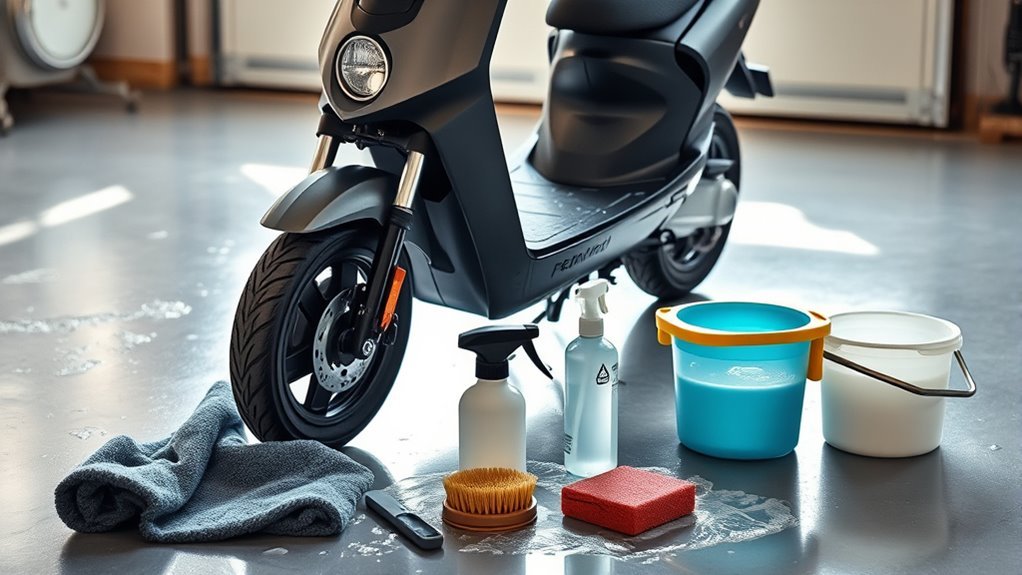
Before you start, gather the right cleaning supplies: a bucket of warm, soapy water, a soft sponge or cloth, and a soft-bristle brush for removing stubborn dirt. Use a mild, non-abrasive soap so you don’t damage the finish, and confirm every product is safe for electronic components. Keep a microfiber cloth nearby; it dries surfaces efficiently and reduces water spots. Add a dry towel for a final wipe, because lingering moisture can drive rust and corrosion.
If you face tough stains, use a biodegradable specialized scooter cleaner that works on all surfaces without harsh residue. Your cleaning frequency should match riding conditions, but regular care keeps grime from building up and preserves performance. These maintenance tips help you avoid costly repairs: choose tools that protect paint, plastic, and wiring, and avoid anything abrasive. With the right kit, you can clean quickly and confidently.
Note: Never clean your scooter with alcohol, gasoline, acetone, or other corrosive or volatile solvents. Manufacturer manuals warn that these can damage the finish and degrade internal plastics and seals — stick to mild soap and water instead.
Understand Your Scooter’s IP Rating Before You Clean
Every electric scooter carries an IP (Ingress Protection) rating, usually printed in the spec sheet or manual, that tells you how much dust and water exposure it can handle. No electric scooter is fully waterproof — even high-end models are only water-resistant, meaning splashes and light rain are fine but soaking or submersion is not. A common entry-level rating is IP54, which handles light rain and splashing but not puddles or a direct hose stream; IP65 and higher tolerate stronger jets of water but still shouldn’t be pressure-washed or submerged. Check your specific rating before you decide how much moisture your cleaning routine can safely involve, and keep in mind that many manufacturer warranties exclude water damage entirely.
Keep the Electronics Dry
Turn off your scooter and unplug the battery before you clean it, so you don’t risk electrical shock or damage to sensitive components. Use a damp cloth, not a soaked one, to wipe exposed areas while keeping liquid away from ports, connectors, and sealed housings. Never use high-pressure hoses or direct sprays; they can drive water into protected compartments and compromise internal electronics. If dirt clings near wiring or terminals, use a soft brush and controlled hand pressure instead of flooding the area.
After cleaning, dry every electrical part completely, including connectors and battery terminals, before you reconnect power. Residual water can trigger corrosion, short circuits, and erratic performance.
Warning: Lithium-ion batteries carry a real fire and shock risk if mishandled. The U.S. Consumer Product Safety Commission has proposed a new federal safety standard for micromobility batteries after tracking hundreds of fire and overheating incidents. Never disassemble the battery, never clean it while it’s charging, and stop immediately if you notice swelling, heat, or a burning smell.
Clean the Frame, Deck, and Wheels
Now clean the frame, deck, and handlebars with a soft-bristled brush or microfiber cloth dampened with mild soap and water, using gentle pressure to lift dirt without damaging the finish. Wipe away grime from seams, edges, and grips, then rinse thoroughly with clean water. Don’t spray directly on electrical components, and keep runoff controlled. Finish by drying all surfaces with a microfiber towel to prevent rust and residue.
For wheel care, brush off loose debris first, then scrub the wheels and tire treads with a cloth or sponge soaked in soapy water. Rinse well so soap doesn’t stay in the grooves and reduce traction. Inspect tires and wheels for cuts, uneven wear, or embedded grit while you clean. Check for dirt buildup often, and schedule a deep clean monthly. That routine extends scooter life and keeps your machine ready for the road.
Dry and Lubricate Moving Parts
Once the frame, deck, and wheels are clean, dry all moving parts completely with a clean microfiber cloth, including bearings, joints, hinges, and brake components, to remove any trapped moisture that can lead to rust and corrosion. Inspect the folding mechanism and other pivots, and wipe away every trace of water before you move on.
For lubrication, apply a silicone-based lubricant to joints and hinges only, and do it monthly or after heavy cleaning. Use a small amount, then work the parts through their motion so the lubricant spreads evenly. Keep lubricant off brake pads and other braking surfaces, because contamination can reduce stopping power and safety.
Warning: Avoid WD-40 and other penetrating oils on your scooter’s joints, hinges, or bearings. Manufacturer maintenance guidance recommends against it because it attracts dirt and isn’t a true long-term lubricant — a silicone-based or white lithium grease holds up far better.
What Not to Use When Cleaning Your Scooter
A few common household products and tools can do more harm than good. Skip alcohol, gasoline, acetone, and other solvents, which can eat through plastics, decals, and seals. Skip pressure washers and garden hoses on full blast, since even water-resistant scooters aren’t built for sustained, high-pressure jets. Skip abrasive pads, steel wool, or sandpaper on painted or plastic surfaces — a soft cloth or brush is enough for nearly everything. And skip spraying any lubricant or cleaner directly into the throttle, display, or charging port; apply it to a cloth first, then wipe.
Pro Tip: For dust and debris packed into the charging port or display seams, a can of compressed air or a soft-bristle toothbrush works better — and more safely — than water or a metal pick.
Protect Your Scooter for Wet Weather
When you ride in wet conditions, add targeted moisture protection to reduce corrosion and electrical damage. Use weather-resistant seals on battery housing edges, and apply dielectric grease to connectors. Cover the display and throttle with waterproof film or handlebar covers. Seal charging ports with robust caps when you’re not charging. A good mudguard installation helps deflect spray from motors, brakes, and wiring.
| Component | Protection | Benefit |
|---|---|---|
| Battery housing | Silicone tape | Blocks seepage |
| Connectors | Dielectric grease | Limits corrosion |
| Display | Waterproof film | Keeps inputs responsive |
| Charging port | Sealed cover | Prevents ingress |
| Wheels | Mudguards | Reduces splashback |
After each wet ride, wipe the scooter dry and inspect for rust, loose fasteners, or worn seals. This routine keeps your machine reliable and helps you stay mobile without surrendering control to the weather.
Cleaning Schedule and Storage
A quick wipe-down after every muddy or wet ride prevents grime from hardening into stains, while a full clean — frame, wheels, drying, and lubrication — once a month keeps everything running smoothly. Between cleans, store your scooter in a dry, cool, indoor location out of direct sun; sun exposure degrades plastics and battery life, and outdoor storage exposes it to moisture it isn’t designed to handle long-term.
Even scooters with strong water-resistance ratings aren’t designed for daily soakings — treating “water-resistant” as “waterproof” is one of the fastest ways to shorten a scooter’s life.
Frequently Asked Questions
What’s the Best Way to Clean an Electric Scooter?
Power down, unplug the battery, then clean with mild soap, lukewarm water, and a soft cloth. Avoid soaking electronics. Dry thoroughly with a microfiber towel, and follow up with a light wipe-down after each ride, especially in mud.
Can I Use WD-40 on an E-Scooter?
It’s best to avoid WD-40 on hinges, joints, and especially bearings — manufacturer maintenance guides recommend against it because it doesn’t provide lasting lubrication and can attract dirt. Use a silicone-based lubricant or white lithium grease instead, and pair terminals with dielectric grease rather than any spray-on oil.
Will Water Ruin an Electric Scooter?
Yes — water can ruin your scooter if exposure exceeds its IP rating, causing corrosion and electrical failure. Protect it with careful maintenance, sealed connectors, and by avoiding heavy rain, puddles, or submersion.
Can I Wash My E-Scooter With a Hose?
No — washing with a hose, especially at high pressure, can force water past seals and into the electronics. Use damp cleaning techniques instead, targeting surfaces only, then dry thoroughly before riding again.
How Often Should I Clean My Electric Scooter?
Wipe it down after every wet or muddy ride, and do a full clean — including drying and lubrication — about once a month. Riders in dusty or rainy climates may want to clean more often.
What Should I Do If My Scooter Gets Soaked?
Turn it off and unplug the battery right away, dry all visible moisture with a towel, and let it air-dry for at least 24 hours before turning it back on. Check for unusual behavior when you power it up, and have a professional inspect it if anything seems off.
Conclusion
Cleaning your electric scooter properly helps it last longer and perform better. Water exposure beyond your scooter’s IP rating is one of the most common causes of costly electrical repairs, and most manufacturer warranties exclude water damage entirely — so keeping electronics dry matters. Use the right supplies, wipe the frame, deck, and wheels carefully, and dry every component before storing it. Then lubricate moving parts with a silicone-based lubricant — never WD-40 — and add weather protection when needed. When you maintain your scooter regularly, you reduce wear, improve safety, and avoid costly breakdowns over time.
Sources
- Segway-Ninebot KickScooter User Manual — official cleaning and solvent-avoidance instructions
- Federal Register / U.S. CPSC — 2026 proposed safety standard for micromobility lithium-ion batteries
- Apollo Scooters Maintenance Guide — lubricant recommendations and WD-40 caution
- Apollo Scooters: Water Resistance Explained — IP ratings and wet-weather riding guidance
- WD-40 Official Scooter Maintenance Guide — manufacturer guidance on where WD-40 should and shouldn’t be used
