
Last Updated on July 28, 2026 by Caleb Warren
Choosing a camera drone is less about chasing the highest megapixel count and more about matching image quality, stabilization, safety features, weight, and legal requirements to the way you shoot. The DJI Air 3S is the strongest all-around choice in this guide, while the Mavic 3 Pro, Mini 3, Avata 2, and EVO Lite+ serve more specialized needs.
Quick Answer
The DJI Air 3S is the best all-around camera drone in this guide for most photographers. It combines a 1-inch main sensor, a useful 70mm secondary camera, up to 45 minutes of rated flight time, and omnidirectional sensing. Choose the Mavic 3 Pro for premium imaging, the Mini 3 for affordable travel, or Avata 2 for FPV.
Key Takeaways
- A 1-inch sensor is helpful for low light and dynamic range, but it is not a universal minimum; lens quality, RAW capture, stabilization, and flight performance also matter.
- The DJI Air 3S offers the best overall balance of image quality, dual-camera flexibility, portability, endurance, and obstacle sensing.
- The Mavic 3 Pro remains the premium officially authorized DJI option for U.S. photographers where stock is available.
- The Mini 3 can qualify for the U.S. recreational registration exemption with its standard battery, but the Plus battery raises its takeoff weight above 250 grams.
- The FCC restriction affects new equipment authorizations for covered foreign-produced drones; previously authorized models may still be imported, sold, owned, and flown.
Disclosure: As an Amazon Associate I earn from qualifying purchases. Some links on this page are affiliate links, at no extra cost to you.
What Makes a Great Camera Drone?
A great camera drone combines a capable imaging system with predictable flight controls. A larger sensor usually captures cleaner shadows and more detail in difficult light, but sensor size is only one part of the decision. The lens, color profile, RAW support, gimbal, wind performance, battery system, and safety features all affect the final result.
Sensor Size and Camera Controls
A 1-inch or Four Thirds sensor gives photographers more room to recover highlights and shadows, especially around sunrise, sunset, and city lights. However, modern 1/1.3-inch sensors can still produce strong travel and social-media work. The DJI Air 3S, Mini 3, Flip, and Avata 2 show why a smaller sensor should not automatically disqualify a drone.
Look beyond the megapixel count. Useful camera features include:
- RAW photo capture for greater exposure and color flexibility.
- Manual shutter speed, ISO, and white balance for consistent results.
- 10-bit color or a log profile when you plan to color-grade video.
- A useful lens angle rather than digital zoom alone.
- Bracketing and interval shooting for HDR images and time-lapse sequences.
Gimbal and Flight Stability
A true 3-axis mechanical gimbal physically corrects pitch, roll, and yaw movement. It normally produces smoother video and more level horizons than electronic image stabilization alone. Budget models such as the Holy Stone HS720E and Potensic ATOM SE can reduce visible shake electronically, but they do not offer the same stabilization control as the Mini 3 or Potensic ATOM.
Wind resistance also matters. A drone may remain airborne in a strong breeze but still struggle to hold position, return against the wind, or keep the horizon steady. Treat a published wind-resistance rating as a limit, not an invitation to launch in poor conditions.
Obstacle Sensing and Flight Safety
Obstacle sensing can reduce risk around buildings, trees, and uneven terrain, but it does not make a drone collision-proof. Thin branches, utility wires, glass, water, reflective surfaces, low light, high speed, and sideways movement can limit sensor performance.
Warning: Never use obstacle sensing as a substitute for visual line of sight or route planning. Confirm the return-to-home point, set a suitable return altitude, watch wind direction, and keep enough battery to land safely.
Flight Time and Battery Reserve
Manufacturer flight-time figures are controlled-test maximums, often measured in still air from a full battery until forced landing. Wind, cold, high-speed flight, climbing, recording, battery age, and the return trip all reduce usable time.
Note: A 45-minute rating does not support a safe 45-minute assignment. Plan the route around a meaningful reserve, begin returning before the low-battery warning becomes urgent, and allow extra power when flying into the wind.
Best Drones for Photos and Video
The strongest model depends on what you photograph. The Air 3S is the best balanced choice, the Mavic 3 Pro offers the most flexible premium camera system, and the Mini 3 keeps cost and weight low. The Flip is easy to deploy for short-form content, the Avata 2 specializes in immersive FPV movement, and the EVO Lite+ provides a 1-inch-camera alternative outside DJI’s software ecosystem.
Top Camera Drones
| Model | Camera System | Rated Flight Time | Safety Features | Best For |
|---|---|---|---|---|
| DJI Air 3S | 1-inch 24mm main camera plus 1/1.3-inch 70mm camera | Up to 45 minutes | Omnidirectional sensing with LiDAR, infrared ToF, and vision sensors | Best overall balance |
| DJI Mavic 3 Pro | Four Thirds 24mm camera plus 70mm and 166mm telephoto cameras; up to 5.1K | Up to 43 minutes | Omnidirectional obstacle sensing | Premium photography and video |
| DJI Mini 3 | 1/1.3-inch sensor, 12MP photos, and 4K video | 38 minutes; 51 with Plus battery | Downward positioning sensors; no forward obstacle avoidance | Affordable travel photography |
| DJI Flip | 1/1.3-inch sensor and 4K/60fps HDR video | Up to 31 minutes | Full propeller guards and forward 3D infrared braking | Beginners and solo content |
| DJI Avata 2 | 1/1.3-inch sensor and 4K video at up to 100fps | Up to 23 minutes | Integrated propeller guards; not omnidirectional sensing | Immersive FPV movement |
| Autel EVO Lite+ | 1-inch 20MP sensor, adjustable aperture, and 6K/30fps video | Up to 40 minutes | Three-direction obstacle sensing | DJI software alternative |
Best Budget Picks
Four lower-cost drones stand out, but their stabilization systems are not equal:
- DJI Mini 3: The strongest photography pick in this group because it combines a 1/1.3-inch sensor with a true 3-axis gimbal, 4K recording, and a 38-minute standard battery.
- Holy Stone HS720E: Provides 4K/30fps recording, GPS Return-to-Home, Follow Me, TapFly, and electronic stabilization. Its advertised 46 minutes comes from two 23-minute batteries, and it lacks a 3-axis camera gimbal.
- Potensic ATOM SE: Records 4K/30fps and 12MP photos, flies for up to 31 minutes, and supports GPS Follow Me, Circle Flight, and Waypoints. Its single-axis gimbal and electronic stabilization are less capable than a mechanical 3-axis system.
- DJI Flip: Weighs under 249 grams with its standard setup and combines a 1/1.3-inch sensor, 4K/60fps HDR video, full propeller guards, subject tracking, and a 31-minute rating.
If you like the ATOM SE’s price but care about smoother footage, the standard Potensic ATOM is the better photography-oriented version. It adds a 3-axis gimbal, manual camera controls, visual tracking, and a 32-minute rating.
FPV and Specialty Drones
FPV and professional aircraft serve different needs from conventional folding camera drones. The DJI Avata 2 prioritizes immersive movement, protected propellers, and high-frame-rate 4K footage. It is ideal for flying through controlled routes and creating fast reveal shots, but it is less useful for high-resolution still photography.
The Mavic 3 Pro is a premium general-purpose camera drone rather than a true specialty platform. Its three focal lengths make it useful for landscapes, architecture, events, and compressed telephoto views.
The Autel EVO Lite+ offers a 1-inch camera, 6K recording, an adjustable f/2.8–f/11 aperture, and a 40-minute rating. It is a practical option for pilots who prefer Autel’s aircraft and app design.
At the professional end, the DJI Inspire 3 supports an 8K full-frame cinema camera, interchangeable DL lenses, and RTK positioning. The Matrice 350 RTK is an enterprise aircraft with a rated 55-minute no-payload flight time and support for inspection, mapping, thermal, and other specialized payloads. These platforms require much larger budgets, trained crews, and more complex operating plans than the consumer models above.
DJI Air 3S: Best Overall Pick
The DJI Air 3S gives photographers two genuinely useful viewpoints in one compact aircraft. Its 24mm-equivalent f/1.8 main camera uses a 1-inch sensor, while its 70mm-equivalent f/2.8 camera uses a 1/1.3-inch sensor. The second camera is especially helpful for isolating subjects, compressing mountain layers, and framing details without flying as close.
Its rated flight time is 45 minutes. Actual usable time will be lower because DJI’s figure comes from controlled testing that runs the battery to forced landing. The sensing system combines forward-facing LiDAR, downward infrared time-of-flight sensing, and multiple vision cameras to provide omnidirectional awareness, including better low-light assistance than basic vision-only systems.
DJI’s official U.S. list prices were $1,099 for the standard package and $1,399 for a Fly More package with three batteries and a charging hub when checked on July 28, 2026. Stock and regional availability can change, so confirm the package, controller, warranty coverage, and delivery status before paying.
- Best for: Travel, landscapes, real estate, events, and creators who want wide and short-telephoto views.
- Main advantage: Strong camera flexibility without the size and cost of the Mavic 3 Pro.
- Main limitation: It does not match the Mavic 3 Pro’s Four Thirds sensor or longer 166mm telephoto reach.
DJI Mavic 3 Pro: Best Upgrade
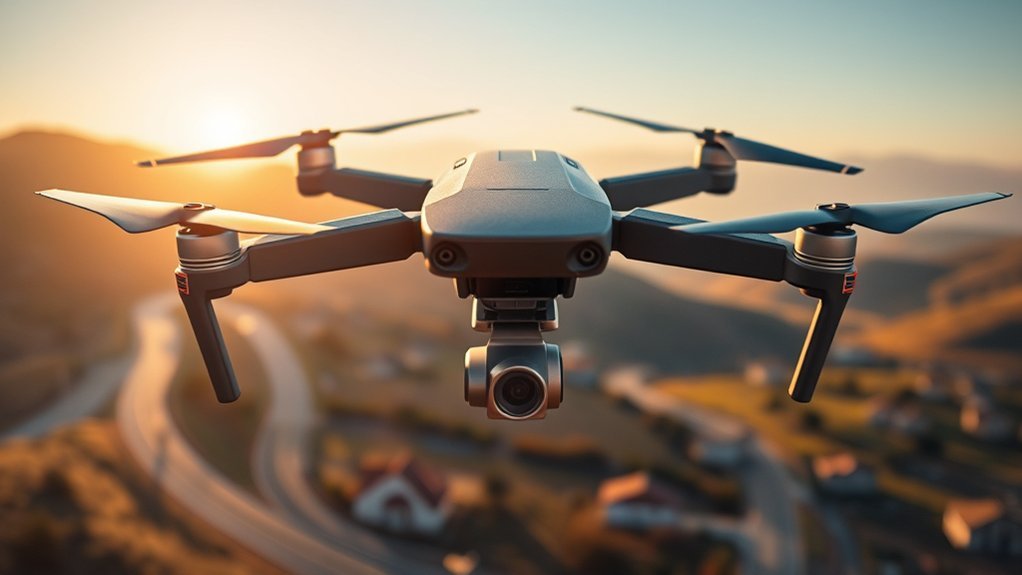
The DJI Mavic 3 Pro combines a Four Thirds Hasselblad main camera with 70mm- and 166mm-equivalent telephoto cameras. The three-camera system lets you move from broad establishing shots to compressed details without swapping aircraft or relying on heavy digital cropping.
The main camera records up to 5.1K video and provides stronger low-light and dynamic-range performance than the smaller sensors used in the Air 3S secondary camera and Mini series. The aircraft also offers a rated 43-minute flight time and omnidirectional obstacle sensing.
- 24mm, 70mm, and 166mm-equivalent viewpoints in one aircraft
- Four Thirds main sensor for demanding still and video work
- 5.1K recording and advanced color options
- Omnidirectional sensing for complex routes
- Greater size, cost, and regulatory burden than a sub-250-gram model
When checked on July 28, 2026, DJI’s U.S. store listed the standard Mavic 3 Pro at $2,199, a Fly More configuration with the RC Pro at $3,889, and the Cine Premium Combo at $4,799. Several official configurations showed limited availability or were out of stock, so compare current authorized inventory rather than relying on an old bundle price.
Note: DJI launched the Mavic 4 Pro in international markets with a 100MP Four Thirds main camera, a rotating Infinity Gimbal, and a rated 51-minute flight time. As of July 28, 2026, it still had no official U.S. product launch. Gray-market listings may carry different warranty, support, radio-authorization, and return risks.
DJI Mini 3: Best Budget Drone
The DJI Mini 3 remains an appealing entry point because it combines a true 3-axis gimbal, a 1/1.3-inch sensor, 4K video, vertical shooting, and long rated flight time in a compact frame. DJI’s U.S. listing with the RC-N1 controller started at $379 when checked on July 28, 2026, although stock and package availability varied.
Lightweight Flight Advantage
With its standard Intelligent Flight Battery, the Mini 3 has a listed takeoff weight below 249 grams. That can simplify recreational flying in the United States, but it does not create a universal registration exemption.
- A drone weighing 250 grams or less may avoid FAA registration only when it is flown solely under the recreational exception.
- Every drone flown under Part 107 must be registered, regardless of weight.
- The Intelligent Flight Battery Plus raises the Mini 3’s takeoff weight to about 290 grams, so the recreational sub-250-gram registration exemption no longer applies.
- Accessories such as guards or lights can also increase takeoff weight.
- Local launch, park, wildlife, and property rules can still restrict where a sub-250-gram drone may operate.
The standard battery is rated for 38 minutes. The Plus battery extends the rating to 51 minutes, but the extra weight changes the aircraft’s regulatory category and may affect handling.
4K Camera Essentials
| Specification | DJI Mini 3 |
|---|---|
| Sensor | 1/1.3-inch CMOS |
| Photos and Video | 12MP photos and up to 4K video |
| Stabilization | 3-axis mechanical gimbal |
| Standard Battery | 38-minute rating; aircraft under 249 grams |
| Plus Battery | 51-minute rating; aircraft approximately 290 grams |
| Obstacle Sensing | Downward positioning only; no forward, rear, or side obstacle avoidance |
For the cleanest results, use a low ISO, lock white balance before recording, and watch the histogram rather than trusting the phone screen in bright sunlight. Plan open routes because the Mini 3 cannot detect obstacles ahead of it.
Best FPV and DJI Alternatives
The DJI Avata 2 is the most approachable FPV model in this comparison. Its 1/1.3-inch sensor records 4K video at up to 100fps with current firmware, and its rated maximum flight time is about 23 minutes. Manual mode can reach 27 m/s, so pilots should build skills in a simulator and controlled open area before attempting tight cinematic routes.
- Integrated propeller guards for greater protection during minor contact
- High-frame-rate 4K recording for smoother action footage
- Easy ACRO functions for assisted flips, rolls, and drifts
- Immersive goggles and motion-controller options
- Shorter endurance and weaker still-photography utility than conventional camera drones
In the United States, FPV goggles do not remove the requirement to maintain visual line of sight. When the person manipulating the controls cannot directly see the aircraft, use a visual observer who can continuously watch the drone and communicate with the pilot.
For a different conventional camera platform, the Autel EVO Lite+ uses a 1-inch 20MP sensor, records 6K video at 30fps, provides an adjustable f/2.8–f/11 aperture, and has a rated flight time of 40 minutes. Its three-direction sensing covers less of the aircraft than the omnidirectional systems on the Air 3S and Mavic 3 Pro.
Autel is also a foreign drone manufacturer affected by the FCC authorization rules discussed below. Previously authorized EVO Lite+ units may remain available, but that does not guarantee that every future Autel model will receive U.S. authorization.
U.S. Drone Rules Before You Fly
Buying the right drone is only part of responsible aerial photography. Before launch, identify whether the flight is recreational or conducted under Part 107 and check the airspace, aircraft registration, Remote ID status, weather, property rules, and local restrictions.
- Recreational pilots: Follow the FAA’s Exception for Limited Recreational Operations and complete The Recreational UAS Safety Test, commonly called TRUST.
- Registration: The FAA generally requires registration for recreational aircraft above 0.55 pounds or 250 grams. All Part 107 aircraft must be registered regardless of weight. Review the FAA registration requirements.
- Remote ID: Registered drones generally must comply with Remote ID requirements unless operated within an authorized exception.
- Visual line of sight: Keep the aircraft where it can be seen directly throughout the flight. A distant video feed is not a substitute.
- Controlled airspace: Obtain FAA authorization before operating in controlled airspace around airports when required.
- Altitude: Recreational pilots generally remain at or below 400 feet in uncontrolled airspace. Part 107 contains a limited provision for operating higher while remaining within 400 feet of a structure, but airspace authorization and all other rules still apply.
- People and vehicles: Do not assume that a small drone or propeller guards automatically permit flight over people, crowds, or moving vehicles.
Note: On December 22, 2025, the FCC added foreign-produced unmanned aircraft systems and certain critical components to its Covered List. Newly covered devices generally cannot receive the equipment authorization needed for U.S. importation, marketing, and sale. Previously authorized models may continue to be imported, sold, owned, and operated. The FCC has since created exemptions and conditional-approval routes, and DJI’s challenge remained pending as of July 28, 2026. Check the FCC fact sheet before buying a newly released model.
How to Get Better Aerial Photos and Video
- Check the route before takeoff. Look for wires, branches, cranes, antennas, reflective surfaces, people, and possible emergency landing areas.
- Set return-to-home carefully. Choose a height that clears nearby obstacles while remaining within the applicable altitude and airspace limits.
- Shoot RAW for important photographs. RAW files provide more room to correct exposure and white balance than JPEG files.
- Use a low ISO when light allows. Smaller drone sensors show noise quickly when ISO rises.
- Lock white balance for video. Automatic white balance can shift color during a continuous shot.
- Use ND filters when needed. For natural-looking motion, start with a shutter speed near twice the frame rate, such as 1/60 second for 30fps video, then use an ND filter to control bright light.
- Bracket difficult scenes. Exposure bracketing can preserve bright skies and dark foregrounds when the scene exceeds the sensor’s dynamic range.
- Return early. Allow more battery when flying over water, in cold weather, at high altitude, or into a headwind.
Pro Tip: Fly the outward leg into the wind when practical. That leaves the tailwind for the return trip and reduces the chance of discovering too late that the aircraft lacks enough battery to reach the home point.
Frequently Asked Questions
What sensor size is best for drone photography?
A Four Thirds or 1-inch sensor is ideal when low-light performance and dynamic range matter, but a good 1/1.3-inch sensor can produce excellent daylight and travel images. Lens quality, RAW support, exposure controls, stabilization, and technique matter as much as the sensor label.
Does a drone under 250 grams need FAA registration?
A drone weighing 250 grams or less may avoid FAA registration when it is flown solely under the recreational exception. Every drone operated under Part 107 must be registered. Also count the installed battery and accessories: the DJI Mini 3 weighs about 290 grams with its Plus battery.
What Is the 20/60/20 Rule in Photography?
The 20/60/20 idea is not a universal photography rule. Some photographers use it as an informal culling framework: roughly 20% standout images, 60% usable images, and 20% experiments or rejects. Your actual keeper rate will vary with the assignment, subject, light, experience, and shooting method.
What Is the 1:1 Rule for Drones?
In some European operating guidance, the 1:1 rule is a people-separation guideline: the horizontal distance from uninvolved people should be at least equal to the drone’s height. For example, a drone 40 meters high should remain about 40 meters away. It is not a U.S. FAA rule and does not mean one meter of altitude for every kilometer of distance.
Why Are New DJI and Autel Drones Restricted in the US?
The FCC added foreign-produced unmanned aircraft systems and certain critical components to its Covered List in December 2025. Newly covered devices generally cannot receive the FCC authorization needed for U.S. importation, marketing, and sale. Previously authorized models remain legal to import, sell, own, and fly, subject to normal FAA rules. Exemptions, conditional approvals, and an ongoing DJI challenge make it important to check the latest status before buying a newly released model.
What Is the 400-Foot Rule for Drones?
Recreational pilots generally must remain at or below 400 feet above ground level in uncontrolled airspace. Part 107 allows a limited exception near structures: the aircraft may fly higher while remaining within 400 feet of the structure’s uppermost limit. Controlled-airspace authorization and all other operating rules still apply.
Can obstacle avoidance prevent every drone crash?
No. Sensors may miss thin wires, leafless branches, transparent or reflective surfaces, water, dark objects, or obstacles outside their field of view. Performance can also decline in low light or at high speed. The pilot remains responsible for maintaining visual line of sight and a clear route.
Conclusion
The best camera drone is the one that matches your images, operating environment, travel needs, and legal responsibilities. The DJI Air 3S offers the strongest all-around mix of camera flexibility, endurance, portability, and sensing. The Mavic 3 Pro delivers better premium imaging, while the Mini 3 keeps aerial photography compact and affordable.
Choose Avata 2 when immersive FPV movement matters more than still-image quality, or consider the EVO Lite+ when you prefer an Autel platform. Before buying, verify current stock, warranty coverage, FCC authorization status, aircraft weight, and FAA requirements. Then plan every flight around visual line of sight, weather, airspace, obstacle clearance, and a safe battery reserve.
Sources
- DJI Air 3S Official Specifications — dual-camera system, sensors, flight-time rating, and obstacle-sensing details
- DJI Mavic 3 Pro Official Specifications — Four Thirds sensor, three-camera system, video resolution, and flight performance
- DJI Mini 3 Official Specifications — camera, standard and Plus battery flight times, weight, and sensing
- Autel EVO Lite Series Official Specifications — EVO Lite+ sensor, aperture, video, flight time, and obstacle sensing
- FAA Unmanned Aircraft Systems — registration, recreational and Part 107 operation, Remote ID, airspace, and flight rules
- FCC Fact Sheet: Covered List Update for Foreign-Made UAS — equipment-authorization restrictions and treatment of previously authorized drones
