
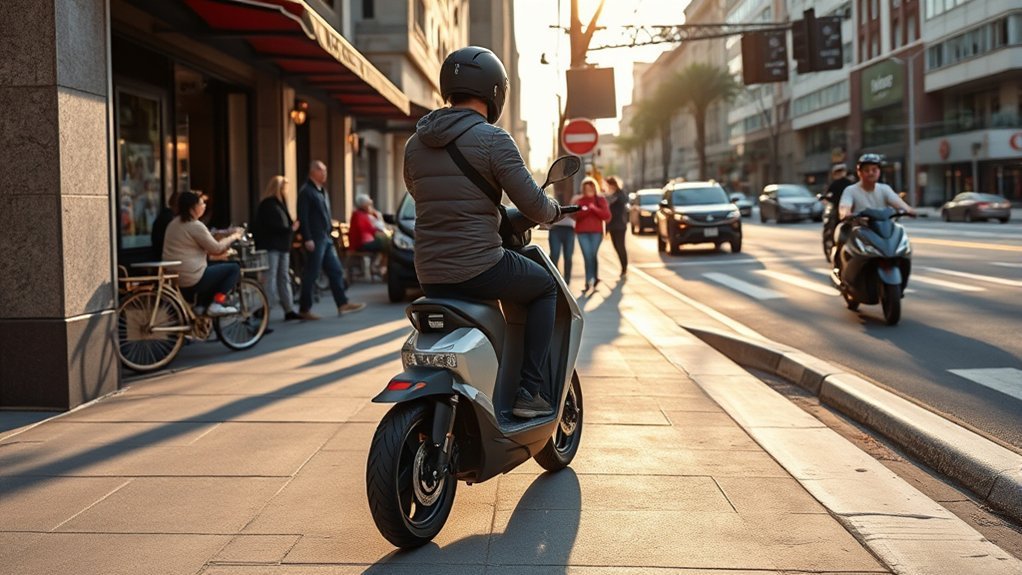
Last Updated on September 10, 2026 by Daniel Globe
In New York City, you generally can’t ride an electric scooter on the sidewalk. State and city law require you to ride in bike lanes or on streets posted at 30 mph or less, and electric operation is capped at 15 mph. Riding on a sidewalk can bring a fine of $25 to $250. Below, you’ll find exactly where you can ride legally, what equipment and age rules apply, and what to do if you’re in a crash.
Quick Answer
No. NYC Administrative Code §19-176.2(b) and New York Vehicle and Traffic Law §1282 both prohibit riding an electric scooter on any sidewalk. You must ride in a bike lane or on a street with a posted speed limit of 30 mph or less, capped at 15 mph. Violations carry fines from $25 to $250.
Disclosure: As an Amazon Associate I earn from qualifying purchases. Some links on this page are affiliate links, at no extra cost to you.
Can You Ride an Electric Scooter on the Sidewalk in New York?
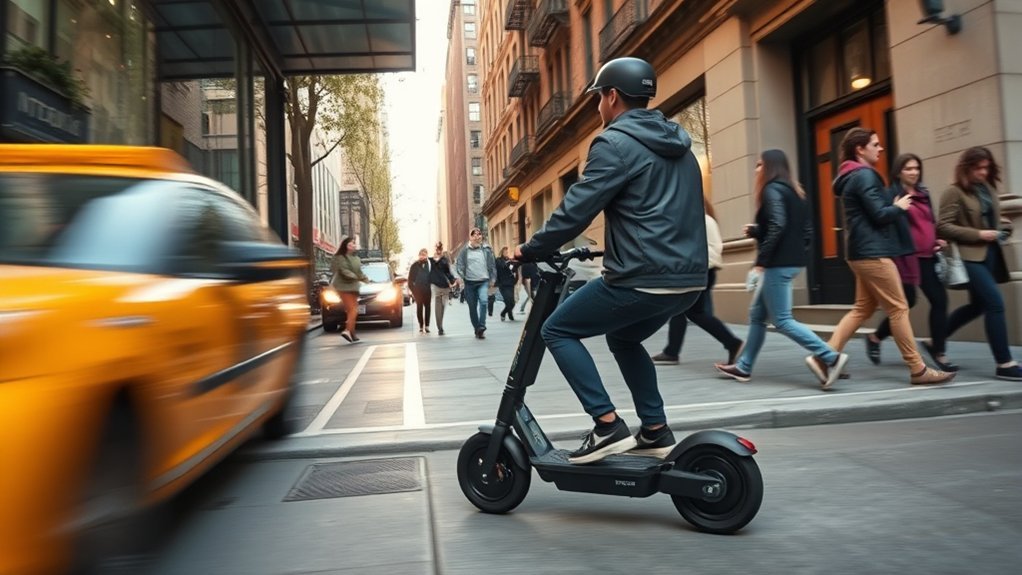
You generally cannot ride an electric scooter on a sidewalk in New York City. New York Vehicle and Traffic Law §1282(7) prohibits sidewalk riding statewide unless a local law specifically authorizes it, and NYC Administrative Code §19-176.2(b) reinforces that ban within the five boroughs. Treat the rule as absolute unless you’ve confirmed a specific local exception. To ride lawfully, use a bike lane or a street posted at 30 mph or less, and don’t exceed 15 mph in full electric operation. You must also be at least 16 years old, and riders aged 16 or 17 must wear a helmet. This framework exists because sidewalks are built for foot traffic, not motorized devices moving at bike speed. A 2020 Insurance Institute for Highway Safety (IIHS) study found that nearly three in five injured scooter riders were hurt on a sidewalk — more than any other location. Ride where the law allows, and keep your riding careful, visible, and predictable for the people walking around you.
What Counts as an “Electric Scooter” Under New York Law?
Under NY Vehicle and Traffic Law §114-e, an electric scooter is a device with handlebars and a floorboard or seat, powered by an electric motor capable of speeds up to 20 mph, though the legal operating limit is 15 mph. This definition matters because it separates true kick-style e-scooters from e-bikes and mopeds, which follow different rules — including different speed caps and, for mopeds, DMV registration requirements. If your device exceeds 20 mph on motor power alone, it likely doesn’t qualify as an e-scooter under state law and may need to be registered as a moped instead.
Note: As of October 2025, New York City applies a citywide 15 mph operating speed cap to e-bikes and e-scooters alike (34 RCNY §§4-01, 4-06), regardless of what a device is mechanically capable of.
What Are New York’s Sidewalk Ban Fines?
Riding an electric scooter on a New York City sidewalk is a citable violation under NYC Administrative Code §19-176.2(b), with fines ranging from $25 to $250 depending on whether it’s a first offense or a repeat one. Under state law, most e-scooter violations — including sidewalk riding, speeding, and equipment lapses — carry a civil fine of up to $50 per VTL §1282, with local ordinances like NYC’s able to set higher penalties for repeat violations. Police can also confiscate a scooter for serious or repeated non-compliance. Lawmakers have proposed stronger oversight through a bill known as “Priscilla’s Law” (Senate Bill S2599A / Assembly Bill A339A), named for Priscilla Loke, a pedestrian killed by an e-bike rider in Manhattan’s Chinatown in 2023. As of mid-2026, the bill remains in committee and has not passed — if enacted, it would require DMV registration and rear license plates for e-bikes and e-scooters in cities of over one million people, though it stops short of mandating insurance. Until then, no registration, license, or insurance is required to ride a personal e-scooter in New York.
Where Can You Legally Ride an E-Scooter in New York?
You can legally ride an e-scooter in designated bike lanes and on streets posted at 30 mph or less. You still have to follow the 15 mph cap for electric operation, and sidewalk riding remains off-limits everywhere in NYC. Because rules can vary outside the city, check local ordinances before riding elsewhere in the state.
Designated Bike Lanes
Bike lanes are the clearest legal option for riding an e-scooter in New York, offering more space and predictability than sidewalks or mixed traffic. Your scooter needs working brakes, lights, reflectors, and an audible signal, and you must be at least 16. Riders 16 or 17 must wear a helmet. Stay within the 15 mph cap, and remember bike-lane rules can differ slightly by borough or block, so watch for posted signage.
Streets Posted at 30 MPH or Lower
On streets posted at 30 mph or lower, you can ride legally in the street or an adjacent bike lane, capped at 15 mph for electric operation. Sidewalks remain off-limits regardless of the posted street speed. You must be 16 or older, wear a helmet if you’re 16 or 17, and ride a scooter equipped with working brakes, lights, and reflectors. Only one rider is permitted per scooter — carrying a passenger is prohibited under state law.
Why Is Sidewalk Riding Dangerous for Pedestrians?
Sidewalks are built for foot traffic, not for devices moving at bike speed. Riding an e-scooter there raises real risks for children, older adults, and people with limited mobility, and it’s where the IIHS found the largest share of scooter-related injuries occur.
- Sidewalks leave little room to pass, so your speed can surprise walkers.
- Uneven pavement and curb cuts can cause sudden stops, wobbles, or falls.
- Tight corners and distracted pedestrians reduce everyone’s reaction time.
- Violations carry $25–$250 fines under NYC Administrative Code §19-176.2(b).
Shared sidewalks work only when riders treat pedestrian space as off-limits — one person’s convenience shouldn’t come at the cost of another person’s ability to walk without fear.
What E-Scooter Rules Do Riders Need to Follow?
Beyond the sidewalk ban, e-scooter riders in New York must follow the same basic traffic rules as cyclists: obey signals and stop signs, yield to pedestrians at crosswalks, and stay off highways. You must be at least 16, and if you’re 16 or 17, wear a helmet — adults aren’t required to, though it’s strongly recommended. Your scooter must have brakes, lights, reflectors, and an audible signal device, plus a front light visible from at least 500 feet. Only one rider per scooter is allowed, and no scooter may be parked in a way that blocks a sidewalk, doorway, or accessibility ramp.
Pro Tip: Personal scooters may be parked (not ridden) on sidewalks under state law, as long as they don’t block pedestrian passage — useful to know if you’re wondering where to leave your scooter after a ride.
What Should You Do After an E-Scooter Crash in New York?
After an e-scooter crash, check for injuries first and call 911 if needed. Then document the scene: photograph the vehicles, roadway conditions, and any visible injuries, and collect names and contact information from witnesses.
- Seek medical attention, even if you feel fine — some injuries surface later.
- Photograph vehicles, roadway defects, debris, and visible injuries.
- Get names, phone numbers, and statements from witnesses.
- Save receipts, messages, and any related communications.
New York now requires many e-bike and e-scooter crashes to be formally reported to the DMV under a statewide reporting law that took effect July 11, 2025 — so check current local reporting requirements without delay. A complete, time-stamped record protects you if you need to file a claim later.
Warning: This article explains general legal rules and isn’t legal advice. If you’re seriously hurt in a crash, consult a personal injury attorney before signing anything or giving a recorded statement to an insurer.
Frequently Asked Questions
What happens if you get caught riding an electric scooter on the sidewalk?
You can face a fine of $25 to $250 under NYC Administrative Code §19-176.2(b), and repeat violations increase the penalty. Officers may also confiscate the scooter for serious or repeated non-compliance, and you could bear added liability if the ride caused an injury.
Do I need a license for an electric scooter in Pennsylvania?
No, Pennsylvania doesn’t require a license to ride a scooter. Riders generally must be 16 or older and follow local safety-equipment rules, but requirements vary by municipality, so check local ordinances before riding.
What are the rules for electric scooters in Florida?
Florida allows e-scooters on streets and bike paths, but not on sidewalks unless a local ordinance permits it. Riders must follow bicycle traffic rules, stay within the 15 mph legal limit, and wear a helmet if under 16.
Are electric scooters street legal in Louisiana?
Yes, electric scooters are street legal in Louisiana. Riders must use streets or bike lanes rather than sidewalks, be at least 16 years old, and follow local ordinances where they apply.
Key Takeaways
- Sidewalk riding is banned citywide under NYC Admin Code §19-176.2(b); fines run $25–$250.
- Legal riding means bike lanes or streets posted at 30 mph or less, capped at 15 mph.
- Riders must be 16+; those 16–17 must wear a helmet (VTL §1286).
- No license, registration, or insurance is currently required — but “Priscilla’s Law” could change that if it passes.
- Nearly three in five e-scooter injuries occur on sidewalks, per IIHS research — a key reason the ban exists.
Conclusion
If you’re wondering whether you can ride an electric scooter on the sidewalk in New York, the answer is no — state and city law both treat sidewalk riding as unsafe, and fines of $25 to $250 can follow. Ride in bike lanes or on streets posted at 30 mph or less, stay within the 15 mph cap, and follow the age and helmet rules. If you’re ever in a crash, document the scene and know that many incidents now must be reported to the DMV. When in doubt, check current local rules before you ride.
Sources
- NY Vehicle and Traffic Law §1282 — sidewalk ban, speed limits, and where e-scooters may operate statewide
- NY Vehicle and Traffic Law §1286 — helmet requirement for riders aged 16–17
- NY Vehicle and Traffic Law §114-e — legal definition of an electric scooter
- Insurance Institute for Highway Safety (IIHS) — study on where e-scooter injuries occur
- NY Governor’s Traffic Safety Committee — Micromobility — state overview of e-scooter and e-bike rules
