

Last Updated on September 11, 2026 by Daniel Globe
Staying in a hotel alone at 16 is possible at a limited number of properties, but you should never assume that a reservation guarantees admission. The answer depends on the specific hotel, its location, the room type, the documents you carry, and whether the property has approved an unaccompanied minor in advance.
Quick Answer
A 16-year-old may stay alone only if the specific hotel permits unaccompanied minors and accepts the required ID, consent, room type, and payment method. Many U.S. properties require guests to be 18 or 21. Some European brands accept 16- and 17-year-olds in private rooms with written parental permission.
Key Takeaways
- Minimum check-in ages are usually set by the individual property, not reliably by the hotel brand.
- A parent booking or prepaying for a room does not automatically authorize a 16-year-old to stay alone.
- Hotels that accept minors commonly require a private room, photo ID, written consent, and a copy of a guardian’s ID.
- Shared hostel dormitories may be prohibited even when the same property allows a minor to use a private room.
- International entry documents and hotel consent forms are separate requirements.
At a Glance
| Time Required | About 10–20 minutes to verify a domestic stay; longer if international documents are needed |
| Difficulty | Moderate because policies differ by property, country, and room type |
| Tools Needed | Phone or email, photo ID, hotel consent form, guardian ID copy, booking details, and approved payment method |
| Cost | Room rate, taxes, and any security or incidental deposit required by the property |
Disclosure: As an Amazon Associate I earn from qualifying purchases. Some links on this page are affiliate links, at no extra cost to you.
Can a 16-Year-Old Stay in a Hotel Alone?
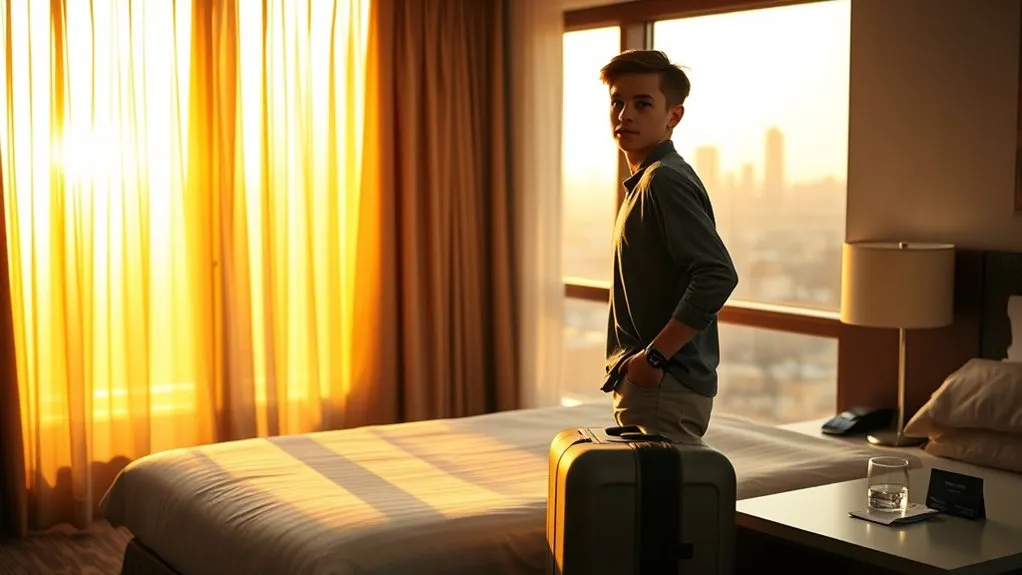
Yes, a 16-year-old can sometimes stay in a hotel alone, but only when the selected property expressly allows it. Permission from a parent is helpful, but parental permission does not override the hotel’s own minimum age.
A hotel that accepts an unaccompanied 16-year-old may require a private room, valid photo identification, a signed consent form, a copy of a parent’s or guardian’s ID, emergency contact information, and an approved payment arrangement. The hotel may also require the documents before arrival rather than at the front desk.
MEININGER Hotels, for example, permits eligible guests aged 16 or 17 to stay in private rooms with parental or guardian permission and the required documents. Its policy does not permit guests under 18 to use shared dormitories.
Note: This article provides general travel information, not legal advice. Hotel policies and laws can change, so confirm the rules for the exact property and destination before paying.
What Are the Hotel Age Rules in the United States?
There is no dependable U.S. chainwide rule that guarantees check-in at 16, 18, or 21. Many properties publish a minimum age of 18, while hotels in nightlife districts, casino markets, resort areas, or other higher-risk locations may require guests to be 21.
Major brands often leave the decision to the individual hotel. Marriott states that each hotel sets its minimum age according to the property, country, and local rules. Current Marriott properties publish different minimums, so seeing an 18-year requirement at one location does not mean another location will accept the same guest.
Hilton also says the minimum age varies by hotel and directs travelers to the selected property’s check-in policy. Hilton’s website terms generally require a person to be at least 18 to reserve online, while advising younger travelers to contact the property directly.
For a 16-year-old, the safest assumption is that most conventional U.S. hotels will not permit solo check-in unless the property has a specific minor policy and has approved the arrangement in advance.
An online confirmation number proves that a reservation was created. It does not prove that an unaccompanied 16-year-old will be admitted at check-in.
Why Do Hotels Set Minimum Check-In Ages?
Hotels use minimum-age rules to manage contracts, payment, property damage, safety, alcohol access, noise complaints, and responsibility for the room. These considerations can produce different rules at hotels located only a few blocks apart.
Legal Risk Management
Hotels normally require the registered guest to accept the room agreement and take financial responsibility for charges or damage. Under U.S. contract principles, agreements made by minors may be void or voidable depending on the jurisdiction and circumstances. Cornell’s Legal Information Institute explains that minors’ contracts are voidable in most states, which is one reason many hotels prefer an adult contracting party.
This does not mean every agreement involving a minor is automatically invalid. It means the property may adopt a minimum age or require an adult guarantee to reduce uncertainty.
Local Age Laws
The legal age of adulthood, child-supervision rules, hotel-registration requirements, and other local laws can affect a property’s policy. The relevant rules depend on the state, country, and sometimes the city.
- Check the property’s published minimum age.
- Ask whether local law prevents an unaccompanied minor from staying.
- Confirm whether a parent’s written authorization changes the answer.
- Ask whether the hotel requires a responsible adult to remain on the property.
Do not rely on the rules from a different city or another hotel in the same chain.
Hotel Policy Differences
A property may set a higher minimum age because it has a bar, casino, nightclub, shared dormitories, expensive room equipment, limited overnight staffing, or a history of unauthorized parties. Other hotels may accept younger travelers when the stay is connected to education, work, sports, medical care, or organized travel.
These exceptions are discretionary unless the property publishes them. Ask for written confirmation rather than relying on an informal statement from a booking platform or call center.
Booking a Hotel Room vs. Checking In

Booking and checking in are separate stages. A website may accept the reservation details or payment without checking the guest’s age, while the front desk can still refuse the room when identification is reviewed.
- Website eligibility: The booking site may require the person creating the reservation to be 18 or older.
- Reservation: A parent may be able to make the reservation, but the hotel still needs to know who will occupy the room.
- Payment: Prepayment covers some or all of the room charge but may not cover deposits or incidentals.
- Check-in: Staff verify the guest’s identity, age, documents, payment method, and eligibility.
- Occupancy: The hotel decides whether the 16-year-old may remain without an adult.
A reservation made by a parent or third-party website is therefore not enough unless the property has approved the minor as the actual guest.
Pro Tip: Ask the hotel to email its approval and list the teen’s full name, age, stay dates, room type, required documents, payment arrangement, and any adult-supervision condition.
How to Confirm a Hotel Will Accept a 16-Year-Old
Contact the property itself rather than relying only on a central reservations agent or third-party booking page. The front desk or hotel manager is usually best placed to explain the local policy.
- Find the hotel’s official website and direct telephone number.
- State the guest’s exact age and that no adult will be staying in the room.
- Ask for the minimum age for both booking and check-in.
- Ask whether a parent may make or guarantee the reservation.
- Confirm the accepted room type, especially whether a private room is required.
- Request the exact consent or authorization form.
- Ask whether the parent’s signature must be notarized.
- Confirm which photo ID the teen must present.
- Ask whether a copy of the guardian’s ID is required.
- Confirm the accepted card, deposit, and incidental-payment method.
- Ask whether the cardholder must appear in person.
- Request written approval and save it offline for arrival.
Reconfirm the arrangement shortly before travel. Policies can change, and a staff member who originally approved the stay may not be working when the guest arrives.
Warning: Do not enter an inaccurate age, list an adult who will not be present, or conceal who will occupy the room. The hotel may cancel the reservation, refuse check-in, remove the guests, or retain charges allowed by its booking terms.
Which Hotel Chains Allow 16-Year-Olds?
Some European hotel and hostel brands publish policies that permit certain 16-year-olds to stay without a parent. Others require a parent or guardian to stay in the hotel. The examples below were checked on July 28, 2026, but they are not permanent guarantees.
| Brand or location | Published under-18 rule |
| MEININGER Hotels | Guests aged 16 or 17 may stay in a private room with parental or guardian permission, the required form, and a copy of the guardian’s ID. Under-18s cannot stay in shared dormitories. |
| a&o Hostels | Unaccompanied minors may be accepted in private rooms with consent and a parent ID copy. The UK minimum is 16, while unaccompanied minors are not accepted at a&o properties in Italy. |
| Premier Inn Germany | Guests between 16 and 18 may stay without a parent or guardian when they present the signed Minor Travelling Alone Form and a copy of a parent’s or guardian’s ID. |
| Premier Inn UK | Guests under 18 are not permitted to stay unless a parent or guardian is also staying in the hotel. |
| Travelodge UK | People under 18 cannot stay in the hotel alone. Guests aged 16 or 17 may occupy a separate room as part of an eligible multi-room booking when accompanied by a parent or guardian. |
Always check the exact destination. A brand may have one policy in Germany, a different policy in the United Kingdom, and another policy in Italy.
When Can Parents Book the Room Instead?
A parent may be able to create, prepay, or guarantee the reservation, but this only works when the hotel knowingly approves the 16-year-old as the actual occupant. The parent should not simply place the room in their own name and assume the teen can collect the key.
Parent-Booked Arrangements
Contact the hotel before booking and explain the complete arrangement. Ask whether the parent should be listed as the payer, guarantor, primary guest, or additional contact. The teen’s name and age should still appear wherever the property requires them.
The hotel may request:
- A signed parental or guardian consent form
- A copy of the parent’s or guardian’s photo ID
- A credit-card authorization form
- Written acceptance of damage and incidental charges
- Emergency contact information
- Confirmation that the guest will use a private room
Do not finalize a nonrefundable reservation until the property confirms that this arrangement is accepted.
Check-In Age Rules
An adult’s payment does not replace the minimum check-in age. If hotel policy requires an adult to appear at check-in or remain on the property, a consent letter will not normally remove that requirement.
Ask the hotel to state whether the parent must:
- Make the reservation
- Present the payment card
- Appear at the front desk
- Stay in the same room
- Stay in another room at the property
- Remain reachable throughout the stay
Shared Room Options
When solo accommodation is not permitted, a hotel may allow a family to book two rooms with the adult staying on the property. Connecting or adjacent rooms can provide privacy while meeting the supervision rule, but room location is not always guaranteed.
- Request connecting or nearby rooms when booking.
- Register every guest accurately.
- Confirm which adult is responsible for the minor.
- Keep the room assignments approved by the front desk.
Do not privately exchange rooms or keys after check-in. Staff should know who is occupying each room so they can respond correctly during an emergency.
What Are the Hotel Rules for 16-Year-Olds in Europe?

Europe does not have one hotel rule for all countries. A 16-year-old may qualify for a private room at one brand in Germany but be refused by the same or another brand in Italy or the United Kingdom.
Common requirements include:
- A private room rather than a shared dormitory
- A hotel-specific parental consent form
- A copy of the parent’s or guardian’s passport or identity card
- The teen’s passport or accepted national ID
- An adult guarantor or approved payment card
- An adult staying elsewhere in the hotel
- Advance submission of the documents
International travel rules are separate from hotel rules. The U.S. Department of State advises that some countries require written or notarized parental permission when a minor travels alone or without a parent or guardian. Airlines, border authorities, and destination countries may request documents that the hotel does not.
Check the destination’s official entry requirements as well as the hotel’s terms. Approval from one does not guarantee approval from the other.
Private Hotel Rooms vs. Shared Hostel Dorms
A property may accept a 16-year-old in a private room while prohibiting the same guest from a shared dormitory. Shared sleeping spaces create additional safeguarding, privacy, and supervision concerns.
MEININGER and a&o both publish private-room restrictions for unaccompanied under-18 guests. Booking through a hostel marketplace does not override the individual hostel’s rule, even when the marketplace allows a 16-year-old to create an account or start a reservation.
Before booking a hostel, ask:
- Whether under-18 guests are accepted at all
- Whether a private room is compulsory
- Whether every bed in a dorm must be reserved for the same family or group
- Whether reception is staffed throughout the night
- Whether a curfew or late-arrival restriction applies
- Whether parental consent must be submitted before arrival
What Documents Does a 16-Year-Old Need?
The required documents depend on the property. “Authorization for Underage Person to Travel” is the name of MEININGER’s form, not a universal hotel form.
A 16-year-old may need:
- Photo identification: A passport, national identity card, driver’s license, or other form specifically accepted by the hotel.
- Hotel consent form: The property’s own underage-guest or minor-travel authorization.
- Guardian ID copy: A clear copy of the ID belonging to the adult who signed the consent form.
- Booking confirmation: The reservation number, guest names, dates, room type, and hotel contact details.
- Written hotel approval: An email confirming that the hotel knows the guest is 16 and will be unaccompanied.
- Payment authorization: Any cardholder authorization or adult guarantee required for the room and incidentals.
- Emergency contacts: Telephone numbers for the parent, guardian, and another trusted adult.
- Travel documents: Any passport, visa, custody, or notarized permission documents required by the airline or destination country.
Bring digital and paper copies where possible. Keep sensitive documents secure and show them only to authorized hotel or border staff.
Payment, Deposits, and Credit-Card Rules
Age approval is only part of check-in. Hotels commonly require an accepted card or deposit to cover incidentals such as room damage, food charges, parking, or other services.
Before arrival, ask:
- Whether cash, debit cards, prepaid cards, or mobile wallets are accepted
- Whether the payment card must match the registered guest
- Whether the cardholder must be present
- Whether a parent can submit a credit-card authorization form
- How much will be held as a deposit
- When the deposit will be released
- Whether the room is refundable if age requirements prevent check-in
A prepaid room can still require a separate card or deposit at the front desk. A teen should not travel with only the exact room price unless the hotel has confirmed every payment requirement.
Warning: Written parental consent does not guarantee that the hotel will accept a card belonging to someone who is absent. Confirm the payment and deposit arrangement separately.
What Safety Tips Should Teens Follow in a Hotel?
If a hotel has approved a solo stay, the teen and parent should make a clear safety plan before arrival.
- Share the hotel name, address, reservation details, and travel schedule with a trusted adult.
- Agree on regular check-in times by phone or message.
- Keep the room number private except when sharing it with a parent, guardian, or emergency contact.
- Use the deadbolt, security latch, and peephole whenever the room is occupied.
- Never open the door for an unexpected visitor.
- Call the front desk using the hotel’s published number to verify anyone claiming to be hotel staff.
- Locate the nearest emergency exit and count the doors between the room and the stairs.
- Do not invite newly met travelers or strangers into the room.
- Keep identification, money, medication, keys, and a charged phone secure.
- Report harassment, suspicious behavior, a lost key, or an attempted entry immediately.
If the room feels unsafe, contact the front desk and a trusted adult. In an immediate emergency, leave for a staffed public area and call the local emergency number.
What Should You Do If the Hotel Says No?
If the hotel refuses the stay, remain calm and ask which requirement was not met. The issue may be the minimum age, room type, missing paperwork, payment method, adult-supervision rule, or a local restriction.
- Ask the hotel to show or explain the applicable policy.
- Find out whether an approved adult staying on the property would solve the problem.
- Ask whether the reservation can be canceled or refunded.
- Contact the parent, guardian, or trusted adult immediately.
- Call nearby properties directly and disclose the guest’s exact age.
- Consider a youth hostel or hotel with a published under-18 private-room policy.
- Do not remain alone in an unsafe or unfamiliar location while searching for accommodation.
A parent should be prepared to arrange alternative lodging or transportation if check-in fails. Avoid making a nonrefundable backup reservation until the second property confirms its policy.
Frequently Asked Questions
Can you stay at a hotel alone at 16?
Sometimes. The specific hotel must allow unaccompanied 16-year-olds and approve the guest’s ID, consent documents, room type, and payment arrangement. Most hotels should be contacted directly before a reservation is made.
Can a 16-year-old have their own hotel room?
Yes, when the hotel permits it. Some properties allow a private room with parental consent, while others require a parent or guardian to stay in the same hotel or room. Shared dormitories may have stricter rules.
Is it illegal for a minor to stay in a hotel alone?
There is no single answer that applies everywhere. Hotel policy, contract rules, child-supervision laws, registration requirements, and international travel laws may all affect the stay. Check the selected property and destination rather than assuming that parental permission is enough.
Can a parent book the hotel room for a 16-year-old?
A parent may be able to book, prepay, or guarantee the room, but the hotel must know that the actual guest is 16 and unaccompanied. A reservation in a parent’s name does not override the minimum check-in age.
Does a 16-year-old need a credit card to check in?
It depends on the hotel. Some accept a debit card, cash deposit, prepaid room, or parent’s card authorization. Others require a physical credit card in the registered guest’s name or require the cardholder to be present.
Can a 16-year-old stay alone in a hostel?
Some hostels permit it, usually in a private room with written parental permission. Shared dormitories are commonly restricted to guests aged 18 or older, so the room category must be confirmed before booking.
Can a 16-year-old spend the night home alone?
That is separate from hotel policy. The answer depends on state or local child-supervision rules, the length of time, the teen’s maturity, access to emergency help, and the parent’s safety plan. Check the rules where the home is located.
Sources
- MEININGER Hotels: Guests Younger Than 18 — private-room, consent-form, and guardian-ID requirements for minors
- a&o Hostels FAQ — country-specific rules for unaccompanied teenage guests
- Marriott: Minimum Age Required to Check In — confirmation that the minimum age is set by the individual hotel
- Hilton Hotel Policies — instructions for finding the selected property’s minimum booking age
- Cornell Legal Information Institute: Infancy — general background on minors and voidable contracts
- U.S. Department of State: Travel With Minors — international parental-permission and travel-document guidance
Conclusion
A 16-year-old can stay alone at some hotels, but only after the exact property approves the arrangement. Confirm the minimum age, room type, ID, consent paperwork, payment method, deposit, and international travel documents before booking.
Never rely on a parent’s reservation, prepayment, or an online confirmation as proof that check-in will be allowed. Obtain written approval, enter every guest’s information accurately, carry the required documents, and keep a safe backup plan in case the hotel cannot admit the teen.
