
Last Updated on July 24, 2026 by Daniel Globe
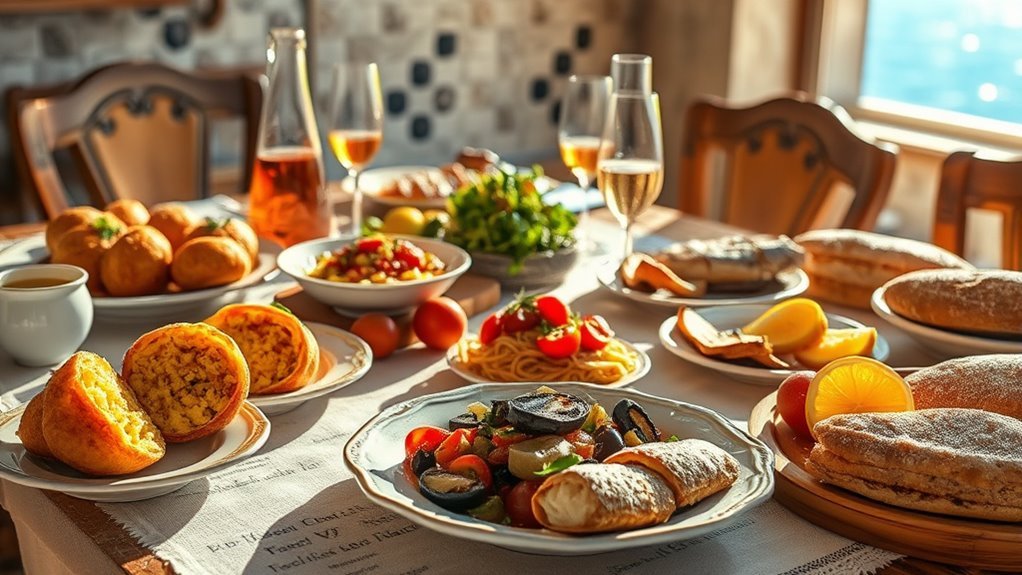
Traditional Sicilian dishes bring together street food, seafood, vegetables, pasta, citrus, nuts, and ricotta in ways that can taste sweet, salty, sour, and briny in the same meal. Start with arancine or arancini, pane e panelle, pasta alla Norma, caponata, pasta con le sarde, Trapani-style couscous, busiate with pesto alla Trapanese, cannoli, cassata, and granita with brioche.
Quick Answer
The must-try foods in Sicily include fried rice balls, chickpea fritter sandwiches, eggplant pasta, sweet-and-sour caponata, sardine pasta, fish couscous, twisted busiate with tomato-almond pesto, ricotta-filled cannoli, decorated cassata, and creamy granita with brioche. Each part of the island has its own names, shapes, ingredients, and specialties.
Key Takeaways
- Palermo is known for round arancine, pane e panelle, sfincione, and other market foods.
- Catania is closely linked to conical arancini, pasta alla Norma, and granita with brioche.
- Western Sicily, especially Trapani, is the place to seek fish couscous and busiate with pesto alla Trapanese.
- Sicilian sweets often feature sheep’s-milk ricotta, almonds, pistachios, chocolate, citrus, and candied fruit.
- Recipes vary by town and family, so different versions can still be traditional.
Disclosure: As an Amazon Associate I earn from qualifying purchases. Some links on this page are affiliate links, at no extra cost to you.
What Makes Sicilian Cuisine Unique?
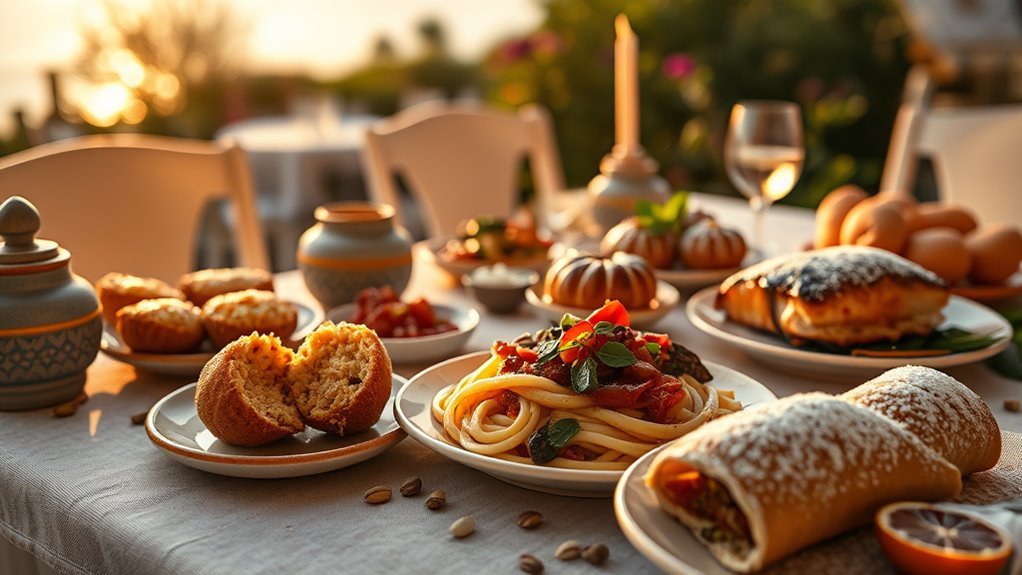
Sicilian cuisine reflects the island’s position in the Mediterranean and its long contact with Phoenician, Greek, Roman, Arab, Norman, Spanish, and other cultures. Those layers appear in combinations such as fish with raisins and pine nuts, couscous with seafood broth, fried foods sold in historic markets, and desserts rich in ricotta, almonds, citrus, and candied fruit. Italy’s official tourism portal describes Sicilian food as an interweaving of several Mediterranean civilizations.
The cooking is also strongly regional. Palermo’s market snacks differ from Catania’s bar food, while Trapani’s dishes show especially clear links with North Africa. Fresh ingredients lead the flavor: tomatoes, eggplant, wild fennel, capers, olives, citrus, almonds, pistachios, ricotta, sardines, tuna, and swordfish appear often.
There is no single Sicilian menu. The island’s food changes from Palermo to Catania, Trapani, Messina, Ragusa, and the smaller islands.
Note: The spelling and form of a dish may change by region. Both arancina and arancino are widely used, and family recipes for caponata, couscous, and pasta dishes can differ.
Traditional Sicilian Dishes at a Glance
| Dish | What It Is | Where It Is Strongly Associated |
|---|---|---|
| Arancina or arancino | Breaded and fried rice with a savory filling | Across Sicily |
| Pane e panelle | Bread filled with chickpea-flour fritters | Palermo |
| Pasta alla Norma | Pasta with tomato, fried eggplant, basil, and ricotta salata | Catania |
| Caponata | Sweet-and-sour eggplant with vegetables, olives, and capers | Across Sicily |
| Pasta con le sarde | Pasta with sardines, wild fennel, raisins, pine nuts, and saffron | Palermo and western Sicily |
| Cous cous di pesce | Hand-worked semolina served with fish broth or soup | Trapani and San Vito Lo Capo |
| Busiate al pesto Trapanese | Twisted pasta with tomato, almond, basil, garlic, and cheese pesto | Trapani |
| Cannolo Siciliano | Fried pastry shell filled with sweetened ricotta | Across Sicily |
| Cassata Siciliana | Ricotta-filled sponge cake with marzipan, icing, and candied fruit | Palermo and across Sicily |
| Granita con brioche | Soft frozen dessert served with a warm brioche | Eastern Sicily |
Arancino or Arancina: Sicily’s Iconic Fried Rice Ball
One bite explains why this is Sicily’s best-known street food. A crisp breadcrumb shell surrounds tender rice and a hot filling. Traditional options include ragù with peas, or a “butter” filling made with béchamel, ham, and cheese. Modern shops may also offer pistachio, mushroom, eggplant, seafood, or vegetarian versions.
The name and shape change across the island. In Palermo and much of western Sicily, the usual word is arancina, and the classic shape is round like an orange. In eastern Sicily, especially Catania, arancino is common and the shape is often conical, sometimes compared with Mount Etna. The official Visit Sicily arancine guide confirms this regional distinction.
The dish is commonly linked to Arab-era rice traditions, but its exact origin is not documented with certainty. It is safer to treat that history as a widely repeated explanation rather than a proven single invention.
Pro Tip: Eat arancine or arancini soon after frying. The shell stays crisper, the filling remains hot, and the rice is less likely to feel heavy.
Pane e Panelle, Palermo’s Street-Food Classic
Pane e panelle is one of Palermo’s simplest and most satisfying foods. Thin fritters made from chickpea flour are fried until lightly crisp, then tucked into a soft sesame-topped roll. Salt, black pepper, parsley, and a squeeze of lemon may finish the sandwich.
You will often see panelle served with crocchè, fried potato croquettes also called cazzilli. The combination is filling, inexpensive, and easy to eat while walking through Palermo’s markets. Visit Sicily’s panelle and crocchè recipe describes panelle as chickpea-flour fritters commonly eaten in bread.
Other Palermo Street Foods Worth Trying
Sfincione
Sfincione is a thick, soft Sicilian bread or pizza topped in the Palermo style with onion, tomato, anchovy, caciocavallo, oregano, and breadcrumbs. The Bagheria version is usually paler and differs in its topping. It is sold by bakeries and street vendors, and its spongy base makes it different from a thin Neapolitan pizza.
Pane con la Milza
Pani câ meusa, or bread with spleen, is a traditional Palermo sandwich made with sliced spleen and other offal cooked in fat. It may be served schietto, with lemon, or maritato, with cheese. Its strong flavor and offal filling make it more adventurous than pane e panelle, but it is an important part of Palermo’s food culture.
Pasta alla Norma and Eggplant Flavors
Pasta alla Norma brings together fried eggplant, tomato sauce, basil, and grated ricotta salata. The eggplant absorbs the sauce, while the salty cheese sharpens the sweet tomato. It is closely associated with Catania and is one of the clearest examples of a simple Sicilian dish becoming more than the sum of its parts.
Classic Pasta alla Norma
The traditional combination is pasta, tomato sauce, fried eggplant, fresh basil, and ricotta salata. Spaghetti, maccheroni, or short pasta may be used. The dish’s name is widely linked to Vincenzo Bellini’s opera Norma, although stories differ about exactly who first made the comparison. The official Visit Sicily recipe and the Italian Academy of Cuisine both identify tomato, eggplant, basil, and ricotta salata as the core ingredients.
Eggplant, Tomato, and Ricotta
The dish depends on balance rather than a long ingredient list:
- Eggplant: Fried slices or cubes add a soft, rich texture and lightly bitter edge.
- Tomato: A bright sauce brings sweetness and acidity.
- Ricotta salata: The firm, salted cheese adds a savory finish.
- Basil: Fresh leaves lift the sauce with a clean herbal note.
A version without ricotta salata can be vegan, but it is no longer the full traditional combination. Some restaurants can replace the cheese with toasted breadcrumbs or leave it off on request.
Caponata and Sicily’s Sweet-Sour Balance
Caponata centers on fried eggplant, celery, tomato, olives, and capers, finished with vinegar and sugar. This sweet-and-sour seasoning is called agrodolce. The result should taste lively rather than sugary, with the vinegar cutting through the soft eggplant and oil.
Sweet-Sour Signature
The classic Palermo-style version uses eggplant, celery, onions, tomatoes, olives, capers, pine nuts, vinegar, sugar, and basil. It can be served warm, at room temperature, or cold. Many cooks say it tastes better after resting because the flavors have time to blend.
- The eggplant gives the dish its soft body.
- Olives and capers add salt and brine.
- Vinegar and sugar create the bright agrodolce finish.
- Celery and nuts add bite and texture.
Eggplant and Capers
Good caponata should not feel like oily eggplant alone. The capers, olives, celery, and vinegar keep every spoonful balanced. It works as an antipasto, side dish, topping for bread, or light main course. The official Visit Sicily caponata recipe shows how vinegar and sugar are added after the fried vegetables are combined.
Local Variations
Caponata changes across Sicily. Palermo’s version is often treated as the simplest reference point. Agrigento versions may add peppers, honey, garlic, chili, almonds, or raisins. Catania versions may include red and yellow peppers, garlic, or potatoes. Messina cooks may use peeled tomatoes, while Trapani versions can include peppers and toasted almonds. These are regional patterns, not strict rules, because family recipes vary.
Pasta con le Sarde
Pasta con le sarde combines fresh sardines, wild fennel, raisins or sultanas, pine nuts, saffron, and often toasted breadcrumbs. Bucatini is common because its hollow shape catches the sauce, but other pasta shapes also appear.
The sardines bring salt and richness, fennel adds an anise-like freshness, and raisins create a mild sweet contrast. Pine nuts add texture, while saffron gives the dish color and aroma. This mix of seafood, fruit, nuts, herbs, and spice is one of the strongest examples of Sicily’s layered food history. Italy’s official tourism guide lists these same core ingredients in its overview of traditional Sicilian foods.
Sarde a Beccafico and Other Sicilian Seafood
Sarde a beccafico are sardines rolled or folded around a filling that can include breadcrumbs, raisins, pine nuts, citrus, and herbs. Recipes differ between Palermo and Catania, but the sweet-savory style remains easy to recognize.
Sicily’s coast also makes tuna, swordfish, octopus, anchovies, and shellfish important parts of local menus. Swordfish rolls, grilled tuna, fish stews, and stockfish a ghiotta are worth seeking, especially in coastal towns.
Trapani’s Cous Cous di Pesce
In western Sicily, especially around Trapani and San Vito Lo Capo, couscous shows the island’s close connection with North Africa. Traditional cooks hand-work semolina and steam it, often in a couscous pot, then serve it with a concentrated fish broth or soup. The seafood may change with the catch and the cook.
Trapani’s fish couscous turns semolina and local seafood into one of Sicily’s clearest Mediterranean crossroads.
- The semolina is moistened and worked into small grains.
- It is steamed slowly rather than simply boiled like instant couscous.
- A fish broth, often flavored with tomato, garlic, herbs, and spices, is served with or absorbed by the couscous.
- Fish and seafood are added according to local availability and the recipe.
Vegetable and meat versions also exist. Visit Sicily’s couscous overview notes the many broth variations and the dish’s strong link with Trapani.
Busiati with Trapanese Pesto
| Element | Role in the Dish |
|---|---|
| Busiati | Hand-twisted pasta whose curves hold the sauce |
| Tomatoes | Fresh sweetness, acidity, and moisture |
| Almonds | Richness and a slightly coarse texture |
| Basil | Fresh herbal aroma |
| Garlic | Sharp, savory depth |
| Pecorino and olive oil | Salt, body, and a smooth finish |
Pesto alla Trapanese is related to Genoese pesto but uses western Sicilian ingredients. Tomatoes and almonds join basil, garlic, olive oil, and often pecorino. The sauce is usually uncooked, so it tastes bright and fresh. Busiati are an ideal match because their twisted shape holds the coarse pesto in every curve.
The official Visit Sicily vegetarian food tour identifies basil, tomatoes, almonds, pecorino, and red garlic from Nubia as characteristic ingredients in the Trapani version.
Granita with Brioche
Sicilian granita is softer and creamier than a hard shaved ice. Common flavors include lemon, almond, coffee, strawberry, mulberry, and pistachio. In eastern Sicily, it is often eaten for breakfast with a warm brioche col tuppo, a soft brioche shaped with a small top knot.
You can tear off pieces of brioche and dip them into the granita, or alternate spoonfuls and bites. The pairing is especially associated with Catania, Messina, and nearby towns, although you can find it across the island.
Cannolo Siciliano and Ricotta Sweets
A good cannolo gives you a crisp fried shell and a cool filling made from sweetened sheep’s-milk ricotta. Chocolate pieces, pistachios, candied orange peel, or cherries may decorate the ends. The contrast between the crackling shell and smooth filling is the reason it remains Sicily’s most famous pastry.
A cannolo is at its best when the shell stays crisp and the ricotta is added close to serving time.
- Crisp shell: The pastry should break cleanly rather than bend.
- Fresh ricotta: Sheep’s-milk ricotta gives the classic filling its light tang and smooth body.
- Simple garnish: Chocolate, citrus peel, or pistachio should support the ricotta rather than cover it.
Cannoli were traditionally linked with Carnival, but they are now made throughout the year. Their deeper origin is debated, so claims that they can be traced with certainty to ancient times should be treated cautiously. The official Visit Sicily cannoli page confirms the Carnival connection and year-round availability.
Pro Tip: In a pastry shop, choose a cannolo filled to order when possible. A shell that sits against wet ricotta for too long can lose its crisp texture.
Cassata Siciliana, the Island’s Showpiece Dessert
Cassata Siciliana layers sponge cake, sweetened ricotta, chocolate, and candied fruit, then covers the cake with marzipan and icing. Its bright decoration and rich filling make it a celebration dessert rather than an everyday snack.
The dessert’s history is complex. Visit Sicily says its name may come from the Arabic qas’at, meaning basin, or the Latin caseum, meaning cheese. The site traces the dessert’s development to around the ninth century but also says the history is uncertain and shaped by several influences. This cautious explanation is more reliable than assigning cassata to one culture or inventor.
Cassata is strongly connected with Palermo and Easter celebrations, although it is sold throughout the year. A simpler cassata al forno uses a baked pastry shell with ricotta and chocolate instead of the colorful marzipan coating. See the official Visit Sicily cassata guide for the traditional components and the baked variation.
Where to Try Traditional Sicilian Food
- Palermo: Look for arancine, pane e panelle, crocchè, sfincione, pane con la milza, pasta con le sarde, cannoli, and cassata. The Ballarò, Capo, Vucciria, and Borgo Vecchio areas are closely linked with street food.
- Catania: Seek conical arancini, pasta alla Norma, cartocciate, cipolline, granita, and brioche.
- Trapani and San Vito Lo Capo: Order cous cous di pesce, busiate with pesto alla Trapanese, tuna, and other western Sicilian seafood dishes.
- Messina: Try granita with brioche, pidoni, focaccia Messinese, and local seafood.
- Ragusa, Modica, and southeastern Sicily: Look for scacce, caciocavallo Ragusano, Modica chocolate, and dishes based on local tomatoes, cheeses, and vegetables.
- Coastal towns and islands: Ask about the day’s tuna, swordfish, sardines, octopus, capers, and seasonal catch.
Allergy Caution: Sicilian dishes may contain wheat, dairy, eggs, fish, shellfish, almonds, pistachios, pine nuts, or other allergens. Fried foods may share oil, and sauces can contain anchovies even when fish is not obvious. Ask the restaurant about ingredients and cross-contact before ordering.
Frequently Asked Questions
Which Sicilian wines pair well with traditional dishes?
A crisp Grillo or another dry Sicilian white can work with fried foods, seafood, and fish couscous. Nero d’Avola often suits tomato-based pasta, grilled meat, and richer dishes. Etna Bianco, Etna Rosso, Frappato, Marsala, and sweet wines from Pantelleria offer more regional choices. Pairing is personal, so use the dish’s weight, salt, acidity, and sweetness as your guide.
Where can you taste the best-known Sicilian specialties?
Palermo is ideal for market food, pasta con le sarde, cannoli, and cassata. Catania is a strong choice for pasta alla Norma, conical arancini, and granita. Trapani and San Vito Lo Capo are known for fish couscous and busiate with Trapanese pesto. Syracuse, Ragusa, Modica, Messina, and smaller coastal towns add their own local dishes.
Which seasonal ingredients shape Sicilian cuisine?
Tomatoes, eggplant, peppers, herbs, citrus, capers, olives, almonds, pistachios, wild fennel, fresh ricotta, and local fish all shape the menu. Their quality and availability change through the year, so a seasonal trattoria may not serve every specialty every day.
Do traditional Sicilian dishes have regional variations?
Yes. Palermo often uses the word arancina and a round shape, while Catania commonly uses arancino and a cone. Caponata recipes vary by province, and couscous, sfincione, pasta dishes, and sweets also change by town and family. Variation is part of the tradition.
Which Sicilian dishes are suitable for vegetarians?
Caponata, pasta alla Norma, panelle, many arancine, vegetable couscous, macco di fave, orange salad, and busiate with pesto alla Trapanese can be vegetarian. Confirm that broth, sauce, cheese, and frying oil do not contain meat or fish. Vegans should also ask restaurants to omit cheese and check for eggs or dairy.
Is it arancino or arancina?
Both forms are used. Arancina is common in Palermo and western Sicily, while arancino is common in Catania and much of eastern Sicily. The naming debate is part of the dish’s regional identity, so use the local form where you are eating.
Can travelers with celiac disease eat Sicilian street food?
Some places offer gluten-free arancine, panelle, crocchè, pasta, desserts, and granita, but cross-contact is possible in shared kitchens and fryers. Ask about preparation, ingredients, and dedicated equipment. A naturally wheat-free ingredient does not guarantee a finished dish is safe for someone with celiac disease.
Conclusion
Sicilian food is a map of the island in edible form. Palermo’s fried snacks, Catania’s eggplant pasta and granita, Trapani’s couscous and busiate, and the island’s ricotta desserts all tell different parts of the same story. Taste the classics, but leave room for local variations, seasonal dishes, and whatever a baker, market vendor, or family-run trattoria makes best that day.
Sources
- Italia.it: Typical Sicilian Products and Dishes — broad overview of the island’s culinary influences, ingredients, pasta, seafood, street food, and desserts.
- Visit Sicily: Arancine — regional naming, shapes, fillings, and the commonly cited Arab-era link.
- Visit Sicily: Panelle and Crocchè — ingredients, preparation, and Palermo street-food context.
- Visit Sicily: Pasta alla Norma — the dish’s main ingredients and connection with Bellini’s opera.
- Visit Sicily: Caponata — classic method and regional variations from Palermo, Agrigento, Catania, Messina, and Trapani.
- Visit Sicily: Cannoli Siciliani — shell, ricotta filling, traditional Carnival link, and year-round availability.
