
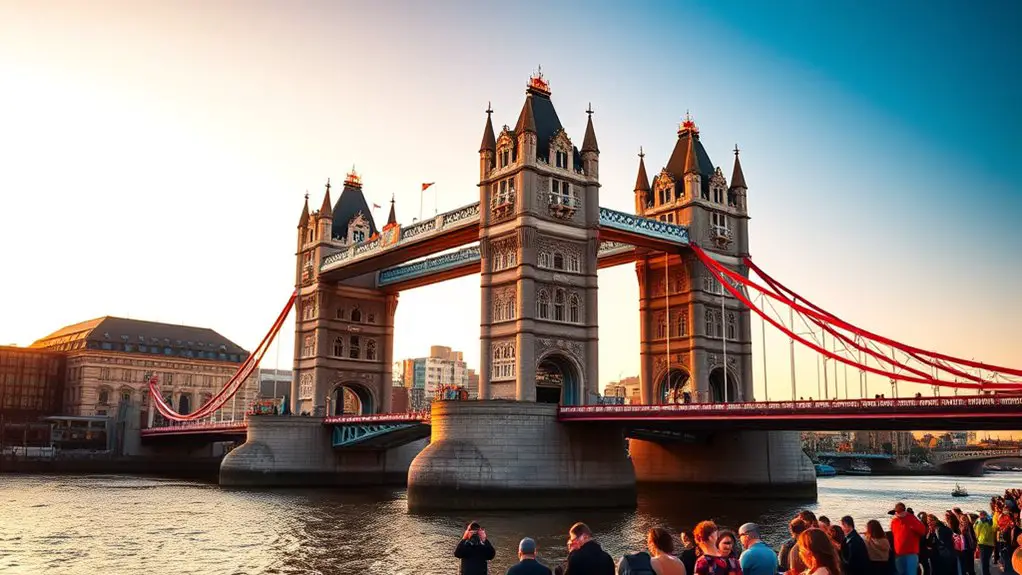
Last Updated on July 24, 2026 by Daniel Globe
Tower Bridge can feel completely different depending on the month, day, and time you visit. Warm summer afternoons bring long daylight hours and a lively atmosphere, but they also attract more visitors. A weekday morning in late spring or early autumn usually offers a better balance of comfortable weather, manageable crowds, and clear views.
Quick Answer
The best time to visit Tower Bridge is on a weekday morning in May, June, or September. These months offer mild weather and long daylight hours without the busiest part of summer. For the paid attraction, choose the first entry slot. For exterior photos, visit near sunrise or during evening blue hour.
Key Takeaways
- May, June, and September provide the best balance of mild weather, long days, and manageable visitor numbers.
- July and August are usually warmest, but school holidays and peak tourism can increase queues.
- Book the first admission slot for a calmer interior visit to the Towers, walkways, glass floors, and Engine Rooms.
- Sunrise and evening visits work best for exterior photography because the paid attraction is not open at those hours year-round.
- Check the official opening information, bridge-lift schedule, and ticket availability shortly before traveling.
What’s in This Article
- Best Time to Visit Tower Bridge at a Glance
- What to Know Before You Go
- The Best Months for Visiting Tower Bridge
- Weekdays vs. Weekends: When Is It Less Crowded?
- Best Times of Day to Visit Tower Bridge
- Seasonal Weather and How It Affects Your Visit
- Bridge Lifts, Tours, and Special Sessions
- How to Avoid Peak Tourist Periods
- Best Times for Photography at Tower Bridge
- How Tides Affect River Views at Tower Bridge
- Planning Around Closures and Disruptions
- How to Plan an Early or Late Visit
- Frequently Asked Questions
Disclosure: As an Amazon Associate I earn from qualifying purchases. Some links on this page are affiliate links, at no extra cost to you.
Best Time to Visit Tower Bridge at a Glance
| Your Priority | Best Time | What to Expect |
|---|---|---|
| Best overall balance | Weekday mornings in May, June, or September | Mild weather, good daylight, and fewer peak-summer crowds |
| Warmest weather | July and August | Long days and warmer temperatures, but busier walkways and ticket sessions |
| Quiet interior visit | First admission slot on a weekday | Lower visitor numbers than the middle of the day, although no ordinary slot is guaranteed to be quiet |
| Exterior photography | Sunrise, sunset, or blue hour | Softer light, illuminated towers, and fewer people in some viewpoints |
| Lower-capacity experience | Official Quieter Time or Relaxed Opening sessions | Controlled capacity and a calmer environment on selected dates |
| See the bridge open | A scheduled bridge-lift time | The bascules rise to allow a booked vessel to pass through |
What to Know Before You Go
Walking across Tower Bridge and viewing it from the riverbanks does not require an attraction ticket. A paid ticket is required to enter the North and South Towers, high-level walkways, glass floors, and Victorian Engine Rooms.
The official Tower Bridge visitor page currently lists general admission hours as 9:30 AM to 6 PM, with last entry at 5 PM. The attraction closes from December 24 through 26 and opens at 10 AM on January 1. Hours can change because of operational, safety, or weather conditions, so confirm them before leaving for your visit.
- Recommended visit length: Allow about 90 minutes to explore the paid attraction without rushing.
- Tickets: Advance booking is recommended for a preferred time, especially during school holidays. A timed ticket does not provide fast-track entry.
- Security: Staff check bags on arrival, so allow extra time before your admission slot.
- Entrance: The Ticket Office and attraction entrance are on the west side of the North Tower.
- Nearest Underground station: Tower Hill, served by the Circle and District lines, is about a seven-minute walk away.
- Other stations: Tower Gateway DLR, London Bridge, and Fenchurch Street are also within walking distance.
Note: The entrance queue is outside on a working road bridge. Bring a waterproof layer and wear comfortable shoes even when most of your visit will be indoors.
Tower Bridge provides lifts to the high-level walkways and step-free access to the Engine Rooms. Visitors who need reduced noise or lower capacity can also check the official accessibility calendar for Relaxed Opening and Quieter Time sessions.
The Best Months for Visiting Tower Bridge
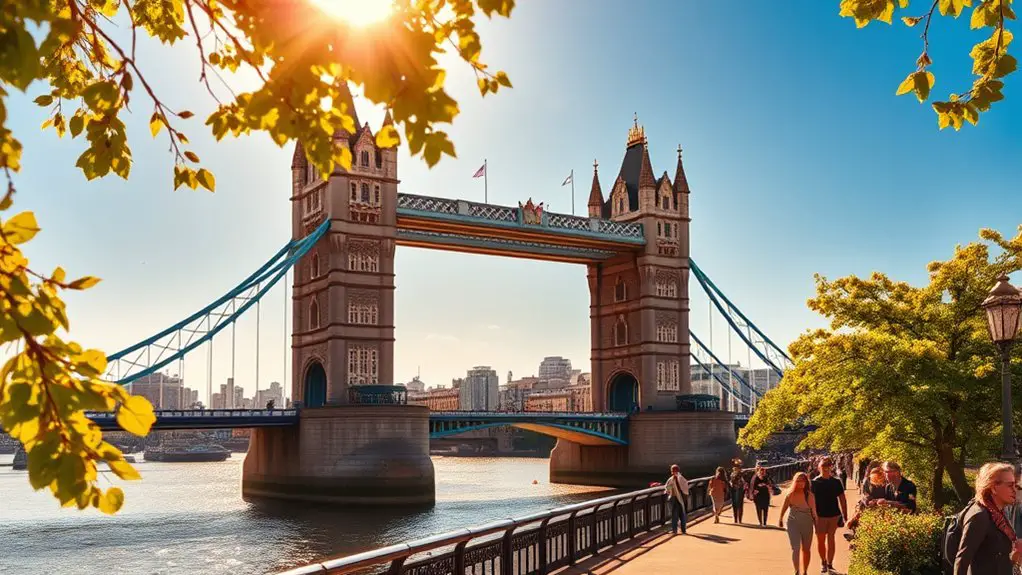
The most comfortable period for outdoor sightseeing generally runs from May through September. Met Office climate averages for Kew Gardens show average daytime maximum temperatures rising from about 18°C in May to nearly 24°C in July, with long sunshine hours across late spring and summer.
That does not make every summer day dry or clear. Rain remains possible throughout the year, and August can be wetter than May or July. Treat May through September as the warmest and brightest broad window rather than a guaranteed dry season.
May, June, and September: Best Overall Balance
May, June, and September usually provide the strongest balance for most visitors. The days are long, temperatures are comfortable for walking, and you avoid at least part of the July and August holiday rush.
Late spring is especially useful when you want extended daylight without peak-summer conditions. September can also work well because the city remains mild while the main summer holiday period begins to ease.
July and August: Warm but Busy
July and August usually bring the warmest weather and some of the longest sightseeing days. They also overlap with major international tourism and school summer holidays, so the paid attraction, nearby river walks, and popular viewpoints may feel busier.
Book ahead, choose a weekday, and use the earliest practical admission slot if summer is your only travel window.
October Through April: Cooler but Often Calmer
Cooler months can suit visitors who care more about atmosphere and lower demand than warm weather. Expect shorter daylight hours, a greater need for warm or waterproof clothing, and less flexibility for outdoor photography.
Winter also brings striking after-dark views because Tower Bridge is illuminated well before late evening. However, daylight photography opportunities are much shorter than in summer.
Note: London weather can change quickly. Check the hourly forecast, but carry a light waterproof layer even when the day begins dry.
Weekdays vs. Weekends: When Is It Less Crowded?
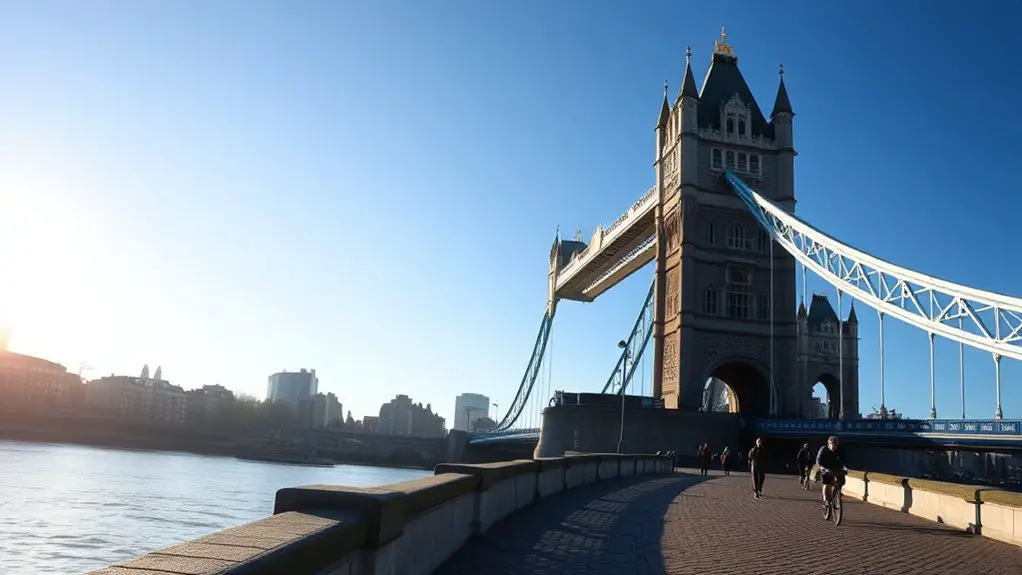
A weekday is generally the safer choice when you want shorter queues and more room on the high-level walkways. Midweek mornings avoid much of the weekend leisure traffic, although school groups, tours, weather, and seasonal demand can still affect visitor numbers.
Weekends, public holidays, and sunny school-holiday days can create heavier foot traffic around the entrance, Potters Fields Park, the Tower of London side of the river, and the bridge approaches.
No ordinary weekday is guaranteed to be quiet. Visitors who need a reliably lower-capacity environment should look for an official Quieter Time or Relaxed Opening session rather than relying only on the day of the week.
Best Times of Day to Visit Tower Bridge
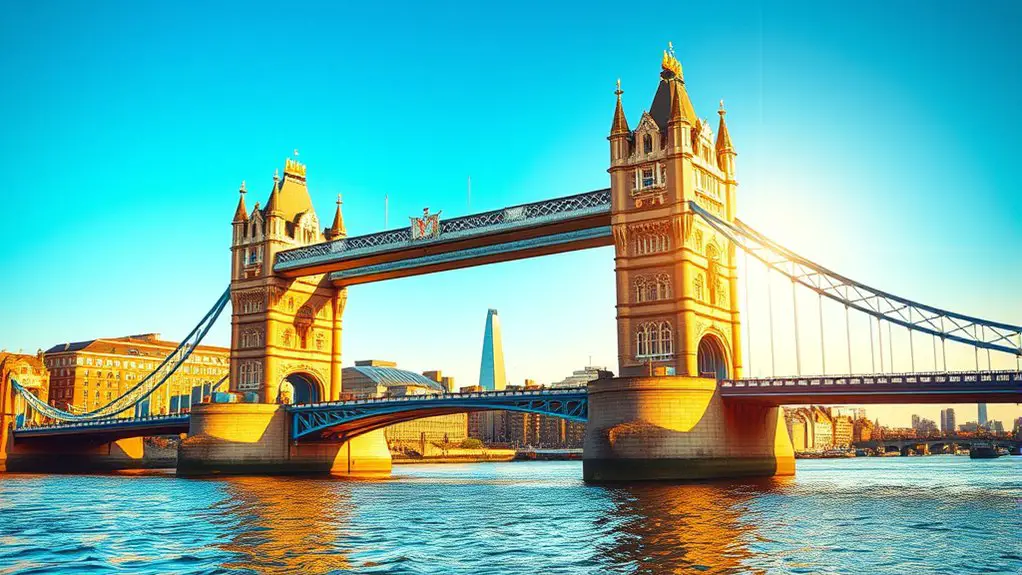
First Entry for the Paid Interior
The first admission slot is usually the most practical choice for exploring the Towers, glass floors, walkways, and Engine Rooms before the middle of the day. Arrive at the time printed on your ticket because security checks and the outdoor queue can add a short delay.
Do not expect a completely empty attraction. Group patterns and special activities vary, but an early slot normally gives you more time before midday visitor numbers build.
Early Morning for Exterior Views
The public areas around the bridge are accessible before the paid attraction opens, subject to bridge operations and temporary restrictions. Early morning works well for photographing the bridge from Potters Fields Park, Queen’s Walk, or the north bank while the surrounding paths are relatively calm.
Sunset and Blue Hour for Illuminated Views
Sunset and the period shortly afterward produce warm skies followed by blue-hour contrast as the bridge lights become more visible. This timing is best for the exterior. In much of the year, the paid attraction will be closing or already closed by the time the strongest evening colors appear.
Pro Tip: Combine a first-entry interior ticket with exterior photography afterward. You can explore the walkways before midday, then photograph the bridge from both riverbanks without rushing to meet an admission time.
Seasonal Weather and How It Affects Your Visit
Each season changes the balance between daylight, temperature, crowds, and photography. The best choice depends on whether you value warm weather, lower demand, seasonal atmosphere, or long shooting hours.
Spring: Mild and Increasingly Bright
March can still feel cool, but April and May bring longer days and increasingly comfortable walking conditions. Late spring is one of the best periods for combining the bridge with a longer Thames walk because you gain daylight without the full intensity of the summer holiday season.
Carry a waterproof layer and expect temperature changes between sunny riverbanks, shaded streets, and exposed sections of the bridge.
Summer: Warm and Lively
Summer provides the longest outdoor sightseeing window and the warmest average temperatures. It works well for combining Tower Bridge with nearby attractions, river cruises, or evening walks.
The trade-off is demand. Ticket sessions, nearby paths, and photography viewpoints can become busy, particularly on weekends and during school holidays. Book ahead and start early.
Autumn: Cooler and Atmospheric
September often retains comfortable temperatures and useful daylight, making it one of the strongest all-around choices. October and November bring cooler air, earlier sunsets, and a more dramatic riverside atmosphere.
Autumn can also bring wetter and windier conditions. Check for operational notices before traveling, especially during periods of severe weather.
Winter: Cold and Illuminated
Winter provides short days, colder riverfront conditions, and earlier opportunities to see Tower Bridge illuminated. It can be a good choice for visitors who prefer evening cityscapes or who are already visiting London for seasonal activities.
- Wear warm, wind-resistant clothing because the riverfront can feel colder than nearby sheltered streets.
- Use footwear with good grip during wet or icy conditions.
- Check holiday opening arrangements before booking.
- Plan daylight photographs early because sunset arrives much sooner than in summer.
Bridge Lifts, Tours, and Special Sessions
Tower Bridge does not follow one fixed annual events calendar. The most useful time-sensitive experiences are scheduled bridge lifts, limited tours, and lower-capacity access sessions. Always confirm availability on the official website.
| Experience | When It Occurs | Why Plan Around It |
|---|---|---|
| Scheduled bridge lifts | Dates and times vary throughout the year | See the bascules rise for a booked vessel. The official schedule lists the vessel, time, and direction. |
| Relaxed Opening | Usually the second Saturday of each month, 9:30 AM to 11:30 AM | A low-capacity, reduced-sound environment designed for neurodivergent visitors and their companions |
| Quieter Time | Selected dates, often during busy periods | Limited visitor numbers with no group bookings or guided tours during the designated period |
| Guided tours | Selected bookable dates | A structured 90-minute visit led by a guide, with accessible tour formats available on selected dates |
| Behind-the-scenes tours | Limited autumn and winter dates | Access to areas such as the Bascule Chambers that are not included with standard admission |
Planning to See a Bridge Lift
Tower Bridge reports roughly 800 lifts per year, but they do not occur at fixed daily times. Check the official bridge-lift schedule and plan to reach your viewing position early.
A lift temporarily interrupts road and pedestrian traffic across the lower bridge. If a lift delays your arrival for a ticketed visit, speak to the attraction team when you reach the entrance. Accommodation depends on capacity.
Tower Bridge opened on June 30, 1894, and remains a working movable bridge rather than only a historic visitor attraction.
How to Avoid Peak Tourist Periods
A quieter Tower Bridge visit depends on several factors, including school calendars, public holidays, weather, group bookings, and nearby events. No month or weekday is always crowd-free, but a few choices reduce the risk of arriving during the busiest window.
Use the Shoulder Seasons
May, early June, September, and parts of October often provide a useful compromise between weather and demand. You retain reasonable daylight while avoiding at least some of the peak July and August travel period.
- Choose a weekday rather than a weekend or public holiday.
- Book the first available admission slot.
- Avoid the middle of the day when tour and leisure traffic often overlap.
- Check whether your date falls within a UK or international school holiday.
- Look for official Quieter Time sessions when lower capacity is important.
Warning: School holiday dates vary by council, school, and country. Do not rely on one national six-week period. Check the dates that overlap your trip and book popular sessions early.
Check Major London Events
Marathons, public celebrations, transport works, severe weather, and large events can affect roads, stations, and pedestrian routes around central London. Review official transport and attraction notices shortly before your visit rather than relying only on information published months earlier.
Best Times for Photography at Tower Bridge
The best photography time depends on the viewpoint and the style of image you want. Sunrise offers softer light and fewer pedestrians in some public areas, while sunset and blue hour bring warmer skies followed by illuminated towers.
- Sunrise: Best for quieter river walks and soft exterior light. The paid attraction will normally be closed.
- First admission: Best for photographing views from the high-level walkways before the middle of the day.
- Late afternoon: Useful for warmer light on the stonework and surrounding skyline.
- Blue hour: Best for balancing the bridge’s lights with remaining color in the sky.
- Overcast weather: Useful for even detail with less glare on stone, metal, glass, and water.
Potters Fields Park provides a broad south-bank view, while the north bank near the Tower of London gives a different angle across the river. Walking both sides helps you adapt to the direction of light instead of depending on one fixed position.
Tripods and photography equipment must not block public paths or create a safety risk. Follow staff instructions inside the attraction and keep busy walkways clear.
How Tides Affect River Views at Tower Bridge
The Thames at Tower Bridge is tidal, so the water height and amount of visible foreshore change throughout the day. High water covers more of the riverbank and can create a fuller-looking river scene. Low water exposes more mud, stone, steps, and structural detail along the edges.
Tide height alone does not create perfect reflections. Wind, current, passing vessels, rain, and the angle of the light all affect the water surface. A high tide may still look choppy, while calmer conditions at another stage of the tide may produce cleaner reflections.
| Higher Water | Lower Water |
|---|---|
| More water fills the channel and covers much of the foreshore. | More foreshore, steps, and river-edge texture may become visible. |
| Can support broad water compositions when light and wind cooperate. | Can create a grittier composition with stronger foreground detail. |
Use the Port of London Authority tidal information and check predictions for the London Bridge or Tower Pier area. High and low water occur hours apart, so seeing both usually requires a long stay or separate visits.
Planning Around Closures and Disruptions
Tower Bridge is a working bridge and visitor attraction. Safety incidents, severe weather, security requirements, bridge operations, transport disruption, or maintenance can affect access with little notice.
Check Official Information Before Traveling
- Review the Tower Bridge planning page when you first choose your date.
- Check it again shortly before leaving for the attraction.
- Review the bridge-lift schedule if you need to cross the roadway at a specific time.
- Check Transport for London for station closures and service changes.
- Keep a nearby alternative activity available in case access changes unexpectedly.
Do not assume that maintenance follows a predictable season. The official site is more reliable than general claims about autumn, winter, or quieter months.
Holiday and Special Closures
The attraction currently closes from December 24 through 26 and opens later on January 1. Other closures may be announced for weather, safety, or operational reasons. These arrangements apply to the paid attraction and do not necessarily describe every road or pedestrian restriction on the bridge itself.
How to Plan an Early or Late Visit
“Early” and “late” mean different things depending on whether you want to enter the attraction or only view Tower Bridge from outside.
For an Early Paid Visit
- Book the first admission slot shown on the official booking page.
- Reach the outside queue at the time stated on your ticket.
- Allow time for bag checks.
- Explore the Towers and walkways before moving to the Engine Rooms.
- Continue to the riverbanks afterward for exterior photographs.
For a Late Exterior Visit
- Check the sunset and blue-hour times for your date.
- Choose a public viewpoint on either riverbank before the light changes.
- Do not rely on late attraction entry because last admission is currently 5 PM.
- Check local transport times if you plan to stay after dark.
- Use well-lit public paths and remain aware of bicycles, traffic, and other pedestrians.
Frequently Asked Questions
Are there specific times when Tower Bridge offers guided tours?
Yes. Guided tours run on selected dates and usually require advance booking. Standard guided tours are listed as 90-minute experiences, while specialist, BSL, Deaf-led, and behind-the-scenes options follow separate schedules. Check the official booking calendar for your travel date.
How does weather affect the safety of visiting Tower Bridge?
Rain, ice, strong wind, fog, or severe-weather warnings can affect outdoor queues, walking surfaces, visibility, and attraction operations. Wear shoes with good grip, bring weather protection, and check official notices before traveling.
Do special tours and sessions require advance booking?
Many guided tours, behind-the-scenes visits, Quieter Time sessions, and Relaxed Opening sessions have limited capacity. Advance booking is recommended and may be required for specific experiences.
What is the best season for avoiding long lines?
Cooler months outside public and school holidays may have lower demand, but weather and daylight are less favorable. For the best balance, try a weekday morning in May, early June, September, or October. An official lower-capacity session is the most dependable choice when crowds are a major concern.
Do off-peak hours provide better photo opportunities?
They can. Sunrise and blue hour often provide softer light and fewer pedestrians at exterior viewpoints. For photographs from inside the Towers or high-level walkways, use an early ticketed admission slot instead.
Is Tower Bridge free to visit?
You can walk across the lower roadway and pedestrian paths without an attraction ticket when they are open. Entry to the Towers, high-level walkways, glass floors, and Victorian Engine Rooms requires a paid ticket.
How long should I allow for a Tower Bridge visit?
Allow about 90 minutes for the paid attraction. Add more time if you want to watch a bridge lift, photograph the bridge from both riverbanks, or combine the visit with nearby attractions.
Make the Most of Your Tower Bridge Visit
For most visitors, a weekday morning in May, June, or September offers the best mix of mild weather, useful daylight, and manageable crowds. Book the first admission slot when you want to explore inside, or visit near sunrise or blue hour when exterior photography is your priority.
Before traveling, confirm the current opening hours, ticket availability, transport status, and bridge-lift schedule. A few minutes of checking can help you avoid a closure, catch the bridge opening for a vessel, and choose a time that matches the experience you want.
Sources
- Tower Bridge: Plan Your Visit – Opening hours, transport, entrance, access, and visitor conditions
- Tower Bridge Entry Tickets – Ticket inclusions, advance booking, and admission information
- Tower Bridge Lift Schedule – Upcoming lift times, vessels, and directions
- Met Office Kew Gardens Climate Averages – London-area temperature, rainfall, and sunshine averages
- Port of London Authority Tidal Information – High and low water predictions for the tidal Thames
- GOV.UK School Term and Holiday Dates – Guidance showing that school holiday dates vary across the UK
