
Last Updated on July 24, 2026 by Daniel Globe
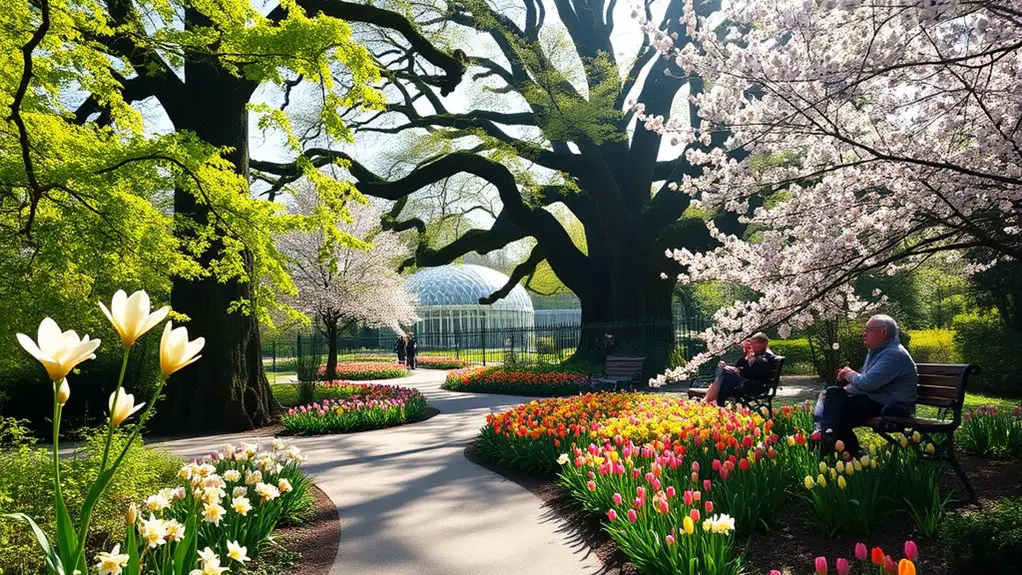
Kew Gardens changes dramatically through the year, so the best time to visit depends on what you want to see. Spring brings magnolias, cherry blossom, tulips, and daffodils. Summer is ideal for roses, picnics, and family days. Autumn adds rich tree colour, while winter combines quiet daytime walks with separately ticketed festive events.
Quick Answer
The best time to visit Kew Gardens depends on your goal. Go from mid-March to mid-April for blossom and spring bulbs, visit in summer for roses and family days, choose October or November for autumn colour, or book Christmas at Kew separately for winter lights. Weekday opening time is usually quietest.
Key Takeaways
- Mid-March to mid-April is usually the strongest period for magnolias, cherry blossom, tulips, daffodils, and other spring flowers.
- June through August suits families, picnics, roses, herbaceous borders, and long outdoor visits.
- October and November are the main months for red, gold, and orange foliage, although exact timing changes with the weather.
- Christmas at Kew requires a separate timed ticket and is not included with normal daytime admission.
- Weekday opening time normally gives you the calmest paths and the best chance to photograph popular areas without large crowds.
What’s in This Article
- Best Time to Visit Kew Gardens by Goal
- Spring Blossoms and Early Season Highlights
- Summer Blooms and Outdoor Activities
- Autumn Colors and Seasonal Changes
- Winter Gardens and Christmas at Kew
- Best Times for Photography at Kew Gardens
- How to Avoid Crowds at Kew Gardens
- Special Exhibitions and 2026 Events
- Visiting Hours and Ticket Information
- How to Get to Kew Gardens
- Essential Tips for Your Visit
- Frequently Asked Questions
Disclosure: As an Amazon Associate I earn from qualifying purchases. Some links on this page are affiliate links, at no extra cost to you.
Best Time to Visit Kew Gardens by Goal
There is no single season that works best for every visitor. Use this comparison to match your trip to the plants, activities, and atmosphere you want.
| Best time | Best for | What to expect | Planning note |
|---|---|---|---|
| Mid-March to mid-April | Spring blossom and bulbs | Magnolias, cherry blossom, tulips, daffodils, and bluebells | Bloom dates move with temperature, rain, and wind. |
| June to August | Families, picnics, and summer flowers | Roses, long borders, waterlilies, seasonal trails, and outdoor dining | Weekends and school holidays can be busy. |
| October to November | Autumn colour and tree photography | Red maples, gold ginkgo leaves, copper beech trees, fungi, and quieter paths | Strong wind or heavy rain can shorten the display. |
| November to early January | Festive lights | Christmas at Kew light installations, soundscapes, food stalls, and fairground attractions | A separate timed event ticket is required. |
| Weekday opening time | Lower crowds | Calmer main paths and fewer people around the glasshouses | Avoid bank holidays and school-break weekends where possible. |
Note: Flowering and leaf-colour dates are never guaranteed. A warm spring can bring blossom forward, while cold weather can delay it. Autumn colour can also change quickly after strong winds or prolonged rain.
Spring Blossoms and Early Season Highlights
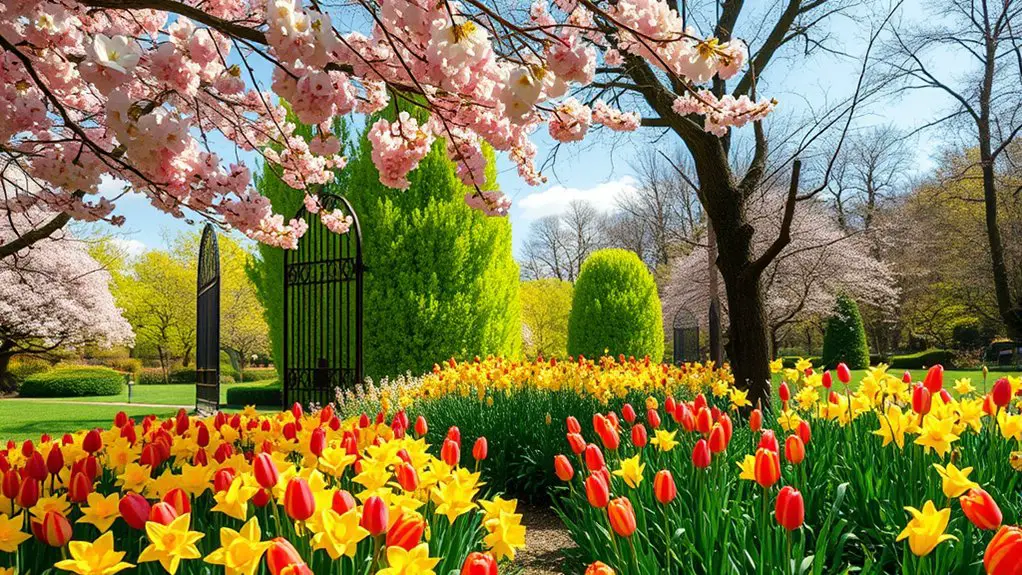
Spring transforms Kew Gardens with magnolias, cherry blossom, tulips, daffodils, bluebells, and fresh green growth. Kew’s official blossom guide identifies mid-March to mid-April as the strongest general window for spring flowers.
Magnolias are often at their best in early to mid-March. Visit Magnolia Walk and Magnolia Grove to see pale pink, white, and deep magenta flowers against the still-opening tree canopy.
Cherry blossom and tulips usually become the main attractions from late March into early April. Some of the best areas include Cherry Walk near the Temperate House, the Japanese Landscape, and the lawns south of the Palm House. You can check Kew’s current spring blossom guide before choosing your date.
Kew is also a UNESCO World Heritage Site, so spring visitors get a combination of seasonal planting, historic glasshouses, ornamental buildings, and landscaped views.
The Temperate House and Palm House are useful places to visit during a spring shower. However, the main bulb displays are generally outdoors, including the tulip plantings near the Temperate House, rather than guaranteed displays inside the building.
Pro Tip: Blossom is highly weather-dependent. Check Kew’s website and recent social updates a few days before your visit instead of relying on the same calendar date every year.
Summer Blooms and Outdoor Activities
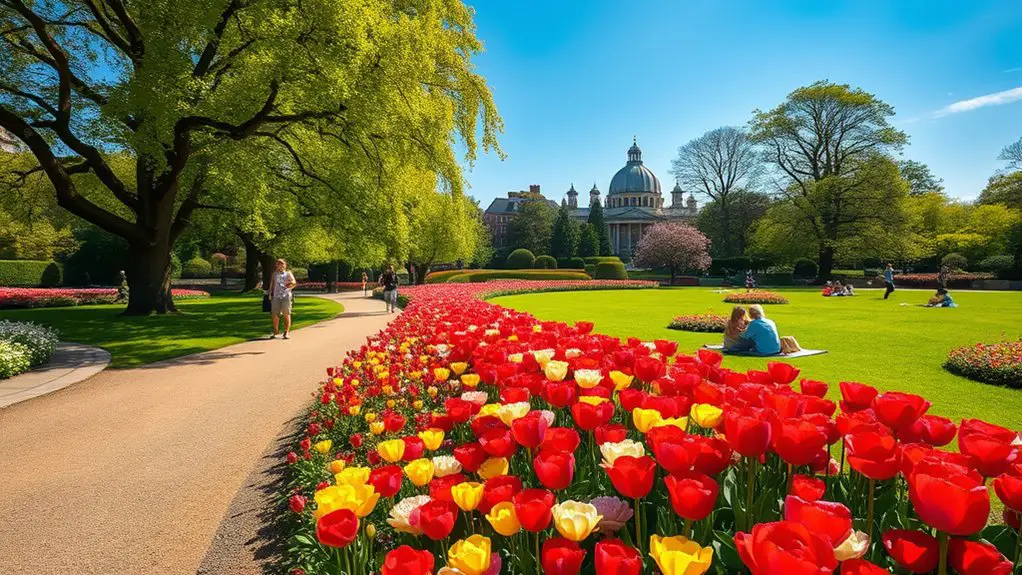
Summer is one of Kew’s most colourful and activity-filled periods. It is particularly good for roses, long herbaceous borders, warm-weather picnics, family visits, and spending several hours outdoors.
Summer Flowering Highlights
The Rose Garden and Wild Rose Garden are major early-summer attractions. As the season continues, the Great Broad Walk Borders fill with plants such as lavender, agapanthus, alliums, salvias, coneflowers, and ornamental grasses.
The Great Broad Walk Borders extend for more than 300 metres and provide one of Kew’s strongest summer photography locations. Different sections flower at different times, so the appearance changes between June, July, and August.
Giant waterlilies and other warm-climate plants can also be seen in the Princess of Wales Conservatory. Kew’s official summer guide lists the best current displays by month.
Note: The Waterlily House is closed throughout 2026 for renovation. Check Kew’s planned-closures page before building your route around a particular glasshouse or gallery.
Family-Friendly Outdoor Activities
Summer is a practical choice for families because children have more time to explore the grounds and use the Children’s Garden. The garden includes spaces based on earth, air, sun, and water, with climbing, sensory, and play features.
Seasonal trails, performances, workshops, and holiday activities may also be available, but they are not guaranteed every day. Check the official events calendar before promising children a particular trail or workshop.
Best Picnic Spots
Picnics are allowed throughout Kew’s grassy areas. Lawns near the Palm House, Temperate House, and quieter parts of the Arboretum can work well, provided the area is open and you avoid planted beds.
You may bring your own food and drink. However, barbecues and picnic furniture are not allowed. Café and restaurant seating is reserved for customers who purchase food or drink from those outlets.
Kew also has cafés and restaurants if you do not want to carry lunch. For a wider London day out, you can compare other affordable afternoon teas in London.
Autumn Colors and Seasonal Changes
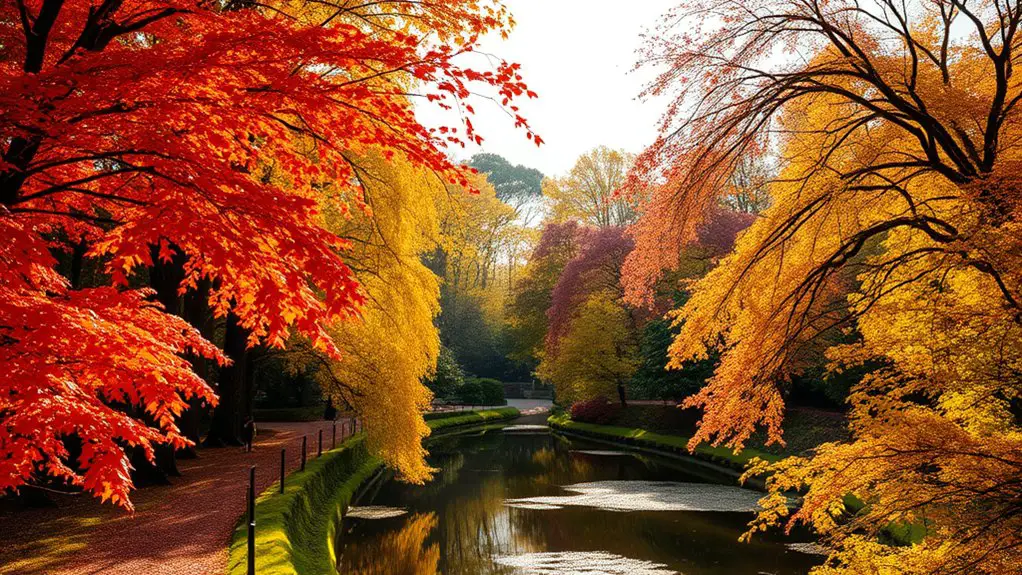
Autumn brings red, orange, copper, and gold tones to Kew’s large tree collection. October and November are usually the most useful months, but the strongest colour can arrive earlier or later depending on temperatures, rain, and wind.
Vibrant Foliage Displays
The Arboretum and Treetop Walkway are two of the best areas for viewing autumn colour. The Arboretum offers long paths among thousands of trees, while the elevated walkway gives you a wider view across the canopy.
Look for:
- Maples turning red, orange, and scarlet.
- Ginkgo trees developing bright yellow leaves.
- Beech trees changing to gold and copper.
- Oak trees taking on warm brown and russet tones.
- Evergreen trees creating contrast behind the changing leaves.
Kew’s official autumn guide can help you find the current seasonal highlights and event programme.
Seasonal Plant Transitions
Autumn offers more than colourful leaves. Ferns begin to fade, seed heads become more visible, fungi appear in damp woodland areas, and falling leaves reveal the shapes of Kew’s older trees.
This can be a calmer season than midsummer, especially on a dry weekday. However, school half-term events and mild weekends can still attract large crowds.
Autumn is the best choice for broad tree-canopy colour, but spring remains stronger for blossom photography and summer offers a wider range of flower-filled borders.
Winter Gardens and Christmas at Kew
Winter reveals a different side of Kew. Bare branches expose the structure of mature trees, while coloured dogwood stems, holly, witch hazel, snowdrops, winter bark, and evergreen planting add interest during quieter daytime visits.
The Palm House, Temperate House, Princess of Wales Conservatory, and galleries also provide indoor options when the weather is cold or wet. Attraction opening hours can be shorter than the Gardens’ hours, so check the daily schedule before arriving late.
Christmas at Kew
Christmas at Kew is an evening light trail held on selected winter dates. The confirmed 2026 event runs from November 13, 2026, to January 3, 2027.
The 2026 programme includes large illuminated installations, colour tunnels, music and soundscapes, a fairground, Father Christmas, street food, hot chocolate, mulled wine, and other seasonal refreshments.
Warning: Christmas at Kew is not included with a normal daytime Gardens ticket. You need a separate timed event ticket, and daytime visitors may be required to leave before the evening trail opens.
Check the official Christmas at Kew information page for current entry gates, time slots, prices, closures, and event rules.
Pro Tip: Capacity is limited. Book early when you need a specific weekend, entry gate, or time slot rather than assuming tickets will remain available.
Best Times for Photography at Kew Gardens
The best photography time for a normal daytime visitor is usually at opening time. Popular areas are calmer, the light is less harsh than at midday, and there are fewer people around the Palm House, Great Broad Walk, and major seasonal displays.
Although sunrise is often recommended for garden photography, Kew normally opens at 10 AM. Sunrise access is therefore unavailable to standard daytime visitors. Kew members may receive 8 AM summer access on eligible dates, but this benefit and its excluded dates can change.
Late afternoon can also produce softer light, especially in spring and autumn. Check the closing and last-entry times first. In midsummer, Kew may close well before sunset, so traditional sunset golden hour may not be available.
For close-up flower photographs, use opening-time light and look for dew or raindrops on the petals. During bright midday conditions, move into open shade or use the glasshouses, where light is softened by the structure and surrounding plants.
Photography Rules
Casual personal photography is generally welcome. Do not step into planted beds, block paths, disturb wildlife, or inconvenience other visitors.
Professional camera equipment may be refused without a valid permit, and commercial photography requires prior authorization. Event rules can be stricter. For example, tripods are not permitted on the Christmas at Kew trail.
Review Kew’s current visitor rules before bringing a tripod, lighting, large lenses, or other professional equipment.
How to Avoid Crowds at Kew Gardens
Arriving at opening time gives you the best chance of seeing popular areas before the largest groups arrive. Weekdays are generally calmer than weekends, although school holidays, bank holidays, exhibitions, and good weather can increase attendance.
Use these strategies for a more relaxed visit:
- Choose Tuesday through Thursday where your schedule allows.
- Arrive shortly before the gates open.
- Visit the Palm House and seasonal headline displays first.
- Explore the Arboretum, Conservation Area, Rhododendron Dell, or Woodland Walk after the main attractions become busy.
- Use Kew’s map to plan a loop instead of repeatedly returning to the central paths.
- Avoid summer weekends, bank holidays, and school half-term afternoons when possible.
- Book your ticket online so you can spend less time at the entrance.
Note: A mildly cloudy day can be an excellent choice. Crowds may be smaller, flower colours photograph well under soft light, and the glasshouses provide shelter if brief rain arrives.
Special Exhibitions and 2026 Events
Kew hosts changing art exhibitions, seasonal plant displays, family programmes, wellness sessions, guided walks, and evening events throughout the year. These can affect both the best time to visit and the amount of time you need.
Important 2026 highlights include:
- Henry Moore: Monumental Nature: Opened May 9, 2026, with 30 large sculptures across the Gardens and more than 90 smaller works in the Shirley Sherwood Gallery. The exhibition is scheduled to continue through January 31, 2027.
- Carbon Garden: The new garden is entering its first full flowering year in 2026, with bulbs and perennial planting designed to explain the role of carbon in living systems.
- Waterlily House closure: The building remains closed during 2026 for renovation.
- Christmas at Kew: Runs on selected dates from November 13, 2026, through January 3, 2027, with separate timed admission.
Schedules, closures, and included activities can change. Check Kew’s official what’s-on calendar and planned visitor notices shortly before your trip.
Visiting Hours and Ticket Information
Kew Gardens normally opens at 10 AM, but closing time and last entry change through the year. Glasshouses, galleries, the Children’s Garden, Kew Palace, the Great Pagoda, restaurants, and shops may follow different schedules.
At the time of this July 2026 update, the main Gardens are listed as opening from 10 AM to 7 PM, with last entry at 6 PM. Do not assume those hours apply to autumn or winter visits.
Note: Always check Kew’s official opening and closing times for your exact date. Last entry is earlier than closing, and individual attractions may close before the main Gardens.
You can buy tickets at the gate, but online tickets usually offer better value. Prices vary by season, age, concession type, promotion, and whether you add a voluntary donation.
Review the live Kew Gardens ticket page rather than relying on a price quoted in an older article.
- Book online for the best available standard-admission price.
- Bring proof of eligibility when using a concession ticket.
- Children aged 16 and under must be accompanied by an adult.
- Special evening events may require a separate ticket.
- Check planned closures before choosing a late entry time.
How to Get to Kew Gardens
Kew Gardens has four main gates, so choose your transport route based on the attractions you plan to visit first.
- Kew Gardens station: About 500 metres from Victoria Gate and served by the District line and London Overground. Step-free access is available from the eastbound platform, but not from the westbound platform.
- Kew Bridge station: About 800 metres from Elizabeth Gate. The station does not provide level access.
- Richmond station: Has lift and level access. From there, bus 65 serves stops near Lion Gate and Victoria Gate.
- Bus routes: Routes 65 and 110 serve areas close to the Gardens, while routes 237 and 267 stop near Kew Bridge station.
- Car: Parking is limited. Kew’s car park is near Brentford Gate, and blue-badge parking arrangements are available.
For an evening Christmas visit, check your return service before entering the trail. Our London Night Tube guide can help with wider late-night transport planning, but always confirm live service information on the day.
Essential Tips for Your Visit
Allow at least three hours for a focused visit. A half day works better if you want to explore several glasshouses, the Arboretum, galleries, seasonal displays, and food outlets without rushing. First-time visitors can easily spend most of a day on the site.
- Wear comfortable walking shoes because Kew covers a large area.
- Check the weather and bring layers, sun protection, or a compact umbrella.
- Download or collect a map before starting your route.
- Carry a refillable water bottle. Water-refill points are available around the Gardens.
- Visit headline seasonal displays early, then explore quieter areas later.
- Check attraction closures as well as the main Garden hours.
- Do not bring barbecues, picnic furniture, scooters, drones, ball games, plants, or professional camera equipment without permission.
Using the Kew Explorer Land Train
The Kew Explorer is a paid electric land-train tour that normally begins at Victoria Plaza. A full circuit takes about 30 minutes and includes stops near major attractions such as the Temperate House, Great Pagoda, Children’s Garden, and Kew Palace.
The service generally runs daily from 11 AM, but weather, maintenance, and staff-safety measures can change the timetable. Tickets are purchased from the Explorer team, and the train can become full at peak times.
One fixed-wheel manual wheelchair space is available in the rear carriage of each train, with limited storage for folded wheelchairs and pushchairs. Check the current Kew Explorer information before relying on it for your visit.
Frequently Asked Questions
Are pets allowed inside Kew Gardens?
Regular pets are not allowed. Recognized guide, assistance, and service dogs are welcome, including assistance dogs in training. They should be identifiable and kept under control on a lead or harness.
Is Kew Gardens wheelchair accessible?
The Gardens are largely flat, and many routes use tarmac paths. Limited manual wheelchairs can be borrowed at the public gates. Mobility scooters may be borrowed when booked in advance, although some historic buildings, galleries, and upper floors have access restrictions. Check Kew’s accessibility map before visiting.
Can I bring food and have a picnic?
Yes. Picnics are allowed on grassy areas throughout the Gardens. You may bring your own food and drink, but barbecues and picnic furniture are not permitted. Café and restaurant tables are reserved for customers purchasing food or drink from those outlets.
Are guided tours available at Kew Gardens?
Yes. Kew offers seasonal walking tours led by experienced guides, and many are included with daytime admission. Times and availability change. The paid Kew Explorer land train provides a separate guided circuit that takes about 30 minutes.
Is photography allowed without a permit?
Casual personal photography is generally welcome. Commercial work requires authorization, and professional equipment may not be admitted without a valid permit. Special events can have additional restrictions. Tripods, for example, are not permitted on the Christmas at Kew trail.
How long should I spend at Kew Gardens?
Allow at least three hours for the main glasshouses and nearby highlights. A half day is more comfortable, while a full day works well for visitors who also want to explore the Arboretum, galleries, Kew Palace area, seasonal displays, and restaurants.
Is Christmas at Kew included with normal admission?
No. Christmas at Kew is a separately ticketed evening event with timed entry. Normal daytime admission does not provide access to the light trail, and daytime visitors may need to leave before the evening event begins.
Your Best Kew Gardens Visit Starts With a Plan
Every season at Kew offers something different. Choose mid-March to mid-April for the strongest combination of blossom and spring bulbs. Visit in summer for roses, family activities, and picnics. Pick October or November for autumn tree colour, or reserve a separate Christmas at Kew ticket for a winter evening.
Whichever season you choose, arrive near opening time, check the weather and planned closures, and confirm the exact Garden and attraction hours. That preparation will help you spend more time enjoying Kew and less time changing your route after you arrive.
Sources
- Royal Botanic Gardens, Kew, UNESCO World Heritage List — supports Kew’s World Heritage status and historical significance.
- Plan Your Blossom-Viewing Day at Kew — supports spring-flower timing and the best blossom locations.
- Best Things to Do at Kew This Summer — supports summer flower and monthly horticultural highlights.
- Best Things to Do at Kew This Autumn — supports autumn colour locations and seasonal planning.
- Kew Gardens Opening and Closing Times and Tickets and Prices — support current operating-hour, entry, and online-booking guidance.
- Accessibility at Kew Gardens and Kew Gardens Visitor Rules — support wheelchair, mobility-scooter, assistance-dog, picnic, photography, and prohibited-item information.
