
Last Updated on July 27, 2026 by Daniel Globe
London is famous for gray skies and sudden showers, but it does not have one sharply defined rainy season. Rain can fall at any time of year, while autumn and early winter tend to be wetter than spring and summer. With a flexible plan, waterproof outer layer, and a few good indoor options, wet weather does not have to spoil your visit.
Quick Answer
London does not have a single official rainy season. Rain falls year-round, but long-term Met Office data for Heathrow show October and November are the wettest months on average. Pack a light waterproof layer and compact umbrella, check the forecast daily, and keep indoor options ready for heavier showers.
Key Takeaways
- London gets rain throughout the year rather than during one clearly defined rainy season.
- At Heathrow, October and November have the highest average rainfall totals in the Met Office’s 1991–2020 climate normals.
- A waterproof jacket, comfortable water-resistant shoes, and a small umbrella are more useful than heavy rain gear for most city trips.
- Ordinary showers usually do not stop sightseeing, but heavy rain and surface-water flooding can disrupt transport, so check live service information when conditions are severe.
Disclosure: As an Amazon Associate I earn from qualifying purchases. Some links on this page are affiliate links, at no extra cost to you.
Does London Actually Have a Rainy Season?
It is common to hear travelers talk about the “London rainy season,” but the city does not have a distinct wet season like a tropical destination. Rain is spread across the calendar, and the amount can change noticeably from one year to another.
The Met Office’s 1991–2020 Heathrow climate normals show an average annual rainfall total of about 615 mm and roughly 112 days per year with at least 1 mm of rain. Heathrow is in western Greater London, so exact totals elsewhere in the city can differ.
At Heathrow, rain averages about 615 mm a year, with at least 1 mm recorded on roughly 112 days in the Met Office’s 1991–2020 climate period.
London Rainfall by Month
The following Met Office averages for Heathrow give a useful guide to how rainfall changes through the year. They are climate averages, not a prediction for a specific trip.
| Month | Average Rainfall | Days With ≥1 mm Rain |
|---|---|---|
| January | 58.83 mm | 11.53 |
| February | 44.96 mm | 9.50 |
| March | 38.78 mm | 8.47 |
| April | 42.31 mm | 8.80 |
| May | 45.91 mm | 8.00 |
| June | 47.25 mm | 8.33 |
| July | 45.80 mm | 7.90 |
| August | 52.78 mm | 8.43 |
| September | 49.61 mm | 7.90 |
| October | 65.07 mm | 10.80 |
| November | 66.63 mm | 11.23 |
| December | 57.05 mm | 10.77 |
March has the lowest average rainfall total in this Heathrow dataset, while July and September have the fewest days with at least 1 mm of rain. That does not guarantee dry weather in those months. A single storm can make one trip much wetter than the long-term average suggests.
Note: Climate averages help you compare seasons, but they cannot tell you whether it will rain during your particular visit. Check the Met Office London forecast shortly before you travel and again each morning.
The Typical Weather Patterns During London’s Rainy Months
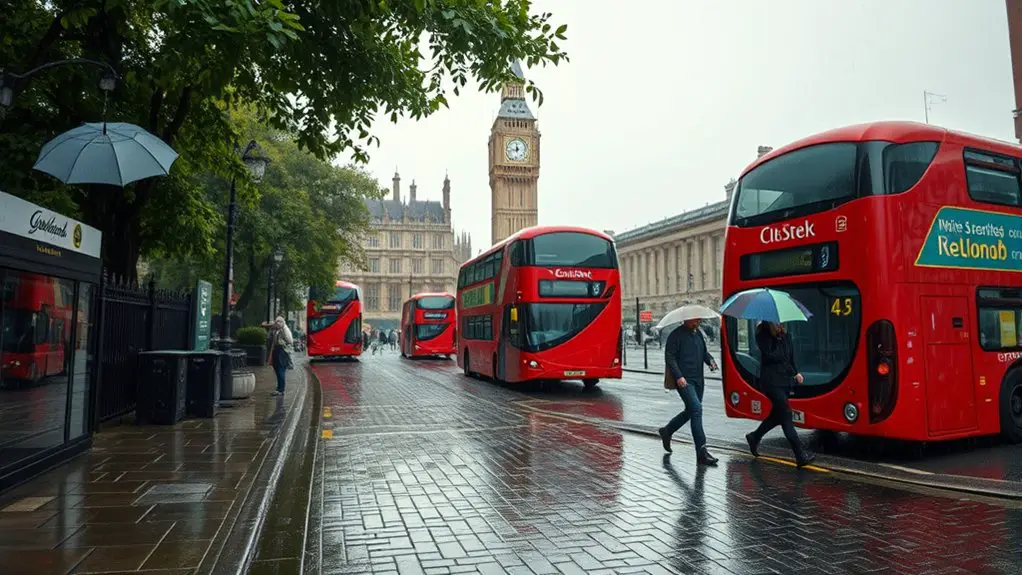
During London’s wetter part of the year, especially in autumn and early winter, you may encounter a mixture of light showers, steady rain, overcast periods, and dry breaks. There is no reliable rule that rain will arrive at regular intervals or at a particular time of day.
Temperatures are generally cooler from late autumn through winter, but London’s weather can still vary. A damp day may feel colder than the thermometer suggests, especially when wind is added.
Cloud cover can change during the day, so a gray morning does not guarantee an entirely wet afternoon. The reverse is also true: a dry start can turn into showers later.
This variability is why layers work well. You can add or remove clothing as conditions change instead of dressing for heavy rain all day.
Best Indoor Activities to Enjoy on Rainy Days

Rain is a good reason to explore London’s museums, galleries, markets, cafés, bookshops, and other indoor attractions. Instead of treating a wet forecast as a lost sightseeing day, pair one major indoor stop with shorter outdoor walks when the weather improves.
The British Museum is especially useful in bad weather. Entry to the permanent collection is free, although the museum recommends booking a free timed ticket in advance and some exhibitions or events require paid tickets.
Tate Modern is another strong choice. Entry to its collection is free, while some temporary exhibitions require tickets.
You can also spend time in covered markets, historic churches, department stores, libraries, cafés, theaters, or cinemas. Board games, puzzles, reading, cooking classes, and other indoor activities work well when you want a slower day.
Pro Tip: Build your day around pairs of nearby indoor and outdoor attractions. When a shower starts, move indoors; when it passes, continue walking instead of crossing the city every time the forecast changes.
How to Prepare for London’s Wet Weather
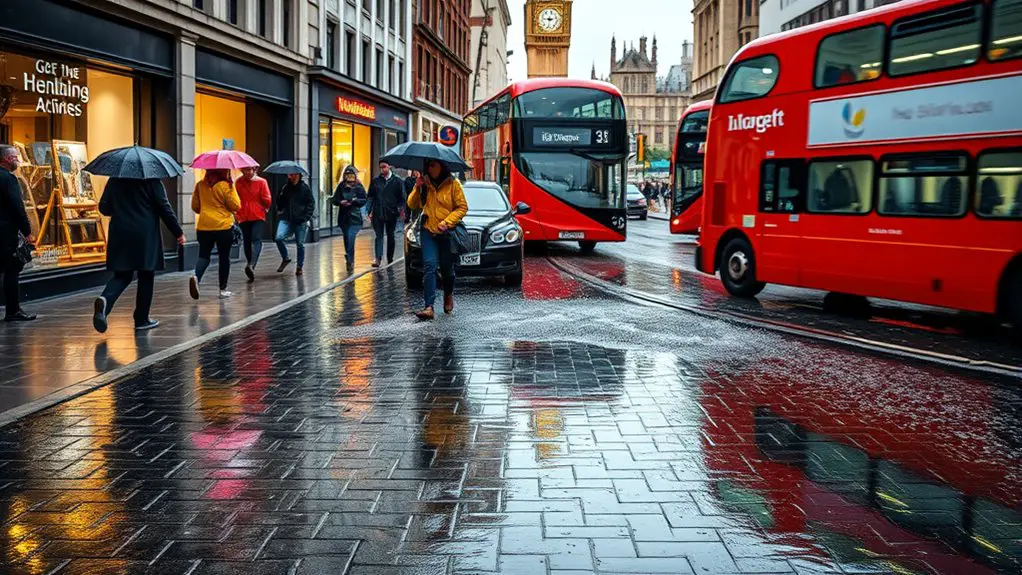
You do not need expedition-level rain gear for a normal London city break. A few compact items can keep you comfortable without taking up much luggage space.
Essential Waterproof Gear
A lightweight waterproof or water-resistant jacket with a hood is one of the most useful items to pack. Choose something breathable enough for walking and easy to layer over a sweater or lighter top.
A compact umbrella can help with brief showers, although a hooded jacket is often easier on crowded pavements or in gusty weather.
Water-resistant walking shoes or boots can make a major difference when pavements are wet. Comfortable footwear matters because sightseeing often involves hours of walking. Moisture-wicking socks are also useful if your shoes become damp.
A water-resistant day bag, pack cover, or simple protective pouch can help protect your phone, passport, camera, and other items.
Staying Dry Outdoors
Prepare for changing conditions rather than dressing for continuous rain. Carry compact protection and use layers that are easy to remove when you move into heated museums, shops, restaurants, or Underground stations.
| Gear | Tip | Benefit |
|---|---|---|
| Compact Umbrella | Keep one in your day bag when showers are forecast. | Quick protection during short showers. |
| Water-Resistant Shoes | Choose a comfortable pair with good grip. | Keeps feet more comfortable on wet pavements. |
| Hooded Jacket | Choose a lightweight layer that packs easily. | Protects you without requiring an umbrella. |
| Protective Bag or Pouch | Use it for electronics and documents. | Reduces the chance of water damage. |
These simple steps let you continue exploring outdoors without packing bulky gear for every possible weather condition.
What to Pack for Rainy London
- A lightweight waterproof or water-resistant jacket with a hood.
- A small umbrella if the forecast calls for showers.
- Comfortable shoes with water-resistant uppers and reliable grip.
- One or two easy-to-layer tops.
- Spare socks for long sightseeing days.
- A water-resistant day bag or cover.
- A small microfiber cloth for glasses, camera lenses, or phone screens.
- A reusable bag for separating damp items from dry belongings.
Getting Around London in Heavy Rain
Normal rain does not automatically cause public-transport problems. Londoners use the Tube, buses, trains, and other services in wet weather every day.
However, intense rainfall can overwhelm drainage, cause surface-water flooding, and affect roads or rail infrastructure. London City Hall identifies surface-water flooding as a significant risk and notes that heavy rainfall can flood transport routes.
When severe rain is forecast, use Transport for London’s live status information before leaving your hotel. TfL’s tools show current disruptions and can help you choose another route.
Warning: Do not enter a flooded road, underpass, station entrance, or walkway simply to keep following your planned route. Surface-water flooding can develop quickly during intense rain. Turn around and use a safe alternative route.
Iconic Scenes and Photography Opportunities in the Rain
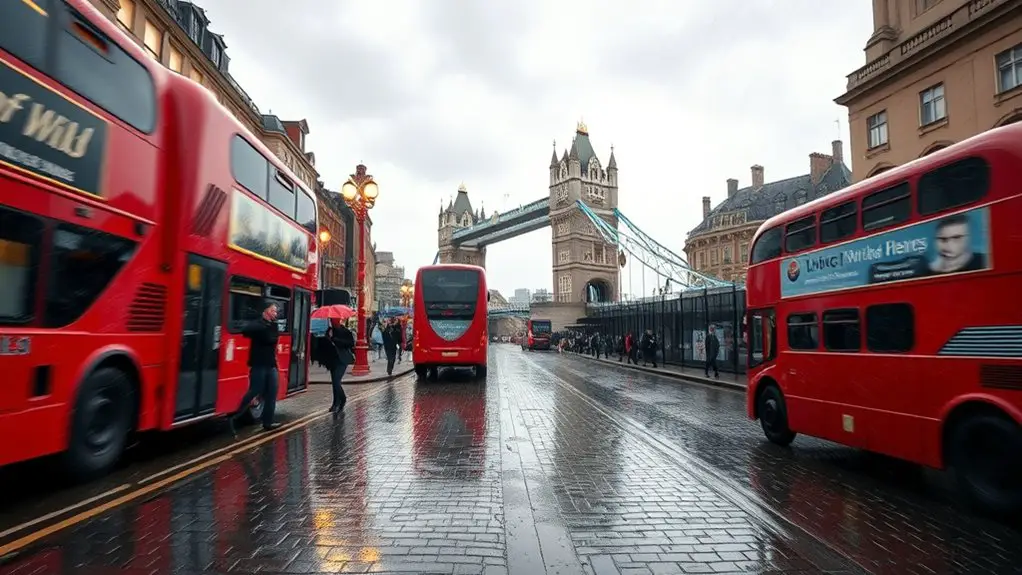
Rain can change the look of London’s most familiar landmarks. Wet streets and pavements reflect lights, buildings, buses, and signs, giving you opportunities for photographs that look very different from bright daytime shots.
You can photograph Tower Bridge through raindrops, frame the Elizabeth Tower and the Palace of Westminster beneath dramatic clouds, or use puddles to create reflections in streets and squares.
The London Eye and the Thames can also look striking under a dark sky. Overcast conditions often create softer light than direct midday sun, which can make it easier to photograph architecture without harsh shadows.
Protect your camera or phone during heavier showers. A rain sleeve, weather-resistant bag, or simple dry pouch can help, and a microfiber cloth is useful for removing water from a lens or screen.
Be careful when composing puddle reflections near roads, cycle lanes, station entrances, or crowded crossings. A photograph is not worth stepping into traffic or blocking other pedestrians.
The Cultural and Culinary Scene in the Rainy Season
Wet weather can be a good reason to slow down and explore London’s indoor cultural and food scene. Instead of rushing between landmarks, you can spend more time in museums, galleries, cafés, pubs, markets, and neighborhood restaurants.
Cozy Café Culture
On a gray day, cafés give you somewhere warm to rest between sightseeing stops. London ranges from historic tearooms and independent coffee shops to large chains, bakeries, museum cafés, and modern specialty-coffee bars.
You may find tea, espresso drinks, pastries, cakes, scones, sandwiches, and seasonal baked goods. Neighborhood cafés can be useful when you need a short break rather than a full indoor attraction.
| Atmosphere | Typical Offerings | Where to Look |
|---|---|---|
| Warm and casual | Tea, coffee, pastries | Neighborhood high streets |
| Quiet and relaxed | Specialty coffee, cakes | Independent cafés and bookshops |
| Historic or traditional | Tea, scones, light meals | Museums, historic districts, tearooms |
A café break can turn a passing shower into part of the day rather than an interruption.
Rainy Day Dining
Rainy days also suit London’s pubs, restaurants, food halls, and covered markets. You might choose classic British comfort food such as fish and chips, a savory pie, or a roast, or explore the city’s wide range of Indian, Middle Eastern, East Asian, African, European, and other cuisines.
Hot tea, coffee, soup, curries, baked dishes, and pub meals can be especially appealing after several hours outside in cool weather.
Rather than looking for a special “rainy-day menu,” choose restaurants close to the attractions you already plan to visit. That keeps you from making long cross-city journeys just to escape a shower.
Planning Outdoor Activities and Events in the Rain
Light rain does not necessarily cancel an outdoor sightseeing day. Parks, riverside walks, markets, neighborhood streets, and major landmarks can still be enjoyable if you are dressed for the weather.
For ticketed outdoor events, check the organizer’s policy before leaving. Some events continue in light rain, while severe weather may cause delays, changes, or cancellation. Do not assume that rain automatically means a refund or cancellation.
When heavy rain is forecast, keep an indoor alternative close to your original route. Museums, covered markets, galleries, churches, cafés, and shops make useful backups.
Embracing the Atmosphere: Tips for Making the Most of London’s Wet Season
Rainy days in London can create a different atmosphere without forcing you to spend the entire day indoors. Put on comfortable waterproof layers and use dry periods for shorter walks between indoor stops.
Visit a café or historic pub when a shower becomes heavier. Spend longer in an art gallery, museum, bookshop, or covered market instead of rushing outside according to a fixed schedule.
Keep your plans flexible. A weather forecast can change, and a wet morning may be followed by a dry afternoon. Build a list of nearby alternatives instead of cancelling an entire day at the first sign of rain.
Photograph reflections and rain-slicked streets if conditions are safe, and protect electronics and documents from moisture.
Pro Tip: Do not plan a London trip around avoiding every drop of rain. Plan around location instead. Group sights by neighborhood and keep one indoor backup in each area so you can change plans without losing an hour to extra travel.
Frequently Asked Questions
How does London’s rain affect public transportation reliability?
Ordinary showers often have little effect on the network. Heavy rainfall and surface-water flooding can cause station closures, road problems, or suspended rail services. Check Transport for London’s live status information when severe weather is affecting the city.
Which months have the most rain in London?
At Heathrow, the Met Office’s 1991–2020 climate normals show October averaging 65.07 mm of rain and November 66.63 mm, making them the two wettest months by average rainfall total at that station. Exact figures vary across Greater London.
What do people commonly do in London on rainy days?
Museums, galleries, cafés, pubs, covered markets, bookshops, cinemas, theaters, and restaurants are all practical choices. Many visitors combine one major indoor attraction with short outdoor walks when showers ease.
How does rain influence London’s outdoor events?
It depends on the event. Some continue in light rain, while severe weather can lead to delays, relocation, or cancellation. Check the organizer’s official weather and ticket policy before traveling to the venue.
Is it necessary to carry waterproof gear year-round?
Not every day, but rain is possible in every month. A lightweight waterproof layer or compact umbrella is easy to carry when showers are in the forecast. Check the daily forecast rather than packing heavy rain gear automatically.
Does it rain all day in London?
Sometimes prolonged rain occurs, but a rainy forecast does not mean continuous rain from morning to night. Conditions may alternate between showers, cloud, and dry periods. Check an hourly forecast when deciding when to schedule outdoor sightseeing.
What is the best month to visit London to avoid rain?
There is no reliably rain-free month. In the Heathrow 1991–2020 averages, March has the lowest rainfall total at 38.78 mm, while July and September average the fewest days with at least 1 mm of rain at 7.9 days each. Weather still varies considerably from year to year.
Conclusion
London’s rain is easier to manage once you stop thinking of it as a single rainy season. Showers are possible throughout the year, with October and November among the wetter months in long-term Heathrow data. Pack light waterproof protection, check the forecast, keep a flexible indoor backup, and use live transport information during severe weather. With that preparation, you can still enjoy museums, neighborhoods, food, photography, and London’s major sights when the streets are wet.
Sources
- Met Office — Heathrow Location-Specific Long-Term Averages — 1991–2020 monthly rainfall, rainy-day, and annual climate averages.
- Met Office — City of London Weather Forecast — current London weather and short-range forecast information.
- Transport for London — Status Updates — live service disruptions and travel information.
- London City Hall — Surface Water Flooding — London flood risk and the effects of intense rainfall on transport routes.
- British Museum — Plan Your Visit — admission, booking, and current visitor information.
- Tate Modern — Visit — free collection admission and visitor information.
