
Last Updated on July 24, 2026 by Daniel Globe
Italy’s islands range from glamorous cliff towns to quiet fishing harbors, thermal landscapes, protected beaches, and lake gardens. The best choice depends on how much time you have and whether you want swimming, history, nightlife, cycling, or a slower stay. This guide compares 10 smaller Italian islands and archipelagos so you can choose the right match.
Quick Answer
Choose Capri for dramatic scenery and glamour, Ischia for thermal parks and sandy beaches, Favignana for cycling and clear coves, Procida for harbor charm, Elba for a longer road trip, and Lampedusa for protected white-sand beaches. For fewer crowds, travel in late spring or early autumn.
Key Takeaways
- Best for a first visit: Capri offers the most famous views, but it is steep, busy, and usually expensive.
- Best for beaches and wellness: Ischia gives you thermal parks, long beaches, gardens, and several towns to explore.
- Best for a relaxed short break: Procida, Favignana, and Levanzo are compact and easy to enjoy at a slower pace.
- Best for a longer island holiday: Elba and Lampedusa reward several nights rather than a rushed day trip.
- Best timing: Late May through June and September through early October usually offer a better balance of weather, transport, and crowds than peak summer.
Disclosure: As an Amazon Associate I earn from qualifying purchases. Some links on this page are affiliate links, at no extra cost to you.
Which Italian Island Should You Choose?
Each island has a different pace. Use this comparison to narrow your choice before you book transport or accommodation.
| Island | Best For | Suggested Stay | Main Gateway |
| Capri | Famous views, romance, shopping | 1 to 2 nights | Naples or Sorrento |
| Ischia | Thermal parks, beaches, gardens | 3 to 5 nights | Naples or Pozzuoli |
| Favignana | Cycling, snorkeling, bright coves | 2 to 4 nights | Trapani |
| Procida | Fishing villages, color, slow travel | 1 to 2 nights | Naples or Pozzuoli |
| Ponza | Boat trips, coves, harbor evenings | 2 to 4 nights | Formia or Terracina |
| Elba | Beaches, history, hiking, road trips | 4 to 7 nights | Piombino |
| Levanzo | Quiet paths and prehistoric art | 1 to 2 nights | Trapani |
| Tremiti Islands | Snorkeling, diving, caves, history | 2 to 4 nights | Termoli; seasonal Gargano ports |
| Lampedusa | White sand, marine nature, swimming | 4 to 7 nights | Lampedusa Airport |
| Borromean Islands | Palaces, gardens, lake scenery | Day trip or 1 to 2 nights nearby | Stresa or other Lake Maggiore ports |
Note: This guide focuses on smaller islands and island groups. Sicily and Sardinia are much larger destinations that need separate multi-day itineraries.
Best Time to Visit Italian Islands
Late spring and early autumn are the easiest seasons for most travelers. From late May through June, you usually get long days and active ferry schedules without the heaviest summer crowds. September and early October can also work well, especially for swimming, walking, and lower-key evenings.
July and August bring the fullest transport schedules and the liveliest atmosphere, but they also bring higher demand, stronger heat, and crowded ports. April and later October can be peaceful, though some seasonal boat routes, beach services, and attractions may run less often.
Pro Tip: Stay overnight on Capri, Procida, or the Borromean Islands if your schedule allows. Day-trip crowds thin after the last major boats leave, and the islands feel calmer in the evening.
Ferries, Flights, and Reservations
Island transport changes by season and can be affected by wind or rough seas. Book the most important ferry or hydrofoil legs before reserving a tight onward connection. Leave extra time between an island arrival and a same-day train or flight on the mainland.
- Bay of Naples: Capri, Ischia, and Procida have regular links from Naples, with additional routes from nearby ports.
- Western Sicily: Trapani is the main gateway for Favignana and Levanzo.
- Ponza: Formia and Terracina are common gateways, with more options in summer.
- Elba: Most visitors cross from Piombino.
- Tremiti Islands: Termoli is a key mainland gateway, while some Gargano services are seasonal.
- Lampedusa: Flight schedules vary by season, so check direct and connecting options for your dates.
- Borromean Islands: Passenger boats leave from Stresa and other Lake Maggiore towns.
Warning: Do not build a trip around outdated beach-access information. Chiaia di Luna on Ponza is closed because of landslide risk and should only be viewed from the sea at a safe distance. Rabbit Beach on Lampedusa requires advance booking from June 8 through October 18, 2026.
Capri’s Glamour and Sea Views
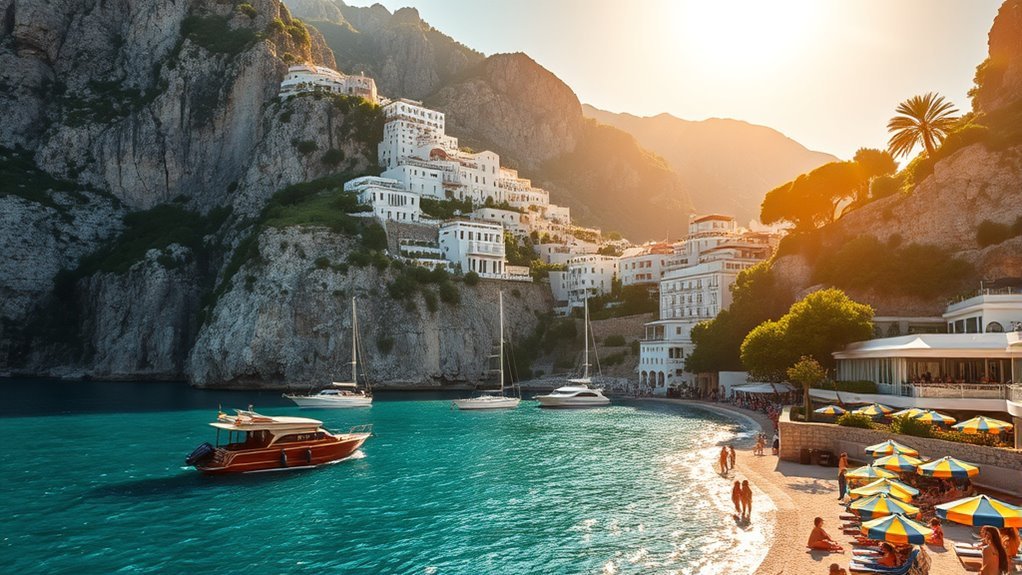
Capri combines dramatic cliffs, famous sea views, luxury shopping, and a polished resort atmosphere. Capri town feels lively and fashionable, while Anacapri is quieter and gives you easier access to higher viewpoints and walking routes.
To reach Monte Solaro, take a bus or taxi to Anacapri, then continue by chairlift or on foot. The summit gives you wide views across the Bay of Naples and toward the Amalfi Coast. The Gardens of Augustus frame the Faraglioni and Marina Piccola, while Bagni di Tiberio adds a quieter historic shoreline.
Capri becomes crowded in peak summer, especially around Marina Grande, the Piazzetta, and the main viewpoints. An overnight stay gives you more time to walk before day-trippers arrive or after they leave. Boat visits to the Blue Grotto depend on sea conditions, so treat it as a possible highlight rather than the only reason for your trip.
Ischia for Thermal Baths and Beaches
Ischia offers a softer, greener alternative to Capri. The island is shaped by volcanic geology, thermal springs, gardens, beaches, and several towns with different moods. A hydrofoil from Naples can take less than an hour, but Ischia is large enough to deserve more than a rushed day trip.
At Negombo Thermal Park, you can move between varied thermal pools, landscaped gardens, and wellness areas. Poseidon Gardens is another major thermal complex. Maronti is one of the island’s longest beaches, with dark sand, nearby fumaroles, and access to Sant’Angelo.
Ischia works well when you want to mix relaxation with activity. You can spend one day at a thermal park, another on the coast, and another walking through gardens or hill towns. The island’s buses are useful, but travel can be slow in summer traffic, so choose accommodation near the places you most want to visit.
Note: Thermal pools can be very hot. Follow the posted time limits and health guidance, stay hydrated, and ask a clinician before using hot pools if you have a condition that makes heat exposure risky.
Favignana’s Turquoise Coves and Bike Trails
Favignana is made for easy days near bright water. Cala Rossa and Cala Azzurra are the best-known stops, while the island’s relatively flat coastline makes cycling one of the simplest ways to move between coves.
Favignana pairs turquoise coves with easy cycling, letting you move from rocky swimming spots to sandy bays at your own pace.
- Explore Cala Rossa for dramatic rock scenery and clear water.
- Stop at Cala Azzurra for a gentler beach setting.
- Visit the former Florio tuna fishery to understand the island’s maritime history.
- Rent an e-bike if heat, wind, or distance may make a standard bicycle tiring.
The Italian National Tourist Board notes that Favignana’s flat coastline is well suited to exploring on foot or by bicycle. Bring water and sun protection because shade can be limited between stops.
Procida’s Old-School Island Charm
Procida gives you colorful harbors, fishing traditions, narrow lanes, and a slower atmosphere than Capri. Marina Corricella is the classic view, with pastel houses stacked above a working waterfront. The island also has several beaches, including Pozzo Vecchio, Chiaia, and Chiaiolella.
Timeless Harbor Life
Harbor life remains central to Procida. Fishing boats, small restaurants, and waterfront homes shape the daily rhythm, especially around Marina Corricella and Marina Grande. You can explore much of the island on foot, though local buses help with longer or steeper stretches.
- Walk to the viewpoints around Terra Murata and Piazza dei Martiri.
- Stop for seafood or a simple drink near the water.
- Visit Chiaiolella for a longer beach and sunset views.
Procida is compact, but it feels more rewarding when you allow time to sit, walk, and watch the harbor rather than rush between photo stops.
Il Postino Legacy
Procida was one of the filming locations for the 1994 film Il Postino. Pozzo Vecchio is often called Postman’s Beach because scenes were filmed there. The island shared the film with Salina, so it is more accurate to describe Procida as an important location rather than the movie’s only setting.
The film connection adds interest, but Procida’s appeal goes beyond cinema. Its strongest features are the lived-in fishing villages, historic Terra Murata, sea views, and the contrast between colorful houses and dark volcanic beaches. The official Procida guide lists several beaches and confirms the island’s connection with Il Postino.
Ponza’s Laid-Back Harbors and Coves
Ponza attracts visitors with a colorful harbor, volcanic cliffs, clear water, and coves that are often best reached by boat. The waterfront is lively in summer, while the island’s main road and local buses connect several inland viewpoints and coastal areas.
Ponza is at its best when you combine harbor walks with a responsible boat trip around cliffs, caves, and coves.
- Walk the harbor early or late, when the light is softer and the waterfront is calmer.
- Use licensed boat operators to reach coves that have no safe land access.
- Visit Cala Feola or Frontone instead of assuming every famous beach is open.
Chiaia di Luna is closed because repeated landslides made the beach and tunnel unsafe. You may admire the bay from the sea, but you should keep a safe distance from the cliff. This closure is a key planning detail, not a minor seasonal change.
Elba’s Beaches, History, and Scooter Trips
Elba combines beaches, mountain scenery, villages, mining history, and sites connected with Napoleon’s exile. In Portoferraio, the Palazzina dei Mulini was his official town residence. Villa San Martino, outside town, was intended as his country residence.
Napoleonic Exile Legacy
Napoleon lived on Elba from May 4, 1814, to February 26, 1815. The Palazzina dei Mulini holds period furnishings, artifacts, and part of his library. Villa San Martino preserves rooms and collections tied to his private life and later commemoration.
- Visit the Palazzina dei Mulini for Napoleon’s official residence and Portoferraio views.
- Pair it with Villa San Martino to understand the second residence.
- Check current museum hours before travel because opening days can change.
The Palazzina dei Mulini and its restored gardens reopened on June 20, 2026, after major restoration work. This is a meaningful freshness update for travelers planning a current visit.
Best Beaches to Swim
Elba has a wide mix of sandy bays, pebble beaches, rocky coves, and clear swimming water. Spiaggia di Sansone is known for pale pebbles and transparent water, while Marina di Campo offers a longer sandy beach with more services. Biodola, Fetovaia, Capo Bianco, and Le Ghiaie give you other options.
Choose a beach based on wind, access, parking, and your swimming ability rather than relying on one fixed ranking. Some beautiful coves require steep walks or boat access. Check local conditions, wear suitable footwear near rocks, and avoid entering rough water.
Scooter Routes and Coves
A scooter can make Elba easier to explore, but the island’s bends, hills, summer traffic, and narrow roads demand care. A small car may suit families or travelers carrying beach gear, while buses can work for selected routes.
- Follow the coastal roads toward Capo Sant’Andrea for sea views and granite scenery.
- Link Portoferraio with beaches such as Sansone and La Sorgente.
- Combine a drive with marked hiking routes in the Tuscan Archipelago National Park.
Wear a helmet, use a properly licensed rental, and avoid riding after drinking. Do not stop on blind bends for photos. Elba feels open and adventurous, but safe travel matters more than covering the entire island in one day.
Levanzo’s Cave Art and Quiet Paths
Levanzo is the smallest of the main Aegadian Islands and has a quiet, low-traffic feel. Its most important cultural site is the Grotta del Genovese, which preserves two different phases of prehistoric rock art.
The older works are Upper Paleolithic engravings of animals and human figures. The later works are black and red paintings from the Neolithic or Copper Age. Calling all the images “Upper Paleolithic cave paintings” mixes two different periods and techniques.
Visits to the Grotta del Genovese require advance booking, normally with at least 48 hours’ notice. Access may be by sea or land depending on weather, and part of the route is on foot. Wear sturdy shoes and carry water.
Beyond the cave, Levanzo gives you limestone paths, clear coves, and a small village where the pace stays quiet. It suits travelers who value archaeology, walking, and simplicity more than nightlife or resort services.
The Tremiti Islands for Snorkeling and History
The Tremiti Islands combine clear Adriatic water, rocky coves, sea caves, forested paths, and an important historic complex on San Nicola. The archipelago is part of a protected marine area, so visitors should follow local rules for boating, fishing, diving, and anchoring.
- Snorkel on marked routes or join a local guide who understands protected zones.
- Explore sea caves around San Domino when conditions are safe.
- Visit Santa Maria a Mare, the fortified abbey complex on San Nicola.
The Gargano National Park describes around 40 dive sites with fish, crustaceans, molluscs, gorgonians, corals, caves, walls, and wrecks. This supports the islands’ diving appeal without overstating the area as a tropical coral-reef destination.
Termoli is a major gateway, while services from Vieste, Peschici, Rodi Garganico, and other ports may vary by season. Cars and motorcycles are heavily restricted, so expect to move mainly on foot, by bicycle, taxi, or boat.
Lampedusa for White Sand and Clear Water
Lampedusa is Italy’s southernmost island and sits closer to Tunisia than to Sicily. Its best-known beach is Spiaggia dei Conigli, where pale sand and clear shallows form part of a protected nature reserve used by loggerhead sea turtles.
For the 2026 season, access to Rabbit Beach is controlled from June 8 through October 18 and requires an online reservation. The reserve limits access to protect the beach and nesting habitat. Follow marked areas, take all rubbish with you, and do not disturb closed nesting zones.
Beyond Rabbit Beach, you can explore Cala Pulcino, Cala Croce, Cala Galera, and the island’s rocky northern coast. Boat trips, snorkeling, and diving are popular, but local reserve rules differ by area. Check what is permitted before entering protected water.
Flights vary through the year. ITA Airways scheduled direct Rome to Lampedusa service twice weekly from July 25 through August 30, 2026, with additional seasonal and connecting options depending on your departure city. Verify the live schedule before booking because routes can change.
Note: Rabbit Beach has no full-service beach club. Carry water and sun protection, but keep your load light because the beach requires a walk down an exposed path.
The Borromean Islands on Lake Maggiore
The Borromean Islands offer a freshwater alternative to Italy’s Mediterranean escapes. Passenger boats from Stresa and other Lake Maggiore towns connect Isola Bella, Isola Madre, and Isola Superiore, also called Isola dei Pescatori.
- Isola Bella: Visit the 17th-century Palazzo Borromeo, shell-covered grottoes, and formal terraced gardens.
- Isola Madre: Walk through an English-style botanical garden around a historic palace.
- Isola Superiore: Explore the only island in the group that is inhabited throughout the year.
The Borromeo family became owners of islands in the archipelago in the 14th century, while the grand transformation of Isola Bella took shape from the 17th century. This is more accurate than saying their stewardship began only in the 1600s.
These islands work well as a day trip, but check palace and garden opening dates before travel because visitor access is seasonal. The official Borromean Islands guide explains the main islands, palaces, and gardens.
Frequently Asked Questions
Which is the most beautiful island in Italy?
There is no single objective winner. Capri is the strongest choice for dramatic cliffs and famous viewpoints. Lampedusa stands out for white sand and protected water, while Sardinia offers the widest range of major beach landscapes. Your best choice depends on whether you value scenery, swimming, culture, or quiet.
When should you avoid Italy’s islands?
Avoid July and August if you strongly dislike heat, high demand, and crowded ferries. Those months are not automatically bad, since they also offer the fullest seasonal schedules and liveliest atmosphere. Late May, June, September, and early October usually give you a better balance.
Which is better, Capri or Ischia?
Choose Capri for iconic views, polished restaurants, luxury shopping, and a compact first visit. Choose Ischia for thermal parks, sandy beaches, gardens, and a longer, more relaxed stay. Capri is more dramatic, while Ischia offers more variety for several days.
What is better, the Amalfi Coast or Sicily?
Choose the Amalfi Coast for a shorter trip focused on cliffside towns, scenic roads, and romance. Choose Sicily for a larger journey with major archaeological sites, cities, beaches, food traditions, and volcanic landscapes. Sicily needs more time but gives you far greater variety.
Which Italian island is easiest for a day trip?
Procida is one of the easiest compact day trips from Naples or Pozzuoli. Capri also works well for a day, but you need an early start and realistic expectations about crowds. The Borromean Islands are an easy lake day trip from Stresa.
Which island is best without a car?
Capri, Procida, Favignana, Levanzo, and the Tremiti Islands are good choices without a car. You can use walking routes, local buses, bicycles, taxis, or boats. Elba and Ischia are larger, so careful accommodation choice matters more if you do not rent a vehicle.
Conclusion
Italy’s smaller islands give you very different trips. Capri is the choice for famous scenery, Ischia for thermal wellness and beaches, Favignana for cycling between coves, Procida for harbor life, Ponza for boat days, and Elba for a fuller road trip. Levanzo and the Tremiti Islands suit quiet exploration, Lampedusa delivers protected beach beauty, and the Borromean Islands add palace-and-garden elegance.
Choose your island by travel style, not by one beauty ranking. Then check current transport, attraction hours, beach rules, and weather before you leave. A well-planned two-night stay often feels more rewarding than a rushed checklist day.
Sources
- Italia.it: Italian Islands — national tourism overview of Italy’s islands and archipelagos.
- Italia.it: The Borromean Islands — island history, palaces, gardens, and visitor context.
- Italian Ministry of Culture: Palazzina dei Mulini — Napoleon’s Elba dates, residence, collections, and current opening information.
- Sicilian Region: Grotta del Genovese — dating and classification of the prehistoric engravings and paintings.
- Gargano National Park: Tremiti Diving — protected marine environment, dive sites, and underwater life.
- Legambiente Reserve: Lampedusa Visitor Rules — 2026 Rabbit Beach access dates, booking requirement, and conservation rules.
