

Last Updated on July 29, 2026 by Daniel Globe
Italian cocktails range from crisp, bubbly spritzes to bold, bittersweet classics. You can make most of them at home in a few minutes with a jigger, plenty of ice, and well-chilled ingredients. This guide covers historic drinks such as the Negroni, Bellini, and Americano, along with regional specialties and newer Italian-inspired recipes.
Quick Answer
The easiest Italian cocktails to make at home are the Aperol Spritz, Limoncello Spritz, Negroni, Americano, and Bellini. Spritzes use sparkling wine, an aperitivo or liqueur, and soda, while stirred classics rely on measured ratios. Chill every ingredient, use fresh ice, and add sparkling components last.
Key Takeaways
- Use the 3:2:1 formula—three parts Prosecco, two parts aperitivo, and one part soda—for a dependable classic spritz.
- A traditional Negroni uses equal parts gin, Campari, and sweet red vermouth.
- Add Prosecco and soda gently so the drink keeps its carbonation.
- The Bellini, Negroni, Americano, and Negroni Sbagliato are established classics; the Como Spritz and Espresso Corretto Martini are modern riffs.
- Seltz Limone e Sale contains no alcohol and is a useful option for guests who do not drink.
At a Glance
| Time Required | About 3–10 minutes per cocktail |
| Difficulty | Easy; beginner-friendly measuring, stirring, building, or shaking |
| Tools Needed | Jigger, bar spoon, ice, citrus peeler, and a shaker or whisk for selected recipes |
| Cost | Varies by bottle and region; spirits, aperitivi, and Prosecco are the main costs |
Warning: Serve alcohol only to adults of legal drinking age. Do not drink before driving or operating machinery. People who are pregnant, taking medicines that interact with alcohol, recovering from alcohol use disorder, or unable to limit their intake should avoid alcohol. A single cocktail may contain more than one U.S. standard drink; review the NIAAA standard-drink guidance when planning portions.
Discover the Charm of Italian Cocktails
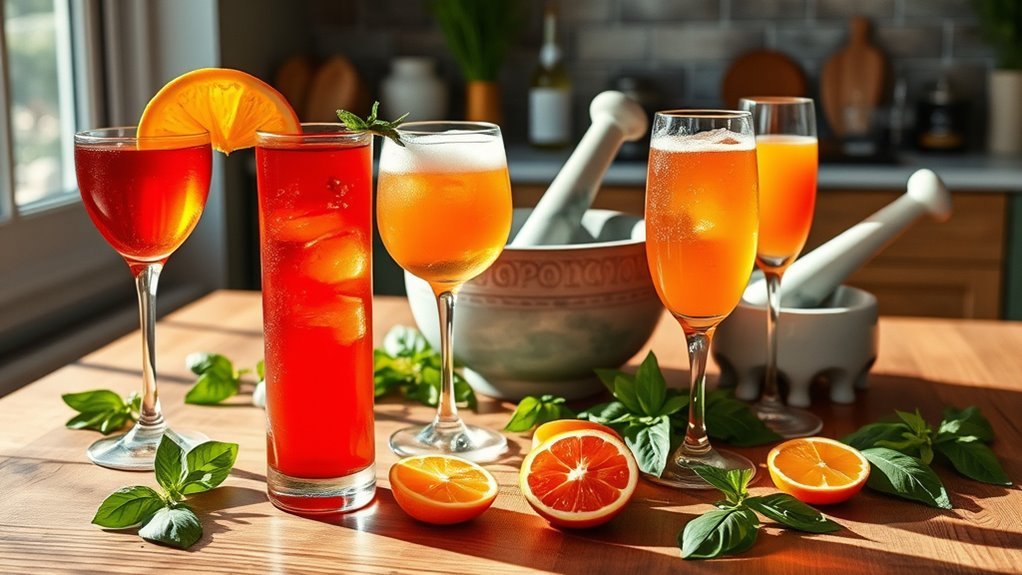
Italian cocktail culture is closely tied to aperitivo, the social custom of enjoying a drink and a few light bites before dinner. The exact hour varies by city and venue, but it usually takes place in the early evening rather than at one fixed national time.
Many aperitivo drinks combine bitterness, sweetness, acidity, and carbonation. Campari, Aperol, Cynar, Cappelletti, and vermouth appear often, while Prosecco and soda add lift. These ingredients can produce a wide range of flavors, from the gentle orange notes of an Aperol Spritz to the stronger herbal bitterness of a Negroni.
Useful Italian Cocktail Terms
| Term | Meaning |
|---|---|
| Aperitivo | A pre-dinner drink or the social occasion built around drinks and light snacks. |
| Aperitivo liqueur | A bittersweet product such as Aperol or Campari commonly served before a meal. |
| Amaro | An Italian bitter herbal liqueur. Styles range from gently bittersweet to intensely bitter. |
| Vermouth | A fortified, aromatized wine used in drinks such as the Negroni and Americano. |
| Digestivo | A drink traditionally served after a meal. The term describes custom, not a proven medical benefit. |
| Spritz | A bubbly drink generally built with sparkling wine, a bitter or flavored component, and soda water. |
Criteria for a Great Italian Cocktail
A successful Italian cocktail does not need a long ingredient list. It needs fresh garnishes, accurate measurements, enough chilling, and a clear balance among sweet, bitter, acidic, herbal, and sparkling components.
Fresh Ingredients Matter
Use freshly cut citrus, ripe fruit, clean ice, and cold sparkling wine. Fresh lemon juice gives the Como Spritz and Seltz Limone e Sale a cleaner taste than bottled juice. Ripe white peaches give a Bellini its soft aroma and natural color.
Vermouth is wine-based and begins to lose freshness after opening. Refrigerate it, close it tightly, and use it while its aroma still tastes lively rather than flat or oxidized.
Balance Between Sweetness and Bitterness
Italian cocktails often balance a bitter ingredient with sweetness, dilution, acidity, or carbonation. In a Negroni, sweet vermouth softens Campari while gin adds structure. In an Aperol Spritz, Prosecco and soda lighten the sweet, bittersweet aperitivo.
| Sweet or Softening Ingredients | Bitter or Herbal Ingredients |
|---|---|
| Sweet vermouth | Campari |
| Peach purée | Cynar |
| Limoncello | Fernet-style amaro |
| Passion fruit syrup | Cappelletti aperitivo |
Simple Yet Elegant Preparation
- Measure accurately: Use a jigger instead of guessing.
- Chill first: Cold bottles and cold glassware reduce the need for extra dilution.
- Use fresh ice: Large, solid cubes melt more slowly than small wet cubes.
- Add bubbles last: Pour sparkling wine and soda gently and avoid aggressive stirring.
- Garnish for aroma: Express a citrus peel over the surface or use a fresh slice that matches the drink.
Pro Tip: Chill Prosecco, soda water, wine glasses, and aperitivo bottles before making a spritz. A colder build preserves bubbles and keeps the drink from becoming watery too quickly.
Choose an Italian Cocktail by Flavor
| Drink | Main Flavor | Relative Strength | Best Occasion |
|---|---|---|---|
| Aperol Spritz | Orange, bittersweet, bubbly | Light to moderate | Aperitivo and casual gatherings |
| Negroni | Bitter, herbal, spirit-forward | Strong | Slow sipping before dinner |
| Bellini | Peach, soft, fruity | Light to moderate | Brunch and celebrations |
| Americano | Bittersweet, herbal, sparkling | Moderate | Long aperitivo sipping |
| Sgroppino | Frozen lemon, creamy, sparkling | Moderate | Dessert or a special dinner |
| Seltz Limone e Sale | Tart, salty, highly sparkling | Alcohol-free | Hot afternoons and mixed groups |
How to Make a Limoncello Spritz
Style: Modern spritz using a traditional Italian lemon liqueur
A Limoncello Spritz is bright, sweet, citrusy, and easy to build in a wine glass. Limoncello is strongly associated with southern Italy, including the Amalfi Coast, Sorrento, and Capri, but the spritz itself does not have one universally accepted regional recipe.
Ingredients
- 3 oz chilled Prosecco
- 2 oz chilled limoncello
- 1 oz chilled soda water
- Ice
- 1 lemon wheel or a small mint sprig
Method
- Fill a large wine glass with fresh ice.
- Add the Prosecco.
- Pour in the limoncello.
- Top with soda water.
- Stir once or twice with a bar spoon.
- Garnish with a lemon wheel or mint.
If your limoncello is very sweet, reduce it to 1 1/2 oz or add a little more soda. Serve the drink immediately while the bubbles are lively.
Mastering the Negroni
Style: Classic Italian cocktail
The International Bartenders Association Negroni uses equal parts gin, Campari, and sweet red vermouth. Its strong, bitter profile makes accurate measuring and proper dilution especially important.
Classic Ingredients Explained
- 1 oz gin: Supplies juniper, citrus, and botanical structure.
- 1 oz Campari: Supplies the drink’s dominant bitterness and red color.
- 1 oz sweet red vermouth: Adds wine, herbs, spice, and sweetness.
- Orange peel or half orange slice: Adds citrus aroma.
Perfecting the Stirring Technique
- Fill a rocks glass with a large ice cube, or fill a mixing glass with ice.
- Add the gin, Campari, and sweet vermouth.
- Stir gently until the drink is thoroughly chilled and slightly diluted.
- If using a mixing glass, strain over fresh ice in a rocks glass.
- Express an orange peel over the drink and add it as the garnish.
Stirring keeps the drink clear and silky. Exact stirring time depends on the size and temperature of the ice, so judge by temperature and taste rather than the clock alone.
Variations to Try
- Negroni Sbagliato: Replace gin with dry sparkling wine.
- Boulevardier: Replace gin with bourbon or rye whiskey.
- White Negroni: Use a pale bitter aperitif and dry or bianco aromatized wine according to the chosen recipe.
- Citrus-forward riff: Add a small bar spoon of limoncello rather than replacing the full vermouth measure.
Note: A Negroni is spirit-forward. Serve it in a modest glass over one large cube rather than filling an oversized glass with several servings.
Aperol Spritz: The Classic 3:2:1 Recipe
Style: Classic Italian aperitivo spritz
Aperol was introduced in 1919, but that date refers to the aperitivo brand rather than the exact modern cocktail formula. The current official Aperol Spritz recipe follows a simple 3:2:1 ratio.
Ingredients
- 3 oz chilled Prosecco DOC
- 2 oz Aperol
- 1 oz soda water
- Ice
- 1 orange slice
Method
- Fill a large wine glass with ice.
- Pour in the Prosecco.
- Add the Aperol.
- Top with soda water.
- Stir gently once.
- Garnish with an orange slice.
Serve it with olives, mild cheese, bruschetta, potato chips, or other salty snacks. Pouring the Prosecco first helps the ingredients combine without aggressive stirring.
Bellini: A Venetian Celebration Cocktail
Style: Classic Venetian cocktail
Cipriani records that Giuseppe Cipriani created the Bellini at Harry’s Bar in Venice in 1948. The traditional drink combines ripe white peach purée with Prosecco and takes its name from Venetian painter Giovanni Bellini.
Ingredients
- 1 1/2 oz chilled white peach purée
- 4 1/2 oz chilled Prosecco
- Optional fresh white peach slice
Method
- Chill a flute, tulip glass, or small wine glass.
- Add the peach purée.
- Slowly pour in a small amount of Prosecco and stir gently to loosen the purée.
- Add the remaining Prosecco in stages to control foaming.
- Garnish only if desired and serve immediately.
How to Make White Peach Purée
- Peel and pit a ripe white peach.
- Blend the flesh until smooth.
- Pass it through a fine sieve if you want a silkier texture.
- Chill it before mixing.
Yellow peaches or nectarines will make a pleasant sparkling peach drink, but their color and flavor will differ from the classic white-peach Bellini.
Americano: A Bittersweet Classic
Style: Classic Italian aperitivo
The Americano combines Campari, sweet red vermouth, and soda water. Its exact early history is described differently across cocktail sources, so it is safer to identify it as a long-established Italian aperitivo and an important predecessor to the Negroni.
Classic Italian Roots
The recognized IBA Americano recipe uses equal parts Campari and sweet red vermouth with a splash of soda water. It is built over ice in an old-fashioned glass.
Balancing Bitters and Sweetness
| Ingredient | Amount | Role |
|---|---|---|
| Campari | 1 oz | Bitterness and citrus-herbal flavor |
| Sweet red vermouth | 1 oz | Sweetness, wine, herbs, and spice |
| Soda water | A splash | Dilution and carbonation |
Perfect Serving Suggestions
- Fill an old-fashioned glass with ice.
- Add 1 oz Campari and 1 oz sweet red vermouth.
- Add a splash of soda water.
- Stir gently.
- Garnish with half an orange slice and lemon zest.
The Americano is less spirit-forward than a Negroni because it uses soda instead of gin, but its actual alcohol content still depends on the brands and serving size.
Como Spritz: A Modern Italian-Inspired Cocktail
Style: Modern New York spritz inspired by Italian flavors
The Como Spritz is not a historic Lake Como specialty. It is a modern drink associated with Good Guys in New York and bartenders Michael McIlroy and Sam Ross. The published version combines Cynar, passion fruit, lemon, and Prosecco for a sweet-tart, herbal drink.
Ingredients
- 2 oz Cynar
- 1 oz passion fruit syrup
- 1 oz fresh lemon juice
- 2 oz chilled Prosecco
- Ice
- Lemon wheel or fresh herb sprig
Method
- Fill a wine glass with ice.
- Add Cynar, passion fruit syrup, and lemon juice.
- Stir briefly to combine.
- Top with chilled Prosecco.
- Stir once, very gently.
- Garnish with lemon or a fresh herb.
For homemade passion fruit syrup, blend equal parts passion fruit purée and simple syrup until smooth. A quality bottled passion fruit syrup also works.
Negroni Sbagliato: A Bubbly Twist on Tradition
Style: Modern Italian classic
Campari Academy traces the Negroni Sbagliato to 1972, when Mirko Stocchetto of Bar Basso in Milan reportedly used sparkling wine instead of gin. “Sbagliato” means “mistaken,” referring to that accidental substitution.
Perfect for Any Occasion
The Sbagliato keeps the bittersweet Campari-and-vermouth base of a Negroni but replaces gin with sparkling wine. The result is bubbly and less spirit-forward than the original, making it well suited to aperitivo.
Refreshing Flavor Profile
Campari supplies bitterness, sweet vermouth adds dark fruit and spice, and dry sparkling wine brightens the mixture. An orange garnish reinforces the citrus aromas.
Easy to Make
- 1 1/2 oz Campari
- 1 1/2 oz sweet red vermouth
- 2–3 oz dry sparkling white wine
- Ice
- Orange wedge
- Fill a large rocks glass or wine glass with ice.
- Add Campari and sweet vermouth.
- Top with dry sparkling wine.
- Stir gently once.
- Garnish with an orange wedge.
Seltz Limone e Sale: an Alcohol-Free Sicilian Specialty
Style: Traditional nonalcoholic drink associated with Catania
Seltz Limone e Sale combines sparkling water, fresh lemon juice, and salt. It is commonly associated with the street kiosks of Catania in Sicily. Despite sometimes appearing in cocktail collections, the basic recipe contains no alcohol.
Ingredients
- 1 oz fresh lemon juice
- 1/2 teaspoon fine Sicilian sea salt or fine sea salt
- 8 oz chilled seltzer water
- Ice
Method
- Fill a highball glass with ice.
- Add the lemon juice and salt.
- Stir until the salt dissolves.
- Slowly add the seltzer because the mixture may foam.
- Stir once and serve immediately.
Start with less salt if you are sensitive to salty drinks, then adjust to taste. This drink can accompany the same olives, nuts, and bruschetta served with alcoholic aperitivo drinks.
Cappelletti Spritz: A Wine-Based Aperitivo Option
Style: Spritz using a traditional Italian wine-based aperitivo
The Cappelletti family has produced bitters and aperitivi since 1906, and its aperitivo is designed for cocktails and spritzes. Compared with Aperol, Cappelletti generally tastes drier and more wine-like, with citrus and herbal notes.
Ingredients
- 3 oz chilled Prosecco
- 2 oz Cappelletti aperitivo
- 1 oz soda water
- Ice
- Orange or grapefruit slice
Method
- Fill a wine glass with ice.
- Add the Prosecco.
- Pour in the Cappelletti aperitivo.
- Top with soda water.
- Stir gently once.
- Garnish with orange or grapefruit.
Serve it with olives, cured meat, hard cheese, roasted nuts, or grilled bread.
Sgroppino: An Italian Dessert Cocktail
Style: Venetian frozen cocktail or palate-cleansing dessert drink
Sgroppino combines lemon sorbet, vodka, and Prosecco. Recipes vary, and some versions include extra lemon juice or a small amount of cream. The drink should be light, frothy, and spoonable rather than thin and watery.
| Ingredient | Quantity |
|---|---|
| Lemon sorbet, slightly softened | 1/4 cup |
| Vodka | 1/2 oz |
| Prosecco | 1 oz |
| Fresh lemon juice | 1 teaspoon, optional |
| Mint or lemon peel | For garnish |
Method
- Place the softened lemon sorbet in a chilled bowl.
- Add the vodka and whisk until smooth.
- Slowly whisk in the Prosecco until lightly frothy.
- Add lemon juice if the sorbet needs more acidity.
- Pour into a chilled coupe or flute.
- Garnish and serve at once.
Do not add ordinary ice. It will dilute the sorbet and make the drink separate faster.
Espresso Corretto Martini: A Modern Coffee Cocktail
Style: Modern American cocktail inspired by the Italian caffè corretto
A traditional caffè corretto is espresso “corrected” with a small amount of grappa or another spirit. The Espresso Corretto Martini in this guide is a modern recipe by Michael Lay, not a historic Italian classic. It combines reposado tequila, coffee liqueur, grappa, espresso, and molé bitters.
Ingredients
- 1 oz reposado tequila
- 1 oz coffee liqueur
- 1/4 oz grappa
- 1 oz room-temperature espresso
- 2 dashes molé bitters
- Ice
Method
- Add all ingredients to a cocktail shaker filled with ice.
- Shake firmly for about 15 seconds.
- Double-strain into a chilled coupe.
- Serve immediately while the foam is fresh.
Pair this rich coffee cocktail with dark chocolate or a small chocolate dessert. Because it contains caffeine and several alcoholic ingredients, keep the portion modest.
Cynar Spritz: Bold Flavor from an Artichoke-Based Amaro
Style: Herbal spritz
Cynar is an artichoke-based bittersweet liqueur made with an infusion of 13 herbs and plants. It tastes earthy, herbal, bittersweet, and less citrus-led than Aperol.
| Ingredient | Measurement |
|---|---|
| Prosecco | 3 oz |
| Cynar | 2 oz |
| Soda water | 1 oz |
| Ice | Fill the glass |
| Orange or lemon | 1 slice |
Method
- Fill a wine glass with ice.
- Add the Prosecco.
- Pour in the Cynar.
- Top with soda water.
- Stir gently and garnish with citrus.
If the drink tastes too bitter, add a little more Prosecco or soda rather than adding a large amount of syrup.
What Makes a Great Italian Cocktail?
Use this final checklist before serving any of the recipes:
- Clear balance: The drink should not be dominated by sweetness, bitterness, or dilution.
- Cold ingredients: Sparkling drinks lose their appeal quickly when built with warm bottles.
- Accurate measurements: Small changes matter in three-ingredient cocktails.
- Fresh aromatics: Citrus peel, peach, mint, and herbs should smell fresh.
- Suitable glassware: Use a rocks glass for stirred classics, a wine glass for spritzes, and a chilled flute or coupe for Bellinis and Sgroppini.
- Moderate portions: A larger glass does not require a larger alcohol measure.
The most reliable home-bartending upgrade is not a rare bottle. It is measuring accurately, chilling every ingredient, and using fresh ice.
Simple Food Pairings for Aperitivo
- Aperol or Cappelletti Spritz: Olives, potato chips, mild cheese, bruschetta, and cured meat.
- Negroni: Aged cheese, roasted nuts, salumi, or mushroom crostini.
- Americano: Marinated vegetables, focaccia, olives, and light sandwiches.
- Bellini: Fresh fruit, soft cheese, pastries, or a light brunch.
- Cynar Spritz: Grilled vegetables, artichokes, hard cheese, or savory flatbread.
- Sgroppino: Serve alone as dessert or after a rich meal.
How to Batch Italian Cocktails for a Group
Still cocktails can be measured ahead, but sparkling ingredients should be added shortly before serving.
Batch a Negroni
For eight small Negronis, combine 8 oz gin, 8 oz Campari, and 8 oz sweet red vermouth. Refrigerate the mixture. Stir each 3 oz serving with ice before pouring, or pre-dilute the batch with a modest amount of cold water and keep it chilled.
Batch a Spritz
Measure the aperitivo portion in advance and chill it. Keep the Prosecco and soda sealed. Build each glass shortly before serving so the drink remains carbonated.
Pro Tip: Set out measured garnish bowls, chilled bottles, ice, and a printed 3:2:1 ratio. Guests can build spritzes without leaving open Prosecco sitting in a pitcher.
Substitutions and Alcohol-Free Options
- Replace Prosecco with another dry sparkling wine when authenticity is less important than convenience.
- Use nonalcoholic sparkling wine and a nonalcoholic bitter aperitif for a zero-proof spritz.
- Make Seltz Limone e Sale for a naturally alcohol-free Italian option.
- Replace white peach with yellow peach or nectarine in a Bellini-style drink, while noting that it is a variation.
- Replace soda water with chilled mineral water only when it is strongly carbonated.
- Do not replace sweet vermouth with ordinary red wine in a Negroni; the sweetness and botanical flavor will be missing.
Storage and Freshness
- Vermouth: Refrigerate after opening and keep the cap tight.
- Prosecco: Use a sparkling-wine stopper and refrigerate; the bubbles are best soon after opening.
- Fresh citrus juice: Refrigerate and use as soon as practical for the brightest flavor.
- Peach purée: Refrigerate in a sealed container and use promptly because fresh fruit oxidizes.
- Opened liqueurs and spirits: Store away from heat and direct sunlight, following the producer’s label guidance.
- Sorbet: Keep fully frozen until shortly before making a Sgroppino.
Italian Cocktail Troubleshooting
| Problem | Likely Cause | Fix |
|---|---|---|
| Spritz tastes watery | Warm ingredients, melting ice, or too much soda | Chill everything, use solid ice, and measure the soda. |
| Spritz is flat | Old Prosecco, aggressive stirring, or early batching | Open sparkling wine just before service and stir only once. |
| Negroni is too bitter | Personal preference or under-dilution | Stir a little longer or slightly increase the vermouth next time. |
| Bellini separates | Thick purée or Prosecco added too quickly | Strain the purée and loosen it with a small pour of Prosecco first. |
| Sgroppino turns runny | Warm sorbet, excess liquid, or overmixing | Use colder sorbet and whisk only until smooth and frothy. |
| Citrus peel adds little aroma | Old or dry fruit | Cut a fresh peel and gently express its oils over the glass. |
Frequently Asked Questions
What is the most popular Italian cocktail?
There is no single official ranking. The Aperol Spritz and Negroni are among the most internationally recognizable Italian cocktails. The best choice depends on whether you prefer a lighter bubbly drink or a stronger bittersweet one.
What is the easiest Italian cocktail to make at home?
An Aperol Spritz or Limoncello Spritz is one of the easiest because it is built directly in the glass. Measure the ingredients, add them over ice, stir gently, and garnish. Seltz Limone e Sale is an even simpler alcohol-free option.
What alcohol settles your stomach?
Alcohol should not be used as a treatment for stomach discomfort. Amari and grappa are traditionally served after meals, but that custom does not prove a medical benefit. Choose water or another nonalcoholic drink, and speak with a healthcare professional if pain, reflux, nausea, or other symptoms continue.
What is Italy’s signature cocktail?
Italy does not have one officially designated national cocktail. The Negroni, Aperol Spritz, Bellini, and Americano are all important, while regional drinking customs and local ingredients vary widely.
Which Prosecco is best for a spritz?
Use a chilled Prosecco DOC that tastes clean and fresh. Brut works well when you want a drier drink, while Extra Dry Prosecco is slightly sweeter despite its name. Avoid using a bottle that has lost most of its carbonation.
Can Italian cocktails be prepared in advance?
Still mixtures such as a Negroni base can be batched and refrigerated. Do not add Prosecco or soda to a spritz batch until shortly before serving, or the drink will lose its bubbles.
Conclusion
Start with one simple ratio and build from there. The 3:2:1 spritz is ideal for beginners, while the equal-parts Negroni teaches the value of careful stirring and dilution. Use chilled ingredients, fresh ice, measured portions, and an aromatic garnish. Most importantly, distinguish historic classics from modern riffs and offer an alcohol-free choice when serving a group.
Sources
- International Bartenders Association: Negroni — recognized ingredients, ratio, preparation, glassware, and garnish.
- International Bartenders Association: Americano — recognized ingredients, preparation, glassware, and garnish.
- Aperol: Official Aperol Spritz Recipe — the 3:2:1 Aperol Spritz ratio and serving method.
- Cipriani: The Original Bellini — the Bellini’s 1948 creation, white peach base, Prosecco, and Harry’s Bar history.
- Campari Academy: The Negroni — Negroni family history and the 1972 Negroni Sbagliato account.
- National Institute on Alcohol Abuse and Alcoholism: What Is a Standard Drink? — serving-size and alcohol-content guidance.
